
Blood vessels general structure Three major types of
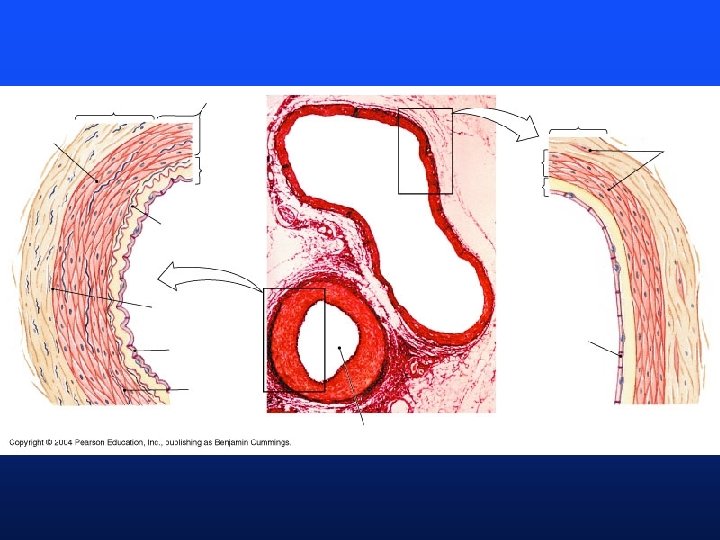
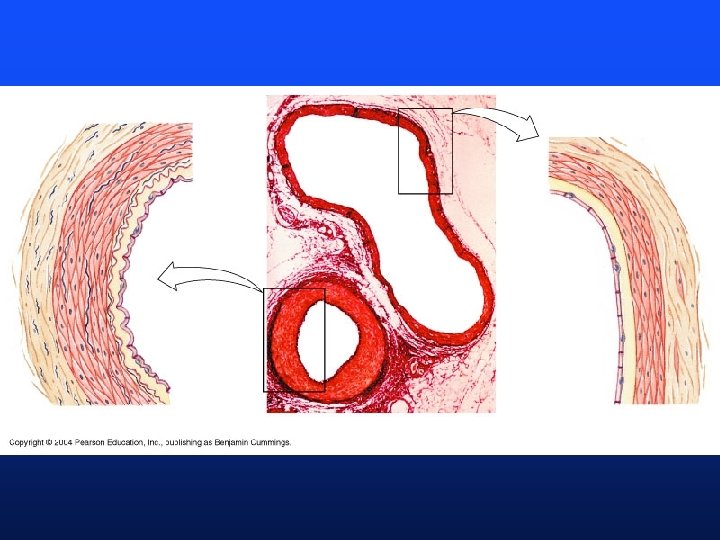
Blood vessels - general structure • Three major types of blood vessels are : arteries, capillaries and veins • The walls of all blood vessles except capillaries are composed of three distinct layers (tunics) surrounding a space (lumen). • The tunics are from inside to outside – Tunic intima - endothelium, simple squamous epithelium – Tunica media - circulary arranged smooth muscle and elastic fibers interspersed with sheets of elastin – Tunica adventitia - collagen
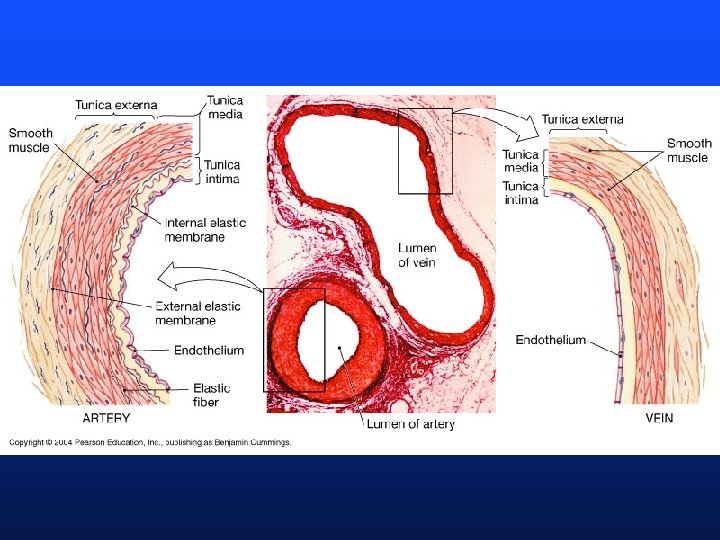

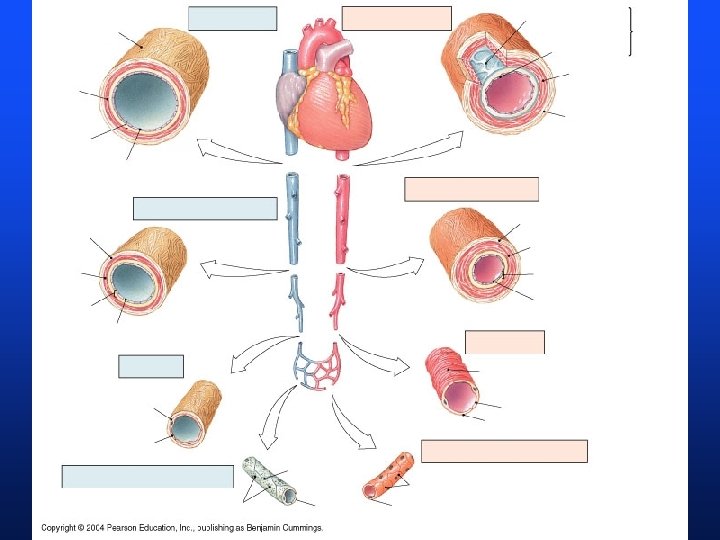
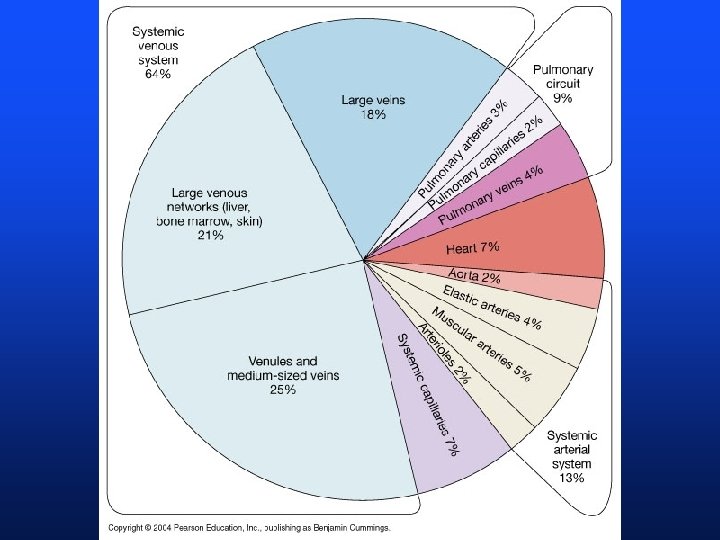
Arteries • Elastic arteries - conducting arteries – arterial pulse • Muscular arteries - distributing arteries • Arterioles
Capillaries • Continous capillaries • Fenestrated capillaries • Sinusoids

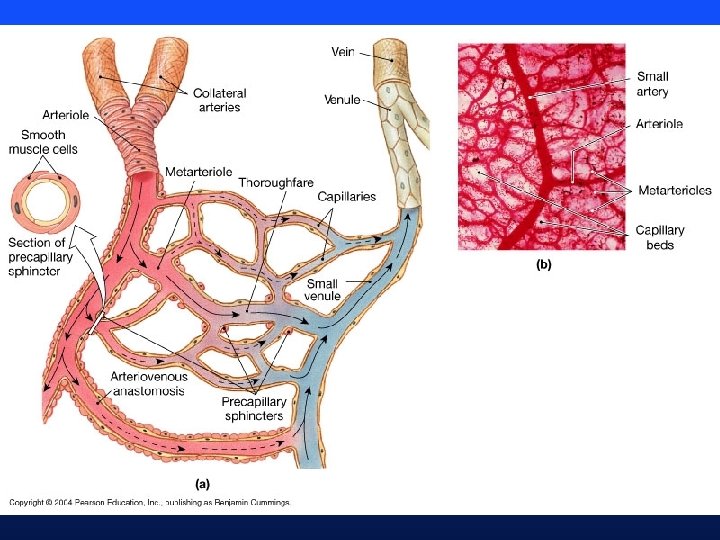
Capillary Beds • General structure - terminal arteriole -----> metarteriole -------> thoroughfare channel ---------> postcapillary venule (PICTURE) • Vascular shunts • True capillaries
Veins • Venules • Veins • Venous sinuses
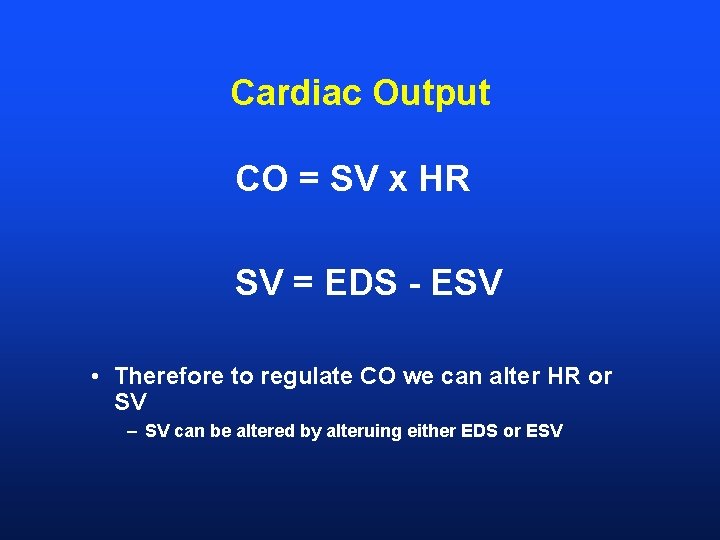
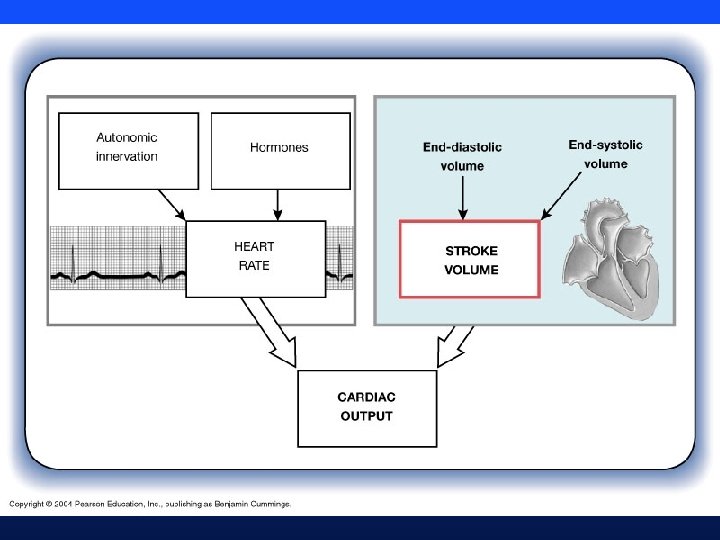
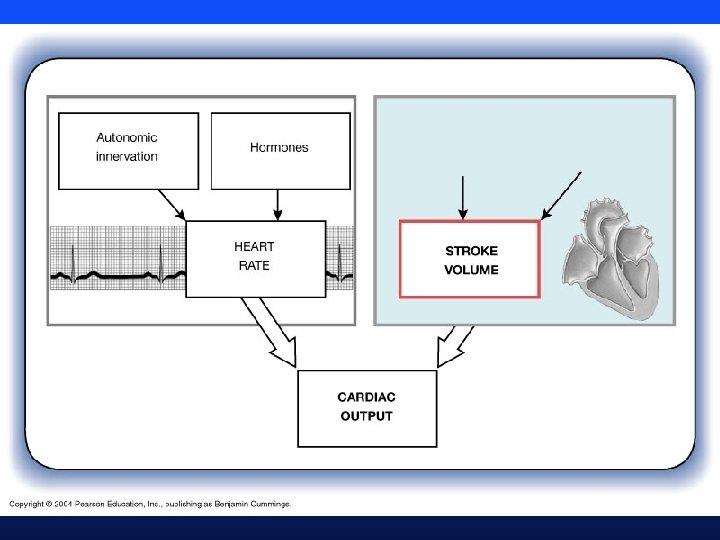
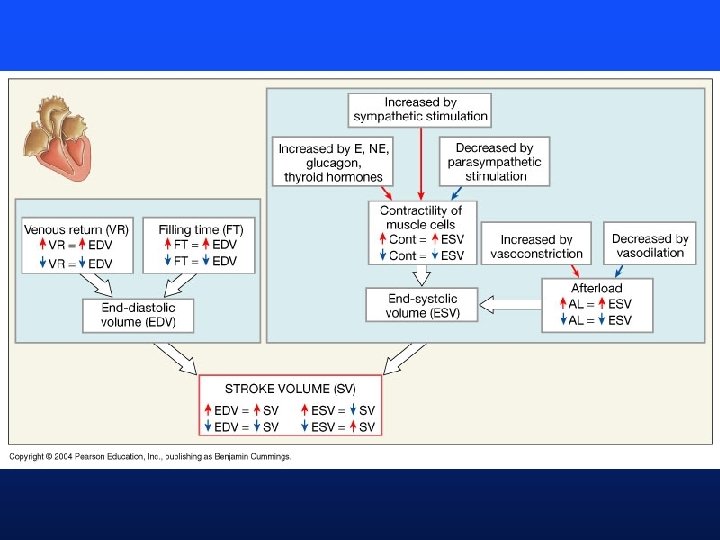
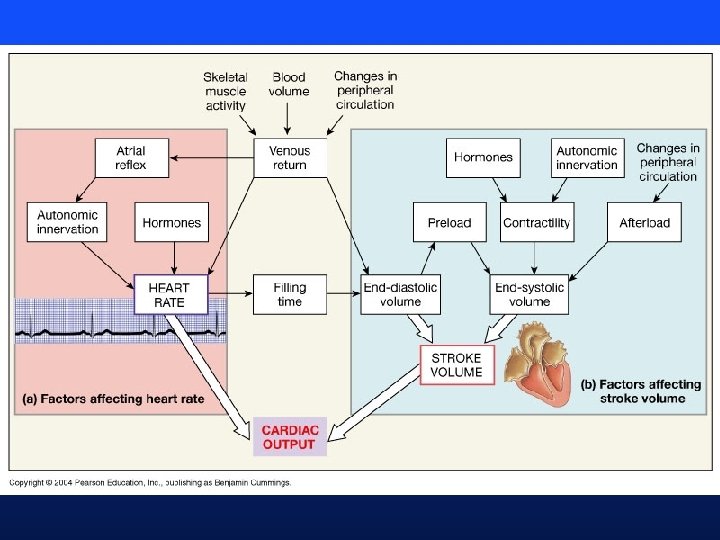
Cardiac Output CO = SV x HR SV = EDS - ESV • Therefore to regulate CO we can alter HR or SV – SV can be altered by alteruing either EDS or ESV
Regulation of SV • Preload - Starling Law of the Heart • Contractility • Afterload
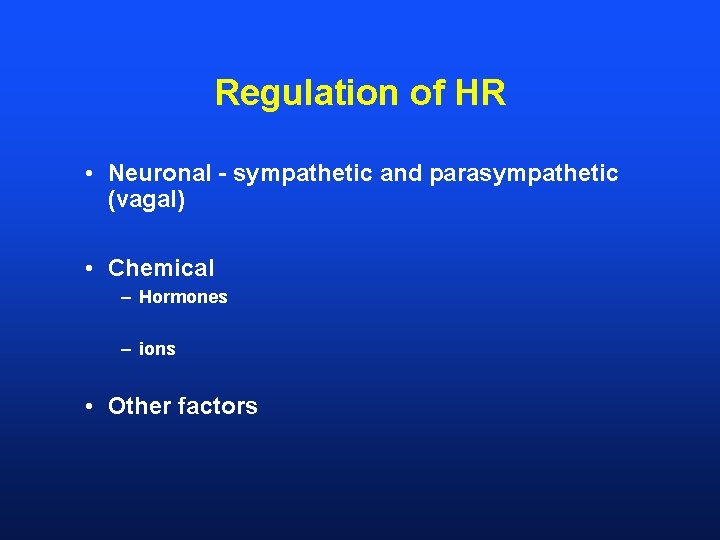
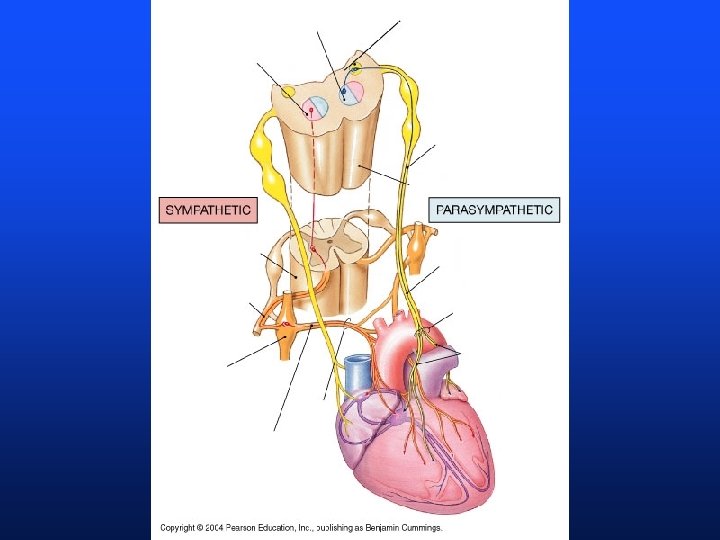
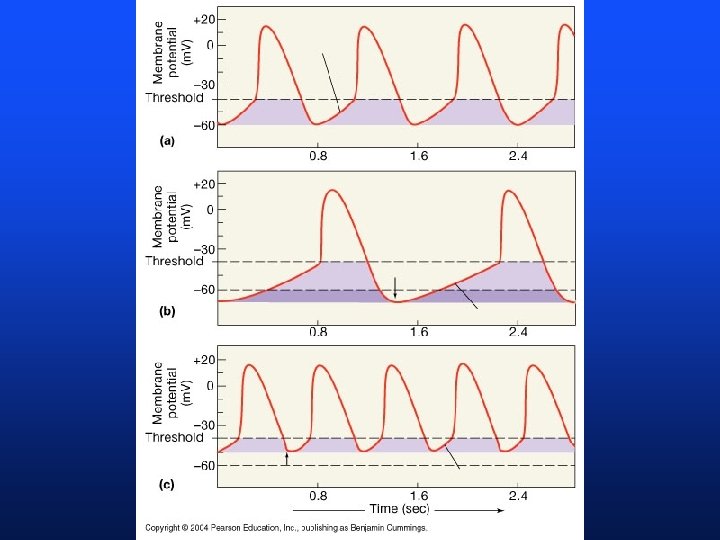
Regulation of HR • Neuronal - sympathetic and parasympathetic (vagal) • Chemical – Hormones – ions • Other factors
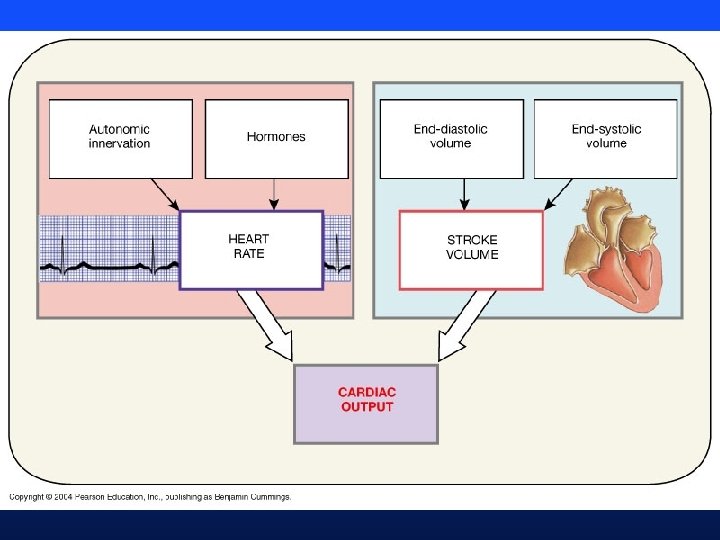
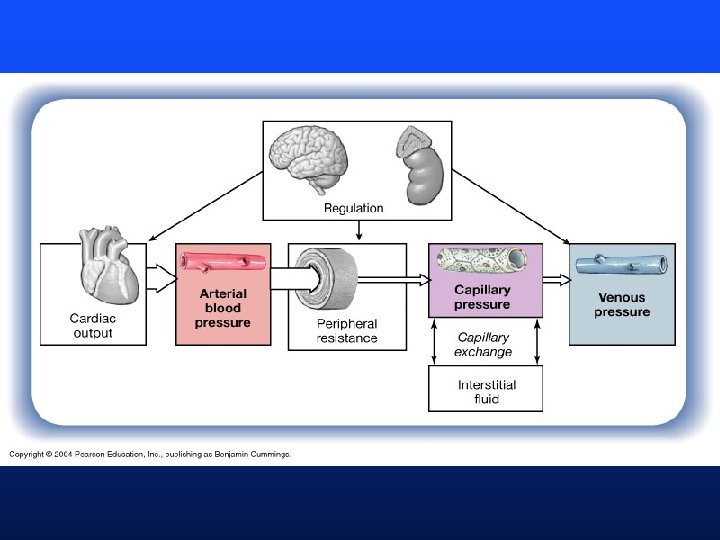
Definition of variables • Blood pressure- P =F/A the force exerted on wall of blood vessel per unit area • Resistance - the opposition to flow mainly in the periphery PR or TPR • Blood viscosity - opposition to flow related to the thickness of blood • Total BV length • Total BV diameter

Relationships among the variables • BP = CO X TPR • Resistance – directly proportional to BV L – directly proportional to 1/r 4 – Directly proportional to blood viscocity • BF = difference in BP in different parts of the vascular system / TPR
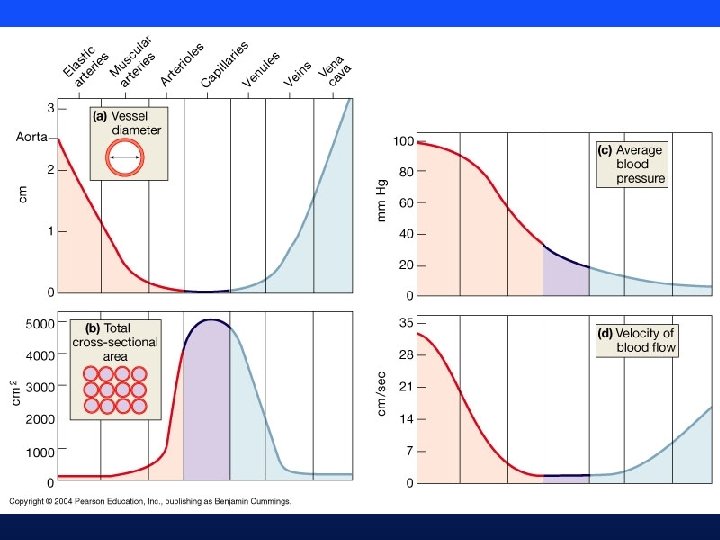
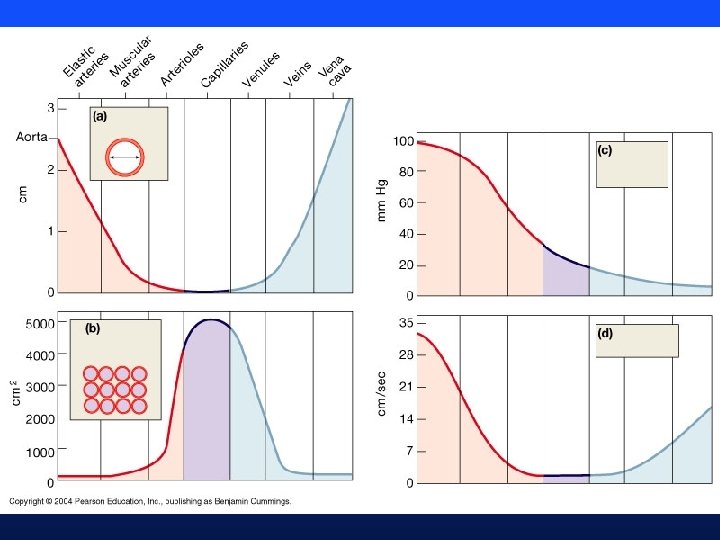
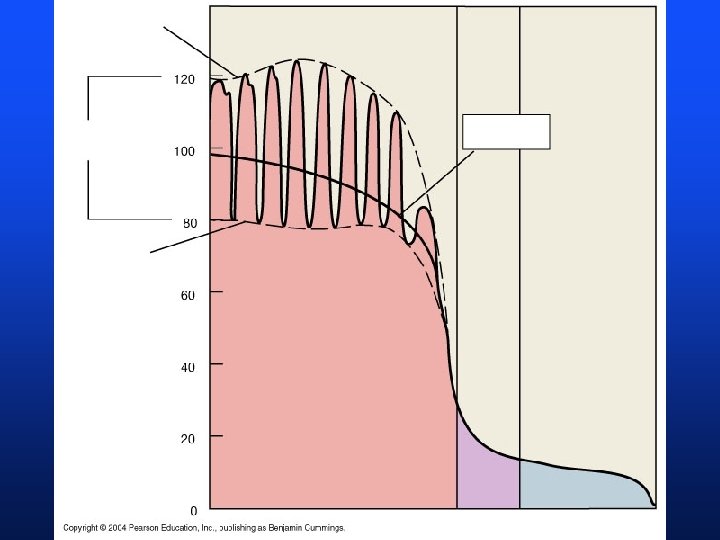
Relationships among the variables • MAP = d. BP + 1/3 pulse pressure – pulse pressure = SBP - DBP • BP and BF velocity in different parts of vascular system
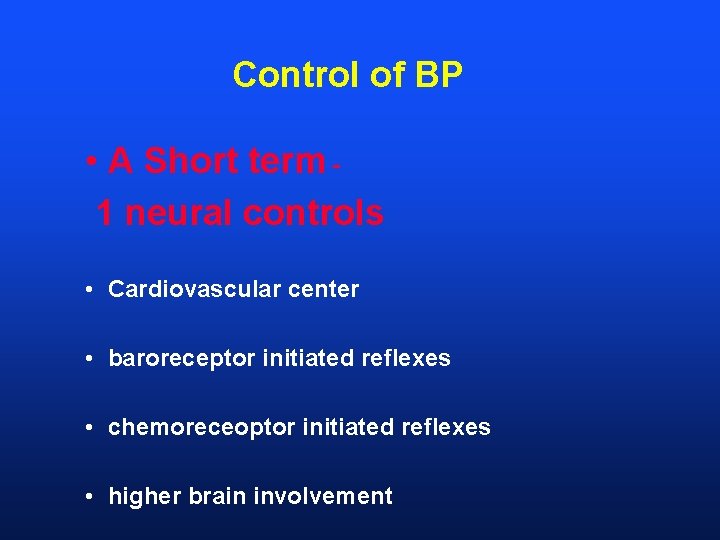
Control of BP • A Short term 1 neural controls • Cardiovascular center • baroreceptor initiated reflexes • chemoreceoptor initiated reflexes • higher brain involvement
Control of BP • 2 Hormones • adrenal medulla hormones • ANF atrail natriuretic factor • ADH antidiuretic hormone • Angiotensin II • EDF endothelium derived factors • NO nitric oxide also called endothelium derived relaxing factor EDRF
Control of BP • 3 Drugs and chemicals • alcohol • inflammatory chemicals -histamine , kinins
Control of BP • B Long term 1. kidney regulation

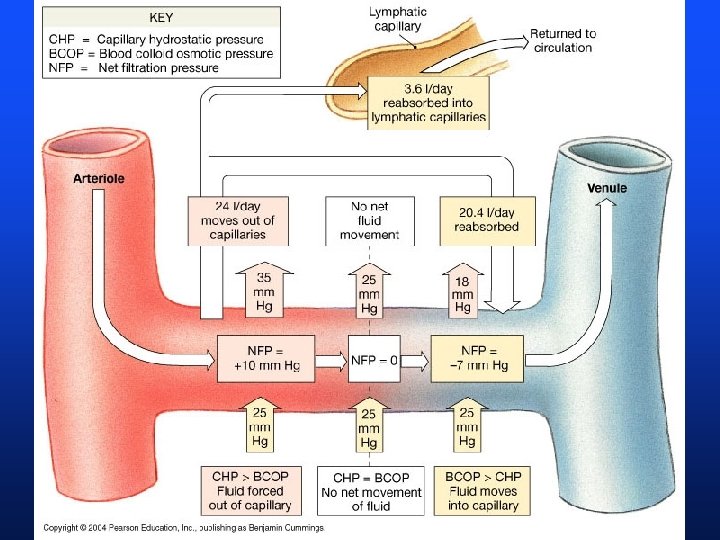
Capillary filtration
- Slides: 35