
Blood Urea Objective To estimate the concentration of

Blood Urea
Objective • To estimate the concentration of urea in serum • To obtain experience in the use of kits
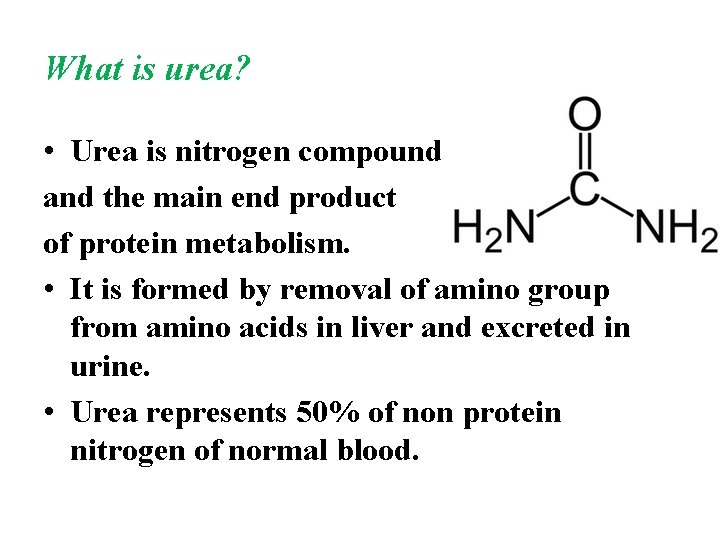
What is urea? • Urea is nitrogen compound and the main end product of protein metabolism. • It is formed by removal of amino group from amino acids in liver and excreted in urine. • Urea represents 50% of non protein nitrogen of normal blood.
• The concentration of urea in the blood serum represent mainly a balance between urea formation from protein catabolism and urea excretion by kidney.
• If kidney fail, blood urea concentration increase to high level and toxic condition known as uremia will result. • In uremia, urea must be removed from the blood by clinical procedure called blood dialysis.
• Normal blood contains 15 -40 mg/dl of urea • In adults over 60 years its level rise to 50 mg/dl • During pregnancy its level is 15 -20 mg/dl • Raised values are seen in dehydration • In renal failure its level rise up to 500 mg/dl • In sever liver disease blood urea is decreased
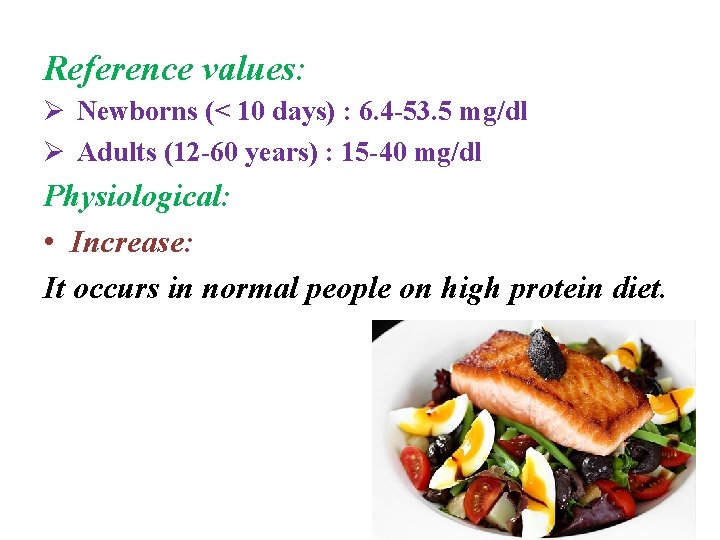
Reference values: Ø Newborns (< 10 days) : 6. 4 -53. 5 mg/dl Ø Adults (12 -60 years) : 15 -40 mg/dl Physiological: • Increase: It occurs in normal people on high protein diet.
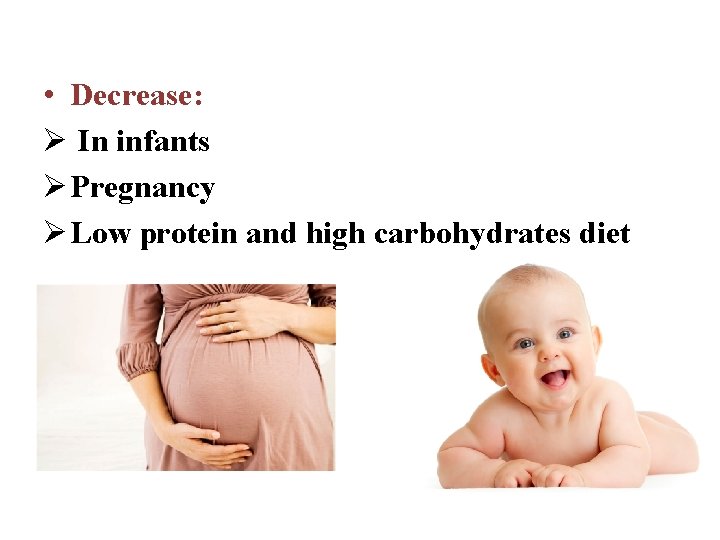
• Decrease: Ø In infants Ø Pregnancy Ø Low protein and high carbohydrates diet
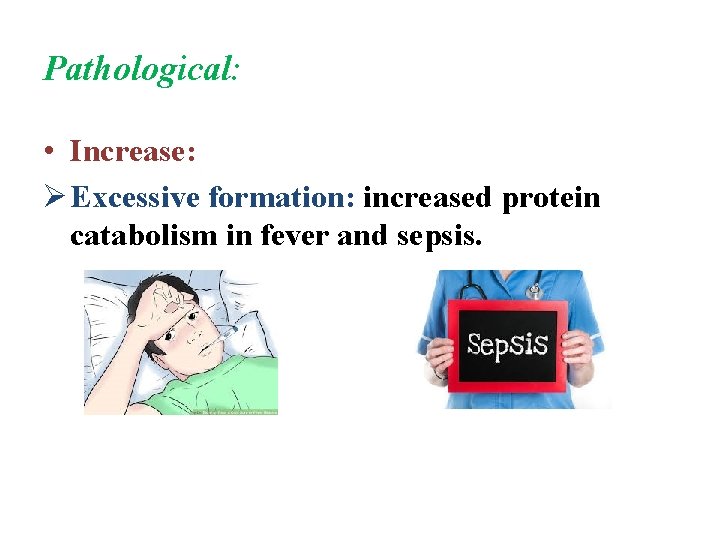
Pathological: • Increase: Ø Excessive formation: increased protein catabolism in fever and sepsis.
Ø Faulty excretion: § Pre-renal failure: a low renal blood supply leads to reduced GFR e. g. CHF § Renal failure: damage to nephrons leads to decreased urine formation and excretion e. g. nephritis § Post-renal failure: e. g. urinary tract obstructions Ø Gastrointestinal hemorrhage.
• Decrease: In transfusion of glucose solution due to dilution of body fluids and reduction protein catabolism Medicines that increase blood urea • Amphotericin B • Nafcilline • Gentamicin • Diuretics • Corticosteroids
- Slides: 11