
Blood Types And how we can test for
Blood Types And how we can test for it
Blood Types • What are the blood types? A (42%) B (12%) AB (3%) O (43%) • All of these blood types can also be negative or positive • Your blood type is determined by heredity • So, what type of evidence would a blood type be? CLASS
Blood Types • What makes one blood type different from another is the antigens on the surface of the red blood cells. • Antigens are proteins on the surface of a cell, but they have different shapes • These antigens can be recognized by specific antibodies (that would mark them for destruction). • So, if you have type A blood, you will have B-antibodies so your body will destroy a foreign blood type
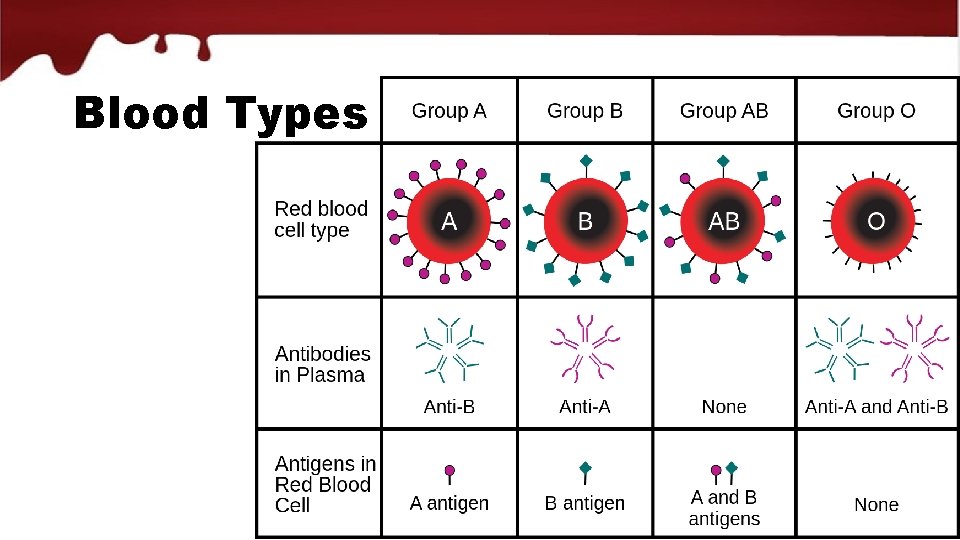
Blood Types
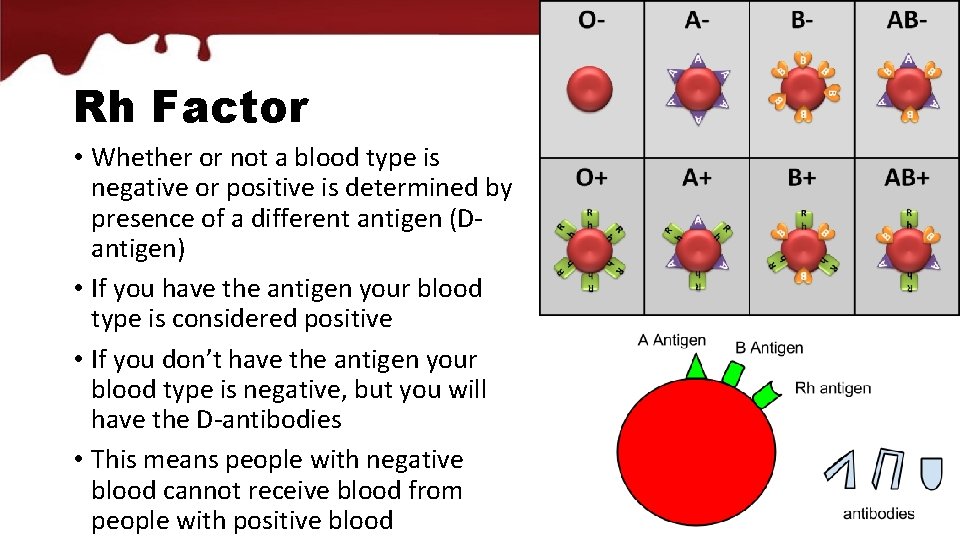
Rh Factor • Whether or not a blood type is negative or positive is determined by presence of a different antigen (Dantigen) • If you have the antigen your blood type is considered positive • If you don’t have the antigen your blood type is negative, but you will have the D-antibodies • This means people with negative blood cannot receive blood from people with positive blood
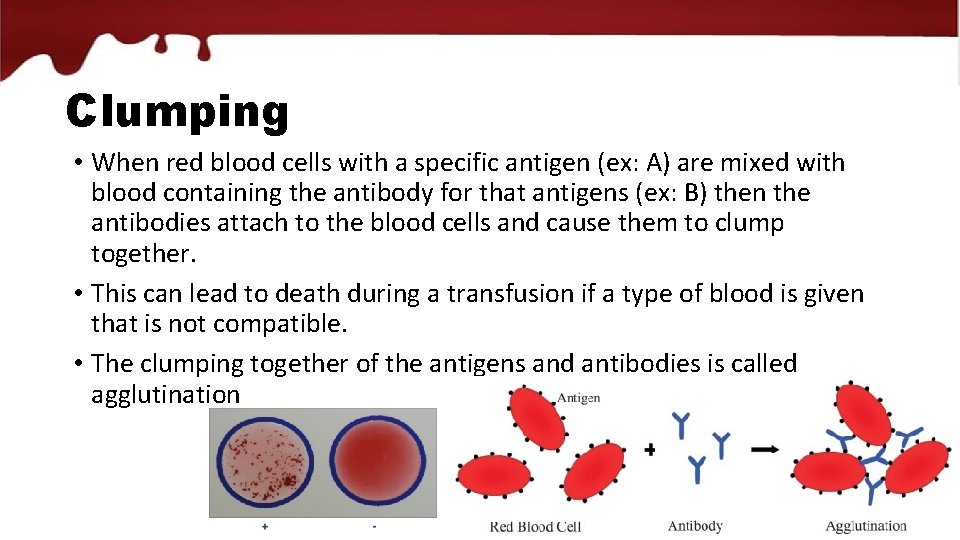
Clumping • When red blood cells with a specific antigen (ex: A) are mixed with blood containing the antibody for that antigens (ex: B) then the antibodies attach to the blood cells and cause them to clump together. • This can lead to death during a transfusion if a type of blood is given that is not compatible. • The clumping together of the antigens and antibodies is called agglutination
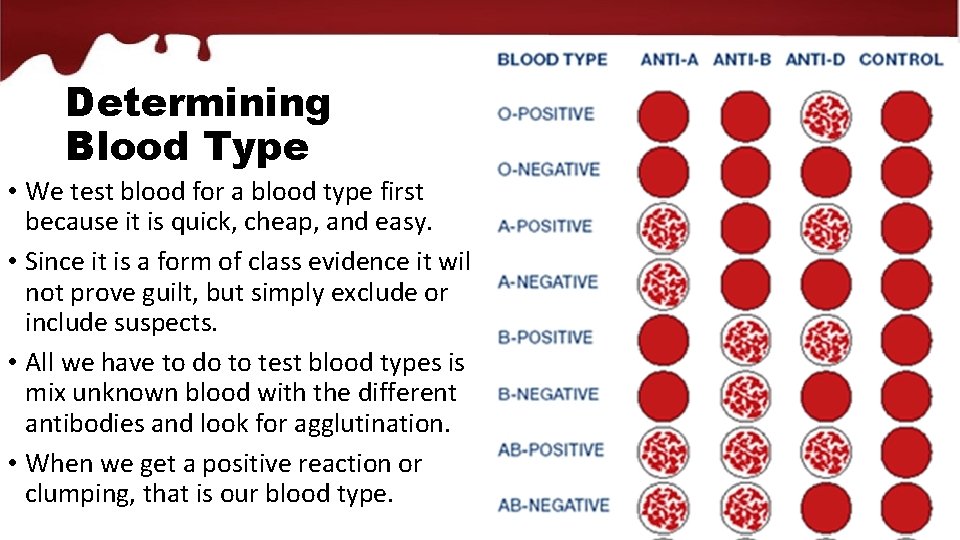
Determining Blood Type • We test blood for a blood type first because it is quick, cheap, and easy. • Since it is a form of class evidence it will not prove guilt, but simply exclude or include suspects. • All we have to do to test blood types is mix unknown blood with the different antibodies and look for agglutination. • When we get a positive reaction or clumping, that is our blood type.
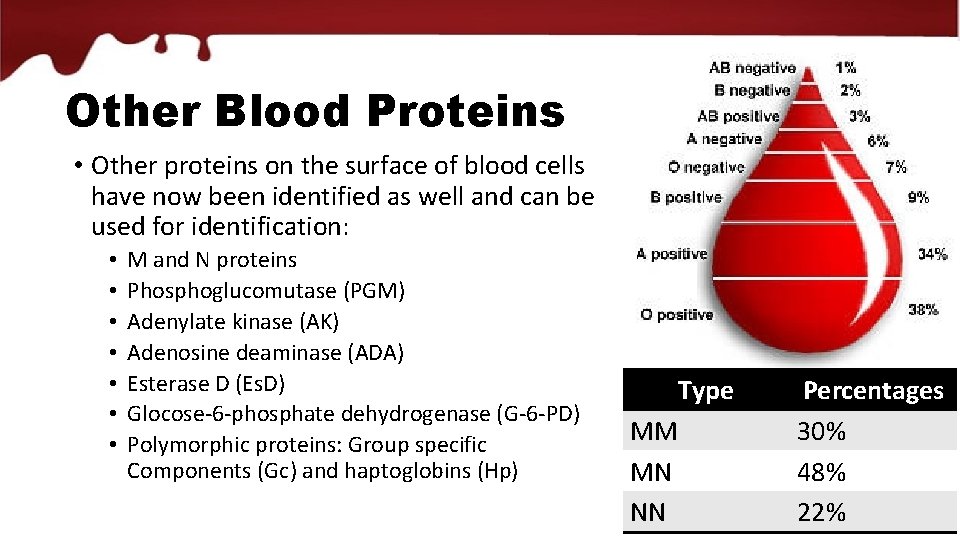
Other Blood Proteins • Other proteins on the surface of blood cells have now been identified as well and can be used for identification: • • M and N proteins Phosphoglucomutase (PGM) Adenylate kinase (AK) Adenosine deaminase (ADA) Esterase D (Es. D) Glocose-6 -phosphate dehydrogenase (G-6 -PD) Polymorphic proteins: Group specific Components (Gc) and haptoglobins (Hp) Type MM MN NN Percentages 30% 48% 22%
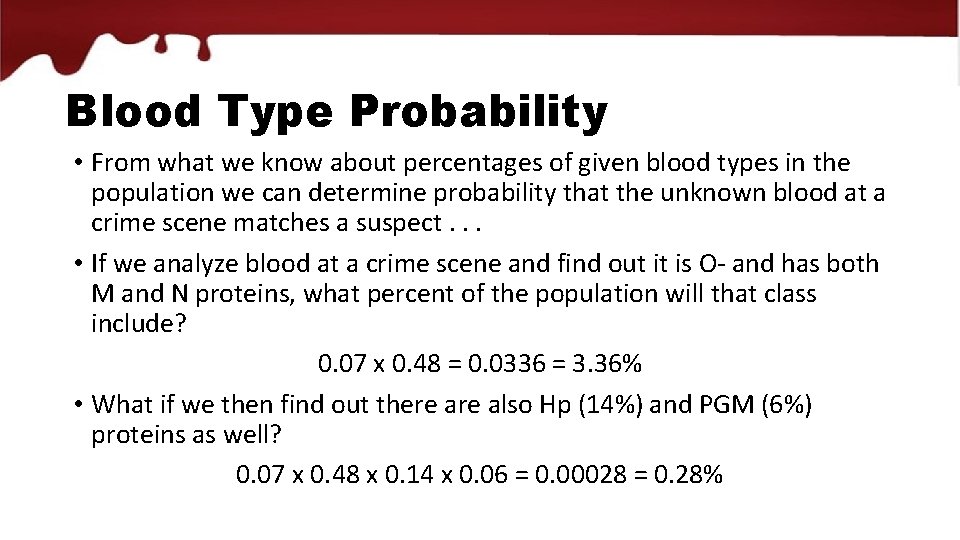
Blood Type Probability • From what we know about percentages of given blood types in the population we can determine probability that the unknown blood at a crime scene matches a suspect. . . • If we analyze blood at a crime scene and find out it is O- and has both M and N proteins, what percent of the population will that class include? 0. 07 x 0. 48 = 0. 0336 = 3. 36% • What if we then find out there also Hp (14%) and PGM (6%) proteins as well? 0. 07 x 0. 48 x 0. 14 x 0. 06 = 0. 00028 = 0. 28%
- Slides: 9