
Blood Stain Patterns LInformation Obtained LOrigin of bloodstains
Blood Stain Patterns LInformation Obtained: LOrigin of bloodstains LDistance between point of impact and origin LType and direction of impact LObject/weapon used LMinimum number of blows LPosition of victim, offender, and objects LMovement by victim or offender at scene LSupport/contradict witness statements LIndicate staged/secondary scenes

Blood Stain Patterns LCast-off Stains
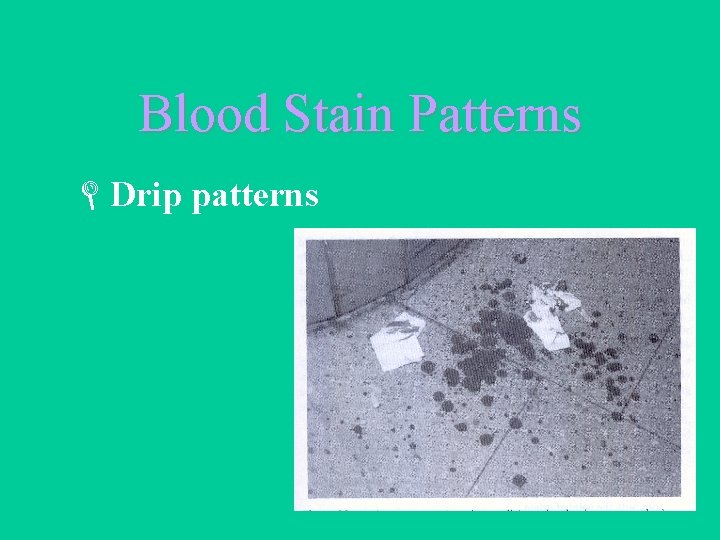
Blood Stain Patterns LDrip patterns

Blood Stain Patterns LSwipe

Blood Stain Patterns LWipe

Blood Stain Patterns LEffects of Surface Texture LHorizontal drop creates circular pattern LForces of surface tension LHarder, less porous surfacesless spatter LRougher surface = greater distortion (more spatter)
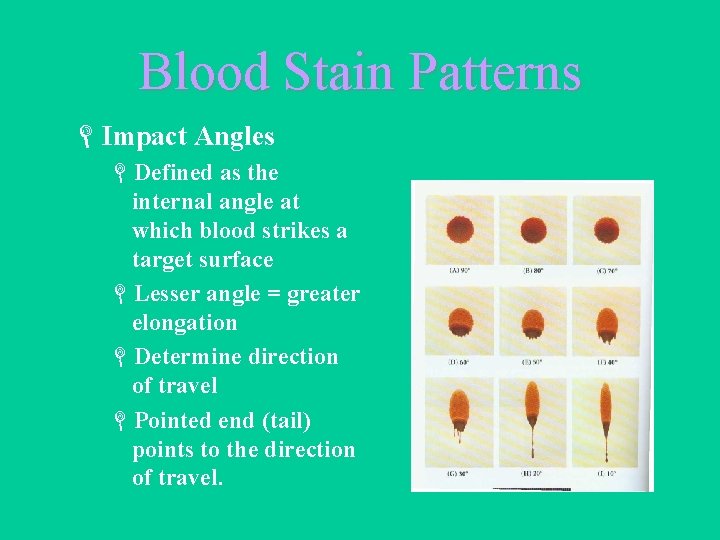
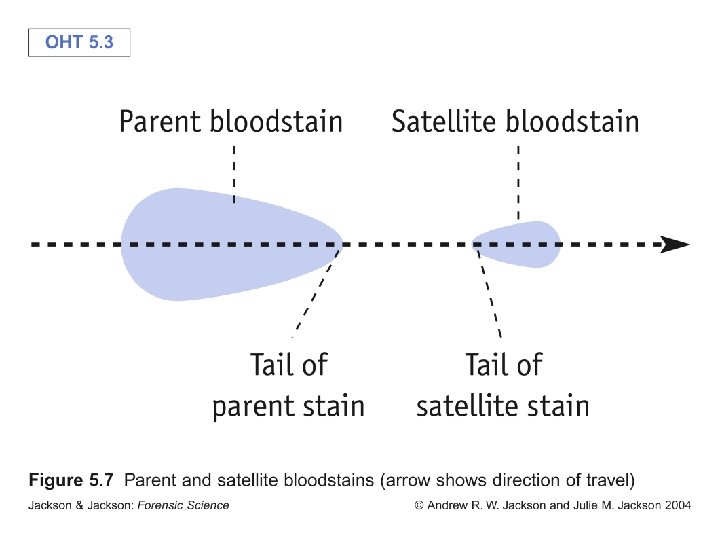
Blood Stain Patterns LImpact Angles LDefined as the internal angle at which blood strikes a target surface LLesser angle = greater elongation LDetermine direction of travel LPointed end (tail) points to the direction of travel.
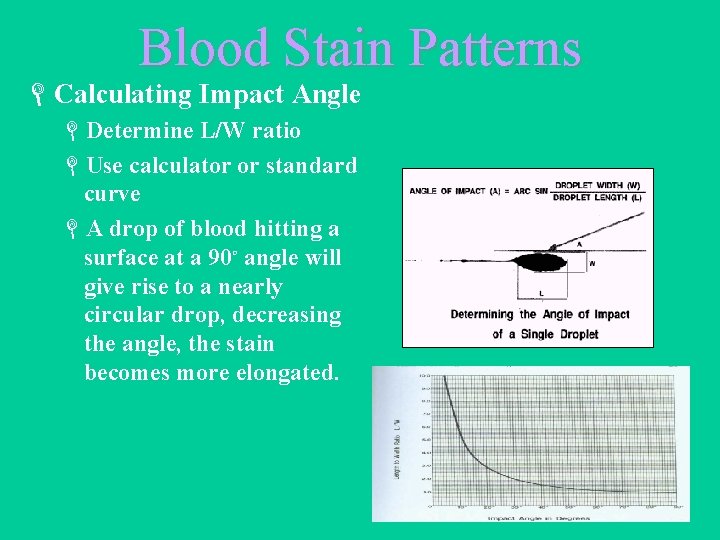
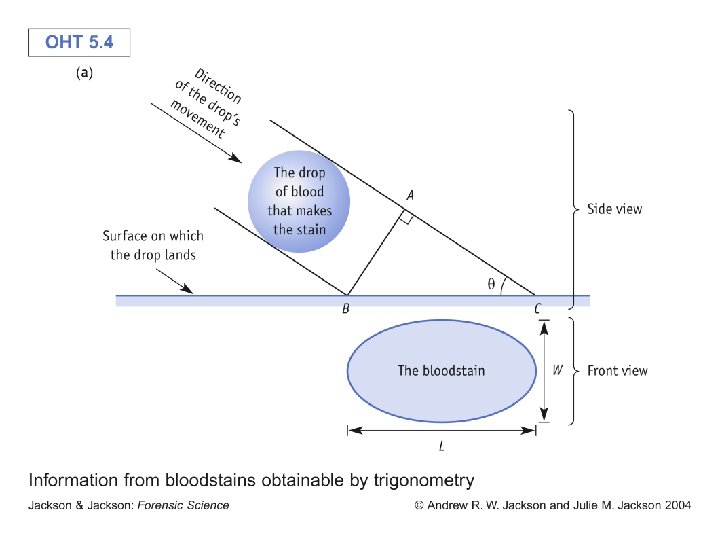
Blood Stain Patterns LCalculating Impact Angle LDetermine L/W ratio LUse calculator or standard curve LA drop of blood hitting a surface at a 90◦ angle will give rise to a nearly circular drop, decreasing the angle, the stain becomes more elongated.
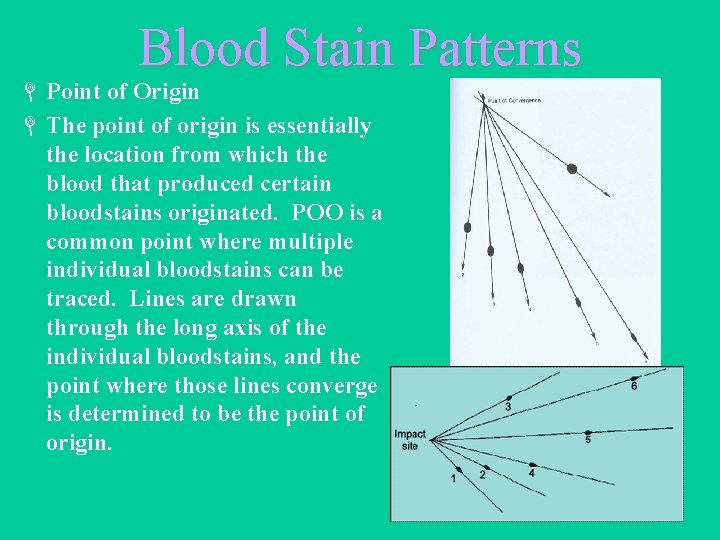
Blood Stain Patterns L Point of Origin L The point of origin is essentially the location from which the blood that produced certain bloodstains originated. POO is a common point where multiple individual bloodstains can be traced. Lines are drawn through the long axis of the individual bloodstains, and the point where those lines converge is determined to be the point of origin.

- Slides: 12