
BLOOD SPATTER http youtu bemlx 3 1 E

BLOOD SPATTER http: //youtu. be/mlx 3 -1 E 1 c 8 U
INTRODUCTION • A blood spattern provides information the truthfulness of an account by a witness or a suspect • the origin of the blood • the angle and velocity of impact • the type of weapon used •
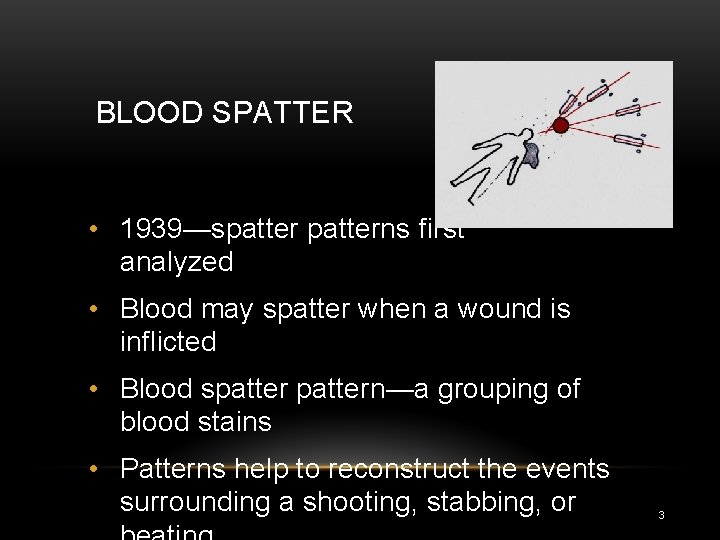
BLOOD SPATTER • 1939—spatterns first analyzed • Blood may spatter when a wound is inflicted • Blood spattern—a grouping of blood stains • Patterns help to reconstruct the events surrounding a shooting, stabbing, or 3
BLOOD SPATTER ANALYSIS Analysis of a spattern can aid in determining the: • direction blood traveled • angle of impact • point of origin of the blood • velocity of the blood • manner of death 4
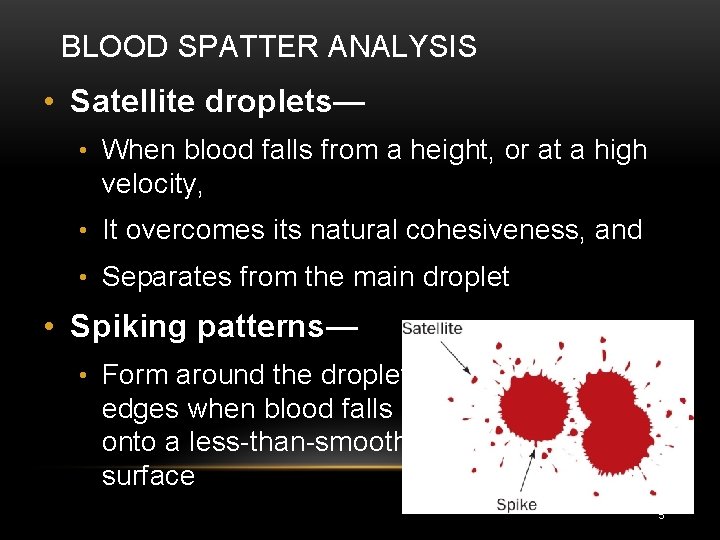
BLOOD SPATTER ANALYSIS • Satellite droplets— • When blood falls from a height, or at a high velocity, • It overcomes its natural cohesiveness, and • Separates from the main droplet • Spiking patterns— • Form around the droplet edges when blood falls onto a less-than-smooth surface 5

BLOOD SPATTER ANALYSIS —DIRECTIONALITY The shape of an individual drop of blood provides clues to the direction from where the blood originated. How will the point of impact compare with the rest of a blood pattern? 6
Blood droplets travel through the air in the shape of a sphere.
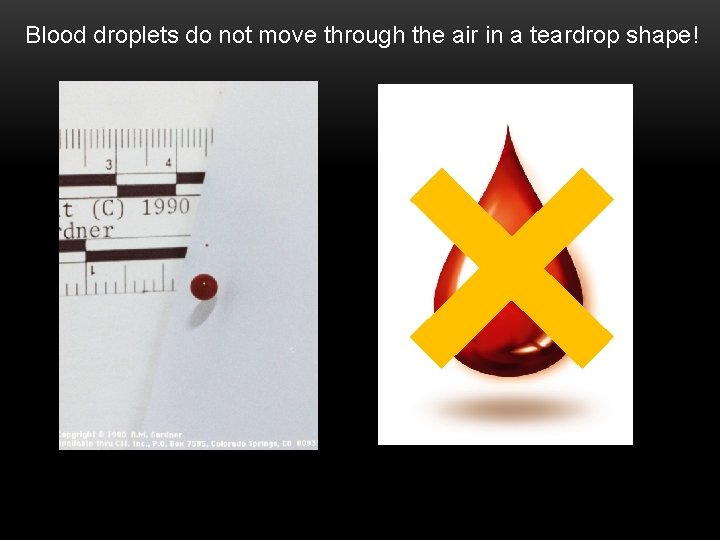
Blood droplets do not move through the air in a teardrop shape!
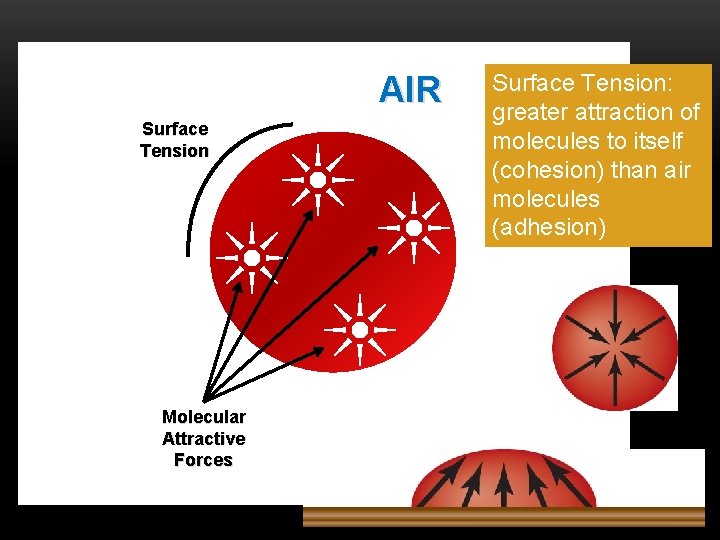
AIR Surface Tension Molecular Attractive Forces Surface Tension: greater attraction of molecules to itself (cohesion) than air molecules (adhesion)
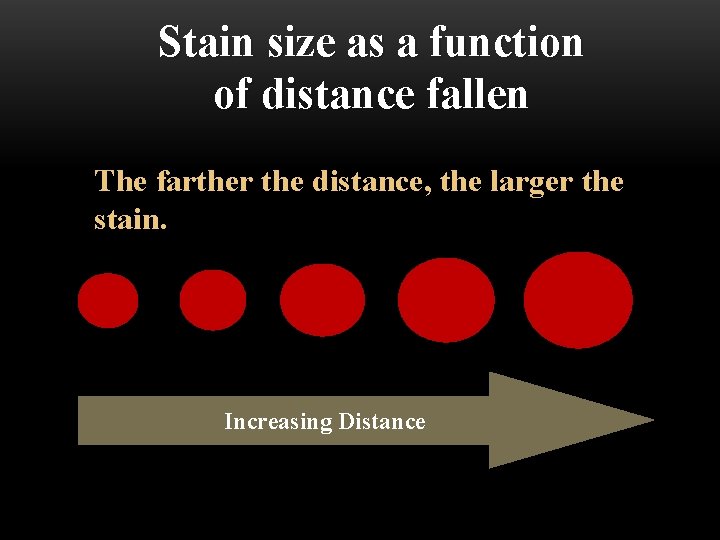
Stain size as a function of distance fallen The farther the distance, the larger the stain. Increasing Distance
Stain size as a function of distance fallen This progressive increase in size is limited by two factors: 1. Blood volume 2. Terminal velocity a) Terminal velocity for blood is 25 feet/second
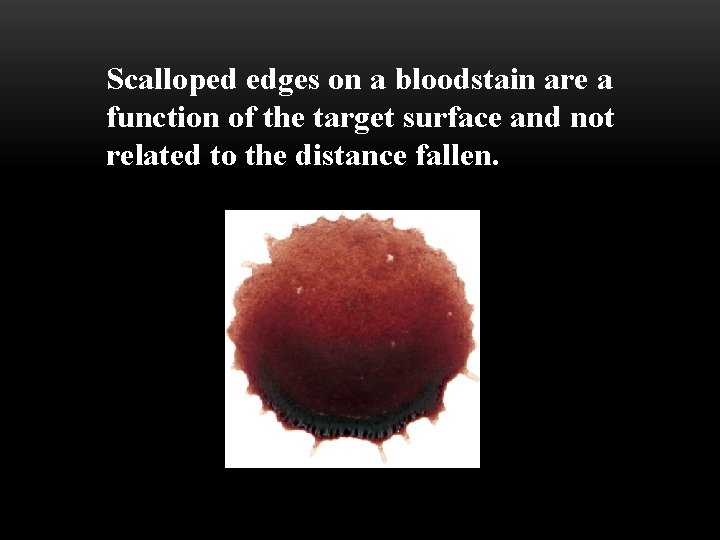
Scalloped edges on a bloodstain are a function of the target surface and not related to the distance fallen.
Should you be able to accurately determine the distance that a blood drop fell by measuring the diameter of a bloodstain at a crime scene?
- Slides: 13