
Blood Products and Bloodless Medicine Sujani Surakanti MD
Blood Products and Bloodless Medicine Sujani Surakanti, MD Duke University Hospital Medicine, Hematology, Medical Oncology
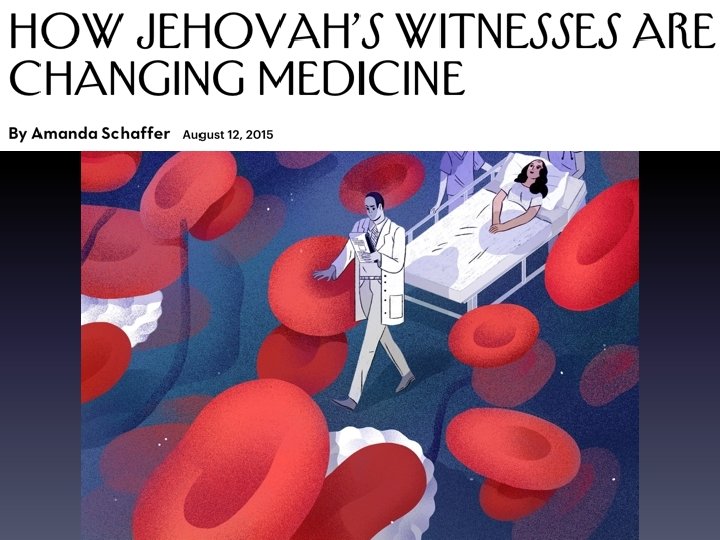
Bloodless Medicine • Objection to blood products – Religious – Personal • Challenges with taking blood products – Adverse reactions – Allo-antibodies
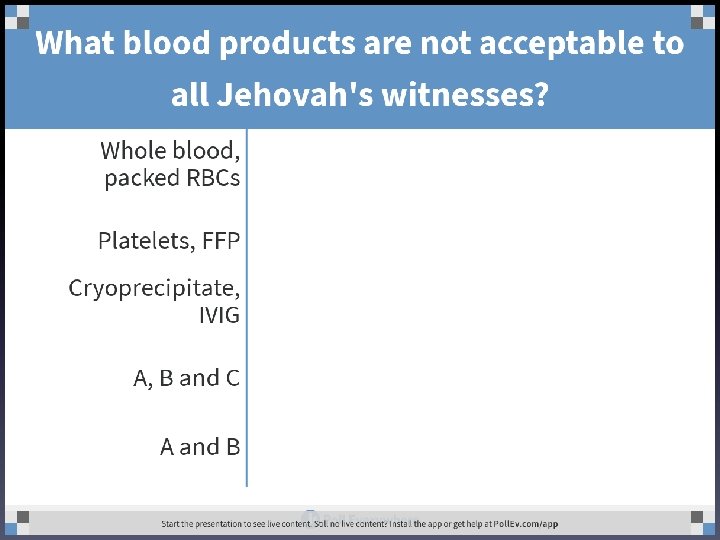
Question 1 What Blood Products are not acceptable to all Jehovah’s Witnesses? A. Whole Blood, Packed RBCs B. Platelets, FFP C. Cryoprecipitate, IVIG D. A, B, and C E. A and B
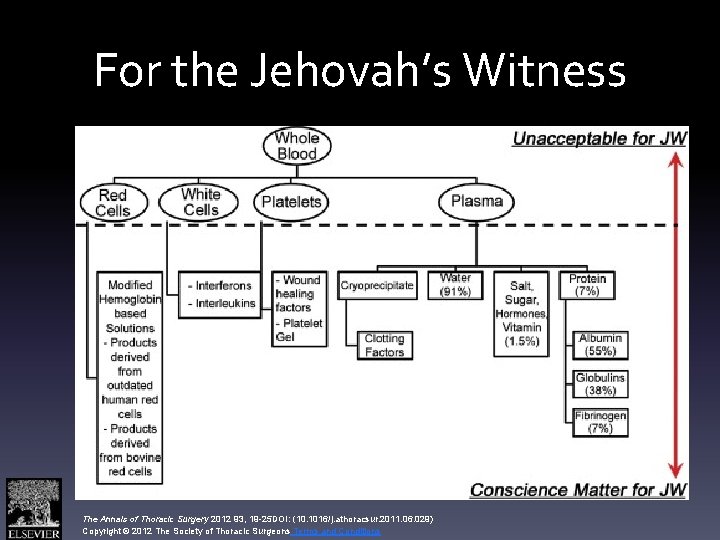
For the Jehovah’s Witness The Annals of Thoracic Surgery 2012 93, 19 -25 DOI: (10. 1016/j. athoracsur. 2011. 06. 029) Copyright © 2012 The Society of Thoracic Surgeons Terms and Conditions
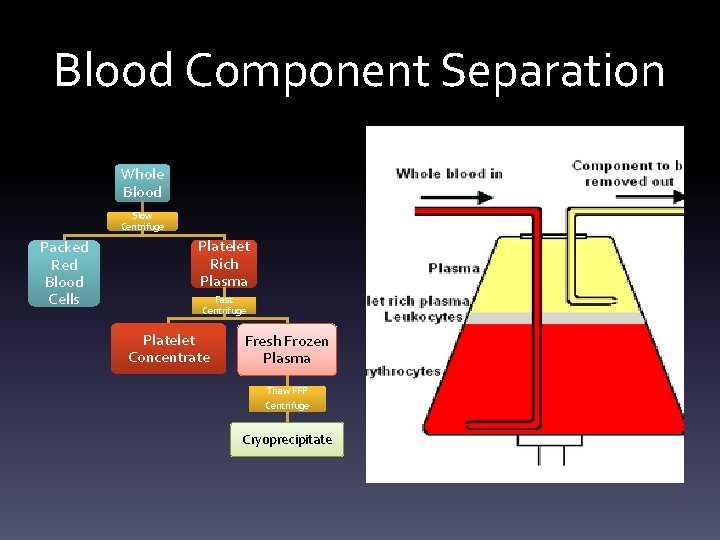
Blood Component Separation Apheresis for platelets or plasma. Whole Blood Slow Centrifuge Packed Red Blood Cells Platelet Rich Plasma Fast Centrifuge Platelet Concentrate Fresh Frozen Plasma Thaw FFP Centrifuge Cryoprecipitate
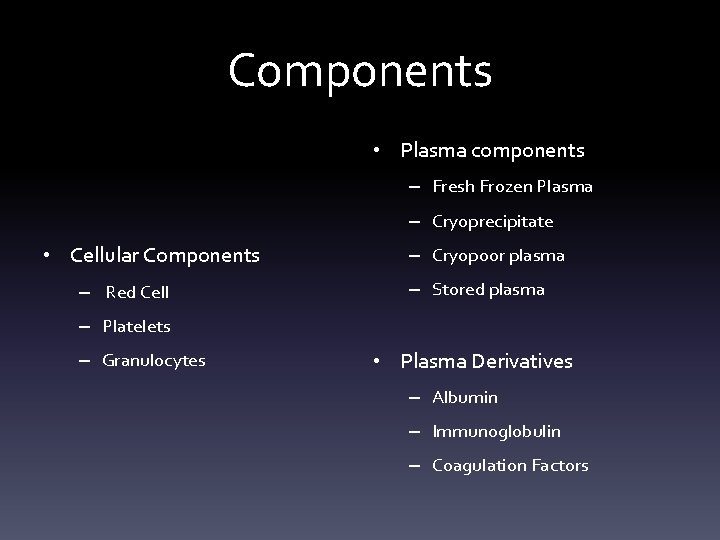
Components • Plasma components – Fresh Frozen Plasma – Cryoprecipitate • Cellular Components – Red Cell – Cryopoor plasma – Stored plasma – Platelets – Granulocytes • Plasma Derivatives – Albumin – Immunoglobulin – Coagulation Factors
Whole Blood • Unit 450 ml • No functional platelets • No labile coagulation factors • Rarely used (exception: massive transfusion protocol, acute trauma with blood loss)
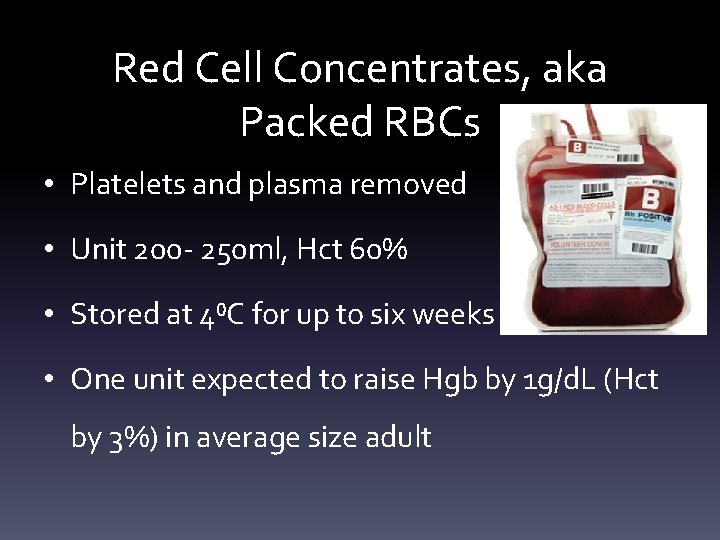
Red Cell Concentrates, aka Packed RBCs • Platelets and plasma removed • Unit 200 - 250 ml, Hct 60% • Stored at 4⁰C for up to six weeks • One unit expected to raise Hgb by 1 g/d. L (Hct by 3%) in average size adult
Packed Red Blood Cells • Indication: symptomatic anemia • Common triggers – Hgb < 7 mg/d. L or symptomatic – Hgb < 10 mg/d. L for cardiac or pulmonary disease – Hemorrhage with >30% total blood loss – Sickle cell anemia • Transfusion or exchange to decrease Hgb S <30%
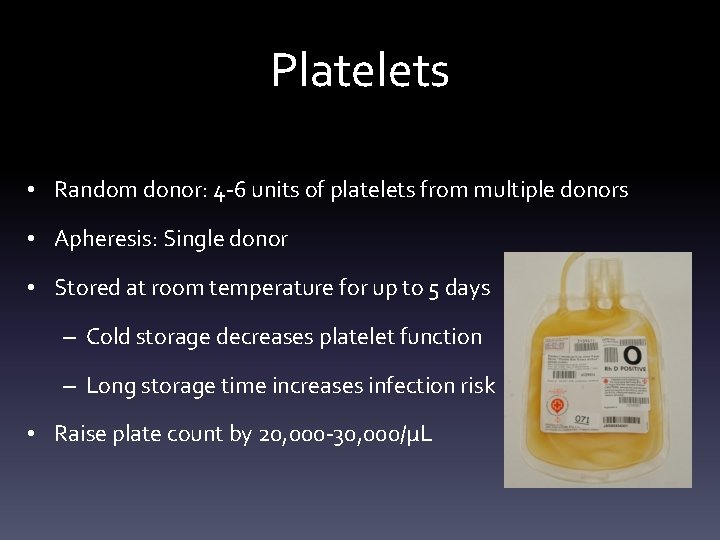
Platelets • Random donor: 4 -6 units of platelets from multiple donors • Apheresis: Single donor • Stored at room temperature for up to 5 days – Cold storage decreases platelet function – Long storage time increases infection risk • Raise plate count by 20, 000 -30, 000/µL

Platelets • Indications: decreased platelet count and/or function • Common triggers – Plts < 10, 000 – Plts < 20, 000 with fever or sepsis – Plts < 50, 000 prior to major surgery – Plts < 100, 000 prior to neurosurgery or ophthalmologic surgery – Active bleeding with known platelet dysfunction
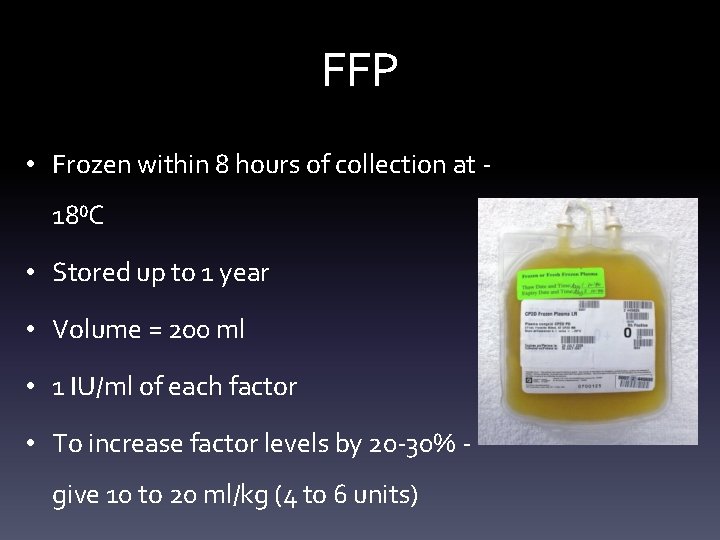
FFP • Frozen within 8 hours of collection at 18⁰C • Stored up to 1 year • Volume = 200 ml • 1 IU/ml of each factor • To increase factor levels by 20 -30% give 10 to 20 ml/kg (4 to 6 units)
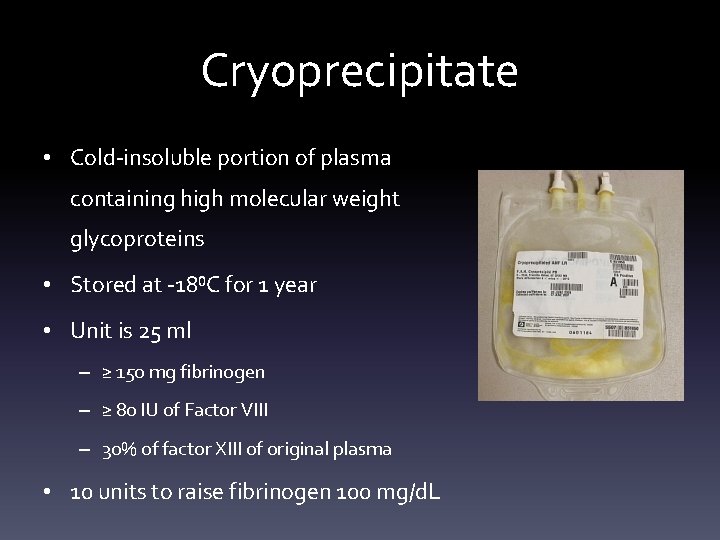
Cryoprecipitate • Cold-insoluble portion of plasma containing high molecular weight glycoproteins • Stored at -18⁰C for 1 year • Unit is 25 ml – ≥ 150 mg fibrinogen – ≥ 80 IU of Factor VIII – 30% of factor XIII of original plasma • 10 units to raise fibrinogen 100 mg/d. L
Cryoprecipitate • Indications: decreased or dysfunctional fibrinogen, v. WF, Factor XIII, Factor VIII • Common triggers – Fibrinogen < 100 mg/d. L – Dysfibrinogenemia – Factor XIII deficiency – Uremic platelet dysfunction with bleeding – v. WD if DDAVP contraindicated (type 2 B or type 3) and active bleeding
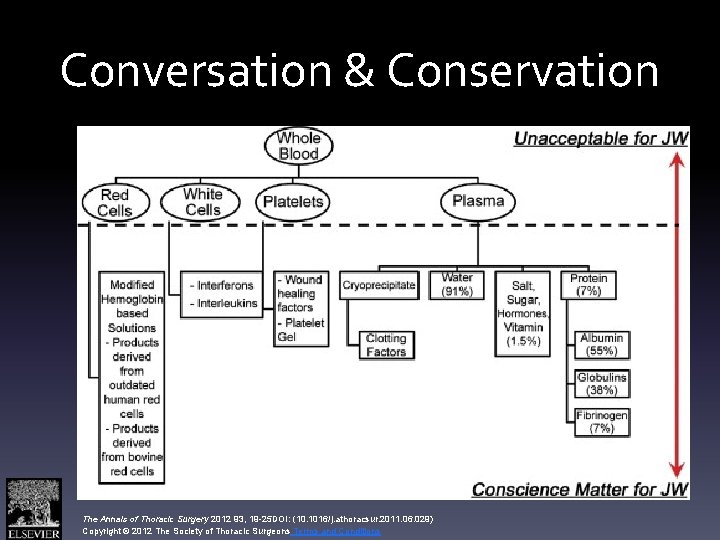
Conversation & Conservation The Annals of Thoracic Surgery 2012 93, 19 -25 DOI: (10. 1016/j. athoracsur. 2011. 06. 029) Copyright © 2012 The Society of Thoracic Surgeons Terms and Conditions
Blood Conservation • Blood conservation may provide particular benefit to: – Blood refusal patients – Patients with sickle cell disease or other hematologic disorders (hemolytic anemia) – Transplant recipients or patients waiting for transplants
Question 2 You are the nocturnist, called on a 32 yo female patient with vasoocclusive crisis with Hgb SS. A page from RN states that the patient developed a fever to 38. 1, hypotensive to 80/50, and severe respiratory distress with RR of 30/min and SPO 2 of 81%. Before going to evaluate you review her last progress note. Her baseline Hgb runs about 6 g/d. L. She has ongoing problems with iron deficiency from menorrhagia from multiple large uterine fibroids. Now during this admission, she is actively menstruating. Her hemoglobin dropped to 3 g/d. L and she was lethargic and dizzy. She was given her 1 U RBC earlier today, with improvement in symptoms. You go evaluate the patient and her sats continue to drop and her breathing is very labored.
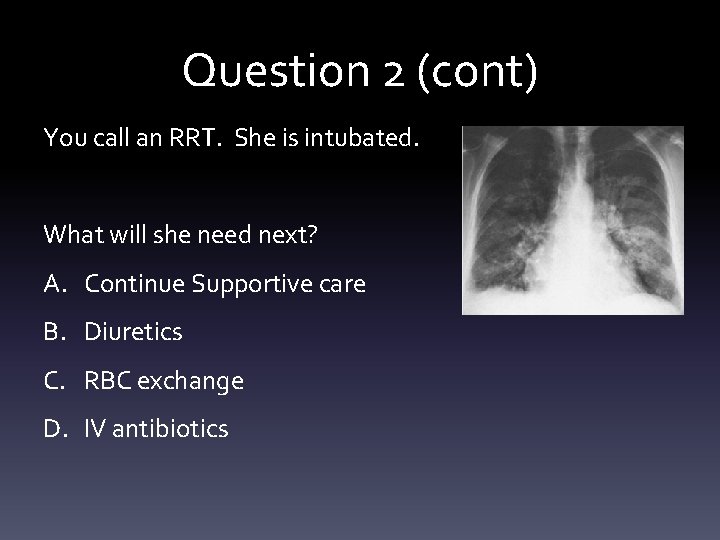
Question 2 (cont) You call an RRT. She is intubated. What will she need next? A. Continue Supportive care B. Diuretics C. RBC exchange D. IV antibiotics
Benefits of Transfusion Avoidance • Infectious risks • TRALI/ TACO • Immune suppression • Administration error/ transfusion reactions • Limited resource • Cost
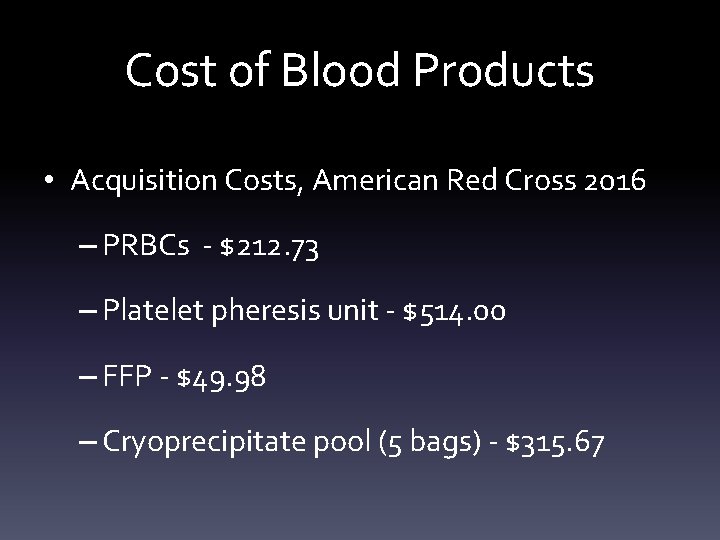
Cost of Blood Products • Acquisition Costs, American Red Cross 2016 – PRBCs - $212. 73 – Platelet pheresis unit - $514. 00 – FFP - $49. 98 – Cryoprecipitate pool (5 bags) - $315. 67
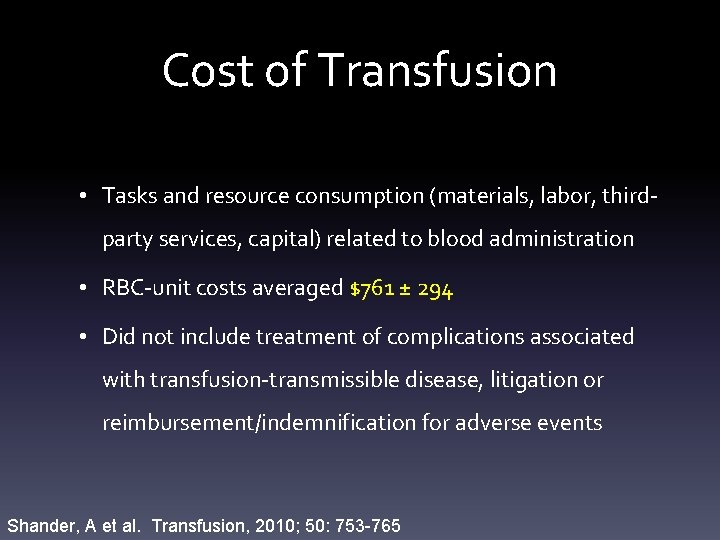
Cost of Transfusion • Tasks and resource consumption (materials, labor, thirdparty services, capital) related to blood administration • RBC-unit costs averaged $761 ± 294 • Did not include treatment of complications associated with transfusion-transmissible disease, litigation or reimbursement/indemnification for adverse events Shander, A et al. Transfusion, 2010; 50: 753 -765
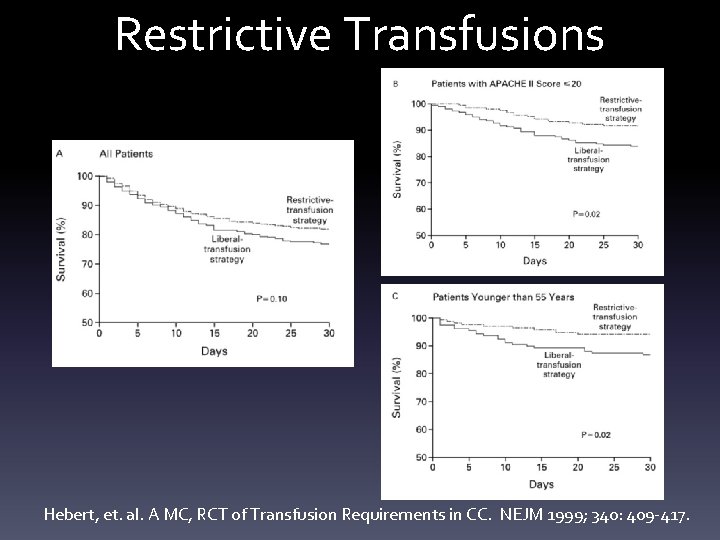
Restrictive Transfusions Hebert, et. al. A MC, RCT of Transfusion Requirements in CC. NEJM 1999; 340: 409 -417.

No GPS, Yet • Growing number of Bloodless Medicine and Surgery programs across the nation • No standard, established guidelines • Not many studies to inform optimal treatment
Common Methods • Minimizing lab testing • Low volume microtainers for phlebotomy • Tolerating lower Hgb levels • Dx and treat anemia and other cytopenias
Preoperative • Perform thorough history and physical exam to evaluate for potential causes of anemia or blood loss – Referral back to PCP or GI for colonoscopy if suspected GI bleed (iron deficiency) – Hematology referral for complex anemia (hemolysis, neutropenia or thrombocytopenia, etc) • Delay surgery to allow for treatment of anemia – Early evaluation • Hold anticoagulants appropriately – Consultation of cardiologist, neurologist as needed
Intraoperative Treatment • Surgical techniques – Minimally invasive techniques, tissue coagulants, minimize cooling – Ensure “maximum hemostasis” • Perfusion Techniques – RAP, smaller circuit volume • Normovolemic hemodilution • Cell salvage • Pharmacotherapy (DDAVP, Antifibrinolytics, etc) • Minimize crystalloid – Hemodilution of clotting factors
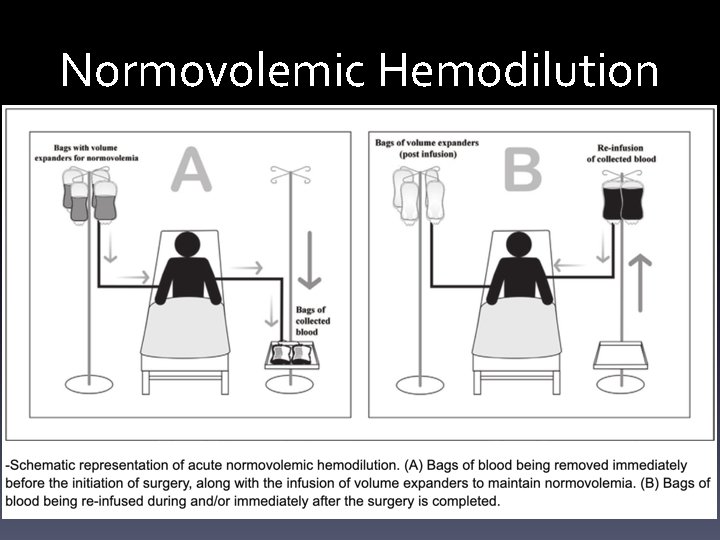
Normovolemic Hemodilution
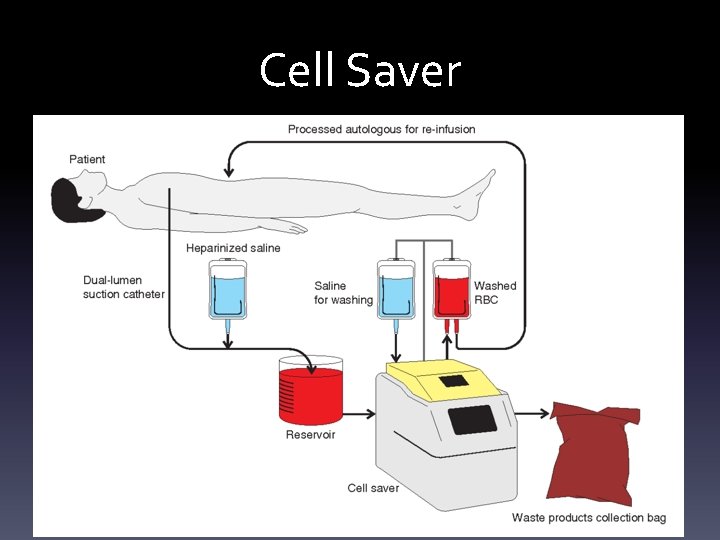
Cell Saver
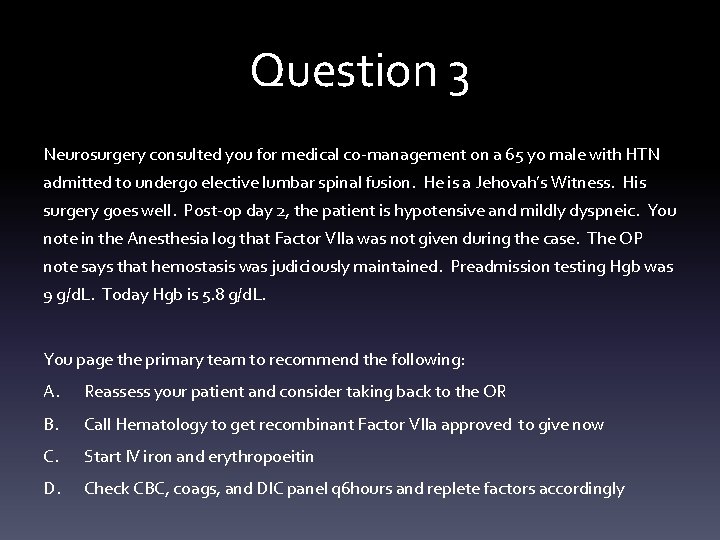
Question 3 Neurosurgery consulted you for medical co-management on a 65 yo male with HTN admitted to undergo elective lumbar spinal fusion. He is a Jehovah’s Witness. His surgery goes well. Post-op day 2, the patient is hypotensive and mildly dyspneic. You note in the Anesthesia log that Factor VIIa was not given during the case. The OP note says that hemostasis was judiciously maintained. Preadmission testing Hgb was 9 g/d. L. Today Hgb is 5. 8 g/d. L. You page the primary team to recommend the following: A. Reassess your patient and consider taking back to the OR B. Call Hematology to get recombinant Factor VIIa approved to give now C. Start IV iron and erythropoeitin D. Check CBC, coags, and DIC panel q 6 hours and replete factors accordingly
Postoperative • Early recognition of surgical bleeding – Low tolerance to re-operate • Labs to recognize and correct coagulopathy, point-ofcare testing – ACT (inadequate heparin reversal), TEG/ ROTEM • Minimize blood draws • Minimize myocardial demand • Tolerance of anemia
Optimizing Coagulation • Assess for coagulopathy early – Utilize point-of-care tests (ROTEM) – By avoiding/ treating coagulopathy may transfuse less total products overall • Minimize hemodilution of platelets and clotting factors – (For massive transfusion, aim for 1: 1: 1 ratio to mimic whole blood) • Pharmacotherapy – Prevent fibrinolysis, improve platelet function, provide clotting factors
Pharmacotherapy Preoperative • IV or oral Iron • B 12, folate • ESAs • If v. WD: • Desmopressin (DDAVP) • cryoprecipitate Humate-P Perioperative • Tranexamic acid • Epsilon aminocaproic acid • Recombinant factor VIIa • Prothrombin complex concentrate (ex: Kcentra) • Calcium (optimize ionized calcium 1. 2 -1. 3)
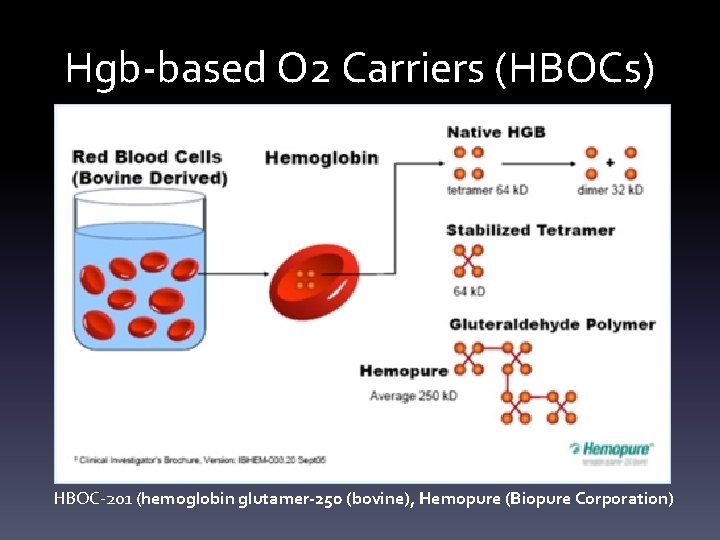
Hgb-based O 2 Carriers (HBOCs) HBOC-201 (hemoglobin glutamer-250 (bovine), Hemopure (Biopure Corporation)
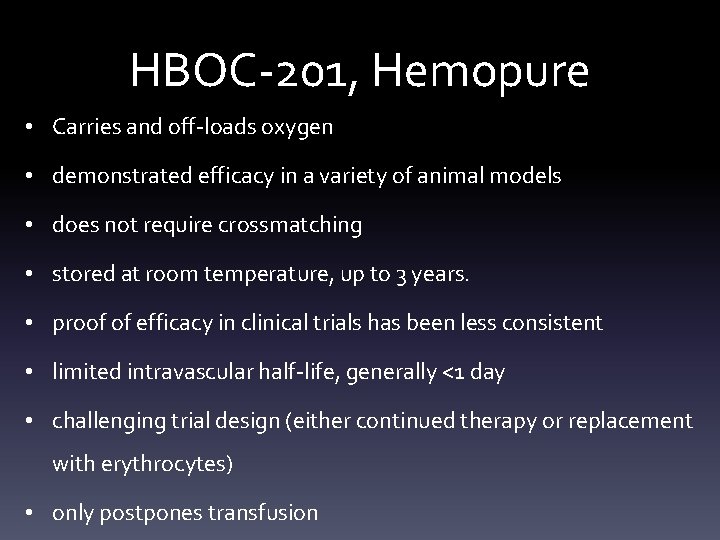
HBOC-201, Hemopure • Carries and off-loads oxygen • demonstrated efficacy in a variety of animal models • does not require crossmatching • stored at room temperature, up to 3 years. • proof of efficacy in clinical trials has been less consistent • limited intravascular half-life, generally <1 day • challenging trial design (either continued therapy or replacement with erythrocytes) • only postpones transfusion
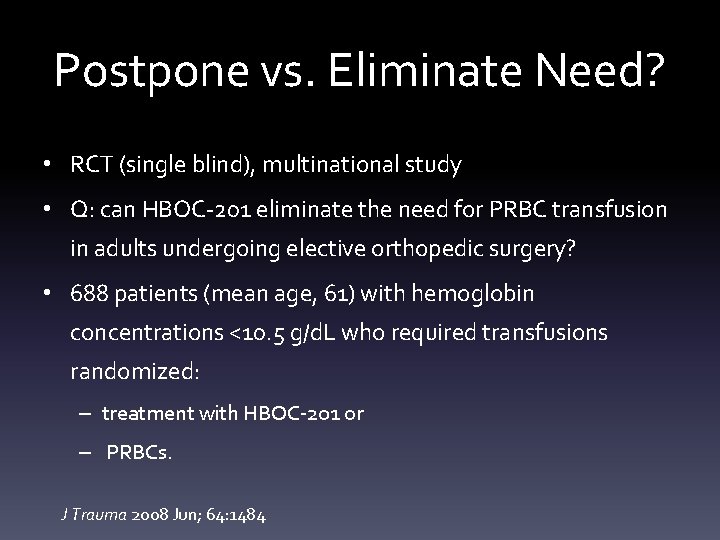
Postpone vs. Eliminate Need? • RCT (single blind), multinational study • Q: can HBOC-201 eliminate the need for PRBC transfusion in adults undergoing elective orthopedic surgery? • 688 patients (mean age, 61) with hemoglobin concentrations <10. 5 g/d. L who required transfusions randomized: – treatment with HBOC-201 or – PRBCs. J Trauma 2008 Jun; 64: 1484
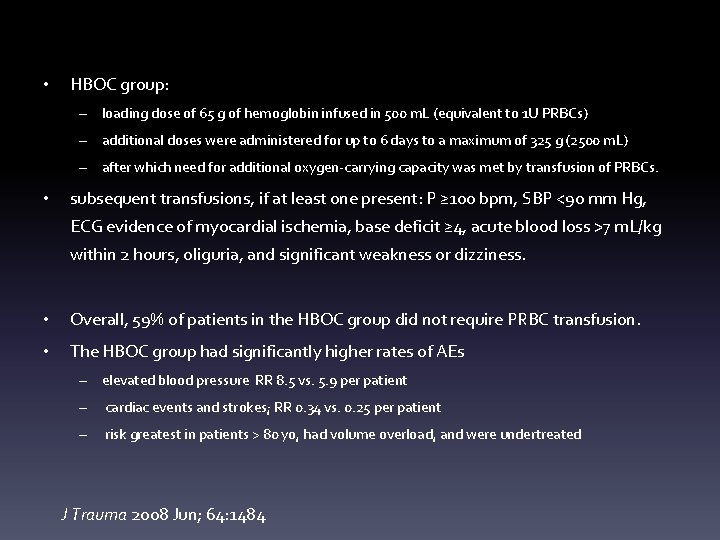
• HBOC group: – loading dose of 65 g of hemoglobin infused in 500 m. L (equivalent to 1 U PRBCs) – additional doses were administered for up to 6 days to a maximum of 325 g (2500 m. L) – after which need for additional oxygen-carrying capacity was met by transfusion of PRBCs. • subsequent transfusions, if at least one present: P ≥ 100 bpm, SBP <90 mm Hg, ECG evidence of myocardial ischemia, base deficit ≥ 4, acute blood loss >7 m. L/kg within 2 hours, oliguria, and significant weakness or dizziness. • Overall, 59% of patients in the HBOC group did not require PRBC transfusion. • The HBOC group had significantly higher rates of AEs – elevated blood pressure RR 8. 5 vs. 5. 9 per patient – cardiac events and strokes; RR 0. 34 vs. 0. 25 per patient – risk greatest in patients > 80 yo, had volume overload, and were undertreated J Trauma 2008 Jun; 64: 1484
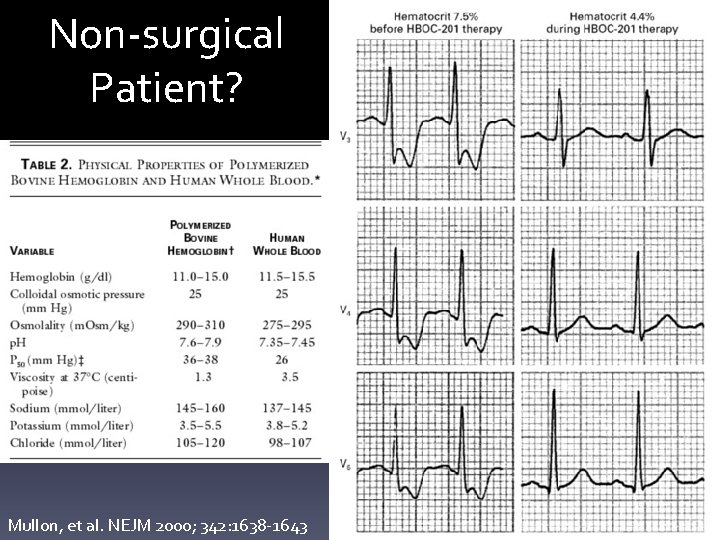
Non-surgical Patient? Mullon, et al. NEJM 2000; 342: 1638 -1643
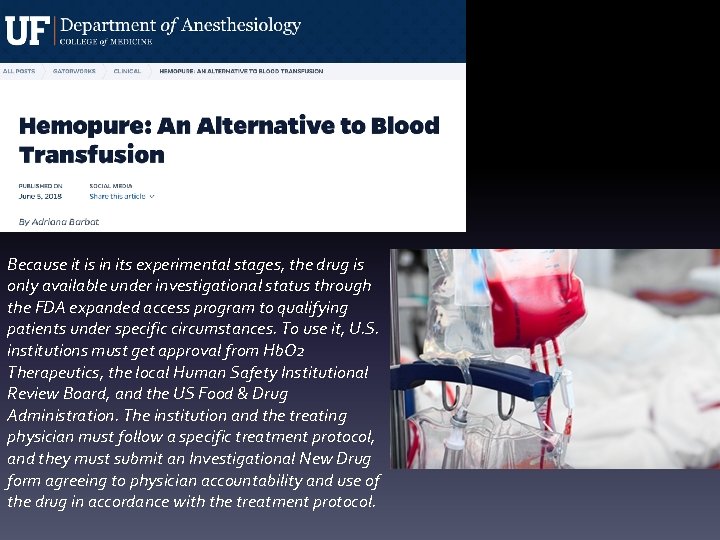
Because it is in its experimental stages, the drug is only available under investigational status through the FDA expanded access program to qualifying patients under specific circumstances. To use it, U. S. institutions must get approval from Hb. O 2 Therapeutics, the local Human Safety Institutional Review Board, and the US Food & Drug Administration. The institution and the treating physician must follow a specific treatment protocol, and they must submit an Investigational New Drug form agreeing to physician accountability and use of the drug in accordance with the treatment protocol.


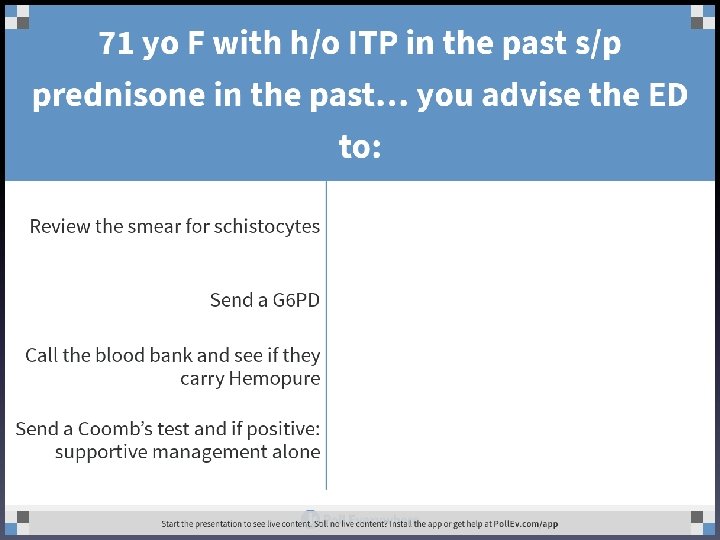
Question 4 Your work day today includes seeing new admits to a rehab center. You see a 71 yo female with h/o ITP s/p prednisone in past. She was recently given IVIG as an inpatient with good response to her platelet count, now about 50 K. PT and OT consulted and suggested rehab given ongoing steroid myopathy and general weakness from prior treatments. When you see her at rehab, she is icteric and Hgb is 5 and has dropped by 3 g/d. L in last 24 hours. Platelets are about 40 K and she has no active sign of bleeding. You arrange for transport to ED with plans for transfusion, but in ED she refuses a transfusion and is quite disagreeable. She says she is “done with blood products. ” The ED calls you saying they don’t see the point of admission and plan to let her discharge AMA, unless rehab will take her back in this state. You state that she should still be admitted. You advise the ED to: A. Review the smear for shistocytes, this now looks more like TTP B. Send a G 6 PD C. Call the blood bank and see if they carry Hemopure D. Send a Coomb’s test and if positive: supportive management alone
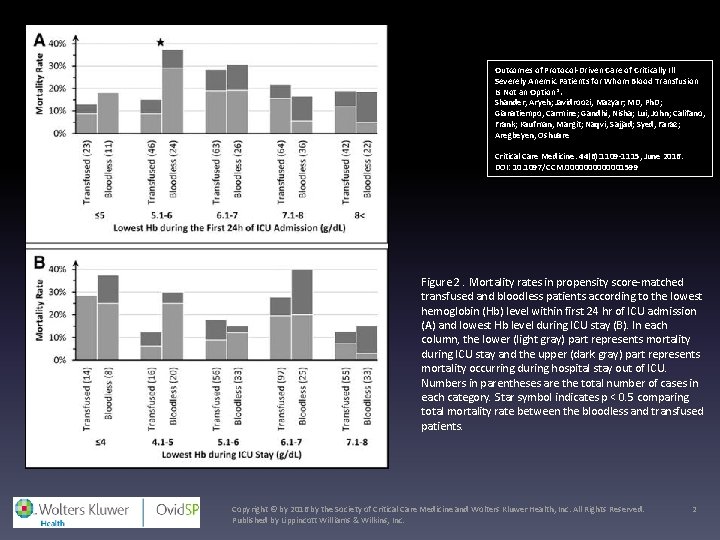
Outcomes of Protocol-Driven Care of Critically Ill Severely Anemic Patients for Whom Blood Transfusion Is Not an Option*. Shander, Aryeh; Javidroozi, Mazyar; MD, Ph. D; Gianatiempo, Carmine; Gandhi, Nisha; Lui, John; Califano, Frank; Kaufman, Margit; Naqvi, Sajjad; Syed, Faraz; Aregbeyen, Oshuare Critical Care Medicine. 44(6): 1109 -1115, June 2016. DOI: 10. 1097/CCM. 0000001599 Figure 2. Mortality rates in propensity score-matched transfused and bloodless patients according to the lowest hemoglobin (Hb) level within first 24 hr of ICU admission (A) and lowest Hb level during ICU stay (B). In each column, the lower (light gray) part represents mortality during ICU stay and the upper (dark gray) part represents mortality occurring during hospital stay out of ICU. Numbers in parentheses are the total number of cases in each category. Star symbol indicates p < 0. 5 comparing total mortality rate between the bloodless and transfused patients. Copyright © by 2016 by the Society of Critical Care Medicine and Wolters Kluwer Health, Inc. All Rights Reserved. Published by Lippincott Williams & Wilkins, Inc. 2
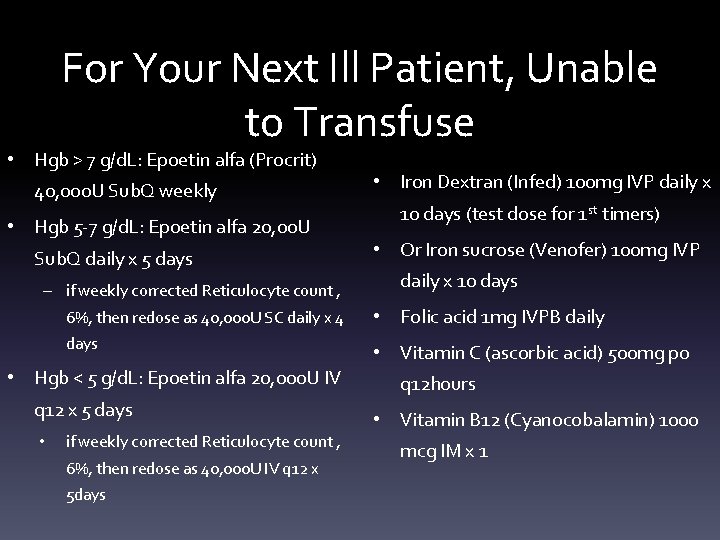
For Your Next Ill Patient, Unable to Transfuse • Hgb > 7 g/d. L: Epoetin alfa (Procrit) 40, 000 U Sub. Q weekly • Hgb 5 -7 g/d. L: Epoetin alfa 20, 00 U Sub. Q daily x 5 days – if weekly corrected Reticulocyte count , 10 days (test dose for 1 st timers) • Or Iron sucrose (Venofer) 100 mg IVP daily x 10 days 6%, then redose as 40, 000 U SC daily x 4 • Folic acid 1 mg IVPB daily days • Vitamin C (ascorbic acid) 500 mg po • Hgb < 5 g/d. L: Epoetin alfa 20, 000 U IV q 12 x 5 days • • Iron Dextran (Infed) 100 mg IVP daily x if weekly corrected Reticulocyte count , 6%, then redose as 40, 000 U IV q 12 x 5 days q 12 hours • Vitamin B 12 (Cyanocobalamin) 1000 mcg IM x 1
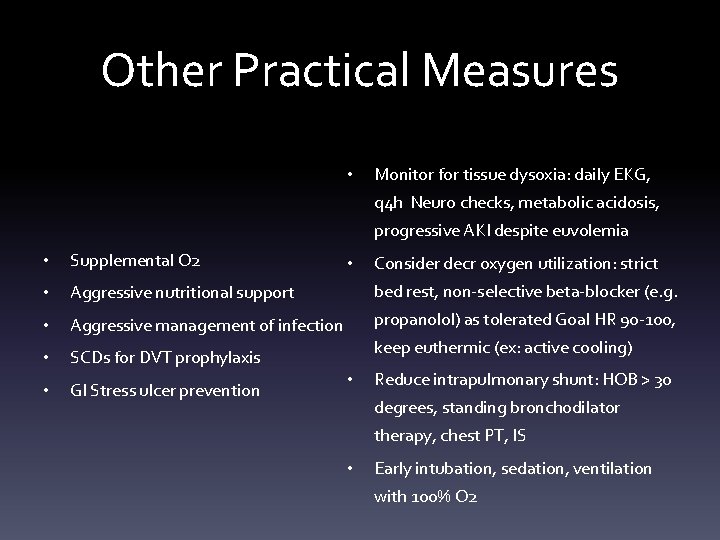
Other Practical Measures • Monitor for tissue dysoxia: daily EKG, q 4 h Neuro checks, metabolic acidosis, progressive AKI despite euvolemia • Supplemental O 2 • Aggressive nutritional support bed rest, non-selective beta-blocker (e. g. • Aggressive management of infection propanolol) as tolerated Goal HR 90 -100, • SCDs for DVT prophylaxis • GI Stress ulcer prevention • Consider decr oxygen utilization: strict keep euthermic (ex: active cooling) • Reduce intrapulmonary shunt: HOB > 30 degrees, standing bronchodilator therapy, chest PT, IS • Early intubation, sedation, ventilation with 100% O 2
- Slides: 51