
Blood Pressure Update Treat the Patient Not the
Blood Pressure Update: Treat the Patient, Not the Population Kenyon Railey, MD
Disclosure Statement � Dr. Railey has no relevant financial or nonfinancial relationships to disclose. CAP = Clinical Application Point i. e. Good Habit If you see the CAP, pay attention! � This practical tool or tip can help you improve outcomes in your practice and community. �
Lecture Objectives • • Describe the epidemiology of hypertension and discuss populations most at risk for the consequences of hypertensive disease. Explore potential contributors to disparities in cardiovascular disease, specifically highlighting barriers to care. Improve competence and performance in the diagnosis of hypertension. Review secondary causes of hypertension and falsely elevated blood pressures in clinical settings. Review and contrast current guidelines for treatment of hypertension Explore non pharmacological treatments for high blood pressures and practical strategies for implementation in patients. Explore specific tools that enhance the provider’s ability to provide culturally competent care for patients with HTN.
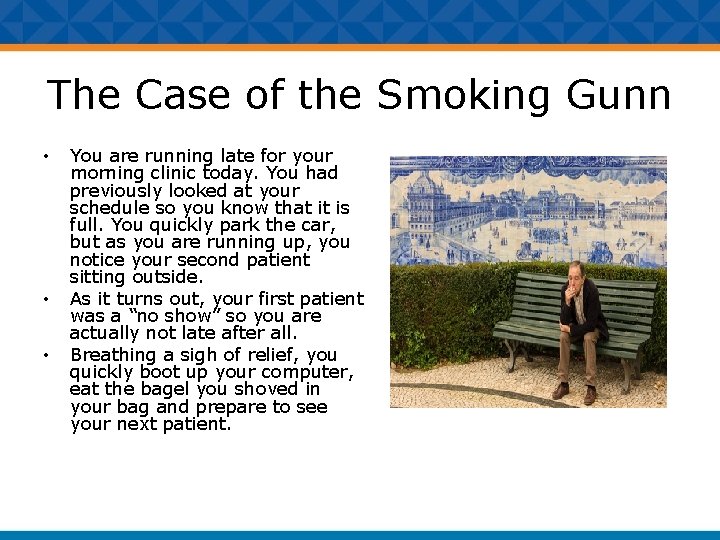
The Case of the Smoking Gunn • • • You are running late for your morning clinic today. You had previously looked at your schedule so you know that it is full. You quickly park the car, but as you are running up, you notice your second patient sitting outside. As it turns out, your first patient was a “no show” so you are actually not late after all. Breathing a sigh of relief, you quickly boot up your computer, eat the bagel you shoved in your bag and prepare to see your next patient.
Jason Gunn • Its 8: 15 AM now and you have just seen Jason Gunn, your 45 year old male patient, that you saw smoking outside. • His last visit was 7 months ago and he has not seen anyone since then. • He is here for follow up of his high blood pressure and refills. He is currently having no issues or problems. He doesn’t check his blood pressure at home. He took his medications before he drove to the appointment. He takes Lisinopril and HCTZ. • Reviewing his social history, you see that he has been smoking a pack per day for 20 years. • His blood pressure today is 140/90. PE is normal. • What do you do?
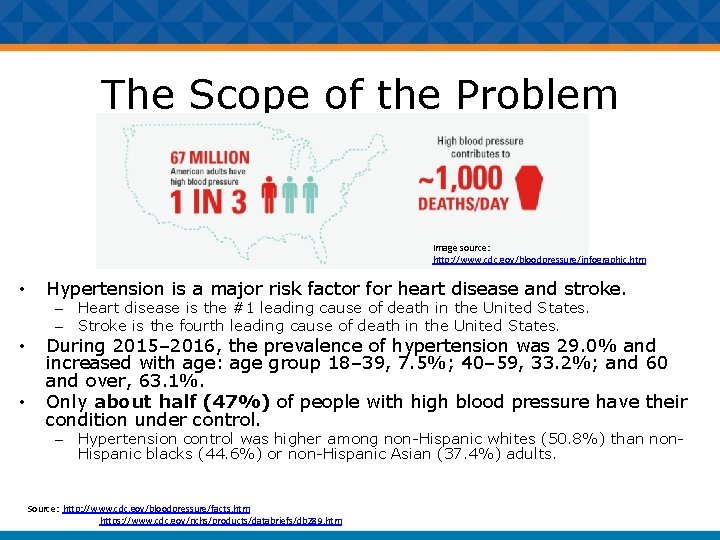
The Scope of the Problem Image source: http: //www. cdc. gov/bloodpressure/infographic. htm • Hypertension is a major risk factor for heart disease and stroke. • During 2015– 2016, the prevalence of hypertension was 29. 0% and increased with age: age group 18– 39, 7. 5%; 40– 59, 33. 2%; and 60 and over, 63. 1%. Only about half (47%) of people with high blood pressure have their condition under control. • – Heart disease is the #1 leading cause of death in the United States. – Stroke is the fourth leading cause of death in the United States. – Hypertension control was higher among non-Hispanic whites (50. 8%) than non. Hispanic blacks (44. 6%) or non-Hispanic Asian (37. 4%) adults. Source: http: //www. cdc. gov/bloodpressure/facts. htm https: //www. cdc. gov/nchs/products/databriefs/db 289. htm
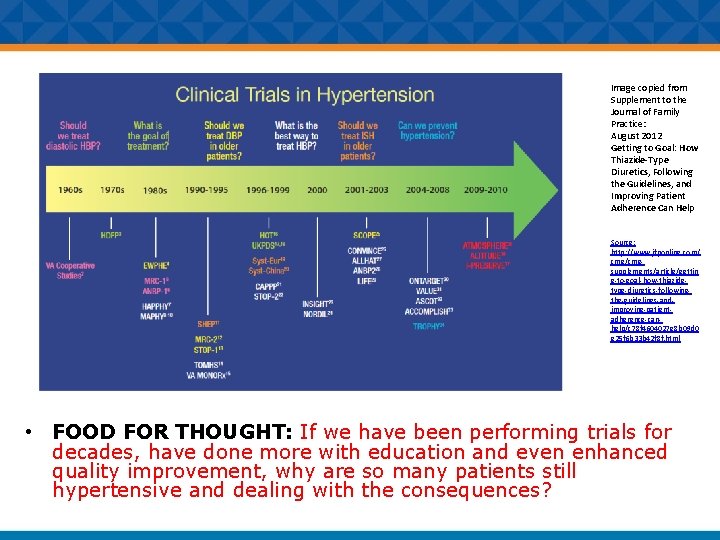
Image copied from Supplement to the Journal of Family Practice: August 2012 Getting to Goal: How Thiazide-Type Diuretics, Following the Guidelines, and Improving Patient Adherence Can Help Source: http: //www. jfponline. com/ cme/cmesupplements/article/gettin g-to-goal-how-thiazidetype-diuretics-followingthe-guidelines-andimproving-patientadherence-canhelp/c 78 f 4604027 e 8 b 09 d 0 e 25 f 6 b 33 b 42 f 8 f. html • FOOD FOR THOUGHT: If we have been performing trials for decades, have done more with education and even enhanced quality improvement, why are so many patients still hypertensive and dealing with the consequences?
Barriers to Blood Pressure Control • System Barriers • Patient-Related Barriers • Provider-Related Barriers
System Related Barriers • Perhaps not as big a factor as we may assume. • Most patients with uncontrolled hypertension have good access to care. • There are few significant differences between groups regarding knowledge about risks of hypertension. • Challenges remain based on: • • • Lack of access to care High cost of medications High copayments Absence of clinical decision support systems Conflicting reports or research
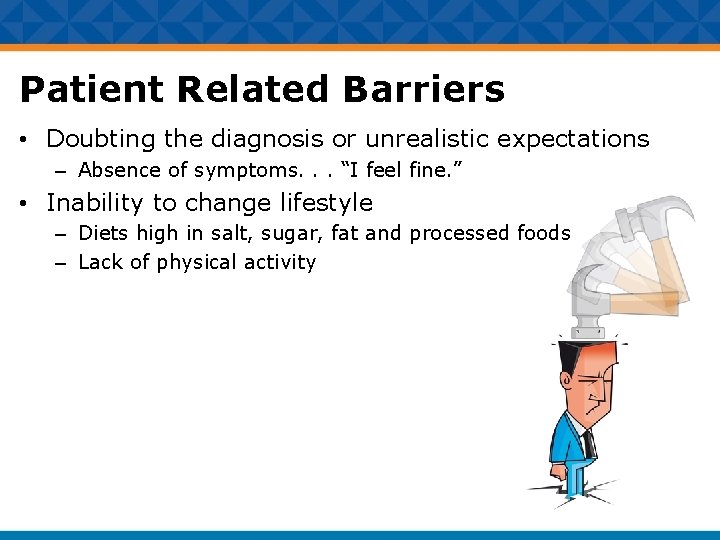
Patient Related Barriers • Doubting the diagnosis or unrealistic expectations – Absence of symptoms. . . “I feel fine. ” • Inability to change lifestyle – Diets high in salt, sugar, fat and processed foods – Lack of physical activity
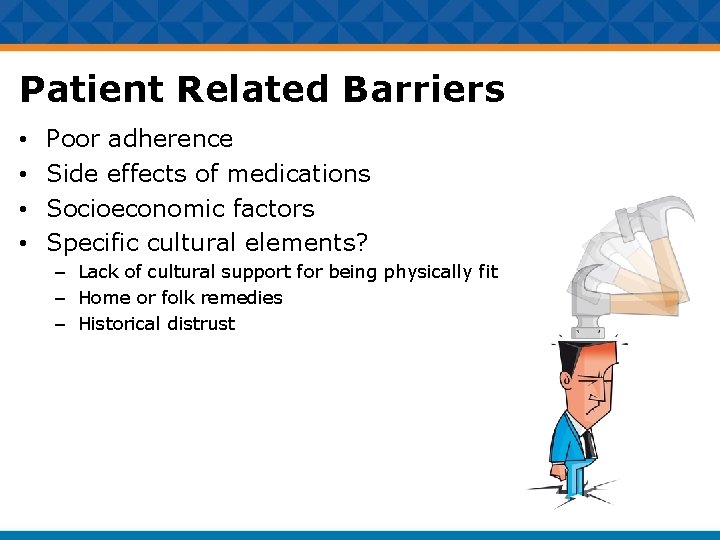
Patient Related Barriers • • Poor adherence Side effects of medications Socioeconomic factors Specific cultural elements? – Lack of cultural support for being physically fit – Home or folk remedies – Historical distrust
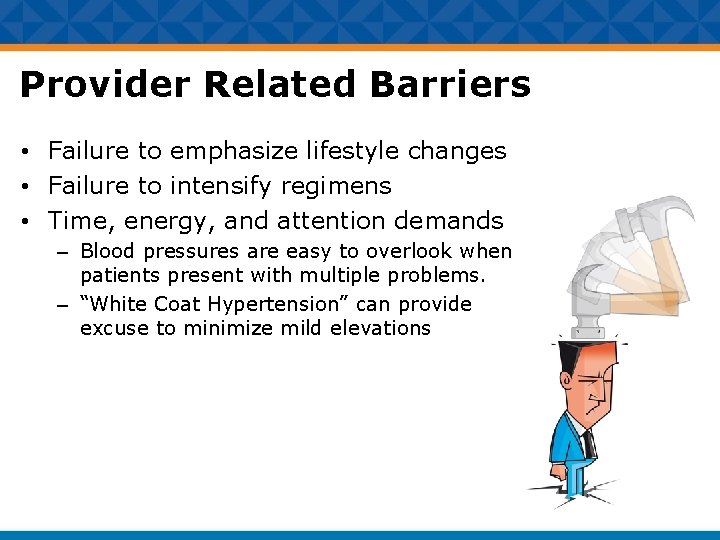
Provider Related Barriers • Failure to emphasize lifestyle changes • Failure to intensify regimens • Time, energy, and attention demands – Blood pressures are easy to overlook when patients present with multiple problems. – “White Coat Hypertension” can provide excuse to minimize mild elevations
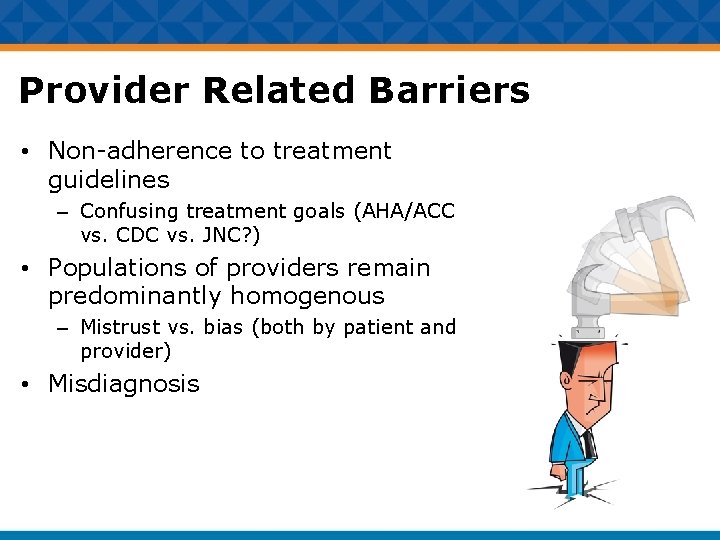
Provider Related Barriers • Non-adherence to treatment guidelines – Confusing treatment goals (AHA/ACC vs. CDC vs. JNC? ) • Populations of providers remain predominantly homogenous – Mistrust vs. bias (both by patient and provider) • Misdiagnosis
Simple diagnosis. . . right? • Who do we screen? • How do we screen? • What are the cut offs for diagnosis?
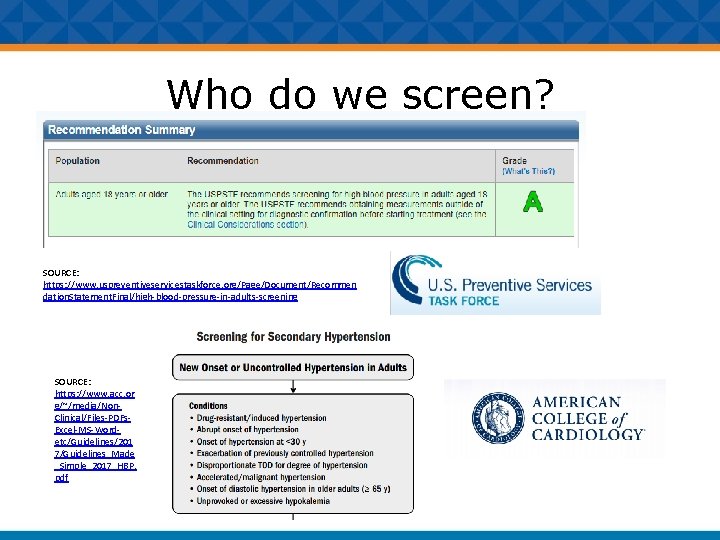
Who do we screen? SOURCE: https: //www. uspreventiveservicestaskforce. org/Page/Document/Recommen dation. Statement. Final/high-blood-pressure-in-adults-screening SOURCE: https: //www. acc. or g/~/media/Non. Clinical/Files-PDFs. Excel-MS-Wordetc/Guidelines/201 7/Guidelines_Made _Simple_2017_HBP. pdf
How do we screen? • Accurate measurement of blood pressure is the first step of successful management. • Equipment should be regularly inspected and validated. – Including ambulatory blood pressure monitors. • Technique is important. • Patient must be properly prepared and positioned.
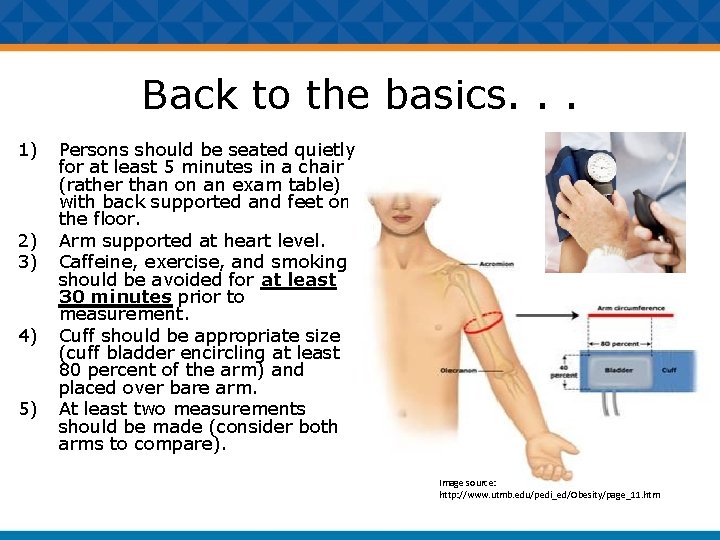
Back to the basics. . . 1) 2) 3) 4) 5) Persons should be seated quietly for at least 5 minutes in a chair (rather than on an exam table) with back supported and feet on the floor. Arm supported at heart level. Caffeine, exercise, and smoking should be avoided for at least 30 minutes prior to measurement. Cuff should be appropriate size (cuff bladder encircling at least 80 percent of the arm) and placed over bare arm. At least two measurements should be made (consider both arms to compare). Image source: http: //www. utmb. edu/pedi_ed/Obesity/page_11. htm
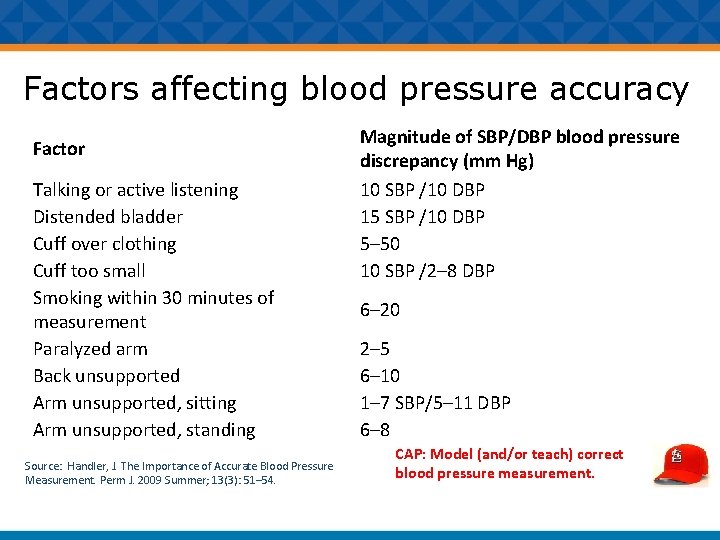
Factors affecting blood pressure accuracy Factor Talking or active listening Distended bladder Cuff over clothing Cuff too small Smoking within 30 minutes of measurement Paralyzed arm Back unsupported Arm unsupported, sitting Arm unsupported, standing Source: Handler, J. The Importance of Accurate Blood Pressure Measurement. Perm J. 2009 Summer; 13(3): 51– 54. Magnitude of SBP/DBP blood pressure discrepancy (mm Hg) 10 SBP /10 DBP 15 SBP /10 DBP 5– 50 10 SBP /2– 8 DBP 6– 20 2– 5 6– 10 1– 7 SBP/5– 11 DBP 6– 8 CAP: Model (and/or teach) correct blood pressure measurement.
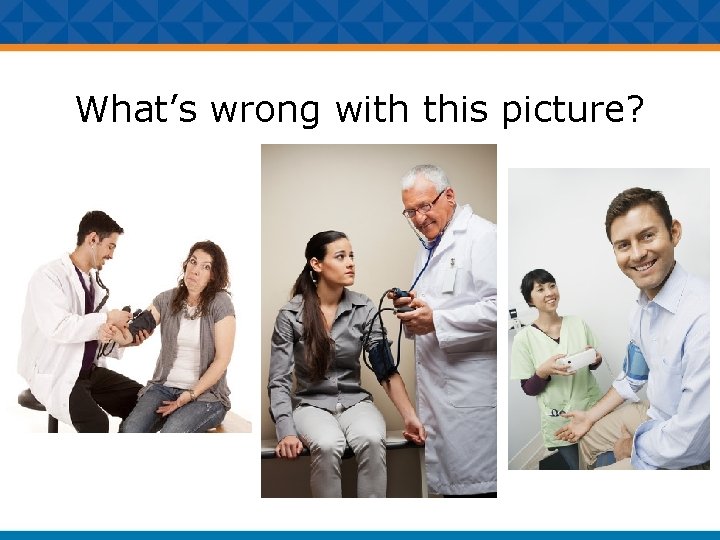
What’s wrong with this picture?
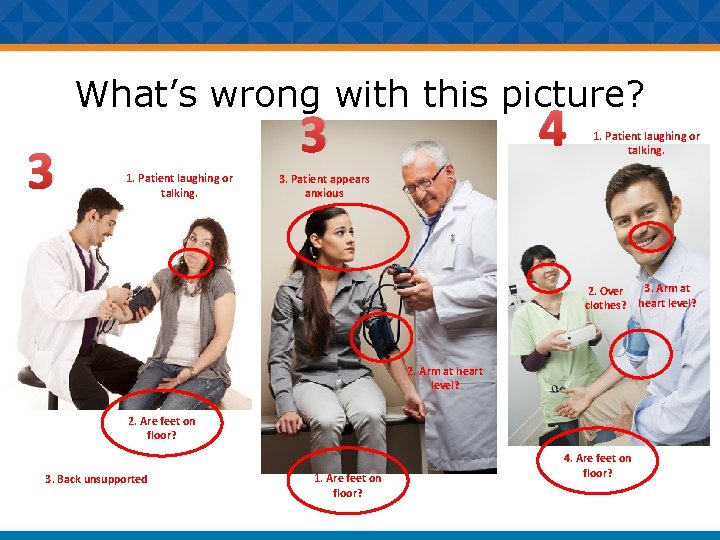
What’s wrong with this picture? 3 4 3 1. Patient laughing or talking. 3. Patient appears anxious 3. Arm at 2. Over heart level? clothes? 2. Arm at heart level? 2. Are feet on floor? 3. Back unsupported 1. Are feet on floor? 4. Are feet on floor?
Ambulatory Blood Pressure Monitoring (ABPM) • Can be used to supplement BP readings obtained in office settings. • ABPM conducted while individuals go about their normal daily activities – Monitors are usually programmed to obtain readings every 15 to 30 minutes throughout the day and every 15 minutes to 1 hour during the night. • The U. S. Centers for Medicaid & Medicare Services and other agencies provide reimbursement for ABPM in patients with suspected white coat hypertension. – In a 2014 study analyzing ABPM claims from 2007 -2010, ABPM was reimbursed for 93. 8% of claims that had an ICD-9 diagnosis code of 796. 2 (“elevated blood pressure reading without diagnosis of hypertension”) versus 28. 5% of claims without this code. – SOURCE: https: //www. ncbi. nlm. nih. gov/pmc/articles/PMC 4262764/
Home Blood Pressure Monitoring • • • Out-of-office measurement of BP can be helpful for confirmation and management of hypertension. If self-monitoring is used, it is important to ensure that the BP measurement device used has been validated with an internationally accepted protocol and the results have been published in a peer reviewed journal. According to ACC/AHA guidelines: – “Take multiple readings: Take at least 2 readings 1 min apart in morning before taking medications and in evening before supper. Optimally, measure and record BP daily. Ideally, obtain weekly BP readings beginning 2 weeks after a change in the treatment regimen and during the week before a clinic visit. ” • One study suggests a minimum number of 5 days of duplicate sets of measurements, which is a reliable estimate of a patient's usual BP that correlates with 24 -hour ABPM. • A 2018 study analyzing 316 adults not taking medications recommended 3 days of home blood pressure tests to reliability estimate mean home BP and diagnose out of clinic HTN.
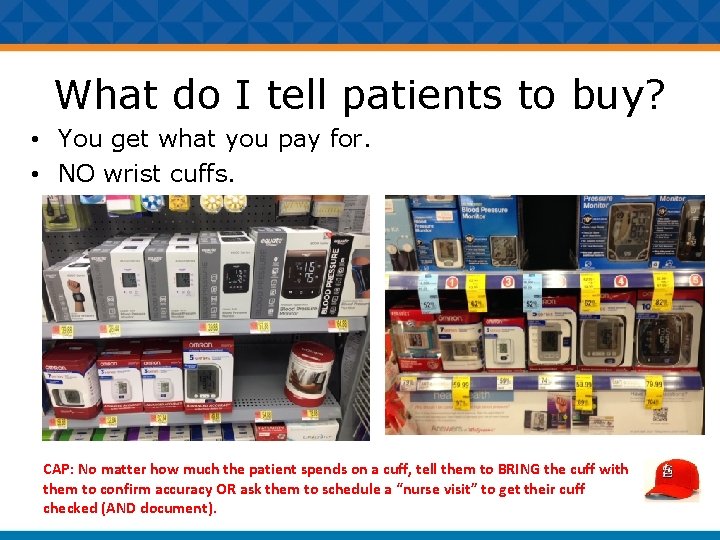
What do I tell patients to buy? • You get what you pay for. • NO wrist cuffs. CAP: No matter how much the patient spends on a cuff, tell them to BRING the cuff with them to confirm accuracy OR ask them to schedule a “nurse visit” to get their cuff checked (AND document).
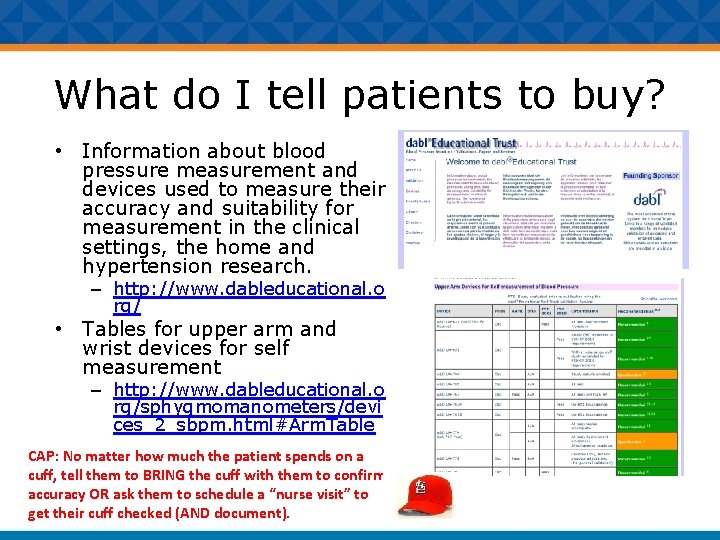
What do I tell patients to buy? • Information about blood pressure measurement and devices used to measure their accuracy and suitability for measurement in the clinical settings, the home and hypertension research. – http: //www. dableducational. o rg/ • Tables for upper arm and wrist devices for self measurement – http: //www. dableducational. o rg/sphygmomanometers/devi ces_2_sbpm. html#Arm. Table CAP: No matter how much the patient spends on a cuff, tell them to BRING the cuff with them to confirm accuracy OR ask them to schedule a “nurse visit” to get their cuff checked (AND document).
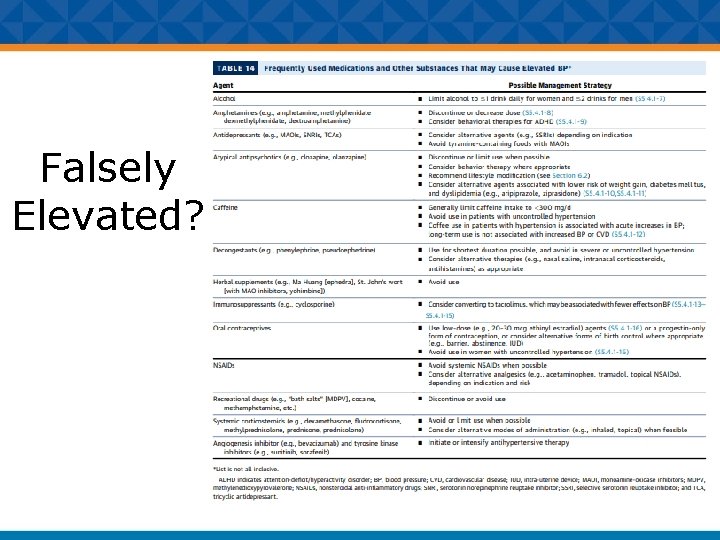
Falsely Elevated?
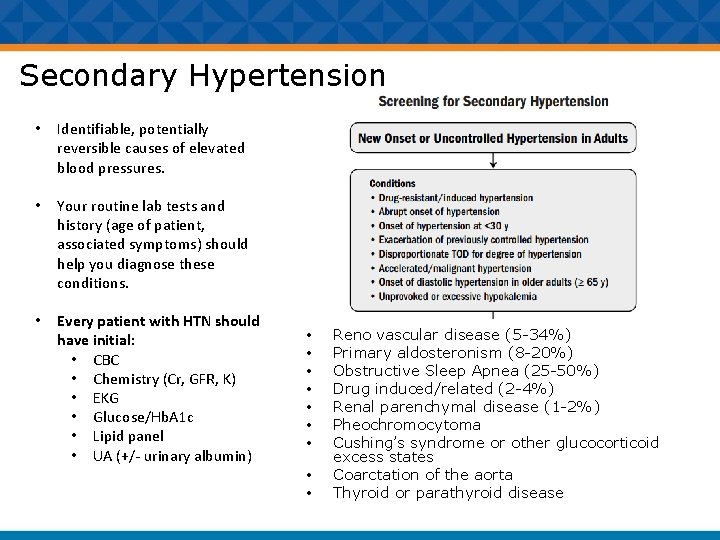
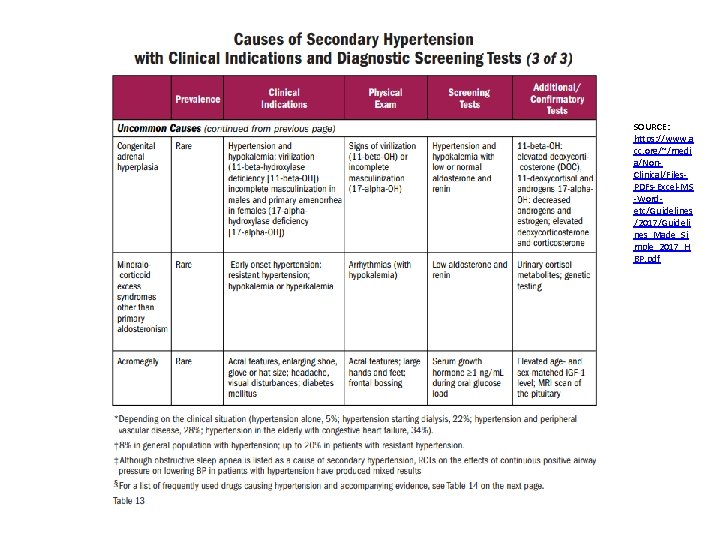
Secondary Hypertension • Identifiable, potentially reversible causes of elevated blood pressures. • Your routine lab tests and history (age of patient, associated symptoms) should help you diagnose these conditions. • Every patient with HTN should have initial: • CBC • Chemistry (Cr, GFR, K) • EKG • Glucose/Hb. A 1 c • Lipid panel • UA (+/- urinary albumin) • • • Reno vascular disease (5 -34%) Primary aldosteronism (8 -20%) Obstructive Sleep Apnea (25 -50%) Drug induced/related (2 -4%) Renal parenchymal disease (1 -2%) Pheochromocytoma Cushing’s syndrome or other glucocorticoid excess states Coarctation of the aorta Thyroid or parathyroid disease
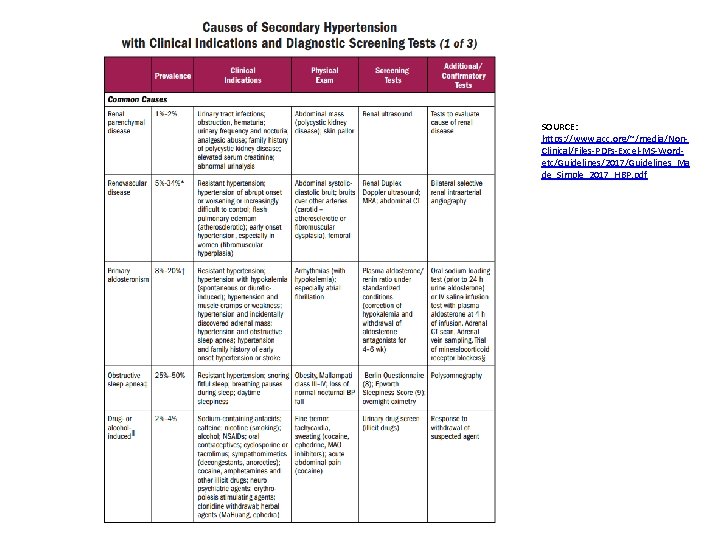
SOURCE: https: //www. acc. org/~/media/Non. Clinical/Files-PDFs-Excel-MS-Wordetc/Guidelines/2017/Guidelines_Ma de_Simple_2017_HBP. pdf
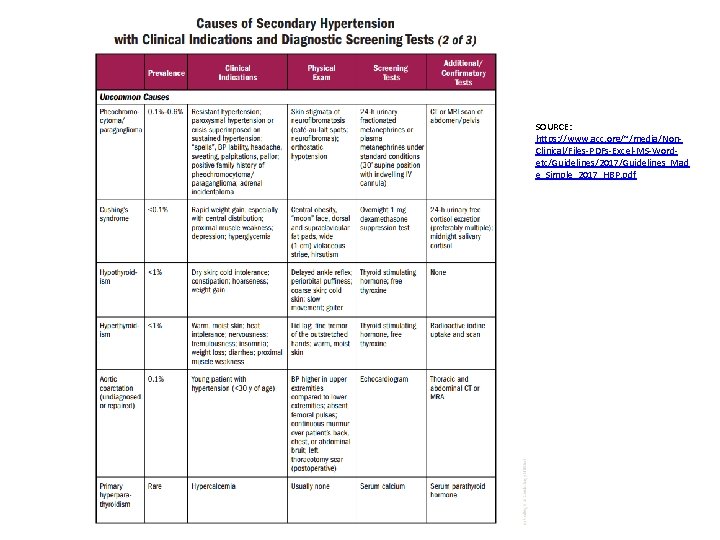
SOURCE: https: //www. acc. org/~/media/Non. Clinical/Files-PDFs-Excel-MS-Wordetc/Guidelines/2017/Guidelines_Mad e_Simple_2017_HBP. pdf
SOURCE: https: //www. a cc. org/~/medi a/Non. Clinical/Files. PDFs-Excel-MS -Wordetc/Guidelines /2017/Guideli nes_Made_Si mple_2017_H BP. pdf
Simple diagnosis. . . right? • Who do we screen? • How do we screen? • What are the cut offs for diagnosis?
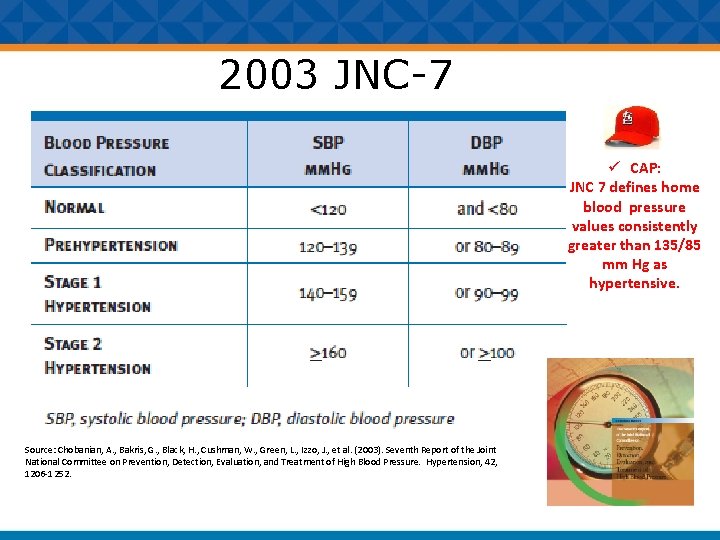
2003 JNC-7 ü CAP: JNC 7 defines home blood pressure values consistently greater than 135/85 mm Hg as hypertensive. Source: Chobanian, A. , Bakris, G. , Black, H. , Cushman, W. , Green, L. , Izzo, J. , et al. (2003). Seventh Report of the Joint National Committee on Prevention, Detection, Evaluation, and Treatment of High Blood Pressure. Hypertension, 42, 1206 -1252.
JNC-7 Pre-hypertension. . . • BPs ranging from 120– 139 mm. Hg systolic and/or 80– 89 mm. Hg diastolic • Introduced in JNC-7 as a classification. – Prehypertension is not a disease category. • No treatment is indicated at this point but many of these patients will develop hypertension. • The goal for individuals with “prehypertension” is to lower BP to normal levels with lifestyle changes, and prevent the progressive rise in BP using the recommended lifestyle modifications.
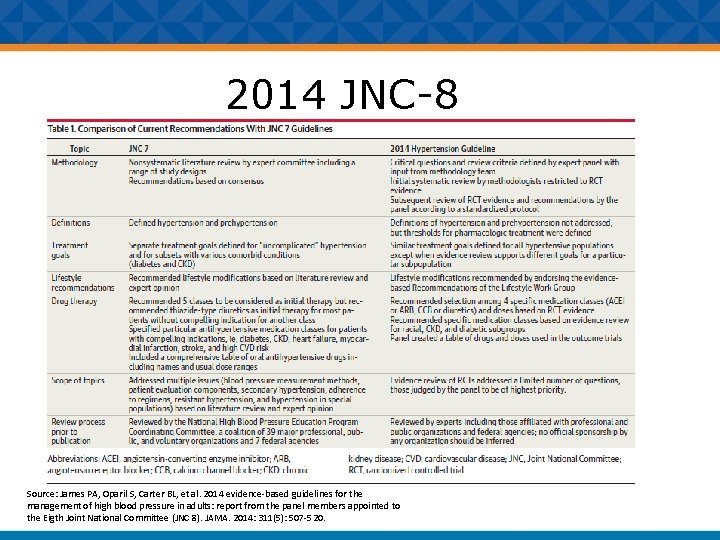
2014 JNC-8 Source: James PA, Oparil S, Carter BL, et al. 2014 evidence-based guidelines for the management of high blood pressure in adults: report from the panel members appointed to the Eigth Joint National Committee (JNC 8). JAMA. 2014: 311(5): 507 -520.
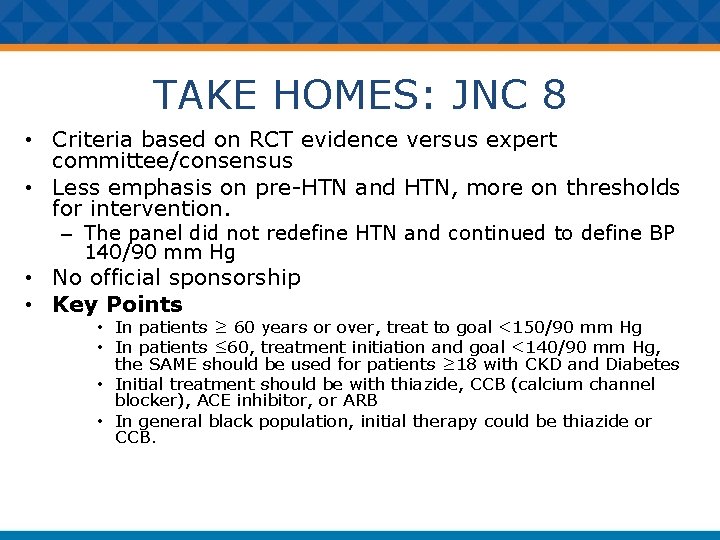
TAKE HOMES: JNC 8 • Criteria based on RCT evidence versus expert committee/consensus • Less emphasis on pre-HTN and HTN, more on thresholds for intervention. – The panel did not redefine HTN and continued to define BP 140/90 mm Hg • No official sponsorship • Key Points • In patients ≥ 60 years or over, treat to goal <150/90 mm Hg • In patients ≤ 60, treatment initiation and goal <140/90 mm Hg, the SAME should be used for patients ≥ 18 with CKD and Diabetes • Initial treatment should be with thiazide, CCB (calcium channel blocker), ACE inhibitor, or ARB • In general black population, initial therapy could be thiazide or CCB.
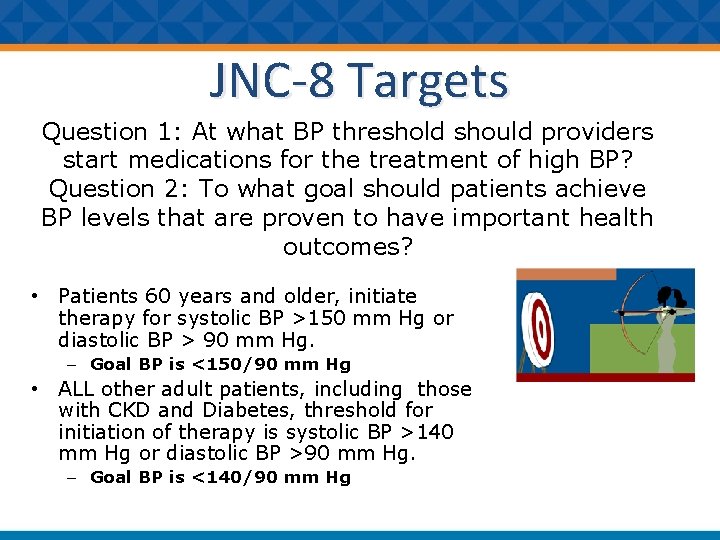
JNC-8 Targets Question 1: At what BP threshold should providers start medications for the treatment of high BP? Question 2: To what goal should patients achieve BP levels that are proven to have important health outcomes? • Patients 60 years and older, initiate therapy for systolic BP >150 mm Hg or diastolic BP > 90 mm Hg. – Goal BP is <150/90 mm Hg • ALL other adult patients, including those with CKD and Diabetes, threshold for initiation of therapy is systolic BP >140 mm Hg or diastolic BP >90 mm Hg. – Goal BP is <140/90 mm Hg
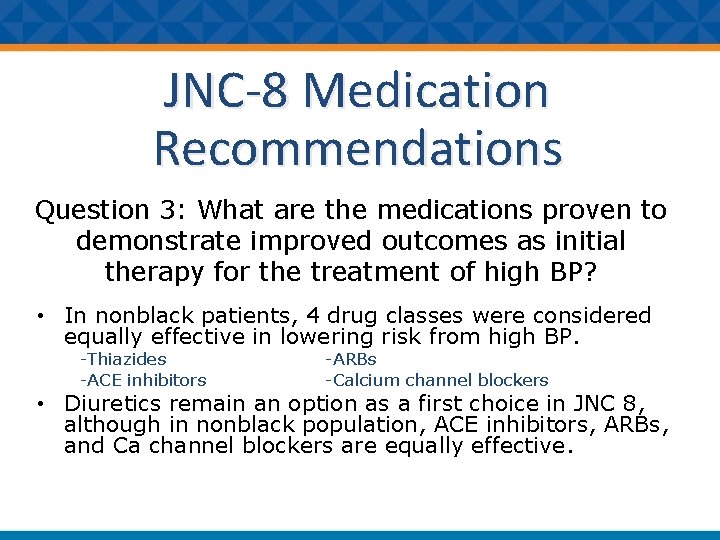
JNC-8 Medication Recommendations Question 3: What are the medications proven to demonstrate improved outcomes as initial therapy for the treatment of high BP? • In nonblack patients, 4 drug classes were considered equally effective in lowering risk from high BP. -Thiazides -ACE inhibitors -ARBs -Calcium channel blockers • Diuretics remain an option as a first choice in JNC 8, although in nonblack population, ACE inhibitors, ARBs, and Ca channel blockers are equally effective.
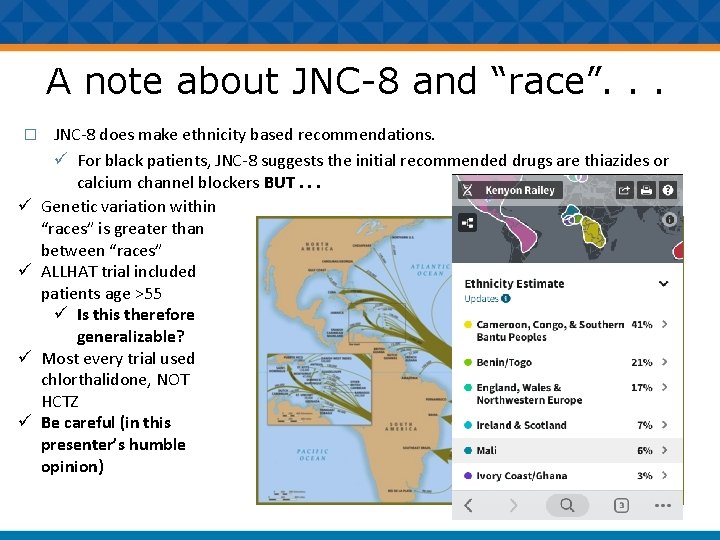
A note about JNC-8 and “race”. . . � ü ü JNC-8 does make ethnicity based recommendations. ü For black patients, JNC-8 suggests the initial recommended drugs are thiazides or calcium channel blockers BUT. . . Genetic variation within “races” is greater than between “races” ALLHAT trial included patients age >55 ü Is this therefore generalizable? Most every trial used chlorthalidone, NOT HCTZ Be careful (in this presenter’s humble opinion)
JNC-8 Treatment & Titration • Panel offered 3 options based on expert opinion – OPTION 1: Start with one drug and then maximize the dose before adding a second drug. – OPTION 2: Add a second drug to the first drug before reaching maximal dose of first drug. – OPTION 3: Begin two drugs simultaneously. • Panel recommended frequent monitoring in patients who have not achieved goal BP
JNC- 8 Follow-Up • CAP: If you change a medication dose or start a new medication, follow up in 1 month. – Follow up does not have to be with you as provider (utilize “nurse visit” or “lab visit “ and/or ambulatory measurements) • Negotiate with your patients what is best for them. – Dr. Railey’s 4 C’s of patient centered HTN follow up: • Do they have a Car? • How much will it Cost? Is there a Copay? • How Convenient is it for your patient?
TAKE HOMES: JNC 8 • Criteria based on RCT evidence versus expert committee/consensus • Less emphasis on pre-HTN and HTN, more on thresholds for intervention. – The panel did not redefine HTN and continued to define BP 140/90 mm Hg • No official sponsorship • Key Points • In patients ≥ 60 years or over, treat to goal <150/90 mm Hg • In patients ≤ 60, treatment initiation and goal <140/90 mm Hg, the SAME should be used for patients ≥ 18 with CKD and Diabetes • Initial treatment should be with thiazide, CCB (calcium channel blocker), ACE inhibitor, or ARB • In general black population, initial therapy could be thiazide or CCB.
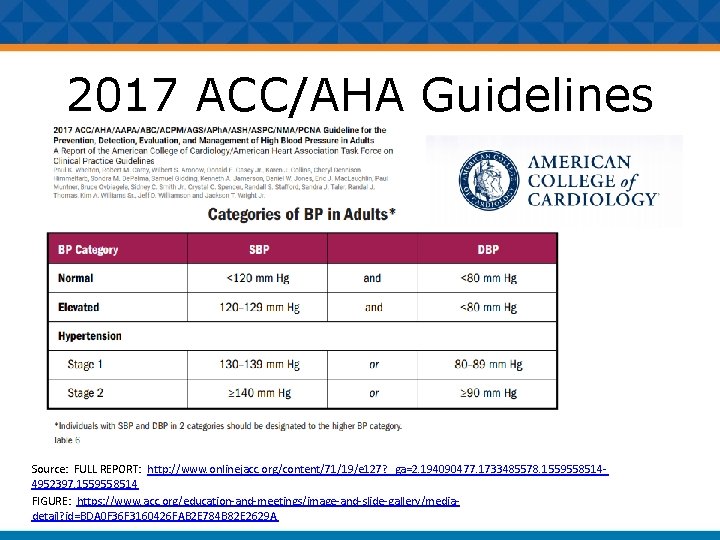
2017 ACC/AHA Guidelines Source: FULL REPORT: http: //www. onlinejacc. org/content/71/19/e 127? _ga=2. 194090477. 1733485578. 15595585144952397. 1559558514 FIGURE: https: //www. acc. org/education-and-meetings/image-and-slide-gallery/mediadetail? id=BDA 0 F 36 F 3160426 FAB 2 E 784 B 82 E 2629 A
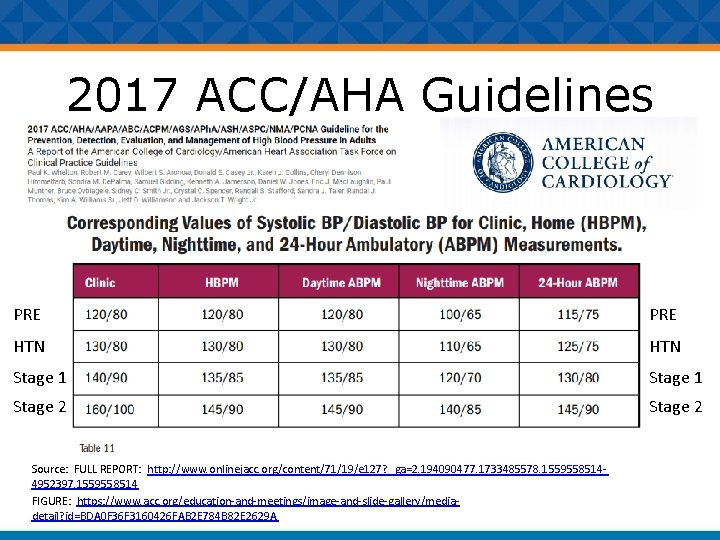
2017 ACC/AHA Guidelines PRE HTN Stage 1 Stage 2 Source: FULL REPORT: http: //www. onlinejacc. org/content/71/19/e 127? _ga=2. 194090477. 1733485578. 15595585144952397. 1559558514 FIGURE: https: //www. acc. org/education-and-meetings/image-and-slide-gallery/mediadetail? id=BDA 0 F 36 F 3160426 FAB 2 E 784 B 82 E 2629 A
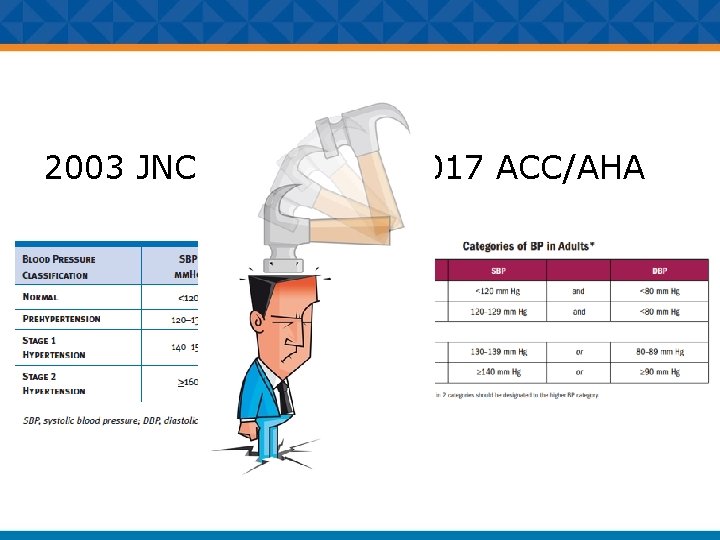
2003 JNC-7 2017 ACC/AHA
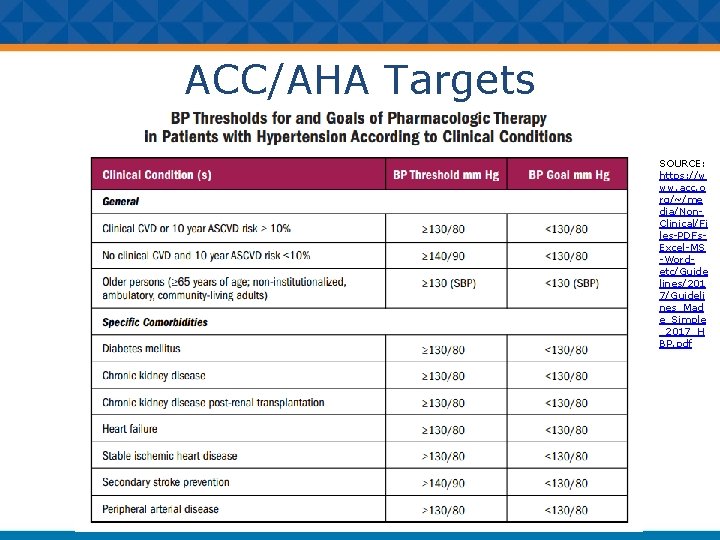
ACC/AHA Targets SOURCE: https: //w ww. acc. o rg/~/me dia/Non. Clinical/Fi les-PDFs. Excel-MS -Wordetc/Guide lines/201 7/Guideli nes_Mad e_Simple _2017_H BP. pdf
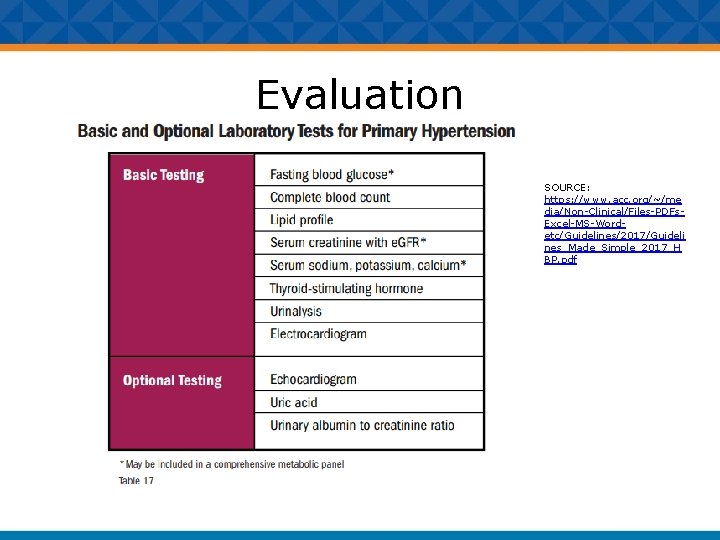
Evaluation SOURCE: https: //www. acc. org/~/me dia/Non-Clinical/Files-PDFs. Excel-MS-Wordetc/Guidelines/2017/Guideli nes_Made_Simple_2017_H BP. pdf
ACC/AHA Medication Recommendations • Agents that have been shown to reduce clinical events should be used preferentially – The primary agents used in the treatment of hypertension include thiazide diuretics, ACE inhibitors, ARBs, and CCBs • Consideration should be given to starting with 2 drugs of different classes for those with stage 2 hypertension • Drug regimens with complementary activity can result in additive lowering of BP. • Drug combinations that have similar mechanisms of action or clinical effects should be avoided. • Adults initiating a new or adjusted drug regimen for hypertension should have a follow-up evaluation of adherence and response to treatment at monthly intervals until control is achieved. • Certain comorbidities may affect clinical decision-making in hypertension and effect targets.
TAKE HOMES: ACC/AHA • • Update from JNC-7, and incorporates information from studies regarding BP related CVD, ABPM, HBPM and BP thresholds Emphasizes accurate BP measurement Recommends categorizing BP as normal (<120/80), elevated (120 -129/<80), stage 1 (130 -139/80 -89) or stage 2 (>140/90) Out of office and self monitoring recommended to confirm the diagnosis Correspond the BP with the method of measurement Screen for secondary causes of HTN Benefit of treatment is related to atherosclerotic CVD risk Key Points • • Treat patients with no history of CVD but with an estimated 10 -year ASCVD risk of ≥ 10% and SBP ≥ 130 mm Hg or DBP ≥ 80 mm Hg Treat patients for primary prevention of CVD in adults with no history of CVD and with an estimated 10 -year ASCVD risk <10% and a SBP ≥ 140 mm Hg or a DBP ≥ 90 mm Hg. Treat patients for secondary prevention of recurrent CVD events with clinical CVD and an average SBP ≥ 130 mm Hg or a DBP ≥ 80 mm Hg Initial first-line therapy for stage 1 hypertension includes thiazide diuretics, CCBs, and ACE inhibitors or ARBs. Two first-line drugs of different classes are recommended with stage 2 hypertension and average BP of 20/10 mm Hg above the BP target. Chlorthalidone (12. 5 -25 mg) is the preferred diuretic because of long half-life and proven reduction of CVD risk Treatment goals for major common conditions (DM, CKD, CVD) generally <130/80. Race/ethnicity: In African American adults with hypertension but without HF or CKD, including those with DM, initial antihypertensive treatment should include a thiazide-type diuretic or CCB. Two or more antihypertensive medications are recommended to achieve a BP target of <130/80 mm Hg in most adults, especially in African American adults, with hypertension.
Practical Guide to BP Elevation/HTN Remember these steps: 1) Confirm elevations using proper technique. 2) Confirm at home (either HBPM or ABPM) 3) Screen certain patients for secondary hypertension. 4) Proper Treatment ü JNC-8 OR ACC/AHA
Other strategies • Cardiovascular Risk Score • Lifestyle Modification – Exercise – Diet • Improved cultural humility
CAP: Calculate a CV risk score for ALL patients with CVD Risks • Common calculators are the ASCVD risk estimator, Framingham Risk Score, Reynolds Risk Score • Remember, some of the estimators OVERestimate risk based on the population studied – Framingham score based primarily on Caucasian, suburban population Source: http: //hp 2010. nhlbihin. net/atpiii/calculator. asp You can use this value to not only educate patients, but it will help you make decisions regarding ASA use, lipid management, and aggressiveness of blood pressure control.
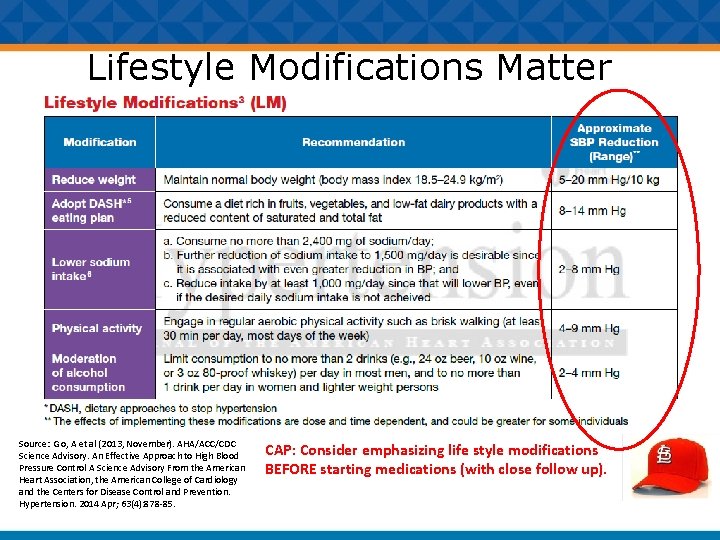
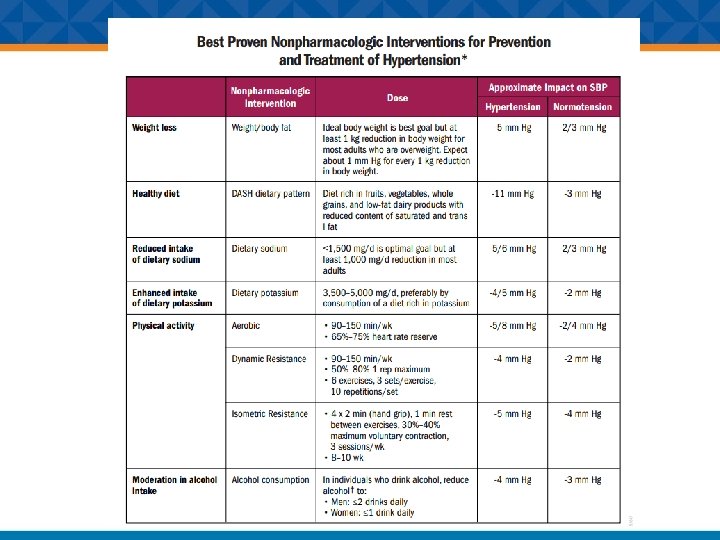
Lifestyle Modifications Matter Source: Go, A et al (2013, November). AHA/ACC/CDC Science Advisory. An Effective Approach to High Blood Pressure Control A Science Advisory From the American Heart Association, the American College of Cardiology and the Centers for Disease Control and Prevention. Hypertension. 2014 Apr; 63(4): 878 -85. CAP: Consider emphasizing life style modifications BEFORE starting medications (with close follow up).
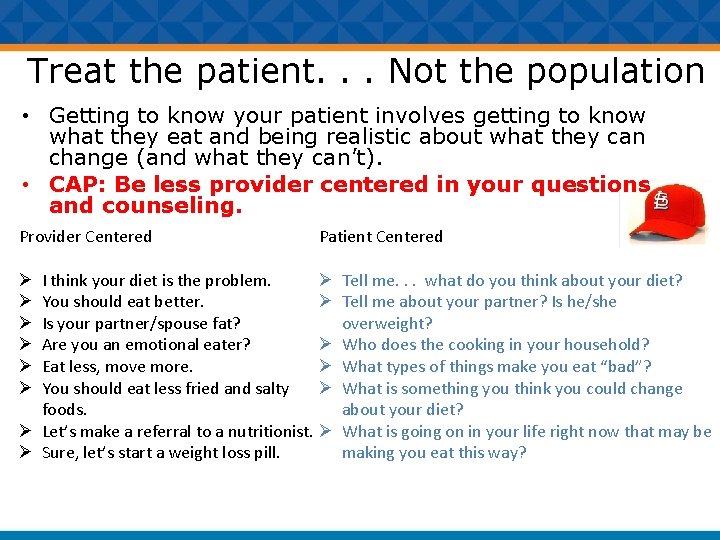
Treat the patient. . . Not the population • Getting to know your patient involves getting to know what they eat and being realistic about what they can change (and what they can’t). • CAP: Be less provider centered in your questions and counseling. Provider Centered Patient Centered I think your diet is the problem. Ø You should eat better. Ø Is your partner/spouse fat? Are you an emotional eater? Ø Eat less, move more. Ø You should eat less fried and salty Ø foods. Ø Let’s make a referral to a nutritionist. Ø Ø Sure, let’s start a weight loss pill. Ø Ø Ø Tell me. . . what do you think about your diet? Tell me about your partner? Is he/she overweight? Who does the cooking in your household? What types of things make you eat “bad”? What is something you think you could change about your diet? What is going on in your life right now that may be making you eat this way?
Watch this. . .
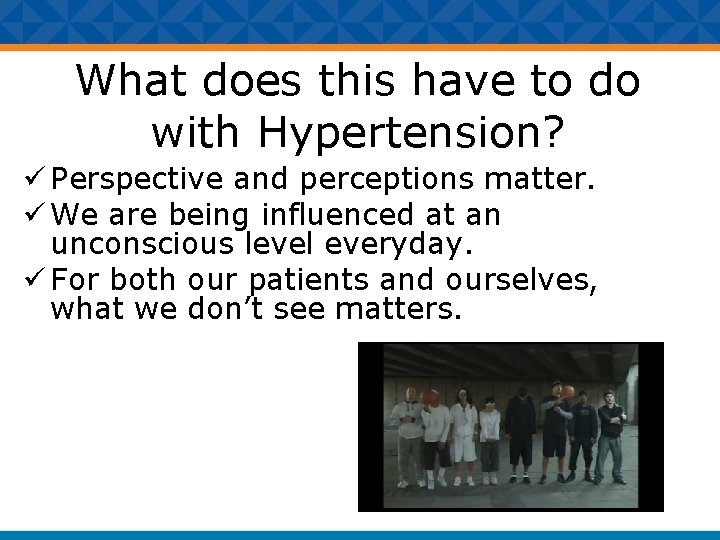
What does this have to do with Hypertension? ü Perspective and perceptions matter. ü We are being influenced at an unconscious level everyday. ü For both our patients and ourselves, what we don’t see matters.
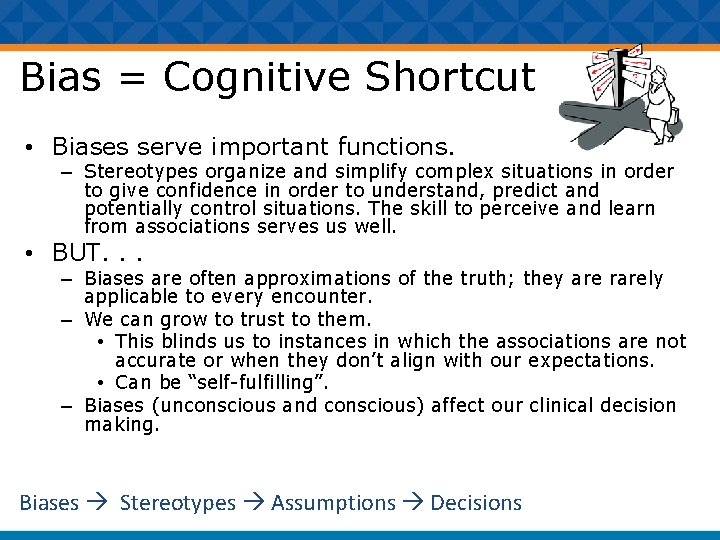
Bias = Cognitive Shortcut • Biases serve important functions. – Stereotypes organize and simplify complex situations in order to give confidence in order to understand, predict and potentially control situations. The skill to perceive and learn from associations serves us well. • BUT. . . – Biases are often approximations of the truth; they are rarely applicable to every encounter. – We can grow to trust to them. • This blinds us to instances in which the associations are not accurate or when they don’t align with our expectations. • Can be “self-fulfilling”. – Biases (unconscious and conscious) affect our clinical decision making. Biases Stereotypes Assumptions Decisions
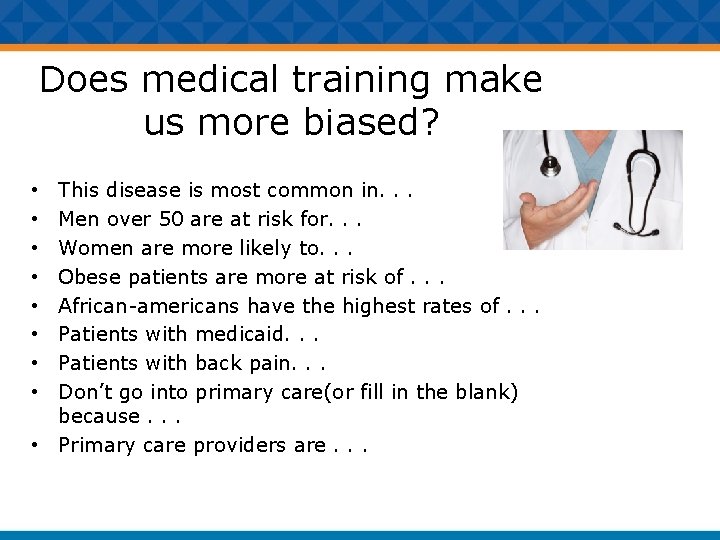
Does medical training make us more biased? This disease is most common in. . . Men over 50 are at risk for. . . Women are more likely to. . . Obese patients are more at risk of. . . African-americans have the highest rates of. . . Patients with medicaid. . . Patients with back pain. . . Don’t go into primary care(or fill in the blank) because. . . • Primary care providers are. . . • •
The connection between bias & time. . . • Time pressure increases the likelihood of relying on shortcuts, such as stereotyping or prejudice, because clinicians are forced to make quick judgments often without enough information.
What could happen? Lawsuits Mistakes Patient complaints Personal unhappiness and poor practice satisfaction • Poor provider/patient relationship • Poor patient adherence • Health disparities • •
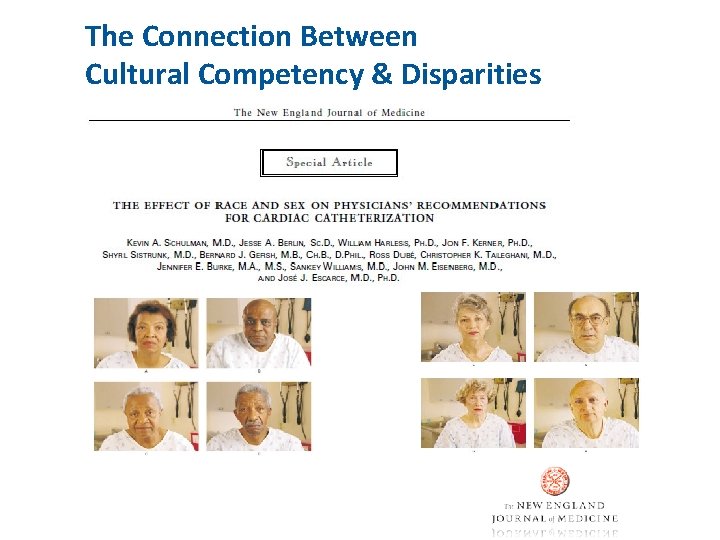
The Connection Between Cultural Competency & Disparities
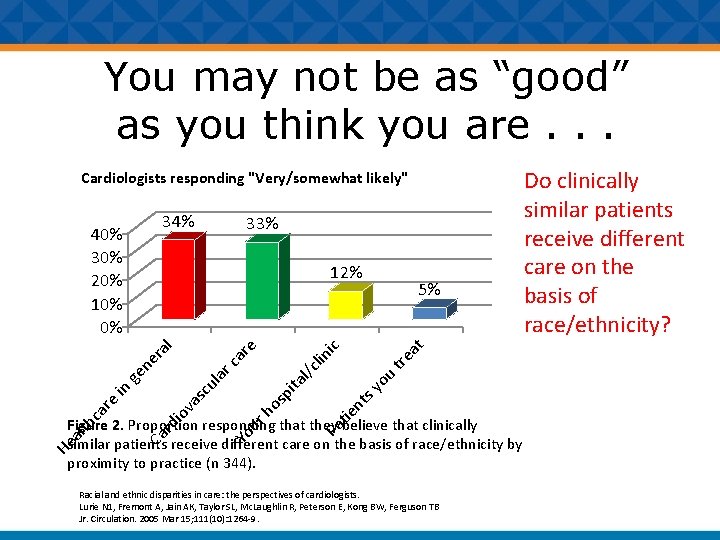
You may not be as “good” as you think you are. . . Cardiologists responding "Very/somewhat likely" 34% 40% 30% 20% 10% 0% 33% at 5% ic u tre lin l/c nt tie h os pi s y o ta ar va sc ul io ca re in ge ne ca ra l re 12% Do clinically similar patients receive different care on the basis of race/ethnicity? Pa ur Yo Ca rd He al th Figure 2. Proportion responding that they believe that clinically similar patients receive different care on the basis of race/ethnicity by proximity to practice (n 344). Racial and ethnic disparities in care: the perspectives of cardiologists. Lurie N 1, Fremont A, Jain AK, Taylor SL, Mc. Laughlin R, Peterson E, Kong BW, Ferguson TB Jr. Circulation. 2005 Mar 15; 111(10): 1264 -9.
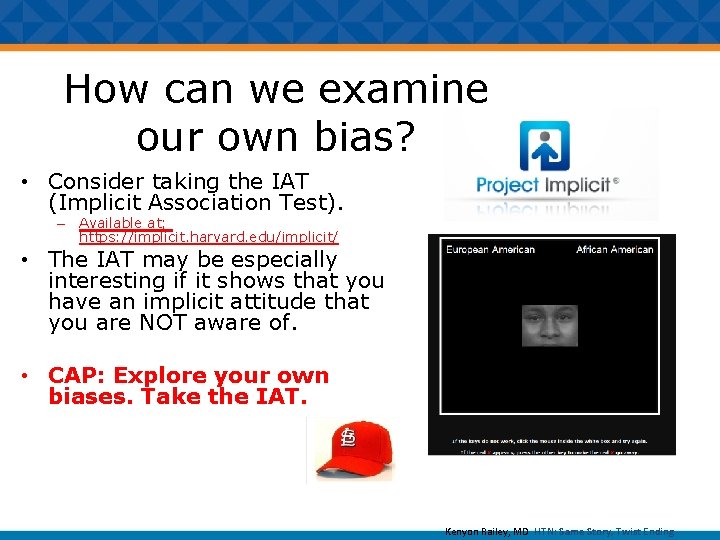
How can we examine our own bias? • Consider taking the IAT (Implicit Association Test). – Available at; https: //implicit. harvard. edu/implicit/ • The IAT may be especially interesting if it shows that you have an implicit attitude that you are NOT aware of. • CAP: Explore your own biases. Take the IAT. Kenyon Railey, MD HTN: Same Story, Twist Ending
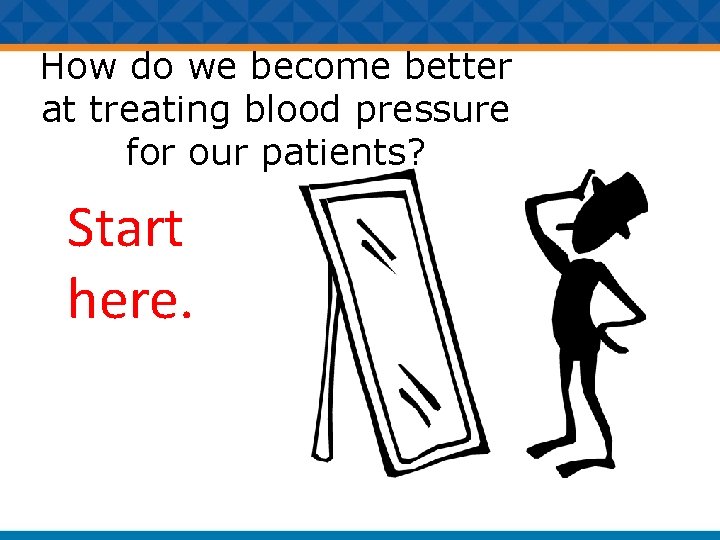
How do we become better at treating blood pressure for our patients? Start here.
Practice, practice • When providers become more aware of differences in values and implicit attitudes, a recognition factor is produced, which itself can lead to change. – Communication skills and cultural humility are lifelong skills (practice makes perfect). • When patients become aware, they are empowered to change. – Healthy choices are lifelong skills (practice makes perfect).
Treat the patient, not the population • JNC 7 and AHA/ACC guidelines define home blood pressure values consistently greater than 135/85 mm Hg as hypertensive. • Model (and/or teach) correct blood pressure measurement. • Have patients BRING their blood pressure cuff to clinic. • If patients are young or resistant to treatment, make sure to consider secondary causes of HTN. • Calculate a CV Risk Score for ALL patients with CVD Risks.
Treat the patient, not the population • Modify your goals for patients based on appropriate recommendations AND justify your decision. – JNC-8: <150/90 if >60 years of age, <140/90 for all others – ACC/AHA: depends on ASCVD risk and specific comorbidities • If you change a medication dose, or start a new medication, follow up in 1 -2 months if feasible. – Dr. Railey’s 4 C’s of patient centered HTN follow up: • Do they have a Car? • How much will it Cost? Is there a Co-pay? • How Convenient is it for your patient?
Treat the patient, not the population • Consider emphasizing life style modifications BEFORE starting medications (with close follow up). • Explore your own biases. • Be more patient and culturally context centered in questioning and counseling. – Meet patients where they are.
Jason Gunn • Its 8: 15 AM now and you have just seen Jason Gunn, your 45 year old white male patient, that you saw smoking outside. His last visit was 7 months ago and he has not seen anyone since then. • He is here for follow up of his high blood pressure and refills. He is currently having no issues or problems. He doesn’t check his blood pressure at home. He took his medications before he drove to the appointment. He takes Lisinopril and HCTZ. • Reviewing his social history, you see that he has been smoking a pack per day for 20 years. • His blood pressure today is 150/90. PE is normal. • What do you do? Recheck the blood pressure in 30 minutes. Ask patient not to smoke prior to visits.
It’s Bo Time. . . • Michelle “Bo” Smith is a 48 year old female patient with a PMH of obesity (BMI 35), Diabetes, Hyperlipidemia, and Osteoarthritis who is presenting for her routine follow up visit. She was 10 minutes late for her appointment, and she admits that she was rushing. • Since her last visit 3 months ago, her Hb. A 1 c is not improving (7. 9 today, previously 7. 6). Her weight has also gone up slightly. She is not checking her blood sugars “as often as I should” nor is she exercising. • You notice a Bojangles drinking cup so you ask her about it. She says that she has been eating out a lot. She passes a Bojangles on her way to work. She normally gets a chicken biscuit in the morning. If she eats lunch, she gets a 2 piece dinner, but “always gets a vegetable. ”
“Bo” Smith • You review your social history from your previous note and it mentions she is married, 2 children. No smoking, no alcohol, no drugs. • Her medications include an ACE inhibitor, CCB, Thiazide for her blood pressure. She takes a statin and ASA appropriately is very compliant with her blood pressure measurements. • Vitals by the nurse reveals blood pressure 160/95, weight 260 pounds. The remainder of your exam is normal. She had normal labs last visit. • What do you do?
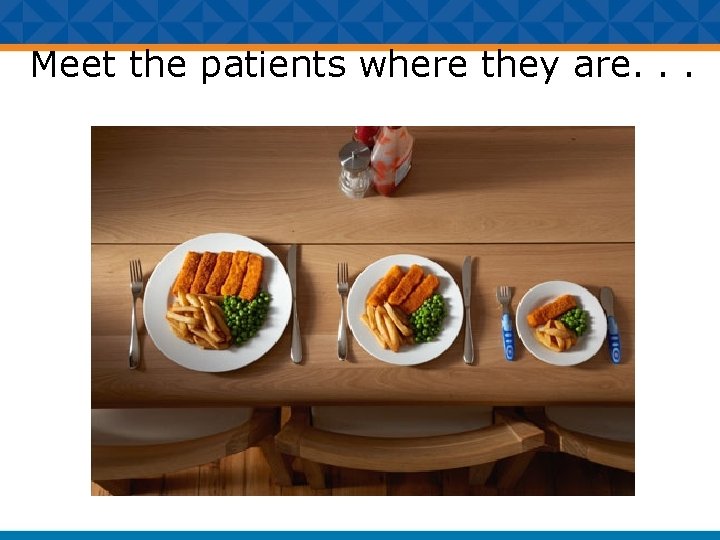
Meet the patients where they are. . .
The case of the stopping trucker. . . • Lisa Miller is a 40 year old female with hypertension. She works as a truck driver and is here for her DOT physical follow up. At your last visit 3 months ago, her blood pressure was elevated (161/91) so she could only get a temporary certification. She takes a thiazide at max dose and an ACE inhibitor (you increased it last visit) at max dose. • Today she is here to hopefully get her DOT certification completed. She does not check her blood pressures. She feels fine without any symptoms. • Her screening questionnaire is negative as well as normal vision screening and urine dip. • The only issue is that her blood pressure is the same 160/90 which means she can’t get the certification.
Objective: Explore specific tools that enhance the provider’s ability to provide culturally competent care for patients with HTN. Lisa Miller • She admits that she doesn’t eat that well because she is “always on the road. ” She says she tries to get salads when she can. • Her runs vary 6 -8 hours each way and she stops when she can to rest and eat. She also is not exercising because she does not belong to a gym. She loves being a truck driver but she is frustrated about not having her blood pressure lower and doesn’t want to be on another medication. • What do you do?
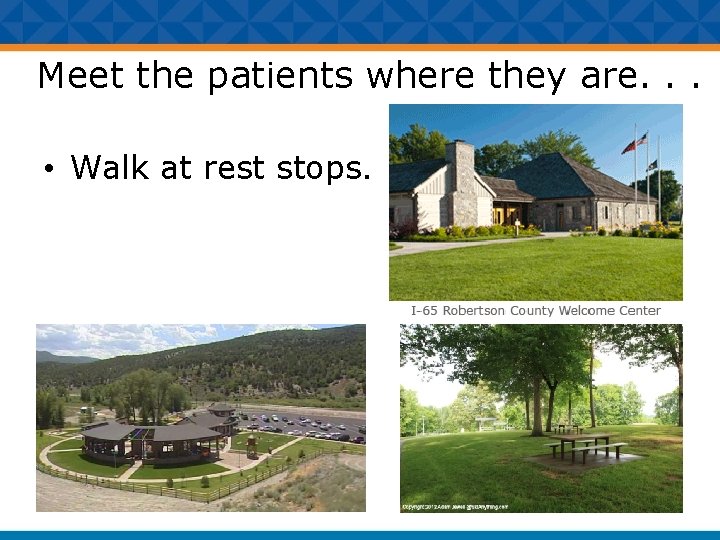
Meet the patients where they are. . . • Walk at rest stops.
Thank you good cultural skills = good clinical (i. e. people) skills “I've learned that people will forget what you said, people will forget what you did, but people will never forget how you made them feel. ” ― Maya Angelou
- Slides: 75