
BLOOD PRESSURE TESTER Presenters Brandon Sbert EE Raj

BLOOD PRESSURE TESTER Ø Ø Presenters: Brandon Sbert (EE) Raj Bose (EE) Bianca Belmont (CPE) Ricardo Wheeler (EE) Sponsors: Ø Texas Instruments Ø Workforce Central Florida Mentor: Ø Herb Gingold (TI)
Project Description q. Build an Automatic Blood Pressure Tester utilizing the Oscillometric Method (indirect) q. Low Power q. Wireless Display
Goals and Objectives q To be worn on upper arm q Battery powered q Simple user operation (one button device) q Integrate safe procedures into design q Implement wireless component q Calculate Blood Pressure reading (SYS DIA) q Transmit results wirelessly to display q Receive data from wireless module q Display Blood Pressure data q Error detection
Specifications q Power Supply 4 AAA rechargeable batteries (3 v) q Power Life is 60 BP runs q Automatic using Micro motor (6 V) / Micro Valve (6 V) q Oscillometric q Accuracy of sensor plus or minus 3 mm. Hg q Pressure range of 20 mm. Hg to 280 mm. Hg (cuff) q Adjustable cuff q Wireless range 1 m <range> 2 m q Display 138 X 110 grayscale, dot-matrix LCD
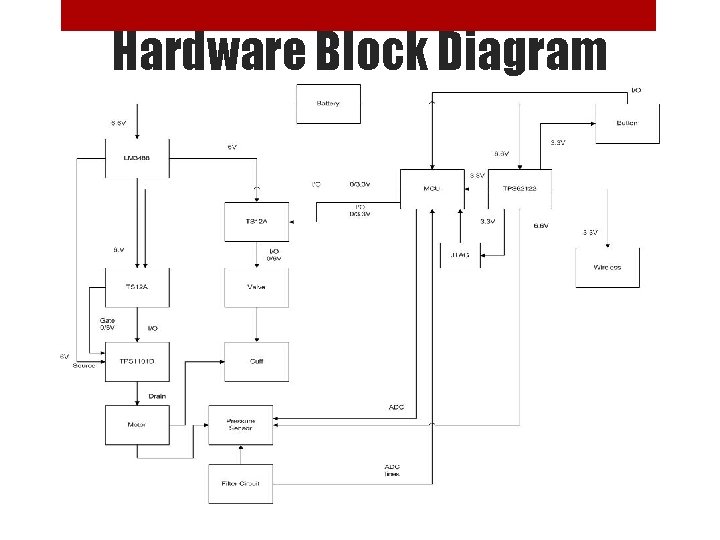
Hardware Block Diagram
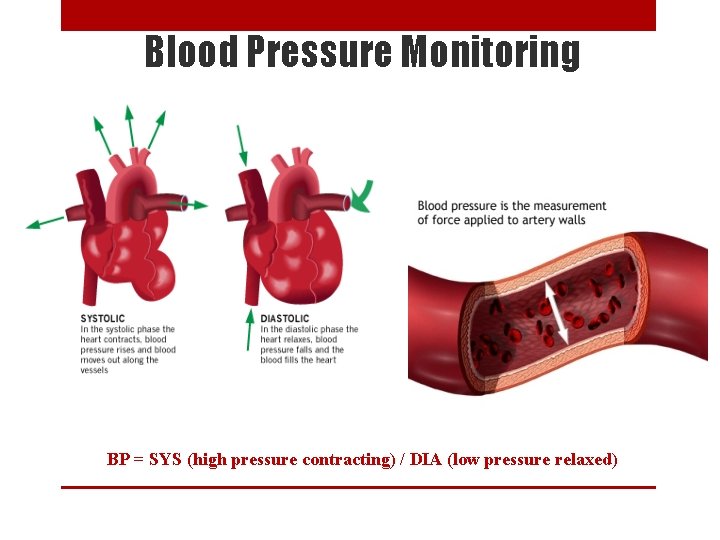
Blood Pressure Monitoring BP = SYS (high pressure contracting) / DIA (low pressure relaxed)
Blood Pressure Monitoring q Many invasive and non invasive methods exist q Similarity of 3 non invasive methods • all 3 use an occlusion cuff • all 3 record pressure values upon the turbulent re-entry of blood to lower arm • all 3 inflate cuff to about 30 mm. Hg above average systolic pressure to cut off blood flow to the lower arm • Palpitation – touch – direct method • Auscultatory – hearing – direct method • Oscillometric – algorithmic – non direct BP = SYS (high pressure contracting) / DIA (low pressure relaxed)
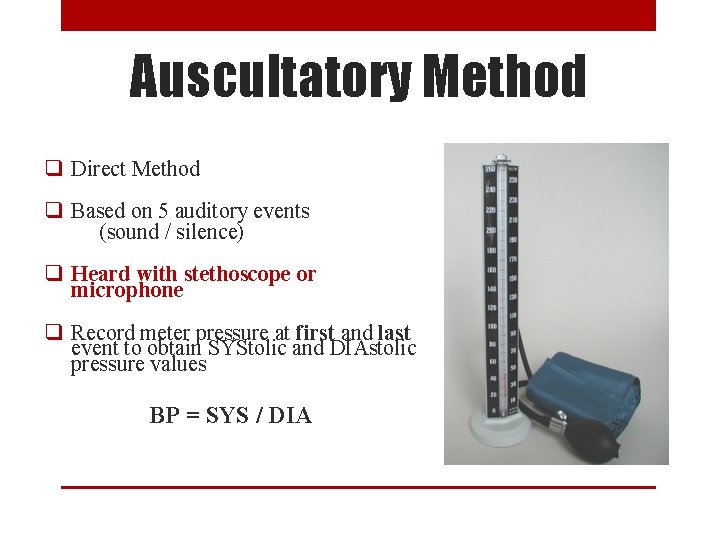
Auscultatory Method q Direct Method q Based on 5 auditory events (sound / silence) q Heard with stethoscope or microphone q Record meter pressure at first and last event to obtain SYStolic and DIAstolic pressure values BP = SYS / DIA
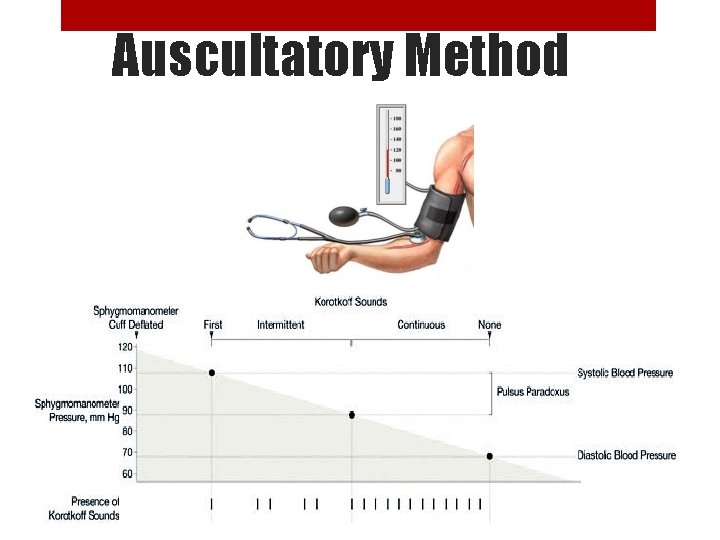
Auscultatory Method

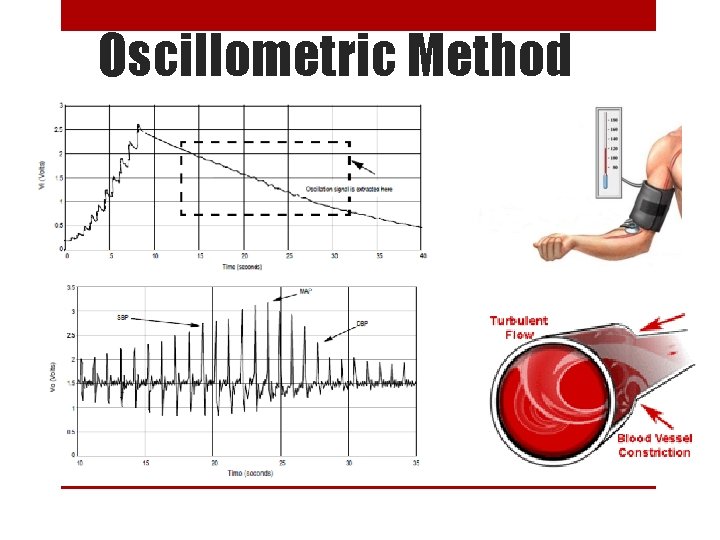
Oscillometric Method Utilized in our device q Indirect Method q Cuff wall assumed one with the skin • Movement of skin due to turbulent blood flow pulses upon re – entry • Creates air turbulence in cuff q Algorithm uses two sets of data: • Originating from a mixed signal obtained by a pressure sensor connected • to an occlusion cuff • Calculates a systolic pressure and diastolic pressure for a blood pressure reading BP = SYS (high pressure contracting) / DIA (low pressure relaxed)
Oscillometric Method
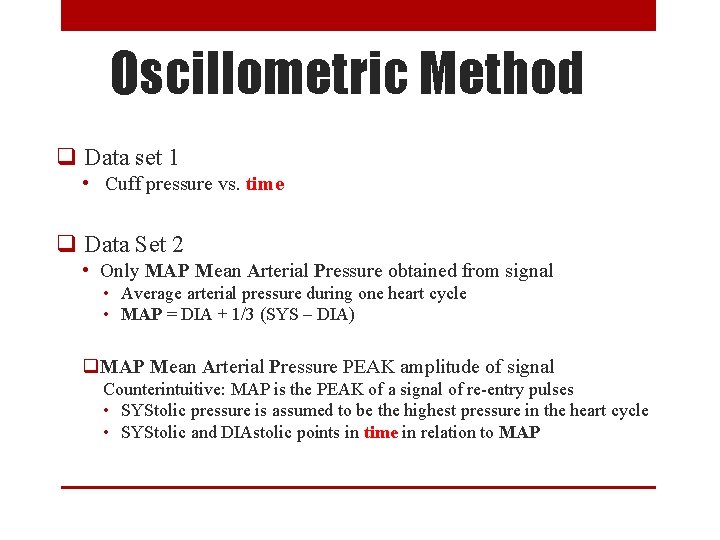
Oscillometric Method q Data set 1 • Cuff pressure vs. time q Data Set 2 • Only MAP Mean Arterial Pressure obtained from signal • Average arterial pressure during one heart cycle • MAP = DIA + 1/3 (SYS – DIA) q. MAP Mean Arterial Pressure PEAK amplitude of signal Counterintuitive: MAP is the PEAK of a signal of re-entry pulses • SYStolic pressure is assumed to be the highest pressure in the heart cycle • SYStolic and DIAstolic points in time in relation to MAP

Mechanical
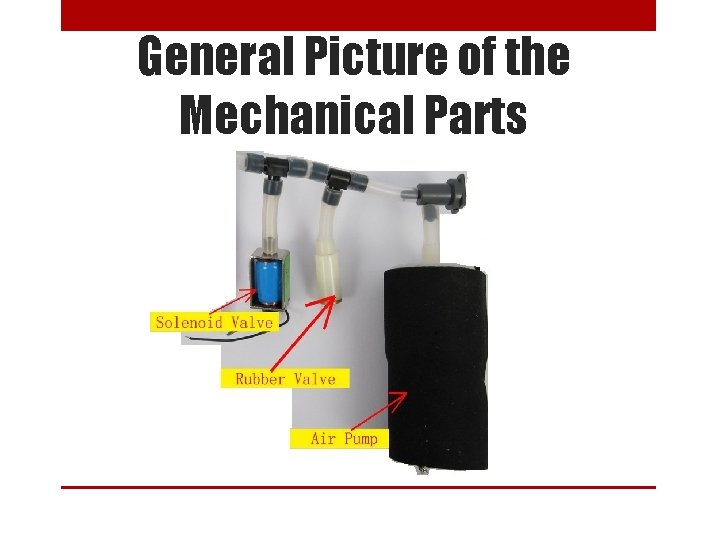
General Picture of the Mechanical Parts
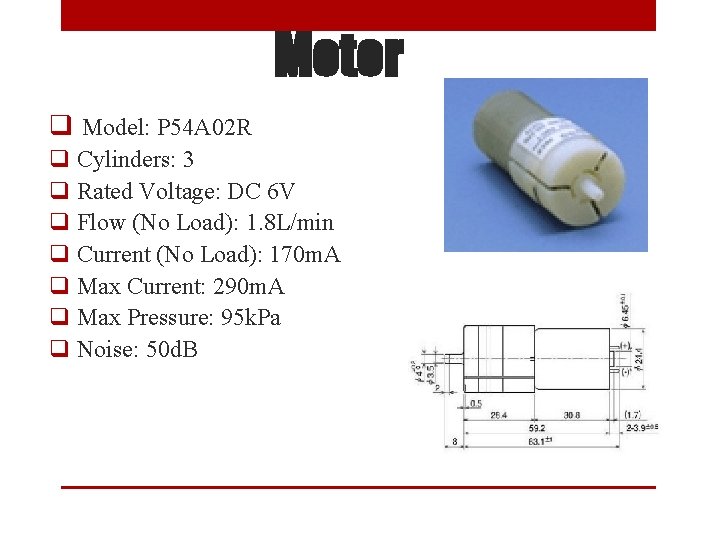
q Model: P 54 A 02 R Motor q Cylinders: 3 q Rated Voltage: DC 6 V q Flow (No Load): 1. 8 L/min q Current (No Load): 170 m. A q Max Current: 290 m. A q Max Pressure: 95 k. Pa q Noise: 50 d. B
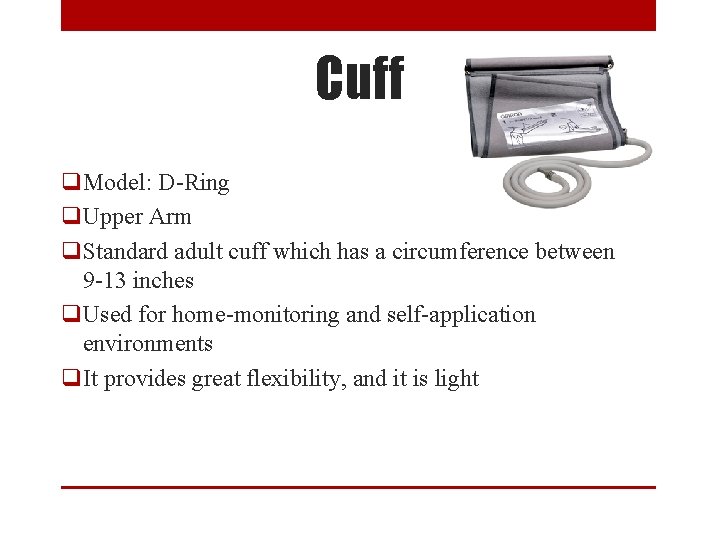
Cuff q. Model: D-Ring q. Upper Arm q. Standard adult cuff which has a circumference between 9 -13 inches q. Used for home-monitoring and self-application environments q. It provides great flexibility, and it is light
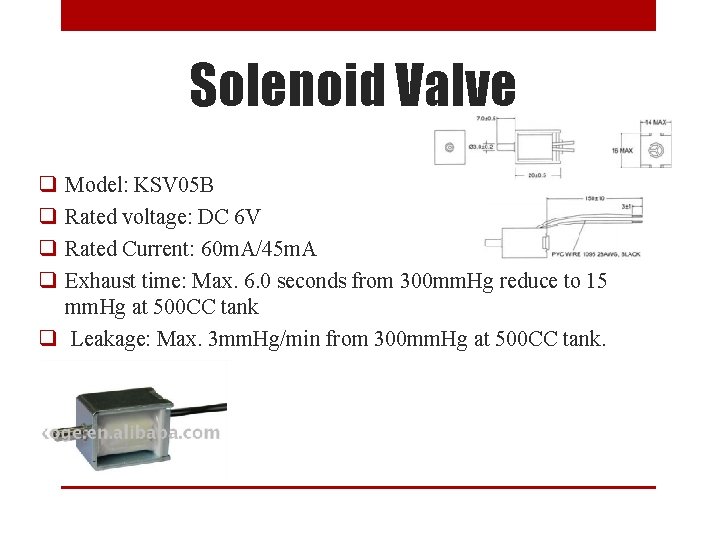
Solenoid Valve q q Model: KSV 05 B Rated voltage: DC 6 V Rated Current: 60 m. A/45 m. A Exhaust time: Max. 6. 0 seconds from 300 mm. Hg reduce to 15 mm. Hg at 500 CC tank q Leakage: Max. 3 mm. Hg/min from 300 mm. Hg at 500 CC tank.
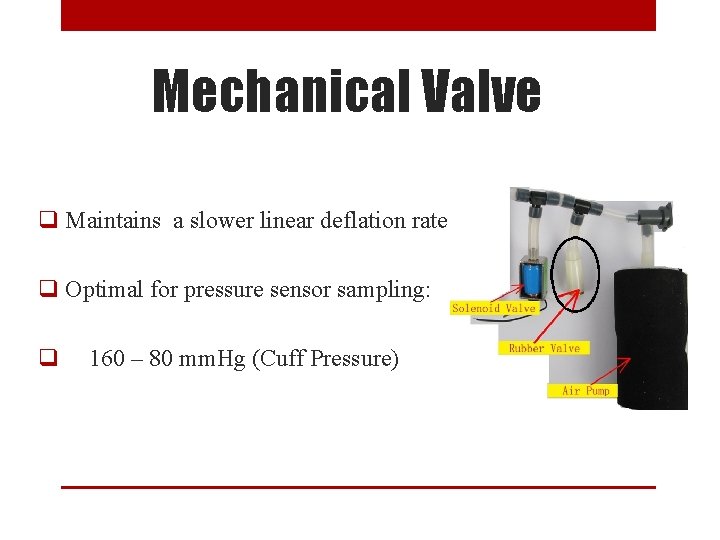
Mechanical Valve q Maintains a slower linear deflation rate q Optimal for pressure sensor sampling: q 160 – 80 mm. Hg (Cuff Pressure)
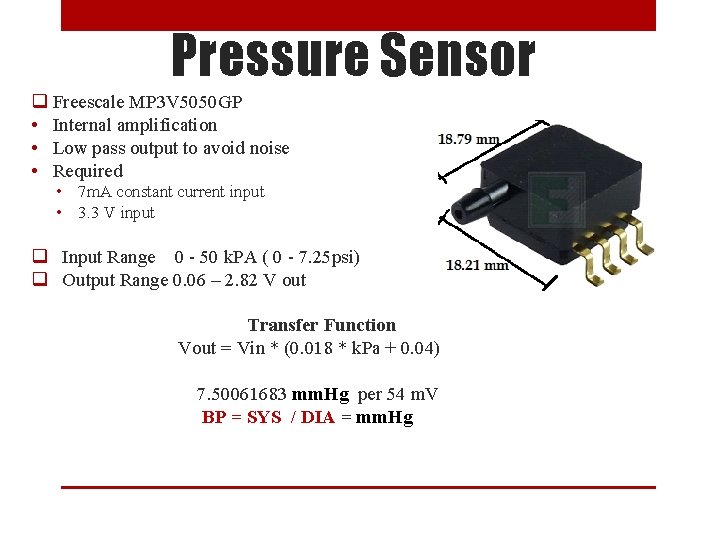
Pressure Sensor q Freescale MP 3 V 5050 GP • Internal amplification • Low pass output to avoid noise • Required • 7 m. A constant current input • 3. 3 V input q Input Range 0 - 50 k. PA ( 0 - 7. 25 psi) q Output Range 0. 06 – 2. 82 V out Transfer Function Vout = Vin * (0. 018 * k. Pa + 0. 04) 7. 50061683 mm. Hg per 54 m. V BP = SYS / DIA = mm. Hg
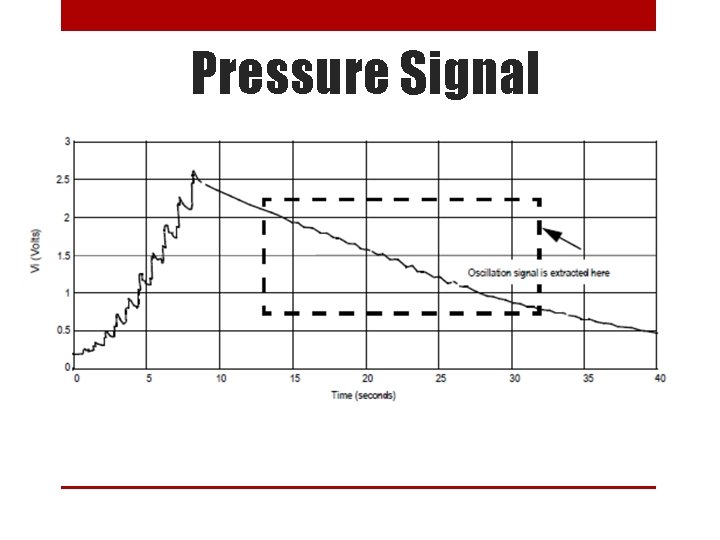
Pressure Signal
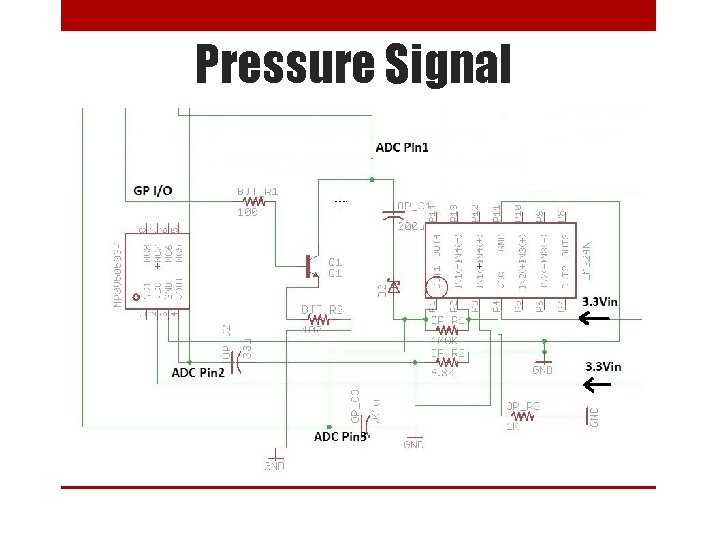
Pressure Signal
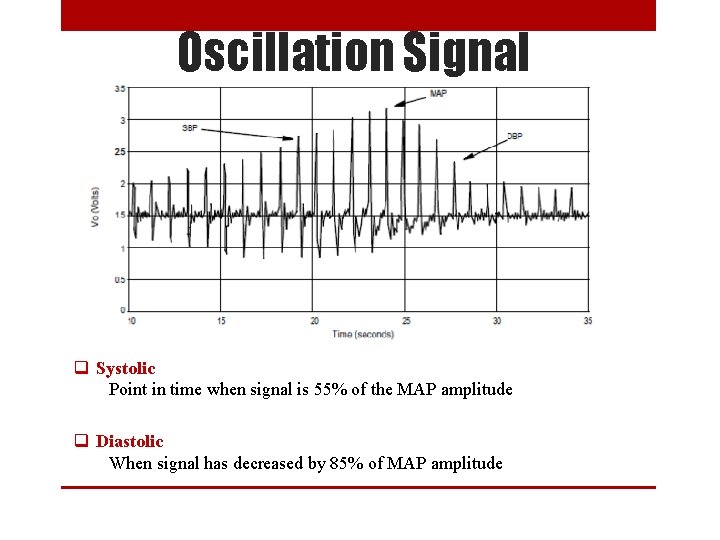
Oscillation Signal q Systolic Point in time when signal is 55% of the MAP amplitude q Diastolic When signal has decreased by 85% of MAP amplitude
MCU
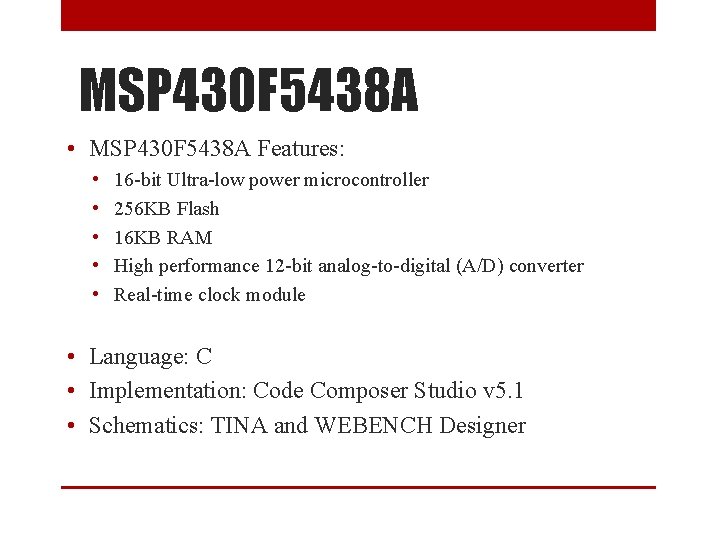
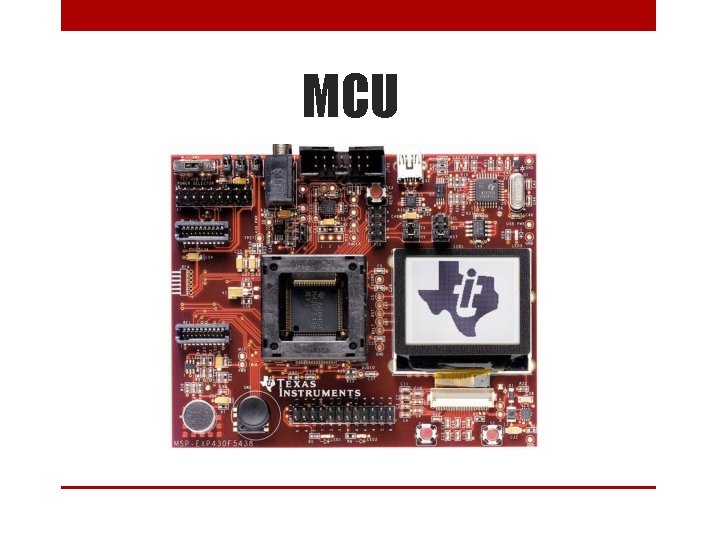
MSP 430 F 5438 A • MSP 430 F 5438 A Features: • • • 16 -bit Ultra-low power microcontroller 256 KB Flash 16 KB RAM High performance 12 -bit analog-to-digital (A/D) converter Real-time clock module • Language: C • Implementation: Code Composer Studio v 5. 1 • Schematics: TINA and WEBENCH Designer
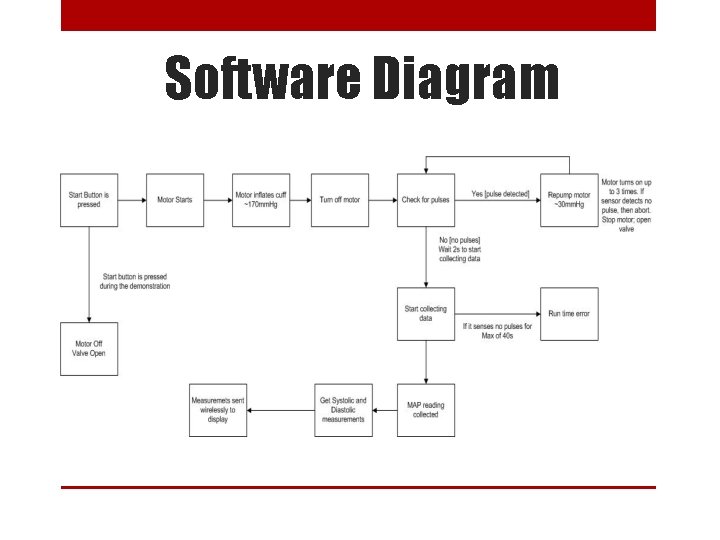
Software Diagram
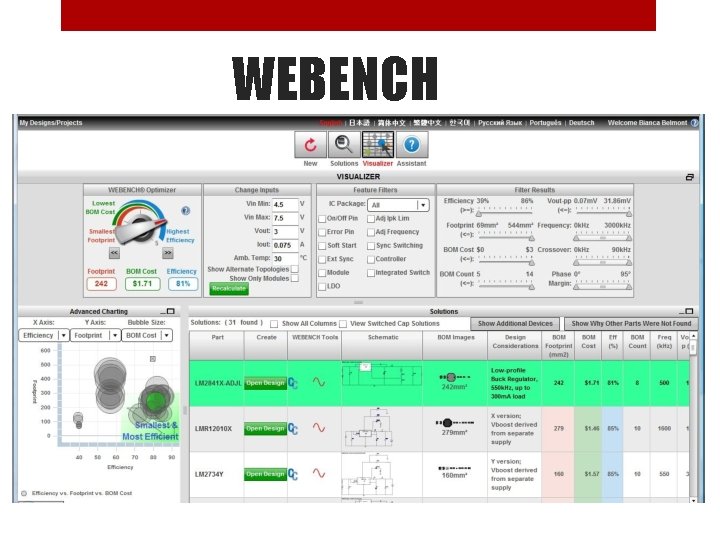
WEBENCH
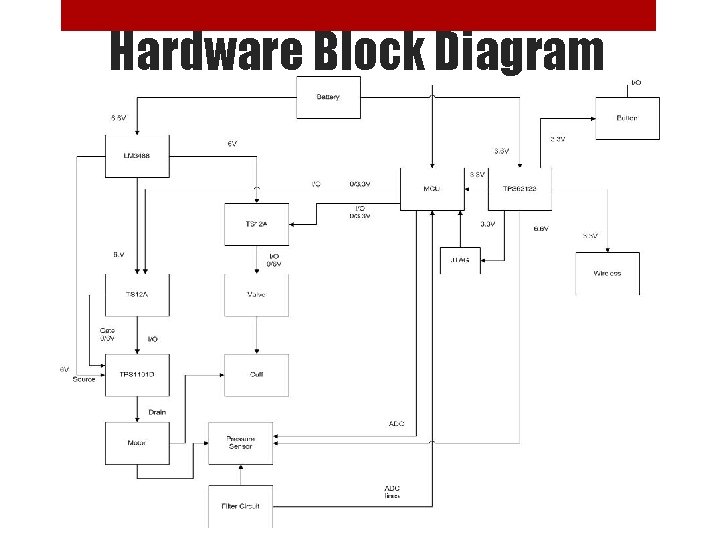
Hardware Block Diagram
Wireless
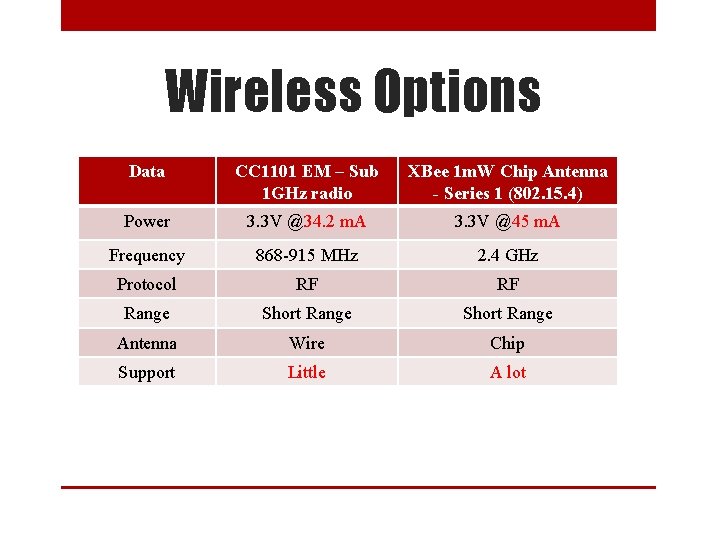
Wireless Options Data CC 1101 EM – Sub 1 GHz radio XBee 1 m. W Chip Antenna - Series 1 (802. 15. 4) Power 3. 3 V @34. 2 m. A 3. 3 V @45 m. A Frequency 868 -915 MHz 2. 4 GHz Protocol RF RF Range Short Range Antenna Wire Chip Support Little A lot
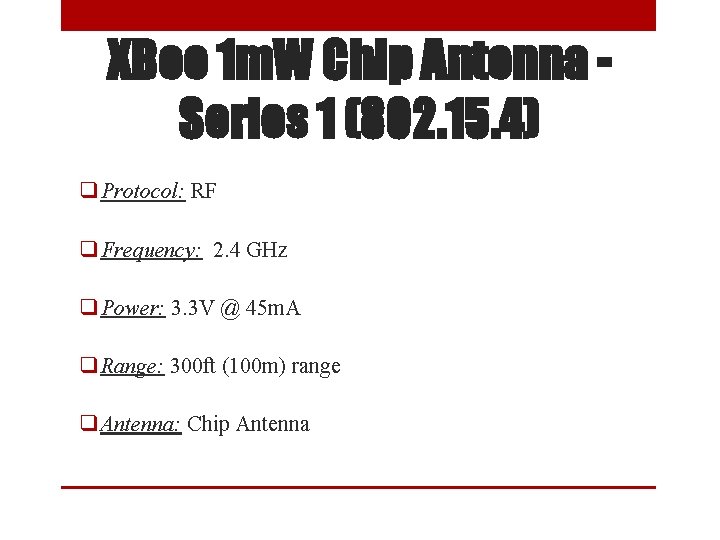
XBee 1 m. W Chip Antenna Series 1 (802. 15. 4) q Protocol: RF q Frequency: 2. 4 GHz q Power: 3. 3 V @ 45 m. A q Range: 300 ft (100 m) range q Antenna: Chip Antenna
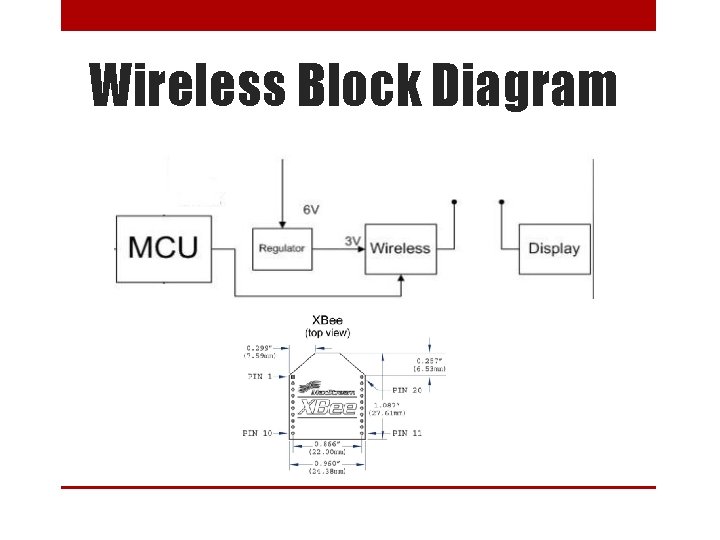
Wireless Block Diagram
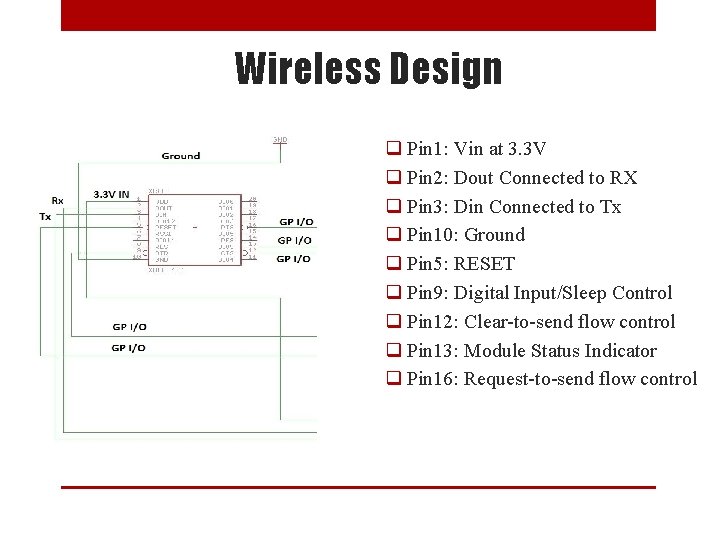
Wireless Design q Pin 1: Vin at 3. 3 V q Pin 2: Dout Connected to RX q Pin 3: Din Connected to Tx q Pin 10: Ground q Pin 5: RESET q Pin 9: Digital Input/Sleep Control q Pin 12: Clear-to-send flow control q Pin 13: Module Status Indicator q Pin 16: Request-to-send flow control

Power Source
Battery q 4 x AAA batteries: 6 V q Alkaline Batteries q Power life 60 BP runs
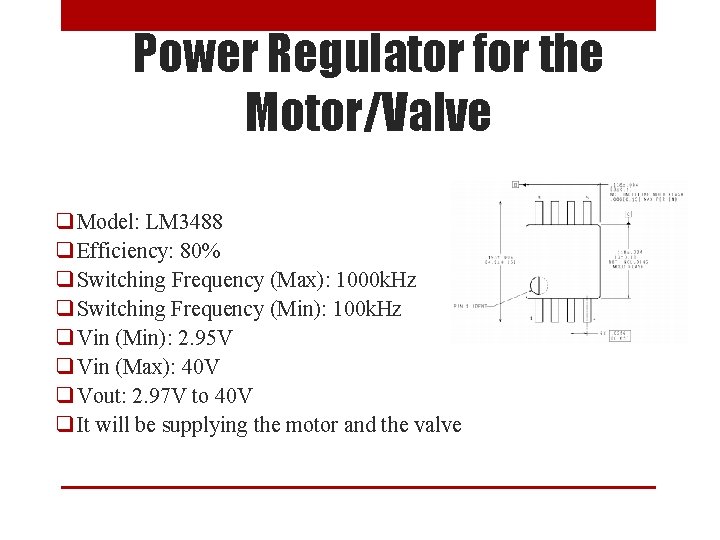
Power Regulator for the Motor/Valve q Model: LM 3488 q Efficiency: 80% q Switching Frequency (Max): 1000 k. Hz q Switching Frequency (Min): 100 k. Hz q Vin (Min): 2. 95 V q Vin (Max): 40 V q Vout: 2. 97 V to 40 V q It will be supplying the motor and the valve
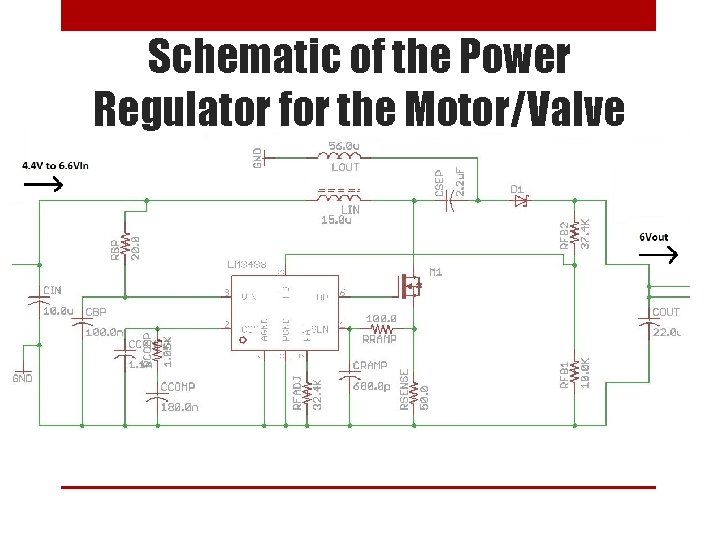
Schematic of the Power Regulator for the Motor/Valve
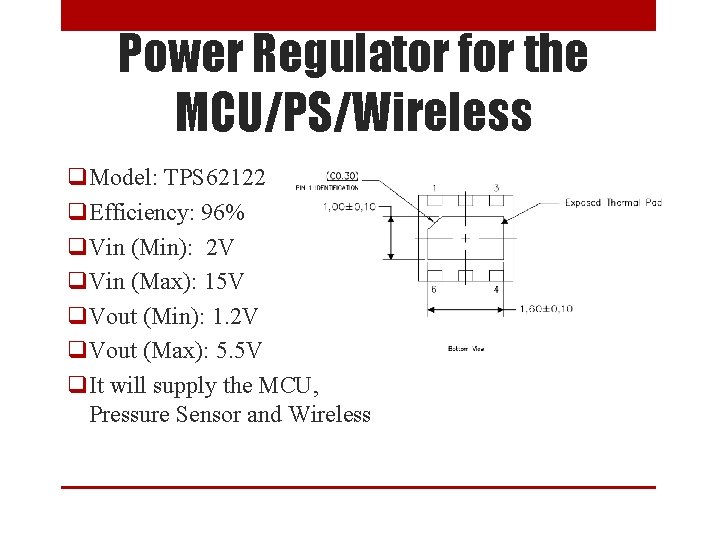
Power Regulator for the MCU/PS/Wireless q. Model: TPS 62122 q. Efficiency: 96% q. Vin (Min): 2 V q. Vin (Max): 15 V q. Vout (Min): 1. 2 V q. Vout (Max): 5. 5 V q. It will supply the MCU, Pressure Sensor and Wireless
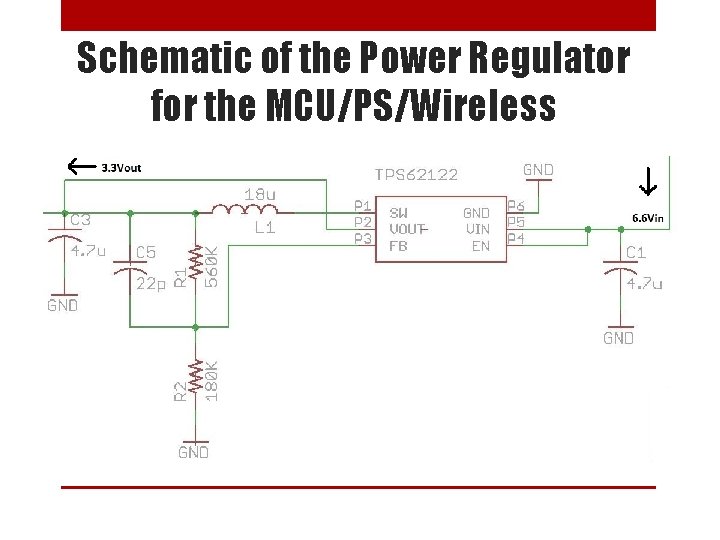
Schematic of the Power Regulator for the MCU/PS/Wireless
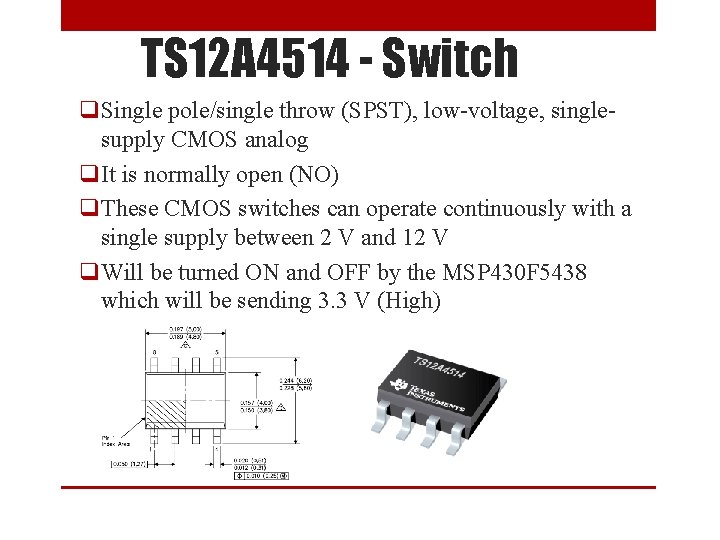
TS 12 A 4514 - Switch q. Single pole/single throw (SPST), low-voltage, singlesupply CMOS analog q. It is normally open (NO) q. These CMOS switches can operate continuously with a single supply between 2 V and 12 V q. Will be turned ON and OFF by the MSP 430 F 5438 which will be sending 3. 3 V (High)
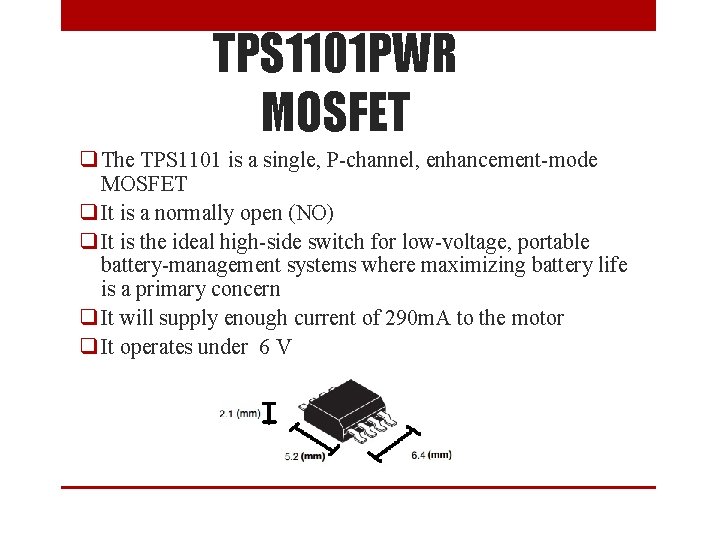
TPS 1101 PWR MOSFET q The TPS 1101 is a single, P-channel, enhancement-mode MOSFET q It is a normally open (NO) q It is the ideal high-side switch for low-voltage, portable battery-management systems where maximizing battery life is a primary concern q It will supply enough current of 290 m. A to the motor q It operates under 6 V
Printed Circuit Board (PCB)

PCB Design Data Values Software EAGLE Manufacturer's Penta. Logix, Inc. & ”Just In Time” Size 4” x 3” Layers 2 Components 62
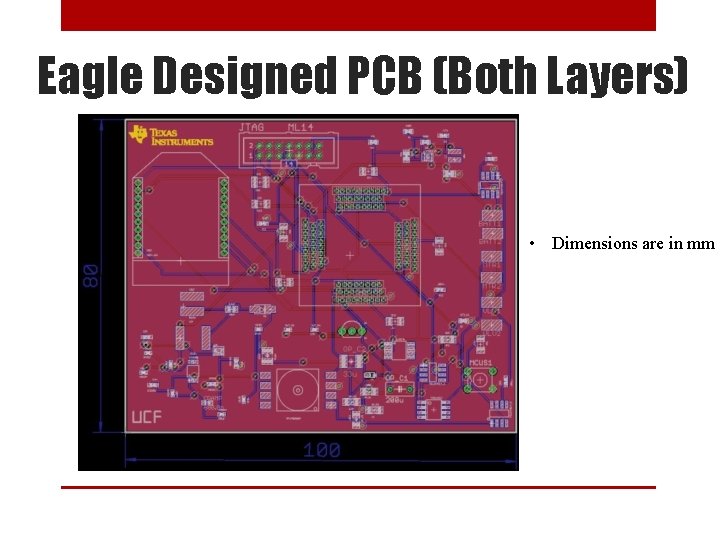
Eagle Designed PCB (Both Layers) • Dimensions are in mm
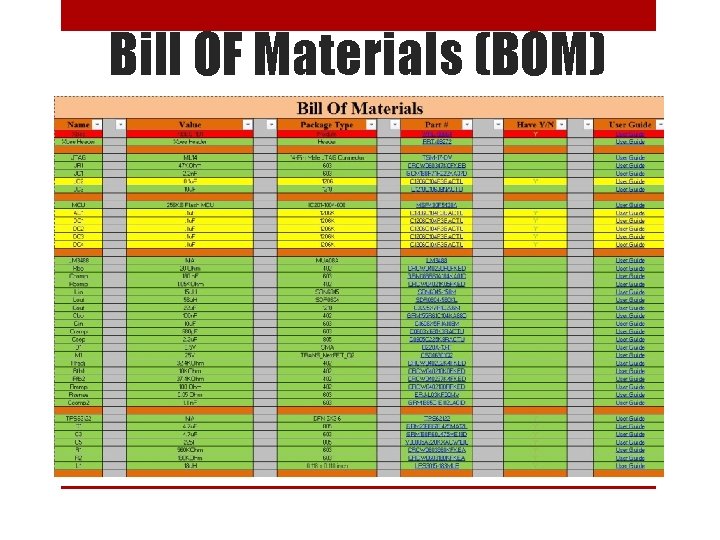
Bill OF Materials (BOM)
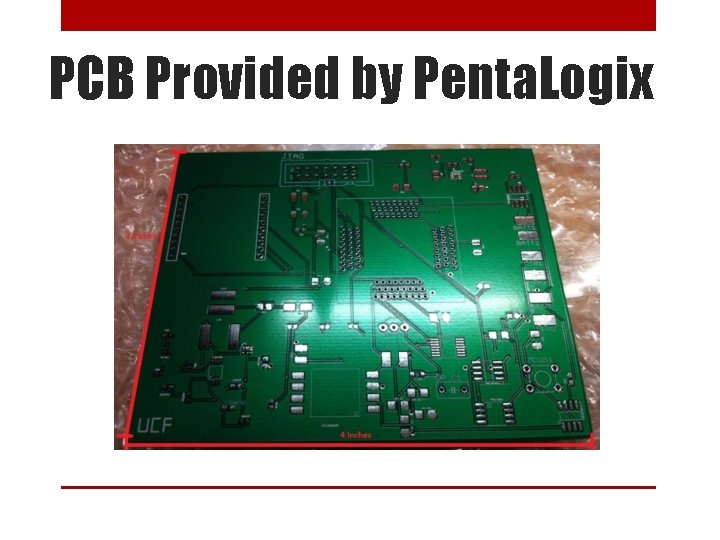
PCB Provided by Penta. Logix
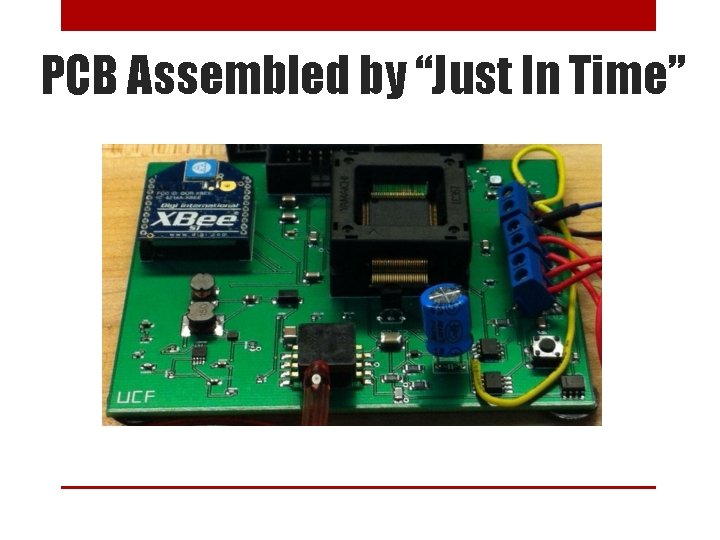
PCB Assembled by “Just In Time”
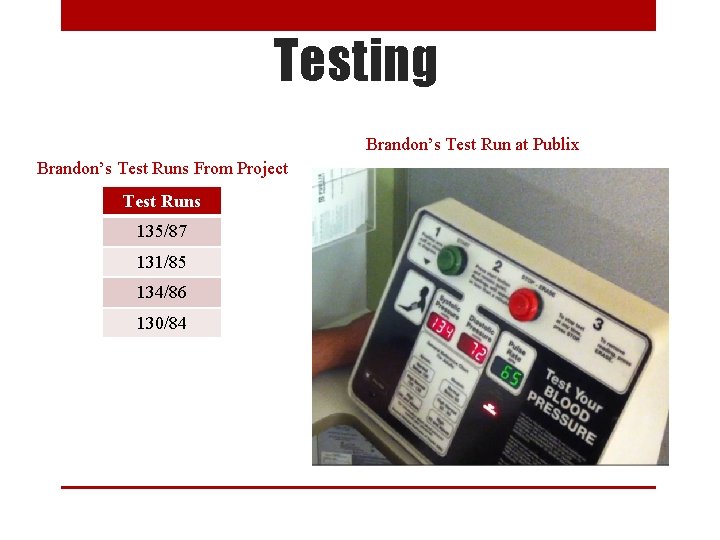
Testing Brandon’s Test Run at Publix Brandon’s Test Runs From Project Test Runs 135/87 131/85 134/86 130/84
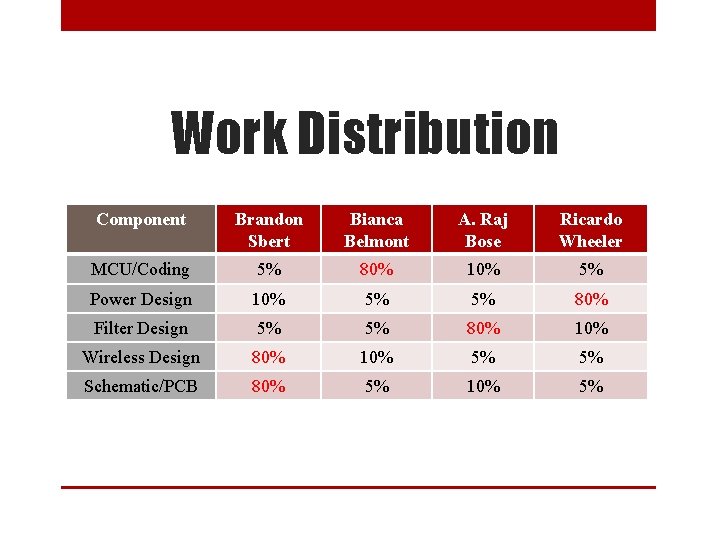
Work Distribution Component Brandon Sbert Bianca Belmont A. Raj Bose Ricardo Wheeler MCU/Coding 5% 80% 10% 5% Power Design 10% 5% 5% 80% Filter Design 5% 5% 80% 10% Wireless Design 80% 10% 5% 5% Schematic/PCB 80% 5% 10% 5%
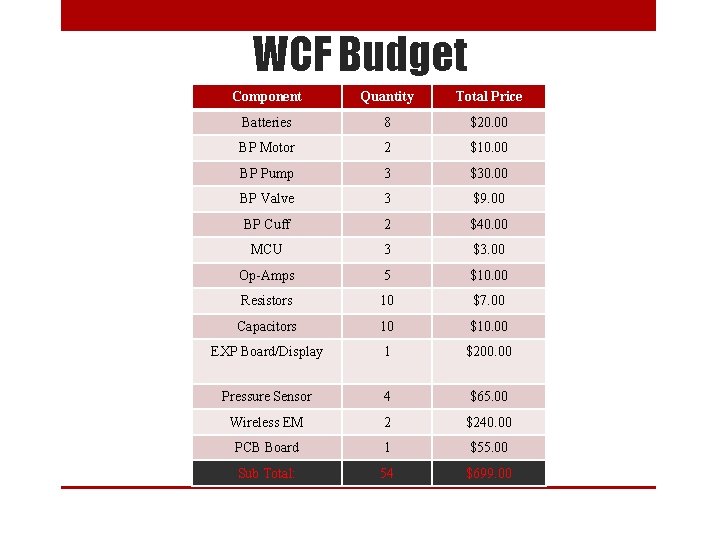
WCF Budget Component Quantity Total Price Batteries 8 $20. 00 BP Motor 2 $10. 00 BP Pump 3 $30. 00 BP Valve 3 $9. 00 BP Cuff 2 $40. 00 MCU 3 $3. 00 Op-Amps 5 $10. 00 Resistors 10 $7. 00 Capacitors 10 $10. 00 EXP Board/Display 1 $200. 00 Pressure Sensor 4 $65. 00 Wireless EM 2 $240. 00 PCB Board 1 $55. 00 Sub Total: 54 $699. 00
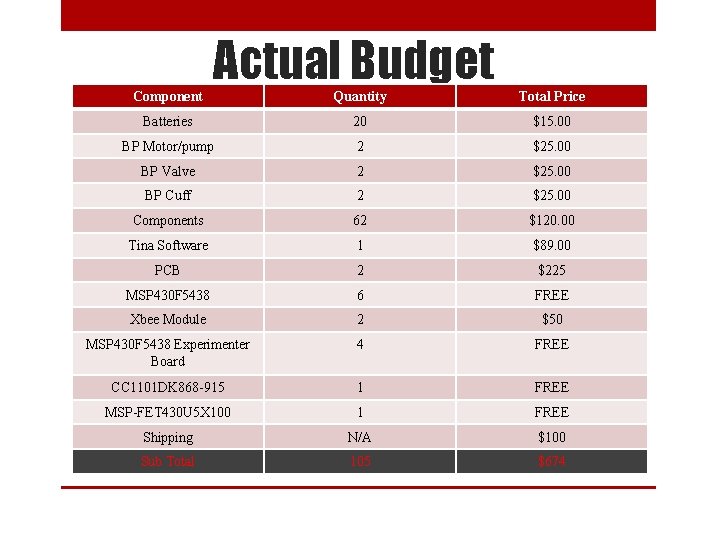
Component Actual Budget Quantity Total Price Batteries 20 $15. 00 BP Motor/pump 2 $25. 00 BP Valve 2 $25. 00 BP Cuff 2 $25. 00 Components 62 $120. 00 Tina Software 1 $89. 00 PCB 2 $225 MSP 430 F 5438 6 FREE Xbee Module 2 $50 MSP 430 F 5438 Experimenter Board 4 FREE CC 1101 DK 868 -915 1 FREE MSP-FET 430 U 5 X 100 1 FREE Shipping N/A $100 Sub Total 105 $674
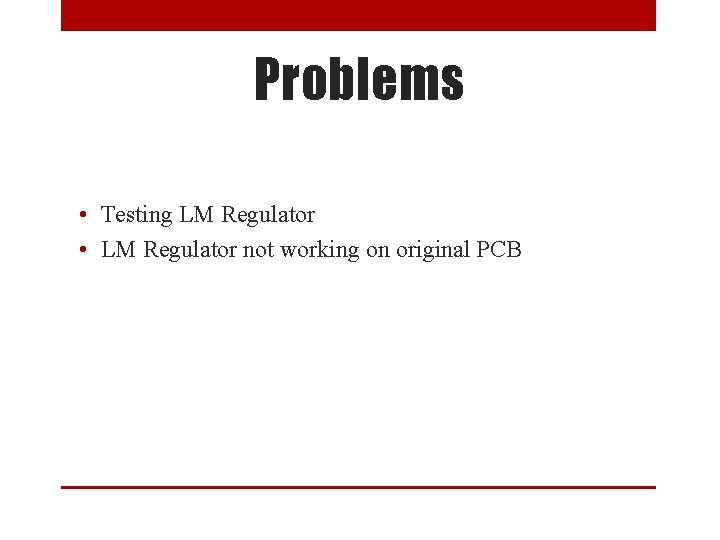
Problems • Testing LM Regulator • LM Regulator not working on original PCB

Questions?
- Slides: 52