
Blood Pressure Anatomy Physiology Measurement of the pressure
Blood Pressure Anatomy & Physiology

Measurement of the pressure of the blood exerted against the walls of the arteries.
For a better understanding of blood pressure watch the following video? Watch the video, you can click on the hyperlink or copy and paste the link into your browser https: //www. youtube. com/watch? v=q. Wti 31 7 qb_w

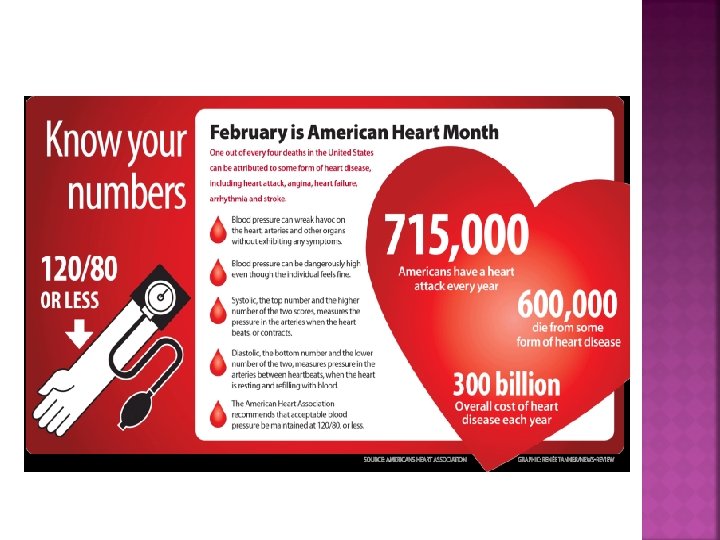
Recorded as 2 measurements Systolic: Top number in the blood pressure reading Pressure in the arteries when the heart contracts Normal is less than 120 Diastolic Bottom number Pressure in the arteries when the heart is at rest Normal is less than 80

Click through the slide show from the American Heart Association to learn more about how blood pressure affects the heart and arteries Click the hyperlink or copy and paste the link into your browser http: //watchlearnlive. heart. org/CVML_Play er. php? module. Select=bpanat

Amount of blood and fluids present in the body Condition of the arteries Force of the heartbeat
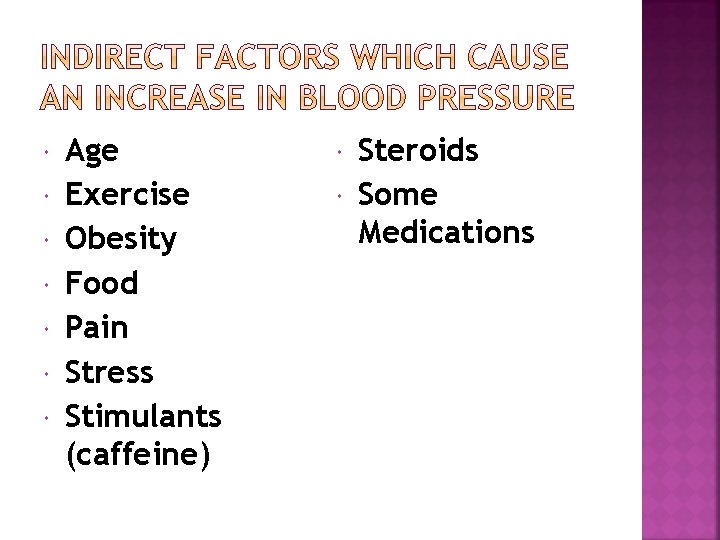
Age Exercise Obesity Food Pain Stress Stimulants (caffeine) Steroids Some Medications
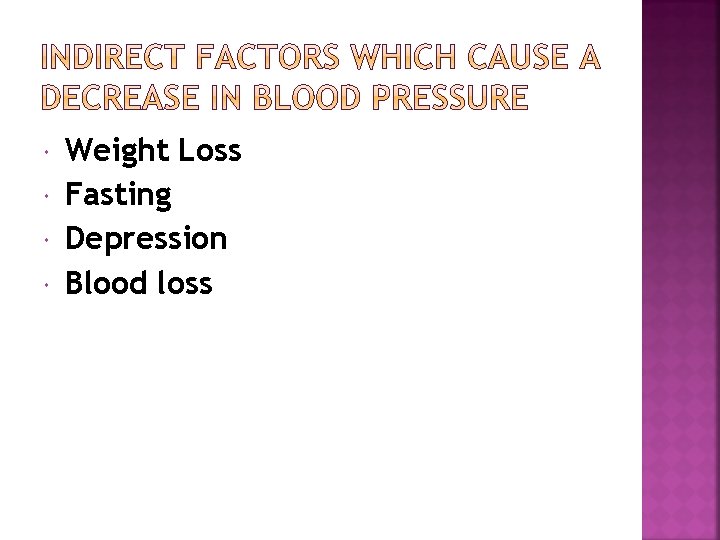
Weight Loss Fasting Depression Blood loss
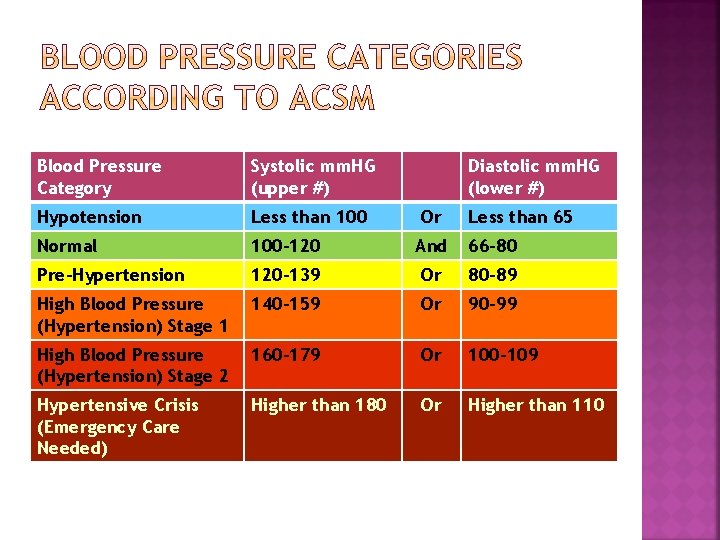
Blood Pressure Category Systolic mm. HG (upper #) Diastolic mm. HG (lower #) Hypotension Less than 100 Normal 100 -120 And 66 -80 Pre-Hypertension 120 -139 Or 80 -89 High Blood Pressure (Hypertension) Stage 1 140 -159 Or 90 -99 High Blood Pressure (Hypertension) Stage 2 160 -179 Or 100 -109 Hypertensive Crisis (Emergency Care Needed) Higher than 180 Or Higher than 110 Or Less than 65

Known as low blood pressure. Occurs when systolic pressure is less than 100 mm. Hg or Diastolic pressure is less than 65 mm. Hg. Symptoms include dizziness, lightheadedness and/or fainting
May indicate shock, dehydration or internal injury. May be caused by heart failure, heat exhaustion, heat stroke, diabetes or liver disease.

Also known as postural hypotension Form of low blood pressure that happens when you stand up from sitting or lying down. Caused by blood pooling in the legs Can make you feel dizzy, lightheaded or even cause you to faint.
Known as high blood pressure. Occurs when systolic pressure is greater than 140 mm. Hg or Diastolic pressure is more than 90 mm. Hg. Can be a dangerous precursor (sign) to cardiac problems and strokes.
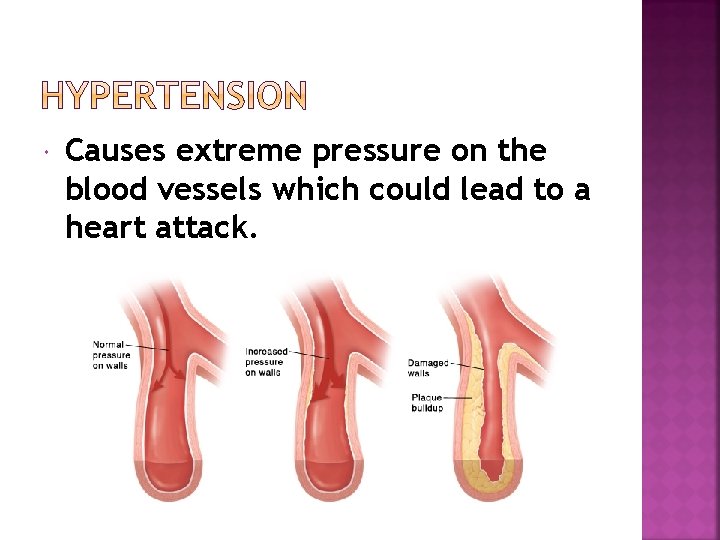
Causes extreme pressure on the blood vessels which could lead to a heart attack.
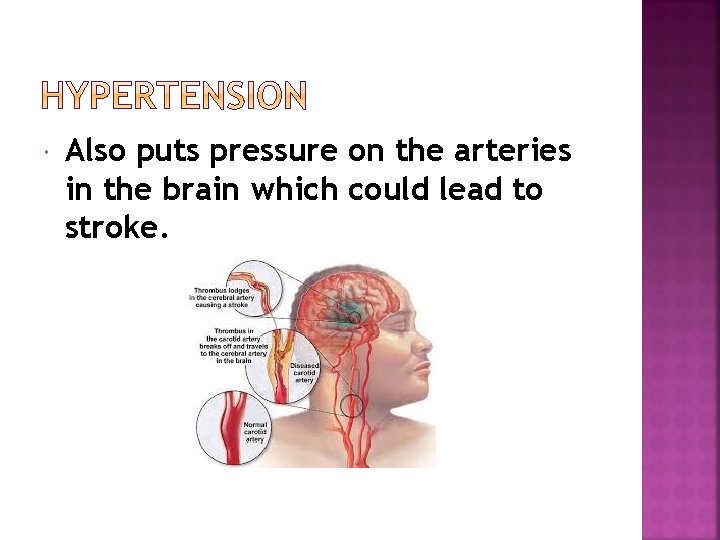
Also puts pressure on the arteries in the brain which could lead to stroke.
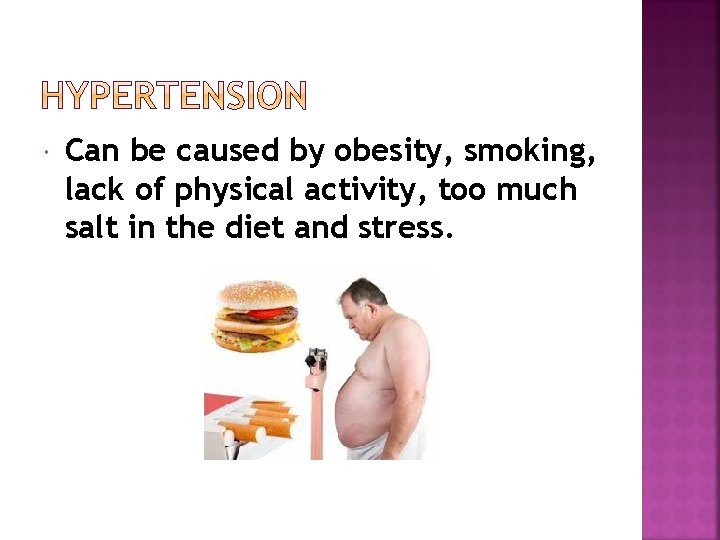
Can be caused by obesity, smoking, lack of physical activity, too much salt in the diet and stress.
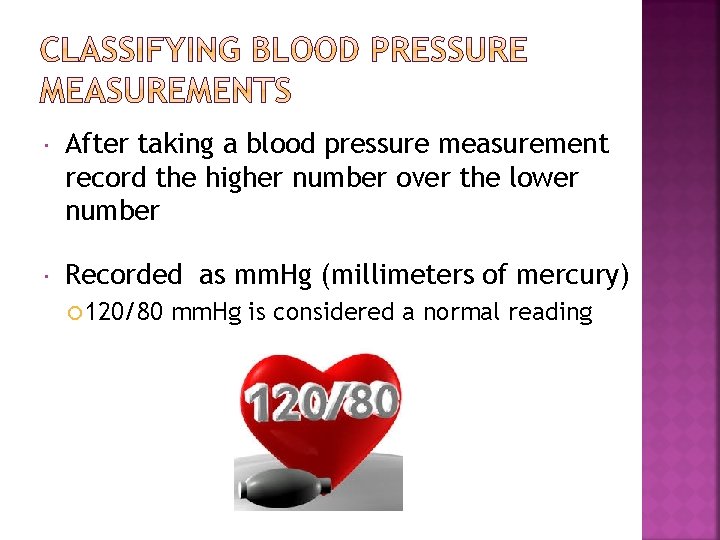
After taking a blood pressure measurement record the higher number over the lower number Recorded as mm. Hg (millimeters of mercury) 120/80 mm. Hg is considered a normal reading
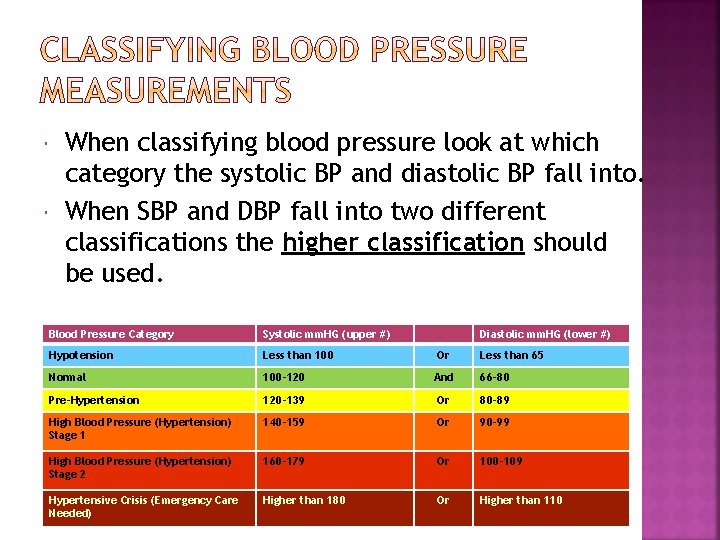
When classifying blood pressure look at which category the systolic BP and diastolic BP fall into. When SBP and DBP fall into two different classifications the higher classification should be used. Blood Pressure Category Systolic mm. HG (upper #) Hypotension Less than 100 Normal 100 -120 And 66 -80 120 -139 Or 80 -89 High Blood Pressure (Hypertension) Stage 1 140 -159 Or 90 -99 High Blood Pressure (Hypertension) Stage 2 160 -179 Or 100 -109 Hypertensive Crisis (Emergency Care Needed) Higher than 180 Or Higher than 110 Pre-Hypertension Recorded Diastolic mm. HG (lower #) Or Less than 65 as 120/80 mm. Hg (millimeters of mercury)
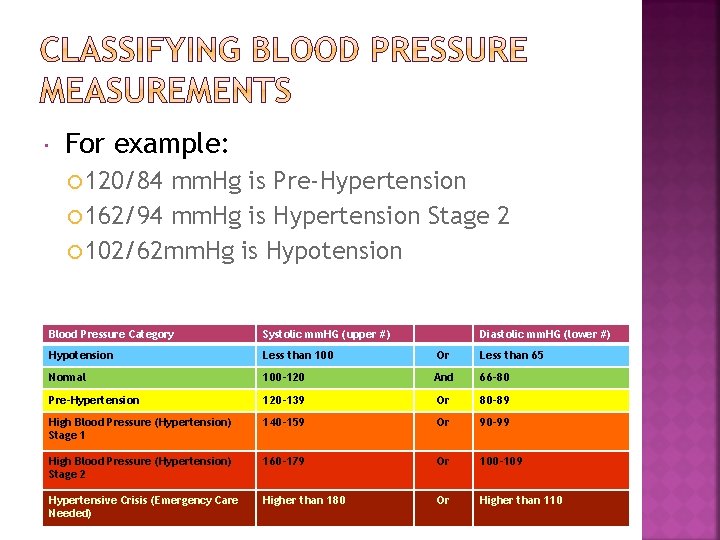
For example: 120/84 mm. Hg is Pre-Hypertension 162/94 mm. Hg is Hypertension Stage 2 102/62 mm. Hg is Hypotension Blood Pressure Category Systolic mm. HG (upper #) Diastolic mm. HG (lower #) Hypotension Less than 100 Normal 100 -120 And 66 -80 Pre-Hypertension 120 -139 Or 80 -89 High Blood Pressure (Hypertension) Stage 1 140 -159 Or 90 -99 High Blood Pressure (Hypertension) Stage 2 160 -179 Or 100 -109 Hypertensive Crisis (Emergency Care Needed) Higher than 180 Or Higher than 110 Or Less than 65
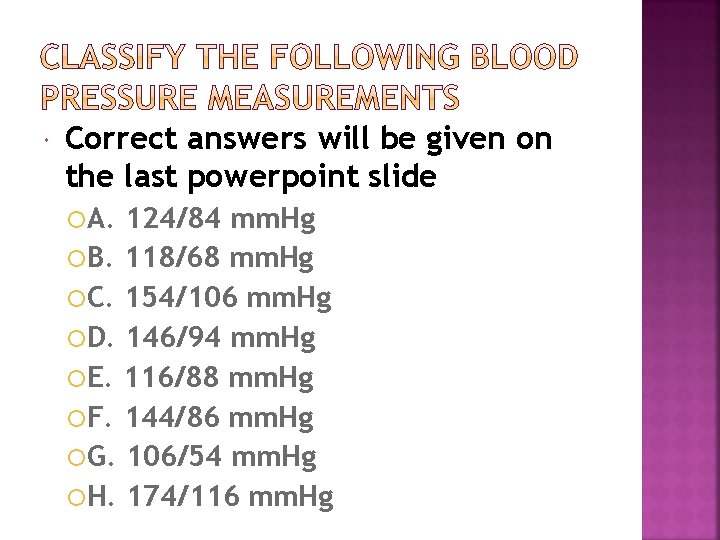
Correct answers will be given on the last powerpoint slide A. 124/84 mm. Hg B. 118/68 mm. Hg C. 154/106 mm. Hg D. 146/94 mm. Hg E. 116/88 mm. Hg F. 144/86 mm. Hg G. 106/54 mm. Hg H. 174/116 mm. Hg
Hypertension is a condition in which the resting blood pressure, either systolic, diastolic or both, is chronically elevated above the optimal or desired level. Hypertension cannot be diagnosed from a single measurement; multiple measurements must be obtained on separate days.
Please note health and fitness professionals CANNOT diagnose a client with hypertension. Only a medical doctor can diagnose clients with hypertension. If abnormal readings are taken and clients are not aware of a hypertension diagnosis clients should be referred to a medical doctor.
One in three adults (70 million people) have high blood pressure, but more than half don’t know they have it Most often people don’t have symptoms until it’s too late Unless you are having your blood pressure monitored regularly, you won’t know if you’re at risk
Why is hypertension important to control? Watch the video, you can click on the hyperlink or copy and paste the link into your browser https: //www. youtube. com/watch? v=Vn 2 d. Q _fl. ZR 0
Damage to the heart and coronary arteries, including heart attack, heart disease, congestive heart failure, and atherosclerosis (fatty buildups in the arteries that cause them to harden) Stroke Kidney Disease Vision Loss Memory Loss Fluid in lungs Angina
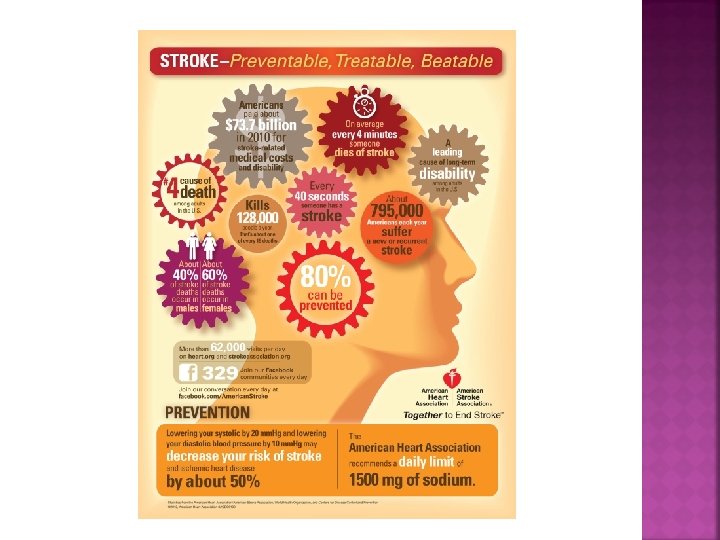

Medications That Increase BP Acetaminophen (Tylenol, Ibuprofen etc. ) Antidepressants Hormonal Birth Control Caffeine Cold Medicines (decongestants) Herbal Supplements (Ephedra, Guarana) Illegal drugs – Steroids, Cocaine, Ecstasy, Methamphetamines Medications That Decrease BP Beta-Blockers – cause heart rates to stay relatively low even when exercising ACE Inhibitors – work by flushing excess water and sodium out of the body – makes you have to urinate a lot Calcium Channel Blockers – prevents calcium from entering the muscles of the heart, causes a decreased force of contraction
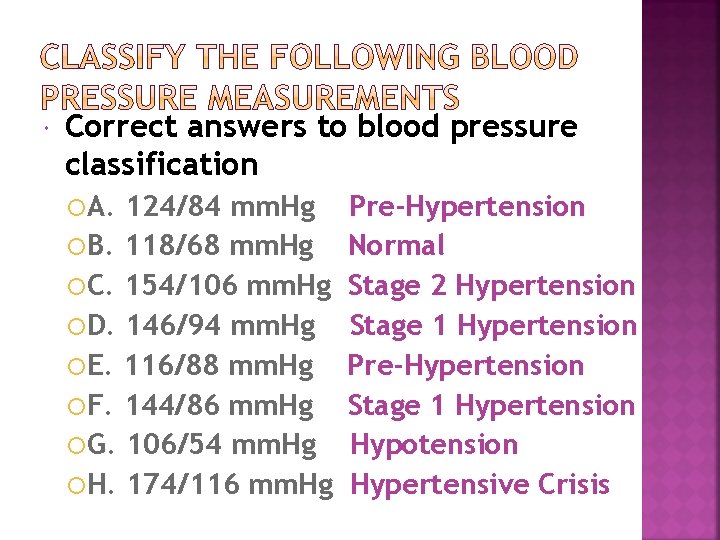
Correct answers to blood pressure classification A. 124/84 mm. Hg B. 118/68 mm. Hg C. 154/106 mm. Hg D. 146/94 mm. Hg E. 116/88 mm. Hg F. 144/86 mm. Hg G. 106/54 mm. Hg H. 174/116 mm. Hg Pre-Hypertension Normal Stage 2 Hypertension Stage 1 Hypertension Pre-Hypertension Stage 1 Hypertension Hypotension Hypertensive Crisis
- Slides: 29