
BLOOD PHLEBOTOMIST person trained to draw blood from
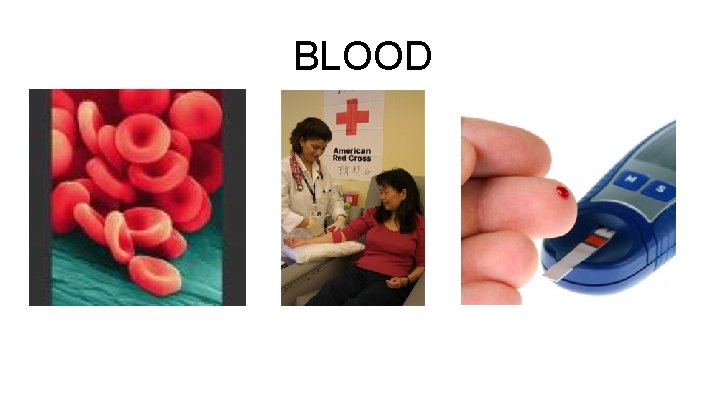
BLOOD
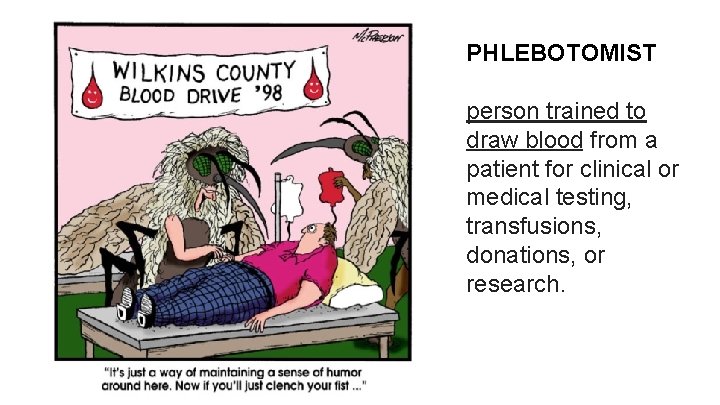
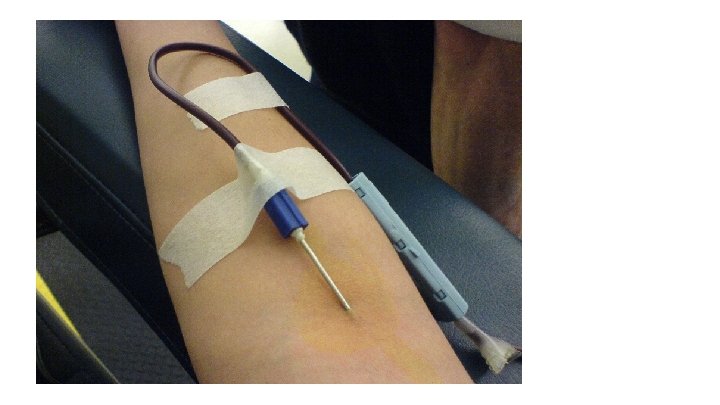
PHLEBOTOMIST person trained to draw blood from a patient for clinical or medical testing, transfusions, donations, or research.
Blood transports substances and maintains homeostasis in the body Hematophobia = fear of blood
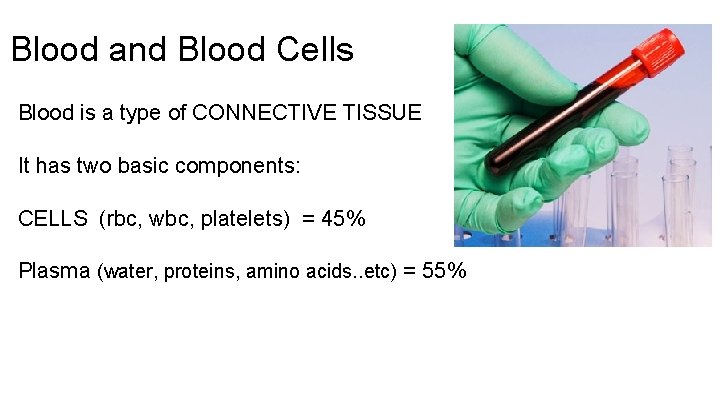
Blood and Blood Cells Blood is a type of CONNECTIVE TISSUE It has two basic components: CELLS (rbc, wbc, platelets) = 45% Plasma (water, proteins, amino acids. . etc) = 55%
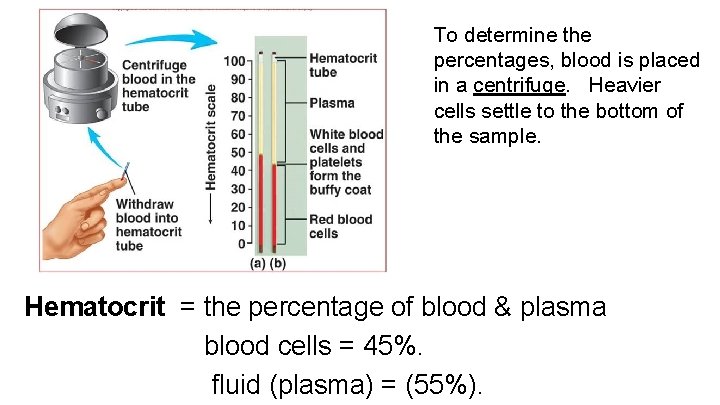
To determine the percentages, blood is placed in a centrifuge. Heavier cells settle to the bottom of the sample. Hematocrit = the percentage of blood & plasma blood cells = 45%. fluid (plasma) = (55%).
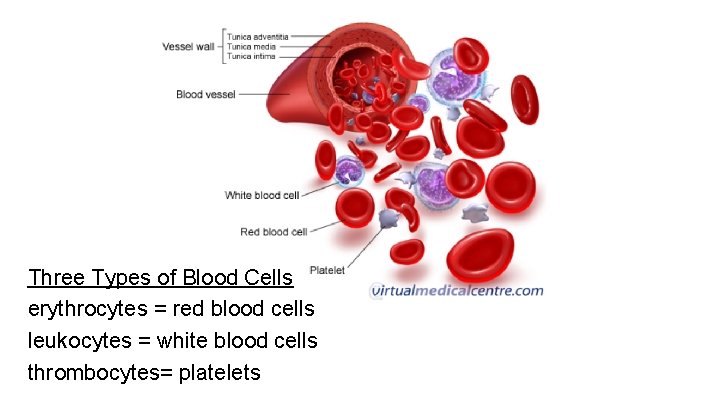
Three Types of Blood Cells erythrocytes = red blood cells leukocytes = white blood cells thrombocytes= platelets
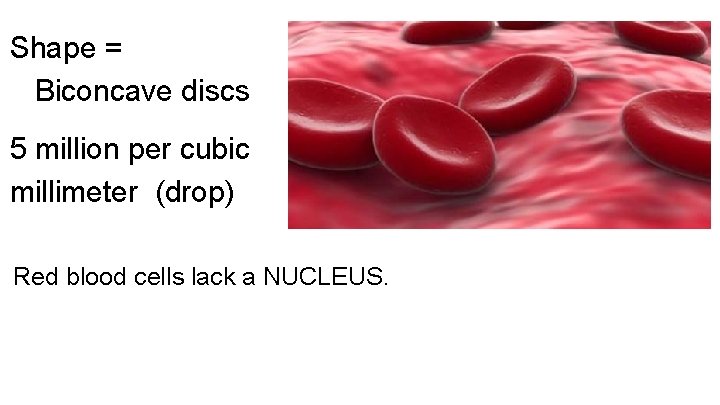
Shape = Biconcave discs 5 million per cubic millimeter (drop) Red blood cells lack a NUCLEUS.

HEMATOPOEISIS – formation of blood cells -- occurs in the bone marrow Old blood cells are destroyed by the liver & spleen - phagocytosis
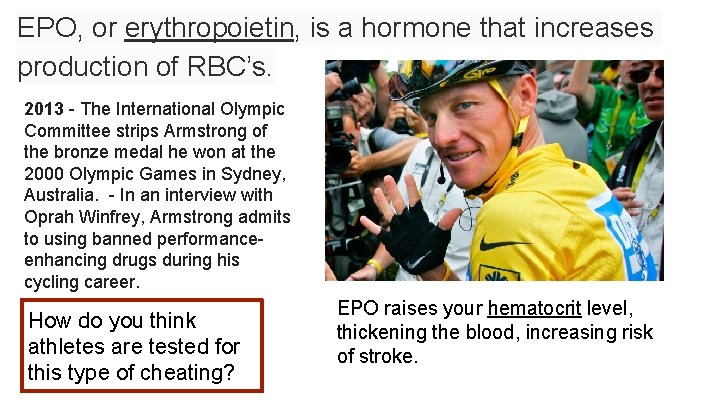
EPO, or erythropoietin, is a hormone that increases production of RBC’s. 2013 - The International Olympic Committee strips Armstrong of the bronze medal he won at the 2000 Olympic Games in Sydney, Australia. - In an interview with Oprah Winfrey, Armstrong admits to using banned performanceenhancing drugs during his cycling career. How do you think athletes are tested for this type of cheating? EPO raises your hematocrit level, thickening the blood, increasing risk of stroke.

Main Functions of RBCs Transports oxygen, remove carbon dioxide What part of the cell needs oxygen? HEMOGLOBIN - protein that combines with O 2 IRON is the binding site of oxygen
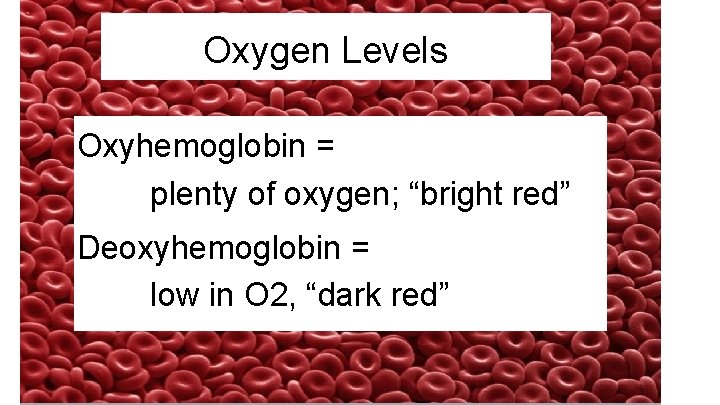
Oxygen Levels Oxyhemoglobin = plenty of oxygen; “bright red” Deoxyhemoglobin = low in O 2, “dark red”
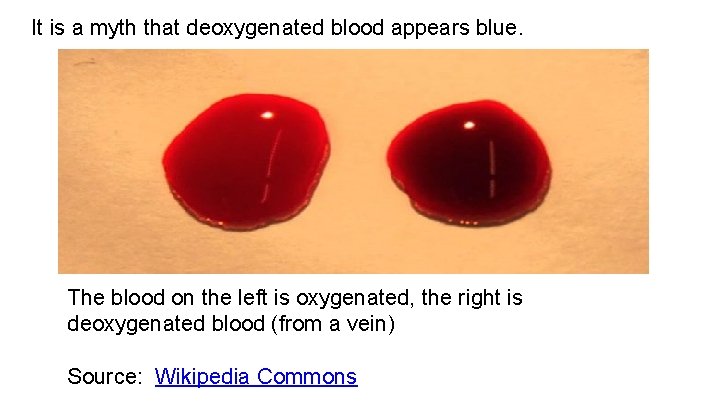
It is a myth that deoxygenated blood appears blue. The blood on the left is oxygenated, the right is deoxygenated blood (from a vein) Source: Wikipedia Commons
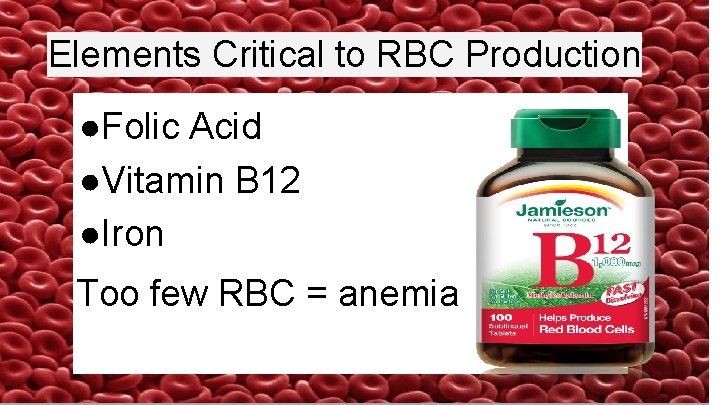
Elements Critical to RBC Production ●Folic Acid ●Vitamin B 12 ●Iron Too few RBC = anemia
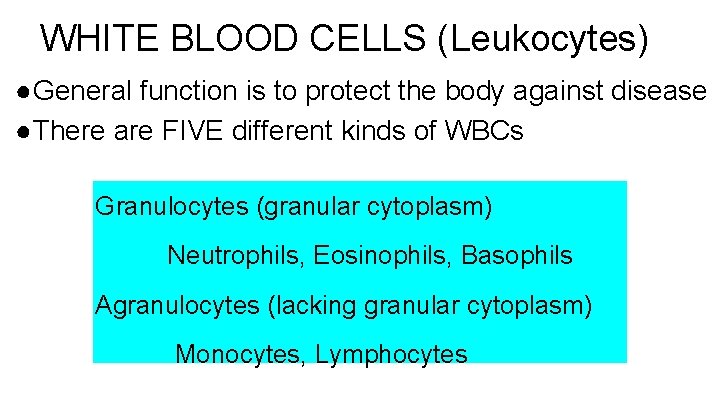
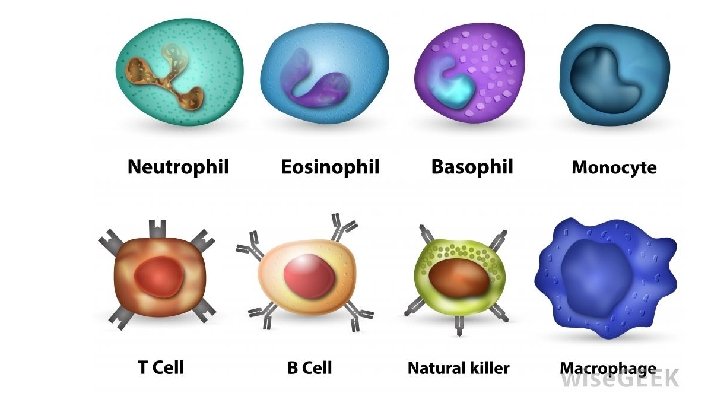
WHITE BLOOD CELLS (Leukocytes) ●General function is to protect the body against disease ●There are FIVE different kinds of WBCs Granulocytes (granular cytoplasm) Neutrophils, Eosinophils, Basophils Agranulocytes (lacking granular cytoplasm) Monocytes, Lymphocytes

The white blood cells are found within the red blood cells, there are not as many WBC’s and generally, they are larger than RBC’s.
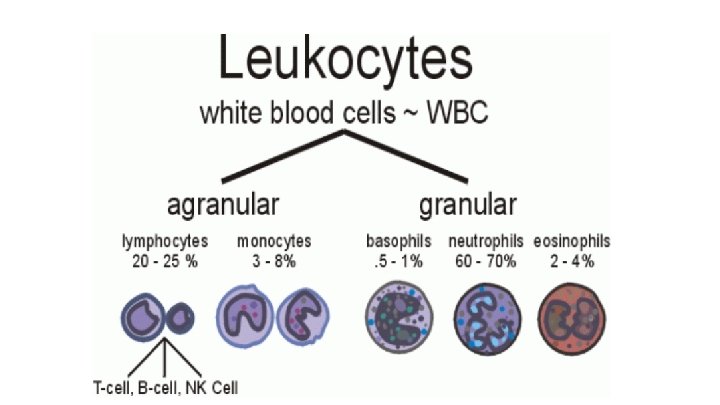

Neutrophil (nucleus has several lobes) -Active phagocytes -60% of WBC -Present in the pus

neutrophil (yellow) phagocytosing anthrax bacilli (orange)
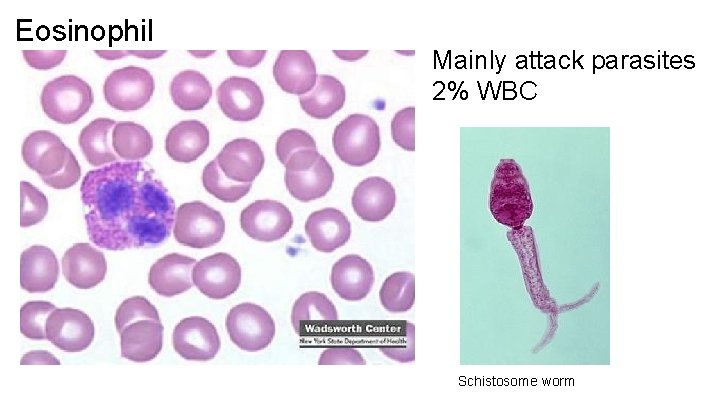
Eosinophil Mainly attack parasites 2% WBC Schistosome worm
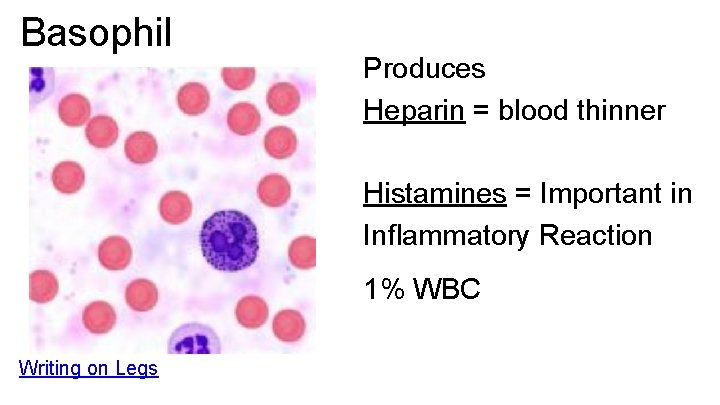
Basophil Produces Heparin = blood thinner Histamines = Important in Inflammatory Reaction 1% WBC Writing on Legs

Dermatographia: Immune system releases excess amounts of histamine causing welts to appear when lightly scratched. Cold Urticaria (essentially meaning "cold hives") is an where hives or large red welts form on the skin after exposure to a cold stimulus.

Monocyte (large cell, horseshoe shaped nucleus) Can become macrophages or dendritic cells -phagocytosis -antigen-presenting

Dendritic cells present antigens to T cells. They act as messengers.
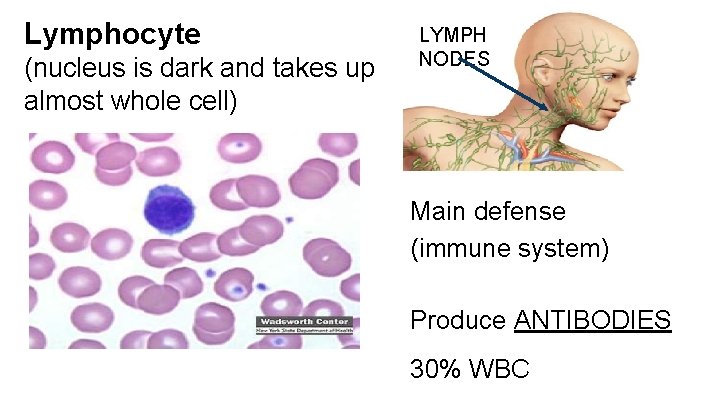
Lymphocyte (nucleus is dark and takes up almost whole cell) LYMPH NODES Main defense (immune system) Produce ANTIBODIES 30% WBC
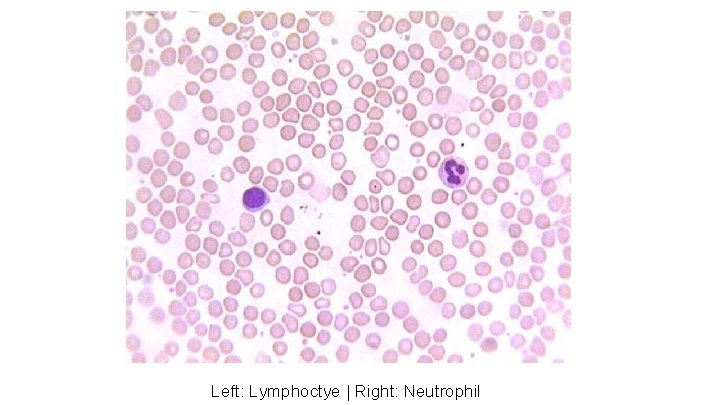
Left: Lymphoctye | Right: Neutrophil
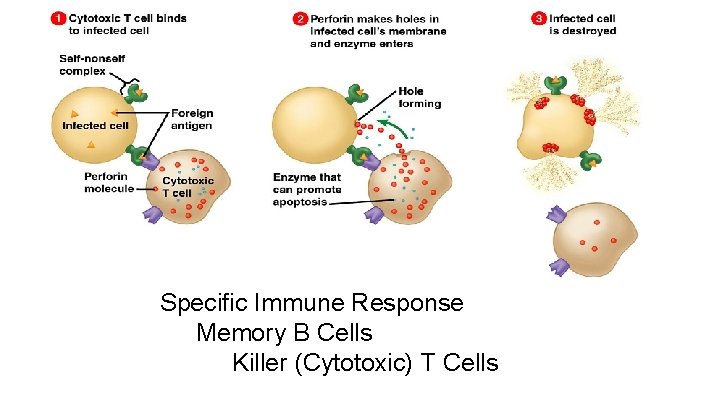
Specific Immune Response Memory B Cells Killer (Cytotoxic) T Cells
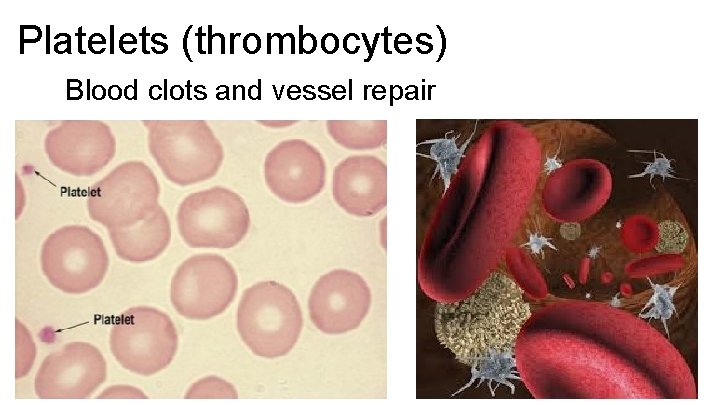
Platelets (thrombocytes) Blood clots and vessel repair

PLASMA The liquid portion of blood is 92% water Also contains nutrients, gases, vitamins (etc) and plasma proteins
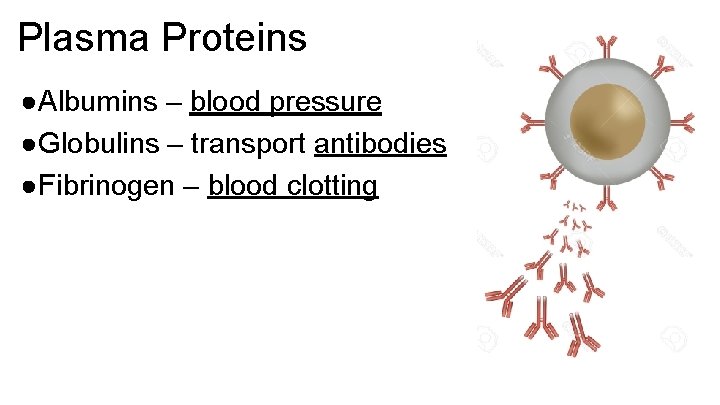
Plasma Proteins ●Albumins – blood pressure ●Globulins – transport antibodies ●Fibrinogen – blood clotting

This machine removes the plasma from the blood and returns the RBC’s to the donor.
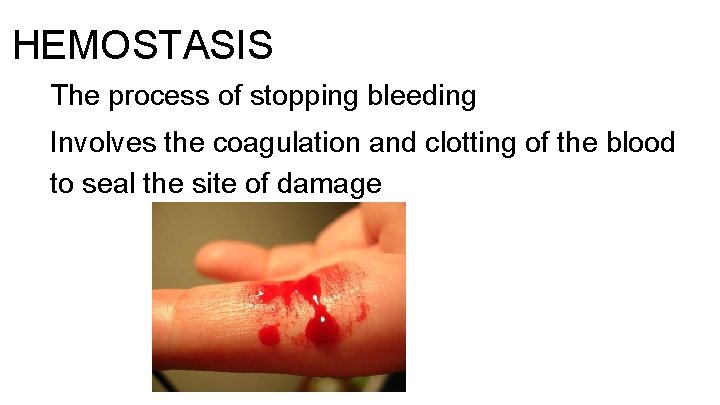
HEMOSTASIS The process of stopping bleeding Involves the coagulation and clotting of the blood to seal the site of damage
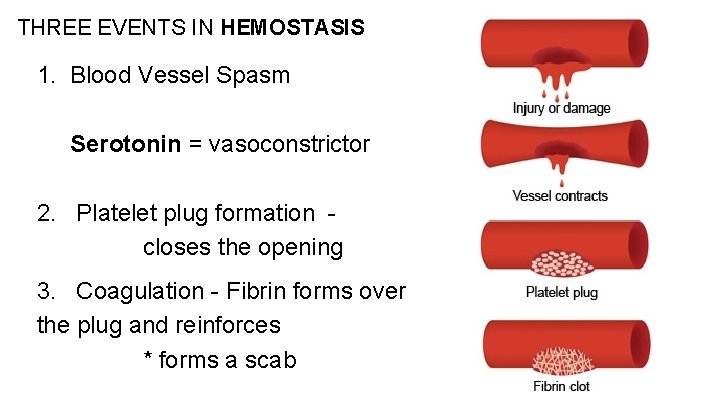
THREE EVENTS IN HEMOSTASIS 1. Blood Vessel Spasm Serotonin = vasoconstrictor 2. Platelet plug formation closes the opening 3. Coagulation - Fibrin forms over the plug and reinforces * forms a scab
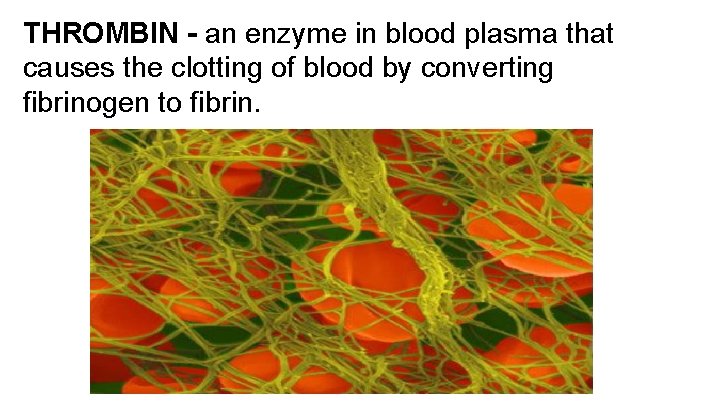
THROMBIN - an enzyme in blood plasma that causes the clotting of blood by converting fibrinogen to fibrin.
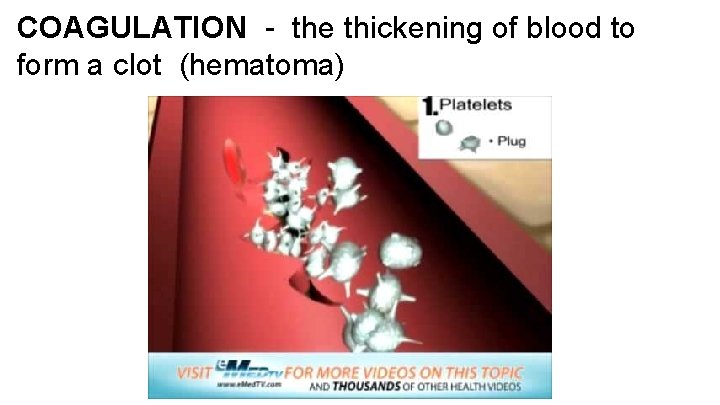
COAGULATION - the thickening of blood to form a clot (hematoma)

Why are newborns given Vitamin K injections? Babies can be given the injection in hospital after they’re born. In newborns, vitamin K can prevent a bleeding disorder called ‘vitamin K deficiency bleeding’ (VKDB), also known as ‘haemorrhagic disease of the newborn’ (HDN).
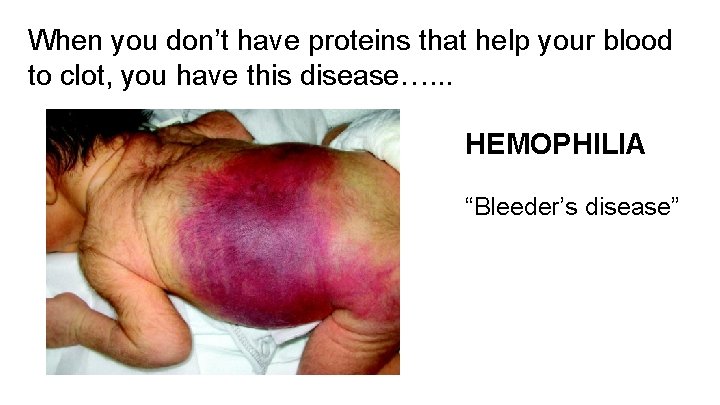
When you don’t have proteins that help your blood to clot, you have this disease…. . . HEMOPHILIA “Bleeder’s disease”
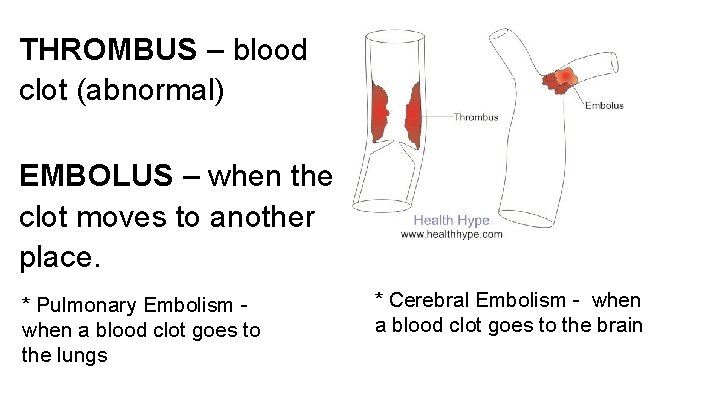
THROMBUS – blood clot (abnormal) EMBOLUS – when the clot moves to another place. * Pulmonary Embolism when a blood clot goes to the lungs * Cerebral Embolism - when a blood clot goes to the brain
- Slides: 42