
Blood Part 2 Clotting and Blood Types B
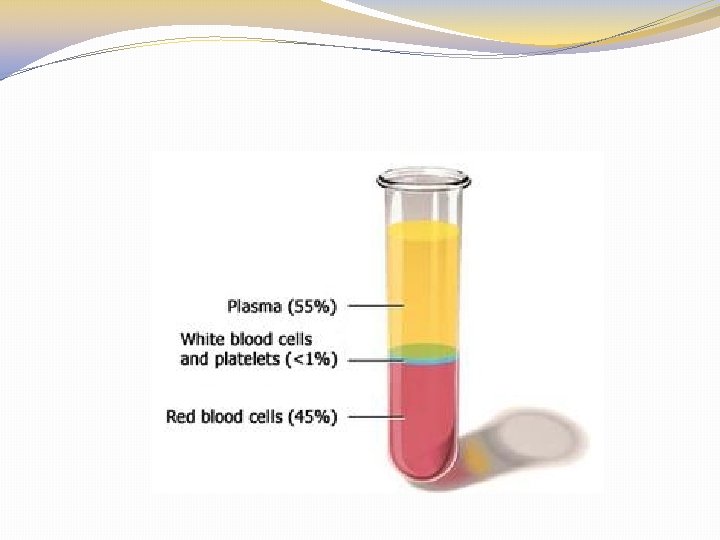
Blood Part 2 Clotting and Blood Types B 11 -3 -02: Compare the characteristics of blood components in terms of appearance, origin, numbers, relative size, and function in the body. (GLO: D 1) Include: plasma, erythrocytes (red blood cells), leukocytes (white blood cells), and thrombocytes (platelets) B 11 -3 -03: Compare and contrast the characteristics of different blood groups. (GLO: D 1) Include: ABO and Rh factor
Essential questions �How does a wound heal? �Why are there different blood types?

Review!
Review! �What are some of the substances that are transported through the body by blood?
Review! �What are some of the substances that are transported through the body by blood? �Dissolved nutrients �Gasses �Hormones �Wastes
Review! �What are the two different components of blood?
Review! �What are the two different components of blood? �Fluid component �Cellular component
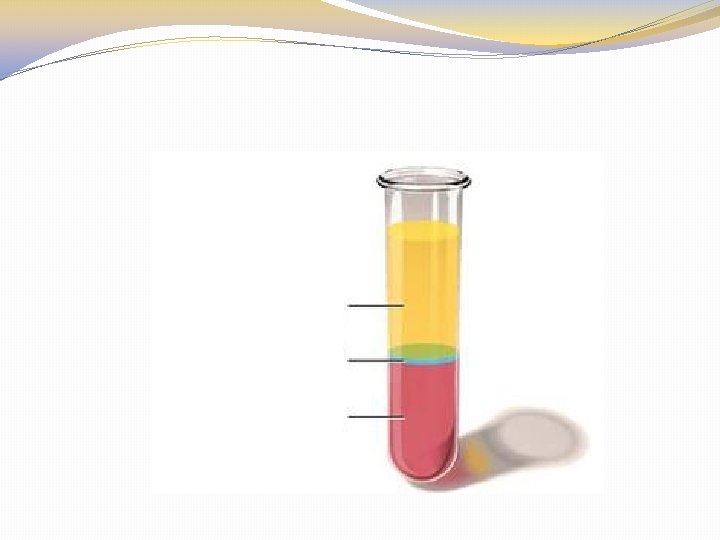
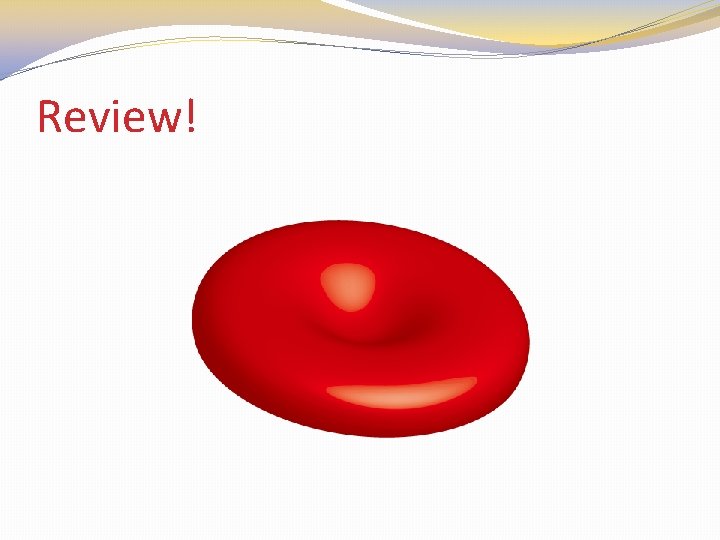
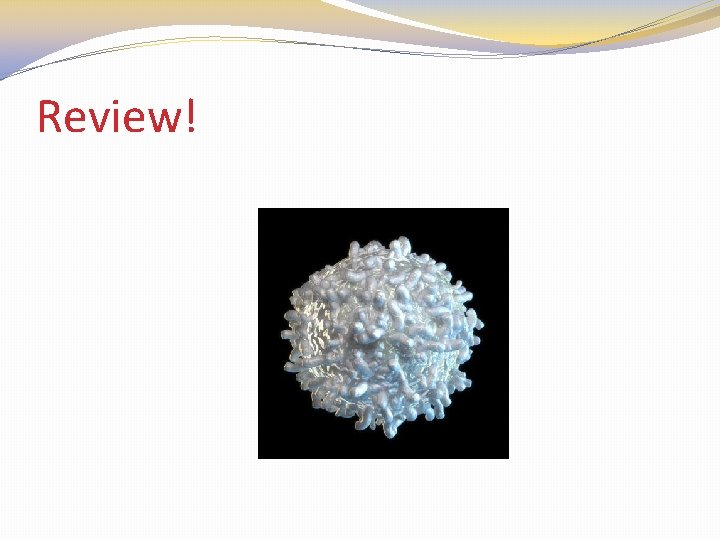
Review! �What are the two different components of blood? �Fluid component � plasma �Cellular component �Erythrocytes= Red blood cells �Leukocytes= White blood cells �Thrombocytes= Platelets
Review!
Review!
Thrombocytes= Platelets �Originate from pinched off pieces of cytoplasm from bone marrow �Lack a nucleus �Very short lifespan � 10 to 12 days
Thrombocytes= Platelets �Function of platelets �Involved in blood clotting �Repair damaged blood vessels or tissue
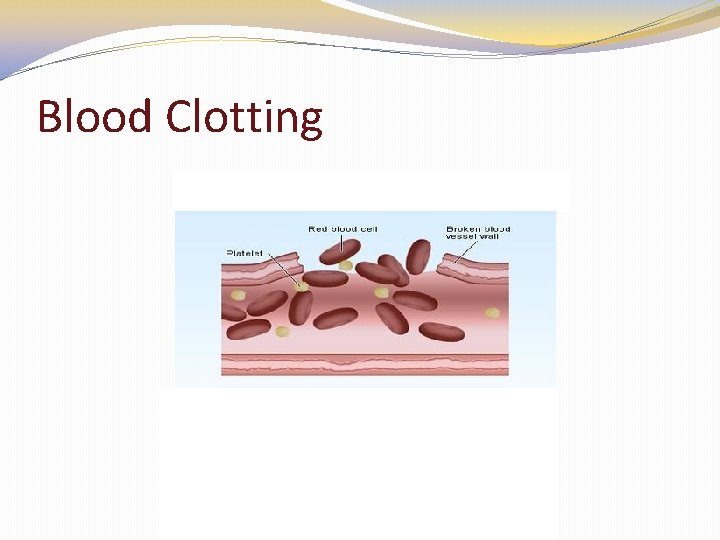
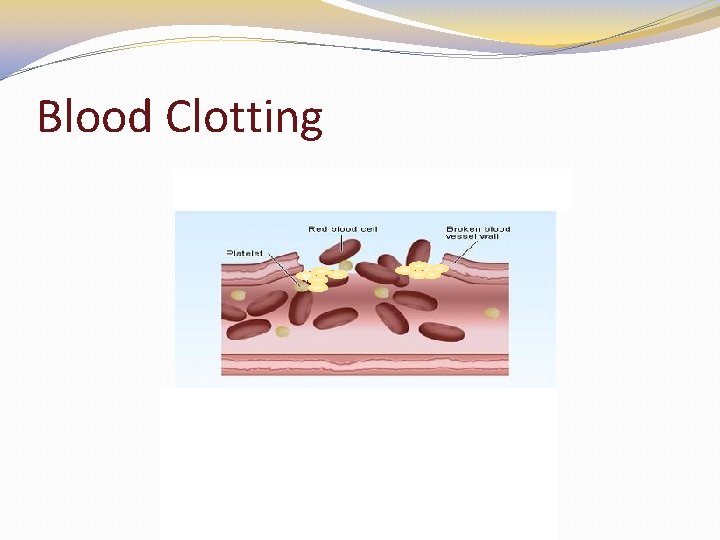
Blood Clotting �Blood clotting prevents humans and animals from bleeding to death after trauma or just wear and tear �Begins when blood comes in contact with injured tissue �Break in blood vessel for example
Blood Clotting
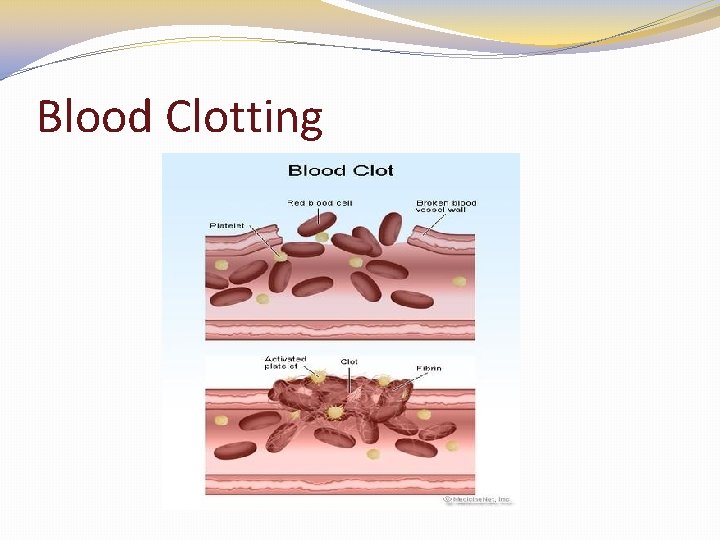
Blood Clotting �When blood comes in contact with the damaged blood vessel thrombocytes begin to stick to it � This begins to partially block the opening
Blood Clotting v
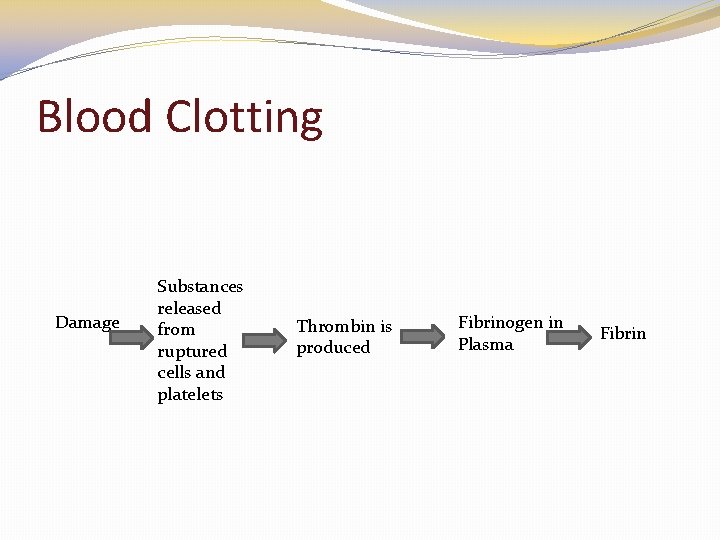
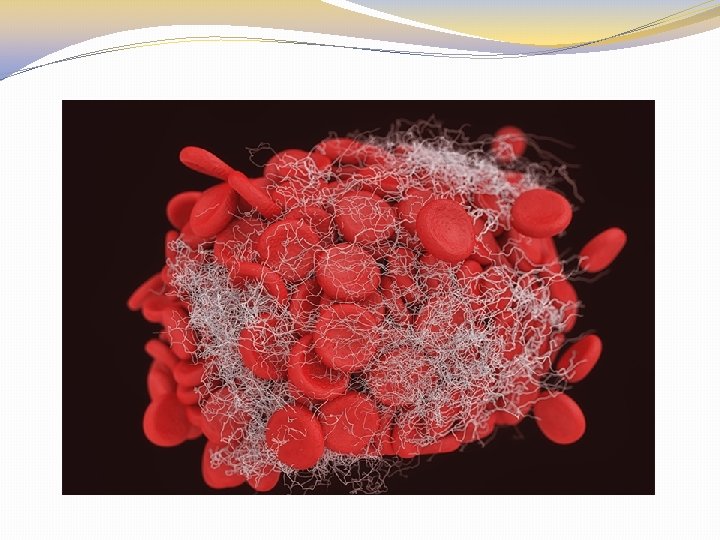
Blood Clotting �Damaged cells and tissue releases substances that stimulates production of the enzyme thrombin �Thrombin �begins the reaction that converts the fibrinogen dissolved in the blood plasma, into fibrin �Fibrin �Insoluble strands of protein �Creates a web that traps more platelets �Platelets contact and pull the fibrin proteins closer together which creates a scab and closes the wound
Blood Clotting Damage Substances released from ruptured cells and platelets Thrombin is produced Fibrinogen in Plasma Fibrin
Blood Clotting
Hemophilia �Disease where someone lacks the factors that cause platelets to stick to an open wound �Causes a weak clot to form �Bleeding lasts longer �Hereditary �Passed down from parents to children �Occurs more often in males
Blood Groups �Video
Blood Type Blood types are determined by your genes before you are born �Gene from mother �Gene from father �Genes determine your blood type by causing agglutinogens to exist on the surface of your erythrocytes
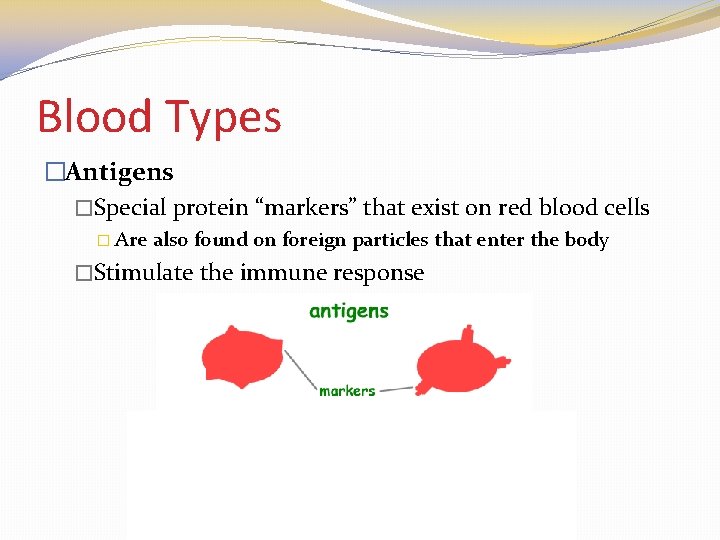
Blood Types �Antigens �Special protein “markers” that exist on red blood cells � Are also found on foreign particles that enter the body �Stimulate the immune response
“ 4” Blood Types �Type A �A antigens present �Type B �B antigens Present �Type AB �Both A and B antigens present �Type O �No antigens present
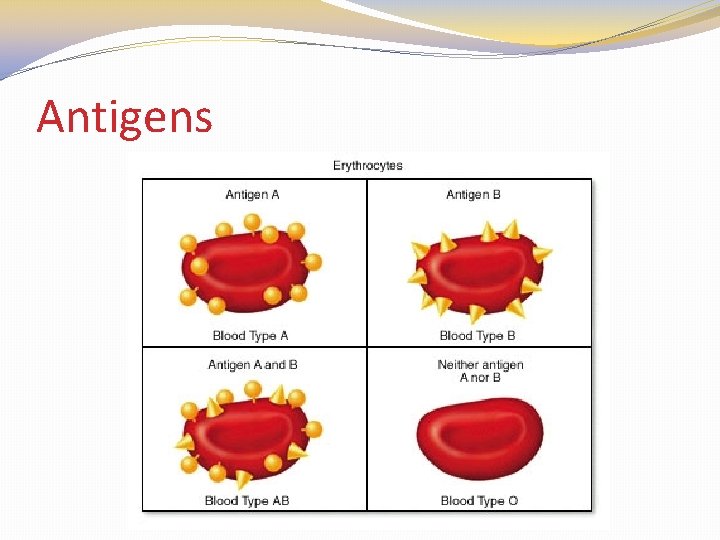
Antigens
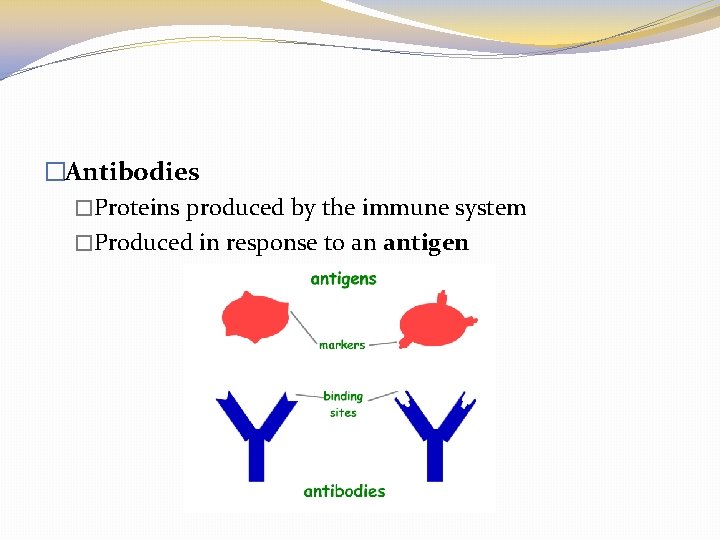
�Antibodies �Proteins produced by the immune system �Produced in response to an antigen
Antibodies �You produce antibodies in your blood plasma �Antibodies are produced for any factor you do not have an antigen for �A blood type has B antibodies �B blood type has A antibodies �AB blood type has no antibodies �Type O has both A and B antibodies
Rh Factor �Scientists sometimes study Rhesus monkeys to learn more about the human anatomy. While studying Rhesus monkeys, a certain blood protein was discovered. This protein is also present in the blood of some people. Other people, however, do not have the protein.
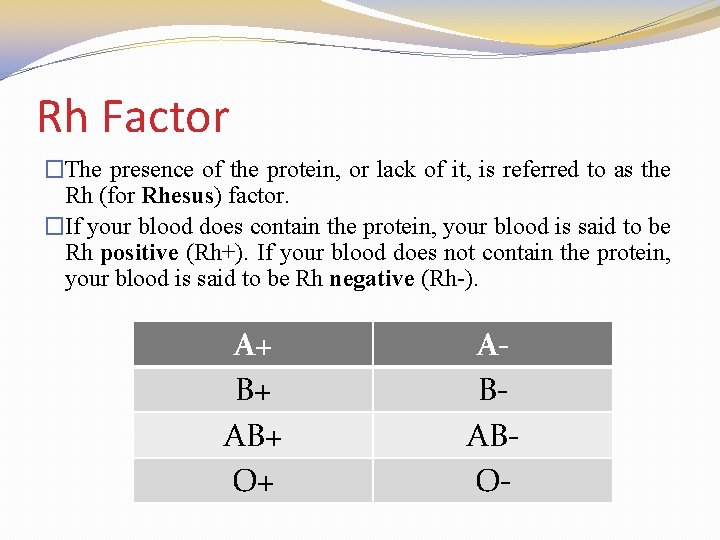
Rh Factor �The presence of the protein, or lack of it, is referred to as the Rh (for Rhesus) factor. �If your blood does contain the protein, your blood is said to be Rh positive (Rh+). If your blood does not contain the protein, your blood is said to be Rh negative (Rh-). A+ B+ AB+ O+ ABABO-
- Slides: 33