
Blood Lecture 3 1 Agranular leukocytes lymphocyte Differential
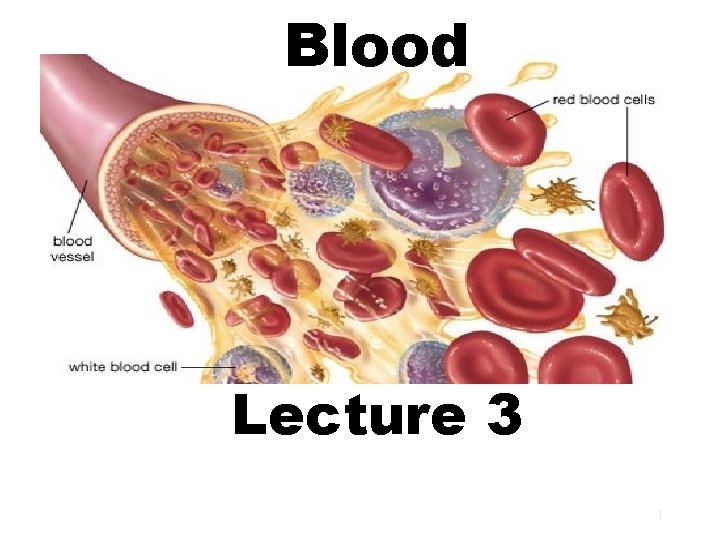
Blood Lecture 3 1
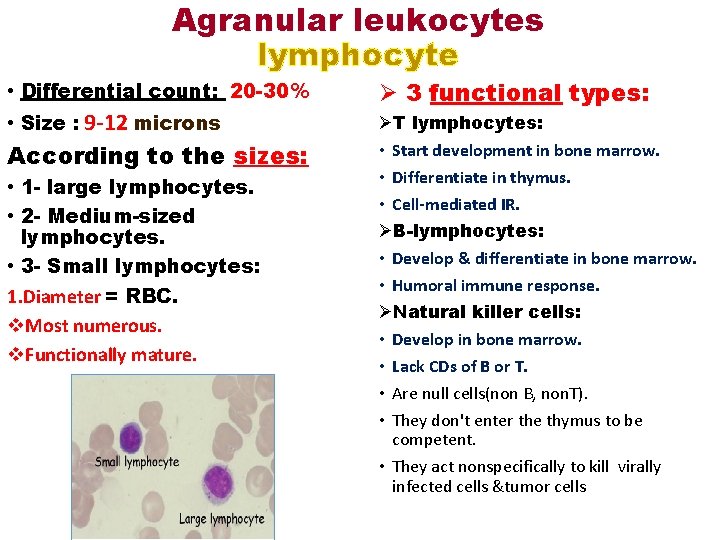
Agranular leukocytes lymphocyte • Differential count: 20 -30% • Size : 9 -12 microns According to the sizes: • 1 - large lymphocytes. • 2 - Medium-sized lymphocytes. • 3 - Small lymphocytes: 1. Diameter = RBC. v. Most numerous. v. Functionally mature. Ø 3 functional types: ØT lymphocytes: • Start development in bone marrow. • Differentiate in thymus. • Cell-mediated IR. ØB-lymphocytes: • Develop & differentiate in bone marrow. • Humoral immune response. ØNatural killer cells: • Develop in bone marrow. • Lack CDs of B or T. • Are null cells(non B, non. T). • They don't enter the thymus to be competent. • They act nonspecifically to kill virally infected cells &tumor cells
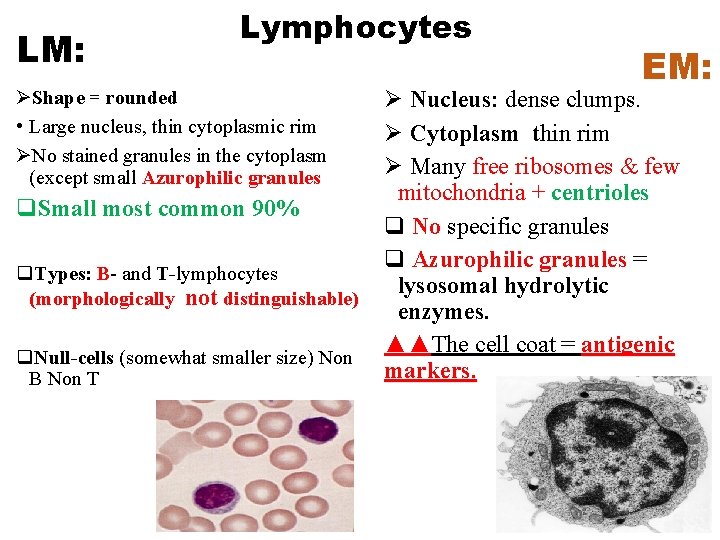
LM: Lymphocytes ØShape = rounded • Large nucleus, thin cytoplasmic rim ØNo stained granules in the cytoplasm (except small Azurophilic granules q. Small most common 90% q. Types: B- and T-lymphocytes (morphologically not distinguishable) q. Null-cells (somewhat smaller size) Non B Non T EM: Ø Nucleus: dense clumps. Ø Cytoplasm thin rim Ø Many free ribosomes & few mitochondria + centrioles q No specific granules q Azurophilic granules = lysosomal hydrolytic enzymes. ▲▲The cell coat = antigenic markers.
Antigenic markers of lymphocyte The cell coat : Large no. of cell receptors. 1. Major histocompatibility complex (MHC) Glycoprotein + specific a. a. sequence. • Tissue typing & antigenic recognition. • 2 subclasses: MHC I & MHC II. 2 - The cluster of differentiation antigens (CDs): • Cell- surface glycoprotein + specific a. a. sequence. • Expressed on different types of lymphocytes. • Marker proteins upon which Functional types of lymphocytes.
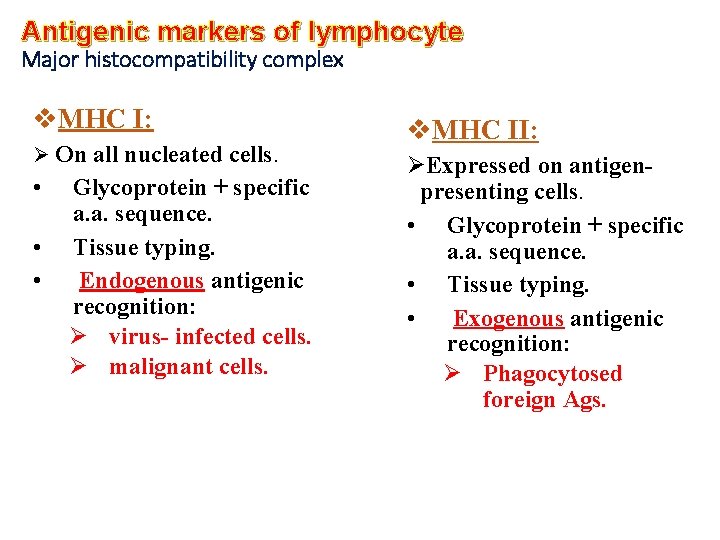
Antigenic markers of lymphocyte Major histocompatibility complex v. MHC I: Ø On all nucleated cells. • • • Glycoprotein + specific a. a. sequence. Tissue typing. Endogenous antigenic recognition: Ø virus- infected cells. Ø malignant cells. v. MHC II: ØExpressed on antigenpresenting cells. • Glycoprotein + specific a. a. sequence. • Tissue typing. • Exogenous antigenic recognition: Ø Phagocytosed foreign Ags.
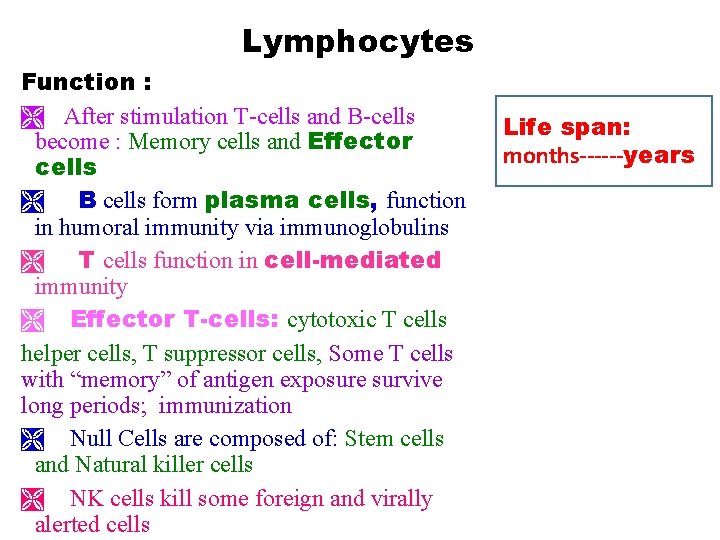
Lymphocytes Function : Ì After stimulation T-cells and B-cells become : Memory cells and Effector cells Ì B cells form plasma cells, function in humoral immunity via immunoglobulins Ì T cells function in cell-mediated immunity Ì Effector T-cells: cytotoxic T cells helper cells, T suppressor cells, Some T cells with “memory” of antigen exposure survive long periods; immunization Ì Null Cells are composed of: Stem cells and Natural killer cells Ì NK cells kill some foreign and virally alerted cells Life span: months------years
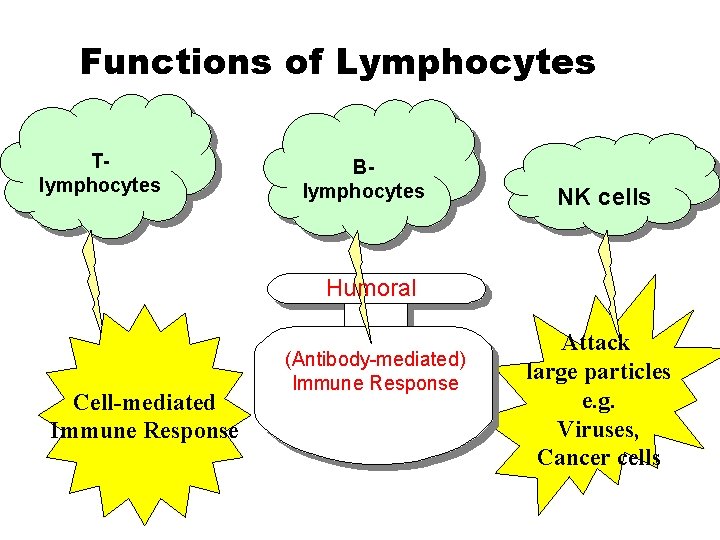
Functions of Lymphocytes Tlymphocytes Blymphocytes NK cells Humoral Cell-mediated Immune Response (Antibody-mediated) Immune Response Attack large particles e. g. Viruses, Cancer cells
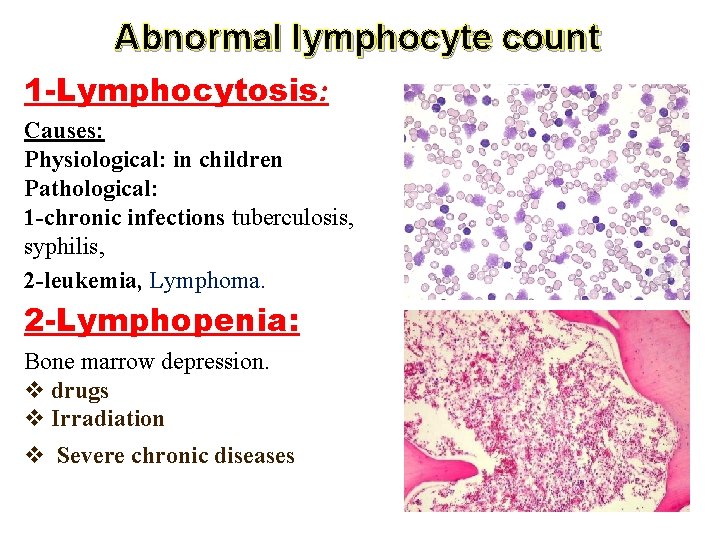
Abnormal lymphocyte count 1 -Lymphocytosis: Causes: Physiological: in children Pathological: 1 -chronic infections tuberculosis, syphilis, 2 -leukemia, Lymphoma. 2 -Lymphopenia: Bone marrow depression. v drugs v Irradiation v Severe chronic diseases
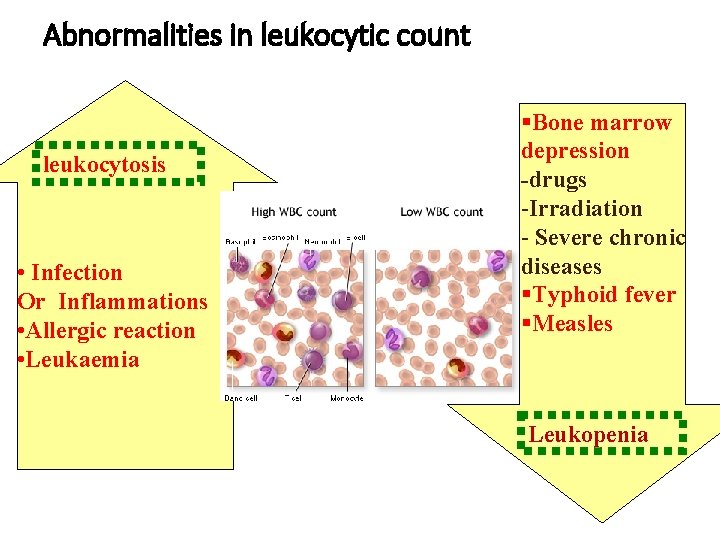
Abnormalities in leukocytic count leukocytosis • Infection Or Inflammations • Allergic reaction • Leukaemia §Bone marrow depression -drugs -Irradiation - Severe chronic diseases §Typhoid fever §Measles Leukopenia
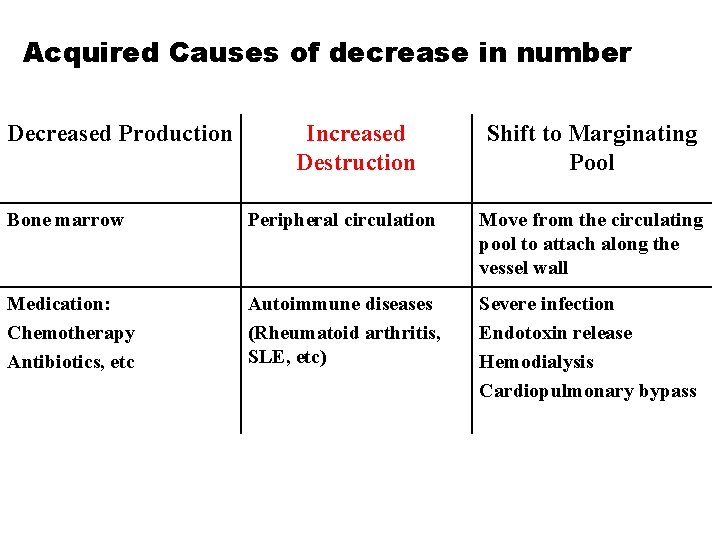
Acquired Causes of decrease in number Decreased Production Increased Destruction Shift to Marginating Pool Bone marrow Peripheral circulation Move from the circulating pool to attach along the vessel wall Medication: Chemotherapy Antibiotics, etc Autoimmune diseases (Rheumatoid arthritis, SLE, etc) Severe infection Endotoxin release Hemodialysis Cardiopulmonary bypass
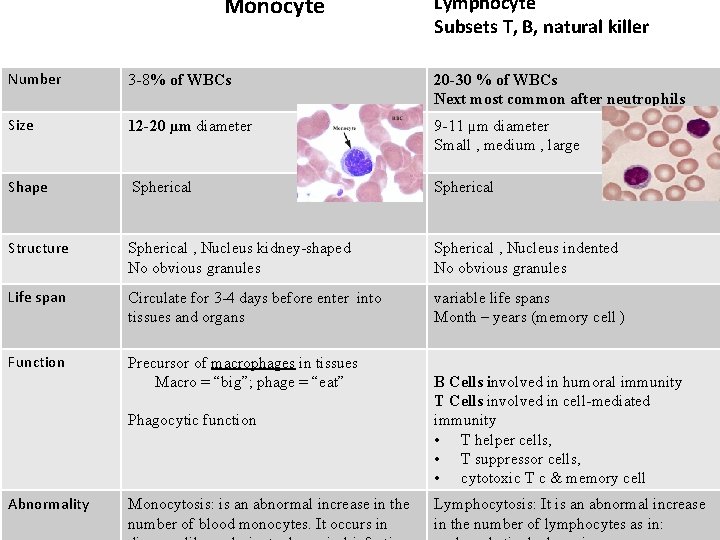
Monocyte Lymphocyte Subsets T, B, natural killer Number 3 -8% of WBCs 20 -30 % of WBCs Next most common after neutrophils Size 12 -20 µm diameter 9 -11 µm diameter Small , medium , large Shape Spherical Structure Spherical , Nucleus kidney-shaped No obvious granules Spherical , Nucleus indented No obvious granules Life span Circulate for 3 -4 days before enter into tissues and organs variable life spans Month – years (memory cell ) Function Precursor of macrophages in tissues Macro = “big”; phage = “eat” Phagocytic function Abnormality Monocytosis: is an abnormal increase in the number of blood monocytes. It occurs in B Cells involved in humoral immunity T Cells involved in cell-mediated immunity • T helper cells, • T suppressor cells, • cytotoxic T c & memory cell Lymphocytosis: It is an abnormal increase in the number of lymphocytes as in:
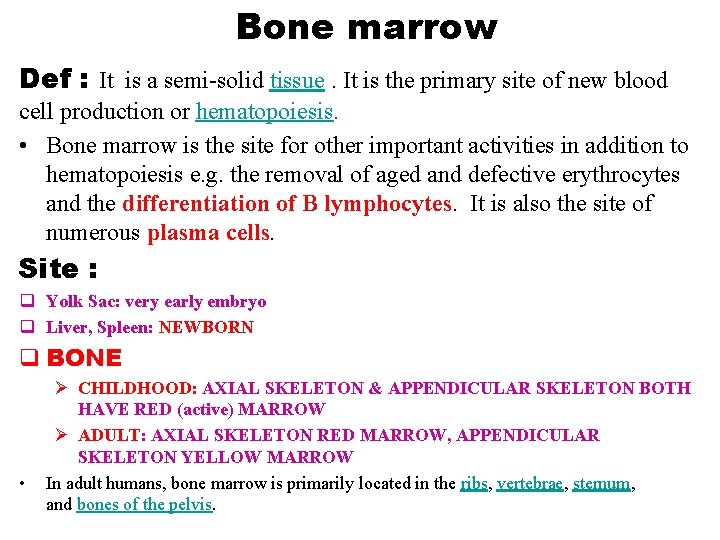
Bone marrow Def : It is a semi-solid tissue. It is the primary site of new blood cell production or hematopoiesis. • Bone marrow is the site for other important activities in addition to hematopoiesis e. g. the removal of aged and defective erythrocytes and the differentiation of B lymphocytes. It is also the site of numerous plasma cells. Site : q Yolk Sac: very early embryo q Liver, Spleen: NEWBORN q BONE • Ø CHILDHOOD: AXIAL SKELETON & APPENDICULAR SKELETON BOTH HAVE RED (active) MARROW Ø ADULT: AXIAL SKELETON RED MARROW, APPENDICULAR SKELETON YELLOW MARROW In adult humans, bone marrow is primarily located in the ribs, vertebrae, sternum, and bones of the pelvis.
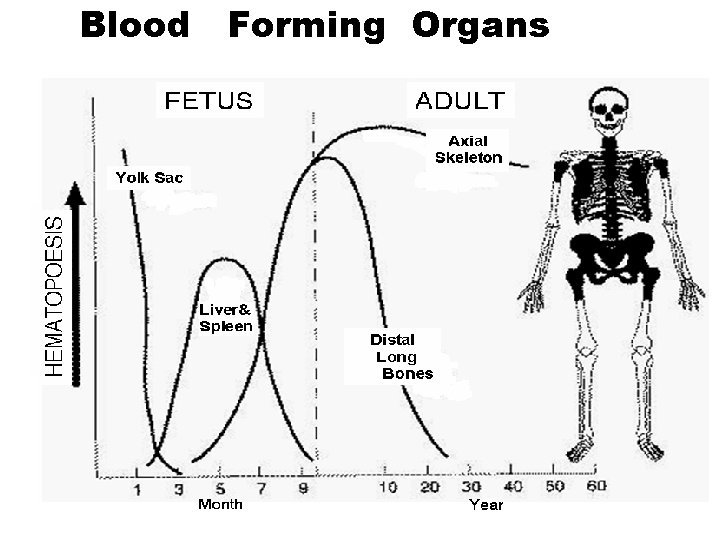
Blood Forming Organs
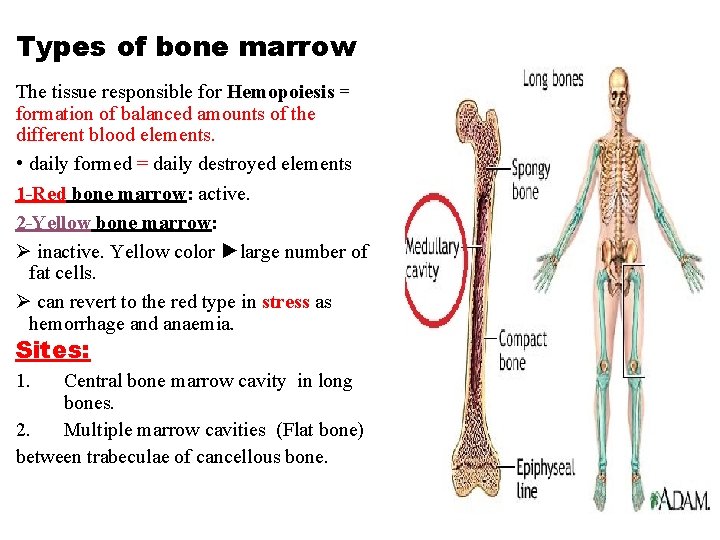
Types of bone marrow The tissue responsible for Hemopoiesis = formation of balanced amounts of the different blood elements. • daily formed = daily destroyed elements 1 -Red bone marrow: active. 2 -Yellow bone marrow: Ø inactive. Yellow color ►large number of fat cells. Ø can revert to the red type in stress as hemorrhage and anaemia. Sites: 1. Central bone marrow cavity in long bones. 2. Multiple marrow cavities (Flat bone) between trabeculae of cancellous bone.
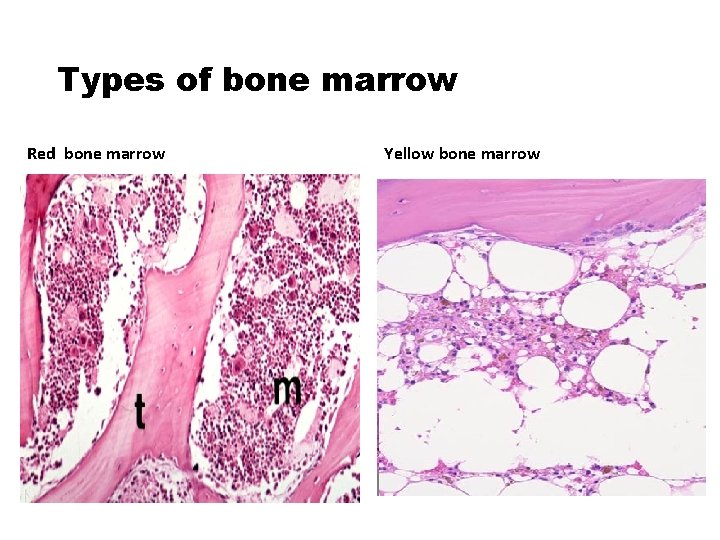
Types of bone marrow Red bone marrow Yellow bone marrow
Bone marrow examination • is the pathologic analysis of samples of bone marrow obtained via biopsy and bone marrow aspiration. q The bone marrow produces the cellular elements of the blood, including platelets, red blood cells and white blood cells. q While much information can be obtained by testing the blood itself , it is sometimes necessary to examine the source of the blood cells in the bone marrow to obtain more information on hematopoiesis; this is the role of bone marrow aspiration and biopsy. q Bone marrow examination is used in the diagnosis of a number of conditions, including leukemia, multiple myeloma, anemia, and pancytopenia.
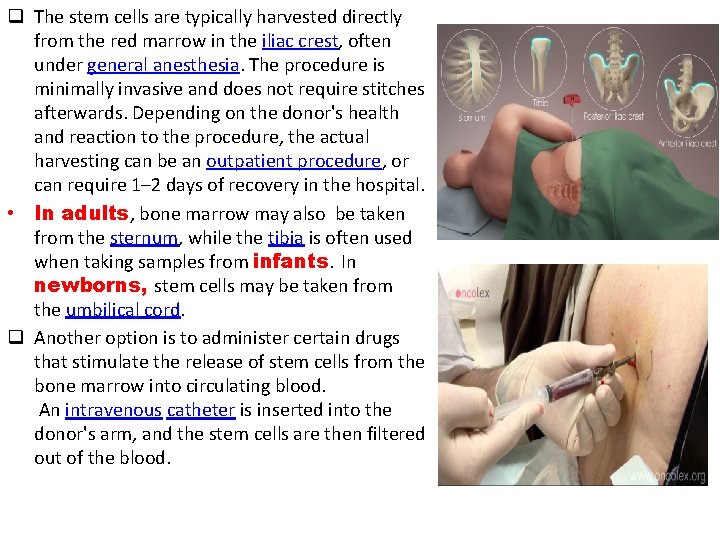
q The stem cells are typically harvested directly from the red marrow in the iliac crest, often under general anesthesia. The procedure is minimally invasive and does not require stitches afterwards. Depending on the donor's health and reaction to the procedure, the actual harvesting can be an outpatient procedure, or can require 1– 2 days of recovery in the hospital. • In adults, bone marrow may also be taken from the sternum, while the tibia is often used when taking samples from infants. In newborns, stem cells may be taken from the umbilical cord. q Another option is to administer certain drugs that stimulate the release of stem cells from the bone marrow into circulating blood. An intravenous catheter is inserted into the donor's arm, and the stem cells are then filtered out of the blood.
STRUCTURE & FUNCTION OF BONE MARROW q The composition of marrow is dynamic, as the mixture of cellular and non-cellular components (connective tissue) shifts with age and in response to systemic factors. Bone marrow has : q vascular compartment q Extravascular compartment.
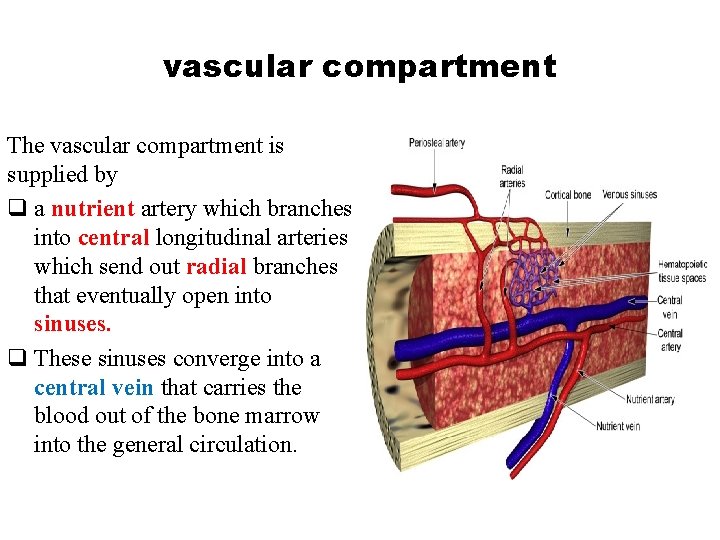
vascular compartment The vascular compartment is supplied by q a nutrient artery which branches into central longitudinal arteries which send out radial branches that eventually open into sinuses. q These sinuses converge into a central vein that carries the blood out of the bone marrow into the general circulation.
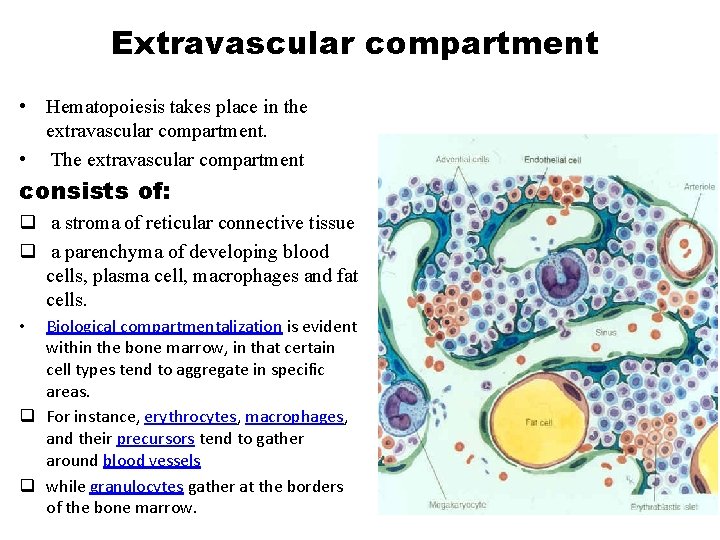
Extravascular compartment • Hematopoiesis takes place in the extravascular compartment. • The extravascular compartment consists of: q a stroma of reticular connective tissue q a parenchyma of developing blood cells, plasma cell, macrophages and fat cells. Biological compartmentalization is evident within the bone marrow, in that certain cell types tend to aggregate in specific areas. q For instance, erythrocytes, macrophages, and their precursors tend to gather around blood vessels q while granulocytes gather at the borders of the bone marrow. •
Stroma q The stroma of the bone marrow includes all tissue not directly involved in the marrow's primary function of hematopoiesis. • Stromal cells may be indirectly involved in hematopoiesis, providing a microenvironment that influences the function and differentiation of hematopoeietic cells, they generate colony stimulating factors, which have a significant effect on hematopoiesis. q Cell types that constitute the bone marrow stroma include: fibroblasts (reticular connective tissue) macrophages, which contribute especially to red blood cell production, as they deliver iron for hemoglobin production. adipocytes (fat cells) osteoblasts (synthesize bone) osteoclasts (resorb bone) endothelial cells, which form the sinusoids. These derive from endothelial stem cells, which are also present in the bone marrow
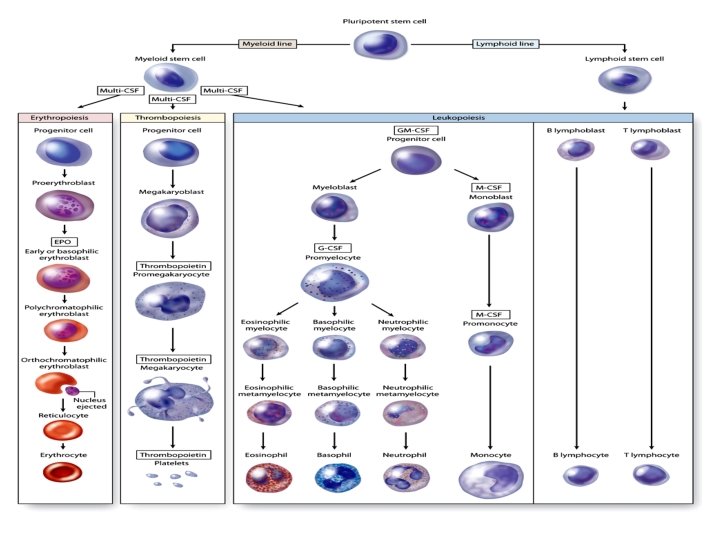
Hematopoietic components • At the cellular level, the main functional component of bone marrow includes the progenitor cells which are destined to mature into blood and lymphoid cells. q Marrow contains hematopoietic stem cells which give rise to the three classes of blood cells that are found in circulation: white blood cells (leukocytes), red blood cells (erythrocytes), and platelets (thrombocytes). q The Pluripotent hemopoietic stem cells (PHSCs): • great ability to divide. • ½ Reserve other ½ becomes more differentiated.
q Multipotent hemopoietic stem cells (MHSCs): • Daughter cells of the PHSCs. • Histologically, larger • Cell divisions but are more differentiated ►► cell colonies ►► 2 CFUs►►► daughter stem cells more differentiated A- CFU- lymphocyte (CFU- Ly): Some migrate to the thymus, spleen and lymph nodes where lymphopoiesis is completed. B- CFU- erythrocyte, megakaryocyte/ granulocytemonocyte ►►unipotent progenitors • CFU-Erythrocyte (CFU- E) • CFU-Megakaryocyte (CFU-Meg). • CFU- Granulocyte /monocyte (CFU-GM),
Function Bone marrow is the site for other important activities in addition to hematopoiesis. These include: Mesenchymal stem cells • The bone marrow stroma contains mesenchymal stem cells (MSCs), also known as marrow stromal cells. These are multipotent stem cells that can differentiate into a variety of cell types. MSCs have been shown to differentiate, in vitro or in vivo, into osteoblasts, chondrocytes, myocytes, marrow adipocytes , beta-pancreatic islets cells. Bone marrow barrier • • The blood vessels of the bone marrow constitute a barrier, inhibiting immature blood cells from leaving the marrow. Only mature blood cells contain the membrane proteins, such as aquaporin and glycophorin, that are required to attach to and pass the blood vessel endothelium. Hematopoietic stem cells may also cross the bone marrow barrier, and may thus be harvested from blood. Lymphatic role • The red bone marrow is a key element of the lymphatic system, being one of the primary lymphoid organs that generate lymphocytes from immature hematopoietic progenitor cells. The bone marrow and thymus constitute the primary lymphoid tissues involved in the production and early selection of lymphocytes.
- Slides: 25