
Blood heart lungs revision Learn IT Know IT
Blood, heart & lungs revision

Learn. IT! Know. IT! Animal tissues, Organs and organ systems Part 2 • • • The heart and blood vessels Blood Coronary heart disease: a non-communicable disease

A reminder……………. • https: //www. youtube. com/watch? v=-043 -Cv 6 unk
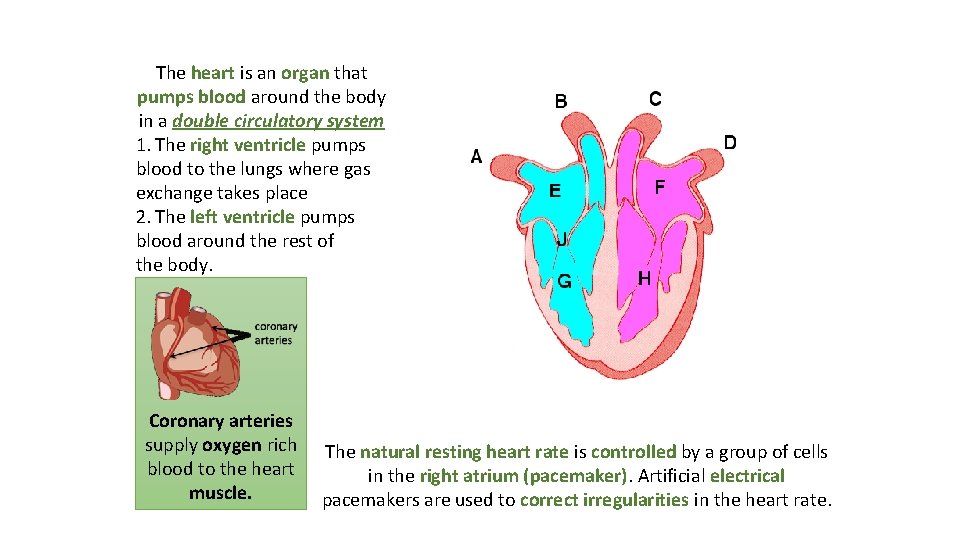
The heart is an organ that pumps blood around the body in a double circulatory system 1. The right ventricle pumps blood to the lungs where gas exchange takes place 2. The left ventricle pumps blood around the rest of the body. Coronary arteries supply oxygen rich blood to the heart muscle. The natural resting heart rate is controlled by a group of cells in the right atrium (pacemaker). Artificial electrical pacemakers are used to correct irregularities in the heart rate.
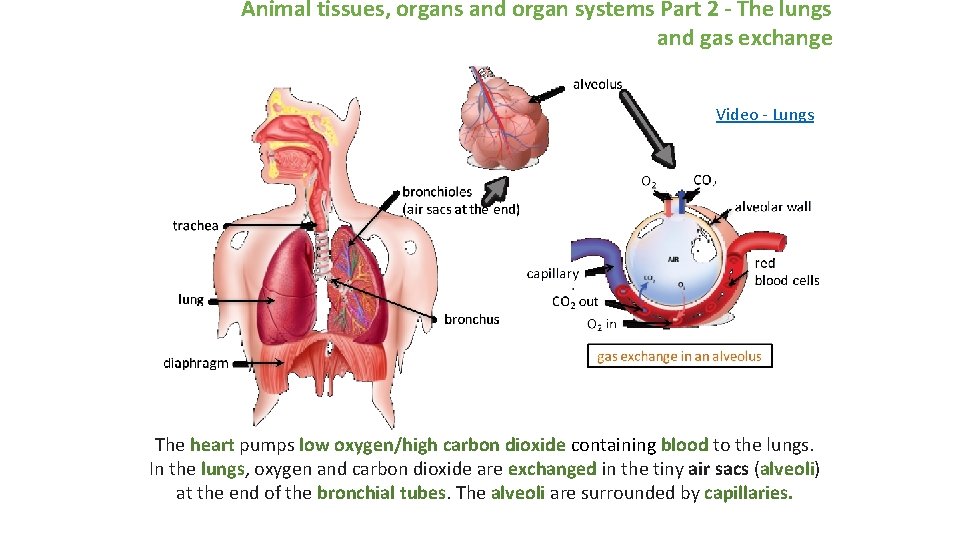
Animal tissues, organs and organ systems Part 2 - The lungs and gas exchange Video - Lungs The heart pumps low oxygen/high carbon dioxide containing blood to the lungs. In the lungs, oxygen and carbon dioxide are exchanged in the tiny air sacs (alveoli) at the end of the bronchial tubes. The alveoli are surrounded by capillaries.
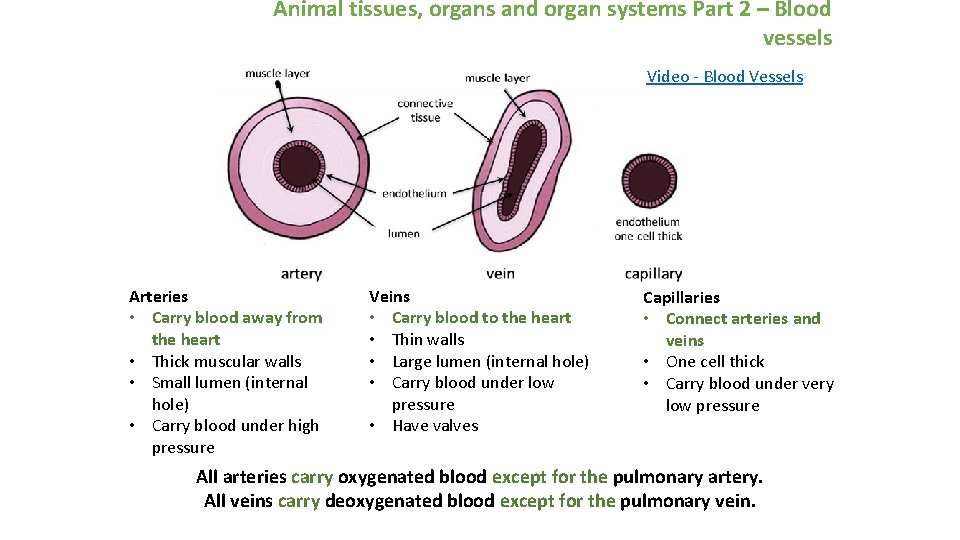
Animal tissues, organs and organ systems Part 2 – Blood vessels Video - Blood Vessels Arteries • Carry blood away from the heart • Thick muscular walls • Small lumen (internal hole) • Carry blood under high pressure Veins • Carry blood to the heart • Thin walls • Large lumen (internal hole) • Carry blood under low pressure • Have valves Capillaries • Connect arteries and veins • One cell thick • Carry blood under very low pressure All arteries carry oxygenated blood except for the pulmonary artery. All veins carry deoxygenated blood except for the pulmonary vein.
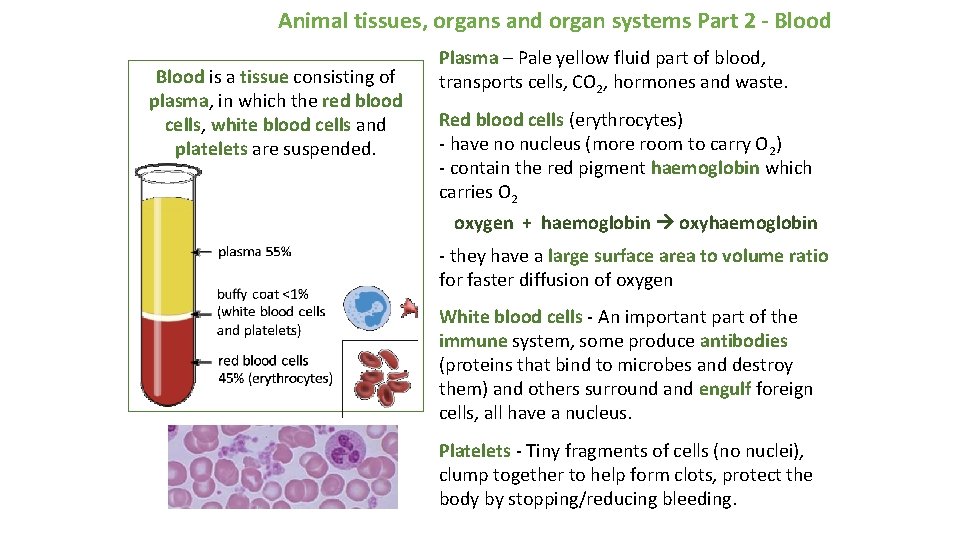
Animal tissues, organs and organ systems Part 2 - Blood is a tissue consisting of plasma, in which the red blood cells, white blood cells and platelets are suspended. Plasma – Pale yellow fluid part of blood, transports cells, CO 2, hormones and waste. Red blood cells (erythrocytes) - have no nucleus (more room to carry O 2) - contain the red pigment haemoglobin which carries O 2 oxygen + haemoglobin oxyhaemoglobin - they have a large surface area to volume ratio for faster diffusion of oxygen White blood cells - An important part of the immune system, some produce antibodies (proteins that bind to microbes and destroy them) and others surround and engulf foreign cells, all have a nucleus. Platelets - Tiny fragments of cells (no nuclei), clump together to help form clots, protect the body by stopping/reducing bleeding.
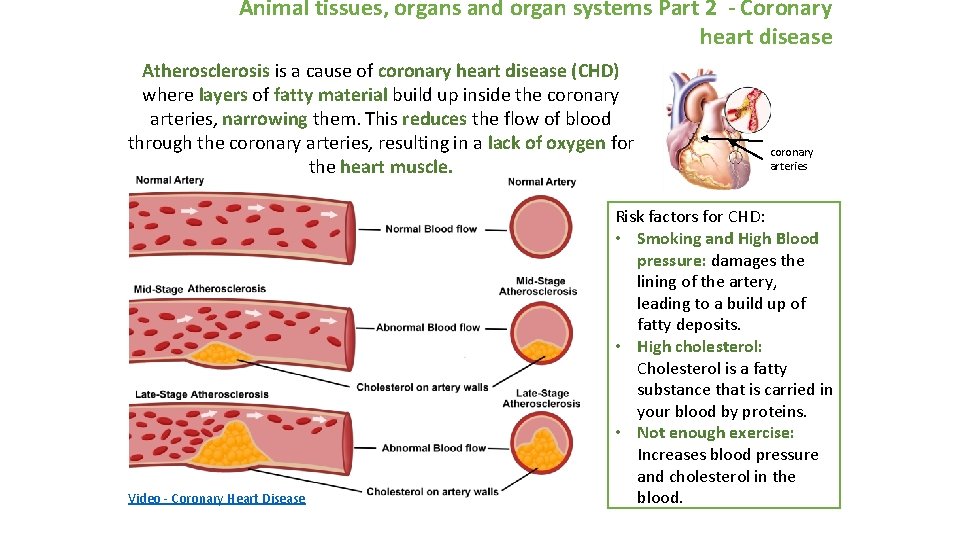
Animal tissues, organs and organ systems Part 2 - Coronary heart disease Atherosclerosis is a cause of coronary heart disease (CHD) where layers of fatty material build up inside the coronary arteries, narrowing them. This reduces the flow of blood through the coronary arteries, resulting in a lack of oxygen for the heart muscle. Video - Coronary Heart Disease coronary arteries Risk factors for CHD: • Smoking and High Blood pressure: damages the lining of the artery, leading to a build up of fatty deposits. • High cholesterol: Cholesterol is a fatty substance that is carried in your blood by proteins. • Not enough exercise: Increases blood pressure and cholesterol in the blood.
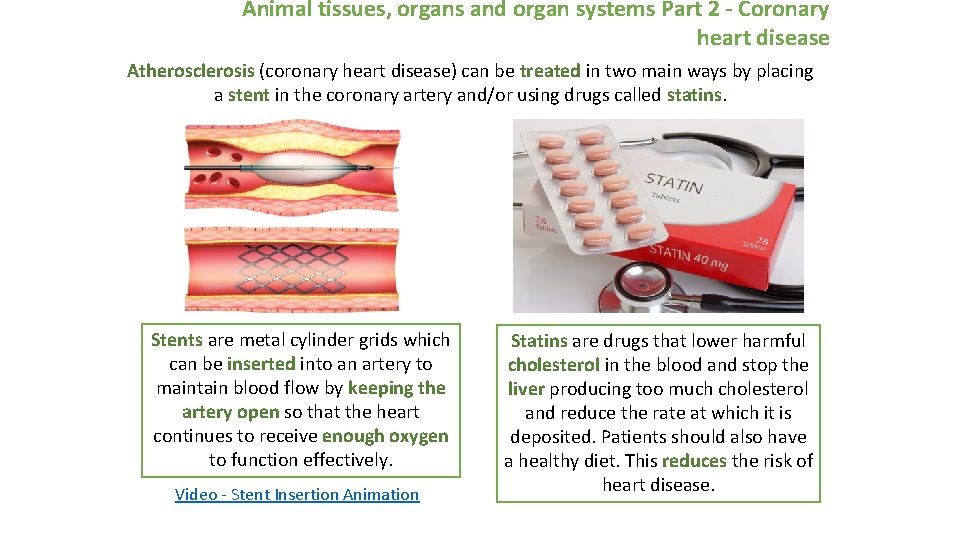
Animal tissues, organs and organ systems Part 2 - Coronary heart disease Atherosclerosis (coronary heart disease) can be treated in two main ways by placing a stent in the coronary artery and/or using drugs called statins. Stents are metal cylinder grids which can be inserted into an artery to maintain blood flow by keeping the artery open so that the heart continues to receive enough oxygen to function effectively. Video - Stent Insertion Animation Statins are drugs that lower harmful cholesterol in the blood and stop the liver producing too much cholesterol and reduce the rate at which it is deposited. Patients should also have a healthy diet. This reduces the risk of heart disease.
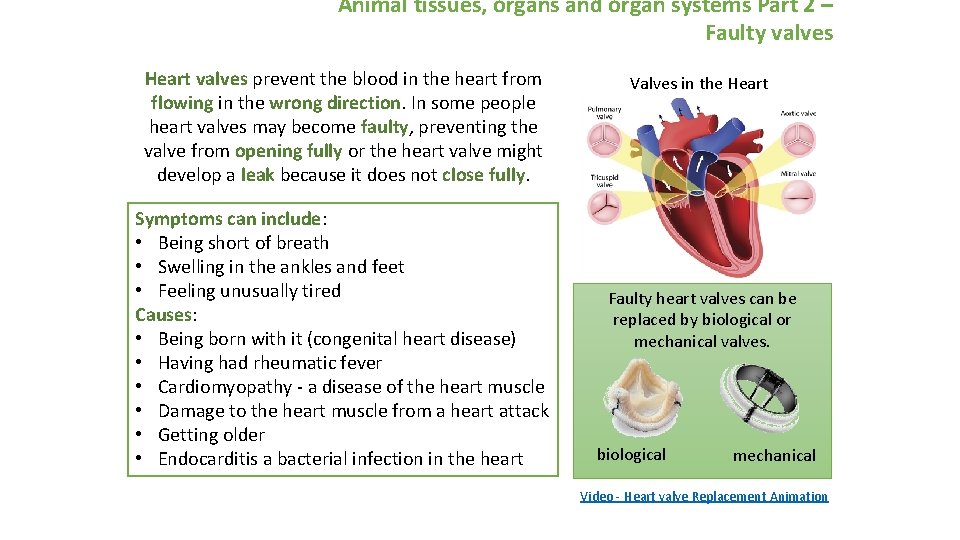
Animal tissues, organs and organ systems Part 2 – Faulty valves Heart valves prevent the blood in the heart from flowing in the wrong direction. In some people heart valves may become faulty, preventing the valve from opening fully or the heart valve might develop a leak because it does not close fully. Symptoms can include: • Being short of breath • Swelling in the ankles and feet • Feeling unusually tired Causes: • Being born with it (congenital heart disease) • Having had rheumatic fever • Cardiomyopathy - a disease of the heart muscle • Damage to the heart muscle from a heart attack • Getting older • Endocarditis a bacterial infection in the heart Valves in the Heart Faulty heart valves can be replaced by biological or mechanical valves. biological mechanical Video - Heart valve Replacement Animation
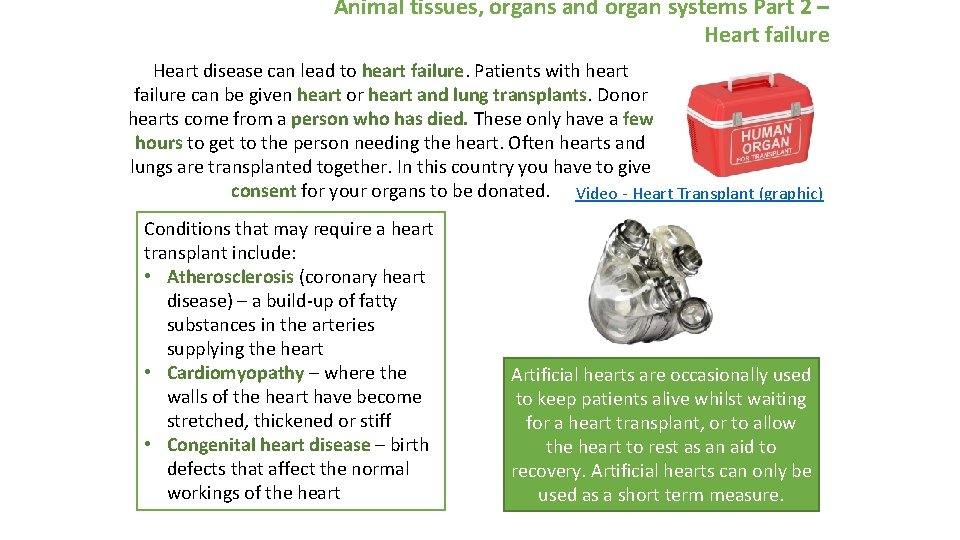
Animal tissues, organs and organ systems Part 2 – Heart failure Heart disease can lead to heart failure. Patients with heart failure can be given heart or heart and lung transplants. Donor hearts come from a person who has died. These only have a few hours to get to the person needing the heart. Often hearts and lungs are transplanted together. In this country you have to give consent for your organs to be donated. Video - Heart Transplant (graphic) Conditions that may require a heart transplant include: • Atherosclerosis (coronary heart disease) – a build-up of fatty substances in the arteries supplying the heart • Cardiomyopathy – where the walls of the heart have become stretched, thickened or stiff • Congenital heart disease – birth defects that affect the normal workings of the heart Artificial hearts are occasionally used to keep patients alive whilst waiting for a heart transplant, or to allow the heart to rest as an aid to recovery. Artificial hearts can only be used as a short term measure.
Question. IT! Animal tissues, organs and organ systems Part 2 • • • The heart and blood vessels Blood Coronary heart disease: a non-communicable disease
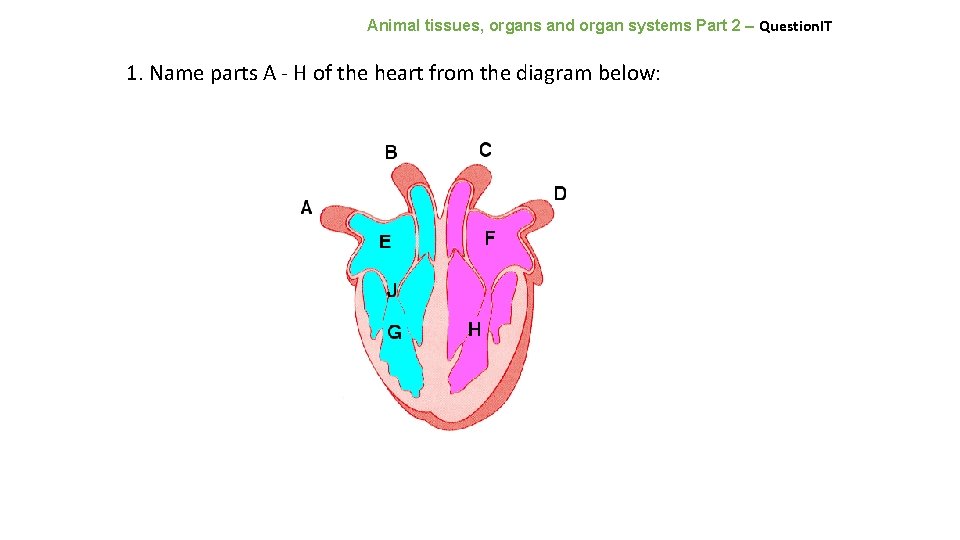
Animal tissues, organs and organ systems Part 2 – Question. IT 1. Name parts A - H of the heart from the diagram below:
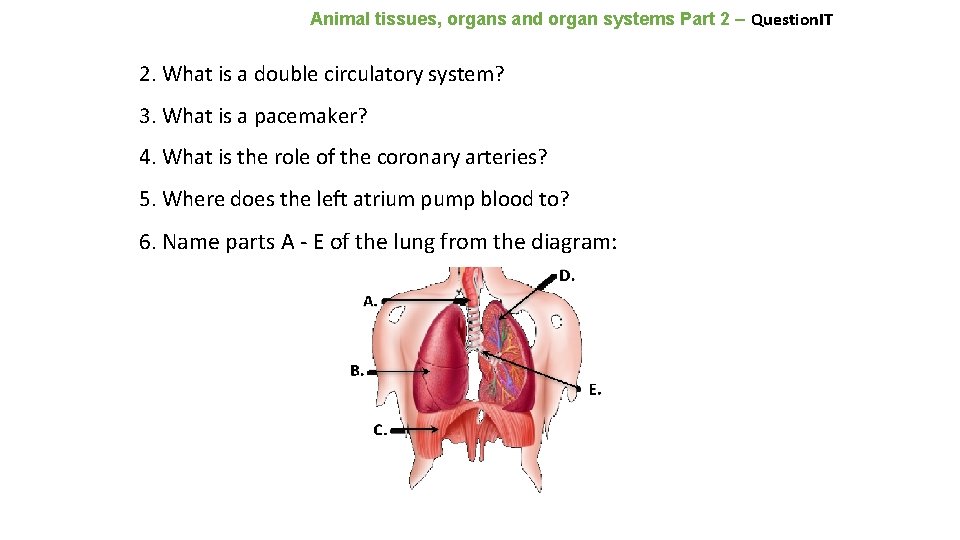
Animal tissues, organs and organ systems Part 2 – Question. IT 2. What is a double circulatory system? 3. What is a pacemaker? 4. What is the role of the coronary arteries? 5. Where does the left atrium pump blood to? 6. Name parts A - E of the lung from the diagram:
Animal tissues, organs and organ systems Part 2 – Question. IT 7. Where does gas exchange take place in the lungs? 8. Name the gas that moves from the blood into the lungs. 9. Name the blood vessels that carry blood away from the heart. 10. Which blood vessels are only one cell thick? 11. Which blood vessels have thick muscular walls? 12. Which blood vessels have valves? 13. What is plasma? 14. What is the role of a red blood cell? 15. In what two ways can white blood cells fight infection? 16. What is the role of platelets?
Animal tissues, organs and organ systems Part 2 – Question. IT 17. What is coronary heart disease? 18. What are the risk factors for coronary heart disease? 19. What is a stent? 20. What are statins? 21. What is the role of heart valves? 22. Give two faults that can occur with heart valves. 23. What treatment can be given to a person with faulty heart valves? 24. Name three conditions that can lead to heart failure.
Answer. IT! Animal tissues, organs and organ systems Part 2 • • • The heart and blood vessels Blood Coronary heart disease: a non-communicable disease
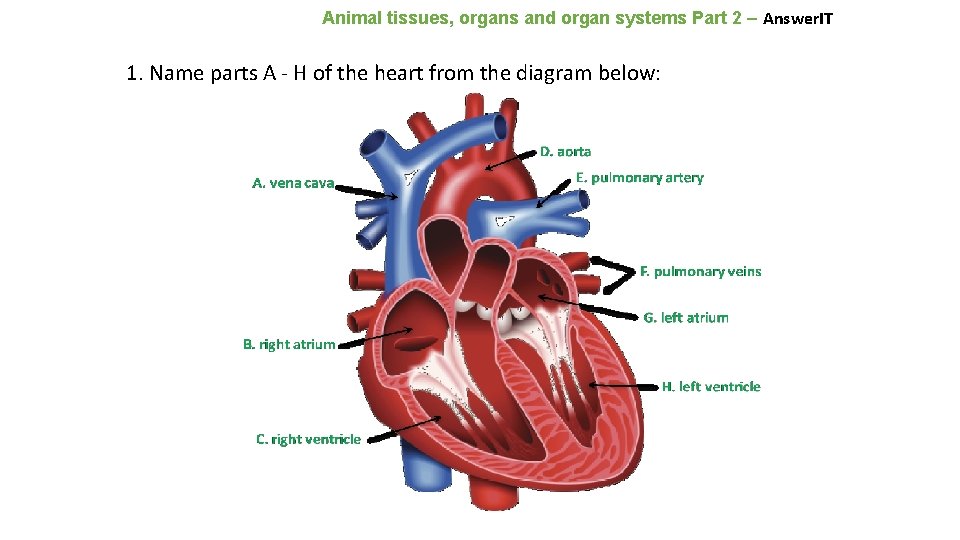
Animal tissues, organs and organ systems Part 2 – Answer. IT 1. Name parts A - H of the heart from the diagram below:
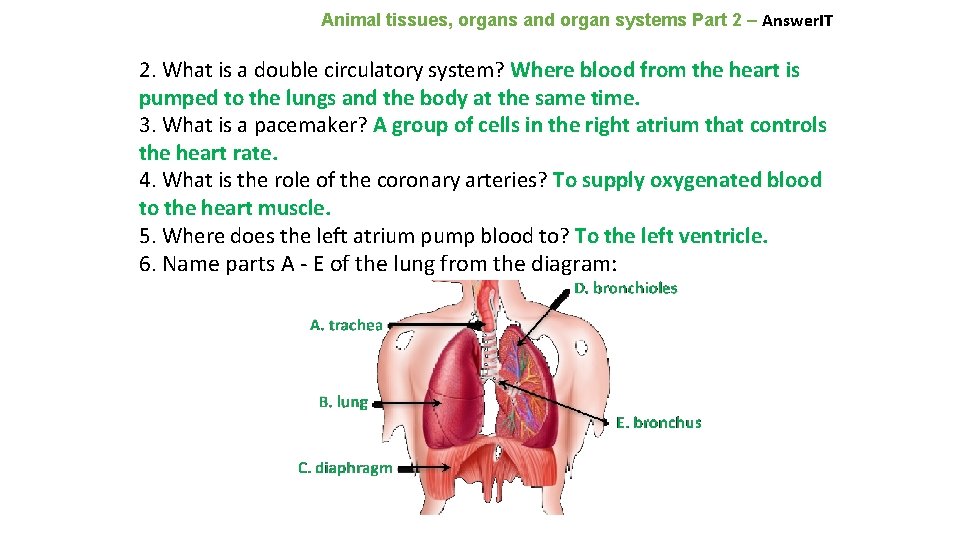
Animal tissues, organs and organ systems Part 2 – Answer. IT 2. What is a double circulatory system? Where blood from the heart is pumped to the lungs and the body at the same time. 3. What is a pacemaker? A group of cells in the right atrium that controls the heart rate. 4. What is the role of the coronary arteries? To supply oxygenated blood to the heart muscle. 5. Where does the left atrium pump blood to? To the left ventricle. 6. Name parts A - E of the lung from the diagram:
Animal tissues, organs and organ systems Part 2 – Answer. IT 7. Where does gas exchange take place in the lungs? In the alveoli. 8. Name the gas that moves from the blood into the lungs Carbon dioxide. 9. Name the blood vessels that carry blood away from the heart Arteries. 10. Which blood vessels are only one cell thick? Capillaries. 11. Which blood vessels have thick muscular walls? Arteries. 12. Which blood vessels have valves? Veins. 13. What is plasma? The pale yellow fluid part of blood, it transports cells, CO 2, hormones and waste. 14. What is the role of a red blood cell? To carry oxygen around the body. 15. In what two ways can white blood cells fight infection? They can produce antibodies that destroy microbes or they can engulf microbes. 16. What is the role of platelets? They form clots to reduce bleeding.
Animal tissues, organs and organ systems Part 2 – Answer. IT 17. What is coronary heart disease? Where layers of fatty material build up inside the coronary arteries narrowing them. 18. What are the risk factors for coronary heart disease? Smoking, high blood pressure, high cholesterol and not enough exercise. 19. What is a stent? A metal cylinder grid that is inserted into an artery to keep the artery open. 20. What are statins? Drugs that reduce the harmful cholesterol in the blood. 21. What is the role of heart valves? To stop the blood in the heart from flowing in the wrong direction. 22. Give two faults that can occur with heart valves. They may not open fully or develop a leak. 23. What treatment can be given to a person with faulty heart valves? They can have their heart valves replaced (biological or mechanical). 24. Name three conditions that can lead to heart failure. Atherosclerosis (CHD), cardiomyopathy, congenital heart disease (born with it).
- Slides: 21