
BLOOD GLUCOSE INSULIN AND GLUCAGON HOMEOSTASIS AND NEGATIVE
BLOOD GLUCOSE, INSULIN AND GLUCAGON HOMEOSTASIS AND NEGATIVE FEEDBACK
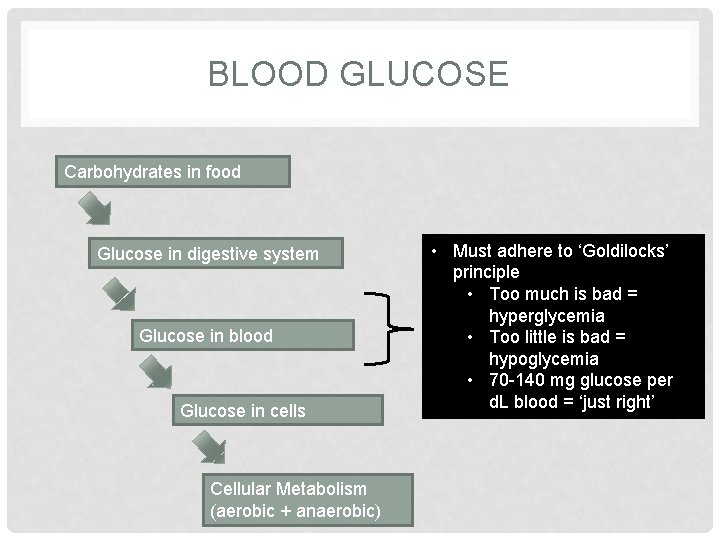
BLOOD GLUCOSE Carbohydrates in food Glucose in digestive system Glucose in blood Glucose in cells Cellular Metabolism (aerobic + anaerobic) • Must adhere to ‘Goldilocks’ principle • Too much is bad = hyperglycemia • Too little is bad = hypoglycemia • 70 -140 mg glucose per d. L blood = ‘just right’
BLOOD GLUCOSE - ABNORMAL • Hypoglycemia • <60 -65 mg/d. L = hunger; shaky, light-headed; rapid heart rate • <40 -50 mg/d. L = loss of mental function, including confusion and/or erratic behavior; seizures; loss of consciousness • Hyperglycemia • >180 mg/d. L • Immediate symptoms = increased thirst; headache; fatigue; frequent urination; blurred vision • Long term results = nerve damage; blood vessel damage; slow healing; loss of vision; cardiovascular disease
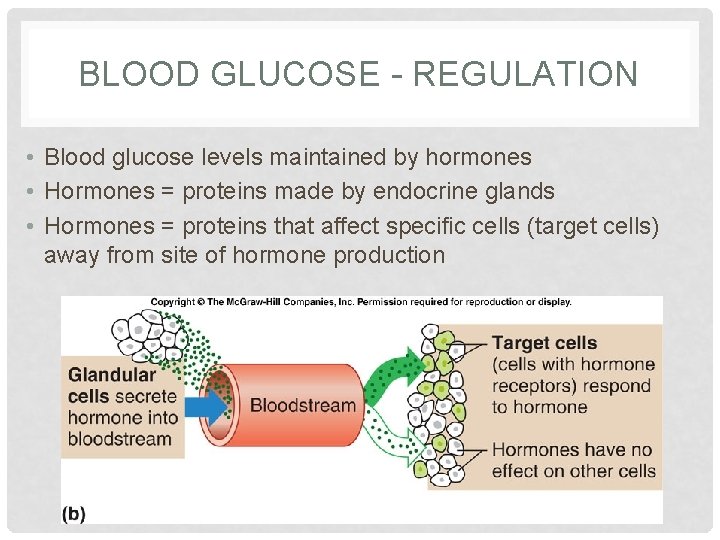
BLOOD GLUCOSE - REGULATION • Blood glucose levels maintained by hormones • Hormones = proteins made by endocrine glands • Hormones = proteins that affect specific cells (target cells) away from site of hormone production
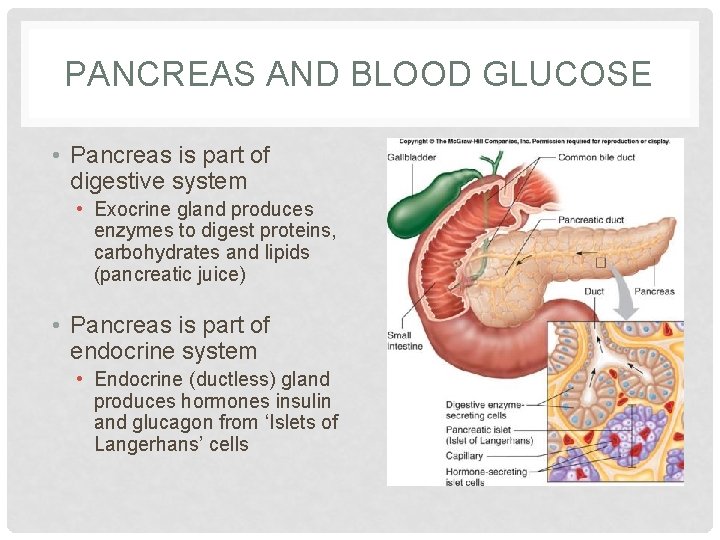
PANCREAS AND BLOOD GLUCOSE • Pancreas is part of digestive system • Exocrine gland produces enzymes to digest proteins, carbohydrates and lipids (pancreatic juice) • Pancreas is part of endocrine system • Endocrine (ductless) gland produces hormones insulin and glucagon from ‘Islets of Langerhans’ cells
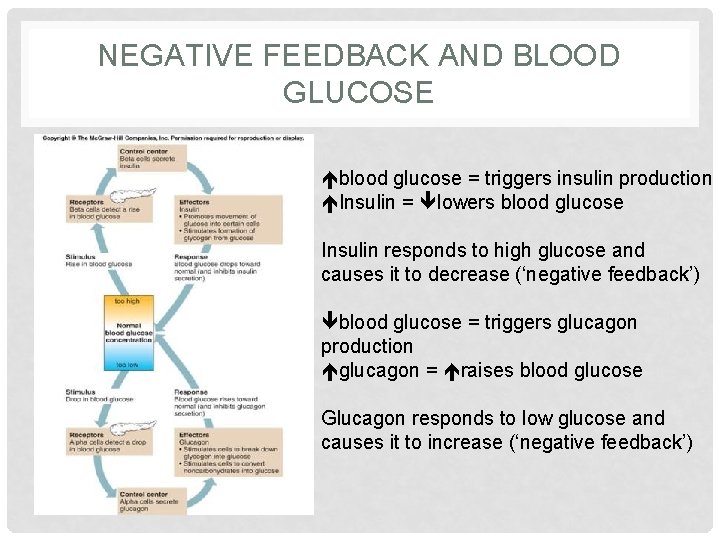
NEGATIVE FEEDBACK AND BLOOD GLUCOSE blood glucose = triggers insulin production Insulin = lowers blood glucose Insulin responds to high glucose and causes it to decrease (‘negative feedback’) blood glucose = triggers glucagon production glucagon = raises blood glucose Glucagon responds to low glucose and causes it to increase (‘negative feedback’)
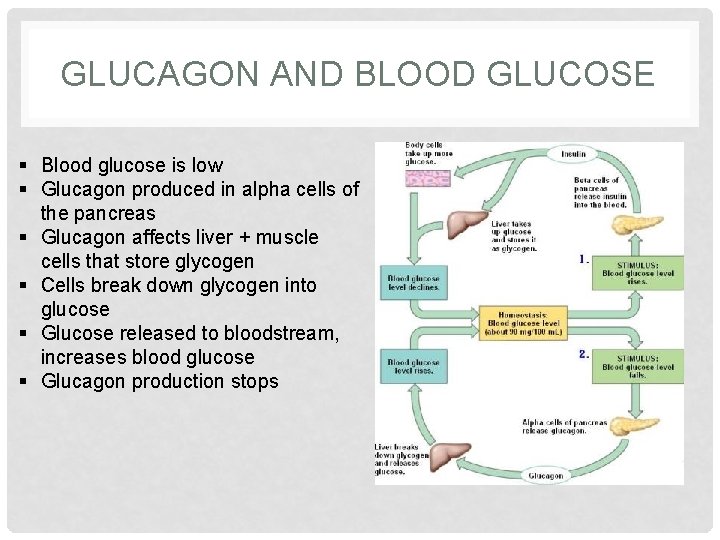
GLUCAGON AND BLOOD GLUCOSE § Blood glucose is low § Glucagon produced in alpha cells of the pancreas § Glucagon affects liver + muscle cells that store glycogen § Cells break down glycogen into glucose § Glucose released to bloodstream, increases blood glucose § Glucagon production stops
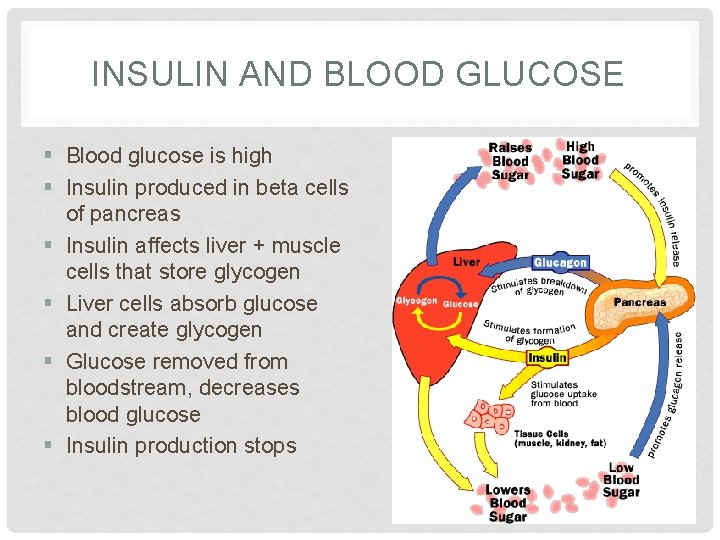
INSULIN AND BLOOD GLUCOSE § Blood glucose is high § Insulin produced in beta cells of pancreas § Insulin affects liver + muscle cells that store glycogen § Liver cells absorb glucose and create glycogen § Glucose removed from bloodstream, decreases blood glucose § Insulin production stops
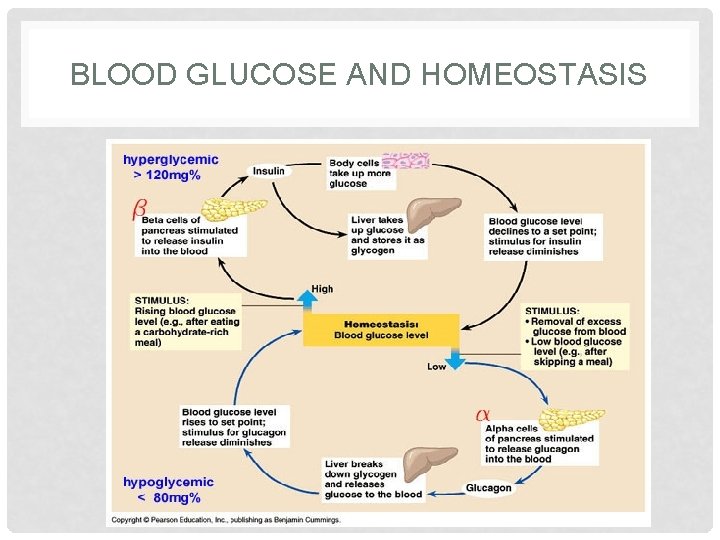
BLOOD GLUCOSE AND HOMEOSTASIS
PROBLEMS WITH HOMEOSTASIS – INSULIN AND DIABETES • Diabetes is a breakdown in homeostasis that results in abnormal blood sugar levels • In U. S. , 25. 8 million people have diabetes (8. 3% of total population) • 18. 8 million are diagnosed • 7. 0 million are undiagnosed • Two forms of diabetes – Type 1 and Type 2 – different cause/same effect
PROBLEMS WITH HOMEOSTASIS – INSULIN AND DIABETES q. Type 1 Diabetes (~5% of all diabetes cases) q‘juvenile diabetes’ q. Cells that produce insulin are destroyed q. No insulin = high blood glucose levels q. No insulin = no stored glycogen q. Type 2 Diabetes (~95% of all diabetes cases) q‘adult onset diabetes’ q. Cells in liver and muscle become insensitive to insulin (insulin resistance) q. Insulin resistance = high blood glucose levels q. Insulin resistance = no stored glycogen
- Slides: 11