
Blood flow x normal Autoregulation of local tissue
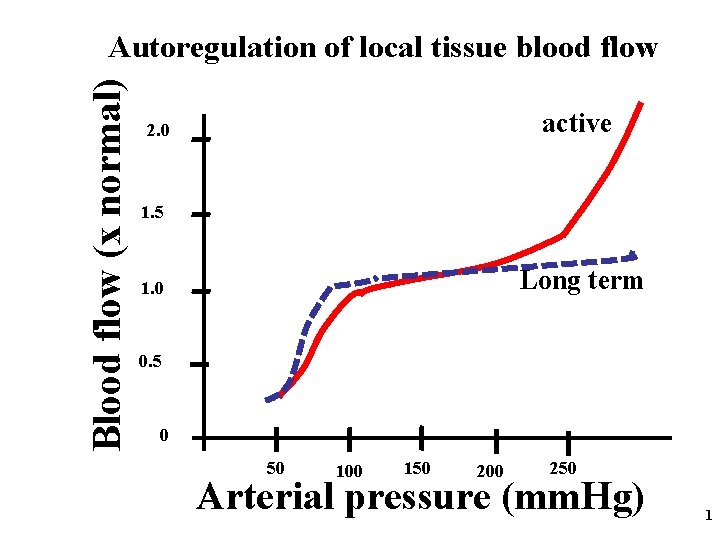
Blood flow (x normal) Autoregulation of local tissue blood flow active 2. 0 1. 5 Long term 1. 0 0. 5 0 50 100 150 200 250 Arterial pressure (mm. Hg) 1
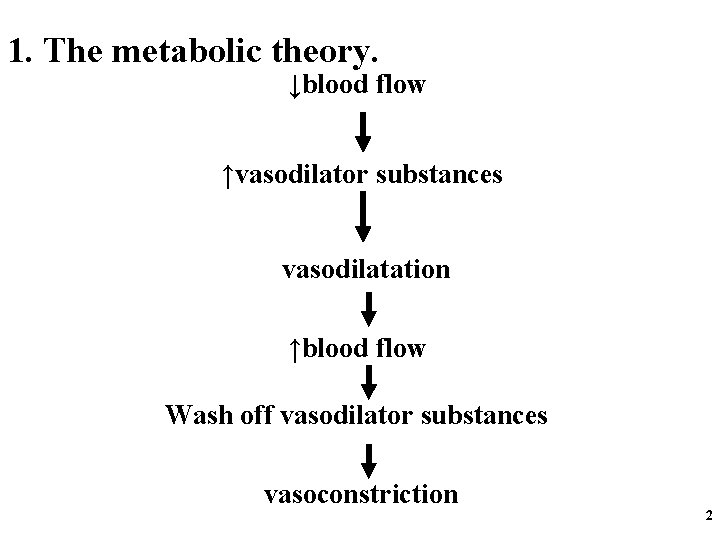
1. The metabolic theory. ↓blood flow ↑vasodilator substances vasodilatation ↑blood flow Wash off vasodilator substances vasoconstriction 2
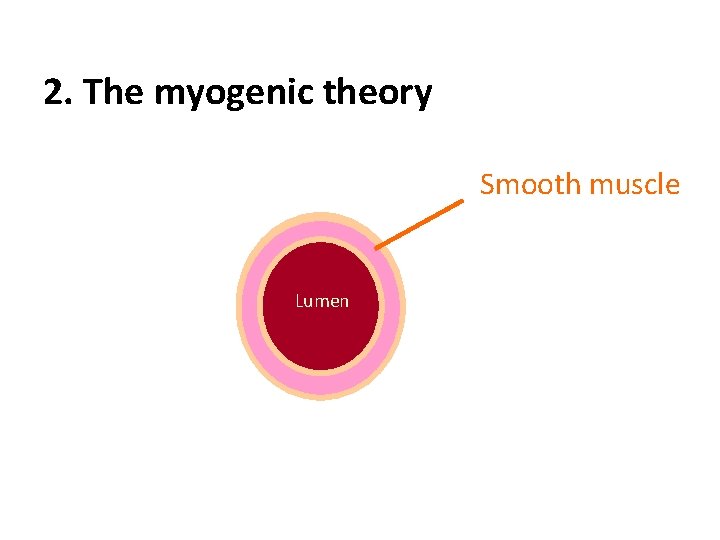
2. The myogenic theory Smooth muscle Lumen
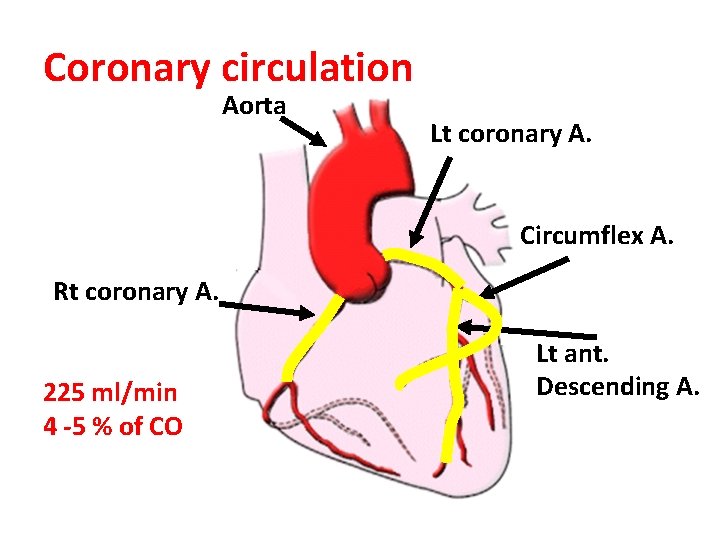
Coronary circulation Aorta Lt coronary A. Circumflex A. Rt coronary A. 225 ml/min 4 -5 % of CO Lt ant. Descending A.
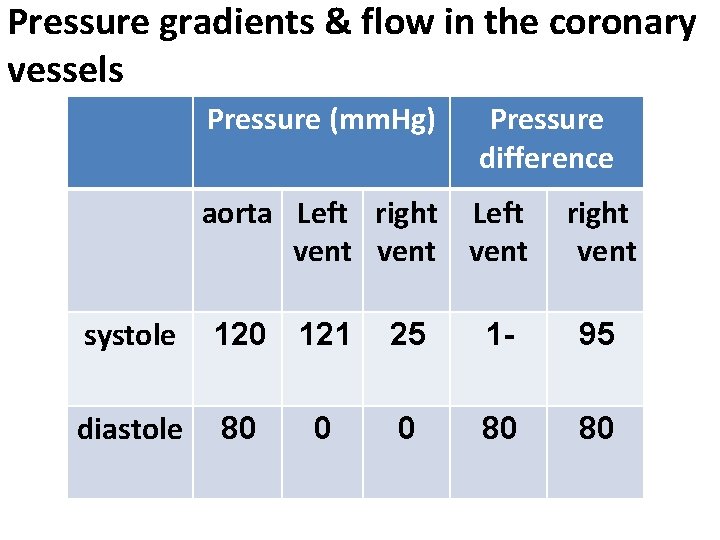
Pressure gradients & flow in the coronary vessels Pressure (mm. Hg) During diastole systole Pressure difference aorta Left right Left vent 120 80 vent right vent systole 250 121 120 121 25 1 - 95 diastole Right ventricle Leftventricles Both 80 0 0 80 80
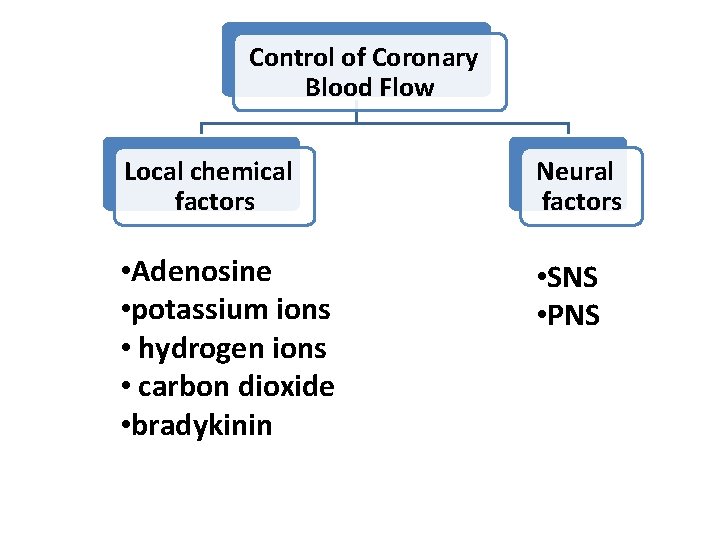
Control of Coronary Blood Flow Local chemical factors Neural factors • Adenosine • potassium ions • hydrogen ions • carbon dioxide • bradykinin • SNS • PNS
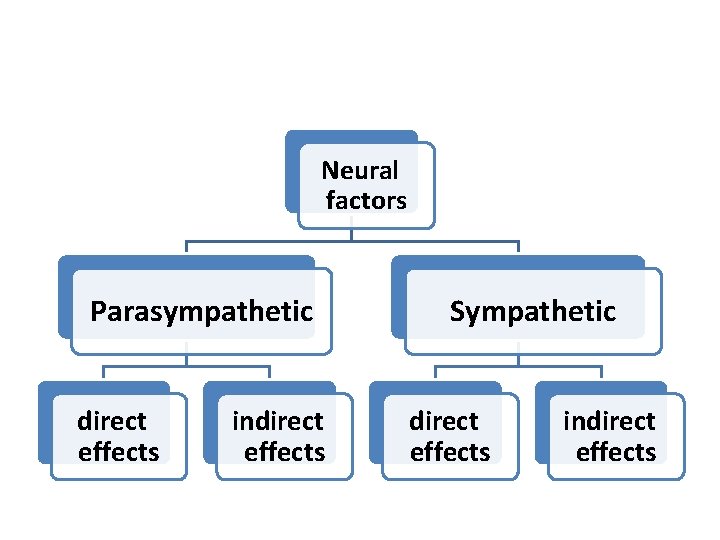
Neural factors Parasympathetic direct effects indirect effects Sympathetic direct effects indirect effects
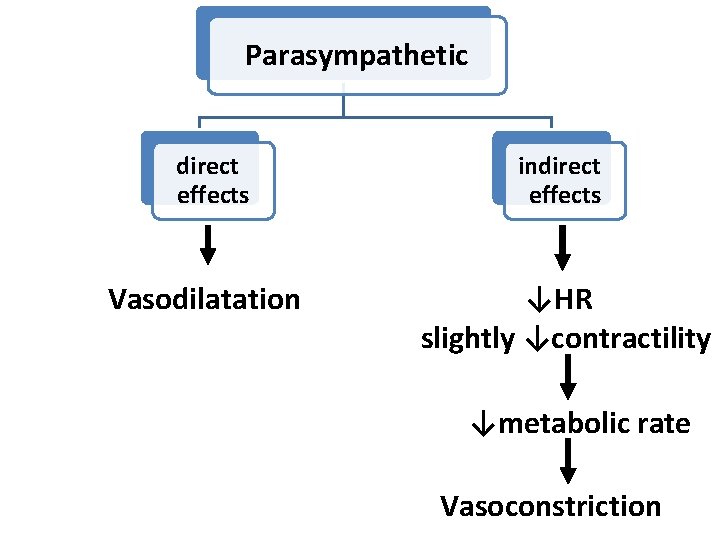
Parasympathetic direct effects Vasodilatation indirect effects ↓HR slightly ↓contractility ↓metabolic rate Vasoconstriction
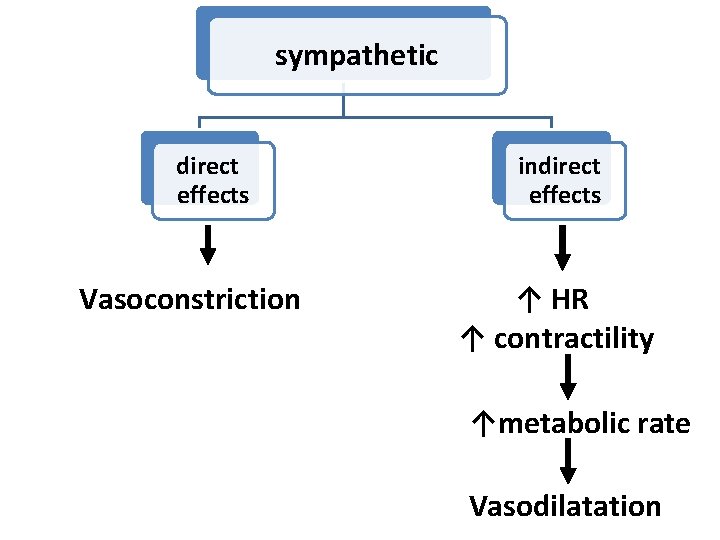
sympathetic direct effects Vasoconstriction indirect effects ↑ HR ↑ contractility ↑metabolic rate Vasodilatation
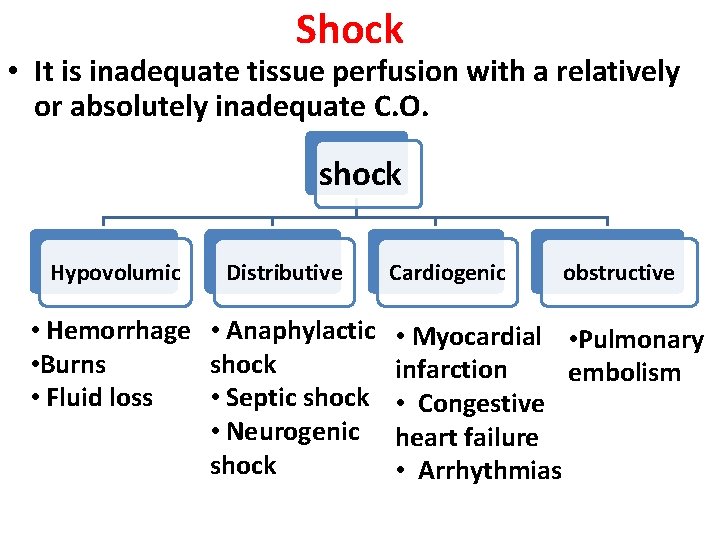
Shock • It is inadequate tissue perfusion with a relatively or absolutely inadequate C. O. shock Hypovolumic Distributive • Hemorrhage • Anaphylactic • Burns shock • Fluid loss • Septic shock • Neurogenic shock Cardiogenic obstructive • Myocardial • Pulmonary infarction embolism • Congestive heart failure • Arrhythmias
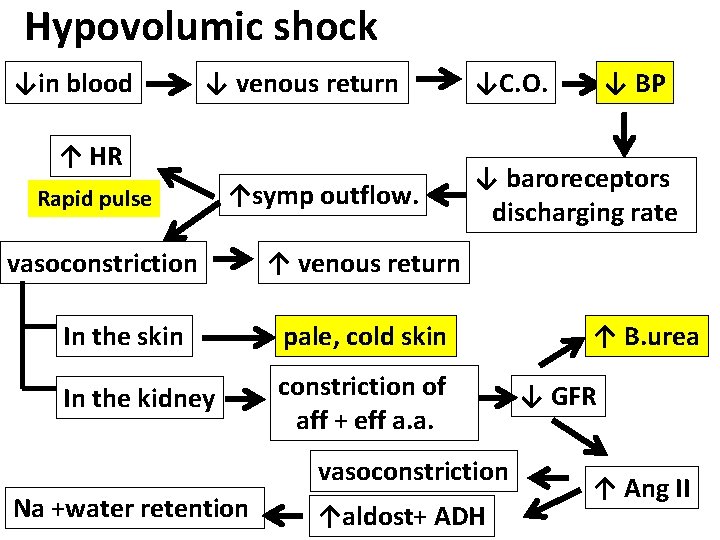
Hypovolumic shock ↓in blood ↓ venous return ↑ HR Rapid pulse ↑symp outflow. vasoconstriction ↓C. O. ↓ baroreceptors discharging rate ↑ venous return In the skin pale, cold skin In the kidney constriction of aff + eff a. a. vasoconstriction Na +water retention ↓ BP ↑aldost+ ADH ↑ B. urea ↓ GFR ↑ Ang II
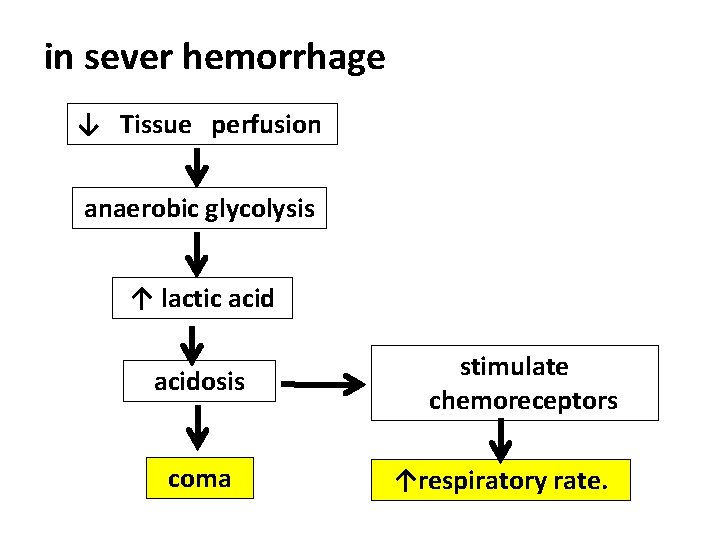
in sever hemorrhage ↓ Tissue perfusion anaerobic glycolysis ↑ lactic acidosis coma stimulate chemoreceptors ↑respiratory rate.
- Slides: 12