
Blood Culture Bacteremia Types o o o Transient
Blood Culture
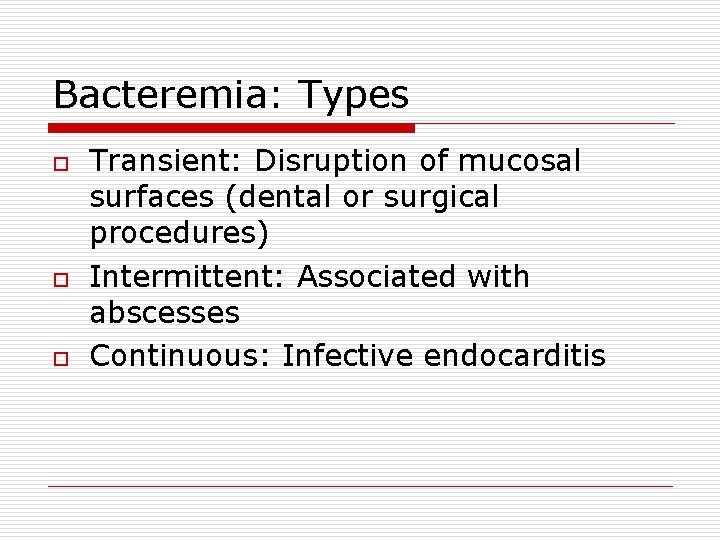
Bacteremia: Types o o o Transient: Disruption of mucosal surfaces (dental or surgical procedures) Intermittent: Associated with abscesses Continuous: Infective endocarditis
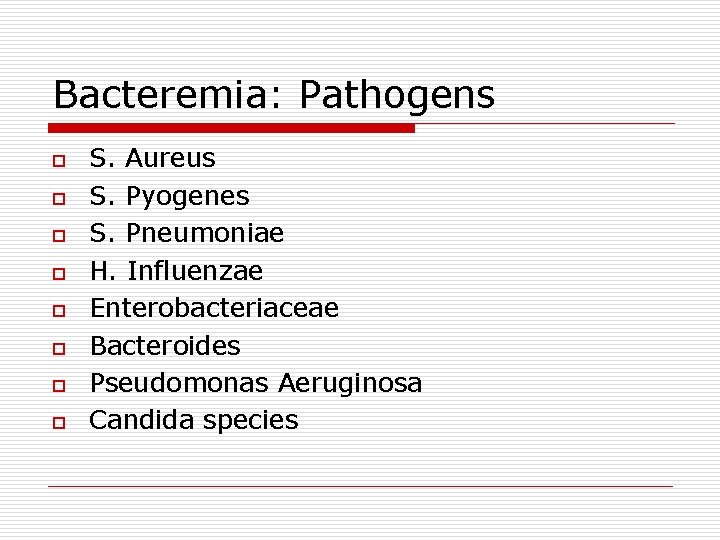
Bacteremia: Pathogens o o o o S. Aureus S. Pyogenes S. Pneumoniae H. Influenzae Enterobacteriaceae Bacteroides Pseudomonas Aeruginosa Candida species
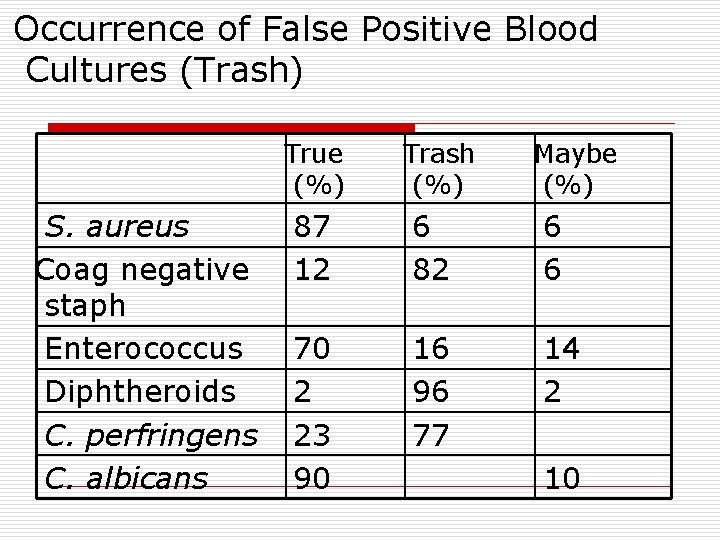
Occurrence of False Positive Blood Cultures (Trash) True (%) S. aureus Coag negative staph Enterococcus Diphtheroids C. perfringens C. albicans Trash (%) Maybe (%) 87 12 6 82 6 6 70 2 23 90 16 96 77 14 2 10
Blood Cultures: Methods o o o 2 blood cultures for separate venipuncture sites is adequate 3 sets of blood cultures for I. E. At least 10 ml/ venipuncture BLD CX > 5 ml blood: 92% yield BLD CX < 5 ml blood: 69% yield Diagnostic yield increased by 3% for every 1 ml of blood drawn
Blood Cultures: Interpretation o o Organisms isolated > 72 hours are often contaminants (+) BLD cultures not compatible with a clinical syndrome are usually contaminants A single BLD CX with coagulase (-) staphylococci is often a contaminant A single (+) BLD CX with S. Aureus, gm (-) bacillie or candida is always a pathogen and requires therapy.
Bacteremia: Contaminants o o o Coagulase (-) Staphylococci Corynebacterium species Bacillus species If multiple isolated from separate sites are obtained, the organisms could be pathogenic Viridans Streptococci can be a contaminant
Aim of the test o Diagnosis of bacteremia by n n n o aerobic and anaerobic cultivation of the blood, with identification and susceptibility test of the isolated organism (s). Blood culture should be made for cases with suspected septicemia, endocarditis, and bacteremia secondary to localized infections (pneumonia, intraabdominal abscesses, pyelonephritis, epiglottitis, meningitis).
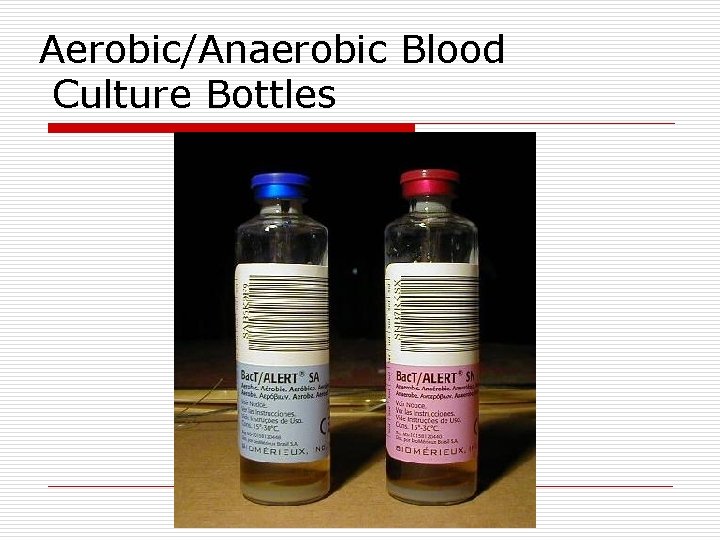
Aerobic/Anaerobic Blood Culture Bottles
Criteria of specimen rejection o o o Blood collected in tubes or bottles other than aerobic and anaerobic blood culture bottles. If the information on the label does not match that of the request form. Specimens for anaerobic blood culture received in aerobic bottles or vice versa.
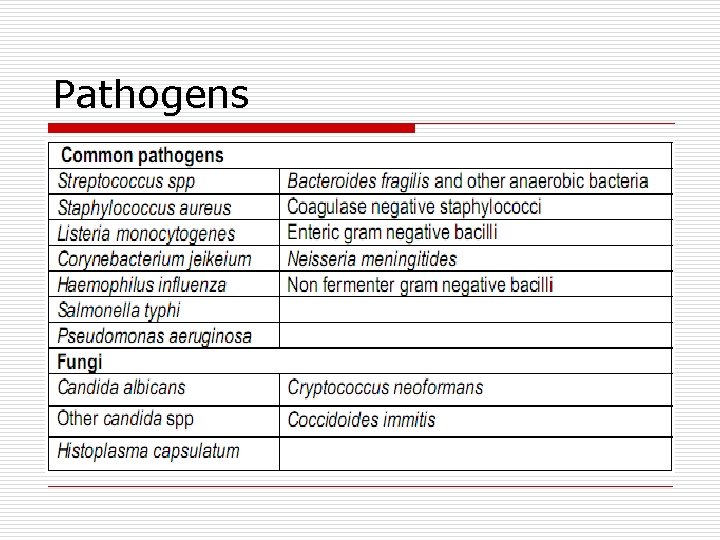
Pathogens
Patient preparing o o The major difficulty in interpretation of blood cultures is potential contamination by skin flora. This difficulty can be markedly reduced by careful attention to the details of skin preparation and antisepsis prior to collection of the specimen.
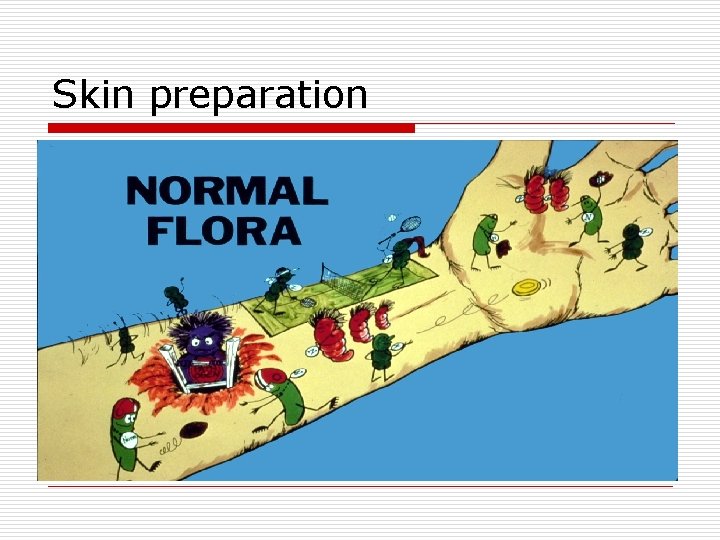
Skin preparation
Obtaining Blood Culture o o Locate the vein Prep kit n n o o o Alcohol 5 sec. Dry 30 -60 sec Tincture of Iodine-center to periphery. Dry 4560 sec Remove caps, clean with alcohol Put on gloves Without palpating, draw 20 ml and put 10 in anaerobic and 10 in aerobic bottle Dispose of syringe in sharps container Label bottles and send to lab
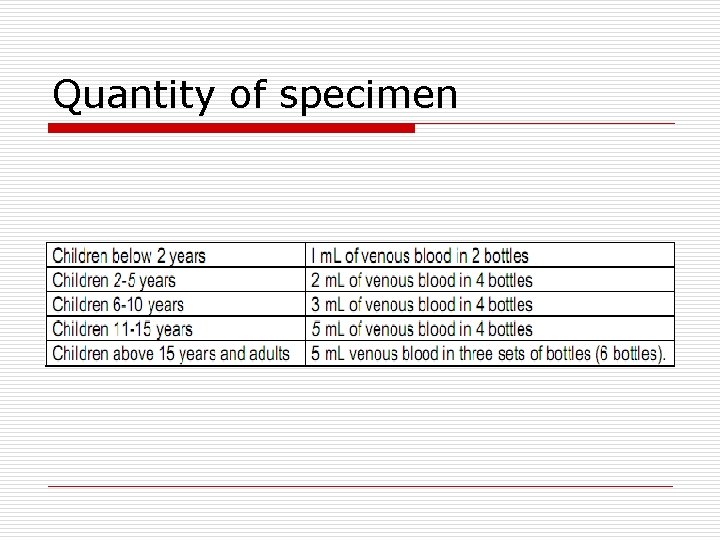
Quantity of specimen
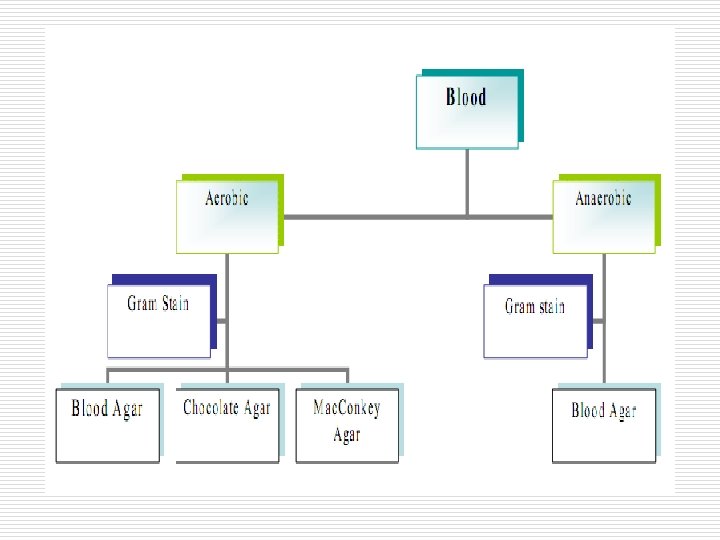
Method o o o Blood is injected to both aerobic and anaerobic bottles and incubated for up to 10 days at 37 C. Discard as negative after the 10 days During the incubation period, a gram stain and subculture onto appropriate media should be done.
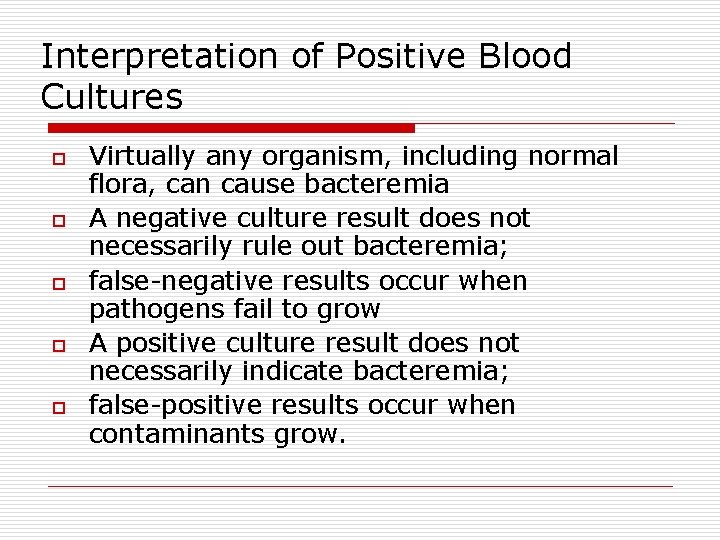
Interpretation of Positive Blood Cultures o o o Virtually any organism, including normal flora, can cause bacteremia A negative culture result does not necessarily rule out bacteremia; false-negative results occur when pathogens fail to grow A positive culture result does not necessarily indicate bacteremia; false-positive results occur when contaminants grow.
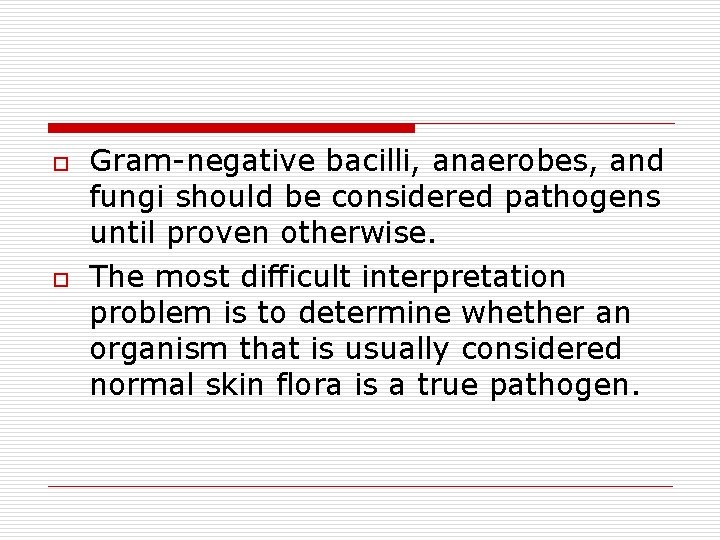
o o Gram-negative bacilli, anaerobes, and fungi should be considered pathogens until proven otherwise. The most difficult interpretation problem is to determine whether an organism that is usually considered normal skin flora is a true pathogen.

Thank you
- Slides: 20