
Blood Collection and Handling of Blood Samples Collecting

Blood Collection and Handling of Blood Samples
Collecting your Sample Determine which ________ are needed. Determine the _________ you will need and the ________ you will use. Preferred blood source is almost ALWAYS ________ blood, not _______ blood. ______ vein is usually most appropriate vessel for collection. Use the _________needle that the patient can comfortably accommodate. Choose the size syringe that best matches the __________________ you will need.
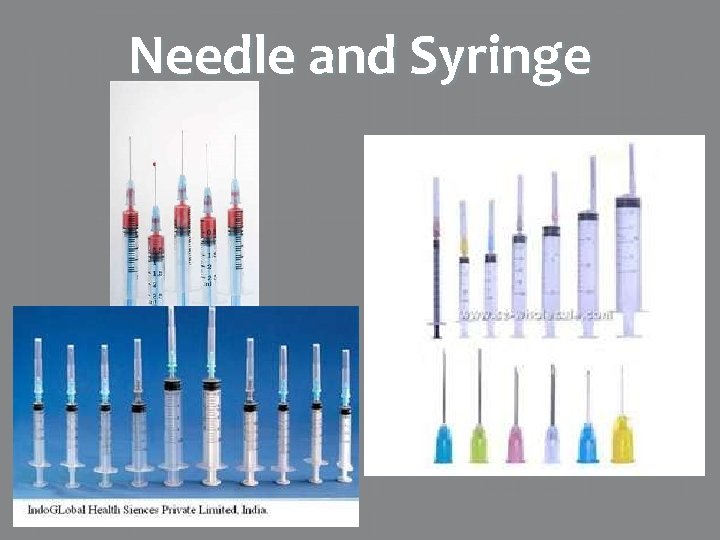
Needle and Syringe
The Vacutainer Is composed of a _______, _____________and _________tubes. Use the correct size tube to minimize ________of the sample and to prevent __________ of the vein. Fill tube to correct volume based on strength of _______________ to ensure appropriate ratio of blood to anticoagulant. ADVANTAGE: multiple samples can be collected directly into tubes without _________________ from patient.
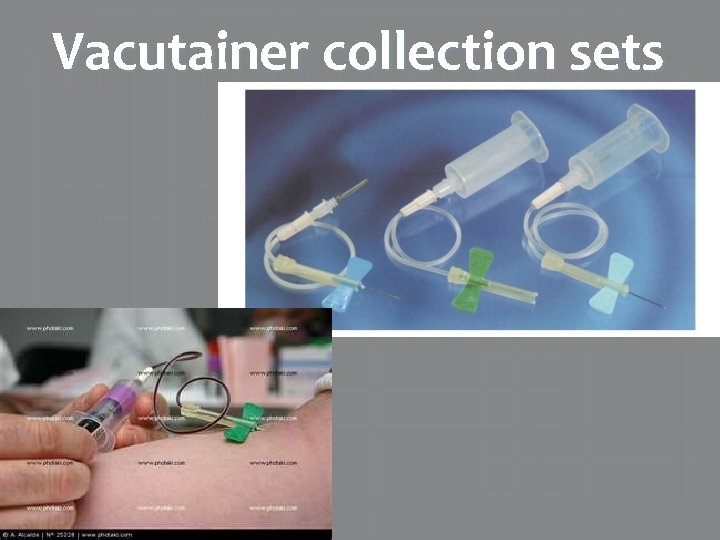
Vacutainer collection sets
Sample Volume The amount of blood collected from an animal depends on the amount of ________or ________needed as well as the ____________ of the animal. Enough blood should be taken to run the required tests _______ times. This should be enough to compensate for technician error, instrument error or the need for diluted samples.
Serum or Plasma? Serum or plasma are the _______ portion of whole blood. Fluid portion of blood is ____% water, ____% dissolved constituents like proteins, vitamins, carbs, hormones, etc… Plasma ______contain clotting factors. The clotting factors are known as _____is plasma that has had the clotting factors removed.
Whole Blood Is placed into a container with an ___________added to prevent clotting. As soon as you obtain your sample, mix the blood with the anticoagulant by using a ______________ motion. Vigorously shaking your sample can cause _______, otherwise known as cell destruction.
_______ Defined: Are chemicals that prevent or delay the clotting process. Choice of anticoagulant depends on _______needed. Sample must be ________before use.
Anticoagulants cont’d Samples not tested within _____of collection should be refrigerated. (Bring sample back to room temperature and re-mix before analysis. ______ blood should NEVER be frozen as the freezing/thawing process can _______ the blood cells.
What’s in the tubes?

Red Topped Tube: Contains no __________. Routinely used for ____________. Used for ____samples.
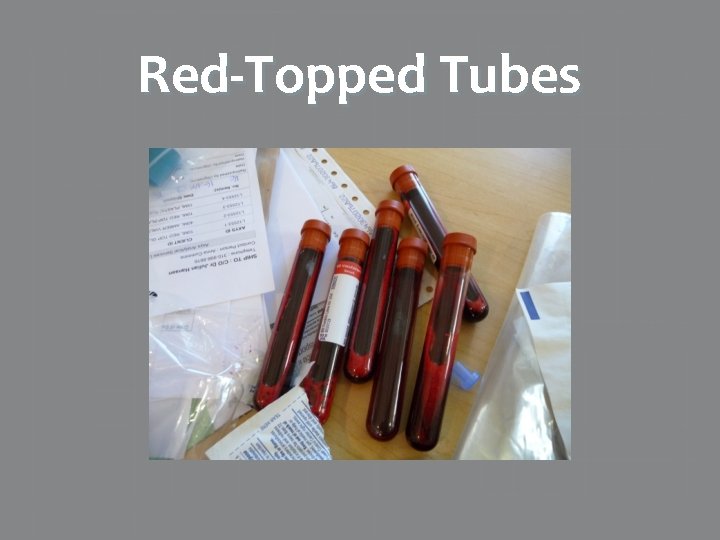
Red-Topped Tubes
Serum Separator/Tiger Topped Tube Tiger Topped (Striped) Tube/Serum Separator: Contains no anti-coagulant. Has a yellowish “plug” of _________________that separates serum from plasma when spun. Used for ______ samples. ***(Not used for therapeutic drug level monitoring. )
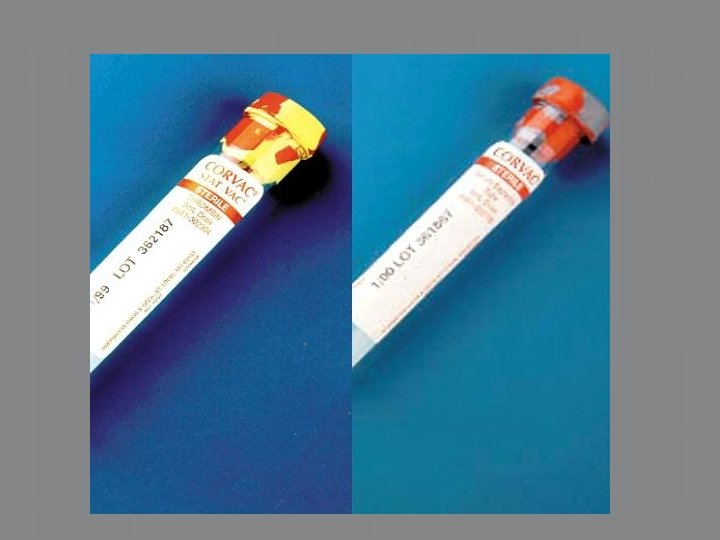
Lavender/Purple Topped Tubes Lavender Topped Tube: Contains the anticoagulant _____ or Ethlenediamine tetraacetic acid. Used for __________samples or _____samples. Used for complete blood counts because it does not ______________. HOWEVER, an excess of anticoagulant in a sample may cause cells to _____and invalidate cell counts done on automated analyzers.
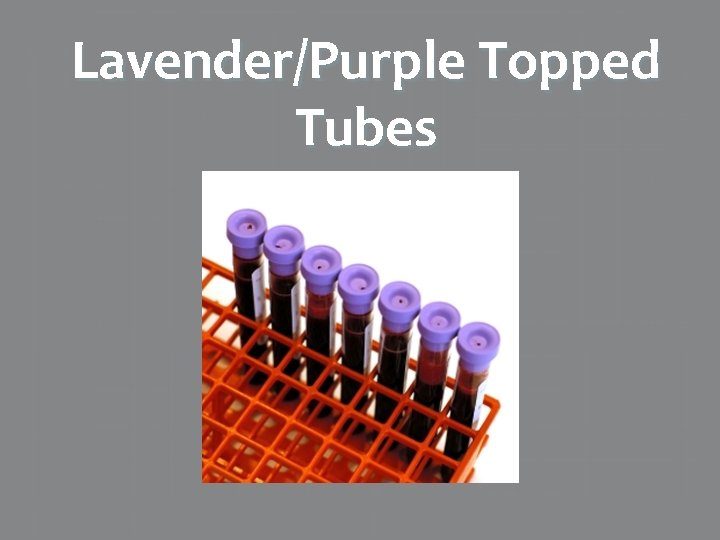
Lavender/Purple Topped Tubes
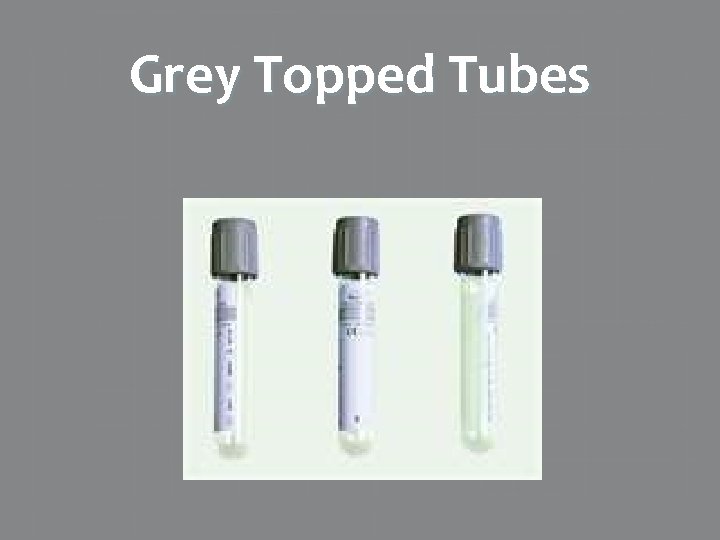
Grey Topped Tube: Contains the anticoagulant _____________. Best for __________ preservation. Interferes with many other tests performed on serum.
Grey Topped Tubes
Blue Topped Tube Contains the anticoagulant ____________. Commonly used in __________. Na Citrate interferes with Na assays and many common serum tests.

Blue Topped Tubes
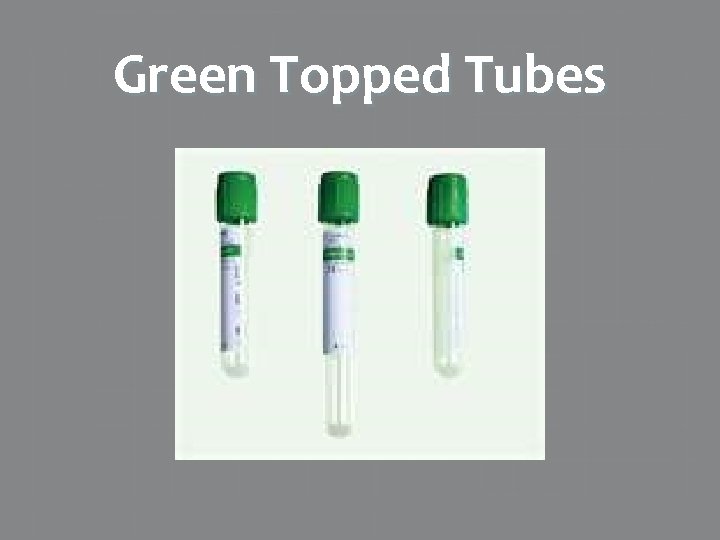
Green Topped Tube Contains the anticoagulant ____. Can be used for most tests that require ______samples. Should never be used for differential blood film analysis because the anticoagulant interferes with the staining of the _______’s.
Green Topped Tubes
Hematology Defined: ______________
Why is hematology important? Evaluation of _________ Screening for _______ animals as a __________ screening _______-______ monitoring
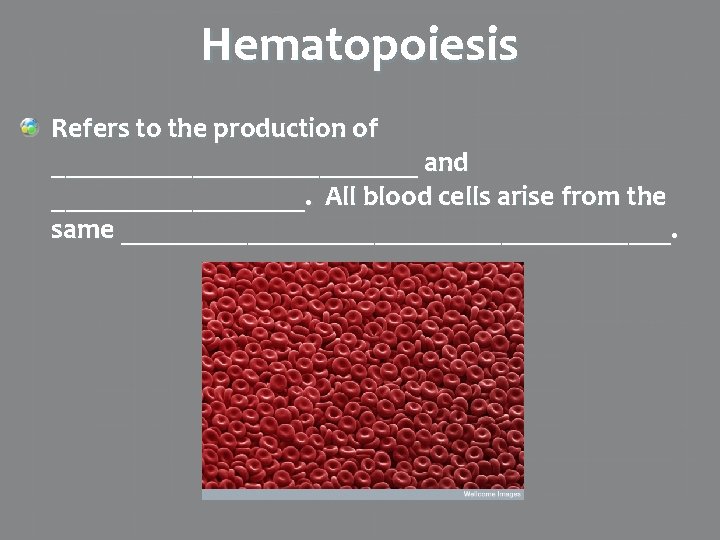
Hematopoiesis Refers to the production of _____________ and _________. All blood cells arise from the same ____________________.
Blood Composition Blood is composed of _____and _____ Fluid portion is ~____% water
Packed Cell Volume The PCV is measuring the percent of CELLS in a patient’s blood. If the animal is dehydrated, the fluid portion of the blood will ______. Example: a PCV of 50% will give a sample that is 50% cells and 50% fluid. This means that a 10 m. L sample will yield 5 m. L of fluid. A PCV of 70% will yield 70% cells and only 30% fluid so a 10 m. L sample will only give 3 m. L of fluid.
PCV (Packed Cell Volume) In a CBC, we determine the number of RBC’s in several different ways. The quickest and easiest is called the _________, also referred to as the packed cell volume (PCV) The PCV will tell you if the animal is ____or ____.
Normal PCV Values Canine: _______% Feline: _______% Equine: _______% Bovine: _______%
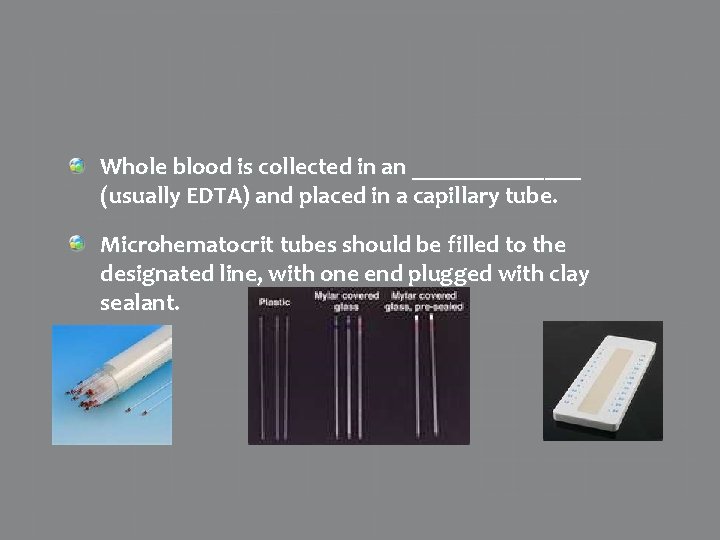
Whole blood is collected in an _______ (usually EDTA) and placed in a capillary tube. Microhematocrit tubes should be filled to the designated line, with one end plugged with clay sealant.
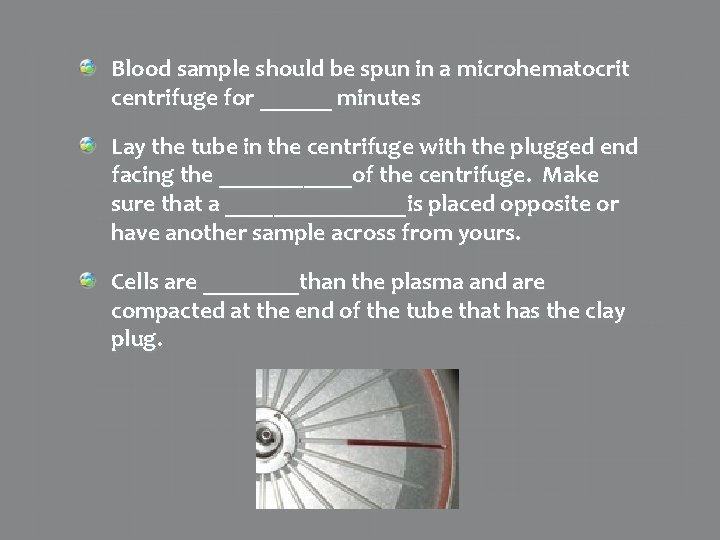
Blood sample should be spun in a microhematocrit centrifuge for ______ minutes Lay the tube in the centrifuge with the plugged end facing the ______of the centrifuge. Make sure that a ________is placed opposite or have another sample across from yours. Cells are ____than the plasma and are compacted at the end of the tube that has the clay plug.
Plasma Evaluation Plasma color and transparency may be helpful in determining a diagnosis and should be recorded in your findings. Normal plasma is _____or a _______color Cloudy Plasma = ____ Reddish tinge = _____ Yellow = ____(indicates possible liver disease)
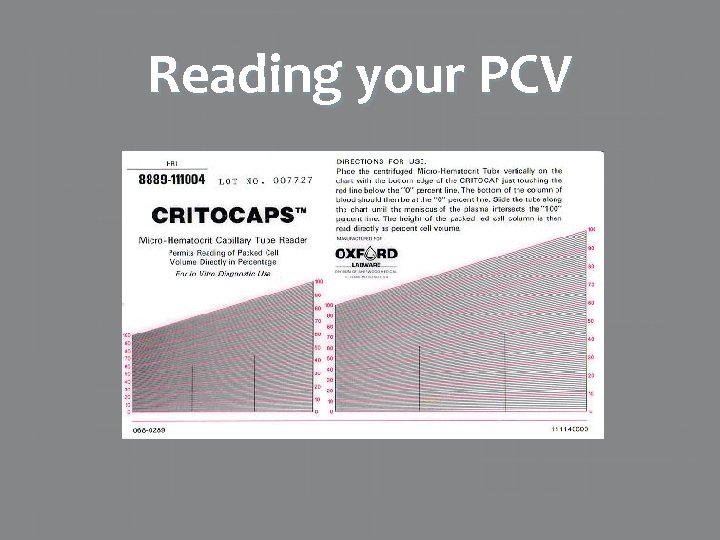
Reading your PCV
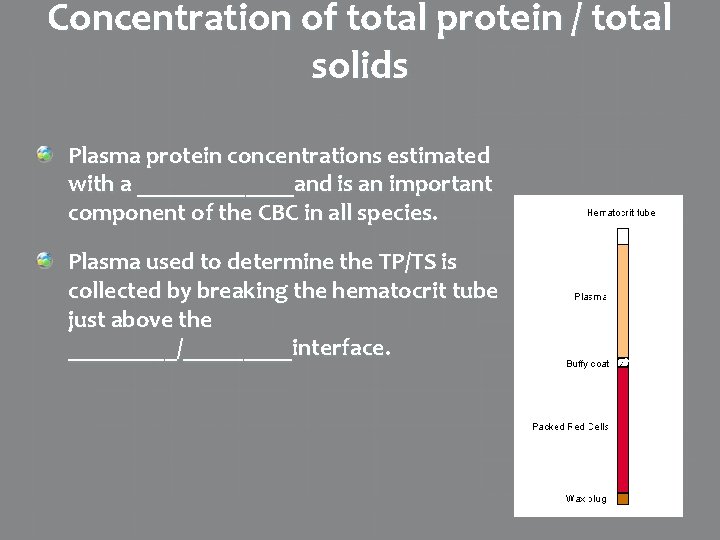
Concentration of total protein / total solids Plasma protein concentrations estimated with a _______and is an important component of the CBC in all species. Plasma used to determine the TP/TS is collected by breaking the hematocrit tube just above the _____/_____interface. ↵
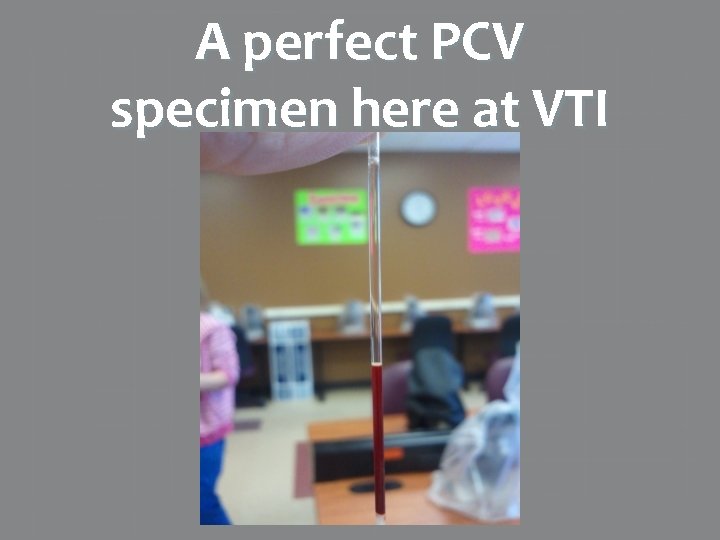
A perfect PCV specimen here at VTI

The plasma is allowed to flow onto the ___________________. (Blow gently through the open end of the hematocrit tube with the broken end of the tube over the prism of your refractometer. ) Hold the refractometer up to the light and record your findings. Make sure to ______your refractometer after each use!
Blood Films The blood film is used to perform the ______, estimate platelet numbers; and evaluate the _________________features of WBCs, RBCs and platelets. _________ smears are prepared by placing a small drop of blood on a clean glass microscope slide
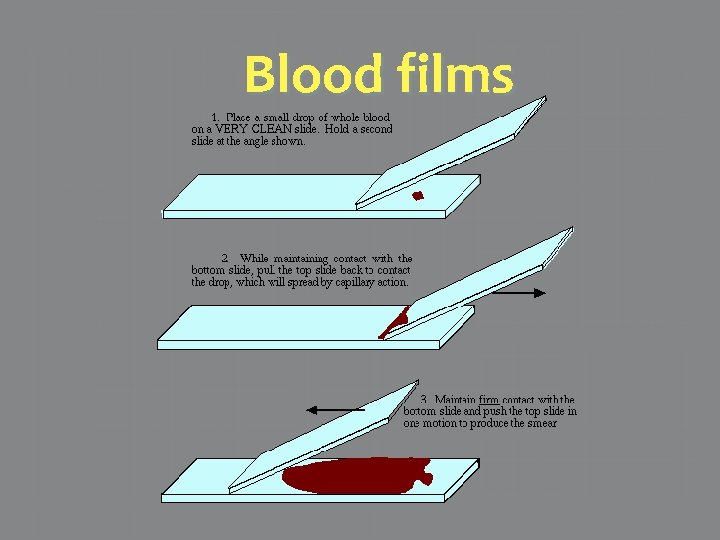
Blood films

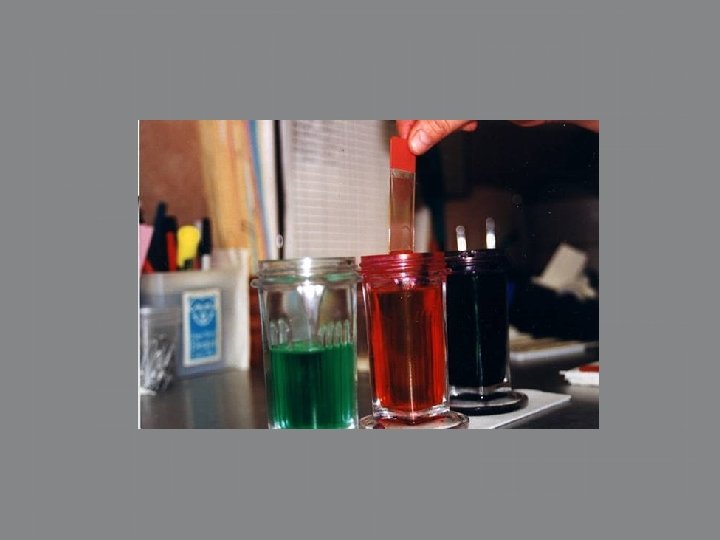
Staining a slide Always stain using the ____to _______stain. Remember which side of your slide is up (clothes pins are marked “top”) Rinse off from _______side of slide May ________ to speed up process. (We will NOT be doing this!)
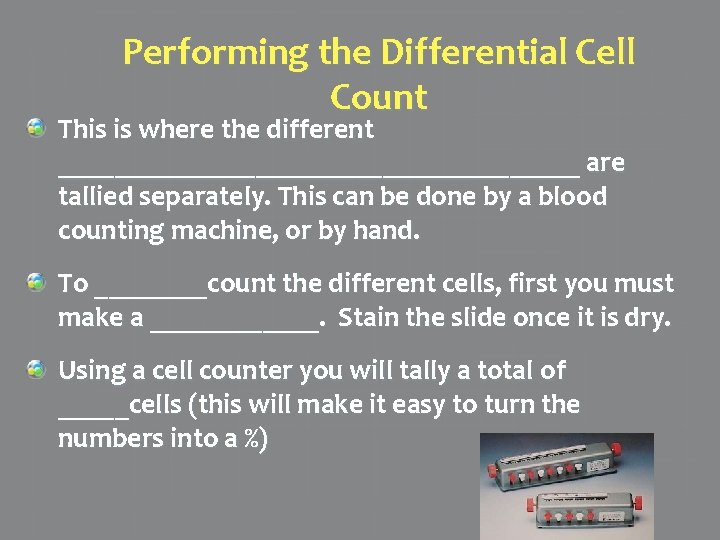
Performing the Differential Cell Count This is where the different ___________________ are tallied separately. This can be done by a blood counting machine, or by hand. To ____count the different cells, first you must make a ______. Stain the slide once it is dry. Using a cell counter you will tally a total of _____cells (this will make it easy to turn the numbers into a %)
- Slides: 43