
Blood coagulation Blood coagulation Conversion of fluid state
Blood coagulation
Blood coagulation • Conversion of fluid state of blood into semisolid state by activation and interaction of pro-coagulants in the blood • Set in motion with formation of the platelet plug • Many steps involving > 30 plasma factors – Proteins (made in the liver), – Vitamin K necessary for the synthesis of the liver proteins – Ca++ Peshawar Medical College NWFP Pakistan
Blood coagulation • Starts earlier (15 -20 seconds) if trauma is severe and late (1 -2 minutes) if trauma is trivial • The activating factors are – Traumatized vessel wall or surrounding tissue – Platelets – Plasma proteins • Clotting completes in 3 -6 minutes • Clot retracts after 20 minutes Peshawar Medical College NWFP Pakistan
Blood coagulation • Last three phases of critical importance I. Prothrombin activator is formed II. Which converts prothrombin III. Which converts fibrinogen fibrin – Fibrin threads form a meshwork which traps blood cells and seals the hole until permanent repair Peshawar Medical College NWFP Pakistan
Mechanism of blood coagulation - Pro coagulants- which promote clotting – Anticoagulants- which inhibit coagulation • In normal circulation anticoagulants dominate • After trauma pro coagulants activated & dominate leading to coagulation.
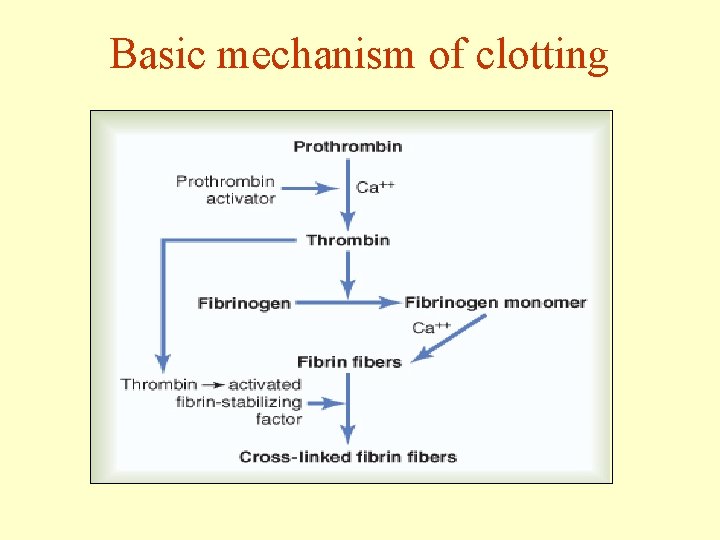
Basic mechanism of clotting
Prothrombin • • A plasma protein α 2 globulin M. W. 68700 15 mg/dl Broken to thrombin MW 33700 Synthesized in liver Vit K required for synthesis ↓ Vit K or liver disease → ↓ prothrombin →↑Bleeding tendency
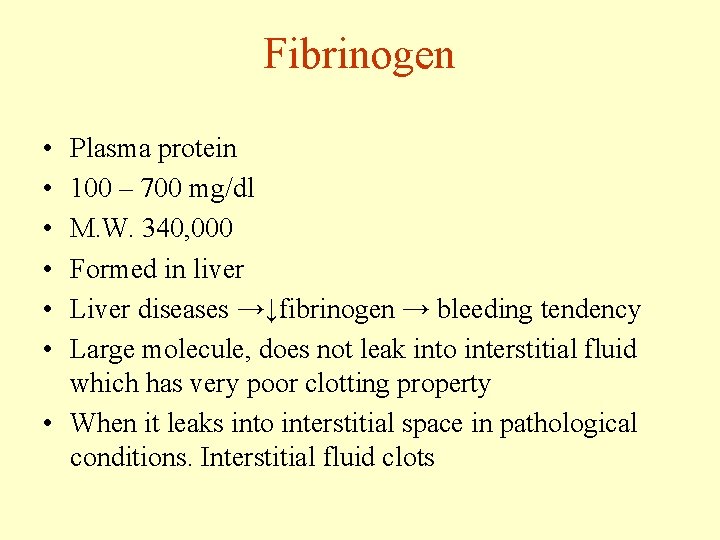
Fibrinogen • • • Plasma protein 100 – 700 mg/dl M. W. 340, 000 Formed in liver Liver diseases →↓fibrinogen → bleeding tendency Large molecule, does not leak into interstitial fluid which has very poor clotting property • When it leaks into interstitial space in pathological conditions. Interstitial fluid clots
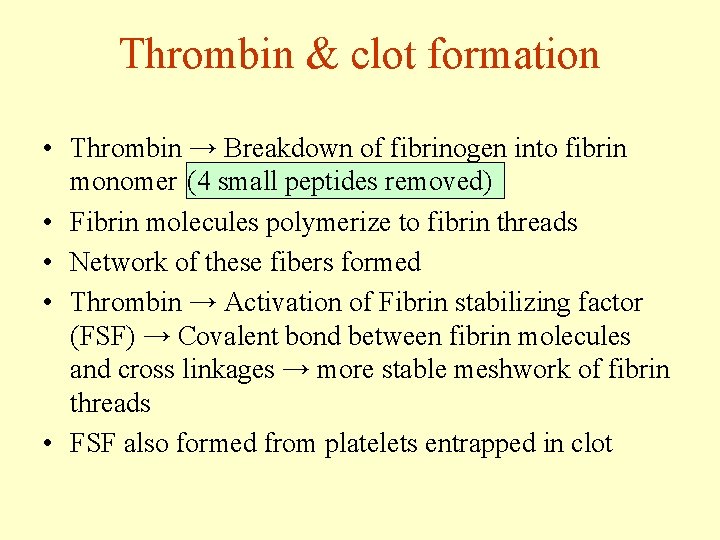
Thrombin & clot formation • Thrombin → Breakdown of fibrinogen into fibrin monomer (4 small peptides removed) • Fibrin molecules polymerize to fibrin threads • Network of these fibers formed • Thrombin → Activation of Fibrin stabilizing factor (FSF) → Covalent bond between fibrin molecules and cross linkages → more stable meshwork of fibrin threads • FSF also formed from platelets entrapped in clot
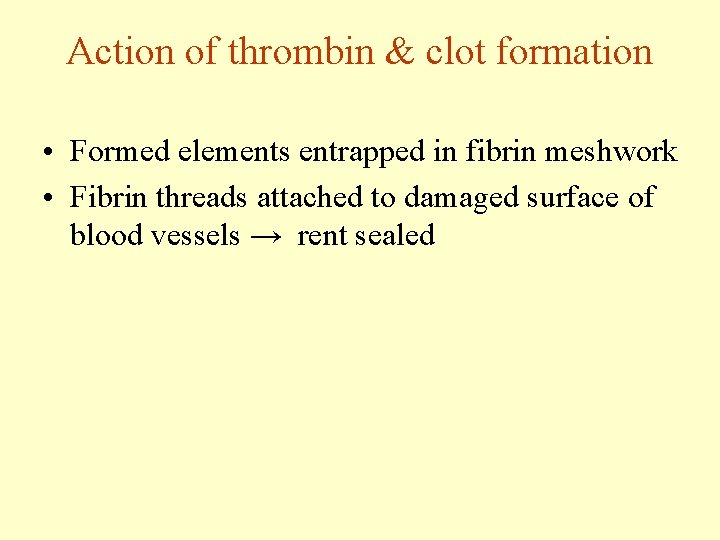
Action of thrombin & clot formation • Formed elements entrapped in fibrin meshwork • Fibrin threads attached to damaged surface of blood vessels → rent sealed
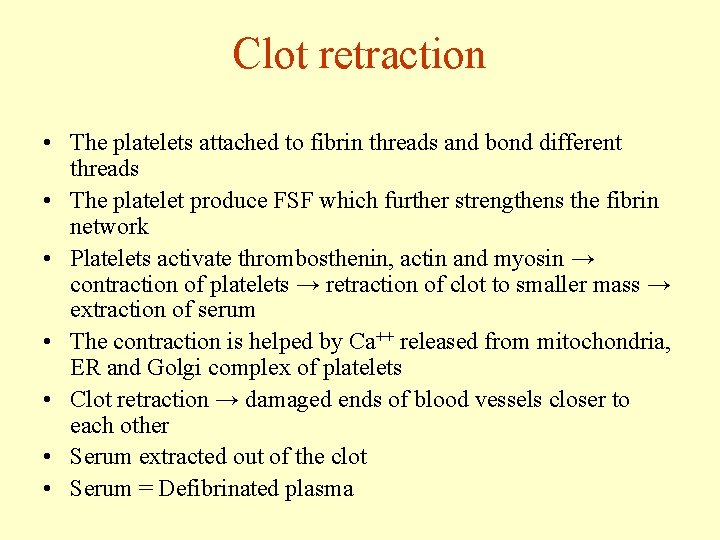
Clot retraction • The platelets attached to fibrin threads and bond different threads • The platelet produce FSF which further strengthens the fibrin network • Platelets activate thrombosthenin, actin and myosin → contraction of platelets → retraction of clot to smaller mass → extraction of serum • The contraction is helped by Ca++ released from mitochondria, ER and Golgi complex of platelets • Clot retraction → damaged ends of blood vessels closer to each other • Serum extracted out of the clot • Serum = Defibrinated plasma
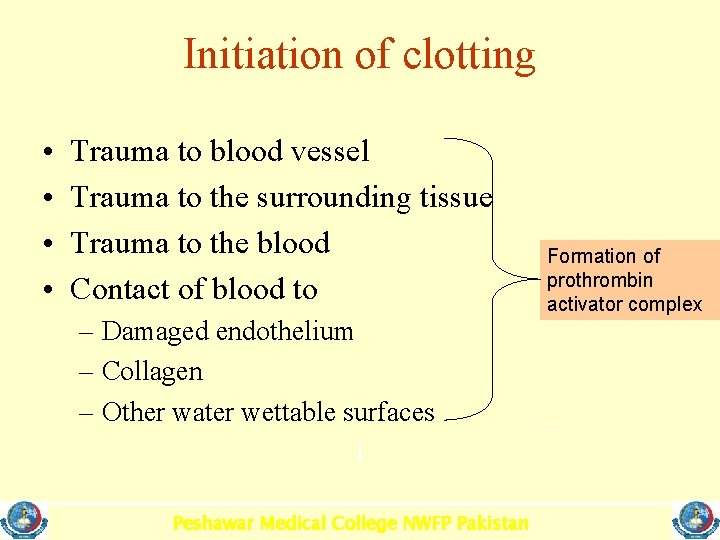
Initiation of clotting • • Trauma to blood vessel Trauma to the surrounding tissue Trauma to the blood Contact of blood to – Damaged endothelium – Collagen – Other water wettable surfaces Peshawar Medical College NWFP Pakistan Formation of prothrombin activator complex
Clotting • Different clotting factors (Most important designated by Roman numerals I- XIII) • Beta globulins plasma proteins • Present in inactive form • Cascade of different enzymatic action & activation of these procoagulants leads to clotting
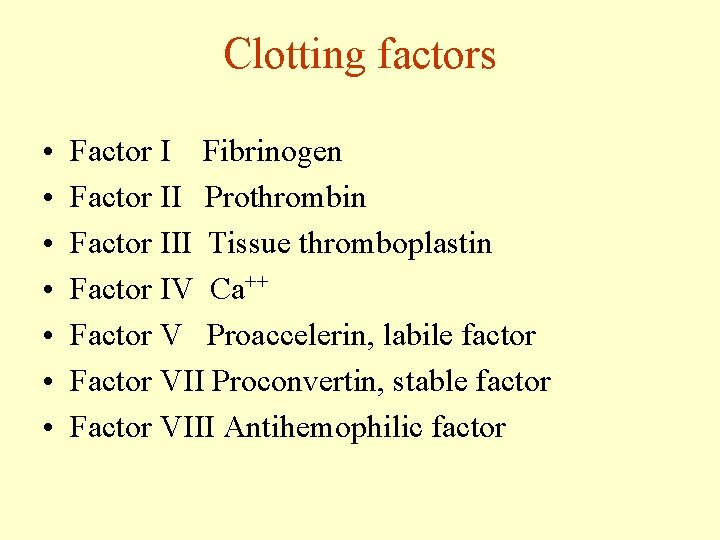
Clotting factors • • Factor I Fibrinogen Factor II Prothrombin Factor III Tissue thromboplastin Factor IV Ca++ Factor V Proaccelerin, labile factor Factor VII Proconvertin, stable factor Factor VIII Antihemophilic factor
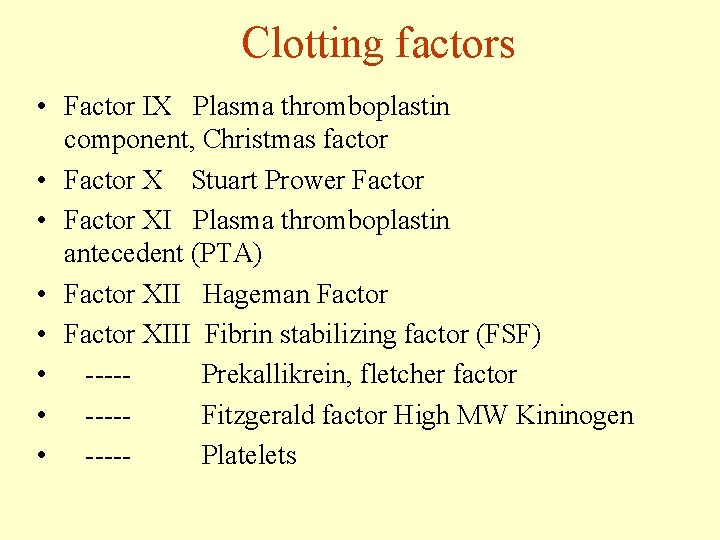
Clotting factors • Factor IX Plasma thromboplastin component, Christmas factor • Factor X Stuart Prower Factor • Factor XI Plasma thromboplastin antecedent (PTA) • Factor XII Hageman Factor • Factor XIII Fibrin stabilizing factor (FSF) • ----Prekallikrein, fletcher factor • ----Fitzgerald factor High MW Kininogen • ----Platelets
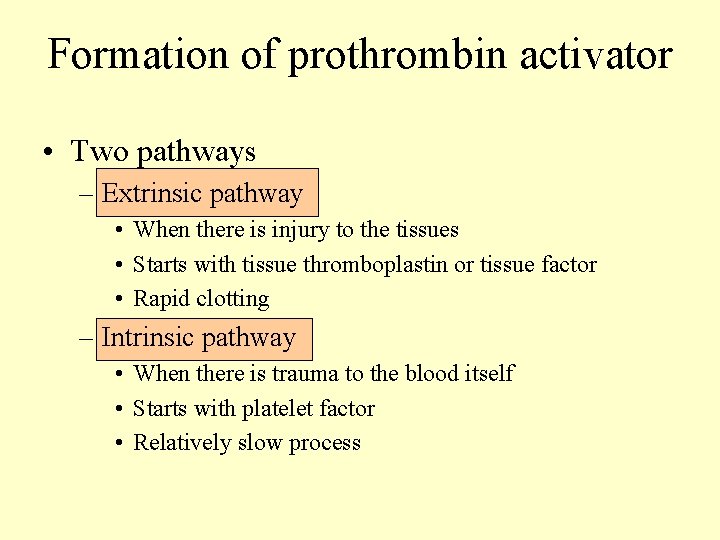
Formation of prothrombin activator • Two pathways – Extrinsic pathway • When there is injury to the tissues • Starts with tissue thromboplastin or tissue factor • Rapid clotting – Intrinsic pathway • When there is trauma to the blood itself • Starts with platelet factor • Relatively slow process
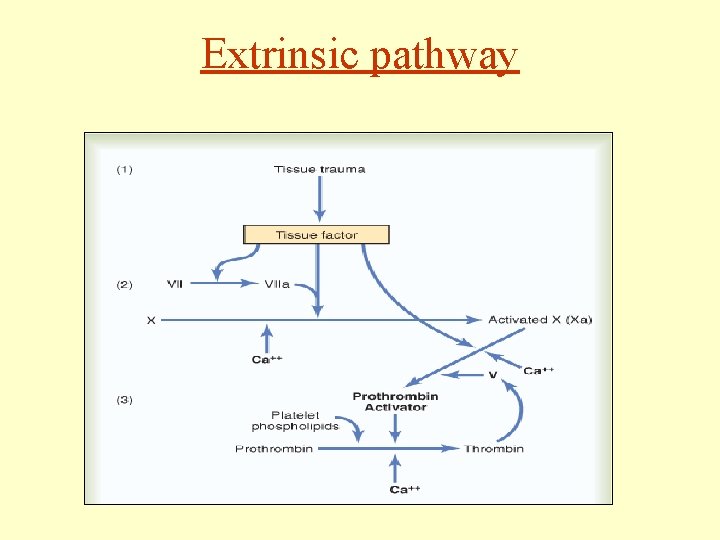
Extrinsic pathway
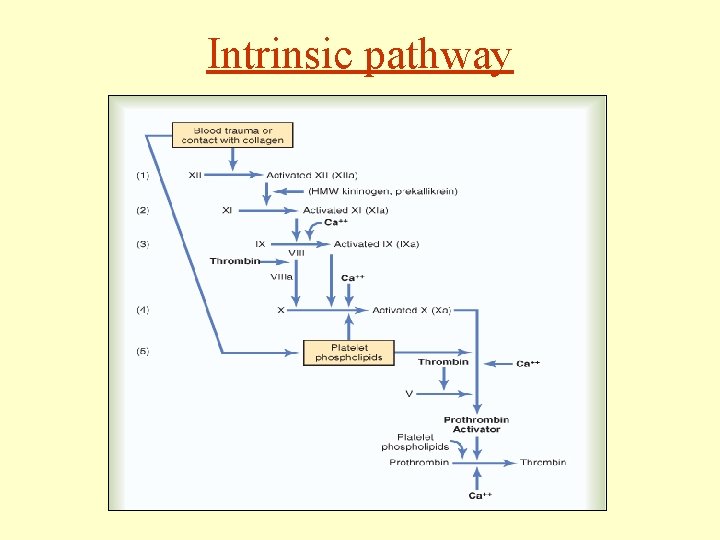
Intrinsic pathway
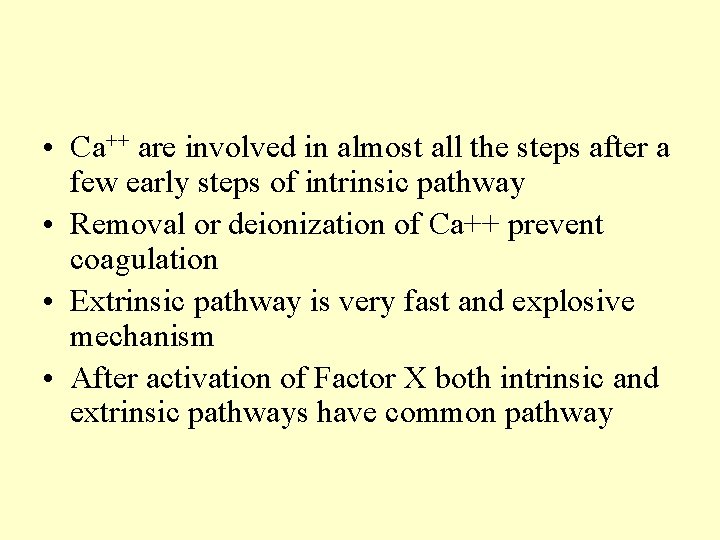
• Ca++ are involved in almost all the steps after a few early steps of intrinsic pathway • Removal or deionization of Ca++ prevent coagulation • Extrinsic pathway is very fast and explosive mechanism • After activation of Factor X both intrinsic and extrinsic pathways have common pathway
Prevention of Intravascular clotting Peshawar Medical College NWFP Pakistan
Prevention of Intravascular clotting • Endothelial surface factors – Smoothness – Glycocalyx of endothelium repels clotting factors & platelets – Thrombomodulin, a protein bound to endothelial membrane binds with thrombin – (Thrombomodulin + thrombin) complex activates a plasma protein C → inactivate factor V and VIII Peshawar Medical College NWFP Pakistan
Intravascular anticoagulants Anticoagulants which remove thrombin • Fibrin fibers – Fibrin threads adsorb thrombin (85 -90 %) – Prevention of excessive spread of clot • Antithrombin III – An alpha-globulin – Combines with thrombin – Inactivates thrombin Peshawar Medical College NWFP Pakistan
Intravascular anticoagulants Heparin – A heteropolysaccharide – Heparin is produced by • Mast cells in the pericapillary CT, specially abundant in lungs and liver • Basophilic Polymorphonuclear leucocytes in the blood – Combines with antithrombin III → 100 – 1000 times increase in antithrombin activity of antithrombin III – (Antithrombin + heparin) complex → inactivation or removal of factor IX, X, XI and XII Peshawar Medical College NWFP Pakistan
Plasmin • Plasminogen, a plasma protein • Tissue plasminogen activator (t PA) produced very slowly from the damaged tissues • Coverts plasminogen into Plasmin • Plasmin a proteolytic enzyme, causes digestion of fibrin, Fibrinolysis • Removes extra or unwanted minute clots in the blood vessels • Plasmin also causes lysis of other clotting factors like prothrombin, factor V, VIII & XII • So it acts as anticoagulant as well Peshawar Medical College NWFP Pakistan
Thank-you Questions ? ? Peshawar Medical College NWFP Pakistan
- Slides: 26