
Blood coagulation and fibrinolysis Professor Asim K Duttaroy
Blood coagulation and fibrinolysis Professor Asim K. Duttaroy University of Oslo
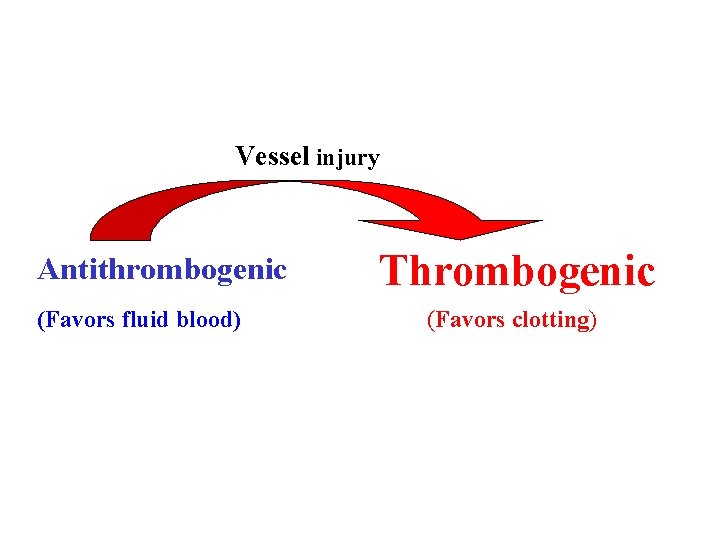
Vessel injury Antithrombogenic (Favors fluid blood) Thrombogenic (Favors clotting)
3 Major systems involved • Vessel wall – Endothelium – ECM = BM (type 4 collagen + other proteins) • Platelets • Coagulation cascade – Coagulation factors (proteins) • Names and numbers • Active and inactive forms (zymogens)
Coagulation Cascade • Enzymatic cascade (amplification) • Several serine proteases – Produced by liver (most) – Require Vit K (several) • • 3 protein cofactors (not enzymes) Requires Ca 2+ Localized to site of injury Reversible (via production of plasmin)
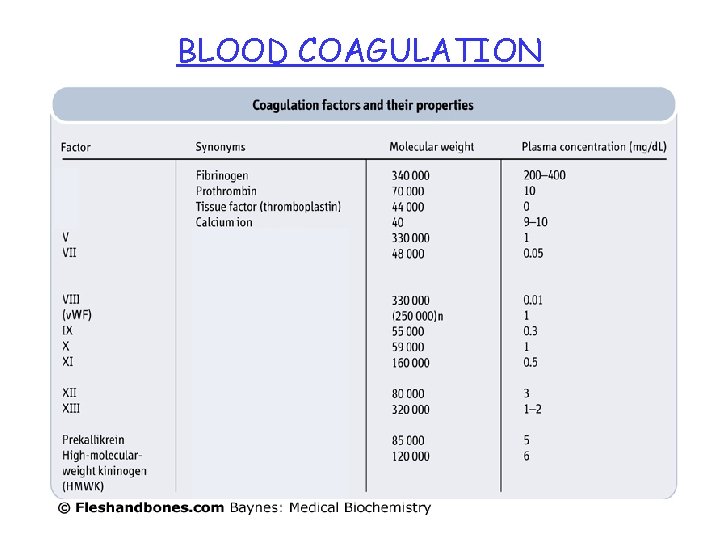
BLOOD COAGULATION
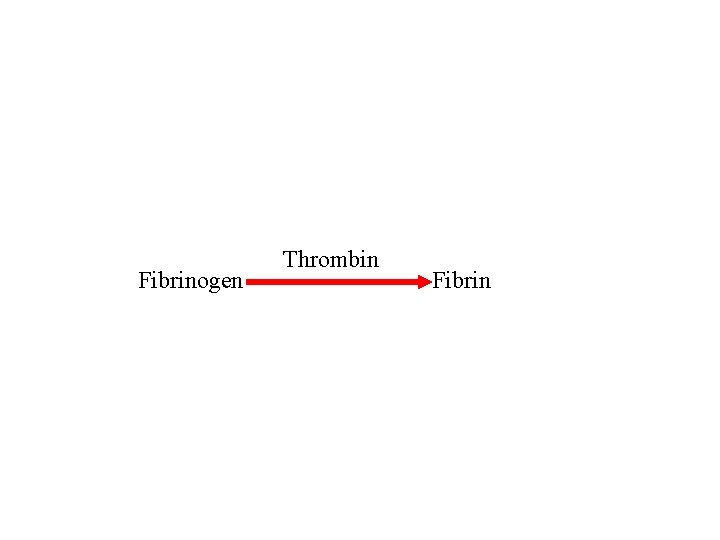
Fibrinogen Thrombin Fibrin
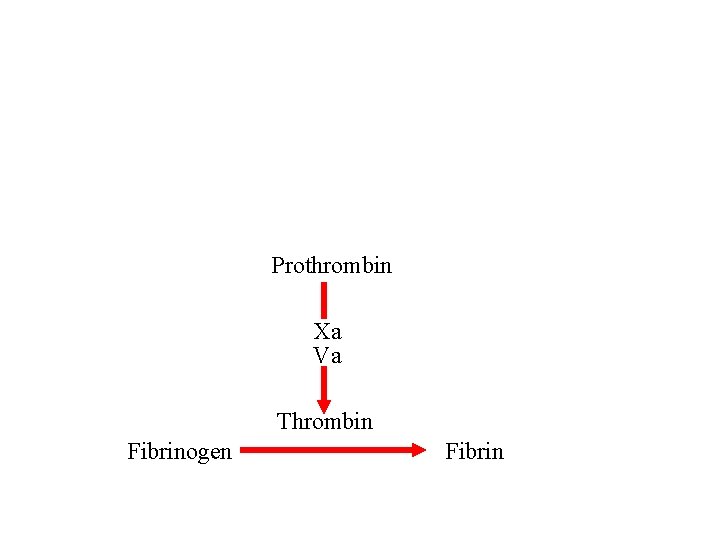
Prothrombin Xa Va Thrombin Fibrinogen Fibrin
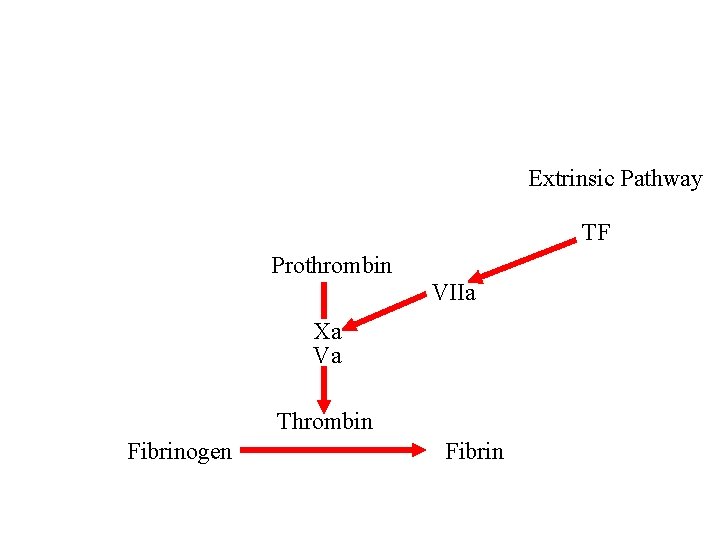
Extrinsic Pathway TF Prothrombin VIIa Xa Va Thrombin Fibrinogen Fibrin
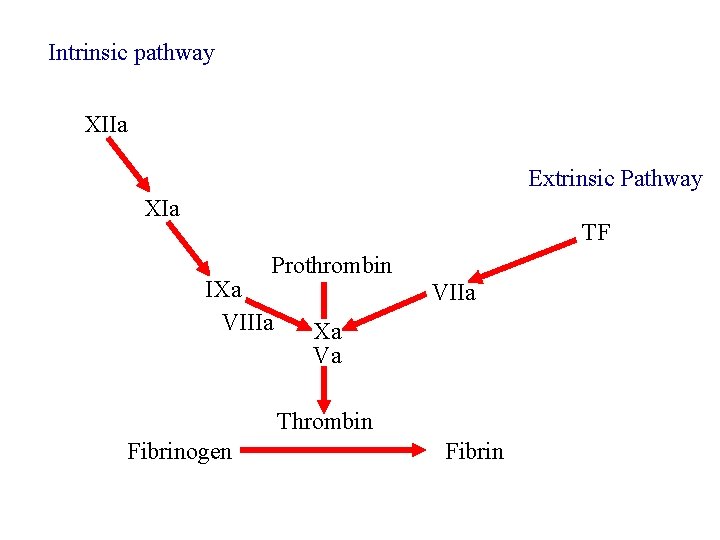
Intrinsic pathway XIIa Extrinsic Pathway XIa TF Prothrombin IXa VIIIa VIIa Xa Va Thrombin Fibrinogen Fibrin
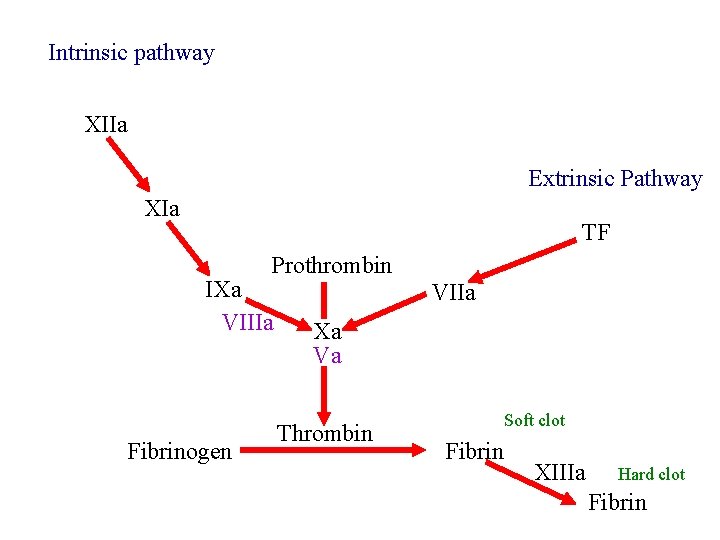
Intrinsic pathway XIIa Extrinsic Pathway XIa TF Prothrombin IXa VIIIa Fibrinogen VIIa Xa Va Thrombin Soft clot Fibrin XIIIa Hard clot Fibrin
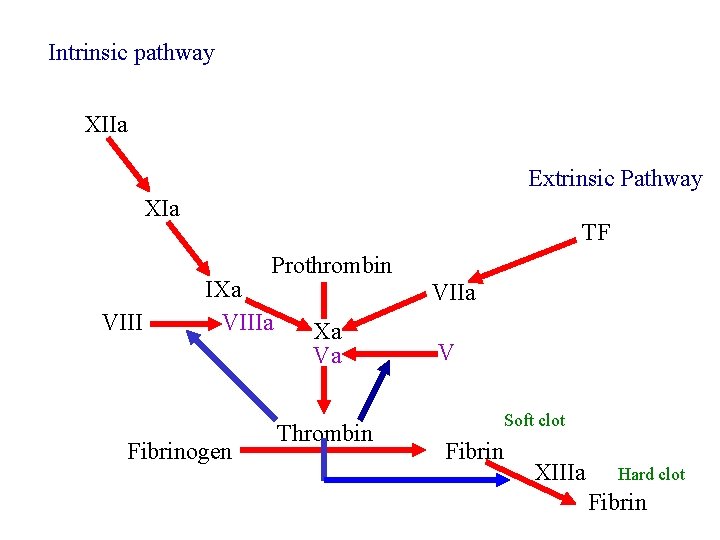
Intrinsic pathway XIIa Extrinsic Pathway XIa TF Prothrombin VIII IXa VIIIa Fibrinogen VIIa Xa Va Thrombin V Soft clot Fibrin XIIIa Hard clot Fibrin
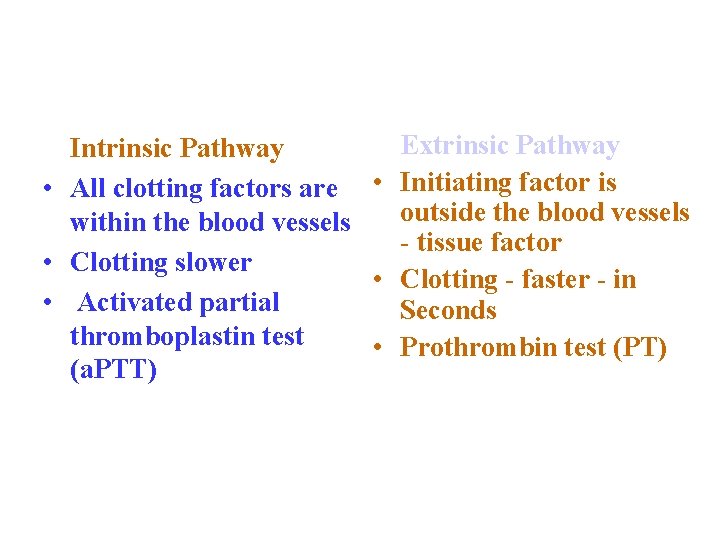
Extrinsic Pathway Intrinsic Pathway • All clotting factors are • Initiating factor is outside the blood vessels within the blood vessels - tissue factor • Clotting slower • Clotting - faster - in • Activated partial Seconds thromboplastin test • Prothrombin test (PT) (a. PTT)
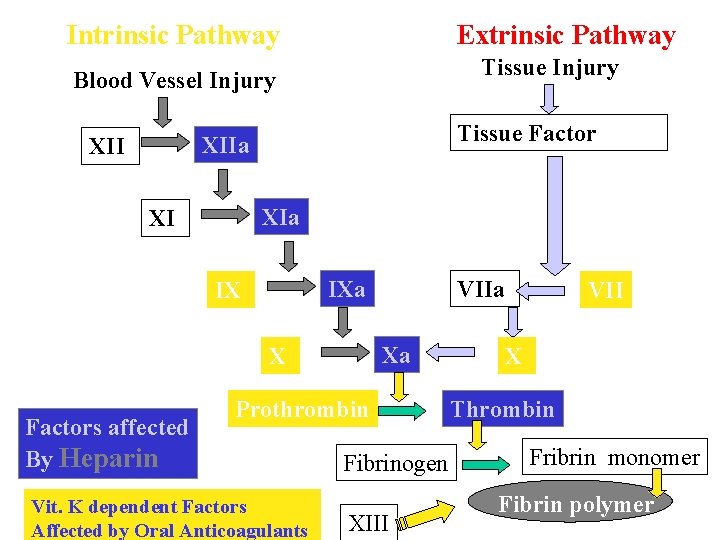
Intrinsic Pathway Extrinsic Pathway Tissue Injury Blood Vessel Injury Tissue Factor XIIa XII XIa XI IXa IX Xa X Factors affected By Heparin VIIa Prothrombin Vit. K dependent Factors Affected by Oral Anticoagulants Fibrinogen XIII VII X Thrombin Fribrin monomer Fibrin polymer
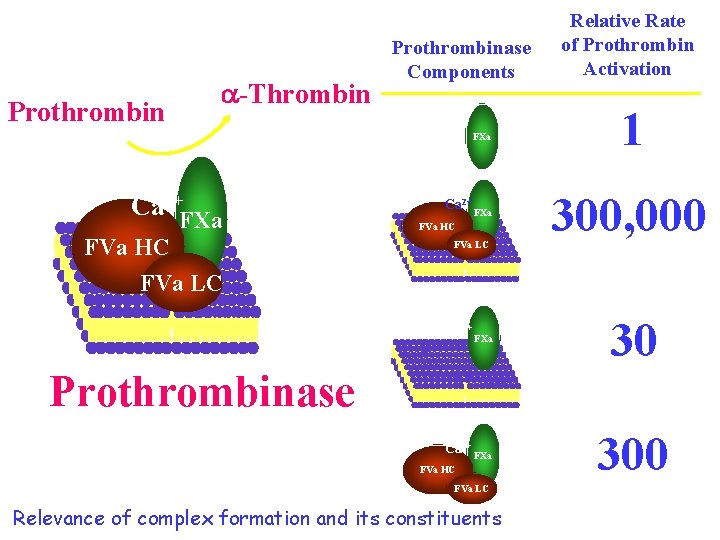
Prothrombin -Thrombin Prothrombinase Components FXa Ca 2+FXa FVa Ca HC 2+ Ca 2+ FXa FVa HC 2+ Ca FVa LC Relative Rate of Prothrombin Activation 1 300, 000 FVa LC Ca 2+ FXa Ca 2+ 30 Prothrombinase Ca 2+ FXa FVa HC FVa LC Relevance of complex formation and its constituents 300
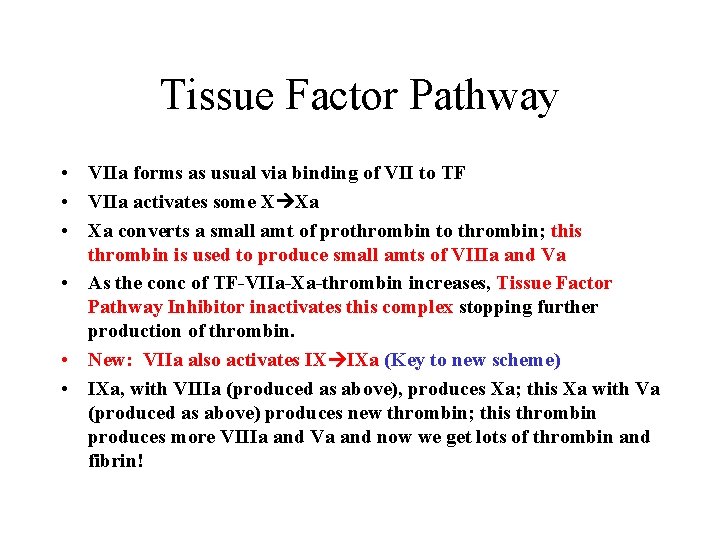
Tissue Factor Pathway • VIIa forms as usual via binding of VII to TF • VIIa activates some X Xa • Xa converts a small amt of prothrombin to thrombin; this thrombin is used to produce small amts of VIIIa and Va • As the conc of TF-VIIa-Xa-thrombin increases, Tissue Factor Pathway Inhibitor inactivates this complex stopping further production of thrombin. • New: VIIa also activates IX IXa (Key to new scheme) • IXa, with VIIIa (produced as above), produces Xa; this Xa with Va (produced as above) produces new thrombin; this thrombin produces more VIIIa and Va and now we get lots of thrombin and fibrin!
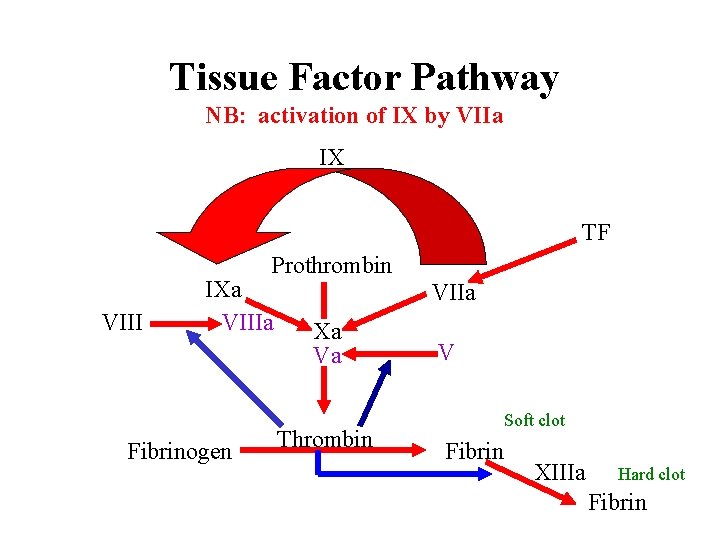
Tissue Factor Pathway NB: activation of IX by VIIa IX TF Prothrombin VIII IXa VIIIa Fibrinogen VIIa Xa Va Thrombin V Soft clot Fibrin XIIIa Hard clot Fibrin
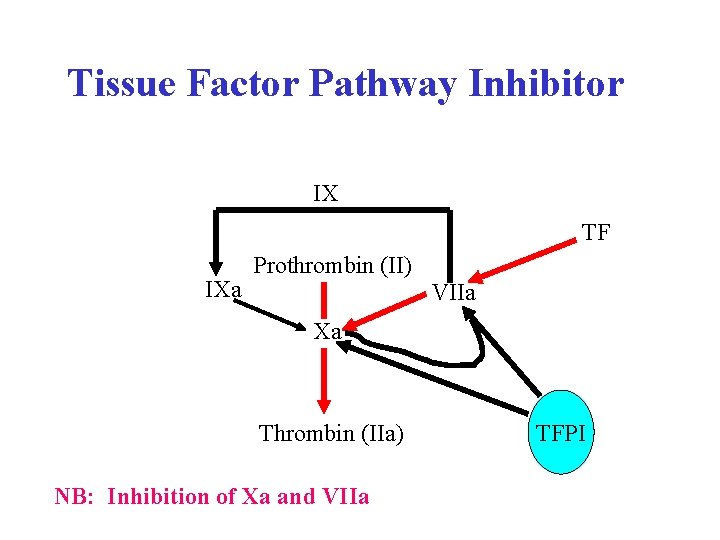
Tissue Factor Pathway Inhibitor IX TF IXa Prothrombin (II) VIIa Xa Thrombin (IIa) NB: Inhibition of Xa and VIIa TFI TFPI
Tissue Factor Pathway Inhibitor • • Kunitz-type protease inhibitor (kringles) 34 and 41 k. D forms in plasma (C-term truncation) Directly inhibits Xa Inhibits VIIa-TF complex in a [Xa]-dependent manner • Bound to LDL, HDL and Lp (a) • ~10% present in platelets (endothelium also)
Hemophilia A Deficiency of/nonfunctional VIII Hemophilia B Deficiency of /nonfunctional IX Why do they bleed?
Physiologic Inhibitors of coagulation • Antithrombin III (serpin) • Activated Protein C + protein S – Inactivates Va and VIIIa (via proteolysis) – NB: Factor V Leiden • Thrombomodulin (EC glycoprotein) – Binds to thrombin – Decreases ability to produce fibrin – Increases ability to activate Protein C
Prothrombin time (PT) Tissue Thromboplastin factor III Mix with phospholipid extract Add calcium and blood sample Determine clotting time Generally 12 - 14 seconds Used to detect defects in extrinsic pathway
Activated partial thromboplastin time (APTT) Blood sample + EDTA or Citrate No clot ( recalcification will result in clot in about 2 - 4 min) Add calcium Mix with negatively charged phospholipid Kaoline (aluminum silicate) Determine clotting time Generally clotting occurs in 26 to 33 seconds Used to detect defects in the intrinsic pathway
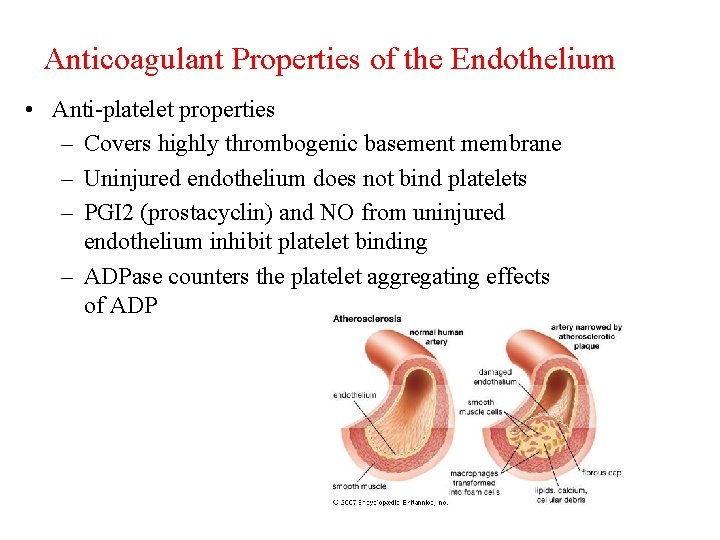
Anticoagulant Properties of the Endothelium • Anti-platelet properties – Covers highly thrombogenic basement membrane – Uninjured endothelium does not bind platelets – PGI 2 (prostacyclin) and NO from uninjured endothelium inhibit platelet binding – ADPase counters the platelet aggregating effects of ADP
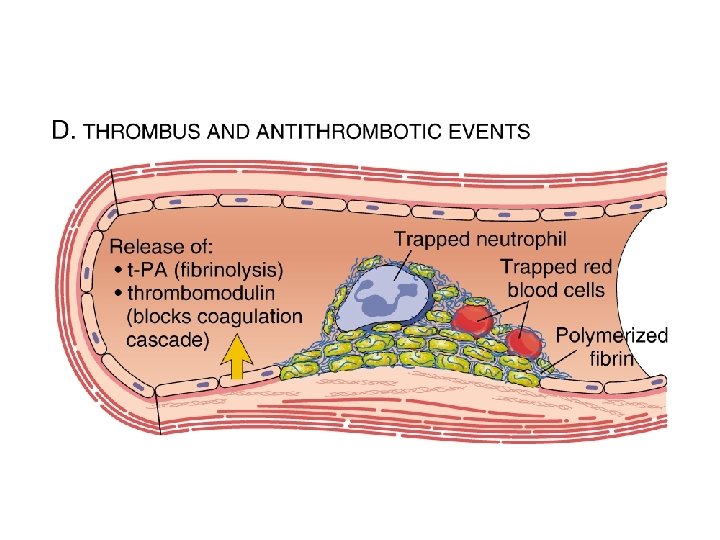
Anticoagulant properties of the endothelium * HEPARIN-LIKE MOLECULES: activate antithrombin III (inactivates active proteases) * THROMBOMODULIN: changes specificity of thrombin (activates protein C , which inactivates factors Va and VIIIa * Endothelial cells produce t- PA which activates fibrinolysis via plasminogen to plasmin
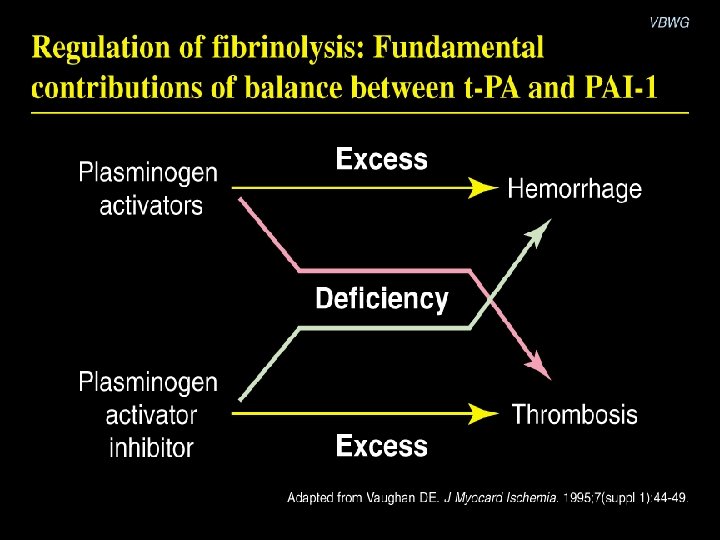
Prothrombotic Properties of the Endothelium • Synthesis of von Willebrand factor • Release of tissue factor, TF • Production of plasminogen activator inhibitors (PAI) • Membrane phospholipids bind and facilitate activation of clotting factors via Ca bridges
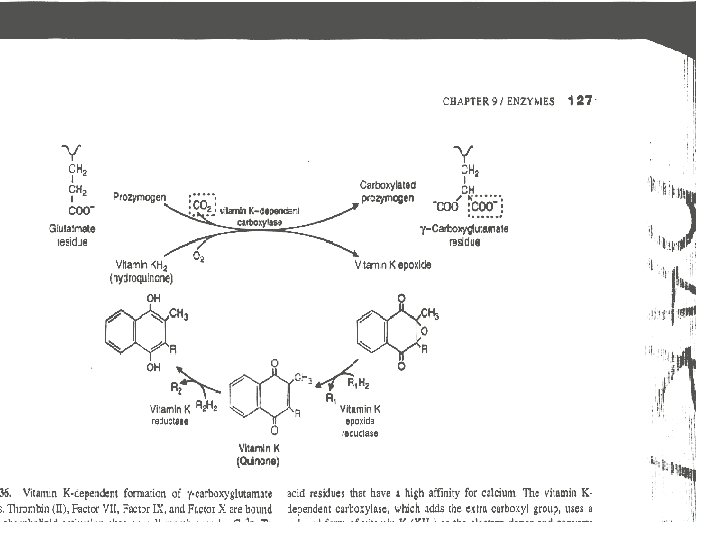
VITAMIN K • Group of related, fat soluble compounds, which differ in the number of side-chain isoprenoid units • Plant derived (vitamin K 1) and synthesized by intestinal bacteria (vitamin K 2) • The reduced form of vitamin K 2 (vitamin KH 2) is required for the post-translational, gammacarboxylation of several proteins involved in blood clotting
Role of vitamin K
Role of vitamin K Some clotting factors require a post-translational modification before they are active in clotting These factors are II, VII, IX, X, proteins C and S This PTM involves the addition of a COO- to certain Glu residues in the clotting factors This PTM results in the formation of several gcarboxy glutamates = Gla This PTM requires vitamin K
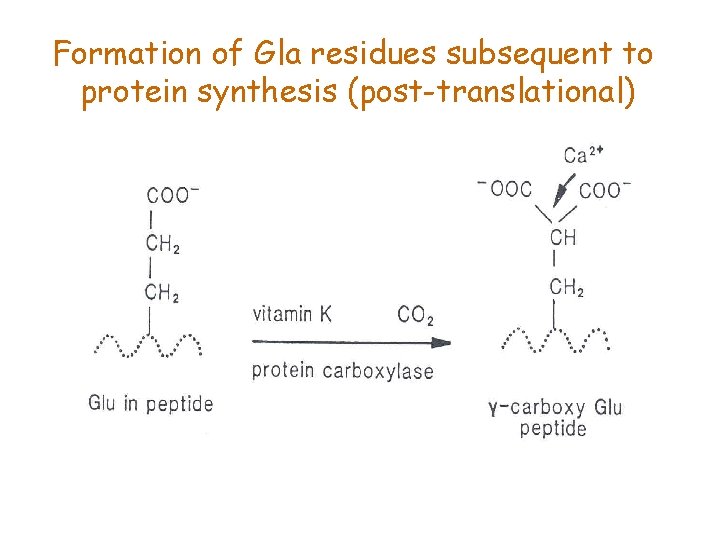
Formation of Gla residues subsequent to protein synthesis (post-translational)
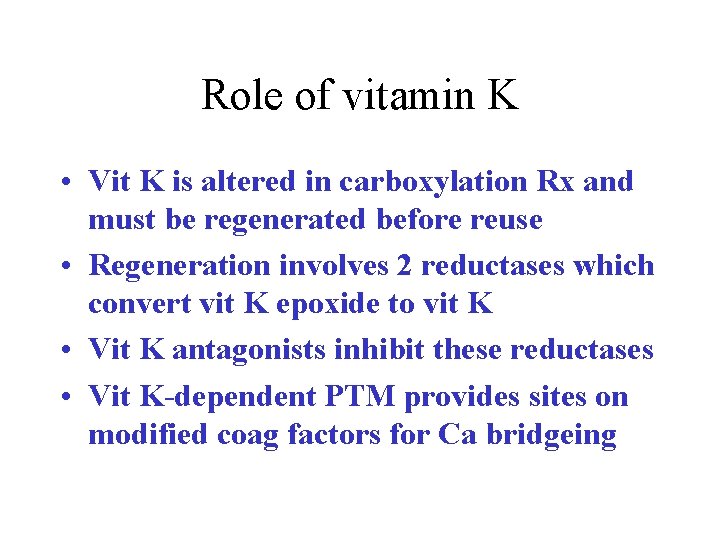
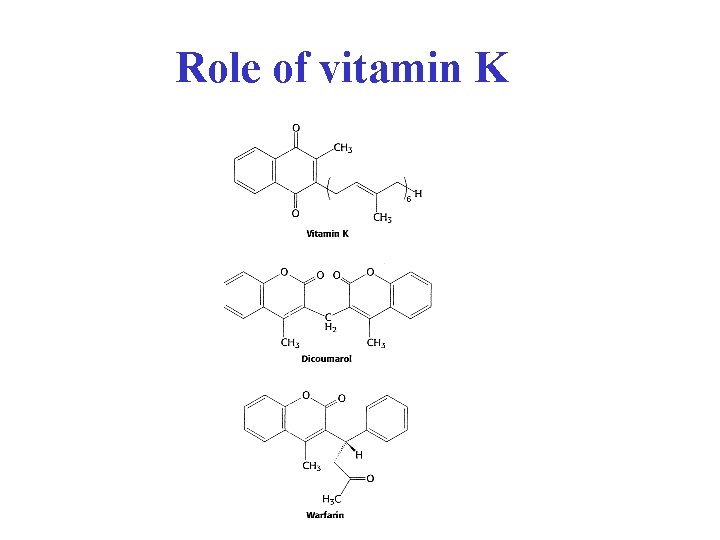
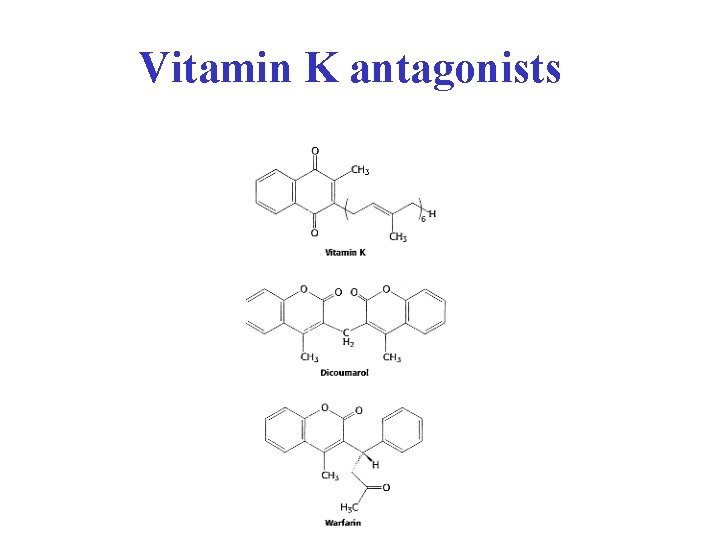
Role of vitamin K • Vit K is altered in carboxylation Rx and must be regenerated before reuse • Regeneration involves 2 reductases which convert vit K epoxide to vit K • Vit K antagonists inhibit these reductases • Vit K-dependent PTM provides sites on modified coag factors for Ca bridgeing
Non-physiologic inhibitors of coagulation • Vitamin K antagonists (in vivo) • Ca chelators (in vitro only) – EDTA – Citrate – Oxalate * Heparin (in vivo and in vitro)
Vitamin K deficiency • Deficiency of vitamin K is rare because of its wide distribution in nature, and its production by intestinal bacteria • Found in individuals with liver disease and fat malabsorption - it is associated with bleeding disorders • Newborn infants (especially preemies) are also at risk - Placenta is insufficient in the transfer of maternal vitamin K - Concentration of circulating vitamin K drops immediately after birth, and it recovers upon absorption of food - Gut of the newborn is sterile Thus, newborns are given an injection of vitamin K following birth.
Vitamin K antagonists
BLOOD COAGULATION (CONT. ) • Deficiencies in all of the factors, except factor XII, lead to a bleeding tendency in the affected individual • Described as a ‘waterfall’ or ‘cascade’ sequence of zymogen (pro-enzyme) to enzyme conversions, with each enzyme activating the next zymogen in the seqeunce • Activated factor enzymes are designated with an “a”, e. g. factor Xa
Clot removal
FIBRINOLYSIS
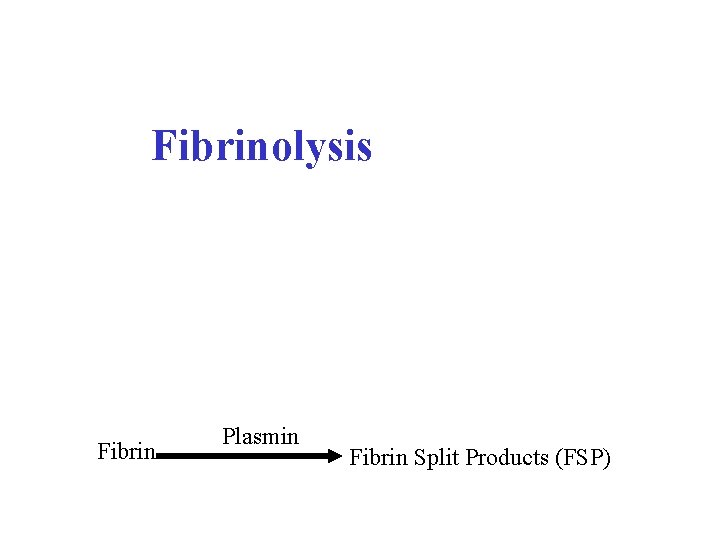
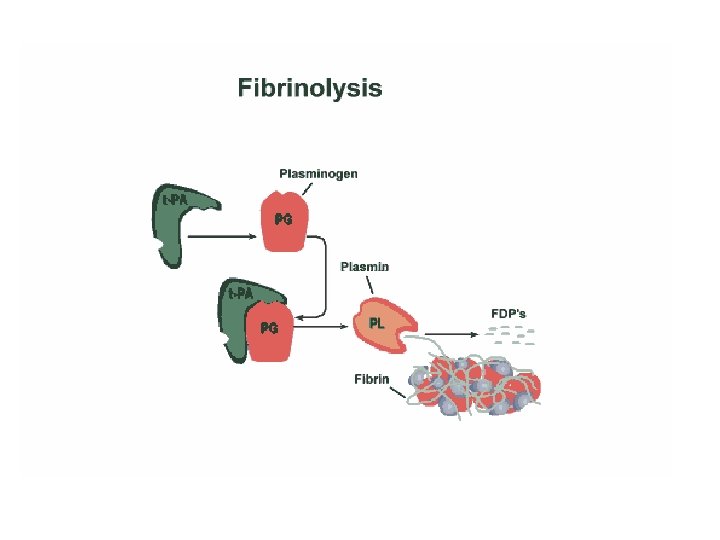
Fibrinolysis Fibrin Plasmin Fibrin Split Products (FSP)
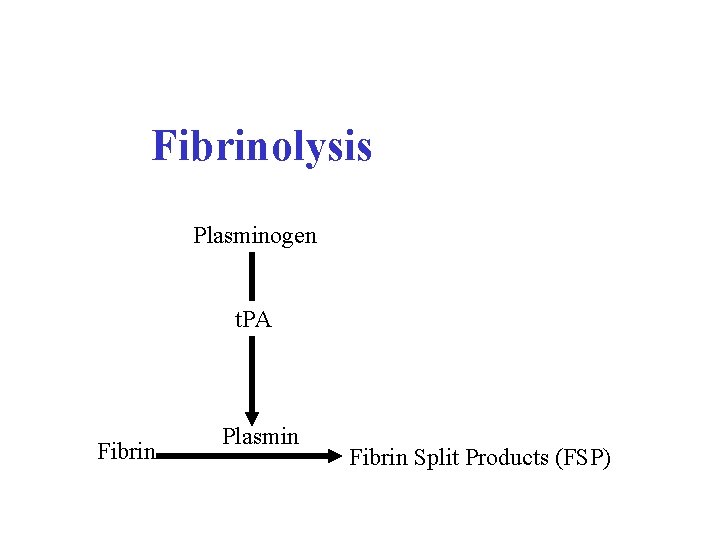
Fibrinolysis Plasminogen t. PA Fibrin Plasmin Fibrin Split Products (FSP)
Fibrinolysis • Enhance degradation of clots • Activation of endogenous protease • Plasminogen (inactive form) is converted to Plasmin (active form) • Plasmin breaks down fibrin clots
Inhibitors of fibrinolysis • Plasminogen activator inhibitors (PAIs) • 2 -antiplasmin (serpin)
- Slides: 44