
BLOOD Chapter 12 FUNCTIONS Transport Heat Distribution Fluid
BLOOD Chapter 12

FUNCTIONS Transport Heat Distribution Fluid Regulation

COMPONENTS Red Blood Cells White Blood Cells Platelets (cell fragments) Plasma (fluid)

BLOOD VOLUME AND COMPOSITION 45% Red Blood Cells (Hematocrit) 55% Plasma <1% White Blood Cells/Platelets Avg. adult has 5 L of blood Fun fact: Men have more blood than women Plasma “Buffy coat” (white blood cells and platelets) Red blood cells Centrifuged Blood Sample
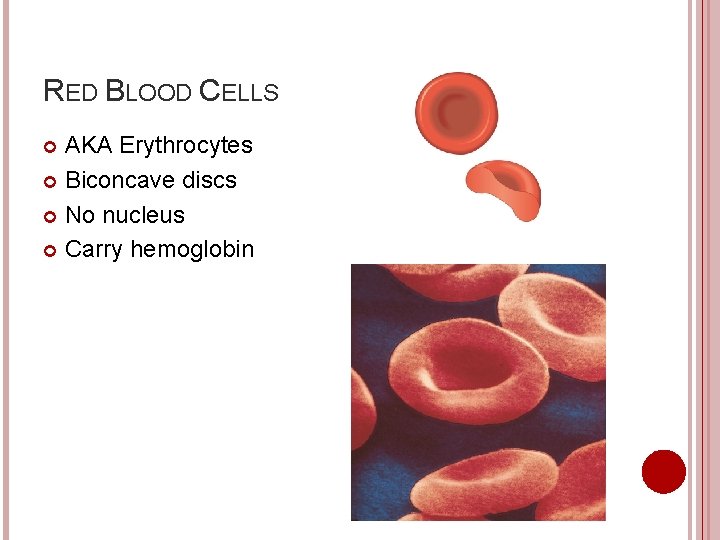
RED BLOOD CELLS AKA Erythrocytes Biconcave discs No nucleus Carry hemoglobin

HEMOGLOBIN Carries oxygen When carrying oxygen, appears bright red No oxygen, appears darker (bluish) Iron needed to make hemoglobin � Low iron or RBC’s-anemia � Lowers oxygen carrying ability Low energy � Sickle Cell
RED BLOOD CELL PRODUCTION/DESTRUCTION Red Bone Marrow With age, capillary transport damages RBCs These damaged cells are broken down
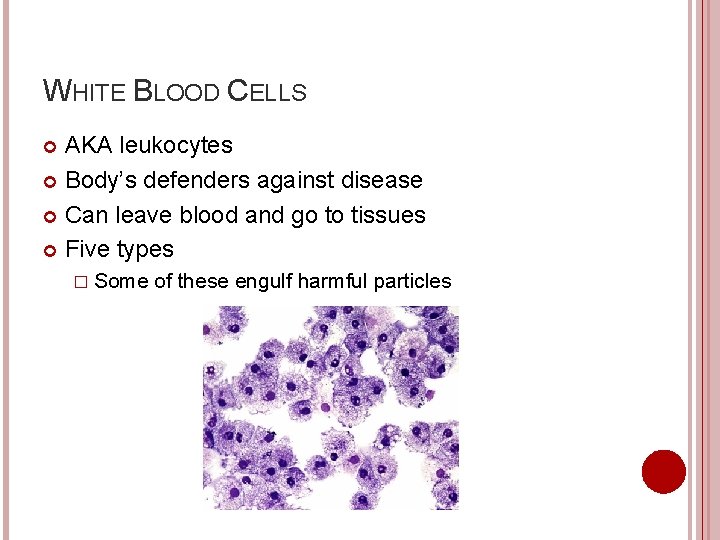
WHITE BLOOD CELLS AKA leukocytes Body’s defenders against disease Can leave blood and go to tissues Five types � Some of these engulf harmful particles
WHITE BLOOD CELL COUNTS High WBC counts can indicate illness
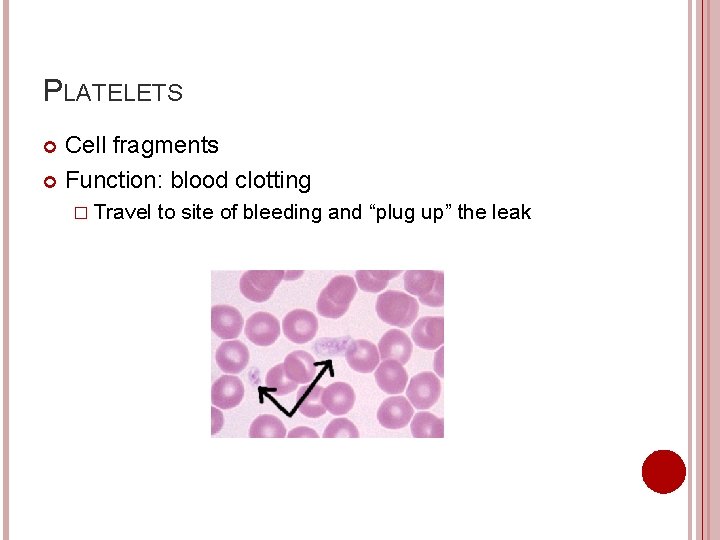
PLATELETS Cell fragments Function: blood clotting � Travel to site of bleeding and “plug up” the leak
PLASMA Mostly water Functions to transport nutrients and gases, regulate fluid and electrolyte balance, and maintain a favorable p. H
STOPPING BLEEDING Hemostasis: stoppage of bleeding 1. Blood vessel spasm 2. Platelet plug 3. Blood coagulation (clotting) � Thrombus � Embolus
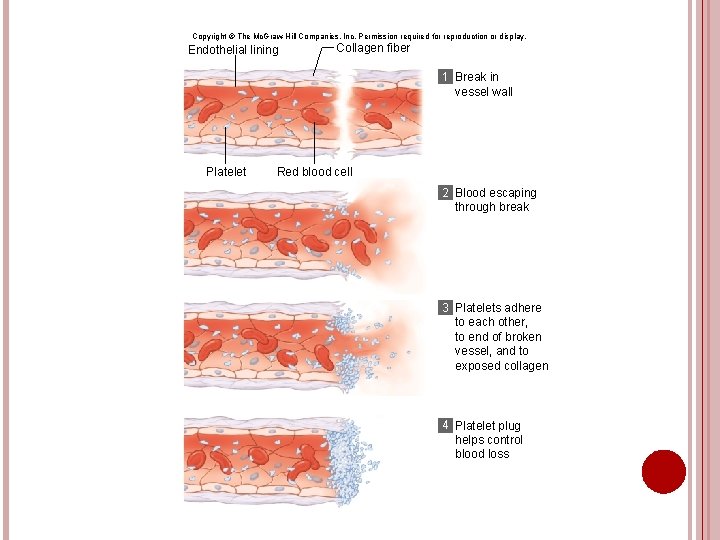
Copyright © The Mc. Graw-Hill Companies, Inc. Permission required for reproduction or display. Endothelial lining Collagen fiber 1 Break in vessel wall Platelet Red blood cell 2 Blood escaping through break 3 Platelets adhere to each other, to end of broken vessel, and to exposed collagen 4 Platelet plug helps control blood loss
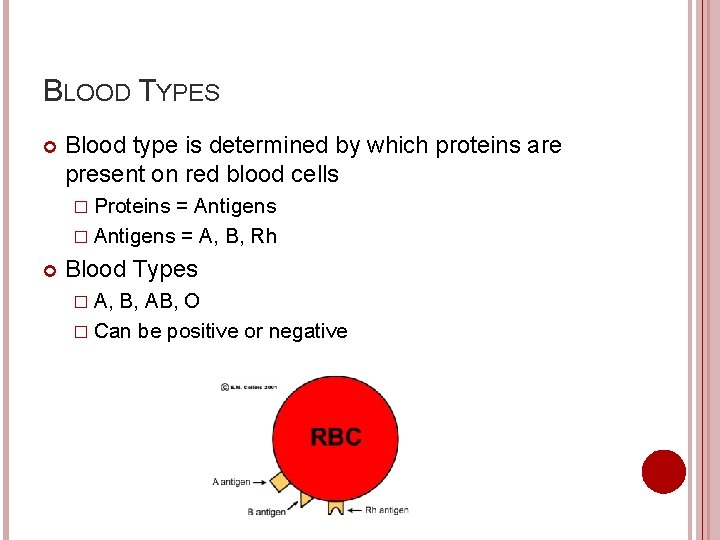
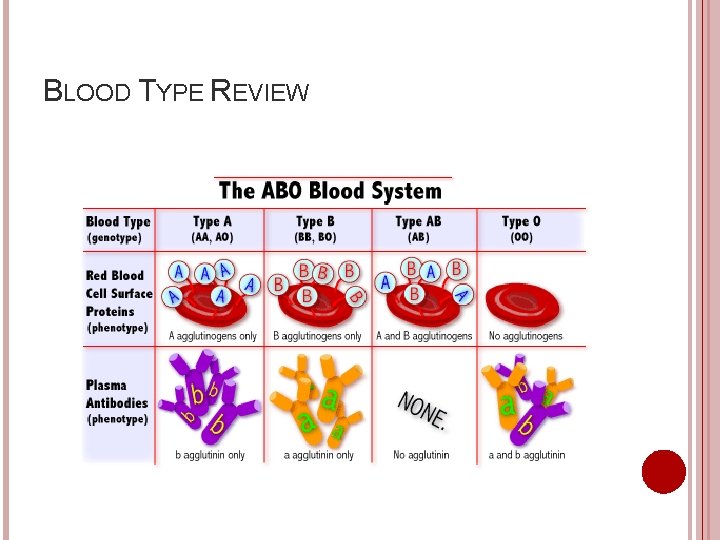
BLOOD TYPES Blood type is determined by which proteins are present on red blood cells � Proteins = Antigens � Antigens = A, B, Rh Blood Types � A, B, AB, O � Can be positive or negative
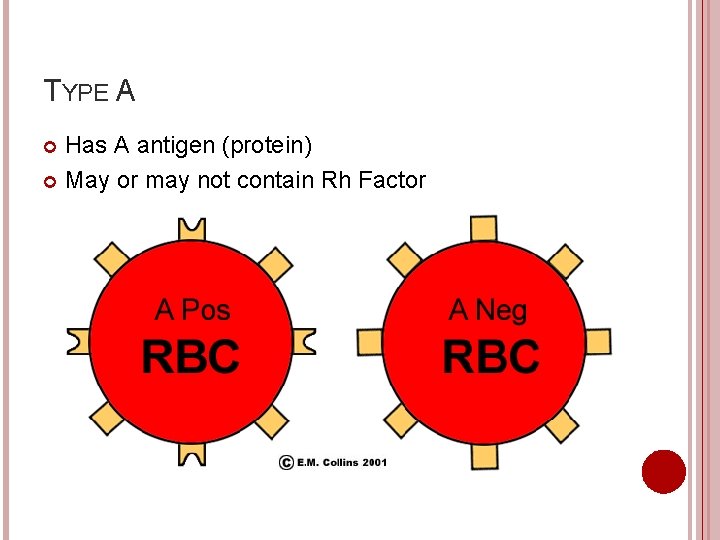
TYPE A Has A antigen (protein) May or may not contain Rh Factor
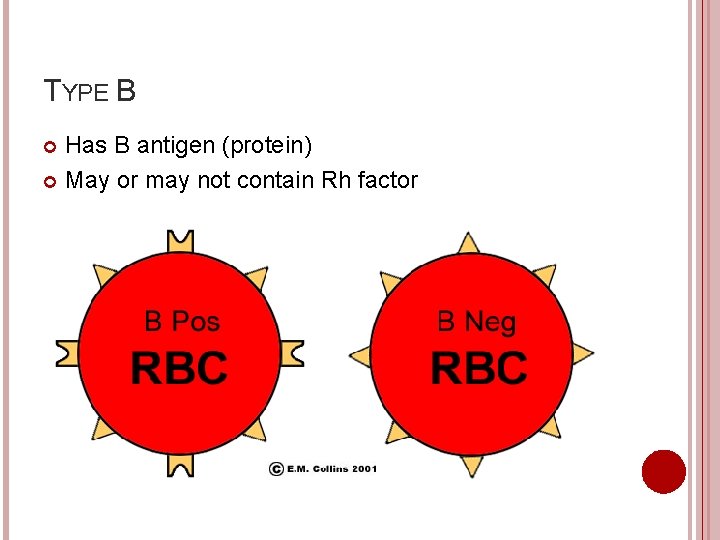
TYPE B Has B antigen (protein) May or may not contain Rh factor
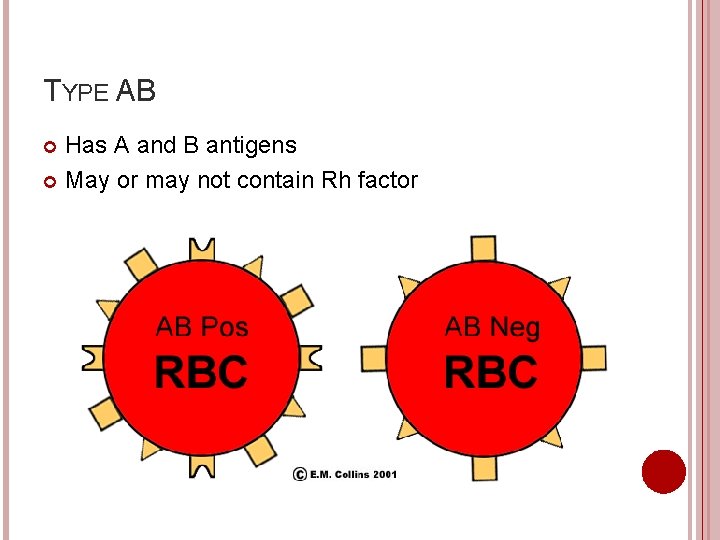
TYPE AB Has A and B antigens May or may not contain Rh factor
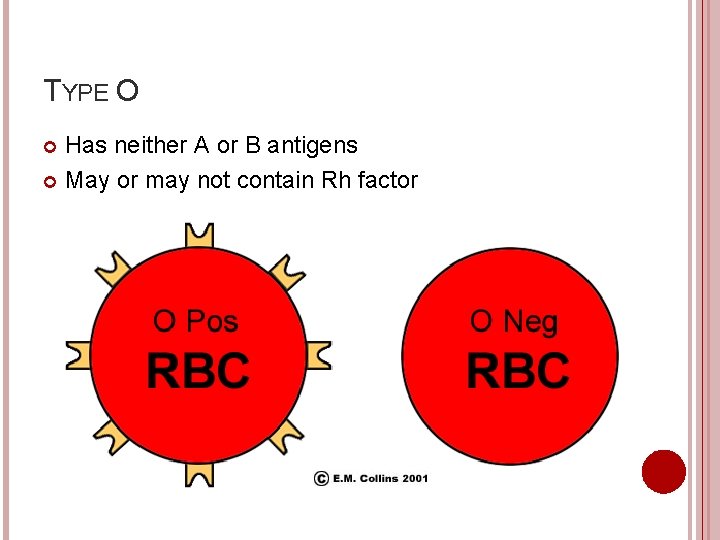
TYPE O Has neither A or B antigens May or may not contain Rh factor
ANTIBODIES A person will make antibodies against any antigens they do not have in their own blood � What is an antibody? Attacks foreign material; released by a type of WBC A type A person will make antibodies against what antigen? Type B? Type AB? Type O? What if a person is Rh – or +?
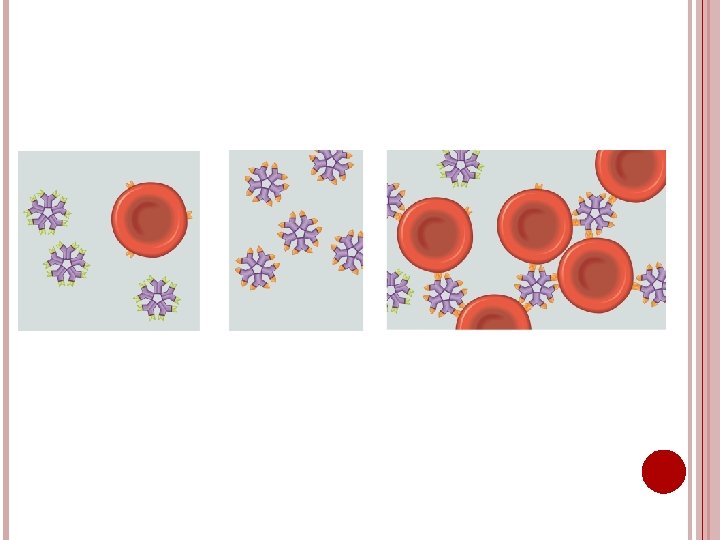
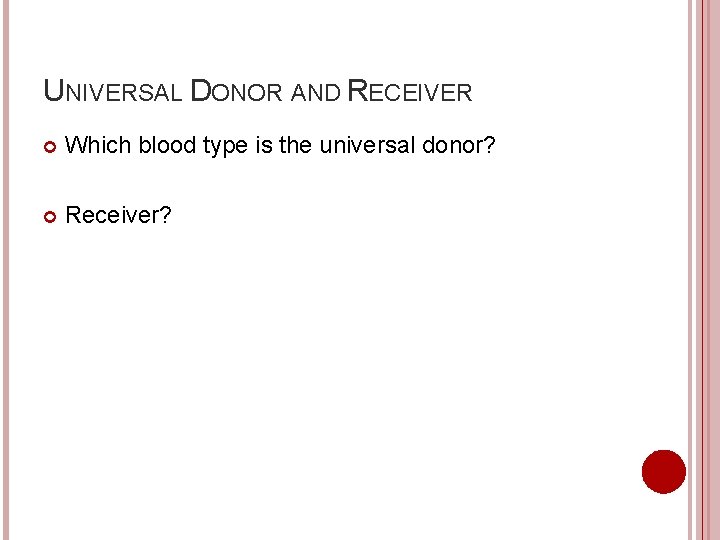
AGGLUTINATION If an antibody detects its corresponding antigen, the red blood cells will start to clump This clumping is called agglutination Why is this a problem with blood transfusions?
BLOOD TYPE REVIEW
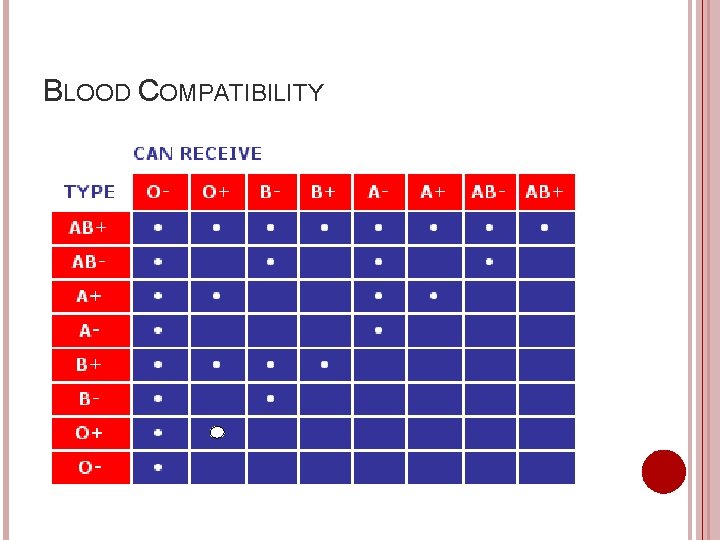
UNIVERSAL DONOR AND RECEIVER Which blood type is the universal donor? Receiver?
BLOOD COMPATIBILITY
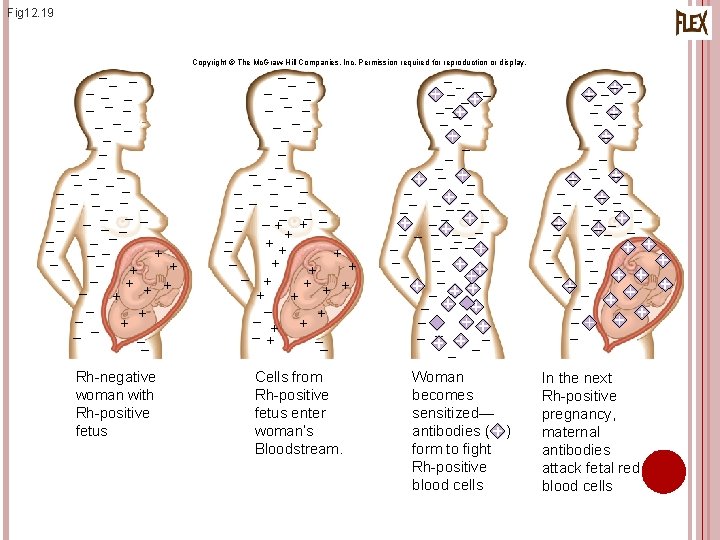
Fig 12. 19 Copyright © The Mc. Graw-Hill Companies, Inc. Permission required for reproduction or display. Rh-negative woman with Rh-positive fetus –– – – – – –– –– – – – – ++ + – + + + + – – Cells from Rh-positive fetus enter woman’s Bloodstream. –– – – – – –– – – – –– –– – – – – Woman becomes sensitized— antibodies ( ) form to fight Rh-positive blood cells – – –– – – – –– – ––– – – – – In the next Rh-positive pregnancy, maternal antibodies attack fetal red blood cells 25 –– – – – – –– –– – – – + – – + + + – + – – – –
RH FACTOR PROBLEM Rh- mother bears an Rh+ baby No problem with FIRST BABY because the mother is NOT exposed to the Rh+ blood until birth If there is exposure, mother will produce antibodies to attack Rh protein If mother bears other Rh+ children, the anti-Rh antibodies may enter the growing baby’s blood and attack the baby’s RBC Lack of oxygen due to decreased or damaged RBCs can cause brain damage or death
- Slides: 26