
Blood cells Platelets Thrombocytes By Dr Sunita Mittal
Blood cells – Platelets (Thrombocytes) By Dr Sunita Mittal
Learning Objectives Platelets Morphology Hemostasis Primary hemostasis Platelet plug formation Disorders of primary hemostasis Secondary hemostasis Disorders of secondary hemostasis Tests to assess hemostasis Anticoagulants

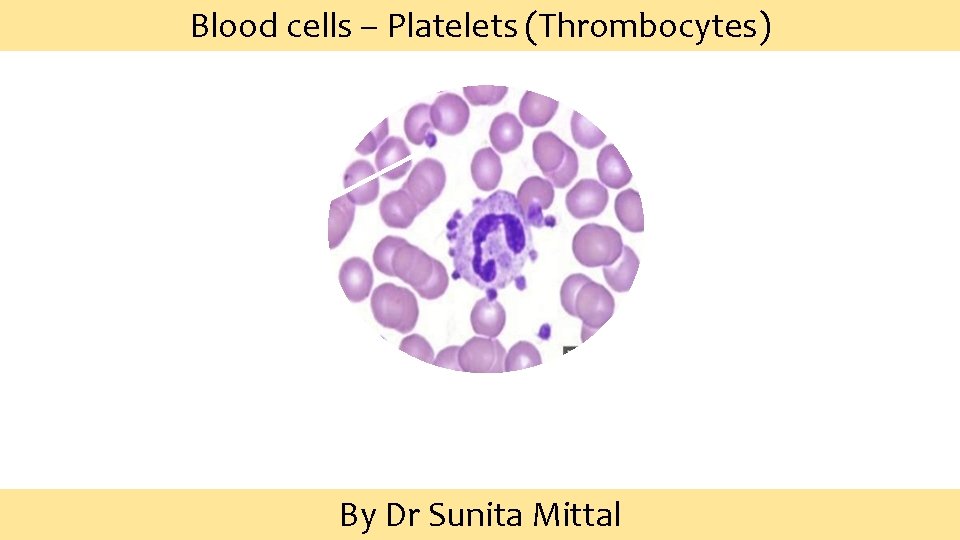
Platelets‐Characteristics ▪Small 2‐ 3 µm disc‐shaped, anuclear, reddish‐purple cells. ▪ Platelet life span 7‐ 10 days ▪ Platelets count: 1. 5‐ 4 lakh/ mm 3 of blood (Platelets are released from bone marrow to enter 2/3‐ peripheral blood and 1/3 seized in spleen. )
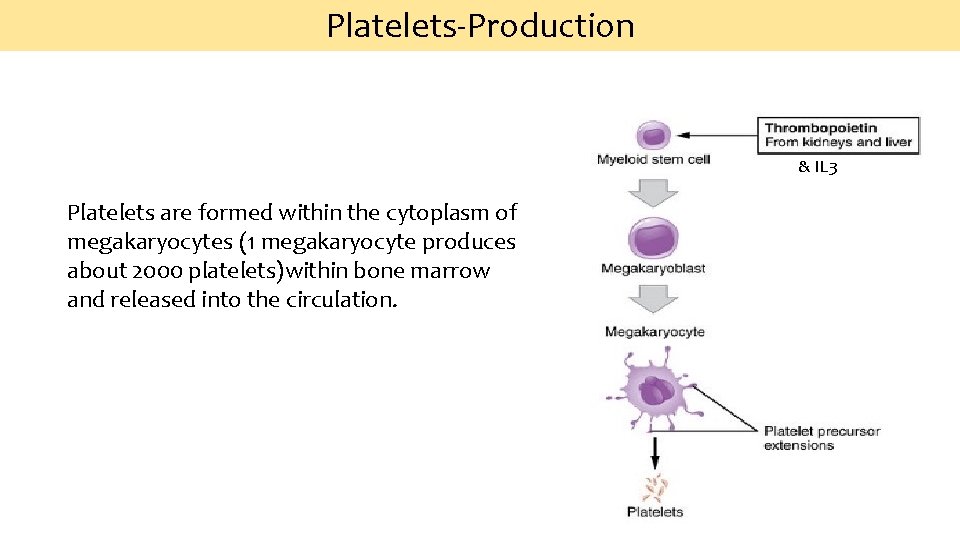
Platelets‐Production & IL 3 Platelets are formed within the cytoplasm of megakaryocytes (1 megakaryocyte produces about 2000 platelets)within bone marrow and released into the circulation.

Platelets structure Peripheral zone: Responsible for platelet adhesion and aggregation Glycocalyx: Fluffy surface coat contains glycoprotein receptors: GPIa & IIa binds to collagen, GPIb binds von Willebrand’s factor ; GPIIb/IIIa binds fibrinogen Membrane Zone Layer called PF 3 (platelet factor) surface for interaction of plasma coagulation factors, Initiation of formation of thromboxane A 2 2 systems : Surface‐connected open canalicular system (OCS) Dense tubular system(DTS). Cytoskeleton Responsible for platelet retraction and platelet shape Microtubules/Microfilaments Binding proteins: Actin & Myosin Organelle zone Responsible for storage and platelet release functions Granules: Dense bodies, alpha granules, lysosomal granules and microperoxisomes. Mitochondria and Glycogen.
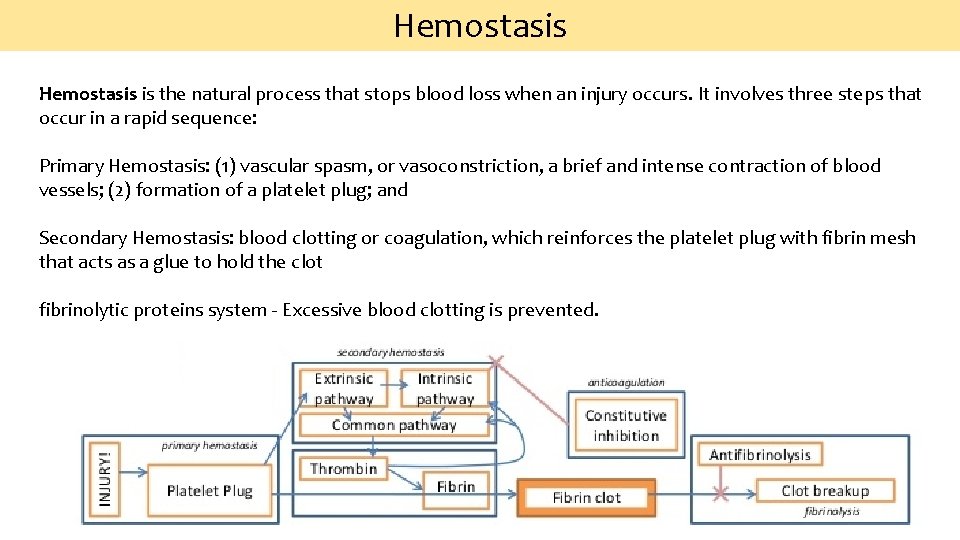
Hemostasis is the natural process that stops blood loss when an injury occurs. It involves three steps that occur in a rapid sequence: Primary Hemostasis: (1) vascular spasm, or vasoconstriction, a brief and intense contraction of blood vessels; (2) formation of a platelet plug; and Secondary Hemostasis: blood clotting or coagulation, which reinforces the platelet plug with fibrin mesh that acts as a glue to hold the clot fibrinolytic proteins system ‐ Excessive blood clotting is prevented.
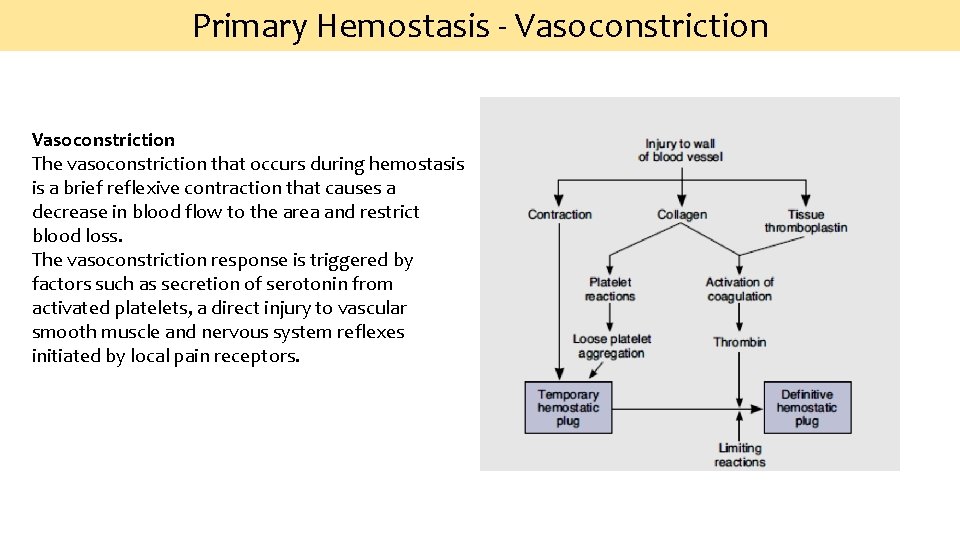
Primary Hemostasis ‐ Vasoconstriction The vasoconstriction that occurs during hemostasis is a brief reflexive contraction that causes a decrease in blood flow to the area and restrict blood loss. The vasoconstriction response is triggered by factors such as secretion of serotonin from activated platelets, a direct injury to vascular smooth muscle and nervous system reflexes initiated by local pain receptors.
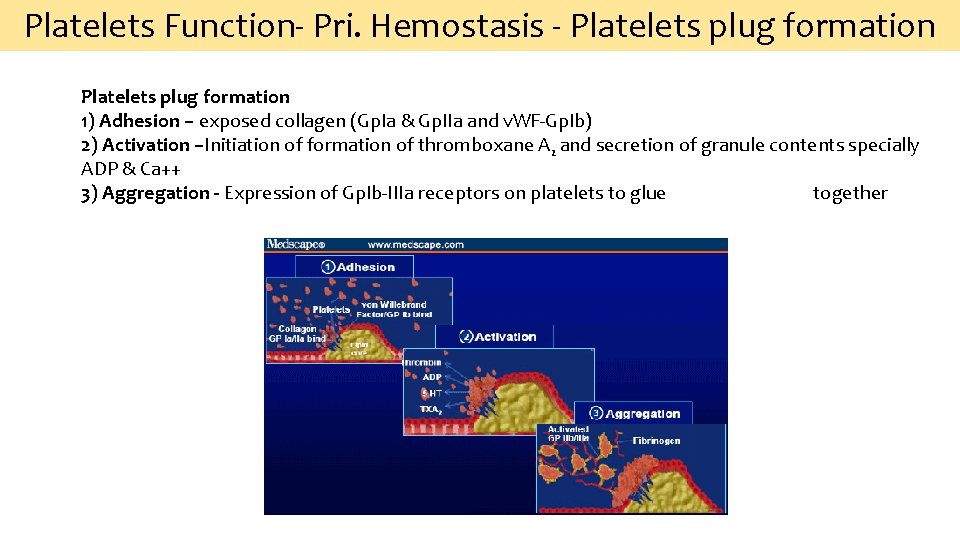
Platelets Function‐ Pri. Hemostasis ‐ Platelets plug formation 1) Adhesion – exposed collagen (Gp. Ia & Gp. IIa and v. WF‐Gp. Ib) 2) Activation –Initiation of formation of thromboxane A 2 and secretion of granule contents specially ADP & Ca++ 3) Aggregation - Expression of Gp. Ib‐IIIa receptors on platelets to glue together
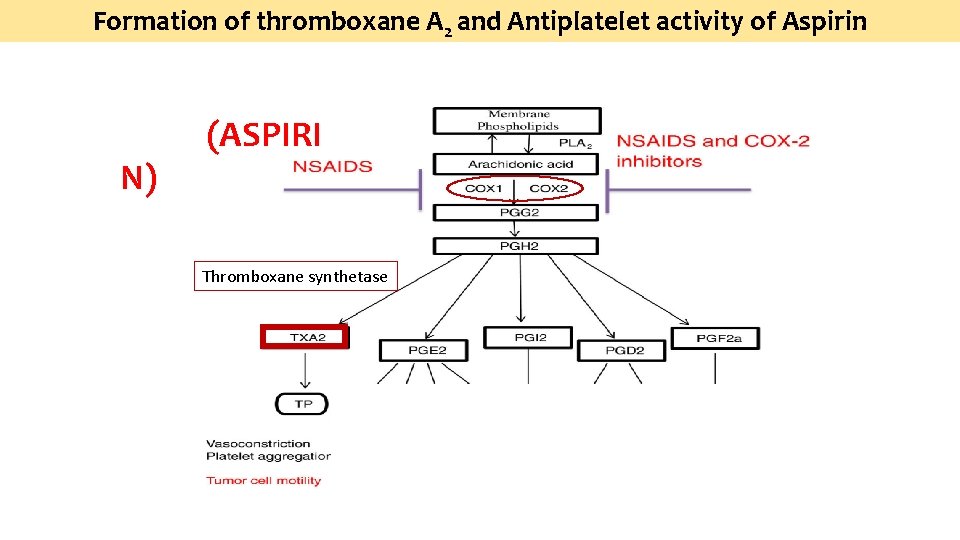
Formation of thromboxane A 2 and Antiplatelet activity of Aspirin N) (ASPIRI Thromboxane synthetase
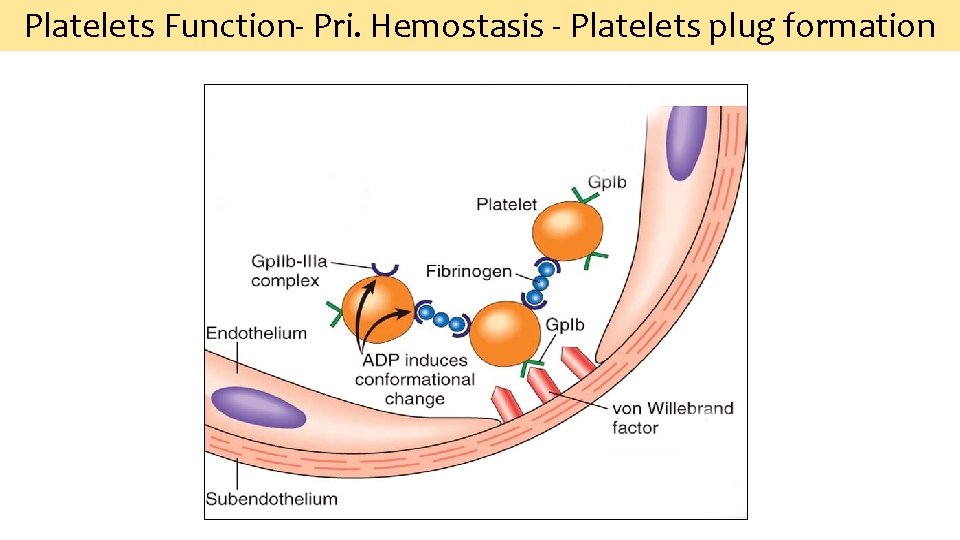
Platelets Function‐ Pri. Hemostasis ‐ Platelets plug formation
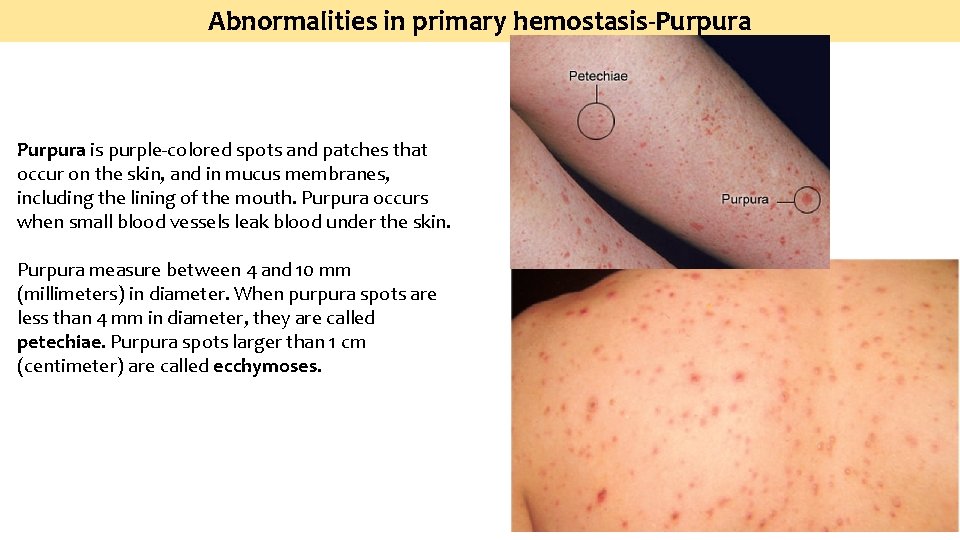
Abnormalities in primary hemostasis-Purpura is purple‐colored spots and patches that occur on the skin, and in mucus membranes, including the lining of the mouth. Purpura occurs when small blood vessels leak blood under the skin. Purpura measure between 4 and 10 mm (millimeters) in diameter. When purpura spots are less than 4 mm in diameter, they are called petechiae. Purpura spots larger than 1 cm (centimeter) are called ecchymoses.
Abnormalities in primary hemostasis Defects in the blood vessel wall- lead to hemorrhage from mucosal surfaces (epistaxis, gingival bleeding, melaena, haematuria), and into skin and mucosae (petechial or ecchymotic haemorrhages ‐ Purpura). Decreased platelets number (Thrombocytopenia) or function (Thrombosthenia) Abnormal v. WF- Bernard Soulier Syndrome Primary haemostasis inhibitors - natural inhibitors of platelet function ‐ such as prostacyclin, bradykinin released by endothelial cells. Induced inhibition of platelet function - more commonly, platelet function is inhibited intentionally by the administration of agents such as aspirin for the prevention of thrombosis.
Causes of Thrombocytopenia Bone Marrow Dysfunction –Many conditions and factors can damage stem cells Cancer- leukemia or lymphoma. Cancer treatments, such as radiation and chemotherapy. Toxic Chemicals- pesticides, arsenic, and benzene Medicines-diuretics and chloramphenicol (aspirin or ibuprofen, also can affect platelets functioning) Alcohol-especially if they're eating foods that are low in iron, vitamin B 12, or folate. Viruses-Chickenpox, mumps, rubella, Epstein-Barr virus, HIV and dengue fever virus etc often develop thrombocytopenia. Genetic Conditions-Wiskott-Aldrich syndromes. The Body Destroys Platelets at a higher rate ITP (Idiopathic thrombocytopenic purpura) Autoimmune Diseases-immune thrombocytopenia. An autoimmune response is thought to cause most cases of ITP eg SLE and RA Margination in congestive splenomegaly Medicines-quinine; antibiotics that contain sulfa; dilantin, vancomycin, and rifampin. Infection-a widespread bacterial infection septicemia, mononucleosis or cytomegalovirus Surgery-Prosthetic heart valves, blood vessel grafts, or machines and tubing used - blood transfusions or bypass surgery. Pregnancy-About 5 percent of pregnant women develop mild thrombocytopenia when they're close to delivery.
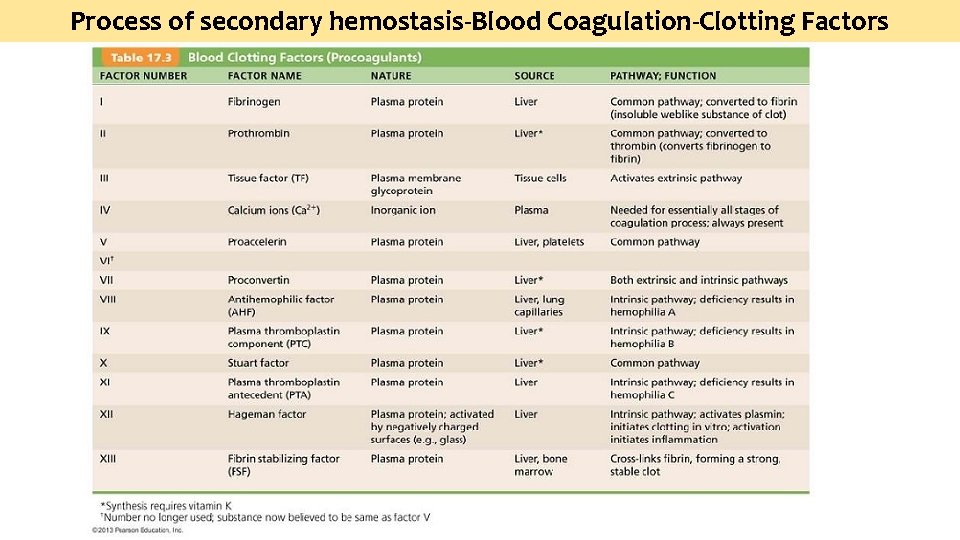
Process of secondary hemostasis-Blood Coagulation-Clotting Factors
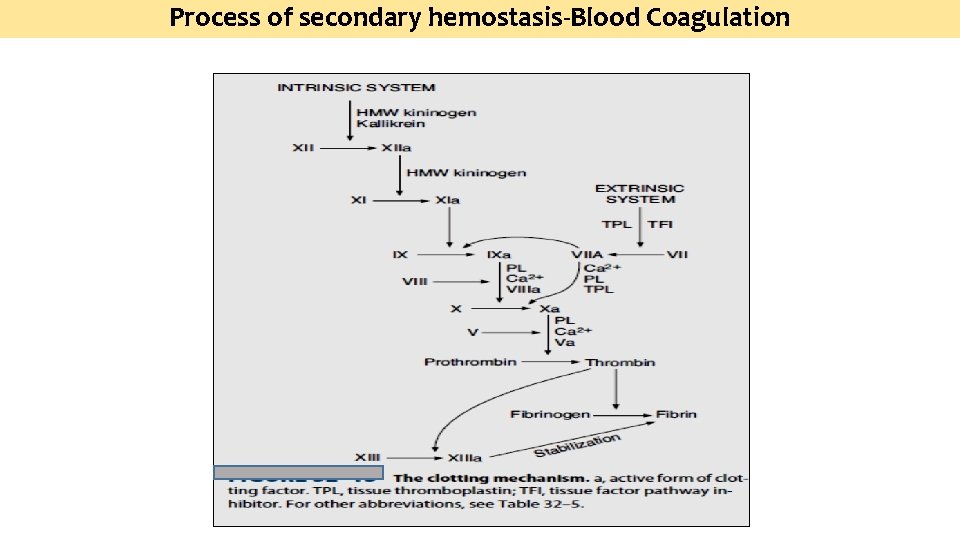
Process of secondary hemostasis-Blood Coagulation
Disorders of Blood Coagulation- Coagulopathy is a condition in that the blood’s ability to coagulate is impaired. This condition cause a tendency toward prolonged or excessive bleeding (bleeding diathesis), which may occur spontaneously or following an injury
Disorders of Blood Coagulation- Hypocoagulopathy -CAUSES Major causes of coagulation disorders resulting in bleeding include: • Hemophilia‐Factor VIII deficiency (X chromosome linked disorder) • Von Willebrand disease • Other clotting factor deficiencies (Christmas disease) • Disseminated intravascular coagulation • Liver Disease • Vit K deficiency
Disorders of Blood Coagulation- Hyper-coagulopathy - CAUSES • Conditions increasing the risk of a blood clot: • Inherited (genetic) abnormalities that cause an increased tendency to clot • A surgical procedure • Sitting or lying down for long periods (more than 4 hours)‐ for example, after surgery or on long plane or car rides. This lack of movement reduces blood flow in the legs by 50%. • Major injury • Increasing age • Cancer • Heart failure • Pregnancy • Use of hormone therapy such as birth control pills or hormone replacement therapy • Having a history of DVT • Tobacco

Fibrinolytic System
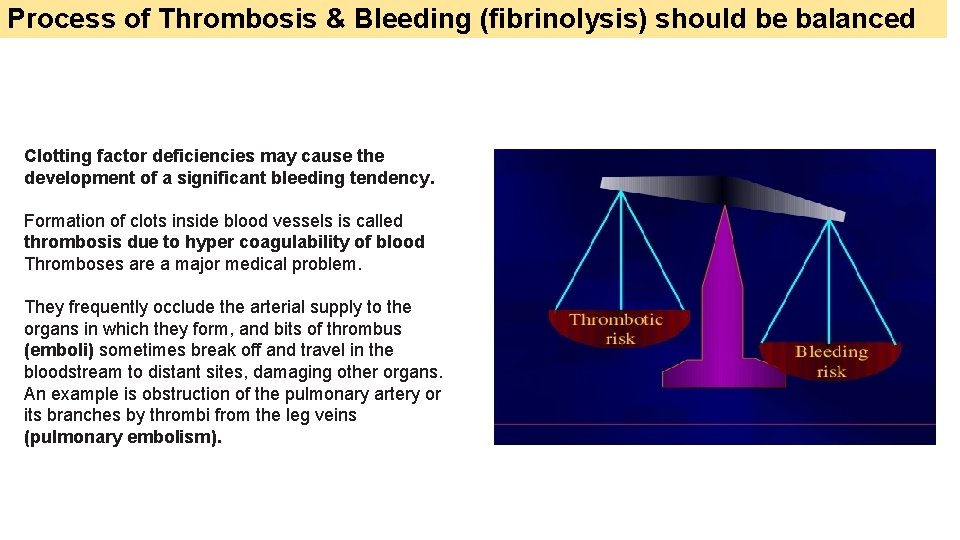
Process of Thrombosis & Bleeding (fibrinolysis) should be balanced Clotting factor deficiencies may cause the development of a significant bleeding tendency. Formation of clots inside blood vessels is called thrombosis due to hyper coagulability of blood Thromboses are a major medical problem. They frequently occlude the arterial supply to the organs in which they form, and bits of thrombus (emboli) sometimes break off and travel in the bloodstream to distant sites, damaging other organs. An example is obstruction of the pulmonary artery or its branches by thrombi from the leg veins (pulmonary embolism).
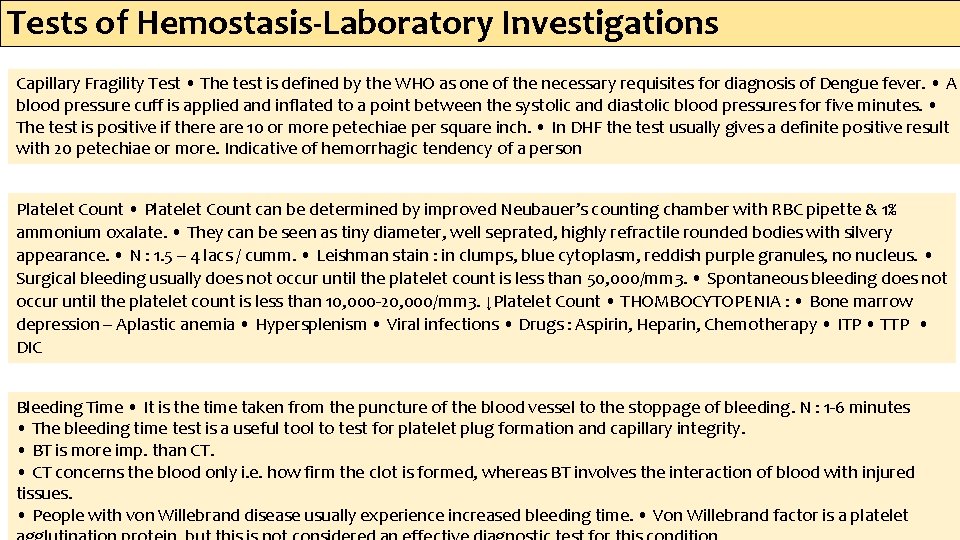
Tests of Hemostasis-Laboratory Investigations Capillary Fragility Test • The test is defined by the WHO as one of the necessary requisites for diagnosis of Dengue fever. • A blood pressure cuff is applied and inflated to a point between the systolic and diastolic blood pressures for five minutes. • The test is positive if there are 10 or more petechiae per square inch. • In DHF the test usually gives a definite positive result with 20 petechiae or more. Indicative of hemorrhagic tendency of a person Platelet Count • Platelet Count can be determined by improved Neubauer’s counting chamber with RBC pipette & 1% ammonium oxalate. • They can be seen as tiny diameter, well seprated, highly refractile rounded bodies with silvery appearance. • N : 1. 5 – 4 lacs / cumm. • Leishman stain : in clumps, blue cytoplasm, reddish purple granules, no nucleus. • Surgical bleeding usually does not occur until the platelet count is less than 50, 000/mm 3. • Spontaneous bleeding does not occur until the platelet count is less than 10, 000‐ 20, 000/mm 3. ↓Platelet Count • THOMBOCYTOPENIA : • Bone marrow depression – Aplastic anemia • Hypersplenism • Viral infections • Drugs : Aspirin, Heparin, Chemotherapy • ITP • TTP • DIC Bleeding Time • It is the time taken from the puncture of the blood vessel to the stoppage of bleeding. N : 1‐ 6 minutes • The bleeding time test is a useful tool to test for platelet plug formation and capillary integrity. • BT is more imp. than CT. • CT concerns the blood only i. e. how firm the clot is formed, whereas BT involves the interaction of blood with injured tissues. • People with von Willebrand disease usually experience increased bleeding time. • Von Willebrand factor is a platelet
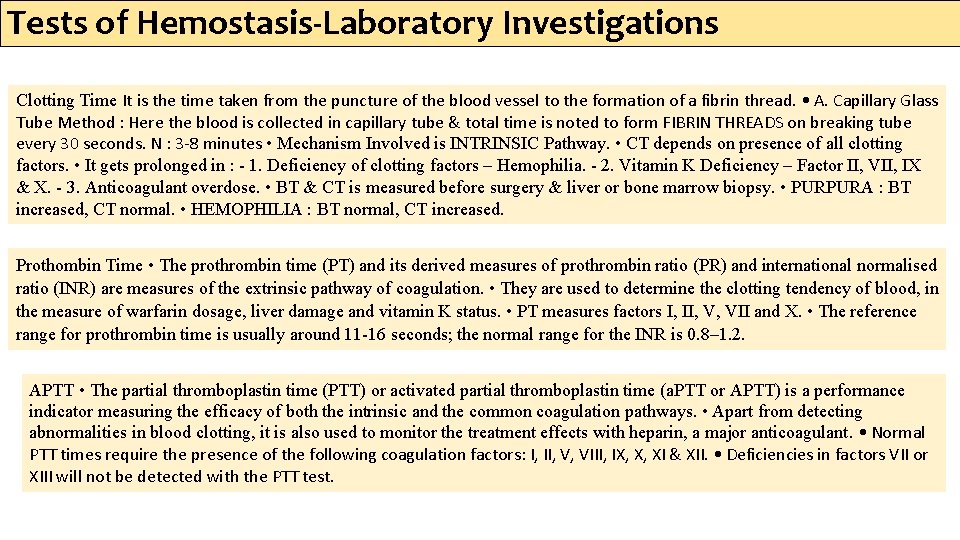
Tests of Hemostasis-Laboratory Investigations Clotting Time It is the time taken from the puncture of the blood vessel to the formation of a fibrin thread. • A. Capillary Glass Tube Method : Here the blood is collected in capillary tube & total time is noted to form FIBRIN THREADS on breaking tube every 30 seconds. N : 3 -8 minutes • Mechanism Involved is INTRINSIC Pathway. • CT depends on presence of all clotting factors. • It gets prolonged in : - 1. Deficiency of clotting factors – Hemophilia. - 2. Vitamin K Deficiency – Factor II, VII, IX & X. - 3. Anticoagulant overdose. • BT & CT is measured before surgery & liver or bone marrow biopsy. • PURPURA : BT increased, CT normal. • HEMOPHILIA : BT normal, CT increased. Prothombin Time • The prothrombin time (PT) and its derived measures of prothrombin ratio (PR) and international normalised ratio (INR) are measures of the extrinsic pathway of coagulation. • They are used to determine the clotting tendency of blood, in the measure of warfarin dosage, liver damage and vitamin K status. • PT measures factors I, II, V, VII and X. • The reference range for prothrombin time is usually around 11 -16 seconds; the normal range for the INR is 0. 8– 1. 2. APTT • The partial thromboplastin time (PTT) or activated partial thromboplastin time (a. PTT or APTT) is a performance indicator measuring the efficacy of both the intrinsic and the common coagulation pathways. • Apart from detecting abnormalities in blood clotting, it is also used to monitor the treatment effects with heparin, a major anticoagulant. • Normal PTT times require the presence of the following coagulation factors: I, II, V, VIII, IX, X, XI & XII. • Deficiencies in factors VII or XIII will not be detected with the PTT test.

ANTICOAGULANTS ●Heparin is a naturally occurring anticoagulant that facilitates the action of anti-thrombin III. Low-molecular weight fragments with an average molecular weight of 5000 have been produced from unfractionated heparin, and these low-molecular-weight heparins are seeing increased clinical use because they have a longer half-life and produce a more predictable anticoagulant response than unfractionated heparin. ● In vivo, a plasma Ca 2+ level low enough to interfere with blood clotting is incompatible with life, but clotting can be prevented in vitro if Ca 2+ is removed from the blood by the addition of substances such as oxalates, which form insoluble salts with Ca 2+, or chelating agents, which bind Ca 2+. Used in vitro only. ● Coumarin derivatives such as dicumarol and warfarin are also effective anticoagulants. They inhibit the action of vitamin K, which is a necessary cofactor for the enzyme that catalyzes the conversion of glutamic acid residues to γ -carboxyglutamic acid residues. Six of the proteins involved in clotting require conversion of a number of glutamic acid residues to γ -carboxyglutamic acid residues before being released into the circulation, and hence all six are vitamin K-dependent. These proteins are factors II (prothrombin), VII, IX, and X, protein C, and protein S.
Self Assessment ▪Megakaryocyte produces about …………. . platelets. ▪ Platelet life span …………………. . Days. ▪ ……………. receptors causes gluing of platelets together. • Spontaneous bleeding does not occur until the platelet count is less than …………. . /mm 3. • Surgical bleeding does not occur until the platelet count is less than ………………. . /mm 3. • Secondary Hemostasis includes ………………processes. • Liver Disease results in hyp 0 coagulability of blood because……………

Thank you
- Slides: 25