
Blood Blood Blood transports everything that must be
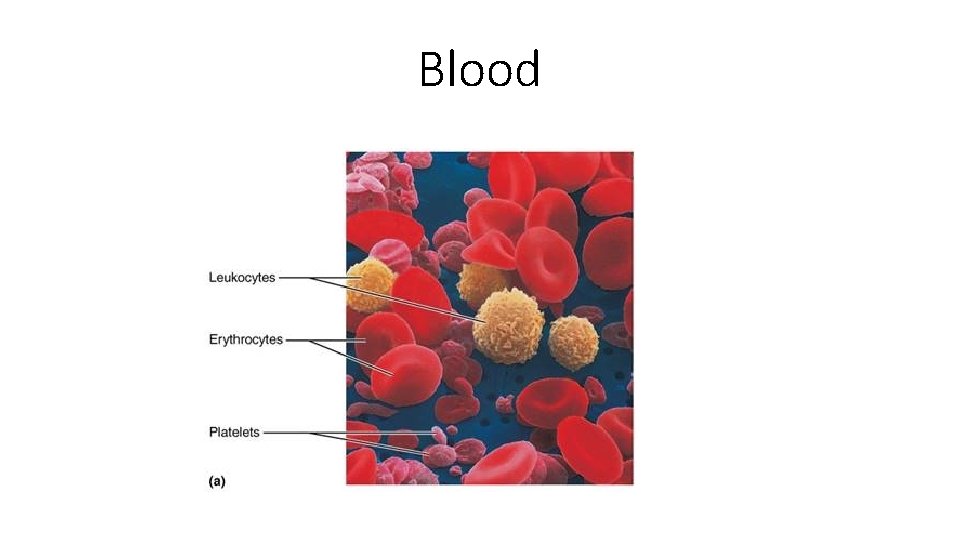
Blood
Blood • Blood transports everything that must be carried from one place to another, such as: • • Nutrients Wastes Hormones Body heat
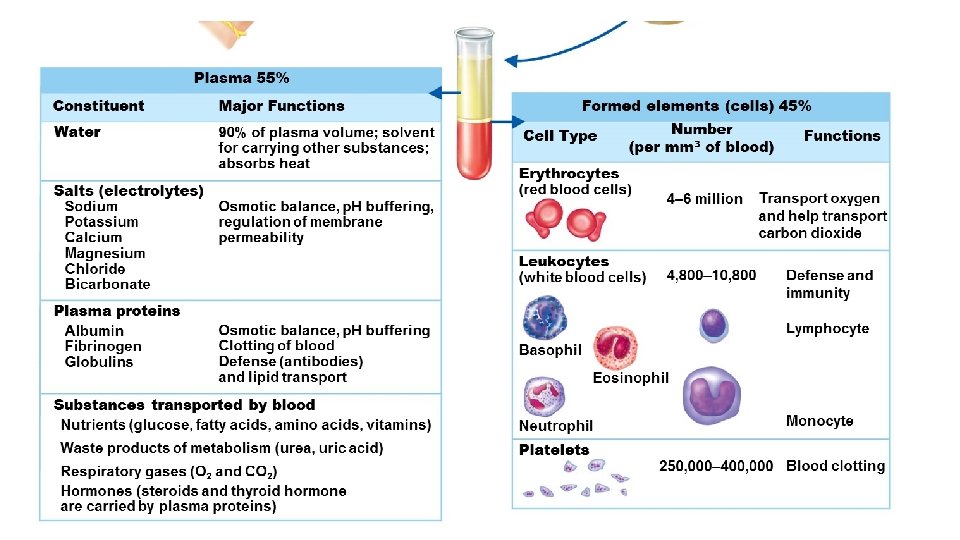
• The only fluid tissue in the human body • Classified as a connective tissue • Components of blood • Living cells • Formed elements • Nonliving matrix • Plasma
• If blood is centrifuged: • Erythrocytes (red blood cells) sink to the bottom (45 percent of blood, a percentage known as the hematocrit) • Buffy coat contains leukocytes and platelets (less than 1 percent of blood) • Buffy coat is a thin, whitish layer between the erythrocytes and plasma • Plasma rises to the top (55 percent of blood)
Physical Characteristics of Blood • Color range • Oxygen-rich blood is scarlet red • Oxygen-poor blood is dull red • p. H must remain between 7. 35 and 7. 45 • Blood temperature is slightly higher than body temperature, at 100. 4°F • In an adult blood volume is about 5– 6 liters, or about 6 quarts • Blood makes up 8 percent of body weight
Blood Plasma • Composed of approximately 90 percent water • Includes many dissolved substances: • • • Nutrients Salts (electrolytes) Respiratory gases Hormones Plasma proteins Waste products
Blood Plasma • Plasma proteins • Most abundant solutes in plasma • Most plasma proteins are made by liver • Various plasma proteins include • Albumin—regulates osmotic pressure • Clotting proteins—help to stem blood loss when a blood vessel is injured • Antibodies—help protect the body from pathogens
Blood Plasma • Acidosis • Blood p. H becomes too acidic • Alkalosis • Blood p. H becomes too basic • In each scenario, the respiratory system and kidneys help restore blood p. H to normal
Formed Elements • Erythrocytes • Red blood cells (RBCs) • Leukocytes • White blood cells (WBCs) • Platelets • Cell fragments
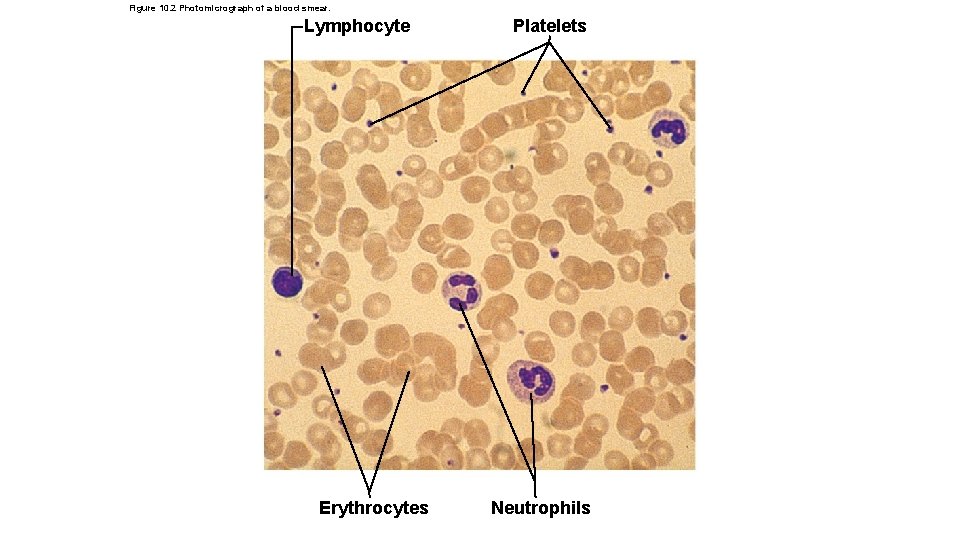
Figure 10. 2 Photomicrograph of a blood smear. Lymphocyte Erythrocytes Platelets Neutrophils
Formed Elements • Erythrocytes (red blood cells, or RBCs) • Main function is to carry oxygen • Anatomy of circulating erythrocytes • • Biconcave disks Essentially bags of hemoglobin Anucleate (no nucleus) Contain very few organelles • 5 million RBCs per cubic millimeter of blood is the normal count
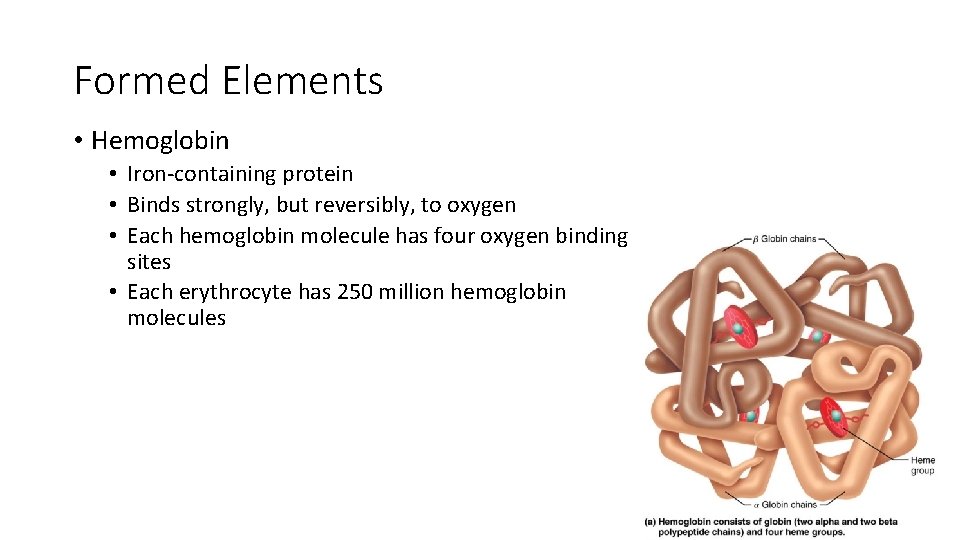
Formed Elements • Hemoglobin • Iron-containing protein • Binds strongly, but reversibly, to oxygen • Each hemoglobin molecule has four oxygen binding sites • Each erythrocyte has 250 million hemoglobin molecules
Problems: • Homeostatic imbalance of RBCs • Anemia is a decrease in the oxygen-carrying ability of the blood • Sickle cell anemia (SCA) results from abnormally shaped hemoglobin • Polycythemia is an excessive or abnormal increase in the number of RBCs
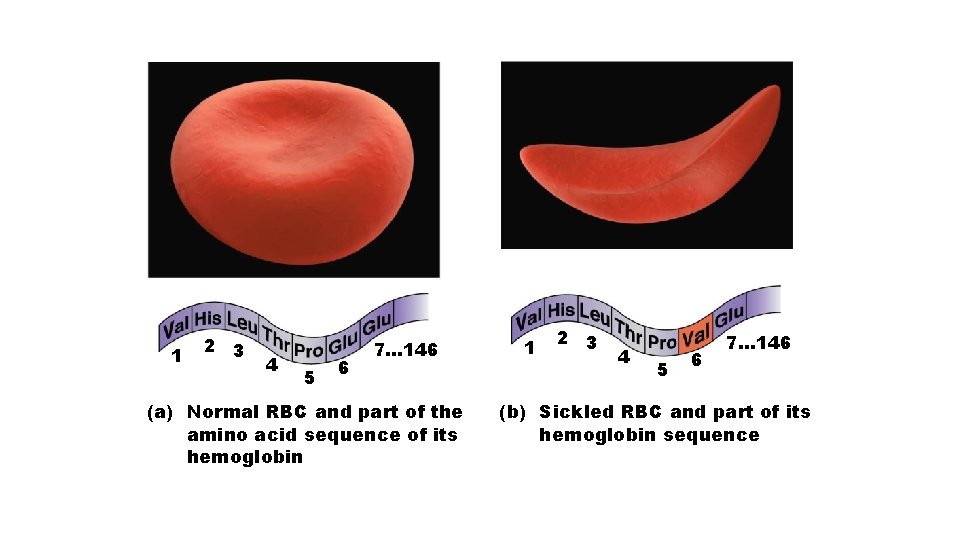
1 2 3 4 5 6 7… 146 (a) Normal RBC and part of the amino acid sequence of its hemoglobin 1 2 3 4 5 6 7… 146 (b) Sickled RBC and part of its hemoglobin sequence
• Polcythemia • Disorder resulting from excessive or abnormal increase of RBCs • May be caused by bone marrow cancer (polycythemia vera) • May be a response to life at higher altitudes (secondary polycythemia) • Increase in RBCs slows blood flow and increases blood viscosity
Formed Elements • Leukocytes (white blood cells, or WBCs) • Crucial in body’s defense against disease • Complete cells, with nucleus and organelles • Able to move into and out of blood vessels (diapedesis) • Move by amoeboid motion • Respond to chemicals released by damaged tissues (known as positive chemotaxis) • 4, 800 to 10, 800 WBCs per cubic millimeter of blood
Abnormal numbers of leukocytes • Leukocytosis • WBC count above 11, 000 cells/mm 3 • Generally indicates an infection • Leukopenia • Abnormally low leukocyte level • Commonly caused by certain drugs, such as corticosteroids and anticancer agents • Leukemia • Bone marrow becomes cancerous; turns out excess WBCs
Formed Elements • Types of leukocytes: • Granulocytes • Granules in their cytoplasm can be stained • Possess lobed nuclei • Include neutrophils, eosinophils, and basophils • Agranulocytes • Lack visible cytoplasmic granules • Nuclei are spherical, oval, or kidney-shaped • Include lymphocytes and monocytes
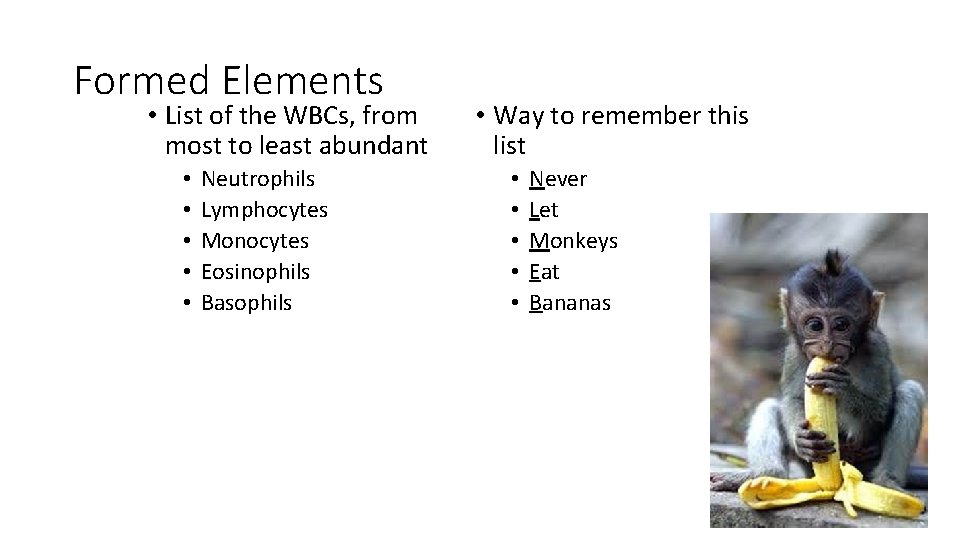
Formed Elements • List of the WBCs, from most to least abundant • • • Neutrophils Lymphocytes Monocytes Eosinophils Basophils • Way to remember this list • • • Never Let Monkeys Eat Bananas
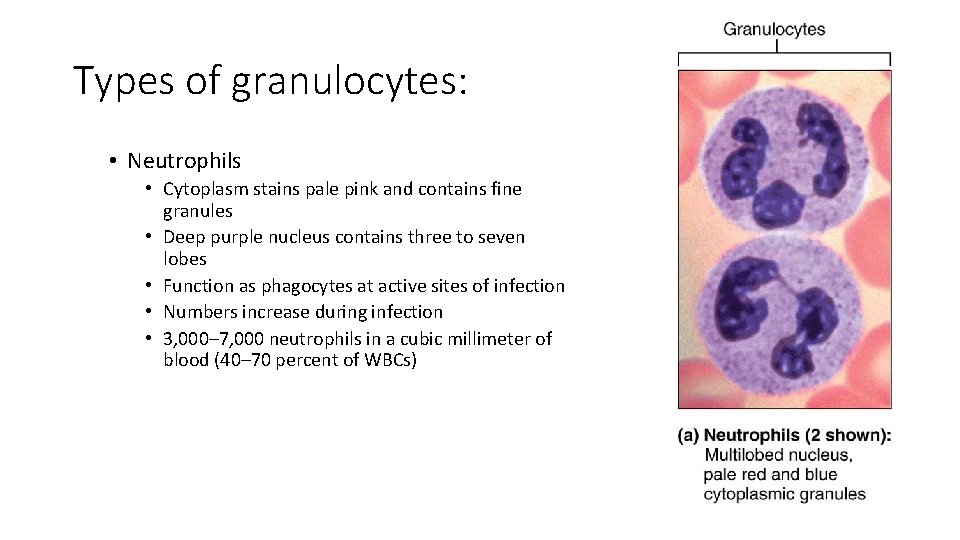
Types of granulocytes: • Neutrophils • Cytoplasm stains pale pink and contains fine granules • Deep purple nucleus contains three to seven lobes • Function as phagocytes at active sites of infection • Numbers increase during infection • 3, 000– 7, 000 neutrophils in a cubic millimeter of blood (40– 70 percent of WBCs)
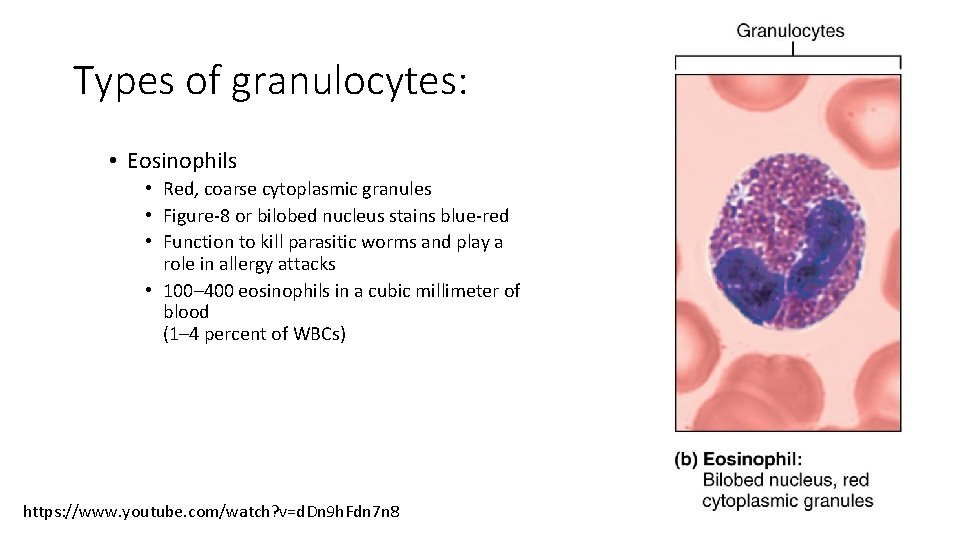
Types of granulocytes: • Eosinophils • Red, coarse cytoplasmic granules • Figure-8 or bilobed nucleus stains blue-red • Function to kill parasitic worms and play a role in allergy attacks • 100– 400 eosinophils in a cubic millimeter of blood (1– 4 percent of WBCs) https: //www. youtube. com/watch? v=d. Dn 9 h. Fdn 7 n 8
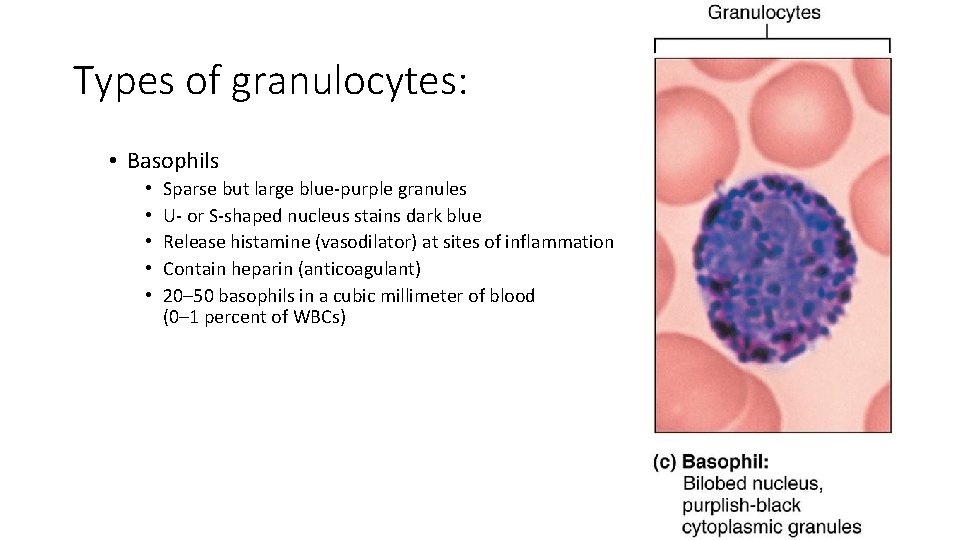
Types of granulocytes: • Basophils • • • Sparse but large blue-purple granules U- or S-shaped nucleus stains dark blue Release histamine (vasodilator) at sites of inflammation Contain heparin (anticoagulant) 20– 50 basophils in a cubic millimeter of blood (0– 1 percent of WBCs)
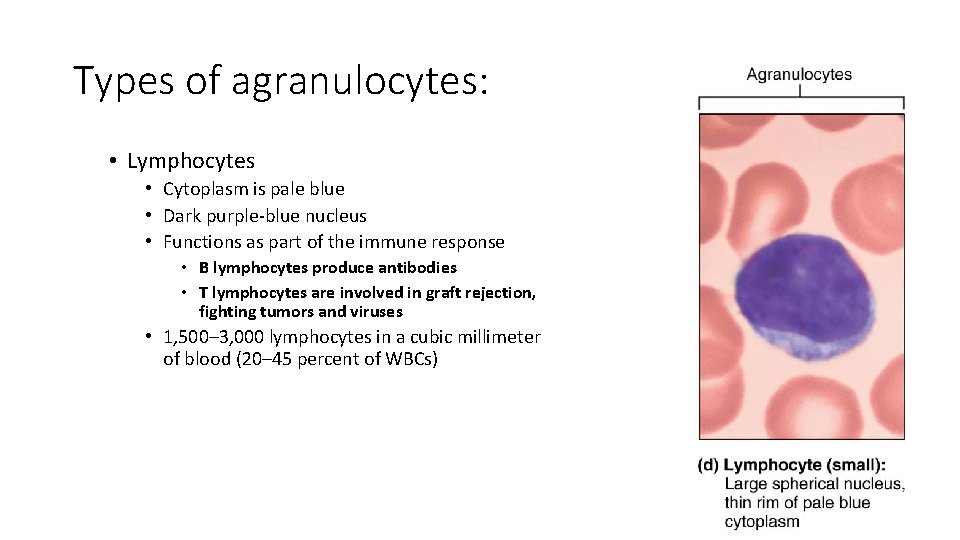
Types of agranulocytes: • Lymphocytes • Cytoplasm is pale blue • Dark purple-blue nucleus • Functions as part of the immune response • B lymphocytes produce antibodies • T lymphocytes are involved in graft rejection, fighting tumors and viruses • 1, 500– 3, 000 lymphocytes in a cubic millimeter of blood (20– 45 percent of WBCs)
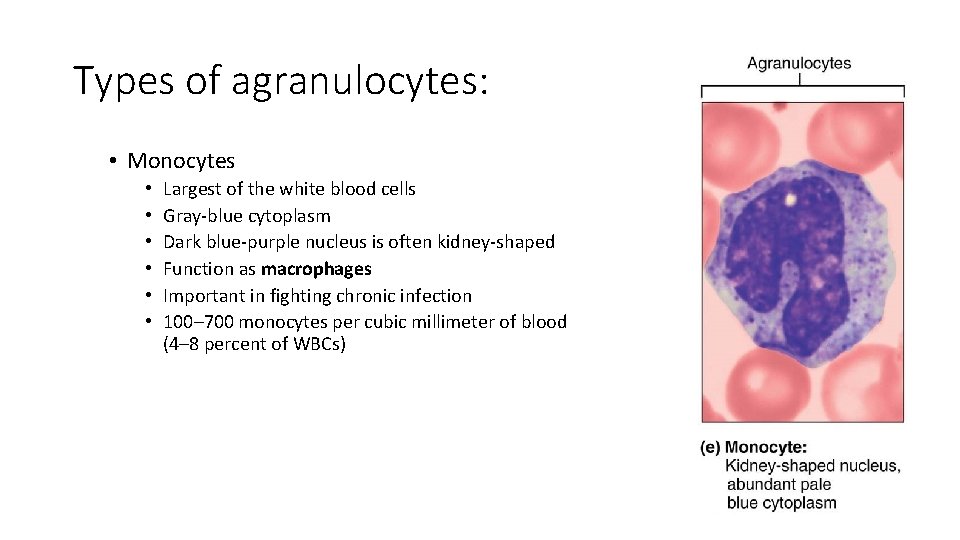
Types of agranulocytes: • Monocytes • • • Largest of the white blood cells Gray-blue cytoplasm Dark blue-purple nucleus is often kidney-shaped Function as macrophages Important in fighting chronic infection 100– 700 monocytes per cubic millimeter of blood (4– 8 percent of WBCs)
Formed Elements • Platelets • Derived from ruptured multinucleate cells (megakaryocytes) • Needed for the clotting process • Platelet count ranges from 150, 000 to 400, 000 per cubic millimeter of blood • 300, 000 is considered a normal number of platelets per cubic millimeter of blood
Hematopoiesis • Hematopoiesis is the process of blood cell formation • Occurs in red bone marrow • All blood cells are derived from a common stem cell (hemocytoblast) • Hemocytoblast differentiation • Lymphoid stem cell produces lymphocytes • Myeloid stem cell produces all other formed elements
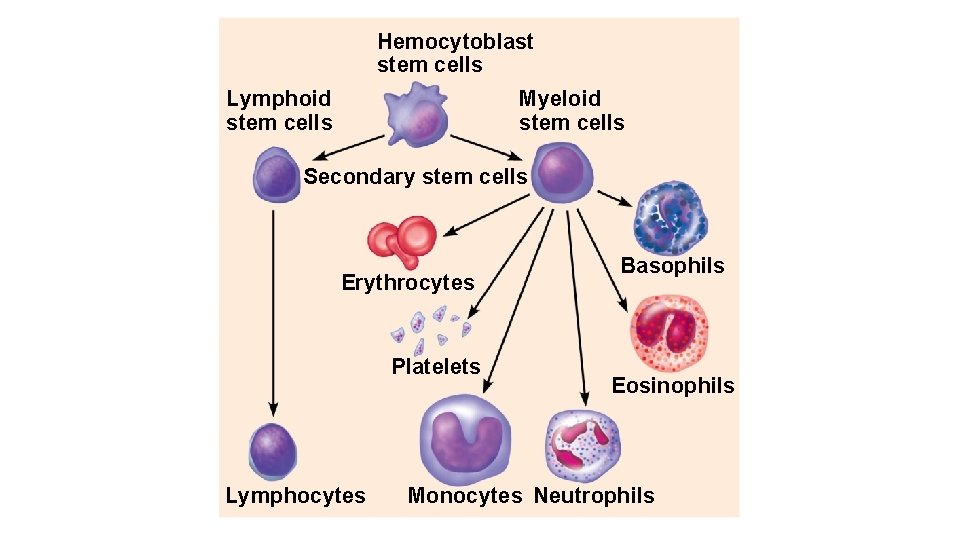
Hemocytoblast stem cells Lymphoid stem cells Myeloid stem cells Secondary stem cells Erythrocytes Platelets Lymphocytes Basophils Eosinophils Monocytes Neutrophils
Formation of Red Blood Cells • Since RBCs are anucleate, they are unable to divide, grow, or synthesize proteins • RBCs wear out in 100 to 120 days • When worn out, RBCs are eliminated by phagocytes in the spleen or liver • Lost cells are replaced by division of hemocytoblasts in the red bone marrow
Control of Erythrocyte Production • Rate of RBC production is controlled by a hormone called erythropoietin • Kidneys produce most erythropoietin as a response to reduced oxygen levels in the blood • Homeostasis is maintained by negative feedback from blood oxygen levels
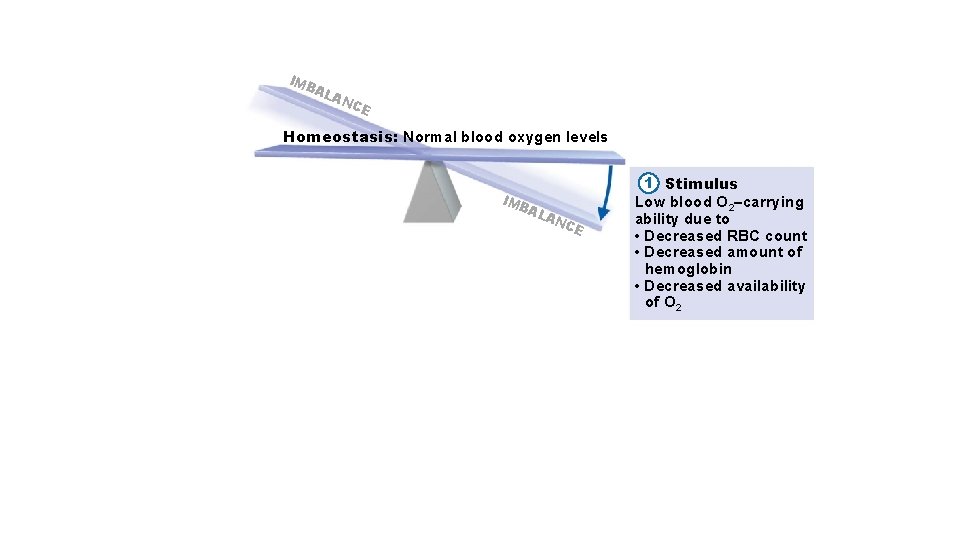
IM BA LA NC E Homeostasis: Normal blood oxygen levels IM BA LA NC E 1 Stimulus Low blood O 2–carrying ability due to • Decreased RBC count • Decreased amount of hemoglobin • Decreased availability of O 2
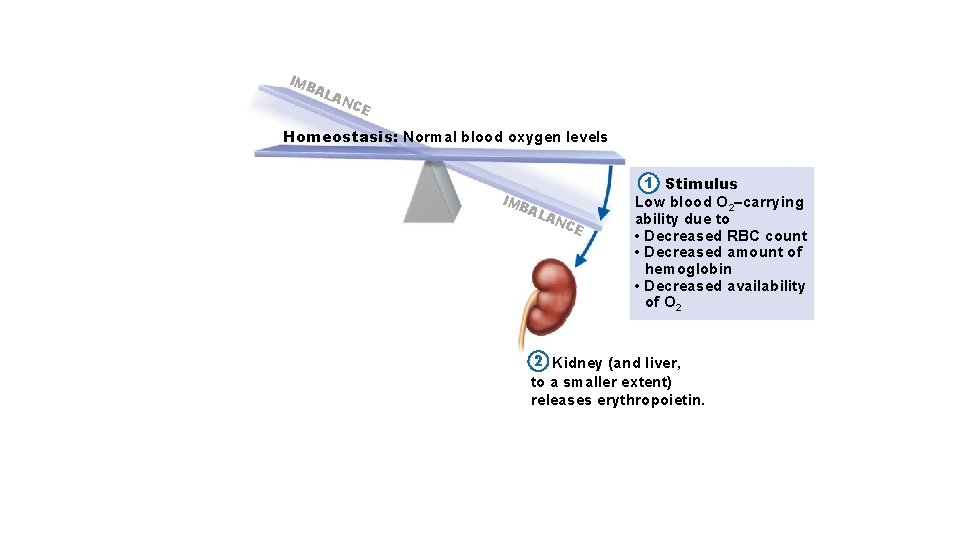
IM BA LA NC E Homeostasis: Normal blood oxygen levels IM BA LA NC E 1 Stimulus Low blood O 2–carrying ability due to • Decreased RBC count • Decreased amount of hemoglobin • Decreased availability of O 2 2 Kidney (and liver, to a smaller extent) releases erythropoietin.
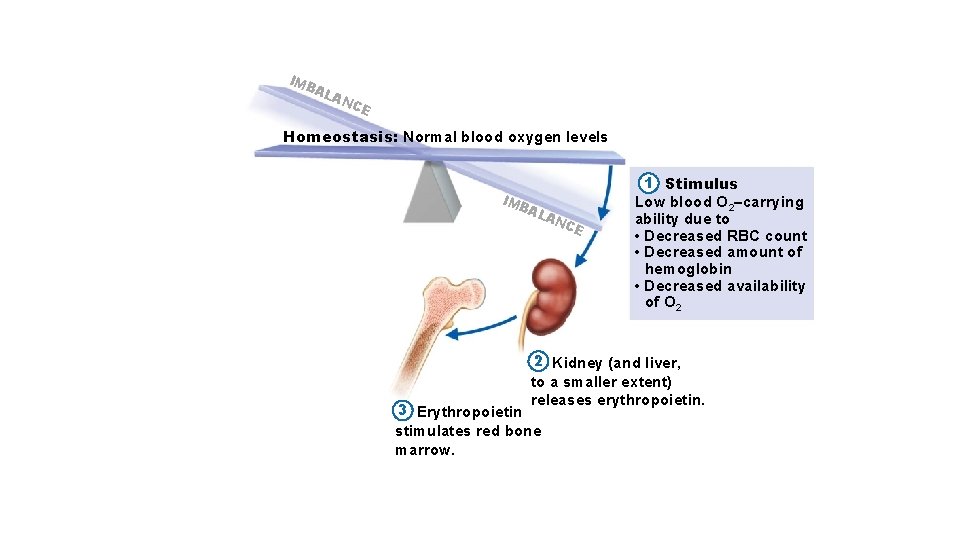
IM BA LA NC E Homeostasis: Normal blood oxygen levels IM BA LA NC E 1 Stimulus Low blood O 2–carrying ability due to • Decreased RBC count • Decreased amount of hemoglobin • Decreased availability of O 2 2 Kidney (and liver, to a smaller extent) releases erythropoietin. 3 Erythropoietin stimulates red bone marrow.
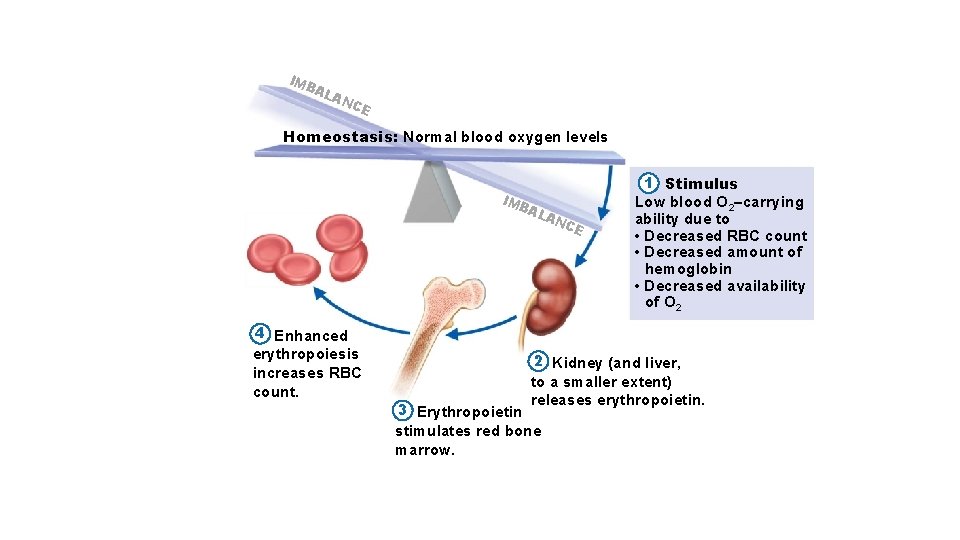
IM BA LA NC E Homeostasis: Normal blood oxygen levels IM BA 4 Enhanced erythropoiesis increases RBC count. LA NC E 1 Stimulus Low blood O 2–carrying ability due to • Decreased RBC count • Decreased amount of hemoglobin • Decreased availability of O 2 2 Kidney (and liver, to a smaller extent) releases erythropoietin. 3 Erythropoietin stimulates red bone marrow.
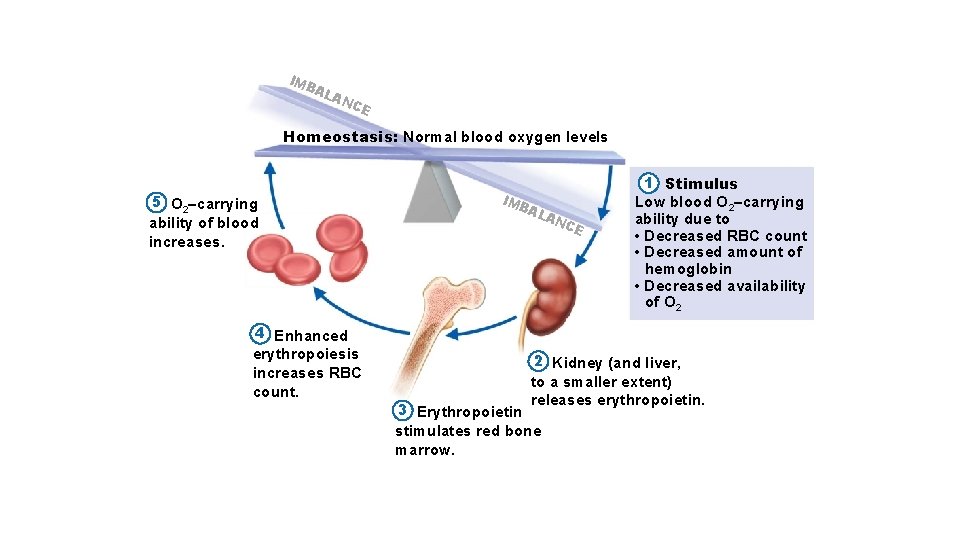
IM BA LA NC E Homeostasis: Normal blood oxygen levels 5 O 2–carrying ability of blood increases. 4 Enhanced erythropoiesis increases RBC count. IM BA LA NC E 1 Stimulus Low blood O 2–carrying ability due to • Decreased RBC count • Decreased amount of hemoglobin • Decreased availability of O 2 2 Kidney (and liver, to a smaller extent) releases erythropoietin. 3 Erythropoietin stimulates red bone marrow.
Formation of White Blood Cells and Platelets • Controlled by hormones • Colony stimulating factors (CSFs) and interleukins prompt bone marrow to generate leukocytes • Thrombopoietin stimulates production of platelets
Hemostasis • Stoppage of bleeding resulting from a break in a blood vessel • Hemostasis involves three phases: 1. Vascular spasms 2. Platelet plug formation 3. Coagulation (blood clotting)
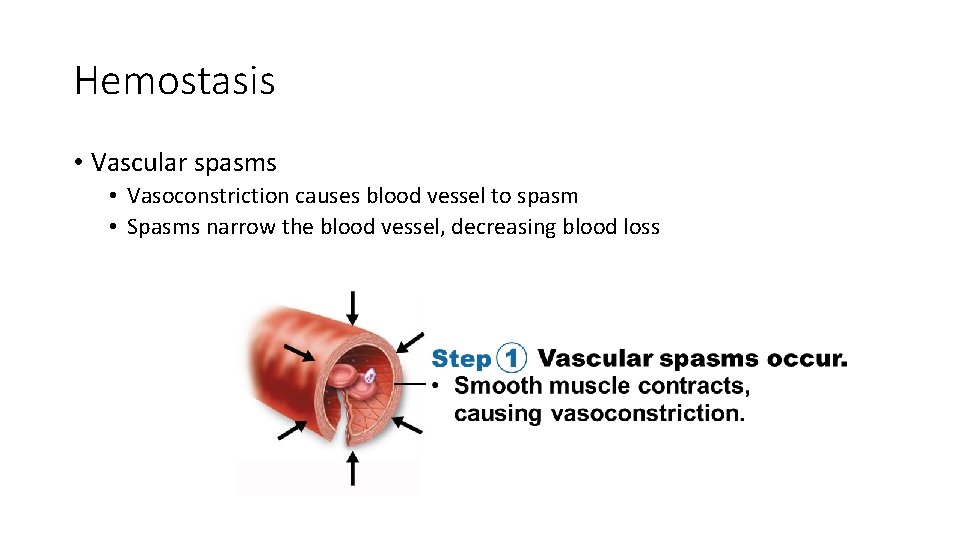
Hemostasis • Vascular spasms • Vasoconstriction causes blood vessel to spasm • Spasms narrow the blood vessel, decreasing blood loss
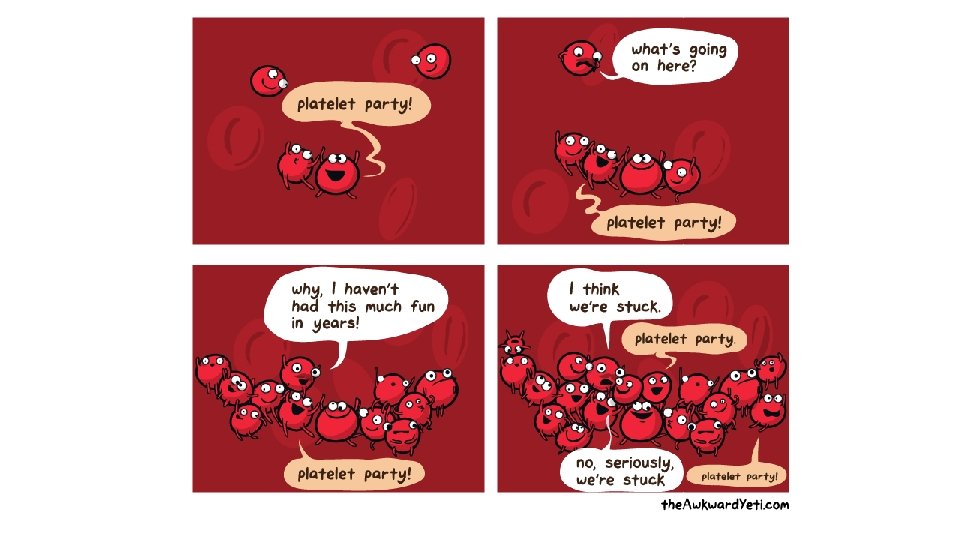
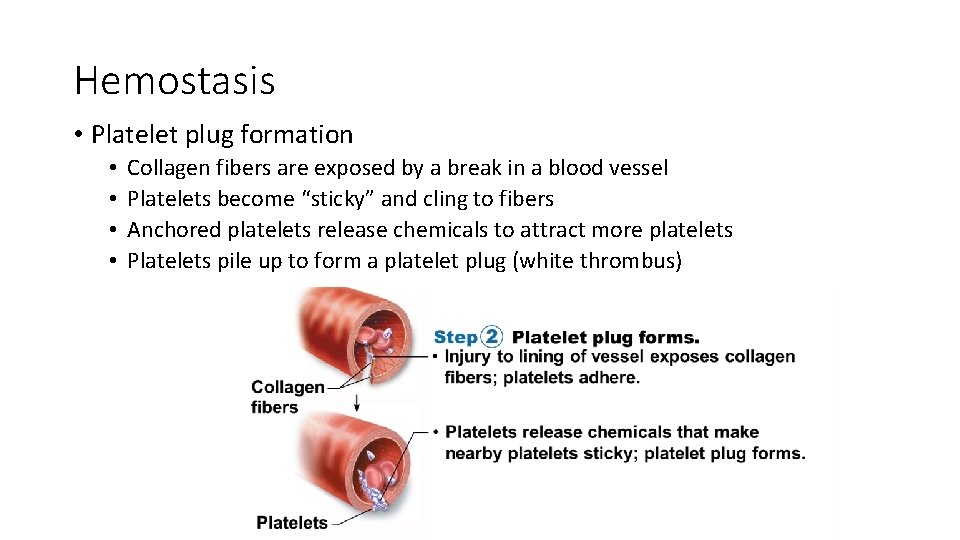
Hemostasis • Platelet plug formation • • Collagen fibers are exposed by a break in a blood vessel Platelets become “sticky” and cling to fibers Anchored platelets release chemicals to attract more platelets Platelets pile up to form a platelet plug (white thrombus)
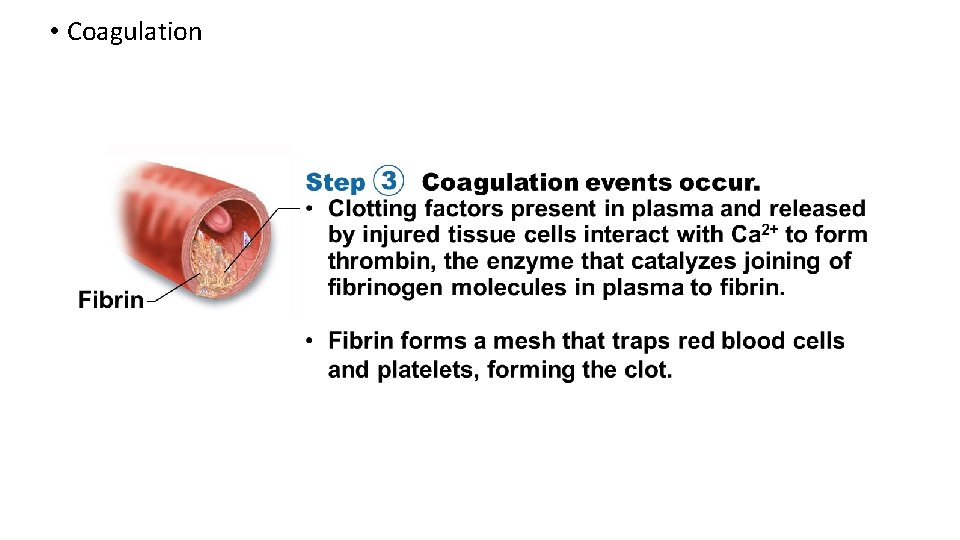
Hemostasis • Coagulation • Injured tissues release tissue factor (TF) • PF 3 (a phospholipid) interacts with TF, blood protein clotting factors, and calcium ions to trigger a clotting cascade • Prothrombin activator converts prothrombin to thrombin (an enzyme) • Thrombin joins fibrinogen proteins into hairlike molecules of insoluble fibrin • Fibrin forms a meshwork (the basis for a clot) • Within the hour, serum is squeezed from the clot as it retracts • Serum is plasma minus clotting proteins
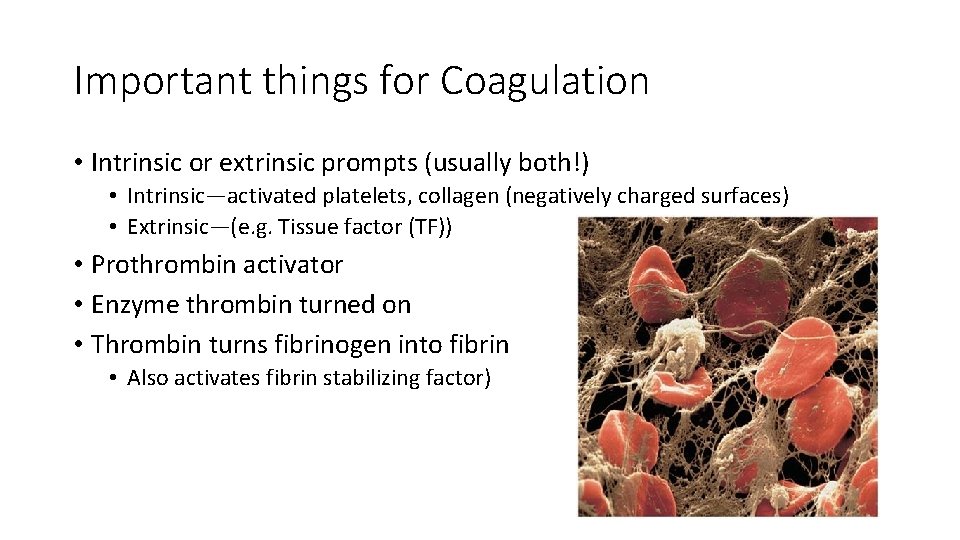
Important things for Coagulation • Intrinsic or extrinsic prompts (usually both!) • Intrinsic—activated platelets, collagen (negatively charged surfaces) • Extrinsic—(e. g. Tissue factor (TF)) • Prothrombin activator • Enzyme thrombin turned on • Thrombin turns fibrinogen into fibrin • Also activates fibrin stabilizing factor)
• Coagulation
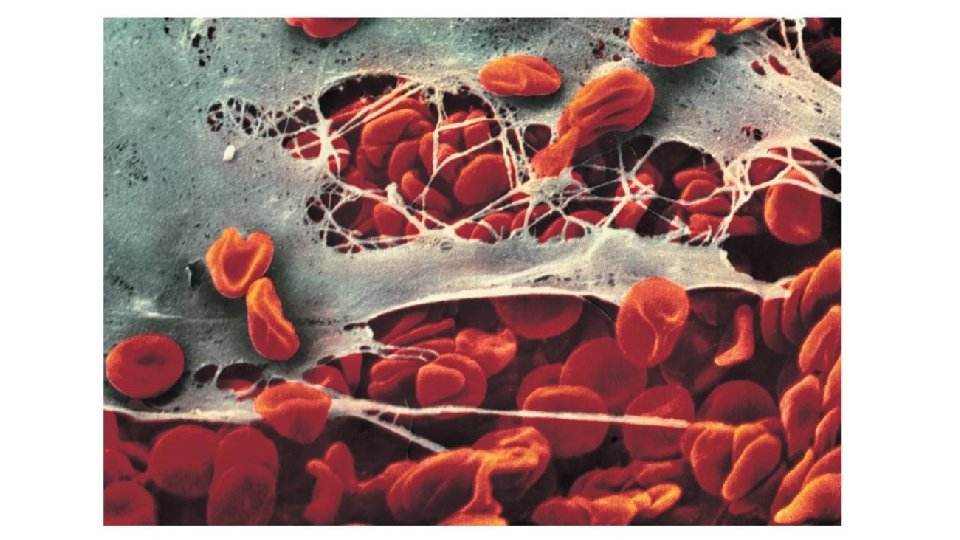
Hemostasis • Blood usually clots within 3 to 6 minutes • The clot remains as endothelium regenerates • The clot is broken down after tissue repair
Undesirable Clotting • Thrombus • A clot in an unbroken blood vessel • Can be deadly in areas such as the heart • Embolus • A thrombus that breaks away and floats freely in the bloodstream • Can later clog vessels in critical areas such as the brain
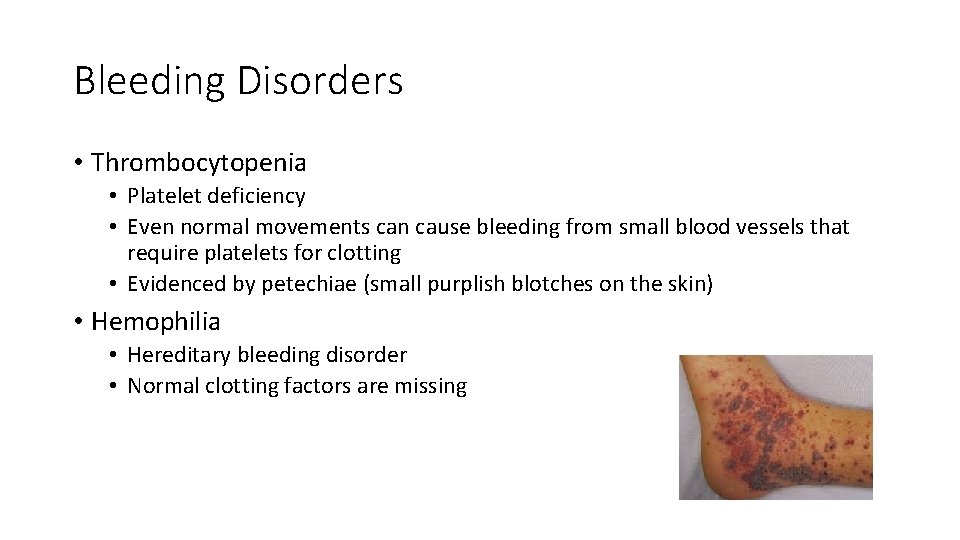
Bleeding Disorders • Thrombocytopenia • Platelet deficiency • Even normal movements can cause bleeding from small blood vessels that require platelets for clotting • Evidenced by petechiae (small purplish blotches on the skin) • Hemophilia • Hereditary bleeding disorder • Normal clotting factors are missing
Blood Groups and Transfusions • Large losses of blood have serious consequences • Loss of 15 to 30 percent causes weakness • Loss of over 30 percent causes shock, which can be fatal • Blood transfusions are given for substantial blood loss, to treat severe anemia, or for thrombocytopenia
Human Blood Groups • Blood contains genetically determined proteins • Antigens are substances that the body recognizes as foreign and that the immune system may attack • Antibodies are the “recognizers” • Blood is “typed” by using antibodies that will cause blood with certain proteins to clump (agglutination) and lyse
Human Blood Groups • There are over 30 common red blood cell antigens • The most vigorous transfusion reactions are caused by ABO and Rh blood group antigens https: //www. youtube. com/watch? v=Bh 4 j. KXsqu. WA
ABO Blood Groups • Based on the presence or absence of two antigens: 1. Type A 2. Type B • The lack of these antigens is called type O • The presence of both antigens A and B is called type AB • The presence of antigen A is called type A • The presence of antigen B is called type B • The lack of both antigens A and B is called type O
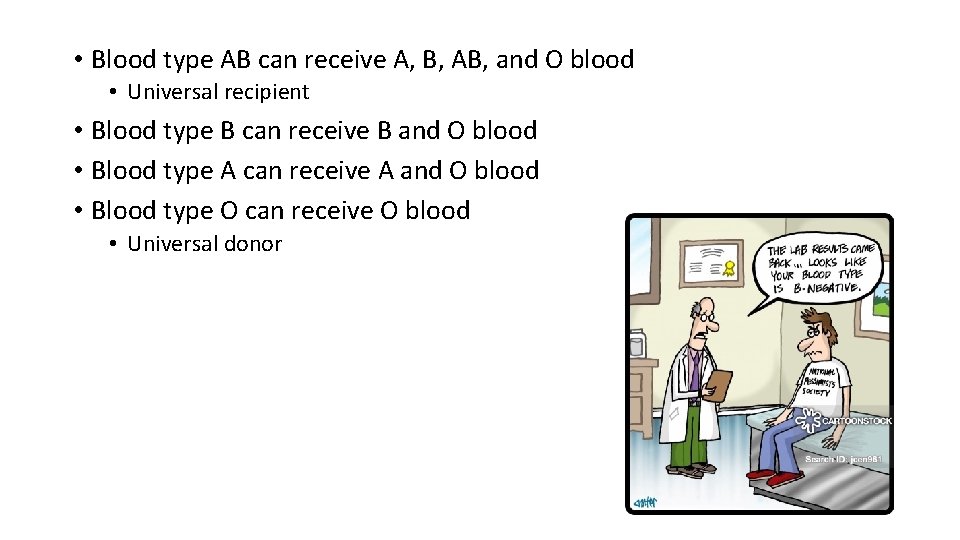
• Blood type AB can receive A, B, AB, and O blood • Universal recipient • Blood type B can receive B and O blood • Blood type A can receive A and O blood • Blood type O can receive O blood • Universal donor
Rh Blood Groups • Named because of the presence or absence of one of eight Rh antigens (agglutinogen D) that was originally defined in Rhesus monkeys • Most Americans are Rh+ (Rh positive) • Problems can occur in mixing Rh+ blood into a body with Rh– (Rh negative) blood • Hemolysis does not occur with first transfusion, because it takes time to make antibodies • Second, and subsequent, transfusions involve antibodies attacking donor’s Rh+ RBCs
Rh Dangers During Pregnancy • Danger occurs only when the mother is Rh– and the father is Rh+, and the child inherits the Rh+ factor • Rho. GAM shot can prevent buildup of anti-Rh+ antibodies in mother’s blood • The mismatch of an Rh– mother carrying an Rh+ baby can cause problems for the unborn child • The first pregnancy usually proceeds without problems • The immune system is sensitized after the first pregnancy • In a second pregnancy, the mother’s immune system produces antibodies to attack the Rh+ blood (hemolytic disease of the newborn)
Blood Typing • Blood samples are mixed with anti-A and anti-B serum • Agglutination or the lack of agglutination leads to identification of blood type • Typing for ABO and Rh factors is done in the same manner
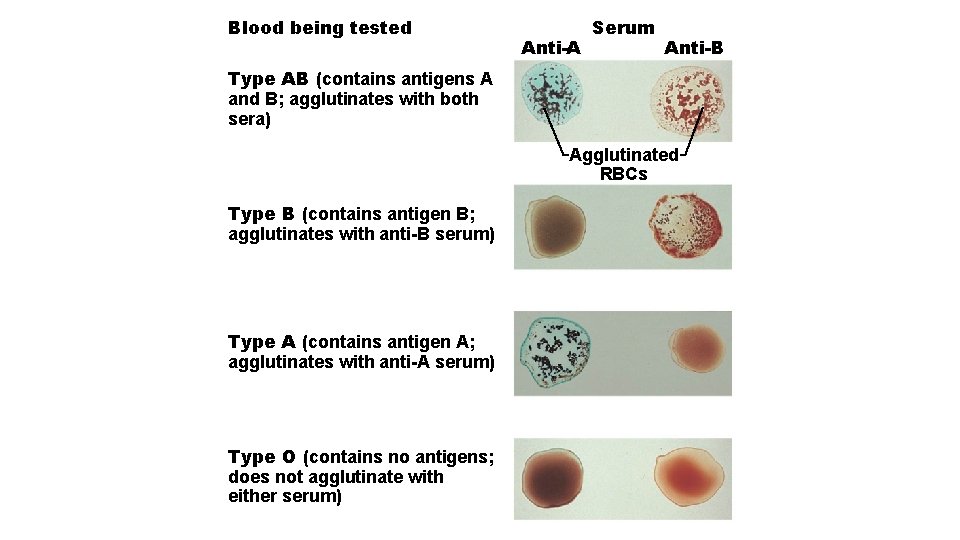
Blood being tested Anti-A Serum Anti-B Type AB (contains antigens A and B; agglutinates with both sera) Agglutinated RBCs Type B (contains antigen B; agglutinates with anti-B serum) Type A (contains antigen A; agglutinates with anti-A serum) Type O (contains no antigens; does not agglutinate with either serum)
Developmental Aspects of Blood • Sites of blood cell formation • The fetal liver and spleen are early sites of blood cell formation • Bone marrow takes over hematopoiesis by the seventh month
Developmental Aspects of Blood • Congenital blood defects include various types of hemolytic anemias and hemophilia • Incompatibility between maternal and fetal blood can result in fetal cyanosis, resulting from destruction of fetal blood cells • Fetal hemoglobin differs from hemoglobin produced after birth • Physiologic jaundice occurs in infants when the liver cannot rid the body of hemoglobin breakdown products fast enough
- Slides: 58