
BLOOD AND TISSUE PARASITES Microbiology Practical Class MALARIA

BLOOD AND TISSUE PARASITES Microbiology Practical Class
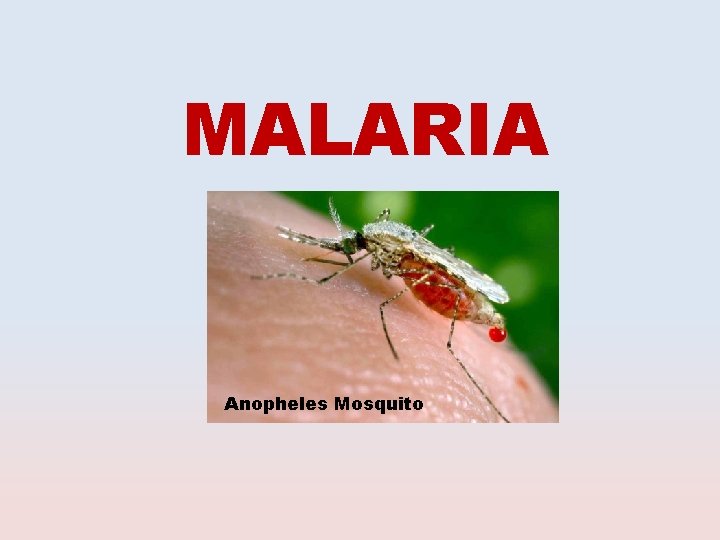
MALARIA Anopheles Mosquito

Ø LABORATORY DIAGNOSIS OF MALARIA Malaria Can Be Diagnosed Commonly By: 1 - MICROSCOPY (LIGHT MICROSCOPE): Uses a blood smear to identify whether parasites are present in the patient’s blood. - Thick film: for screening - Thin film: for different speices identification 2 - RAPID DIAGNOSTIC TESTS (RDTs): RDTs are quick tests for screening that use a drop of blood from the finger tip to identify whether parasites are present in the patient or no. 3 - SEROLOGY 4 - PCR

Ø LABORATORY DIAGNOSIS OF MALARIA LIGHTMICROSCOPY 1 - Preparing blood film (Thick & Thin)
ØLABORATORY DIAGNOSIS LIGHTMICROSCOPY 2 - Video showing Preparing of Thin and Thick blood film https: //youtu. be/a. EAXYJ 7 Xa. Cg
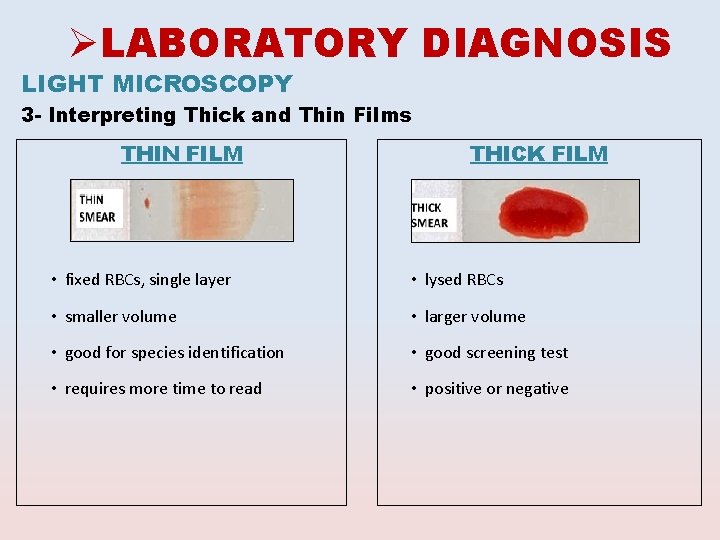
ØLABORATORY DIAGNOSIS LIGHT MICROSCOPY 3 - Interpreting Thick and Thin Films THIN FILM THICK FILM • fixed RBCs, single layer • lysed RBCs • smaller volume • larger volume • good for species identification • good screening test • requires more time to read • positive or negative
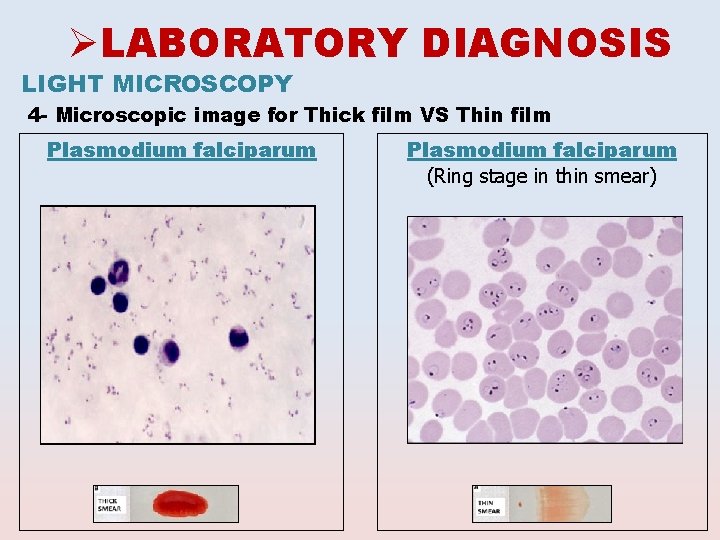
ØLABORATORY DIAGNOSIS LIGHT MICROSCOPY 4 - Microscopic image for Thick film VS Thin film Plasmodium falciparum (Ring stage in thin smear)
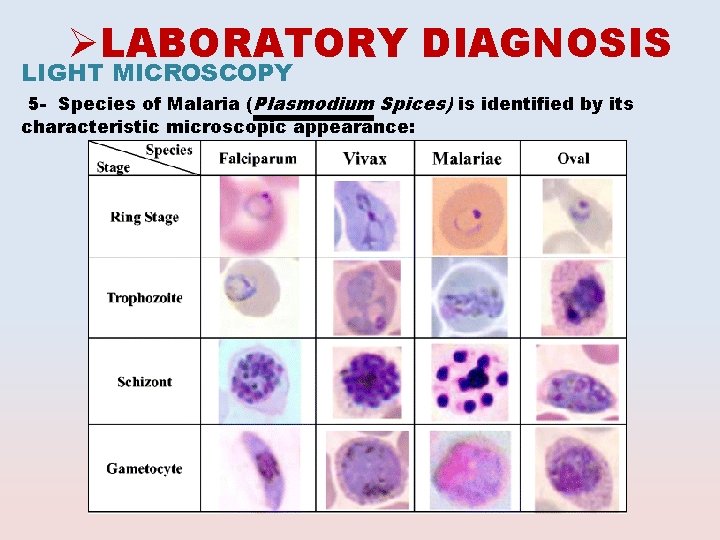
ØLABORATORY DIAGNOSIS LIGHT MICROSCOPY 5 - Species of Malaria (Plasmodium Spices) is identified by its characteristic microscopic appearance:
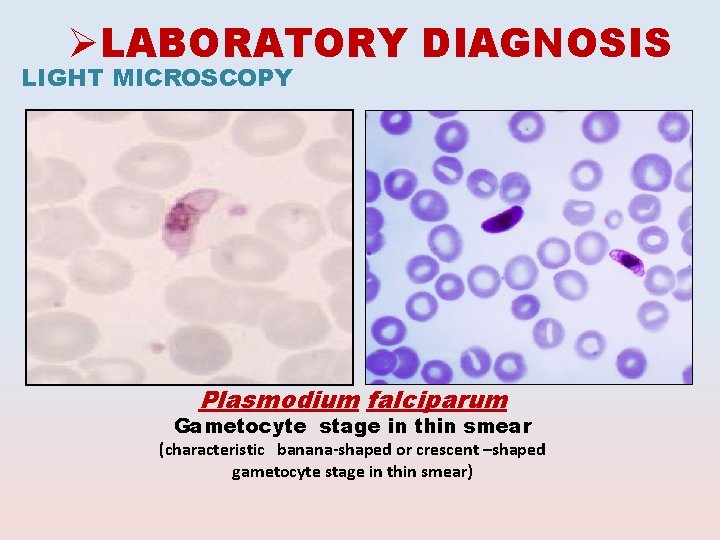
ØLABORATORY DIAGNOSIS LIGHT MICROSCOPY Plasmodium falciparum Gametocyte stage in thin smear (characteristic banana-shaped or crescent –shaped gametocyte stage in thin smear)
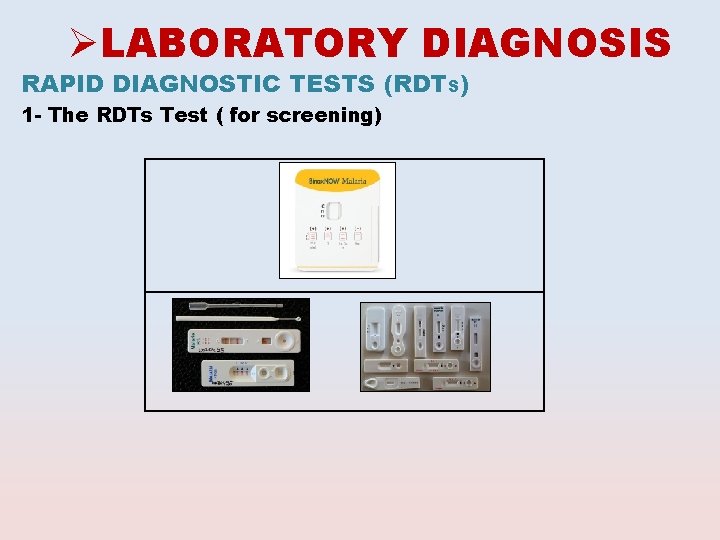
ØLABORATORY DIAGNOSIS RAPID DIAGNOSTIC TESTS (RDTS) 1 - The RDTs Test ( for screening)
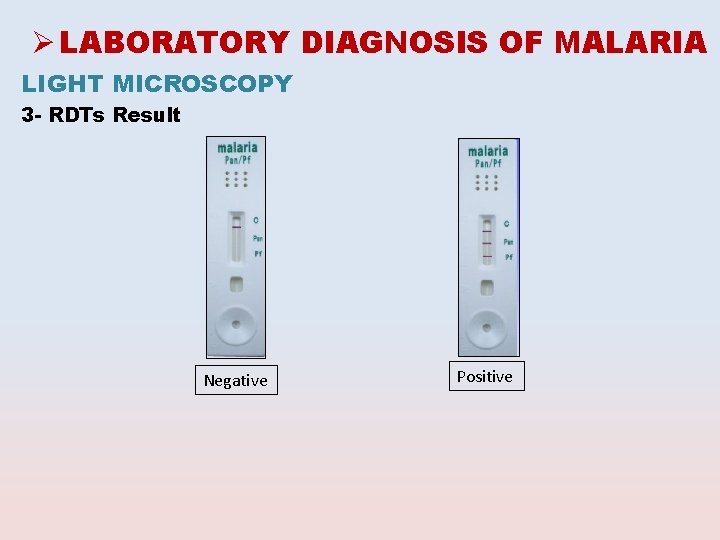
Ø LABORATORY DIAGNOSIS OF MALARIA LIGHT MICROSCOPY 3 - RDTs Result Negative Positive
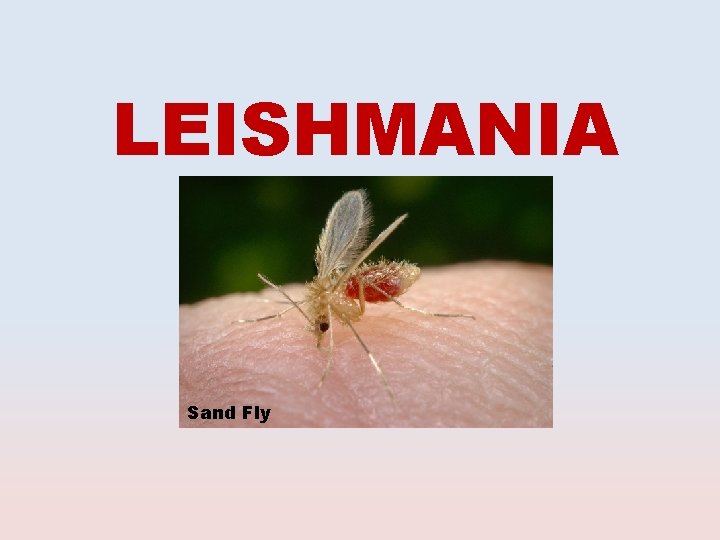
LEISHMANIA Sand Fly
Ø LABORATORY DIAGNOSIS OF LEISHMANIA Leishmania Can be Diagnosed Commonly By: Ø Microscopy (Light Microscope) Ø Culture in NNN Medium Used Samples: • Bone Marrow aspirate • Splenic aspirate • Lymph node • Biopsy
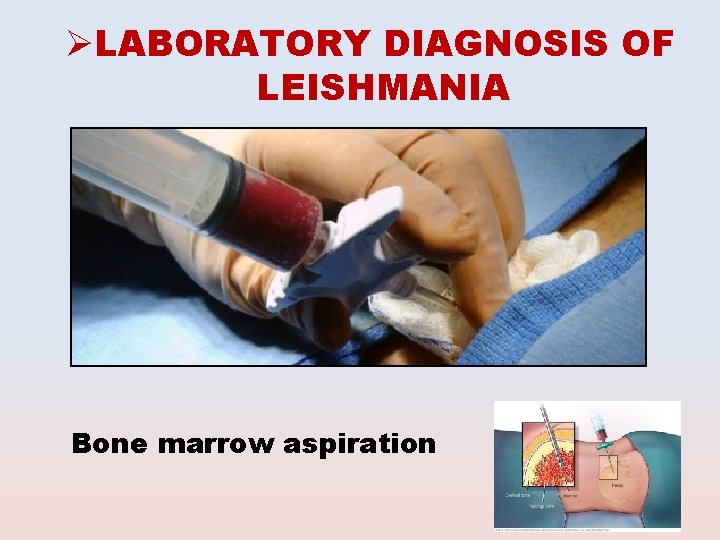
ØLABORATORY DIAGNOSIS OF LEISHMANIA Bone marrow aspiration
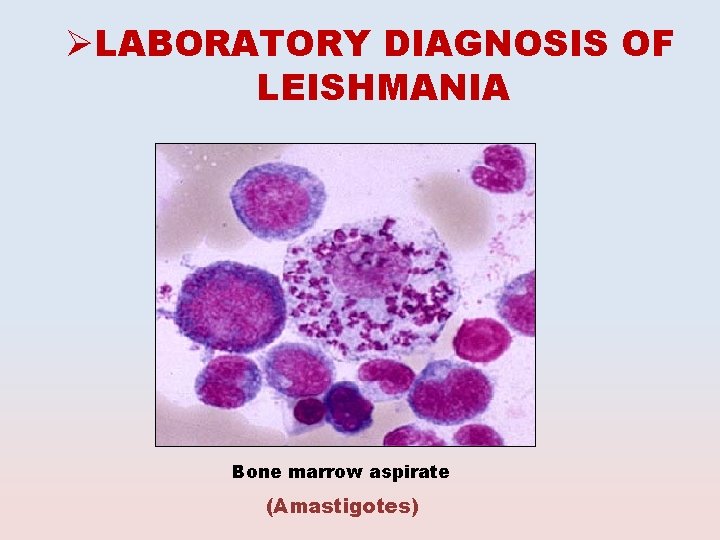
ØLABORATORY DIAGNOSIS OF LEISHMANIA Bone marrow aspirate (Amastigotes)
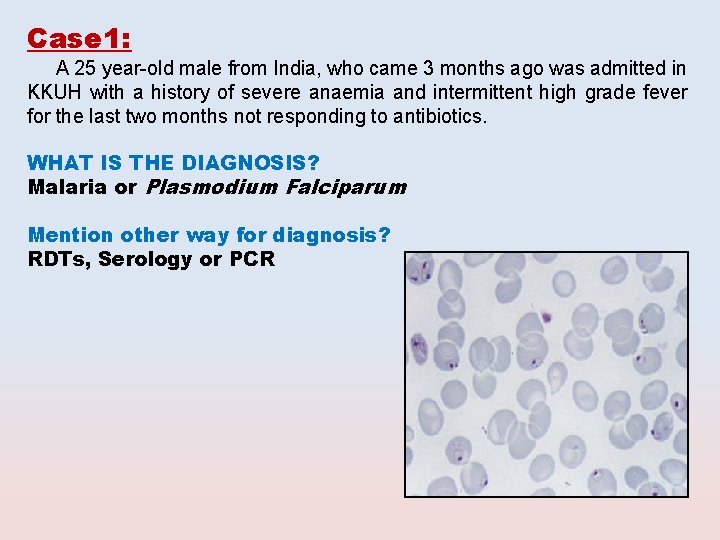
Case 1: A 25 year-old male from India, who came 3 months ago was admitted in KKUH with a history of severe anaemia and intermittent high grade fever for the last two months not responding to antibiotics. WHAT IS THE DIAGNOSIS? Malaria or Plasmodium Falciparum Mention other way for diagnosis? RDTs, Serology or PCR
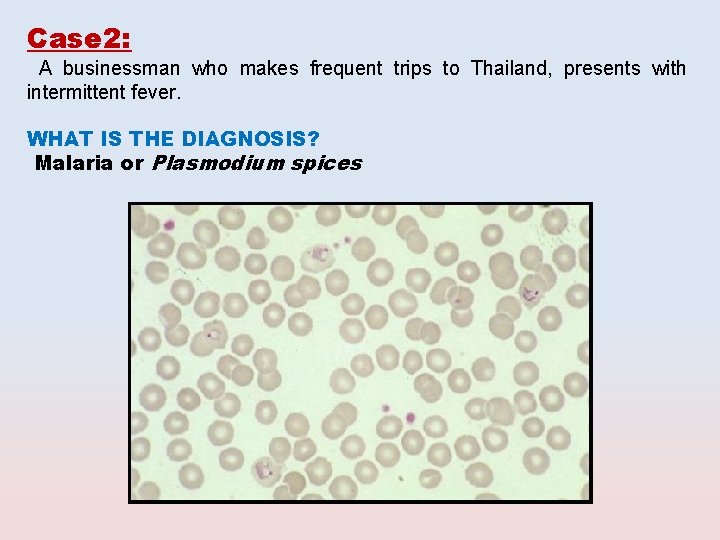
Case 2: A businessman who makes frequent trips to Thailand, presents with intermittent fever. WHAT IS THE DIAGNOSIS? Malaria or Plasmodium spices
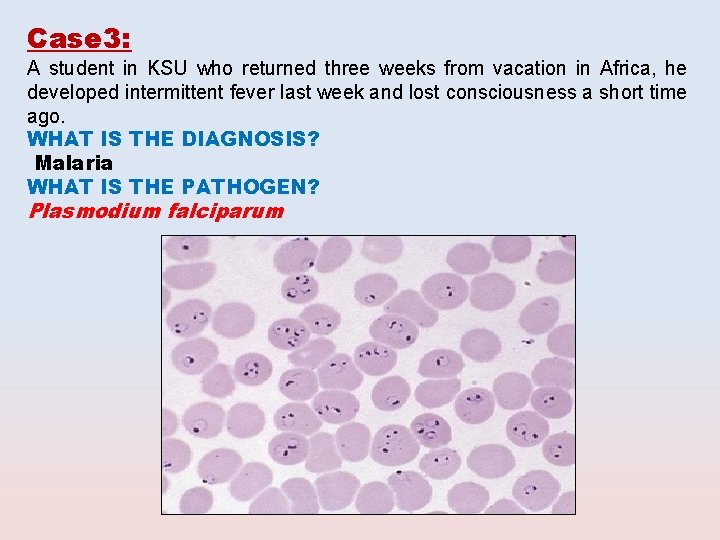
Case 3: A student in KSU who returned three weeks from vacation in Africa, he developed intermittent fever last week and lost consciousness a short time ago. WHAT IS THE DIAGNOSIS? Malaria WHAT IS THE PATHOGEN? Plasmodium falciparum
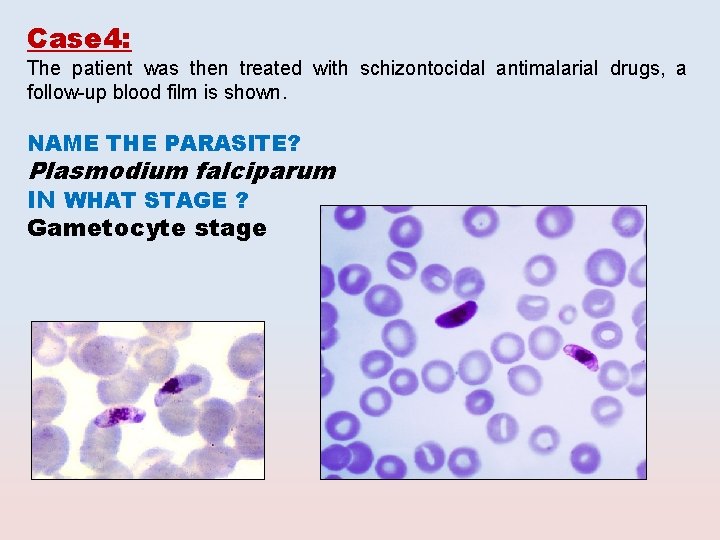
Case 4: The patient was then treated with schizontocidal antimalarial drugs, a follow-up blood film is shown. NAME THE PARASITE? Plasmodium falciparum IN WHAT STAGE ? Gametocyte stage
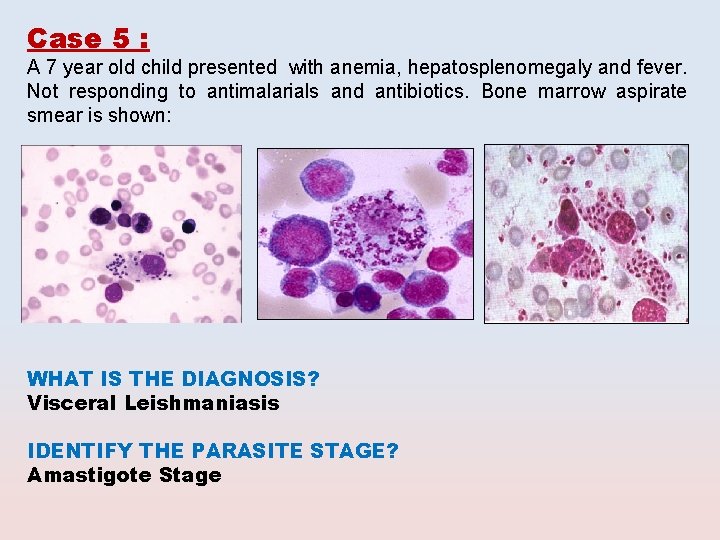
Case 5 : A 7 year old child presented with anemia, hepatosplenomegaly and fever. Not responding to antimalarials and antibiotics. Bone marrow aspirate smear is shown: WHAT IS THE DIAGNOSIS? Visceral Leishmaniasis IDENTIFY THE PARASITE STAGE? Amastigote Stage
- Slides: 21