
Blood An Overview Ch 10 a Challenge Problem
Blood: An Overview Ch. 10 a
Challenge Problem • Complete the CSA 1/2 • Get computer • Use the tiny URL to complete an introduction on blood
Intro to Blood • Get your computer number from me • Use a computer to complete the Google Form in this address • http: //tinyurl. com/blood-disorders • TO SAVE YOUR WORK** – Click ‘Send me a copy of my responses’ – Submit – You will be able to copy/paste your answers on Friday
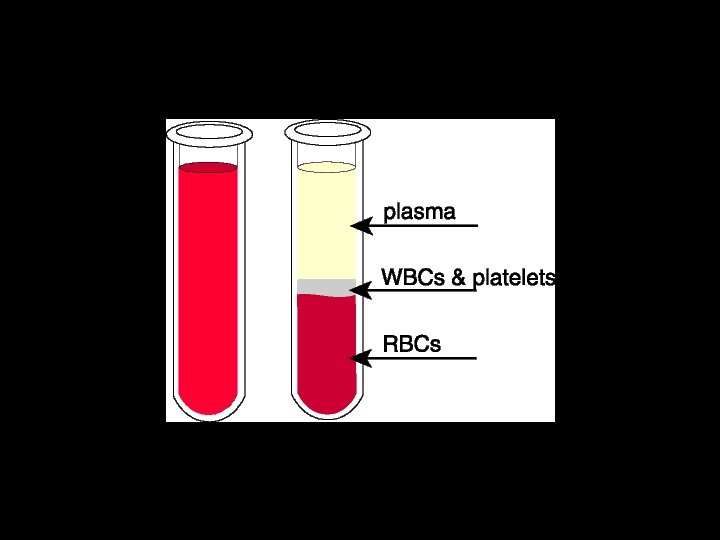
Blood · The only fluid tissue in the human body · Classified as a connective tissue w/ 2 parts: · Formed Elements = Living Cells within the blood (45% of blood volume) · Plasma = Non-Living matrix, “liquid” part of blood (55% of blood volume) Copyright © 2003 Pearson Education, Inc. publishing as Benjamin Cummings Slide 10. 1 a

Blood Figure 10. 1 Copyright © 2003 Pearson Education, Inc. publishing as Benjamin Cummings Slide 10. 1 b
What are the physical characteristics of blood?
Physical Characteristics of Blood · Blood Color range · Oxygen-rich blood is scarlet red · Oxygen-poor blood is dull red · Blood is NEVER blue! · p. H must remain between 7. 35– 7. 45 · Blood temperature is slightly higher than body temperature Copyright © 2003 Pearson Education, Inc. publishing as Benjamin Cummings Slide 10. 2
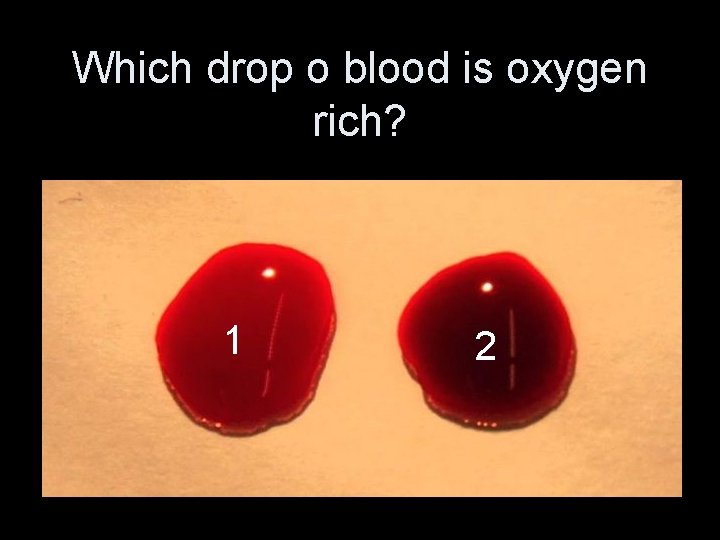
Which drop o blood is oxygen rich? 1 2
Quick Quiz • What color is oxygen poor blood?
Blood: Plasma Components
Blood Plasma: The liquid part · Composed of approximately 90 percent water · Includes many dissolved substances · Nutrients · Salts (metal ions) · Respiratory gases · Hormones · Proteins · Waste products Copyright © 2003 Pearson Education, Inc. publishing as Benjamin Cummings Slide 10. 3
Challenge Problem 10/12 • 1. With a p. H of 7. 35 -7. 45, blood is slightly acidic/basic. Choose one • 2. The liquid portion of blood is called____ • 3. Some of the substances found in the liquid portion of blood are – – – • 4. If someone were losing blood and could not transport oxygen efficiently, what might result?
Plasma Proteins · Albumin – regulates osmotic pressure · Clotting proteins – help to stem blood loss when a blood vessel is injured · Antibodies – help protect the body from antigens Copyright © 2003 Pearson Education, Inc. publishing as Benjamin Cummings Slide 10. 4
Quick Quiz Name one of the plasma proteins and its function. Why do ambulance drivers/ EMT rely so heavily on blood plasma and IV fluids? When would they need to use them?
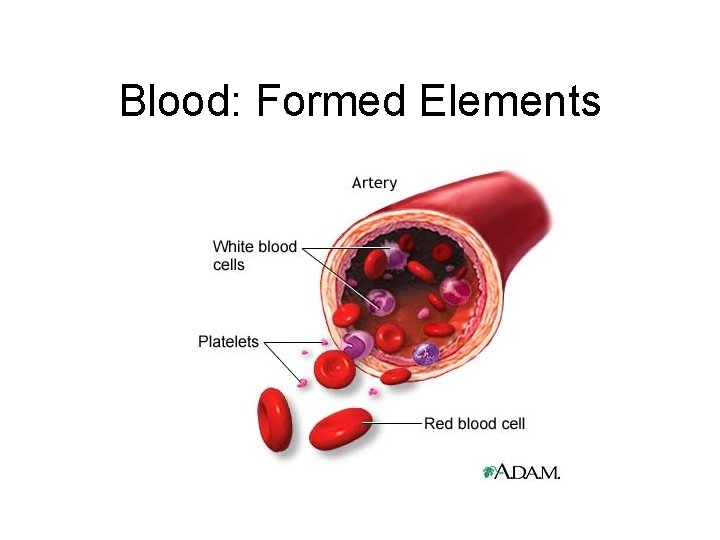
Blood: Formed Elements
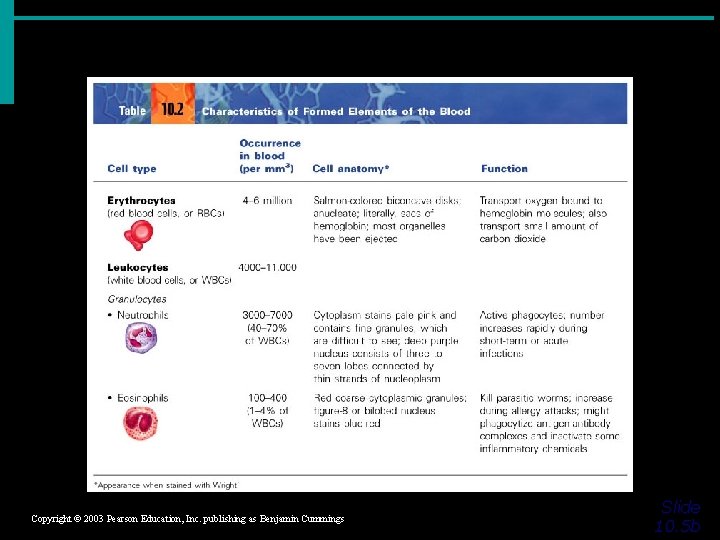
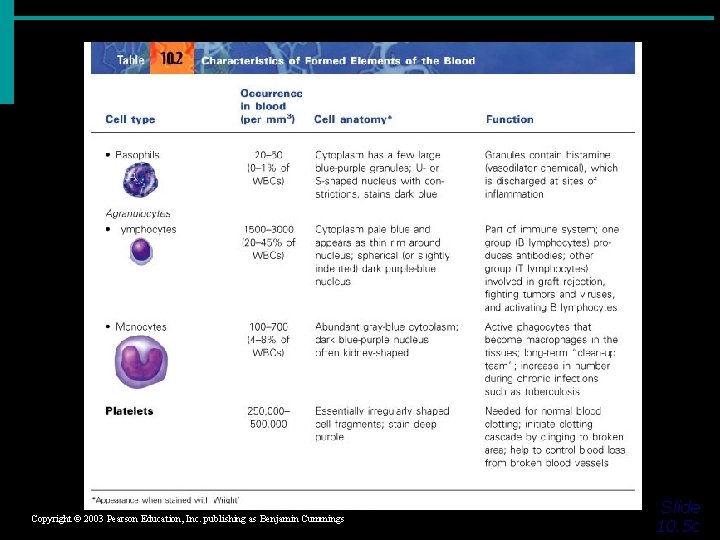
Formed Elements · Erythrocytes = red blood cells · Leukocytes = white blood cells · Platelets = cell fragments Copyright © 2003 Pearson Education, Inc. publishing as Benjamin Cummings Slide 10. 5 a
Copyright © 2003 Pearson Education, Inc. publishing as Benjamin Cummings Slide 10. 5 b
Copyright © 2003 Pearson Education, Inc. publishing as Benjamin Cummings Slide 10. 5 c
Erythrocytes
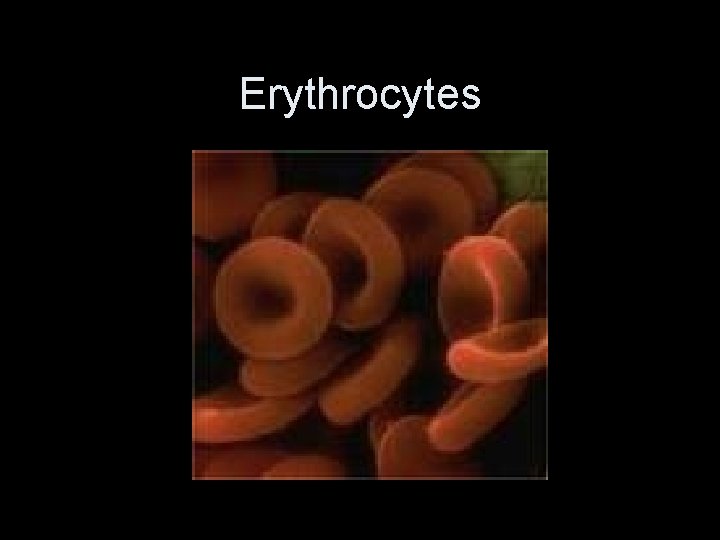
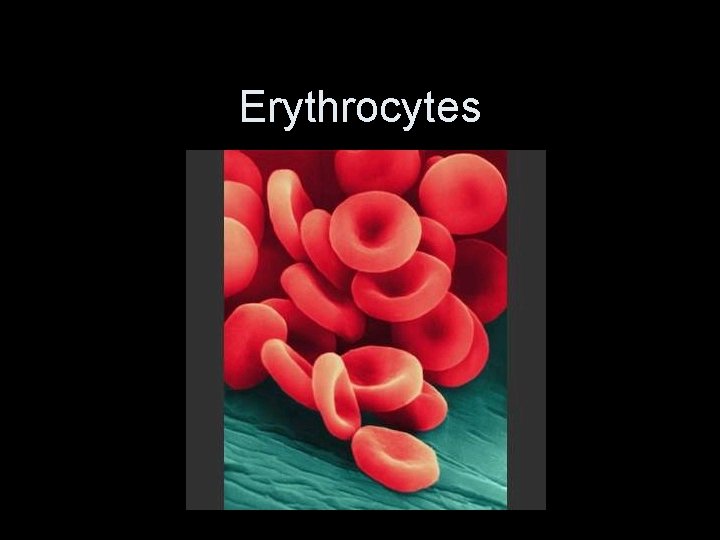
Erythrocytes (Red Blood Cells) · The main function is to carry oxygen · Anatomy of circulating erythrocytes · Biconcave disks · Essentially bags of hemoglobin · Anucleate (no nucleus) · Contain very few organelles · Outnumber white blood cells 1000: 1 Copyright © 2003 Pearson Education, Inc. publishing as Benjamin Cummings Slide 10. 6
Hemoglobin · Found within Red Blood Cells · Gives bright red color when oxygen is present · Iron-containing protein · Binds strongly, but reversibly, to oxygen · Each hemoglobin molecule has four oxygen binding sites · Each erythrocyte has 250 million hemoglobin molecules Slide 10. 7

I need a Blood
Quick Quiz • Identify the function of hemoglobin? • Carbon Monoxide (found in car exhaust and during a fire) binds to hemoglobin 210 times stronger than oxygen. Why is that scary?
Leukocytes
Leukocytes (White Blood Cells) · Crucial in the body’s defense against disease · These are complete cells, with a nucleus and organelles · Able to move into and out of blood vessels (diapedesis) · Can move by ameboid motion · Can respond to chemicals released by damaged tissues Copyright © 2003 Pearson Education, Inc. publishing as Benjamin Cummings Slide 10. 8
Leukocyte Levels in the Blood · Normal levels are between 4, 000 and 11, 000 cells per mm 3 · Abnormal leukocyte levels · Leukocytosis · Abnormally high leukocyte level · Generally indicates an infection · Leukopenia · Abnormally low leukocyte level · Commonly caused by certain drugs Copyright © 2003 Pearson Education, Inc. publishing as Benjamin Cummings Slide 10. 9
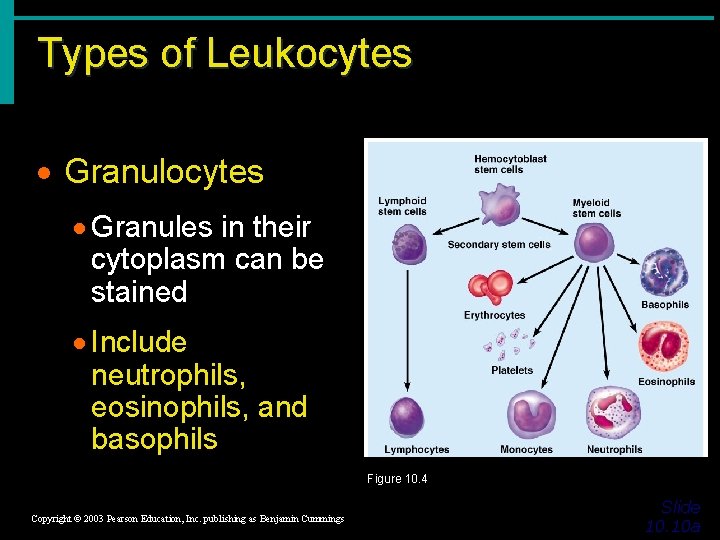
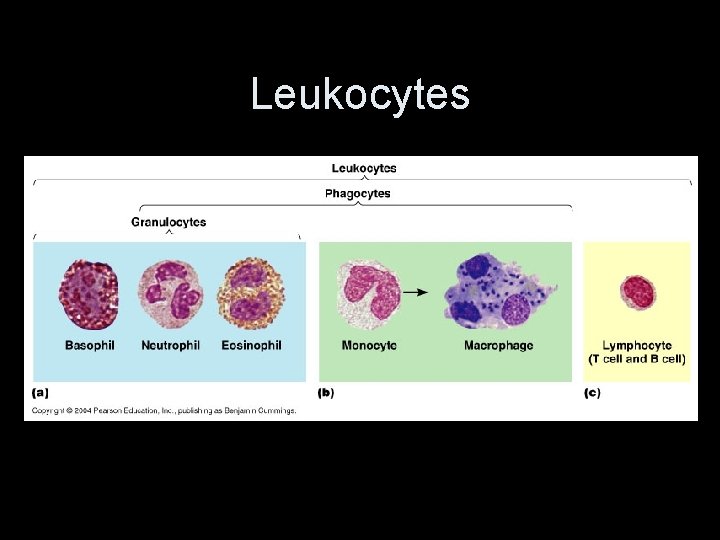
Types of Leukocytes · Granules in their cytoplasm can be stained · Include neutrophils, eosinophils, and basophils Figure 10. 4 Copyright © 2003 Pearson Education, Inc. publishing as Benjamin Cummings Slide 10. 10 a
Granulocytes · Neutrophils · Multilobed nucleus with fine granules · Act as phagocytes at active sites of infection · Eosinophils · Large brick-red cytoplasmic granules · Found in repsonse to allergies and parasitic worms Copyright © 2003 Pearson Education, Inc. publishing as Benjamin Cummings Slide 10. 11 a
Granulocytes · Basophils · Have histamine-containing granules · Initiate inflammation Copyright © 2003 Pearson Education, Inc. publishing as Benjamin Cummings Slide 10. 11 b
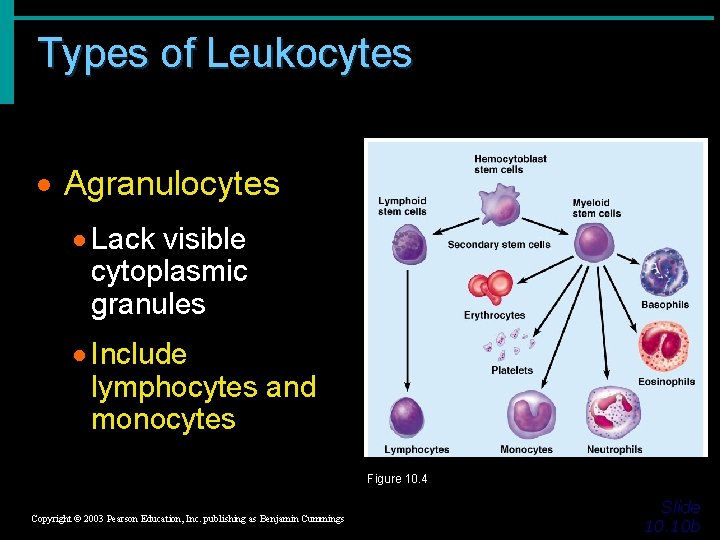
Types of Leukocytes · Agranulocytes · Lack visible cytoplasmic granules · Include lymphocytes and monocytes Figure 10. 4 Copyright © 2003 Pearson Education, Inc. publishing as Benjamin Cummings Slide 10. 10 b
Agranulocytes · Lymphocytes · Nucleus fills most of the cell · Play an important role in the immune response · Monocytes · Largest of the white blood cells · Function as macrophages · Important in fighting chronic infection Copyright © 2003 Pearson Education, Inc. publishing as Benjamin Cummings Slide 10. 12
Quick Quiz • How do Leukocytes function? • Someone asked last period about a drug that decreases the number of white blood cells. • Use your phones to find out the name of a drug that reduces the number of white blood cells and when it would be used.
Brain. Pop- blood • -1 Use the plastic covered sheet and a dry erase marker to answer the questions on the Brain. Pop quiz • -2 watch vid • -3 fix answers after taking quiz
Get a book- 5 min • Using your book, find out what platelets are made of • Also find out if there is a disease or diseases that involve a platelet deficiency.
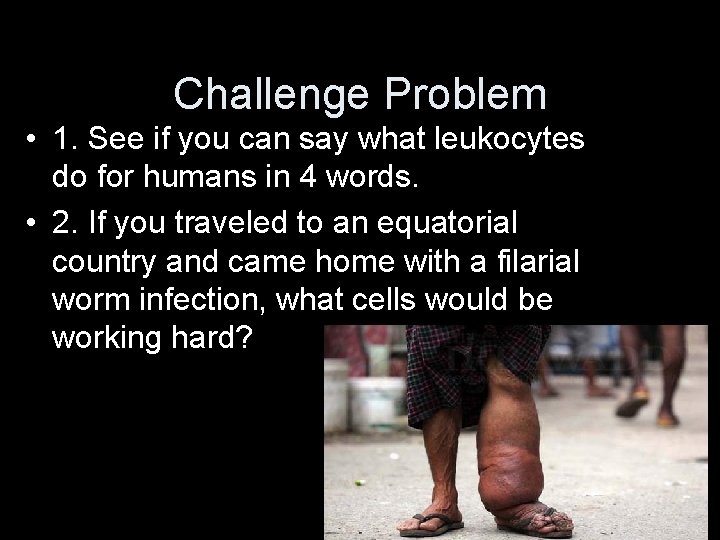
Challenge Problem • 1. See if you can say what leukocytes do for humans in 4 words. • 2. If you traveled to an equatorial country and came home with a filarial worm infection, what cells would be working hard?
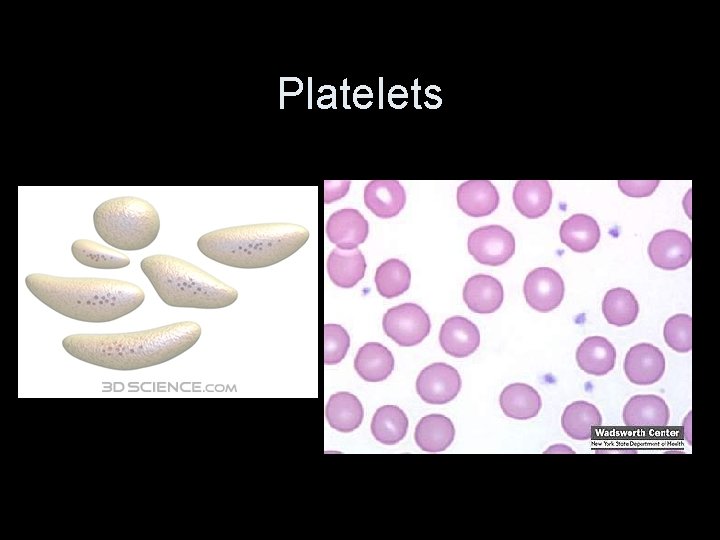
Platelets
Platelets · Derived from ruptured multinucleate cells (megakaryocytes) · Parts of broken down cells · Needed for the clotting process · Normal platelet count = 300, 000/mm 3 Copyright © 2003 Pearson Education, Inc. publishing as Benjamin Cummings Slide 10. 13
Quick Quiz - What are platelets made of? - If you were a hematologist (blood doctor) when would you talk to your patients about platelets? - Which disease would they likely have?
How is blood formed?
Blood Cell Formation · Hematopoiesis · Blood cell formation · Occurs in red bone marrow · All blood cells are derived from a common stem cell (hemocytoblast) · Hemocytoblast differentiation · Lymphoid stem cell produces lymphocytes · Myeloid stem cell produces other formed Slide elements 10. 14
Erythrocytes
Fate of Erythrocytes · Unable to divide, grow, or synthesize proteins · Wear out in 100 to 120 days · When worn out, are eliminated by phagocytes in the spleen or liver · Lost cells are replaced by division of hemocytoblasts Copyright © 2003 Pearson Education, Inc. publishing as Benjamin Cummings Slide 10. 15
Control of Erythrocyte Production · Rate is controlled by a hormone (erythropoietin) · Kidneys produce most erythropoietin as a response to reduced oxygen levels in the blood · Homeostasis is maintained by negative feedback from blood oxygen levels Copyright © 2003 Pearson Education, Inc. publishing as Benjamin Cummings Slide 10. 16
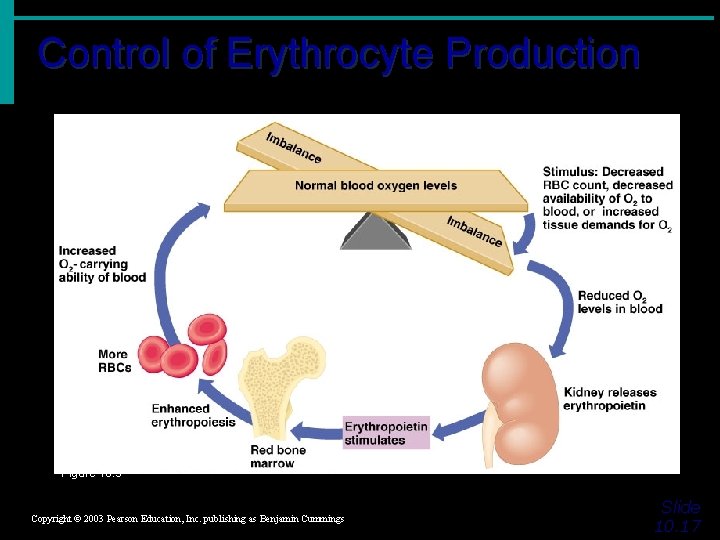
Control of Erythrocyte Production Figure 10. 5 Copyright © 2003 Pearson Education, Inc. publishing as Benjamin Cummings Slide 10. 17
Quick Quiz • Where are blood cells made? • What is a hemocytoblast?
- Slides: 46