
Blog as a Tool to Develop Cultural Awareness
Blog as a Tool to Develop Cultural Awareness in a Medical Spanish Programme Dr Ana Niño and Dr Sandra Torres
RATIONALE • Medicine with Spanish: European Option Programme • Only 2 contact hours a week, hence VLE as blended learning platform • Culture embedded in the curriculum • Part of the students’ independent L learning practice together with self-assessment tests, clinical cases reading, compositions and forum collaboration • Medical Spanish community outside class
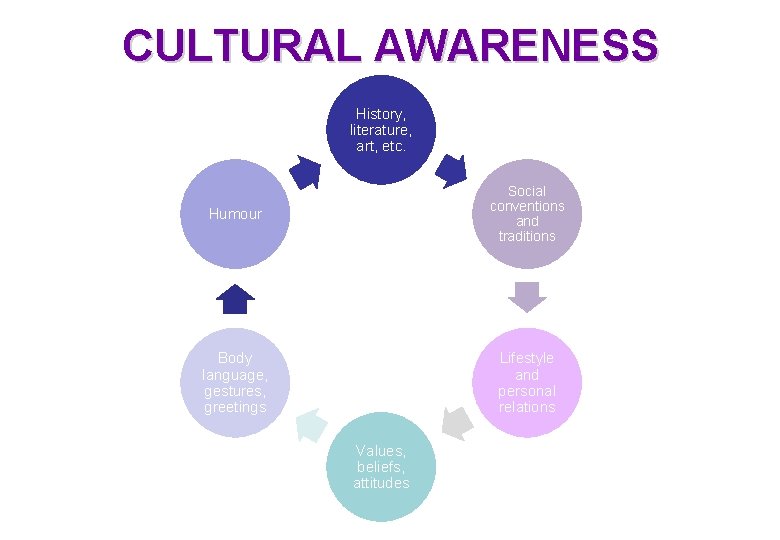
CULTURAL AWARENESS History, literature, art, etc. Humour Social conventions and traditions Body language, gestures, greetings Lifestyle and personal relations Values, beliefs, attitudes
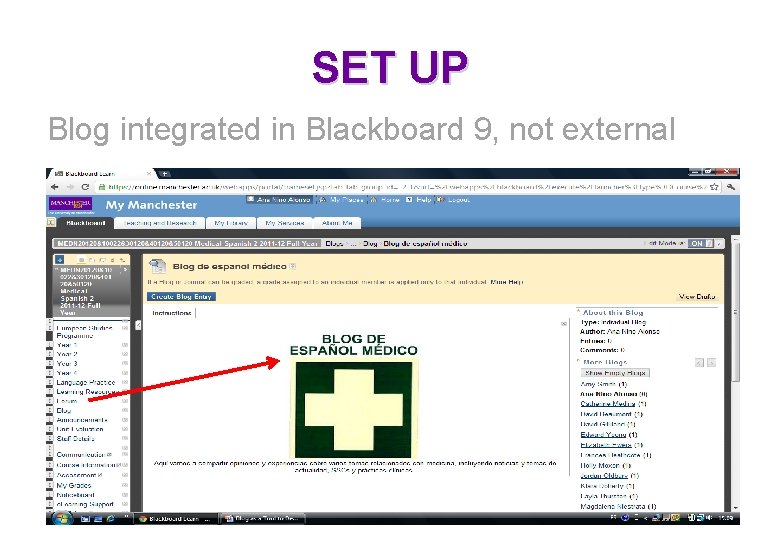
SET UP Blog integrated in Blackboard 9, not external
SET UP • Students are made aware of the pedagogical purpose of using blogs outside class and set their own goals • Tutor makes suggestions of tasks that can be done in the blog as a follow-up of classes or masterclasses • Students are encouraged to work in pairs and comment on their classmates’ entries • Students draft their own tasks, reflect on their own learning and choose their own strategies • Students interact throughout the process • Tutor encourages peer/teacher feedback • They choose their own topics and write one new entry per week
TOPICS • Experiences and reflections on their SSCs and visits to Spanish speaking countries • Experiences about their ward rounds at hospital • Reflections on why they study Medicine and about the specialty they would like to pursue in the future • Food • Various medical topics, including ethical matters
EXAMPLES OF STUDENTS’ ENTRIES • • • Tapas Sexual health My experience in Labour Ward last week The placebo effect SSCs and/or medical experiences abroad Consent, competence and youngsters My experience as an au-pair in Spain Infertility Lumbar puncture Disabled children and education Premature babies Reflections on my future as a doctor
STUDENTS’ COMMENTS: SURVEY RESULTS https: //selectsurveys. humanities. manchester. ac. uk/
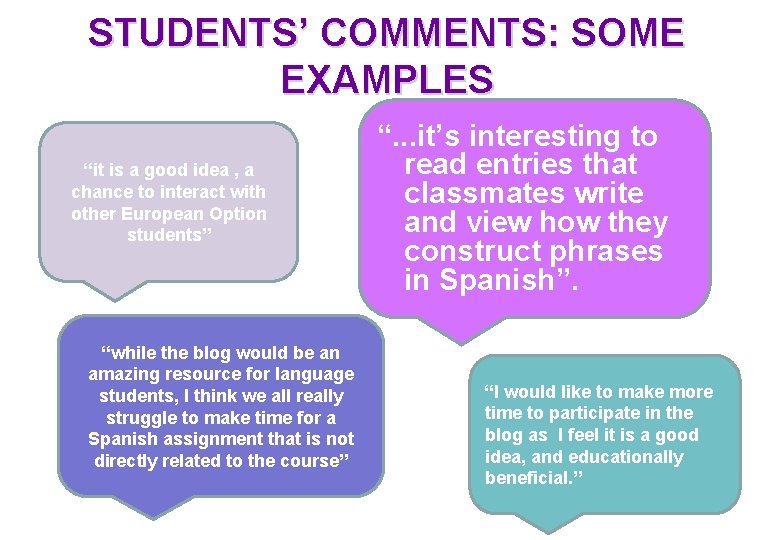
STUDENTS’ COMMENTS: SOME EXAMPLES “it is a good idea , a chance to interact with other European Option students” “while the blog would be an amazing resource for language students, I think we all really struggle to make time for a Spanish assignment that is not directly related to the course” “. . . it’s interesting to read entries that classmates write and view how they construct phrases in Spanish”. “I would like to make more time to participate in the blog as I feel it is a good idea, and educationally beneficial. ”
ADVANTAGES OF BLOG USE IN CLASS • • Encourages autonomy and collaboration Class blog, student-centred Reveals students’ learning style Promotes use of authentic culturally-related sources Encourages learners to be creative and active Develops problem solving skills Helps improve reading writing skills Facilitates the use of multimedia resources
SOME LIMITATIONS • Some learners prefer to be told what they must do • Inaccurate language may occur • Inappropriate use may happen • Public online portfolio seen by all students • Heavy time pressure • Lack of cultural experiences in a Spanish speaking country • Entries appear in reverse chronological order • There is not a topic-based search facility
SOME SUGGESTIONS • Cultural-awareness survey • Medical Ethics Quizz, general TL culture quizz • Subtitling a video on taking a medical history or doing a clinical exam • Students’ individual blogs as a portfolio of medical Spanish learning, including cultural issues • Documentaries and films on medicine and culture that can prompt a follow-up discussion • Invite native health professionals to comment on a particular cultural-related topic of their specialty
SOME IMPORTANT POINTS TO REMEMBER • Language practice (reading and writing) plus culture awareness reflection • Student-centred • Collaborative>authentic interaction • Professionally orientated
Many thanks for your attention! Do you have any questions?
No two languages are ever sufficiently similar to be considered as representing the same social reality. The worlds in which different societies live are distinct, not merely the same world with different labels attached. Edward Sapir: 'Culture, Language and Personality'
- Slides: 15