
Blockchain Practice in Maritime Transport Richard Morton Secretary
Blockchain Practice in Maritime Transport Richard Morton, Secretary General, IPCSA Shipping & Blockchain Seminar 21 st November – Palazzo San Giorgio, Genoa Hosted by Assagenti

Blockchain in Maritime Transport I. IPCSA Bill of Lading Proof of Concept II. Port of Antwerp e. Phyto via Blockchain Proof of Concept III. Challenges of Implementation 2
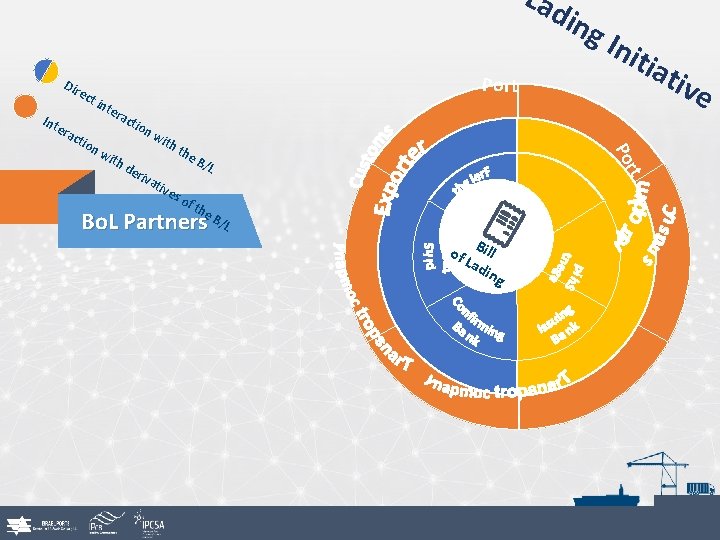
f La Dir ect Int e rac Port int de nw riv ith ati the ves of B/L rt ith ctio the Bo. L Partners B/L e Po tio nw era din g In itia tiv of Bill Lad ing

IPCSA Blockchain Bill of Lading Initiative BC Bo. L High Level Business Flow • Export Country Issue Bo. L Exporter Bo. L Forward Bo. L Approve Bo. L Endorse Bo. L PCS 1 Users Interact through Web Application Submit Bo. L Issue Delivery Order Ship agent Advising bank Validators Smart Contract Have a network node Issuing bank PCS 2 Importer DO Import Country 4 Ship agent
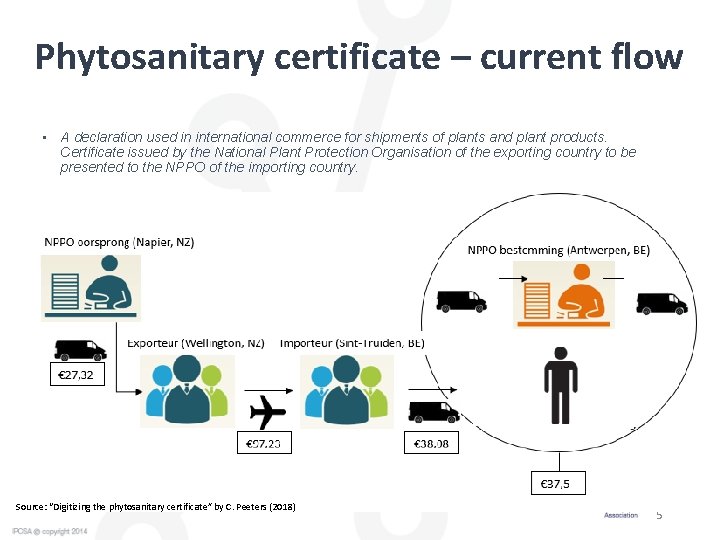
Phytosanitary certificate – current flow • A declaration used in international commerce for shipments of plants and plant products. Certificate issued by the National Plant Protection Organisation of the exporting country to be presented to the NPPO of the importing country. Source: “Digitizing the phytosanitary certificate” by C. Peeters (2018) 5
e. Phyto exchange via Blockchain • Proof of Concept was set up for a specific apple trade between New Zealand (Port of Napier) and the Port of Antwerp • Po. C builds further upon Smart Contract building blocks, on top of the basic blockchain technology • Executed during June - August 2018 (launched on June 14 th) 6

Pilot case – blockchain infrastructure (1) 7
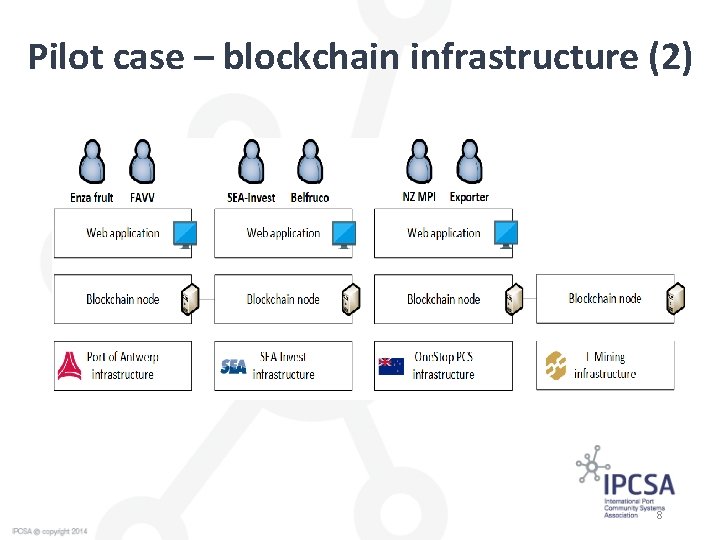
Pilot case – blockchain infrastructure (2) 8
Challenges of Implementation Technology Ø Technology maturity - Long transaction confirmation time (Affected by parameters such as Smart contract complexity, validators number, the technology used, etc) Ø Lack of expert developers with work experience in several projects already working Ø Interoperability of Blockchain networks- number of coexisting solutions
Challenges of Implementation Regulations/Standards • Legal recognition – carriers, Insurance companies, banks and countries are required to adopt new regulations. • Data ownership, personal privacy, general data protection regulation. • Missing open standards - Data Definitions should comply with currently used international standards (maritime industry is UN/EDIFACT and the Core Component Library of UN/CEFACT). • Multiple players with different technology adoption.
Challenges of Implementation Other obstacles • Need to change business processes • Creation of Eco. System on both sides of the ocean • Using blockchain only when needed
Opportunities of Implementation • increases transparency , availability and reliability for all participants. (Enables traceability and preventing manipulation through the public auditability of the system, Sharing an updated information (container loading, verifies a vessel has actually departed) • More efficient transfer of digital assets (Blockchain digital transfer of assets could provide the benefits of quick transfer, and security to both parties) • Increased security
Opportunities of Implementation • Automation of contractual obligations through Smart Contracts (The exchange of goods against payment process is handled through different financial and physical flows. These two flows can be synchronized if both assets exist in a digital form. Swapping of assets can happen through smart contracts) • Time and cost reductions • Using blockchain only when needed
Richard Morton, IPCSA, Secretary General E: richard. morton@ipcsa. international Associate Members
- Slides: 14