
Block and Lock using gene silencing Tony Kelleher
Block and Lock using gene silencing Tony Kelleher | 25 th July, 2018
Block and Lock using Gene Silencing: IAS 2018 Conflicts of interest • Inventor on patents regarding Promoter targeted si. RNAs • Calimmune /CSL has provided one of the retroviral backbones for delivery and expression of sh/si. RNAs used in the SCID Hu Mouse experiments Acknowledgments • Patients from whom the primary viral isolates have been characterised that provide the Env and Vpx constructs that are detailed in the second half of the talk
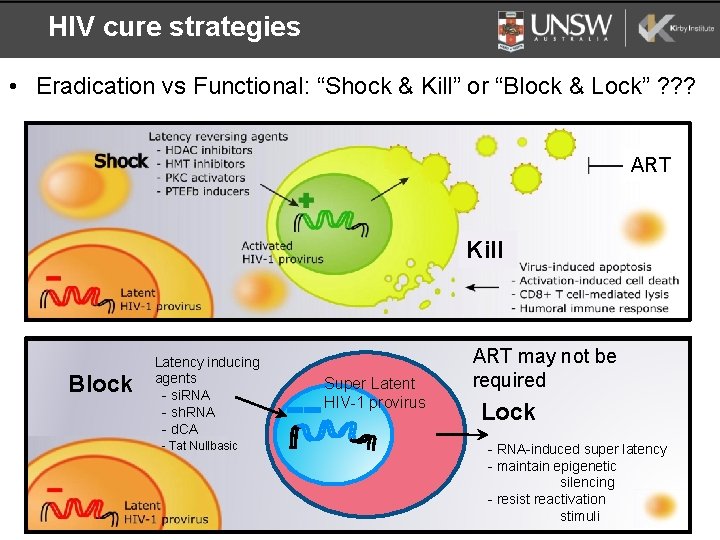
HIV cure strategies • Eradication vs Functional: “Shock & Kill” or “Block & Lock” ? ? ? ART Kill Block Latency inducing agents - si. RNA - sh. RNA - d. CA - Tat Nullbasic Super Latent HIV-1 provirus ART may not be required Lock - RNA-induced super latency - maintain epigenetic silencing - resist reactivation stimuli
Block and Lock using Gene Silencing: IAS 2018 The virus in the reservoir is in a Latent state Post-integration Latency DNA form of the Virus is not transcribing: not making RNA – gene expression is driven off promoters: in HIV this is the 5’LTR Mechanisms of latency: – Integration into silent genes • HIV tends to integrate into active genes • active genes may become silent as cell differentiates or becomes resting – Epigenetic silencing • change in histone architecture of the 5’LTR: deacetylation and methylation of histones • sequestration of host (Transcription Factors) and/or viral factors (Tat) that regulate viral transcription – viral promoter competition with host gene – defective virus • may not be replication competent, unable to transcribe 4
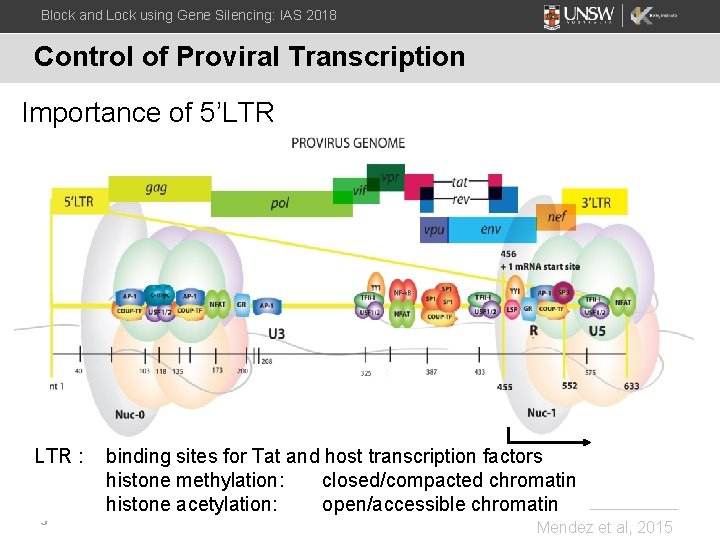
Block and Lock using Gene Silencing: IAS 2018 Control of Proviral Transcription Importance of 5’LTR : 5 binding sites for Tat and host transcription factors histone methylation: closed/compacted chromatin histone acetylation: open/accessible chromatin Mendez et al, 2015
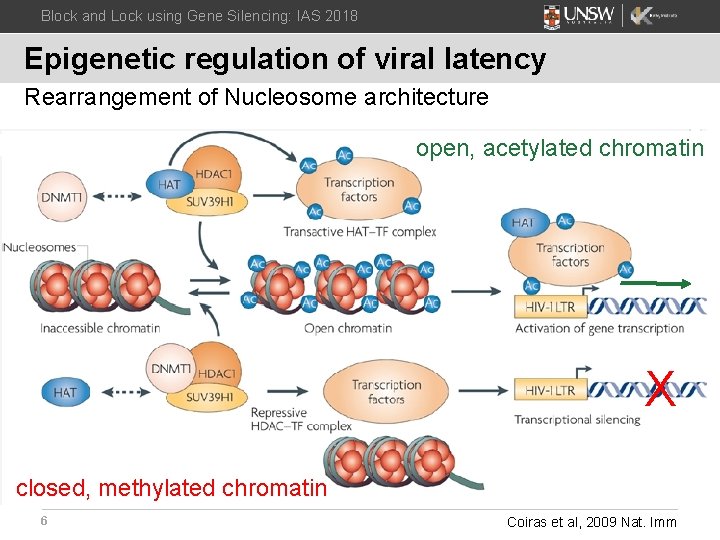
Block and Lock using Gene Silencing: IAS 2018 Epigenetic regulation of viral latency Rearrangement of Nucleosome architecture open, acetylated chromatin X closed, methylated chromatin 6 Coiras et al, 2009 Nat. Imm
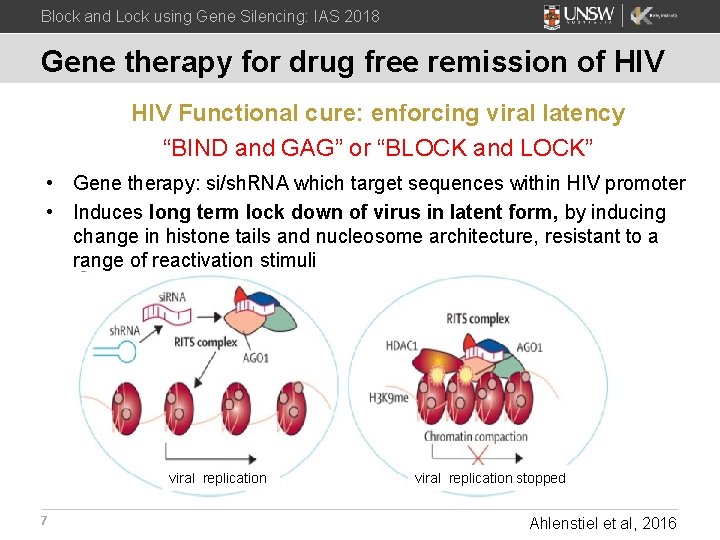
Block and Lock using Gene Silencing: IAS 2018 Gene therapy for drug free remission of HIV Functional cure: enforcing viral latency “BIND and GAG” or “BLOCK and LOCK” • Gene therapy: si/sh. RNA which target sequences within HIV promoter • Induces long term lock down of virus in latent form, by inducing change in histone tails and nucleosome architecture, resistant to a range of reactivation stimuli viral replication 7 viral replication stopped Ahlenstiel et al, 2016
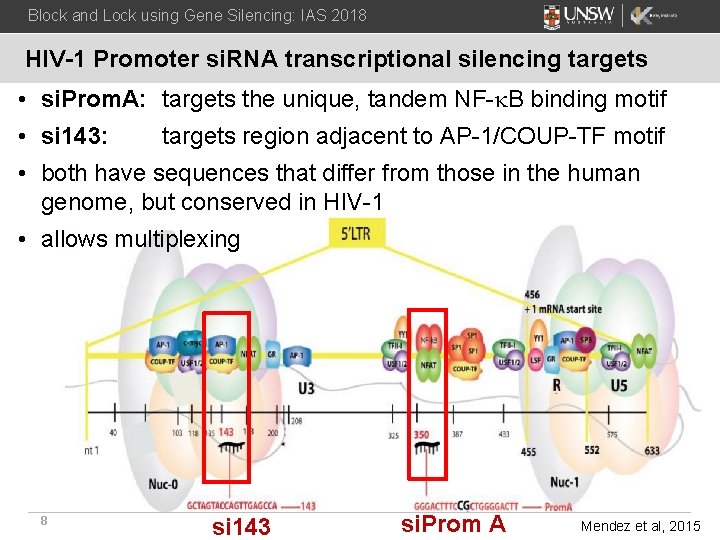
Block and Lock using Gene Silencing: IAS 2018 HIV-1 Promoter si. RNA transcriptional silencing targets • si. Prom. A: targets the unique, tandem NF-k. B binding motif • si 143: targets region adjacent to AP-1/COUP-TF motif • both have sequences that differ from those in the human genome, but conserved in HIV-1 • allows multiplexing H 3 K 9 Ac 8 H 3 K 9 Ac si 143 si. Prom A Mendez et al, 2015
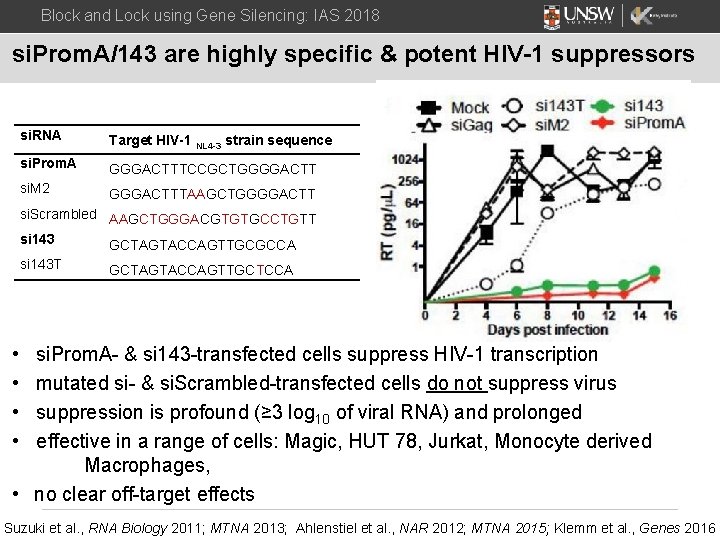
Block and Lock using Gene Silencing: IAS 2018 si. Prom. A/143 are highly specific & potent HIV-1 suppressors si. RNA Target HIV-1 NL 4 -3 strain sequence si. Prom. A GGGACTTTCCGCTGGGGACTT si. M 2 GGGACTTTAAGCTGGGGACTT si. Scrambled AAGCTGGGACGTGTGCCTGTT si 143 GCTAGTACCAGTTGCGCCA si 143 T GCTAGTACCAGTTGCTCCA • • si. Prom. A- & si 143 -transfected cells suppress HIV-1 transcription mutated si- & si. Scrambled-transfected cells do not suppress virus suppression is profound (≥ 3 log 10 of viral RNA) and prolonged effective in a range of cells: Magic, HUT 78, Jurkat, Monocyte derived Macrophages, • no clear off-target effects Suzuki et al. , RNA Biology 2011; MTNA 2013; Ahlenstiel et al. , NAR 2012; MTNA 2015; Klemm et al. , Genes 2016
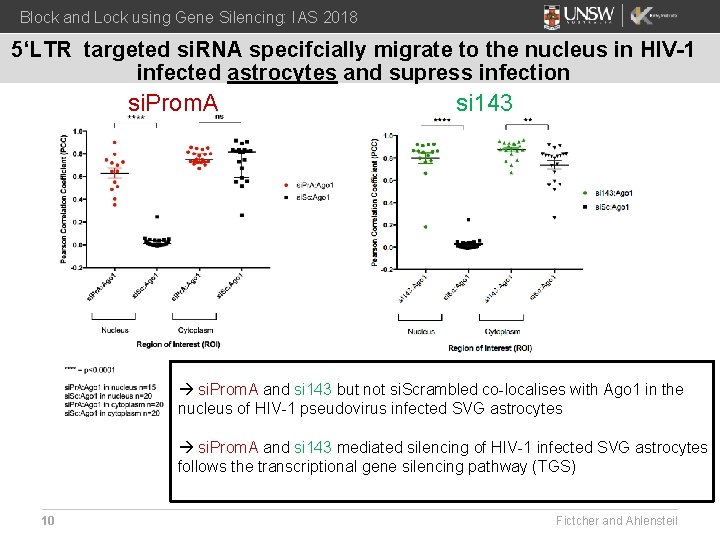
Block and Lock using Gene Silencing: IAS 2018 5‘LTR targeted si. RNA specifcially migrate to the nucleus in HIV-1 infected astrocytes and supress infection si. Prom. A si 143 si. Prom. A and si 143 but not si. Scrambled co-localises with Ago 1 in the nucleus of HIV-1 pseudovirus infected SVG astrocytes si. Prom. A and si 143 mediated silencing of HIV-1 infected SVG astrocytes follows the transcriptional gene silencing pathway (TGS) 10 Fictcher and Ahlensteil
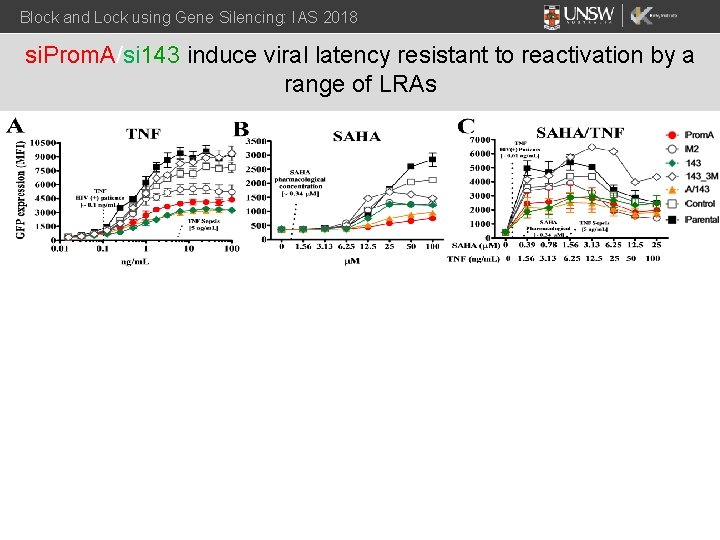
Block and Lock using Gene Silencing: IAS 2018 si. Prom. A/si 143 induce viral latency resistant to reactivation by a range of LRAs + • sh. Prom. A, sh 143 and dual-transduced J-lat 9. 2 cells resist reactivation induced by a panel of LRAs • correlates with maintenance of heterochromatin epigenetic profile
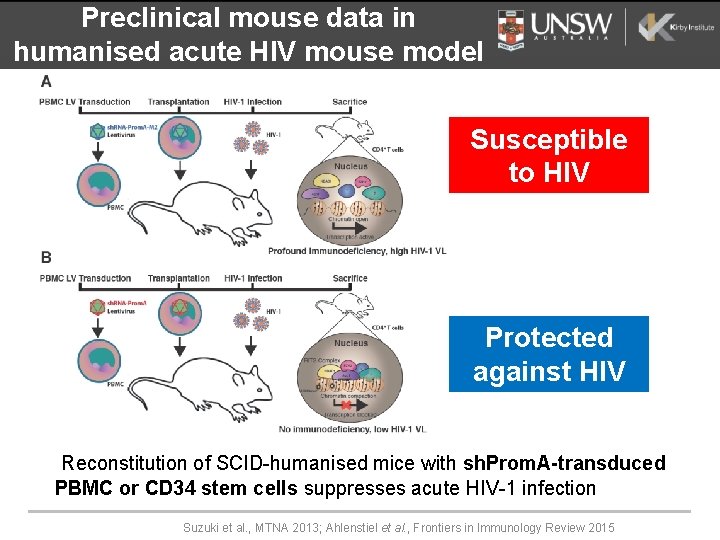
Preclinical mouse data in humanised acute HIV mouse model Susceptible to HIV Protected against HIV Reconstitution of SCID-humanised mice with sh. Prom. A-transduced PBMC or CD 34 stem cells suppresses acute HIV-1 infection Suzuki et al. , MTNA 2013; Ahlenstiel et al. , Frontiers in Immunology Review 2015
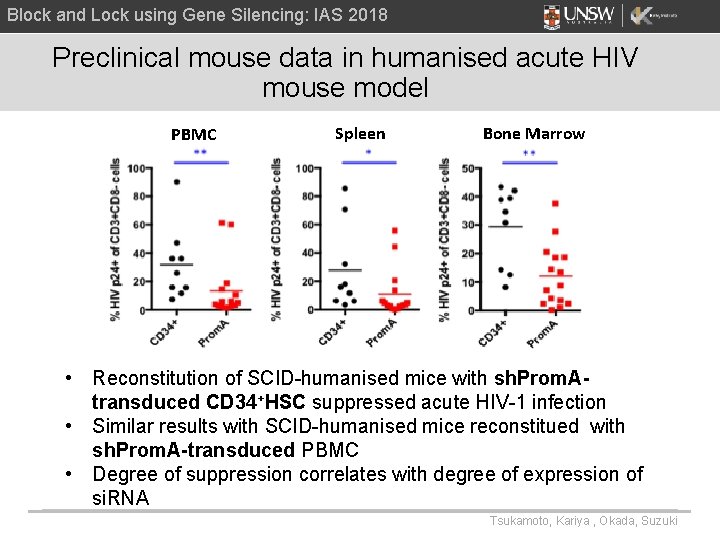
Block and Lock using Gene Silencing: IAS 2018 Preclinical mouse data in humanised acute HIV mouse model PBMC Spleen Bone Marrow • Reconstitution of SCID-humanised mice with sh. Prom. Atransduced CD 34+HSC suppressed acute HIV-1 infection • Similar results with SCID-humanised mice reconstitued with sh. Prom. A-transduced PBMC • Degree of suppression correlates with degree of expression of si. RNA Tsukamoto, Kariya , Okada, Suzuki
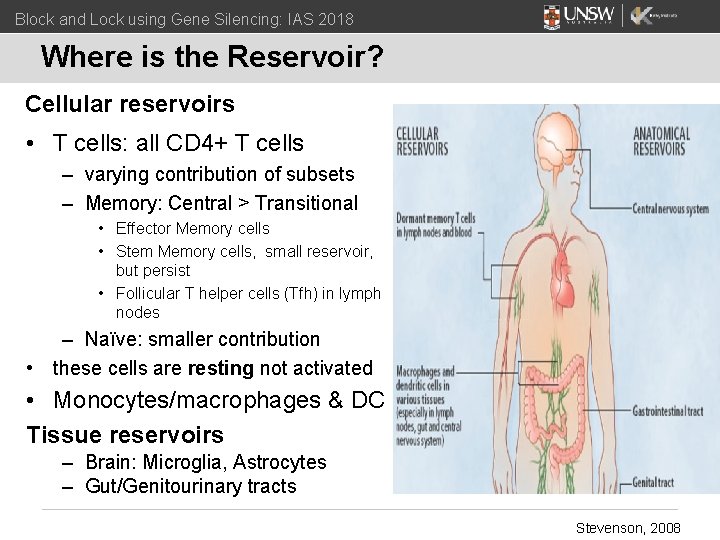
Block and Lock using Gene Silencing: IAS 2018 Where is the Reservoir? Cellular reservoirs • T cells: all CD 4+ T cells – varying contribution of subsets – Memory: Central > Transitional • Effector Memory cells • Stem Memory cells, small reservoir, but persist • Follicular T helper cells (Tfh) in lymph nodes – Naïve: smaller contribution • these cells are resting not activated • Monocytes/macrophages & DC Tissue reservoirs – Brain: Microglia, Astrocytes – Gut/Genitourinary tracts Stevenson, 2008
Nanoparticle delivery of HIV gene therapy: 2018 Gene therapy in HIV infection requires effcient delivery to the reservoir • • • Manipulation of the reservoir requires delivery of genes into resting T cells Resting T cells have low endocytosis and do not carry VSV-g receptor Highly challenging: • • • VSV-g pseudotyped retroviral delivery is limited, needs activation of cells or ways of avoiding viral restriction factors must be done ex vivo, complex expensive GMP procedures needs to deliver gene therapy to cells without clear marker of their being latently infected need to access small, difficult to access and find reservoir Potential solutions: • • 15 Retroviral delivery: build new retrovirus expressing broadly tropic HIV-1 gp 120 instead of VSV-g and HIV-2/SIV Vpx Use nanoparticles • allows multiplexing • may allow in vivo rather than ex vivo treatment, with bulk synthesis • potentially better safety profile
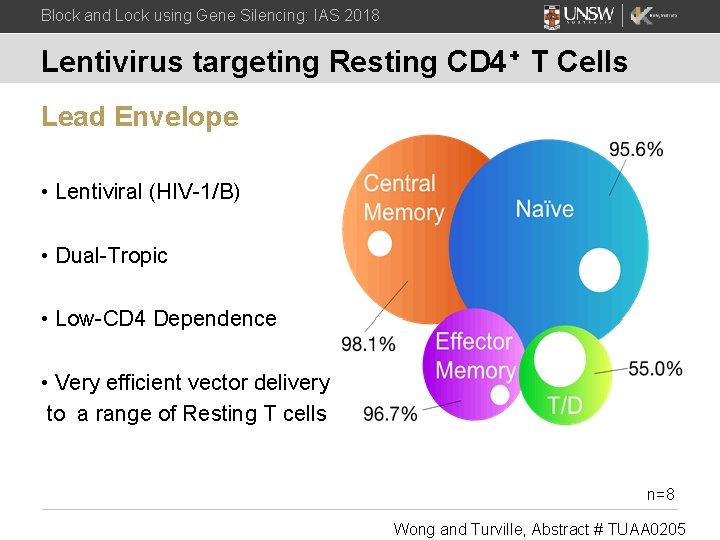
Block and Lock using Gene Silencing: IAS 2018 Lentivirus targeting Resting CD 4⁺ T Cells Lead Envelope • Lentiviral (HIV-1/B) • Dual-Tropic • Low-CD 4 Dependence • Very efficient vector delivery to a range of Resting T cells n=8 Wong and Turville, Abstract # TUAA 0205
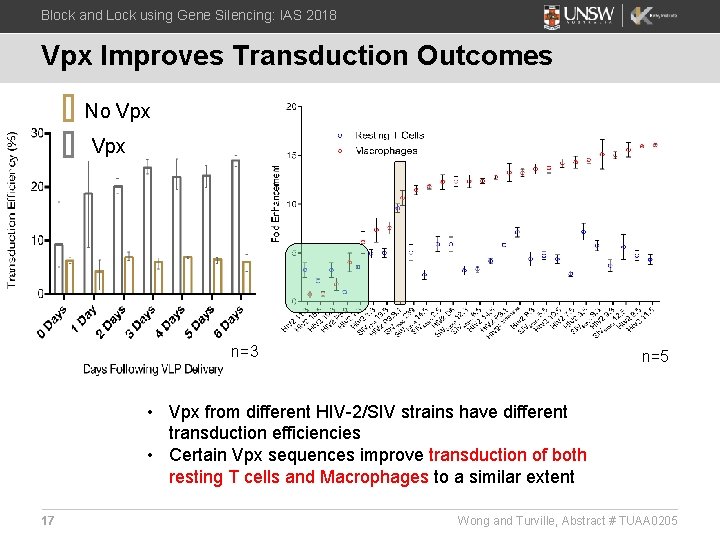
Block and Lock using Gene Silencing: IAS 2018 Vpx Improves Transduction Outcomes No Vpx n=3 n=5 • Vpx from different HIV-2/SIV strains have different transduction efficiencies • Certain Vpx sequences improve transduction of both resting T cells and Macrophages to a similar extent 17 Wong and Turville, Abstract # TUAA 0205
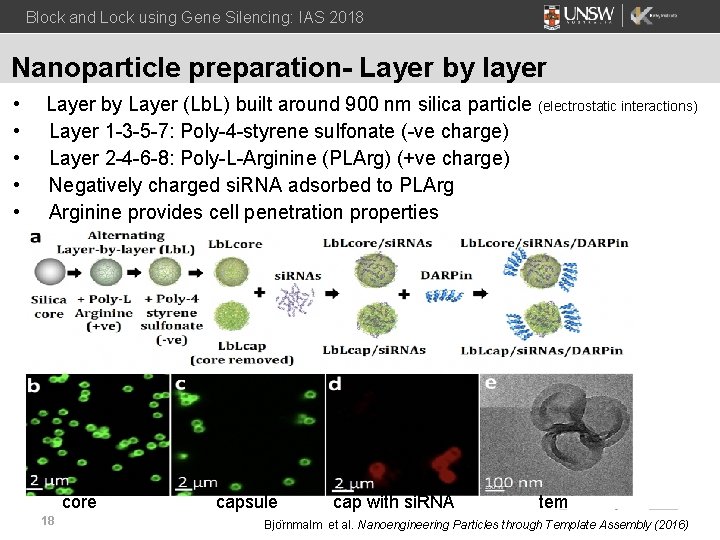
Block and Lock using Gene Silencing: IAS 2018 Nanoparticle preparation- Layer by layer • • • Layer by Layer (Lb. L) built around 900 nm silica particle (electrostatic interactions) Layer 1 -3 -5 -7: Poly-4 -styrene sulfonate (-ve charge) Layer 2 -4 -6 -8: Poly-L-Arginine (PLArg) (+ve charge) Negatively charged si. RNA adsorbed to PLArg Arginine provides cell penetration properties core 18 capsule cap with si. RNA tem Bjo rnmalm et al. Nanoengineering Particles through Template Assembly (2016)
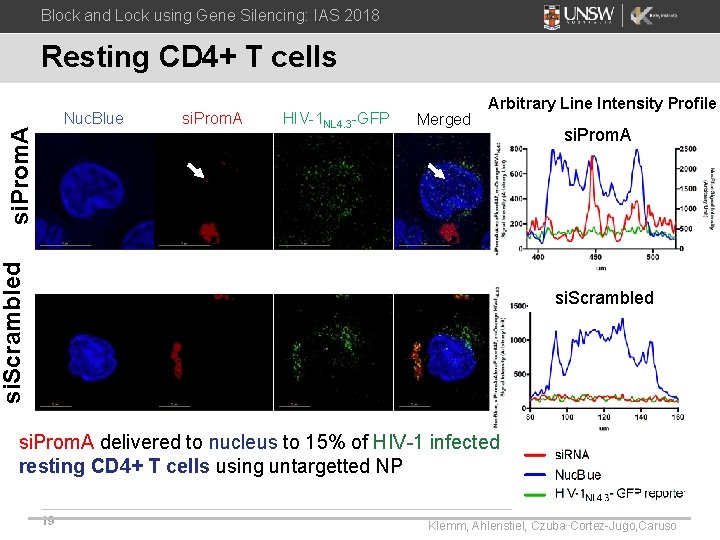
Block and Lock using Gene Silencing: IAS 2018 Resting CD 4+ T cells si. Prom. A HIV-1 NL 4. 3 -GFP Merged si. Scrambled si. Prom. A Nuc. Blue Arbitrary Line Intensity Profile si. Prom. A si. Scrambled si. Prom. A delivered to nucleus to 15% of HIV-1 infected resting CD 4+ T cells using untargetted NP 19 Klemm, Ahlenstiel, Czuba, , Cortez-Jugo, Caruso

Block and Lock using Gene Silencing: IAS 2018 Conclusions • si/sh. RNAs targeting conserved regions of the HIV-1 promoter induce prolonged, profound & specific silencing BLOCK – in a range of cell types LOCK - • • induced latency is resistant to T cell activation: Superlatency Any gene cargo needs to to be efficiently delivered to the reservoir especially resting T cells • • DELIVER 20 T cells MDM Astrocytes existing approaches are inefficient: we have chosen to Modify The Vector, Not The Cell Promising results from – engineered retrovirus carrying specific env (>80% of untouched CD 4⁺ T cells) and Vpx, 40%+ transduction efficiencies observed using lower MOI for transduction (MOI=0. 04, important for upscaling) – LBL Nanoparticles: may have advantages for si. RNA multiplexing and use for direct in vivo delivery
Block and Lock using Gene Silencing: IAS 2018 Acknowledgements Kirby Institute, UNSW Vera Klemm Chantelle Ahlenstiel Christina Fitcher Scott Ledger Kazuo Suzuki Andrew Wong Stuart Turville Anupriya Aggarwal Bailey Hao Hugh Mc. Rae Orvin Atthi T. H. Chan School of Public Health, Harvard University Phyllis Kanki Donald Hamel Bobby Brooke Herrera Funding: Chemical Engineering, Melbourne University Ewa Czuba, Christina Cortez-Jugo Frank Caruso Burnet Institute, Monash University Lachlan Gray Royal Melbourne Institute of Technology (RMIT) Paul Gorry Melissa Churchill Kumamato University Tetsuo Tsukamoto Seiji Okada NHMRC (Australia): Program Grant: NP work Project Grants: development of si. RNAs 21
- Slides: 21