
BLOCK 9 REPRODUCTIVE SYSTEM INTEGUMENTARY SYSTEM MUSCLE MOVEMENT
BLOCK # 9 • REPRODUCTIVE SYSTEM • INTEGUMENTARY SYSTEM • MUSCLE / MOVEMENT REVIEW (this will be on every test)
Reproduction Unit
READING: • Please read pages: 238 -241 in your blue health science books

• Intro video on website
Appropriate Language & Myths about Sexuality In your packets: With your study buddy answer the following
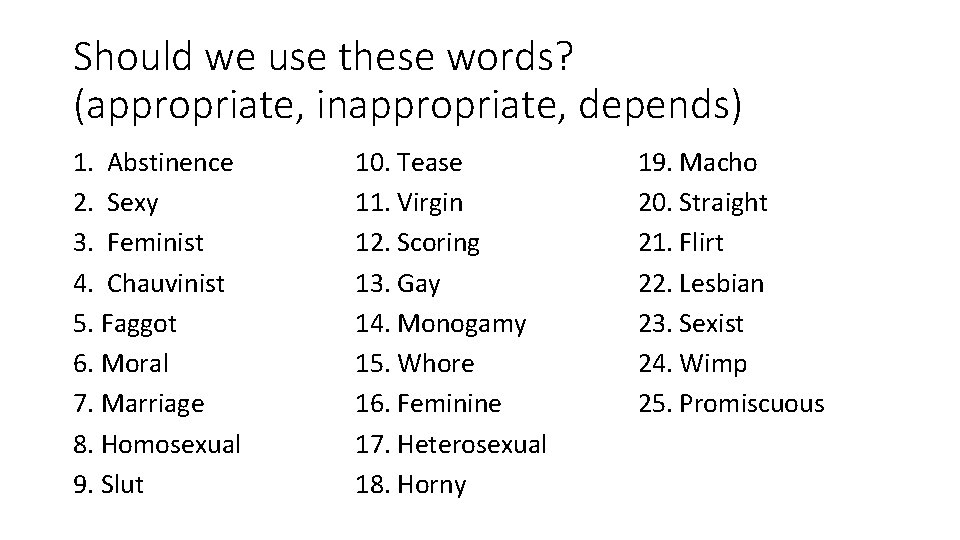
Should we use these words? (appropriate, inappropriate, depends) 1. Abstinence 2. Sexy 3. Feminist 4. Chauvinist 5. Faggot 6. Moral 7. Marriage 8. Homosexual 9. Slut 10. Tease 11. Virgin 12. Scoring 13. Gay 14. Monogamy 15. Whore 16. Feminine 17. Heterosexual 18. Horny 19. Macho 20. Straight 21. Flirt 22. Lesbian 23. Sexist 24. Wimp 25. Promiscuous
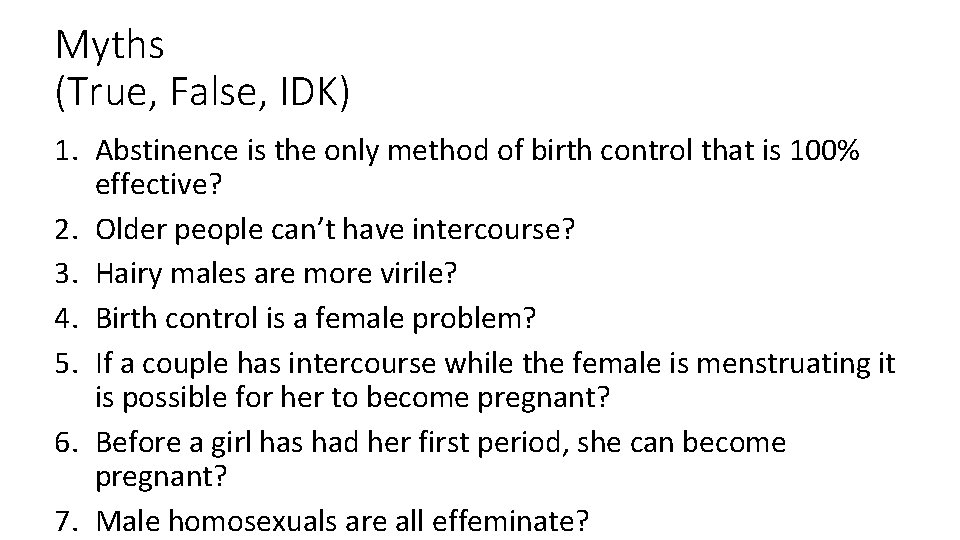
Myths (True, False, IDK) 1. Abstinence is the only method of birth control that is 100% effective? 2. Older people can’t have intercourse? 3. Hairy males are more virile? 4. Birth control is a female problem? 5. If a couple has intercourse while the female is menstruating it is possible for her to become pregnant? 6. Before a girl has had her first period, she can become pregnant? 7. Male homosexuals are all effeminate?
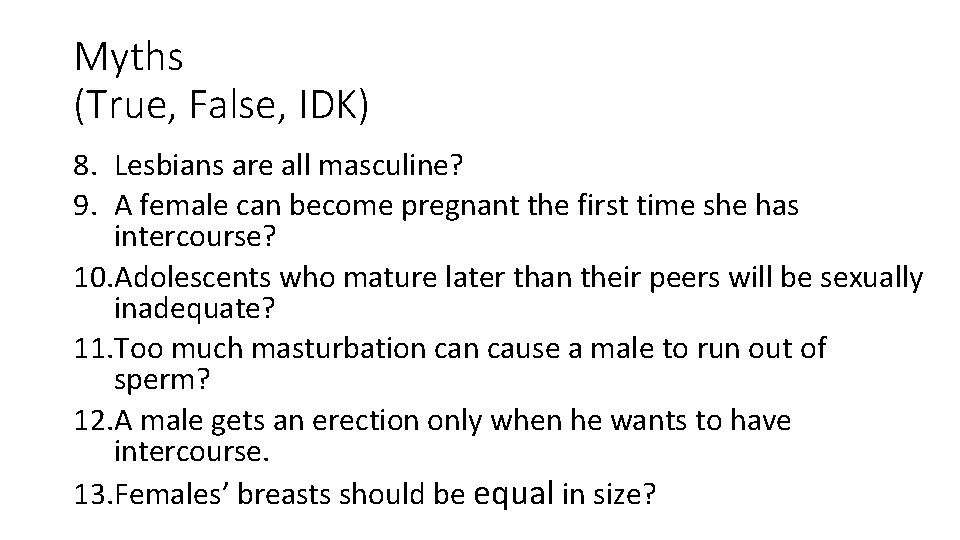
Myths (True, False, IDK) 8. Lesbians are all masculine? 9. A female can become pregnant the first time she has intercourse? 10. Adolescents who mature later than their peers will be sexually inadequate? 11. Too much masturbation cause a male to run out of sperm? 12. A male gets an erection only when he wants to have intercourse. 13. Females’ breasts should be equal in size?
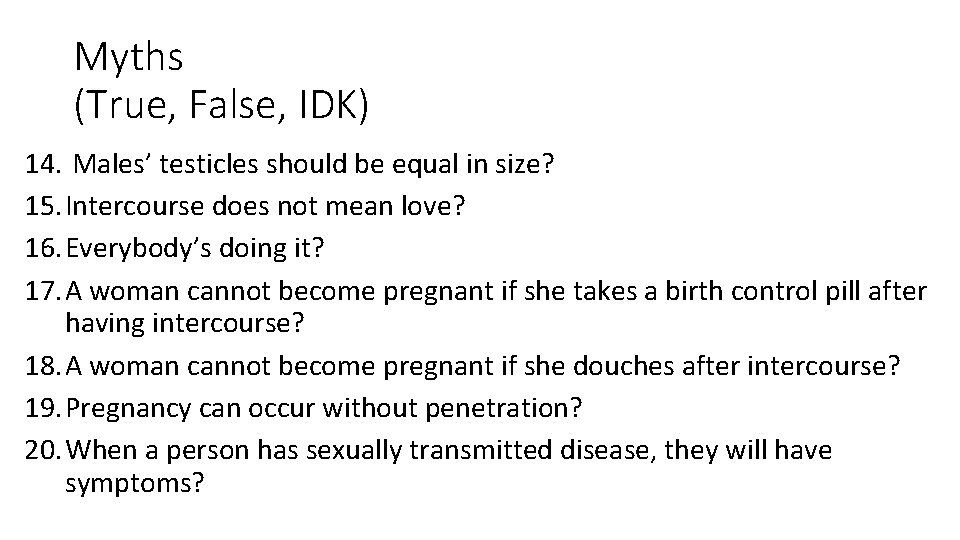
Myths (True, False, IDK) 14. Males’ testicles should be equal in size? 15. Intercourse does not mean love? 16. Everybody’s doing it? 17. A woman cannot become pregnant if she takes a birth control pill after having intercourse? 18. A woman cannot become pregnant if she douches after intercourse? 19. Pregnancy can occur without penetration? 20. When a person has sexually transmitted disease, they will have symptoms?
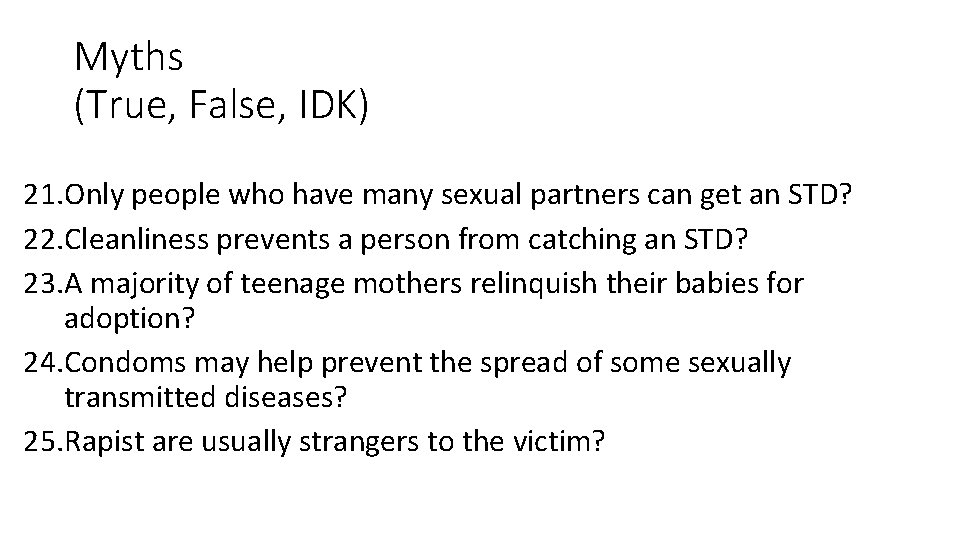
Myths (True, False, IDK) 21. Only people who have many sexual partners can get an STD? 22. Cleanliness prevents a person from catching an STD? 23. A majority of teenage mothers relinquish their babies for adoption? 24. Condoms may help prevent the spread of some sexually transmitted diseases? 25. Rapist are usually strangers to the victim?
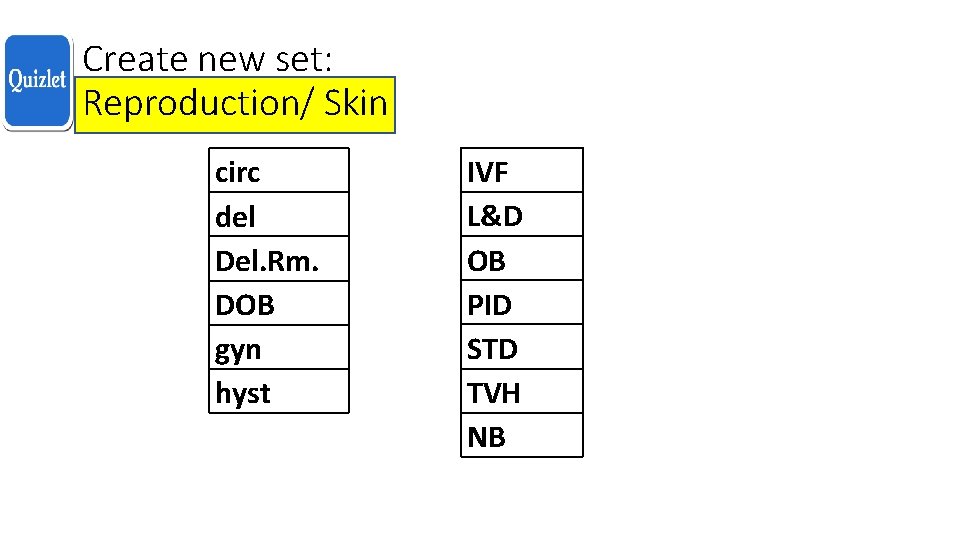
Create new set: Reproduction/ Skin circ del Del. Rm. DOB gyn hyst IVF L&D OB PID STD TVH NB
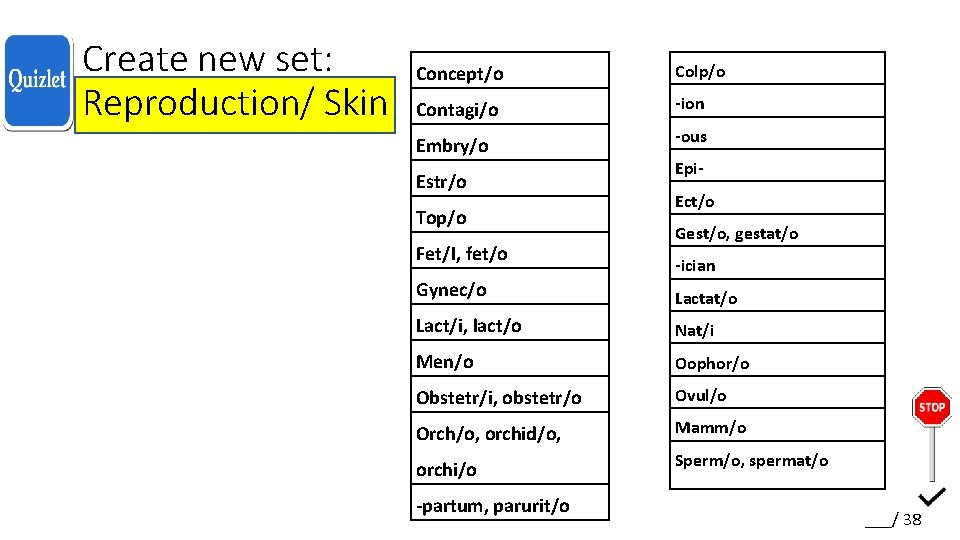
Create new set: Reproduction/ Skin Concept/o Colp/o Contagi/o -ion Embry/o -ous Estr/o Top/o Fet/I, fet/o Epi. Ect/o Gest/o, gestat/o -ician Gynec/o Lactat/o Lact/i, lact/o Nat/i Men/o Oophor/o Obstetr/i, obstetr/o Ovul/o Orch/o, orchid/o, Mamm/o orchi/o Sperm/o, spermat/o -partum, parurit/o ___/ 38
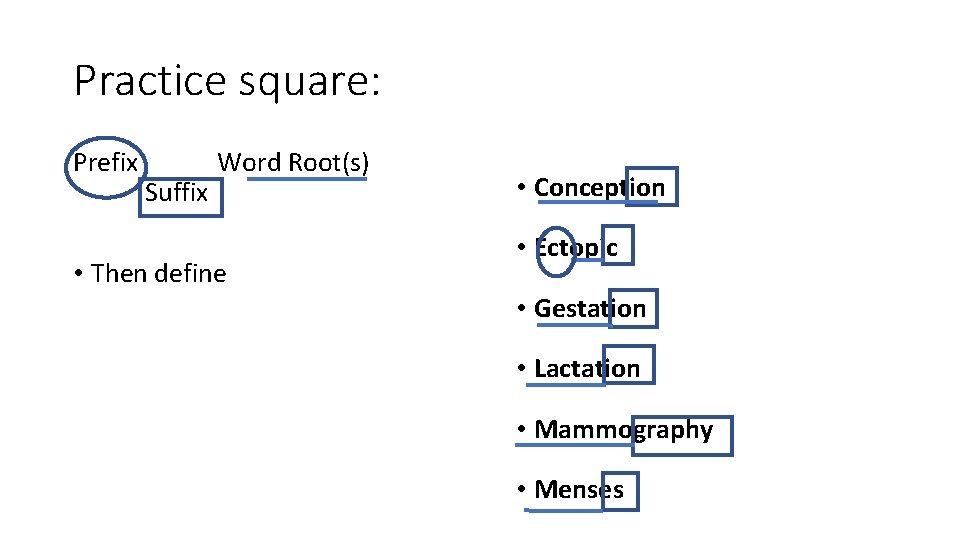
Practice square: Prefix Suffix Word Root(s) • Then define • Conception • Ectopic • Gestation • Lactation • Mammography • Menses
Human Sexuality Vocab We will do together
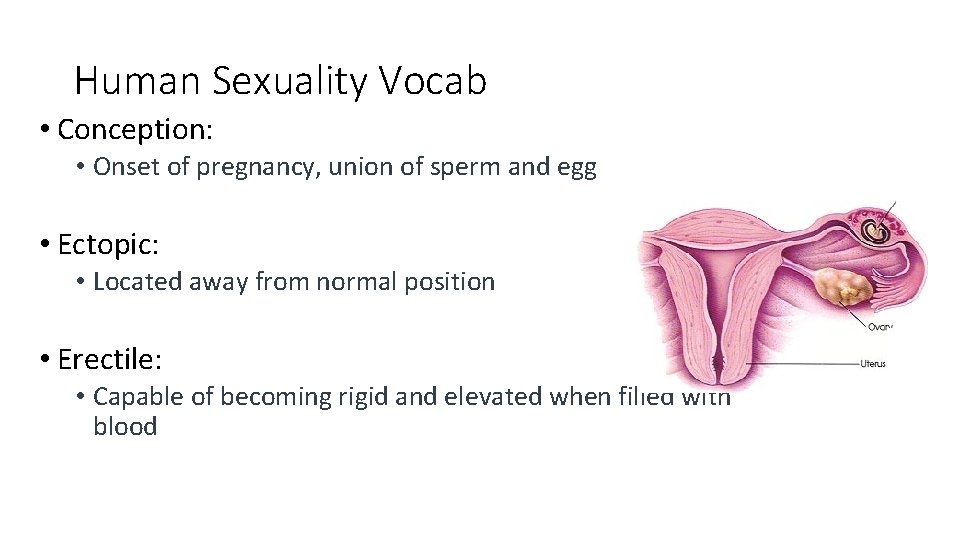
Human Sexuality Vocab • Conception: • Onset of pregnancy, union of sperm and egg • Ectopic: • Located away from normal position • Erectile: • Capable of becoming rigid and elevated when filled with blood
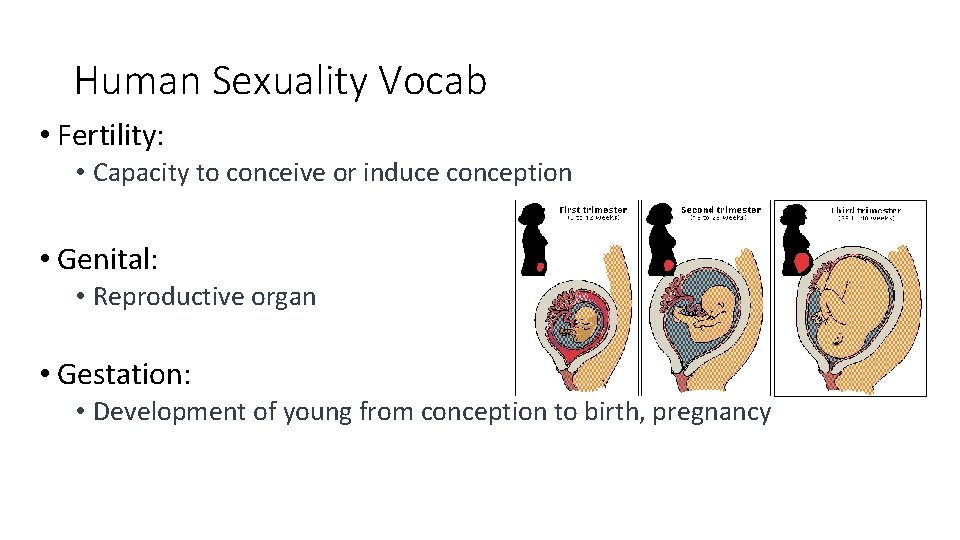
Human Sexuality Vocab • Fertility: • Capacity to conceive or induce conception • Genital: • Reproductive organ • Gestation: • Development of young from conception to birth, pregnancy
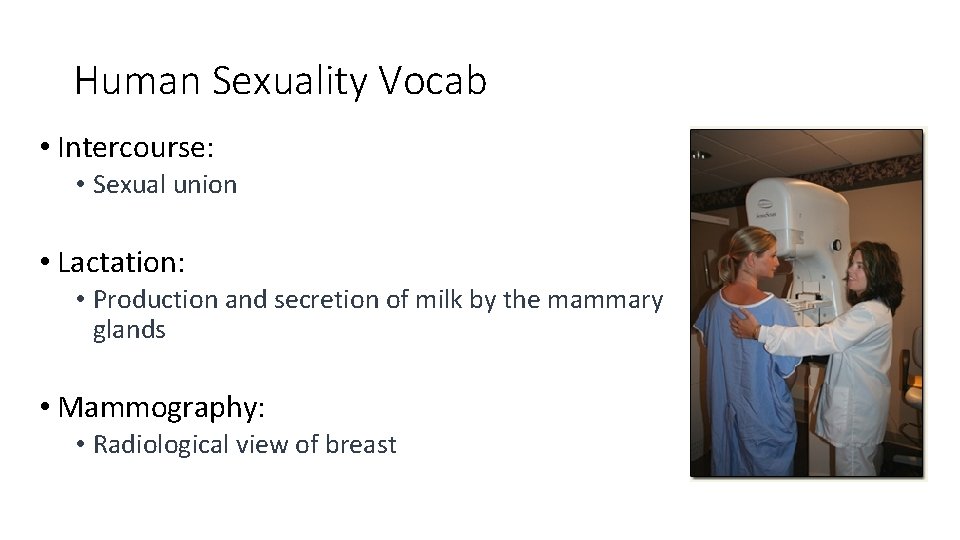
Human Sexuality Vocab • Intercourse: • Sexual union • Lactation: • Production and secretion of milk by the mammary glands • Mammography: • Radiological view of breast
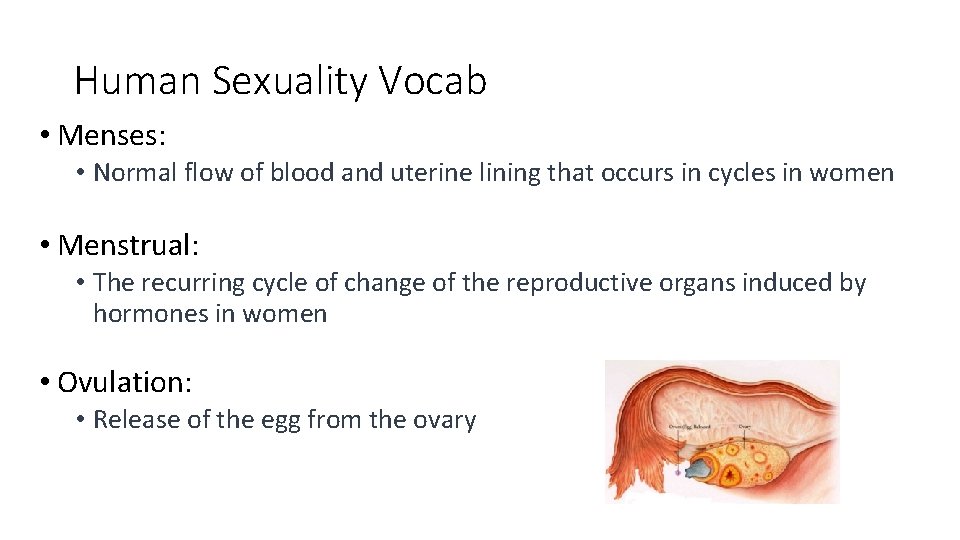
Human Sexuality Vocab • Menses: • Normal flow of blood and uterine lining that occurs in cycles in women • Menstrual: • The recurring cycle of change of the reproductive organs induced by hormones in women • Ovulation: • Release of the egg from the ovary
Human Sexuality Vocab • Sterile: • Unable to produce offspring • Stillborn: • Born dead
VOCAB CHALLENGE • With your neighbor • Try to match the word and definitions

QUESTIONS? ? ? • Everyone will write SOMETHING on your scratch paper …. – Ask a question! – Suggest a song for MY playlist…. something that you think that I would enjoy – Wish me a happy day

VOCAB REVIEW: VERBALLY WITH NEIGHBORS: CAN USE NOTES
BELL RINGER • Sperm Bell Ringer: on website, please read

MALE / FEMALE PACKETS
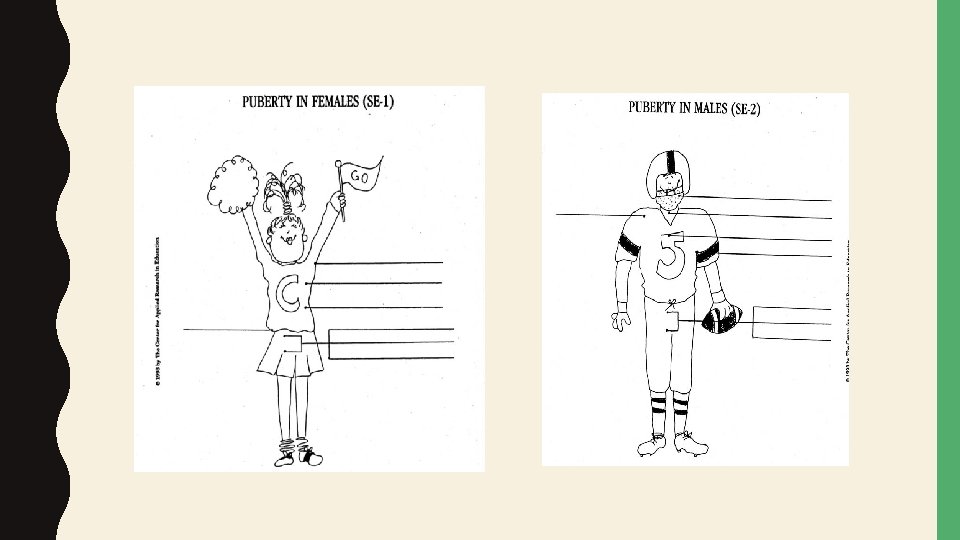
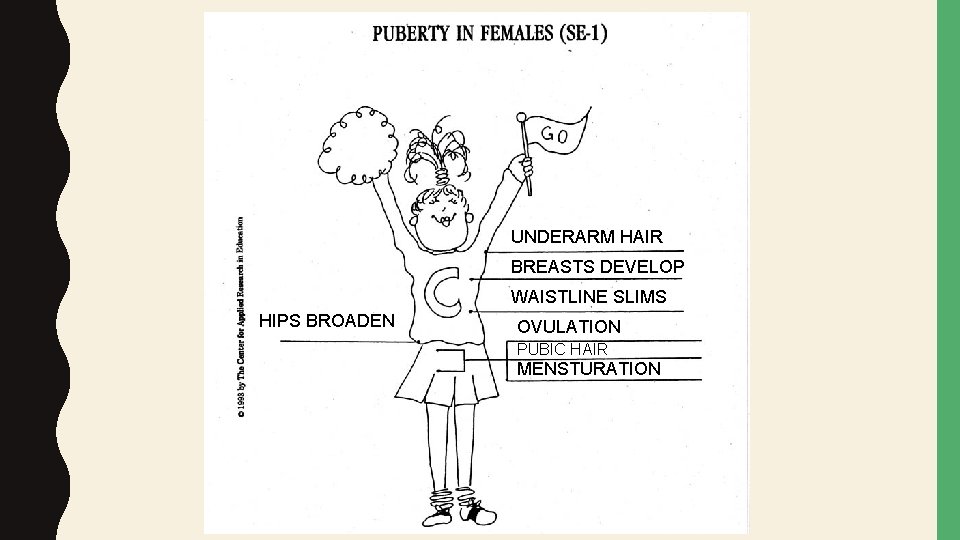
UNDERARM HAIR BREASTS DEVELOP WAISTLINE SLIMS HIPS BROADEN OVULATION PUBIC HAIR MENSTURATION
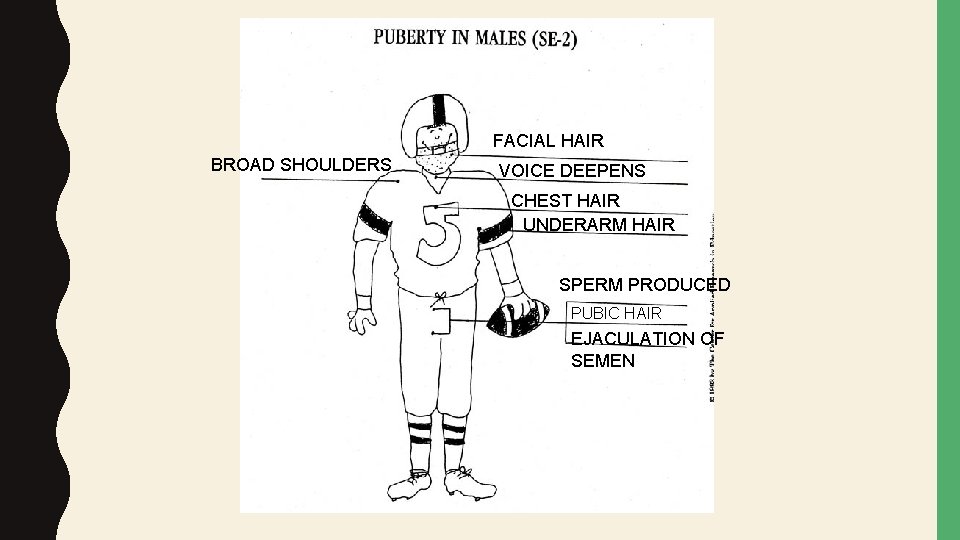
FACIAL HAIR BROAD SHOULDERS VOICE DEEPENS CHEST HAIR UNDERARM HAIR SPERM PRODUCED PUBIC HAIR EJACULATION OF SEMEN
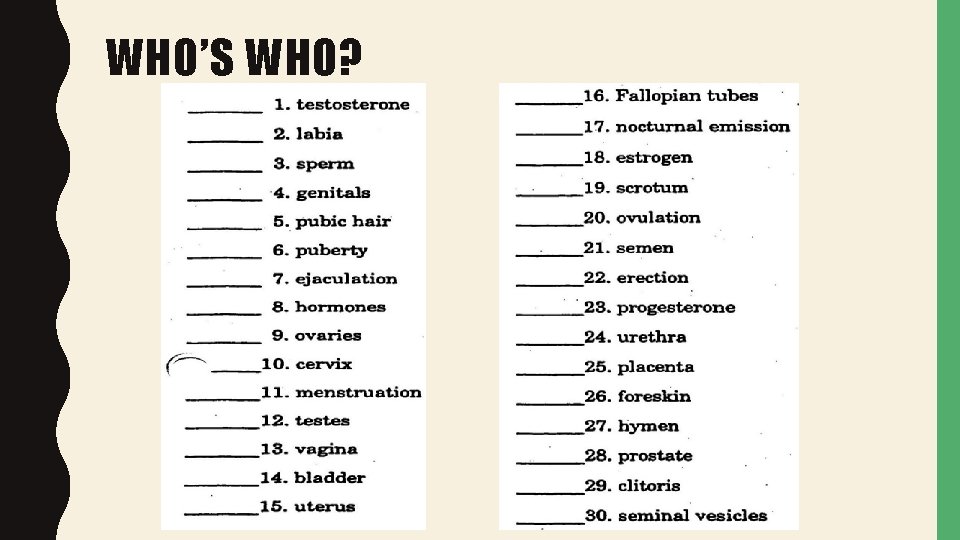
WHO’S WHO?
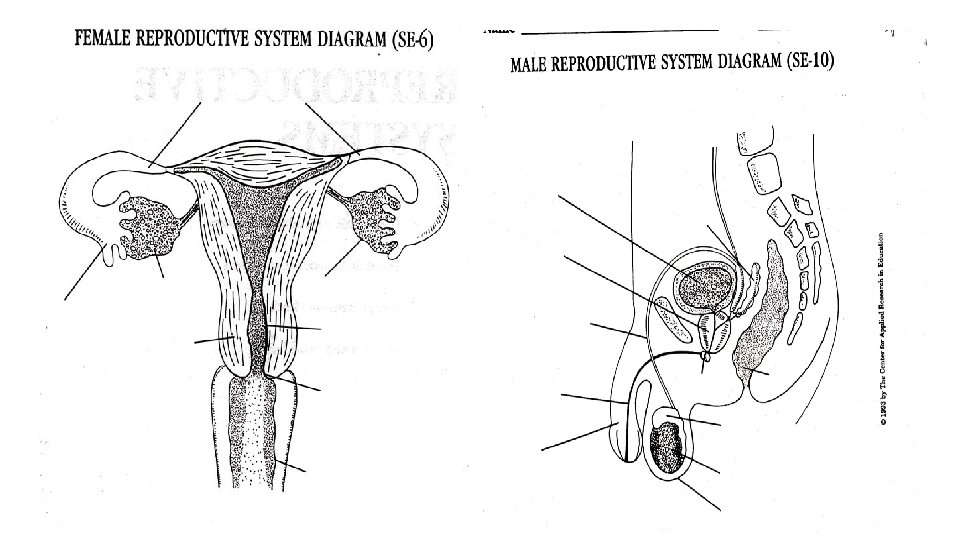
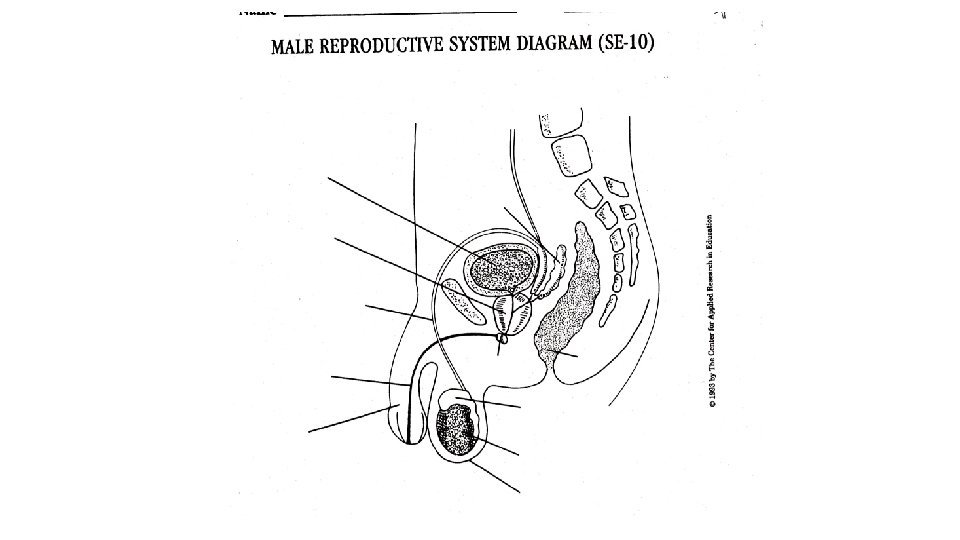
REPRODUCTION ANATOMY FEMALE / MALE
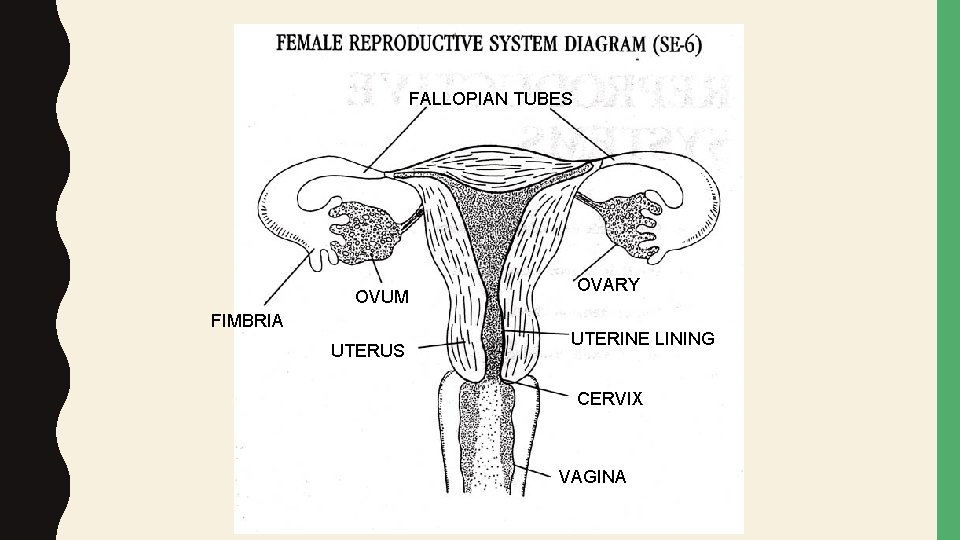
FALLOPIAN TUBES OVUM FIMBRIA UTERUS OVARY UTERINE LINING CERVIX VAGINA
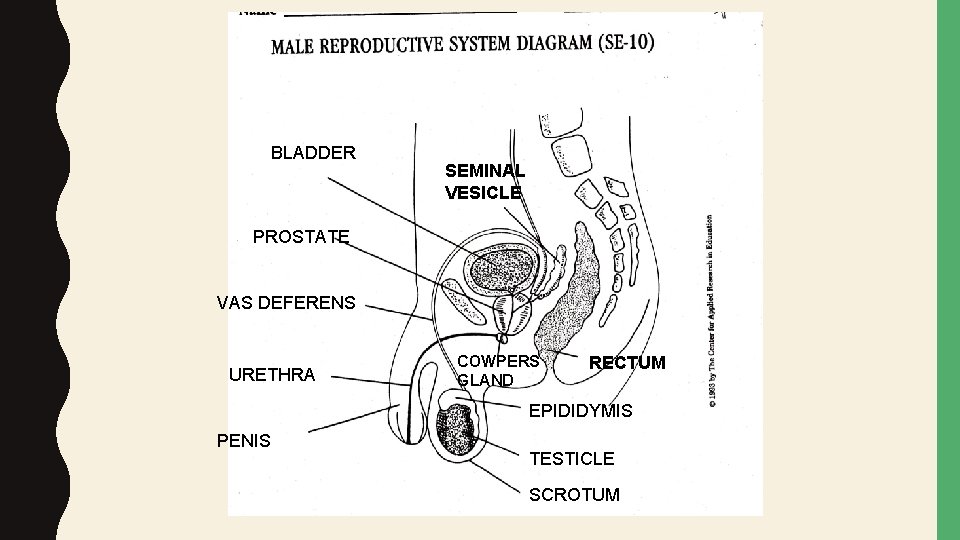
BLADDER SEMINAL VESICLE PROSTATE VAS DEFERENS URETHRA COWPERS GLAND RECTUM EPIDIDYMIS PENIS TESTICLE SCROTUM
UNDERSTANDING VOCAB CHALLENGE • Underline these words in your anatomy charts: – Prostate gland – Ovaries – Cervix – Seminal vesicles – Testes – Vas deferens – Scrotum – Vagina fallopian tubes – Uterus – Epididymis • Understanding vocab challenge: – Go through and read the definitions/ FUNCTIONS

REVIEW • Q. live
PRACTICE QUIZ
BELL RINGER • STD Bell Ringer: Here’s Why Teen STDs Are Hitting All-Time Highs
WHY IT IS SO HARD TO CURE HIV • On website
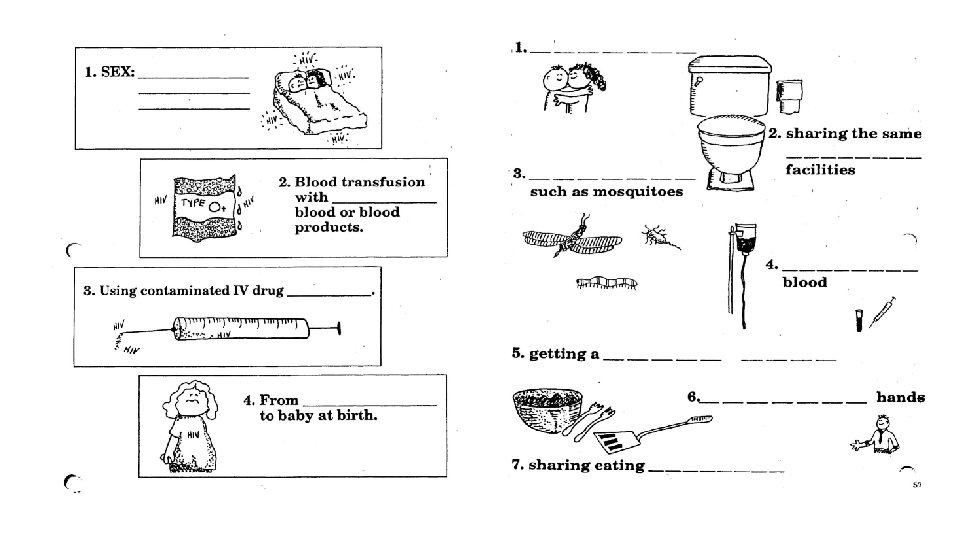
HIV/AIDS
Sexually Transmitted Diseases (STDs) Sexually Transmitted Infections (STIs) EVENTUALLY ADD DISEASE AND DEFINITION TO
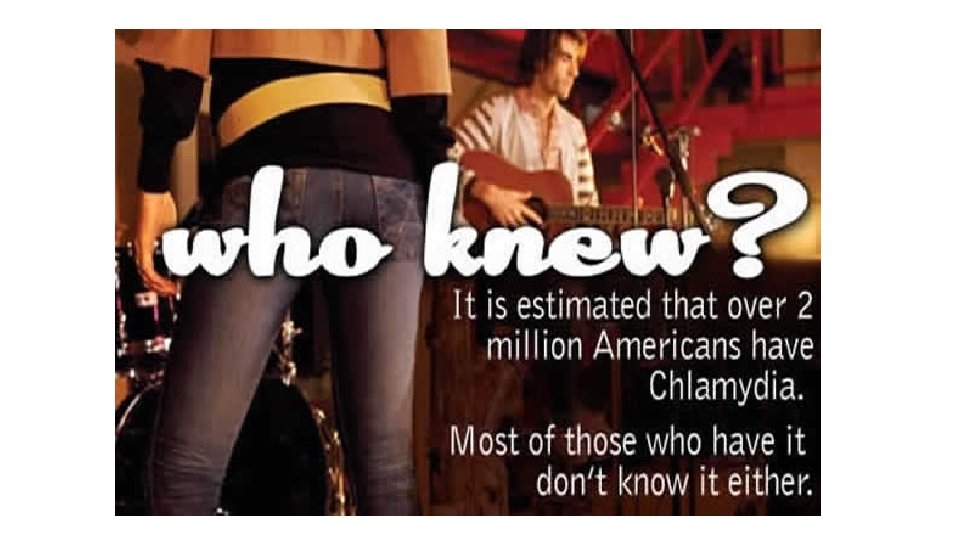
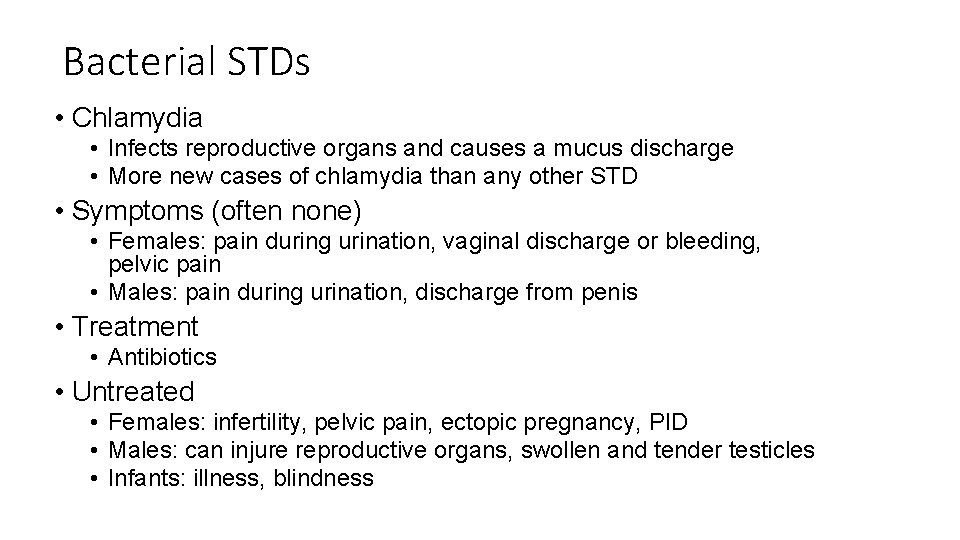
Bacterial STDs • Chlamydia • Infects reproductive organs and causes a mucus discharge • More new cases of chlamydia than any other STD • Symptoms (often none) • Females: pain during urination, vaginal discharge or bleeding, pelvic pain • Males: pain during urination, discharge from penis • Treatment • Antibiotics • Untreated • Females: infertility, pelvic pain, ectopic pregnancy, PID • Males: can injure reproductive organs, swollen and tender testicles • Infants: illness, blindness
Bacterial STDs • Pelvic Inflammatory Disease (PID) • Inflammation of the upper female reproductive tract caused by migration of infection from vagina • Symptoms • Pain in the pelvic region, vaginal discharge, long and painful menstrual periods, fever, painful urination, nausea • Treatment • Antibiotics, surgery may be needed if infection is left untreated • Untreated • Scars in the fallopian tubes or uterus, ectopic pregnancy, infertility • Chronic pelvic pain
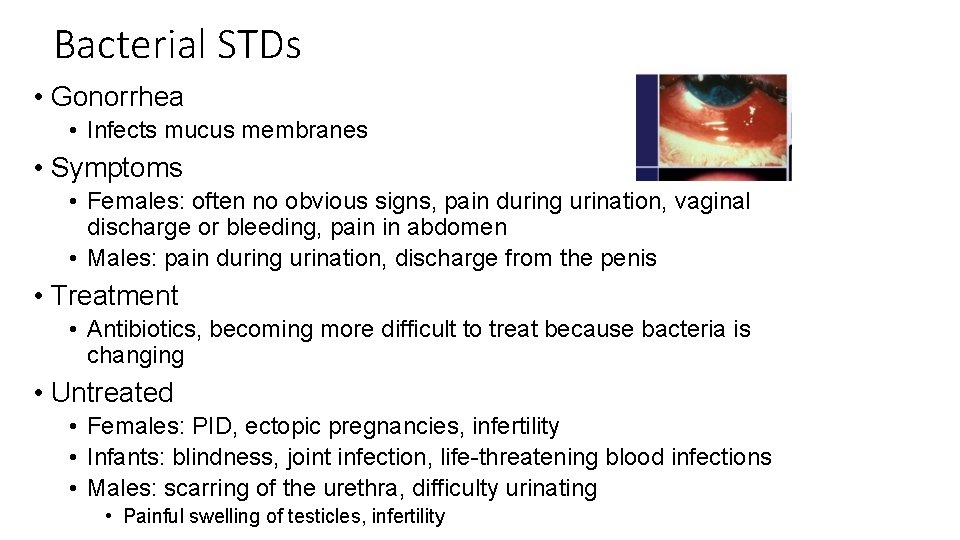
Bacterial STDs • Gonorrhea • Infects mucus membranes • Symptoms • Females: often no obvious signs, pain during urination, vaginal discharge or bleeding, pain in abdomen • Males: pain during urination, discharge from the penis • Treatment • Antibiotics, becoming more difficult to treat because bacteria is changing • Untreated • Females: PID, ectopic pregnancies, infertility • Infants: blindness, joint infection, life-threatening blood infections • Males: scarring of the urethra, difficulty urinating • Painful swelling of testicles, infertility
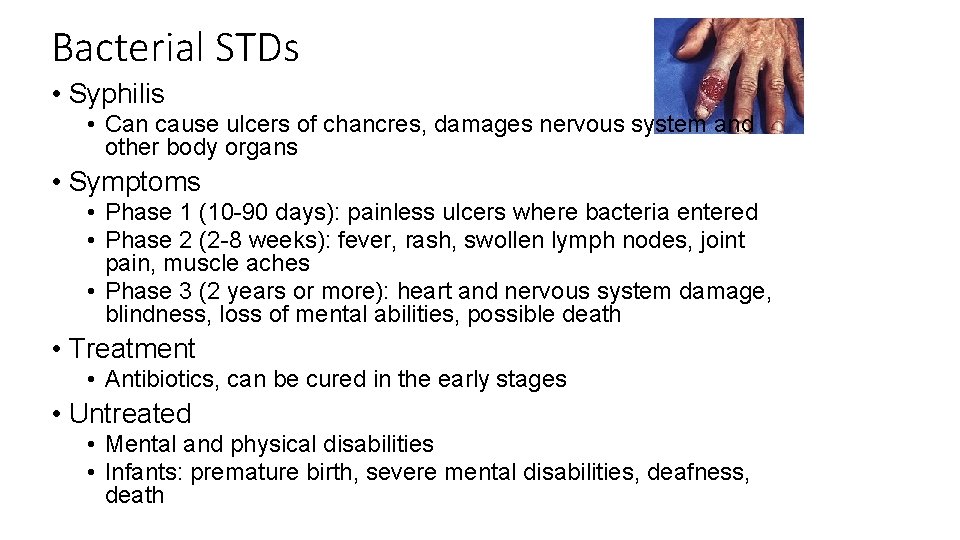
Bacterial STDs • Syphilis • Can cause ulcers of chancres, damages nervous system and other body organs • Symptoms • Phase 1 (10 -90 days): painless ulcers where bacteria entered • Phase 2 (2 -8 weeks): fever, rash, swollen lymph nodes, joint pain, muscle aches • Phase 3 (2 years or more): heart and nervous system damage, blindness, loss of mental abilities, possible death • Treatment • Antibiotics, can be cured in the early stages • Untreated • Mental and physical disabilities • Infants: premature birth, severe mental disabilities, deafness, death
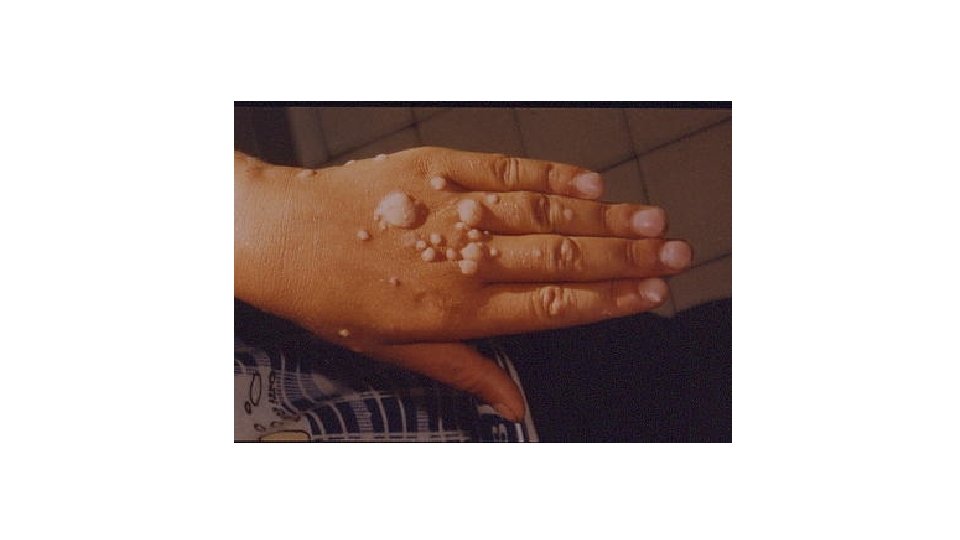
Viral STDs • Human Papilloma Virus (HPV) • Can cause genital warts and cervical cancer • Symptoms • Females: genital and anal warts, abnormal papsmear • Males: genital and anal warts • Treatment • No treatment, warts can be treated by surgical removal, freezing, or medication • Vaccine for women against the 4 types of HPV that cause most genital warts and cancers • Untreated • Cervical Cancer, genital cancers
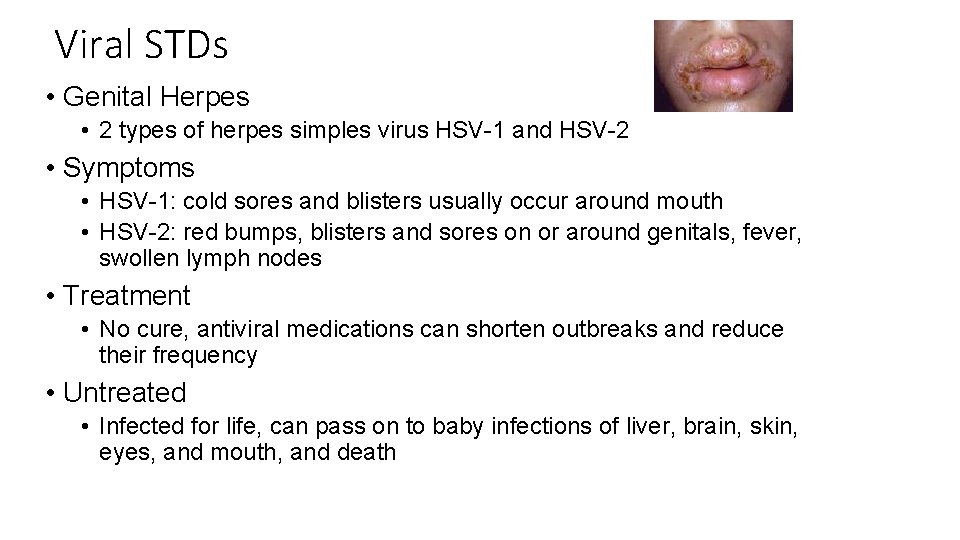
Viral STDs • Genital Herpes • 2 types of herpes simples virus HSV-1 and HSV-2 • Symptoms • HSV-1: cold sores and blisters usually occur around mouth • HSV-2: red bumps, blisters and sores on or around genitals, fever, swollen lymph nodes • Treatment • No cure, antiviral medications can shorten outbreaks and reduce their frequency • Untreated • Infected for life, can pass on to baby infections of liver, brain, skin, eyes, and mouth, and death
Viral STDs • Hepatitis • Inflammation of the liver • Hepatitis B and C can be sexually transmitted • Symptoms • Jaundice, tiredness and muscle aches, fever, dark urine • Treatment • No cure, medications may help stop spread of virus • Vaccine available for Hepatitis A and B • Untreated • Liver damage, failure, cancer, premature death

AIDS video • On website
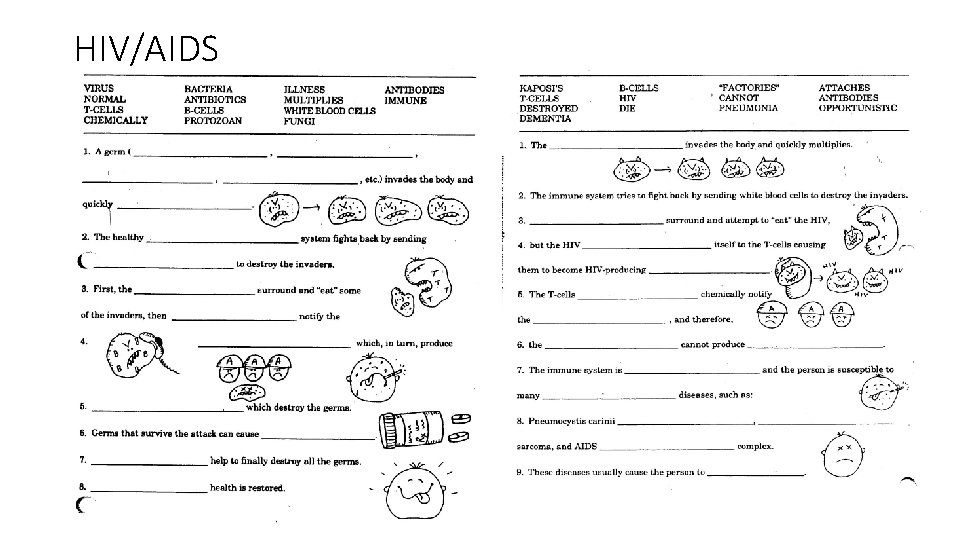
Viral STDs • Human Immunodeficiency Virus (HIV) • Infects cells of the immune system and causes AIDS • Symptoms • Phase 1 (initial exposure to 10 yrs): fatigue, weight loss, fever, diarrhea, swollen lymph nodes • Phase 2: Phase 1 symptoms, forgetfulness, difficulty thinking • Phase 3: weakened immune system, infections, weight loss • Treatment • No cure, a combination of drugs can delay the start of serious symptoms • Untreated • Malnutrition, loss of mobility, opportunistic infections, cancer, premature death
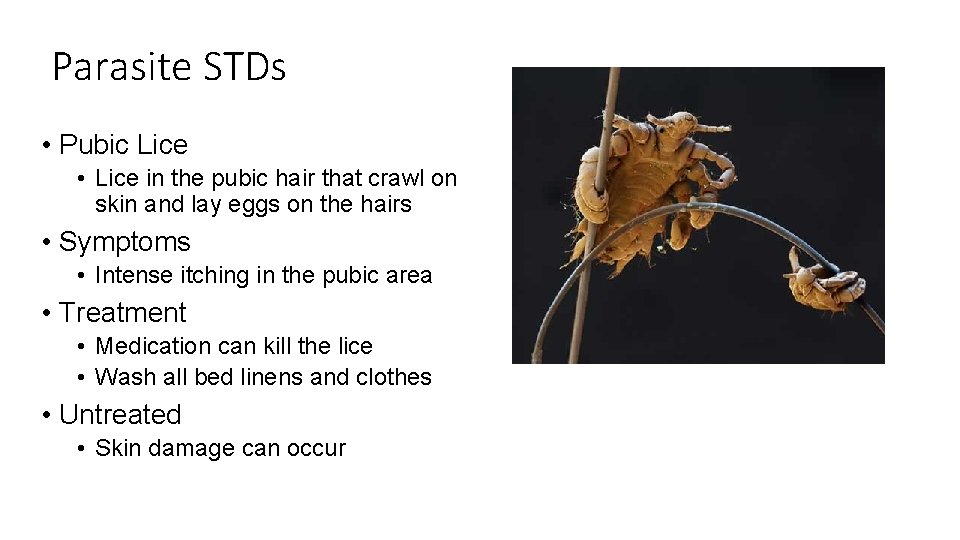
Parasite STDs • Pubic Lice • Lice in the pubic hair that crawl on skin and lay eggs on the hairs • Symptoms • Intense itching in the pubic area • Treatment • Medication can kill the lice • Wash all bed linens and clothes • Untreated • Skin damage can occur
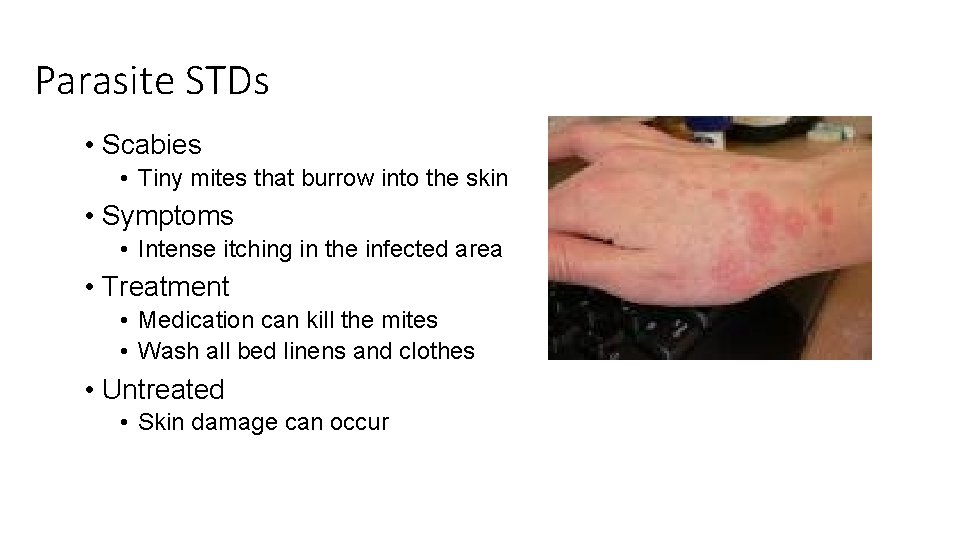
Parasite STDs • Scabies • Tiny mites that burrow into the skin • Symptoms • Intense itching in the infected area • Treatment • Medication can kill the mites • Wash all bed linens and clothes • Untreated • Skin damage can occur
Parasite STDs • Trichomoniasis • Caused by a protozoan • Symptoms • Females: itching, discharge from the vagina, painful urination • Males: usually no symptoms • Treatment • Can be cured with a prescribed medicine • Untreated • Females: bladder and urethral infections, premature birth • Males: inflamed urethra
Contraception Comparison Chart

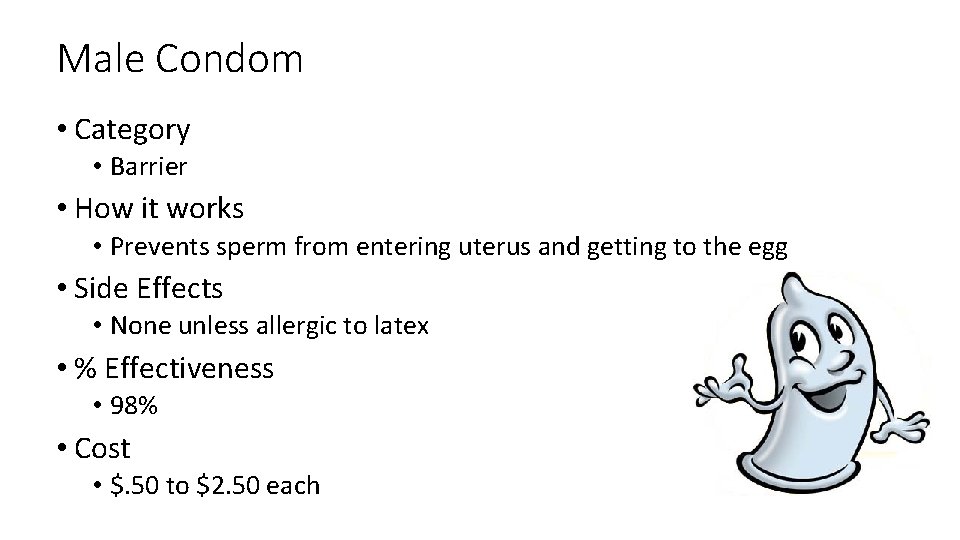
Male Condom • Category • Barrier • How it works • Prevents sperm from entering uterus and getting to the egg • Side Effects • None unless allergic to latex • % Effectiveness • 98% • Cost • $. 50 to $2. 50 each
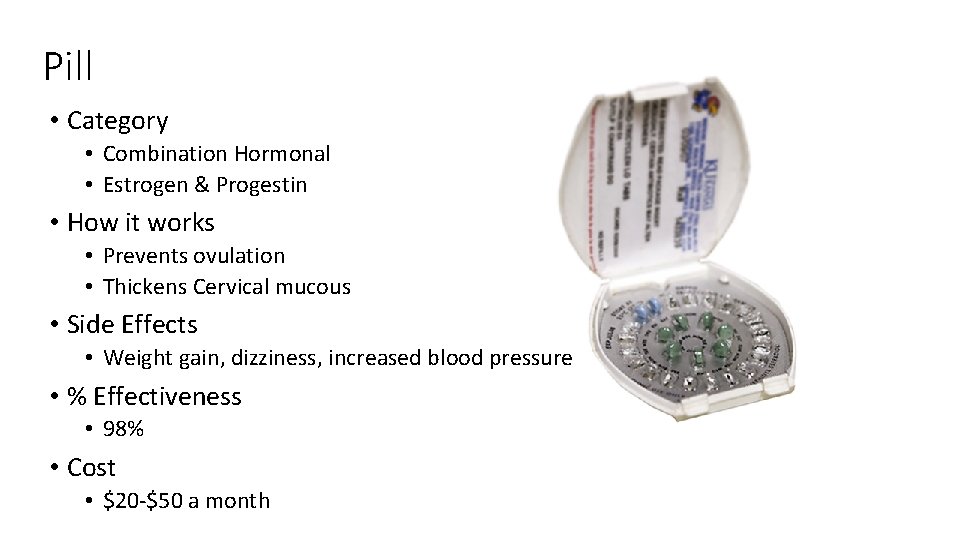
Pill • Category • Combination Hormonal • Estrogen & Progestin • How it works • Prevents ovulation • Thickens Cervical mucous • Side Effects • Weight gain, dizziness, increased blood pressure • % Effectiveness • 98% • Cost • $20 -$50 a month
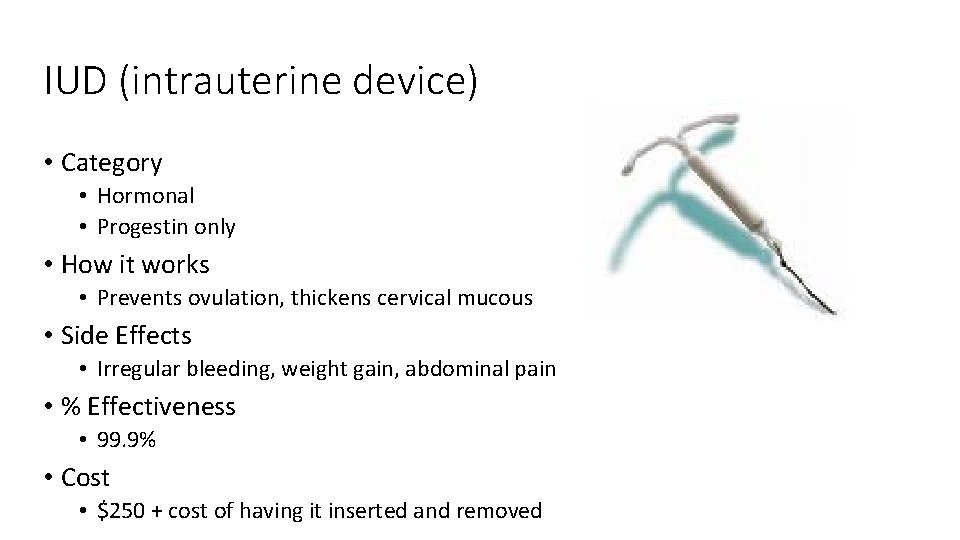
IUD (intrauterine device) • Category • Hormonal • Progestin only • How it works • Prevents ovulation, thickens cervical mucous • Side Effects • Irregular bleeding, weight gain, abdominal pain • % Effectiveness • 99. 9% • Cost • $250 + cost of having it inserted and removed
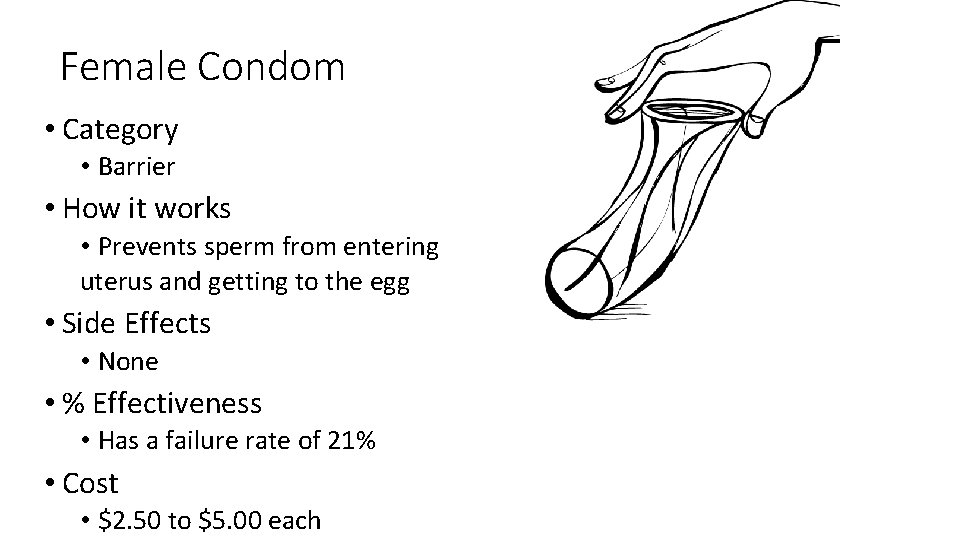
Female Condom • Category • Barrier • How it works • Prevents sperm from entering uterus and getting to the egg • Side Effects • None • % Effectiveness • Has a failure rate of 21% • Cost • $2. 50 to $5. 00 each
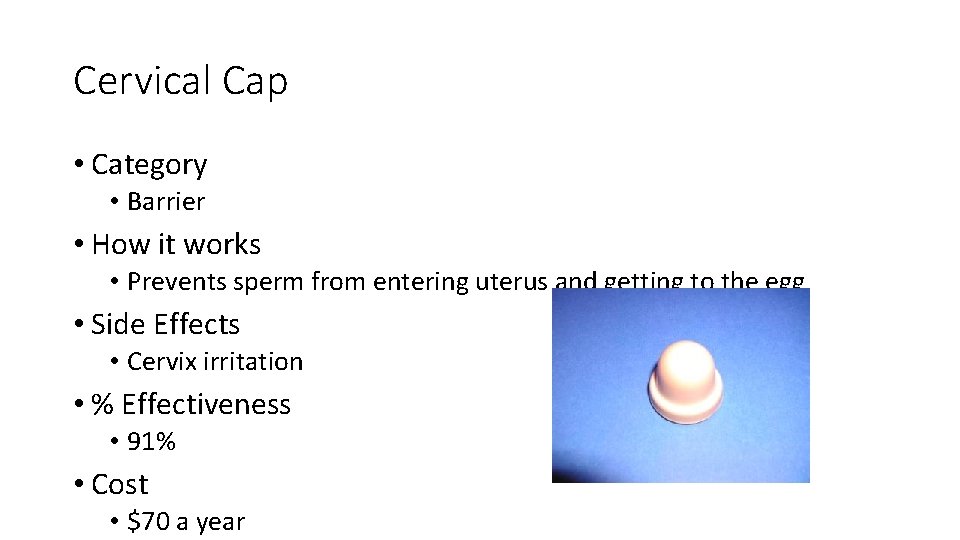
Cervical Cap • Category • Barrier • How it works • Prevents sperm from entering uterus and getting to the egg • Side Effects • Cervix irritation • % Effectiveness • 91% • Cost • $70 a year
Spermicides • Category • Barrier • How it works • Kills or disables sperm • Side Effects • Possible allergy • Genital irritation • % Effectiveness • 85% • Cost • $2 -$3 for 20 applications
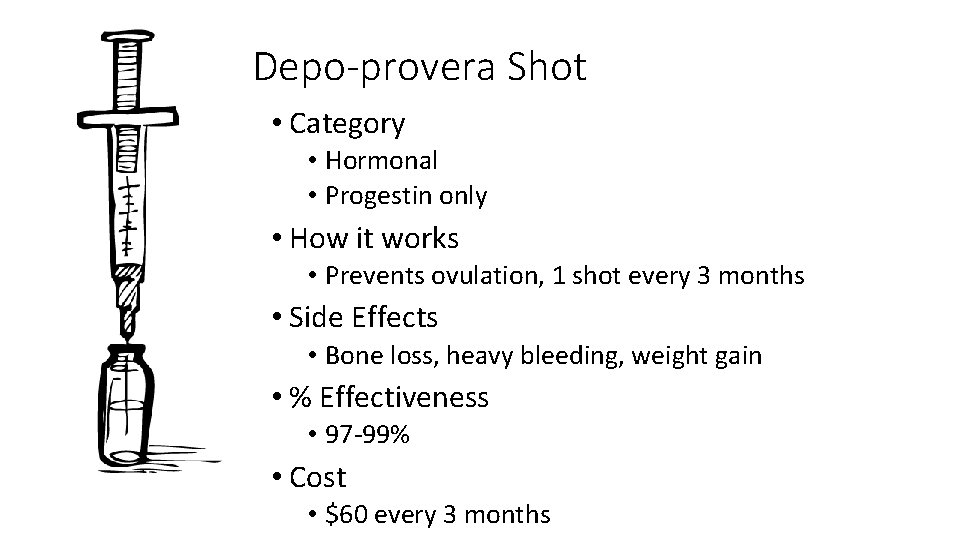
Depo-provera Shot • Category • Hormonal • Progestin only • How it works • Prevents ovulation, 1 shot every 3 months • Side Effects • Bone loss, heavy bleeding, weight gain • % Effectiveness • 97 -99% • Cost • $60 every 3 months
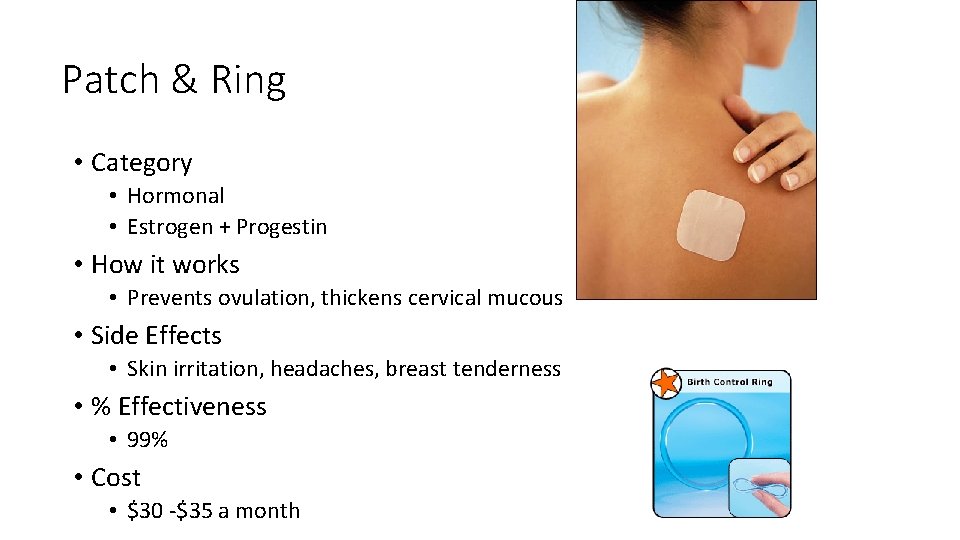
Patch & Ring • Category • Hormonal • Estrogen + Progestin • How it works • Prevents ovulation, thickens cervical mucous • Side Effects • Skin irritation, headaches, breast tenderness • % Effectiveness • 99% • Cost • $30 -$35 a month
Fertility Awareness • Category • Periodic Abstinence • Family Planning • How it works • Avoid intercourse during times when pregnancy can occur • Side Effects • none • % Effectiveness • 78 -88% • Cost
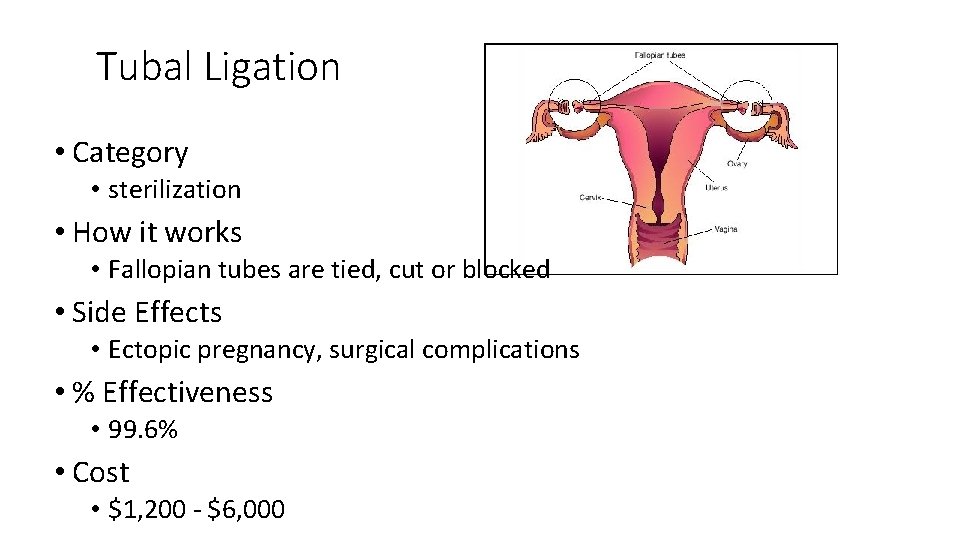
Tubal Ligation • Category • sterilization • How it works • Fallopian tubes are tied, cut or blocked • Side Effects • Ectopic pregnancy, surgical complications • % Effectiveness • 99. 6% • Cost • $1, 200 - $6, 000
Vasectomy • Category • Sterilization • How it works • Vas deferens are cut and blocked • Semen contains no sperm • Side Effects • Surgical complications • % Effectiveness • 99% • Cost • $150 - $1, 200
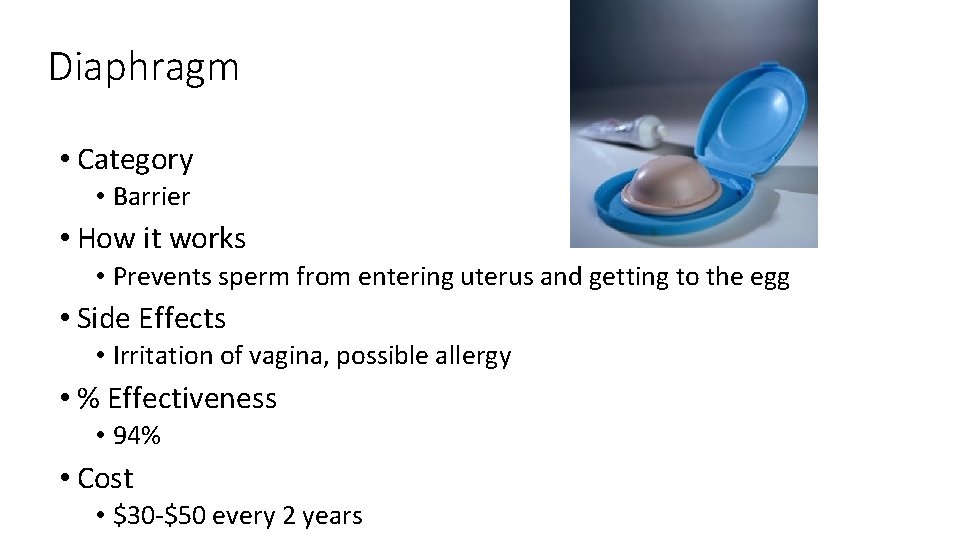
Diaphragm • Category • Barrier • How it works • Prevents sperm from entering uterus and getting to the egg • Side Effects • Irritation of vagina, possible allergy • % Effectiveness • 94% • Cost • $30 -$50 every 2 years
Abstinence • Category • Sexual Abstinence • How it works • Refrain from sexual activity • Side Effects • None! • % Effectiveness • 100%!! • Cost • FREE!
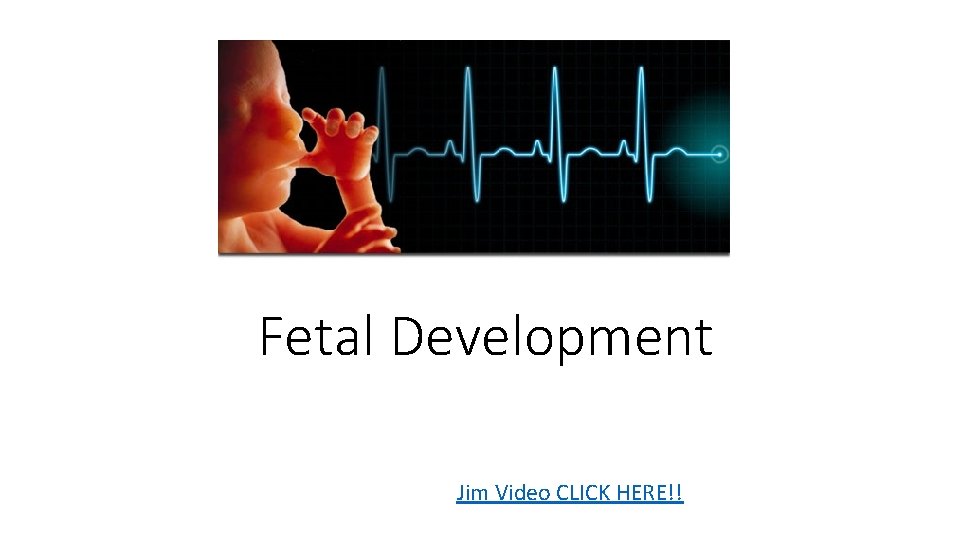
Fetal Development Jim Video CLICK HERE!!

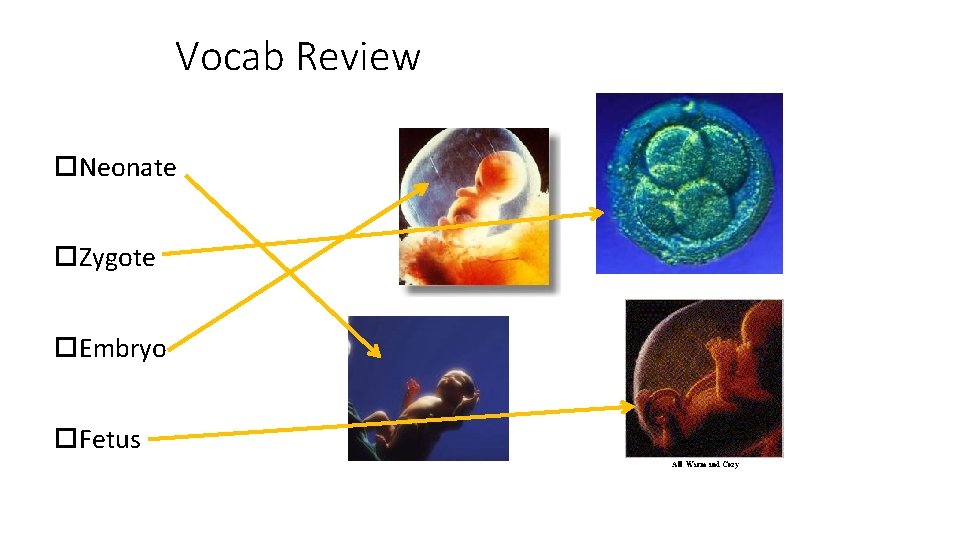
Vocab Review Neonate Zygote Embryo Fetus
First Trimester Facts • Ovum is about the size of a pencil dot on paper • Conception occurs when sperm penetrates the ovum in the fallopian tube • Zygote travels through fallopian tube toward the uterus, takes about 3 – 5 days.
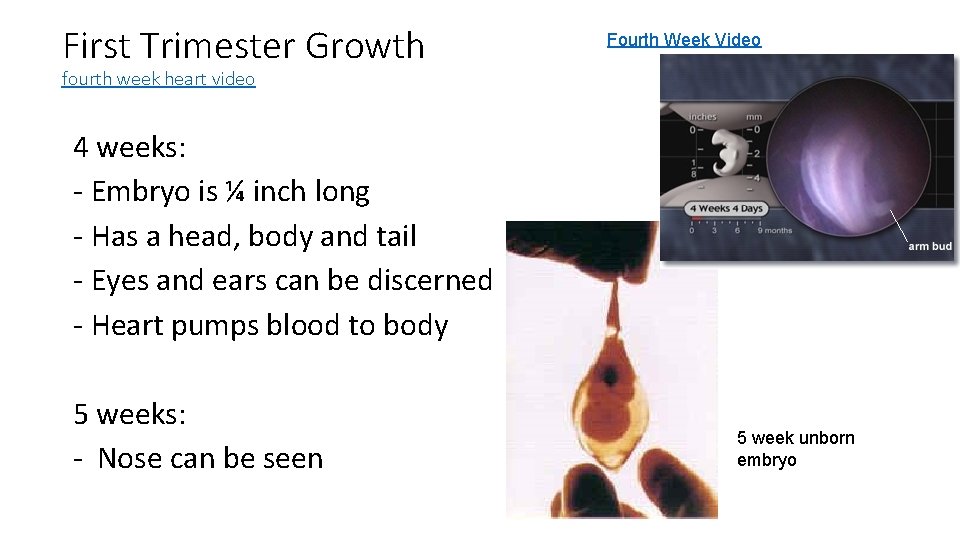
First Trimester Growth Fourth Week Video fourth week heart video 4 weeks: - Embryo is ¼ inch long - Has a head, body and tail - Eyes and ears can be discerned - Heart pumps blood to body 5 weeks: - Nose can be seen 5 week unborn embryo
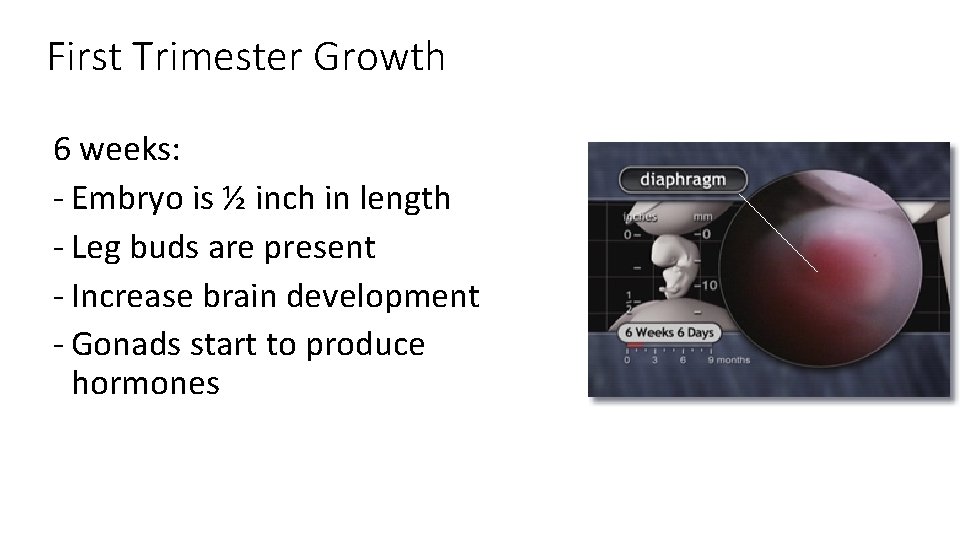
First Trimester Growth 6 weeks: - Embryo is ½ inch in length - Leg buds are present - Increase brain development - Gonads start to produce hormones
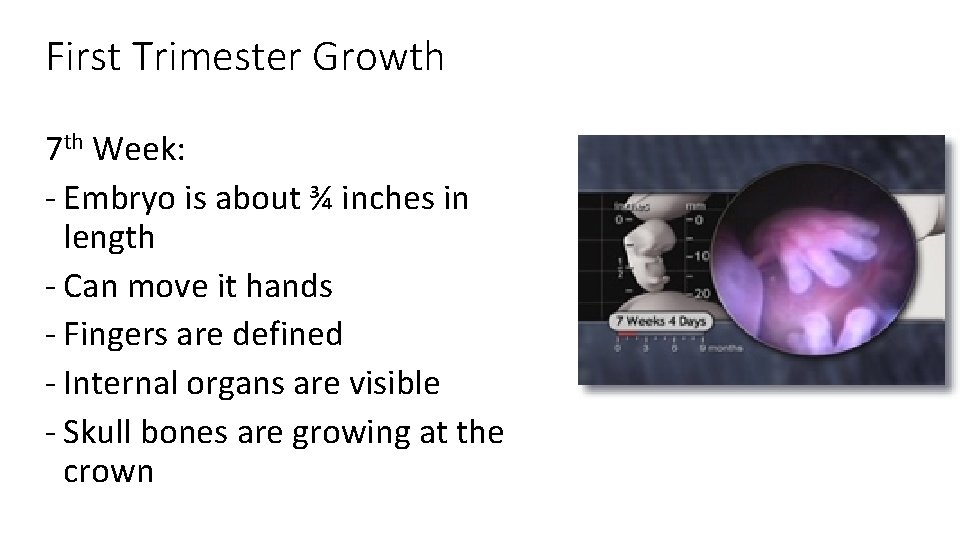
First Trimester Growth 7 th Week: - Embryo is about ¾ inches in length - Can move it hands - Fingers are defined - Internal organs are visible - Skull bones are growing at the crown
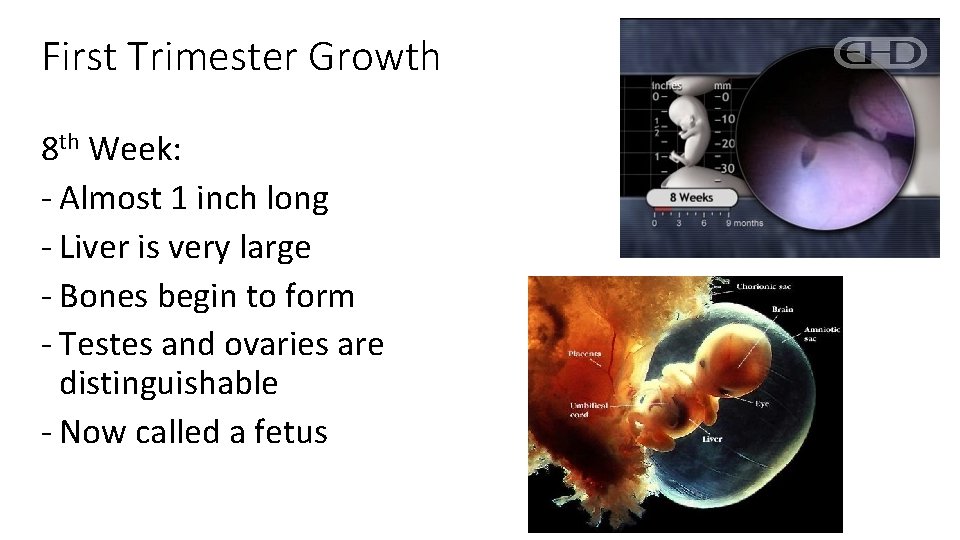
First Trimester Growth 8 th Week: - Almost 1 inch long - Liver is very large - Bones begin to form - Testes and ovaries are distinguishable - Now called a fetus
First Trimester Growth Tenth Week Video 10 th week: - 1 ½ - 2 inches long - Kidneys make urine - Lower trunk muscle are developing
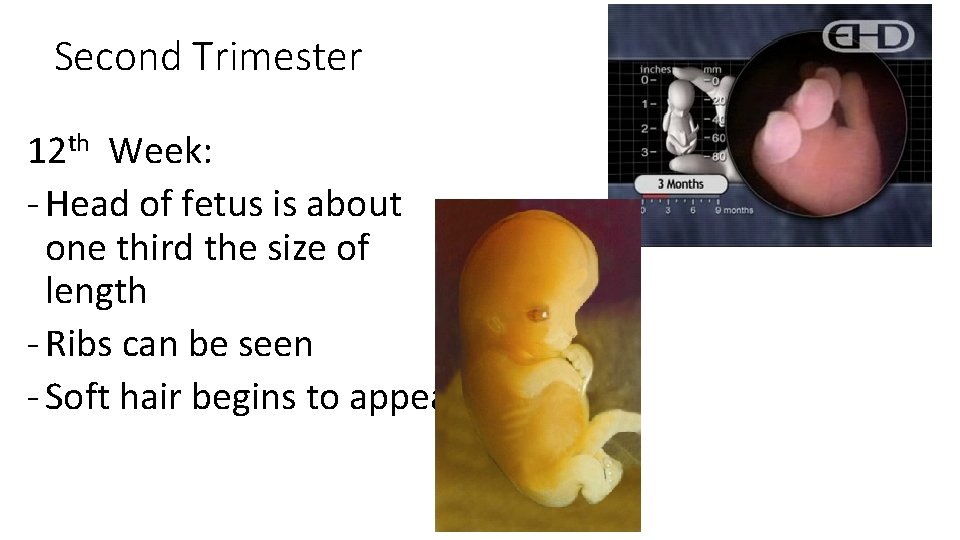
Second Trimester 12 th Week: - Head of fetus is about one third the size of length - Ribs can be seen - Soft hair begins to appear
Second Trimester 16 th week: (4 months) - 4 ½ inches long weights about 3 -4 ounces - Face looks human - Cerebrum lies over other brain parts - Testicles of males are in position for descent - Mother can feel movement - Heart can be heard with instruments
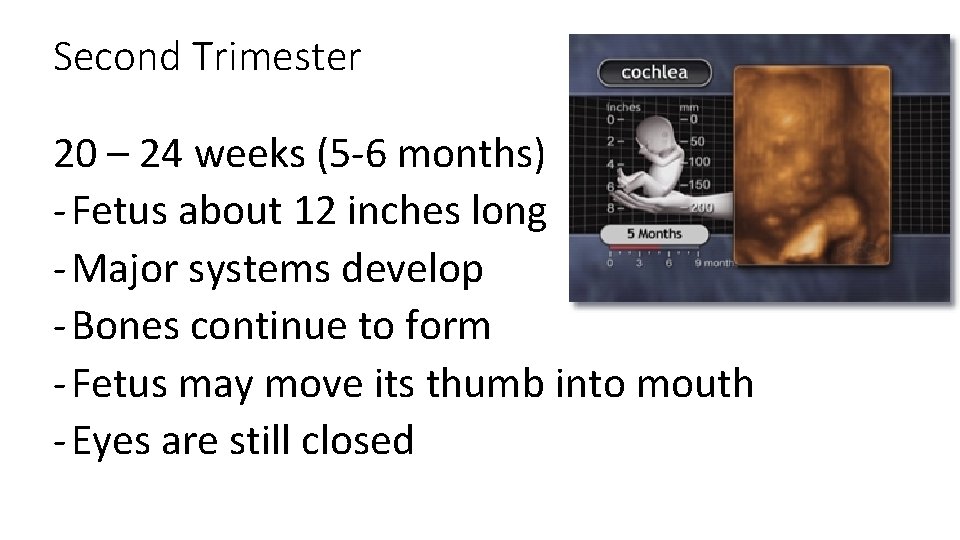
Second Trimester 20 – 24 weeks (5 -6 months) - Fetus about 12 inches long - Major systems develop - Bones continue to form - Fetus may move its thumb into mouth - Eyes are still closed
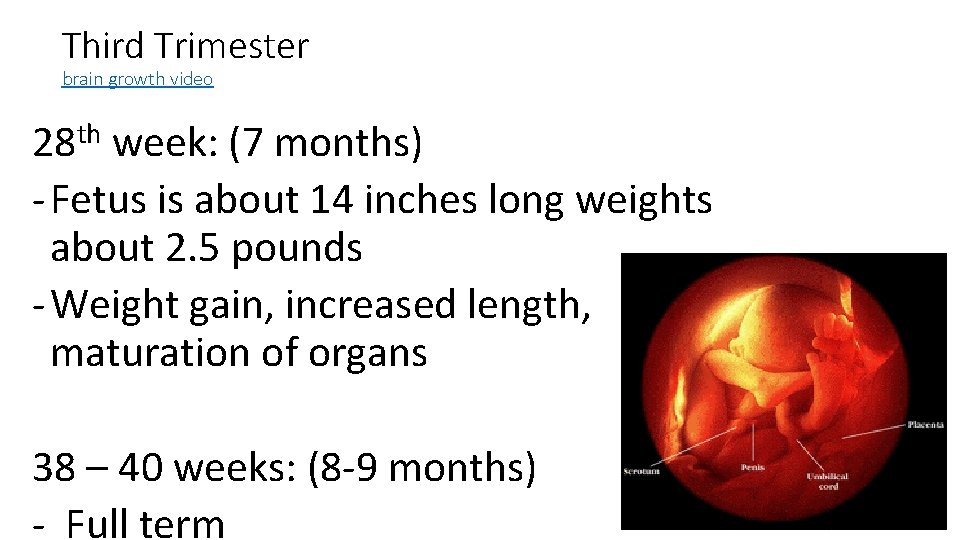
Third Trimester brain growth video 28 th week: (7 months) - Fetus is about 14 inches long weights about 2. 5 pounds - Weight gain, increased length, maturation of organs 38 – 40 weeks: (8 -9 months) - Full term
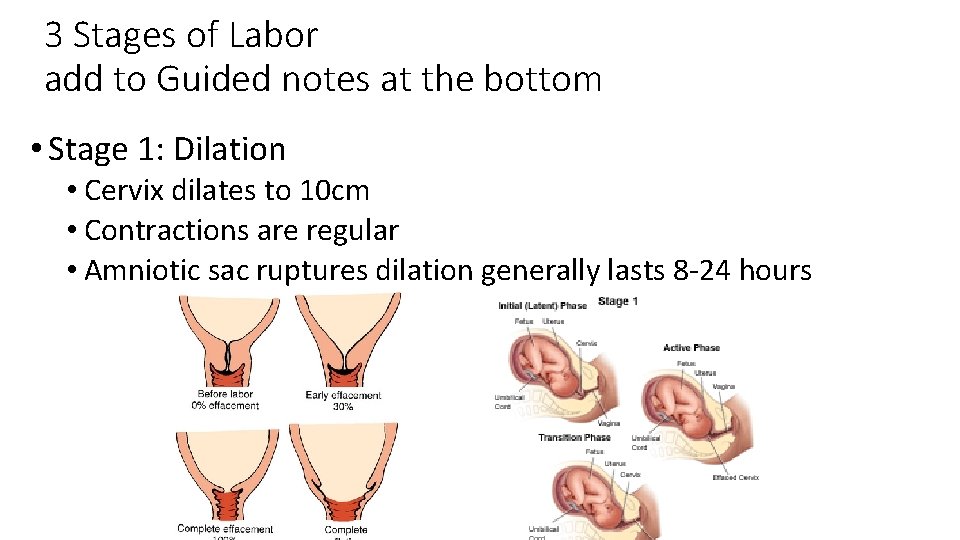
3 Stages of Labor add to Guided notes at the bottom • Stage 1: Dilation • Cervix dilates to 10 cm • Contractions are regular • Amniotic sac ruptures dilation generally lasts 8 -24 hours
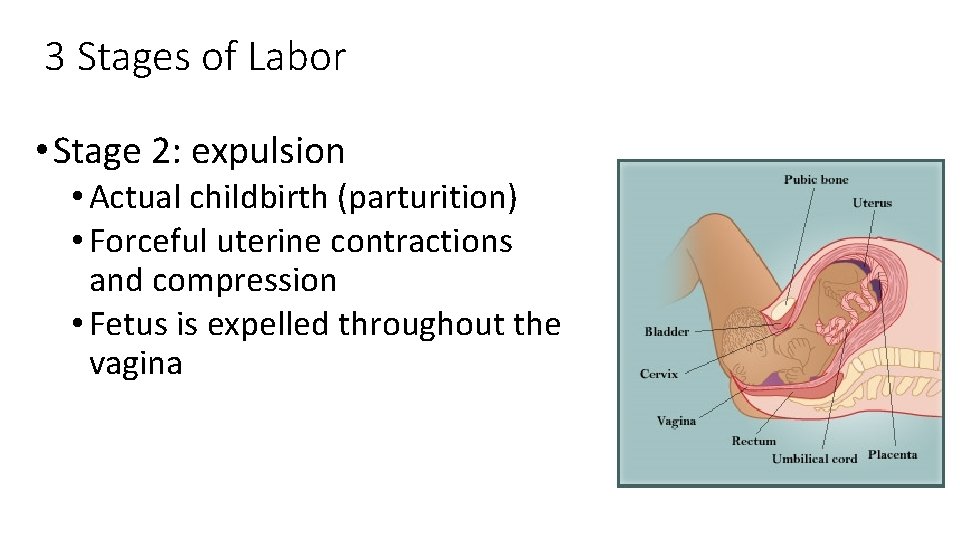
3 Stages of Labor • Stage 2: expulsion • Actual childbirth (parturition) • Forceful uterine contractions and compression • Fetus is expelled throughout the vagina
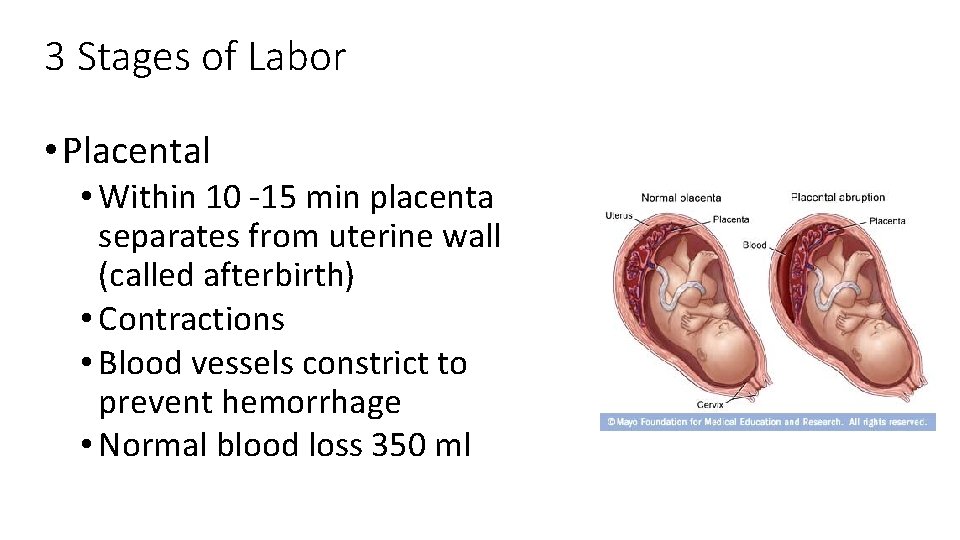
3 Stages of Labor • Placental • Within 10 -15 min placenta separates from uterine wall (called afterbirth) • Contractions • Blood vessels constrict to prevent hemorrhage • Normal blood loss 350 ml

Practice quizzes
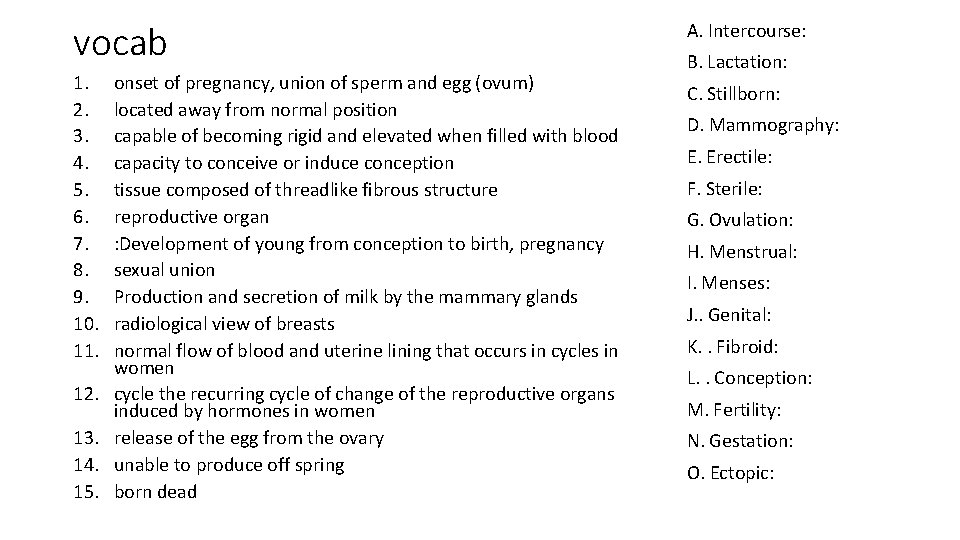
vocab 1. 2. 3. 4. 5. 6. 7. 8. 9. 10. 11. 12. 13. 14. 15. onset of pregnancy, union of sperm and egg (ovum) located away from normal position capable of becoming rigid and elevated when filled with blood capacity to conceive or induce conception tissue composed of threadlike fibrous structure reproductive organ : Development of young from conception to birth, pregnancy sexual union Production and secretion of milk by the mammary glands radiological view of breasts normal flow of blood and uterine lining that occurs in cycles in women cycle the recurring cycle of change of the reproductive organs induced by hormones in women release of the egg from the ovary unable to produce off spring born dead A. Intercourse: B. Lactation: C. Stillborn: D. Mammography: E. Erectile: F. Sterile: G. Ovulation: H. Menstrual: I. Menses: J. . Genital: K. . Fibroid: L. . Conception: M. Fertility: N. Gestation: O. Ectopic:
HUMAN SEXUALITY OUTLINE
FUNCTIONS • To reproduce • Includes gonads and ovaries • Passing of genetic material to offspring
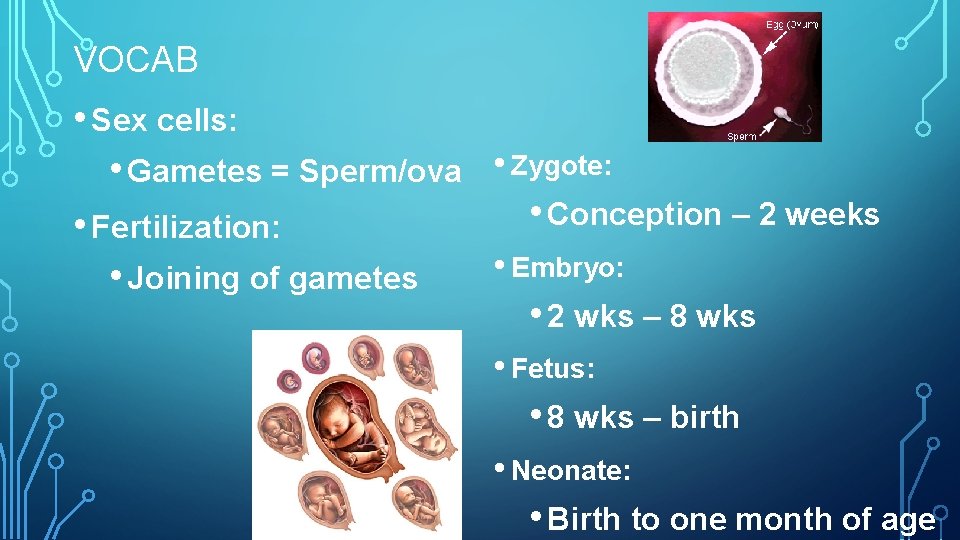
VOCAB • Sex cells: • Gametes = Sperm/ova • Zygote: • Conception – 2 weeks • Fertilization: • Embryo: • Joining of gametes • 2 wks – 8 wks • Fetus: • 8 wks – birth • Neonate: • Birth to one month of age
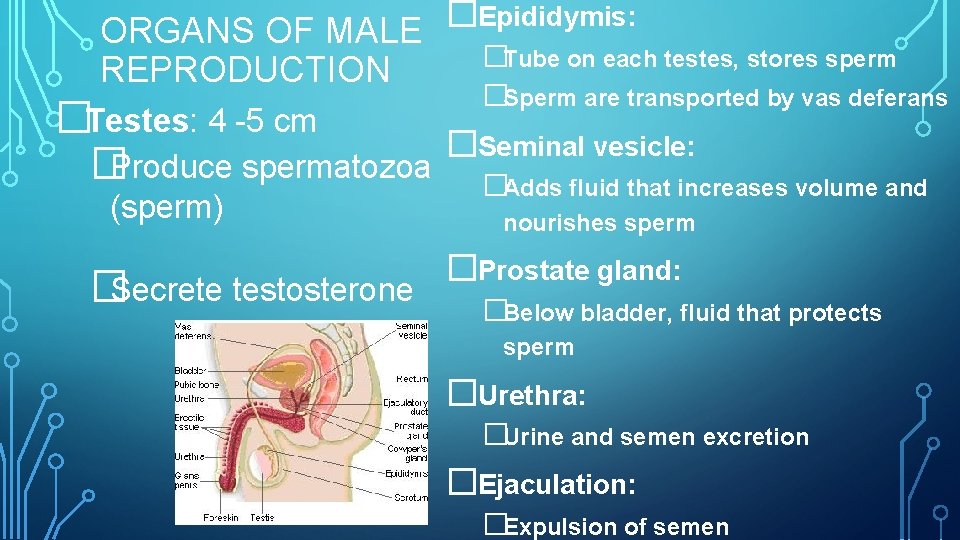
� Epididymis: ORGANS OF MALE � Tube on each testes, stores sperm REPRODUCTION �Sperm are transported by vas deferans �Testes: 4 -5 cm �Seminal vesicle: �Produce spermatozoa �Adds fluid that increases volume and (sperm) �Secrete testosterone nourishes sperm �Prostate gland: �Below bladder, fluid that protects sperm �Urethra: �Urine and semen excretion �Ejaculation: �Expulsion of semen
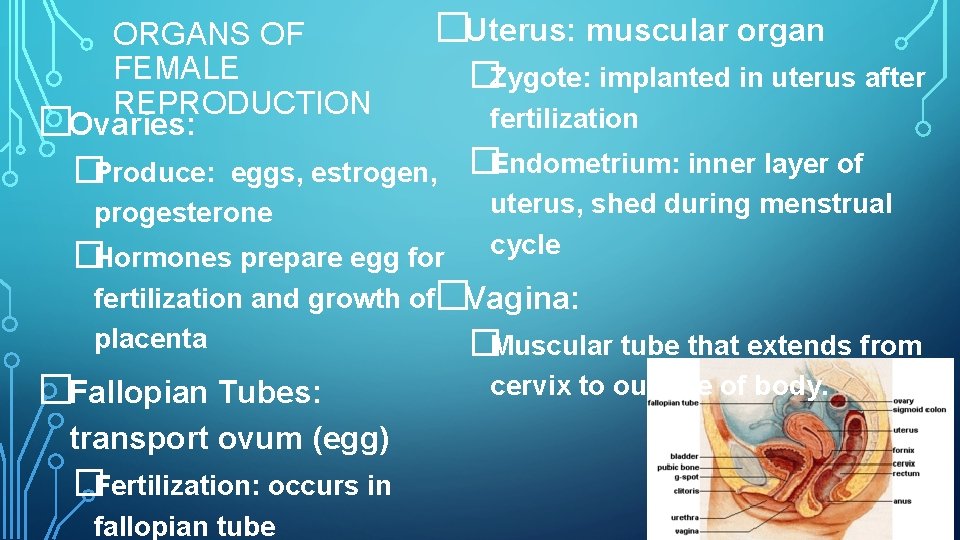
ORGANS OF FEMALE REPRODUCTION �Ovaries: �Uterus: muscular organ �Produce: eggs, estrogen, progesterone �Hormones prepare egg for �Zygote: implanted in uterus after fertilization �Endometrium: inner layer of uterus, shed during menstrual cycle fertilization and growth of�Vagina: placenta �Muscular tube that extends from �Fallopian Tubes: transport ovum (egg) �Fertilization: occurs in fallopian tube cervix to outside of body.
EXTERNAL STRUCTURES: VULVA • Labia majora: folds of adipose tissue that protect vaginal opening • Mon pubis: fat that joins the labia • Labia minora: folds of skin between labia majora • Clitoris: erectile tissue • Mammary glands: breasts
MENSTUAL CYCLE • Menstruation: signals puberty • Lasts about 28 days • Climacteric: menopause, average 52

Integumentary System SPORTS MED 1/INTRO TO HEALTH PROFESSIONS
SKIN READING GUIDING QUESTIONS 1. What does skin color depend on ? 2. What does Kitlg (KIT ligand) do? 3. What are the verbs that describe Kitlg 4. What does the gene produce when it lands? 5. Why do Europeans have less melanin than West Africans?

INCREDIBLE HUMAN MACHINE On website
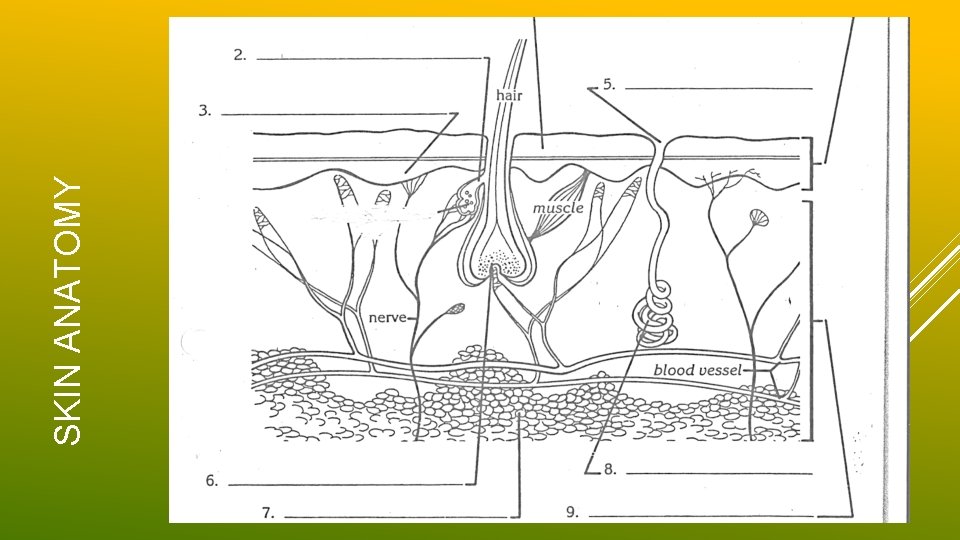
SKIN ANATOMY

On website WHAT ARE THE ODDS VIDEO
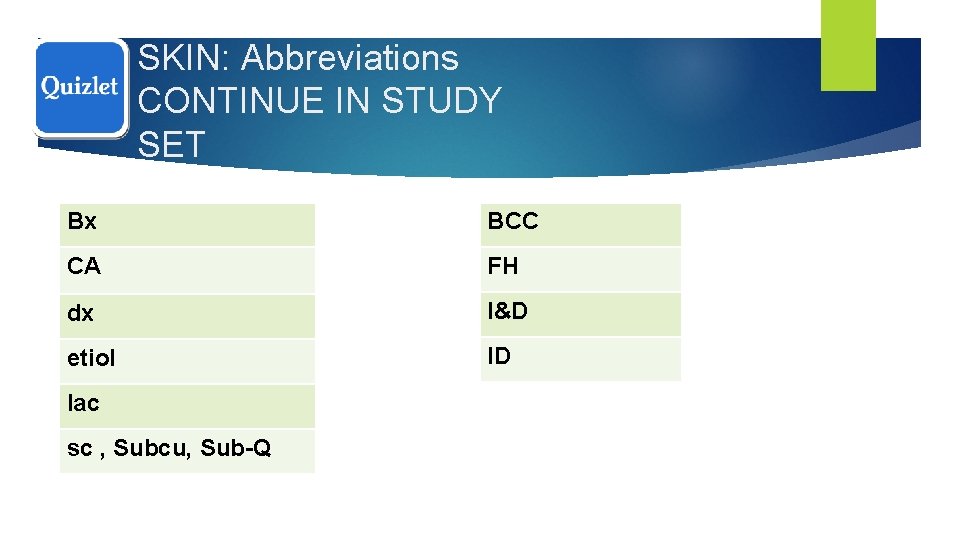
SKIN: Abbreviations CONTINUE IN STUDY SET Bx BCC CA FH dx I&D etiol ID lac sc , Subcu, Sub-Q
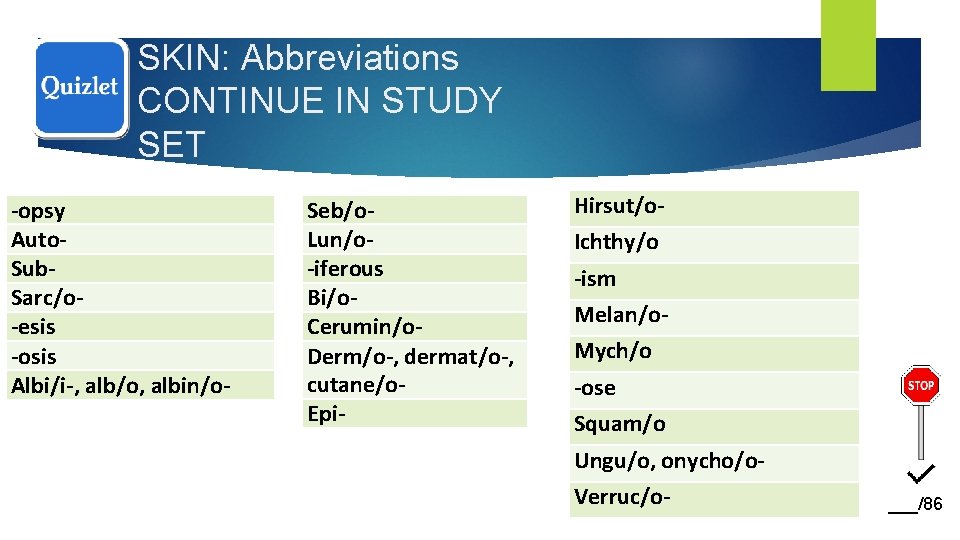
SKIN: Abbreviations CONTINUE IN STUDY SET -opsy Auto. Sub. Sarc/o-esis -osis Albi/i-, alb/o, albin/o- Seb/o. Lun/o-iferous Bi/o. Cerumin/o. Derm/o-, dermat/o-, cutane/o. Epi- Hirsut/o. Ichthy/o -ism Melan/o. Mych/o -ose Squam/o Ungu/o, onycho/o. Verruc/o- ___/86
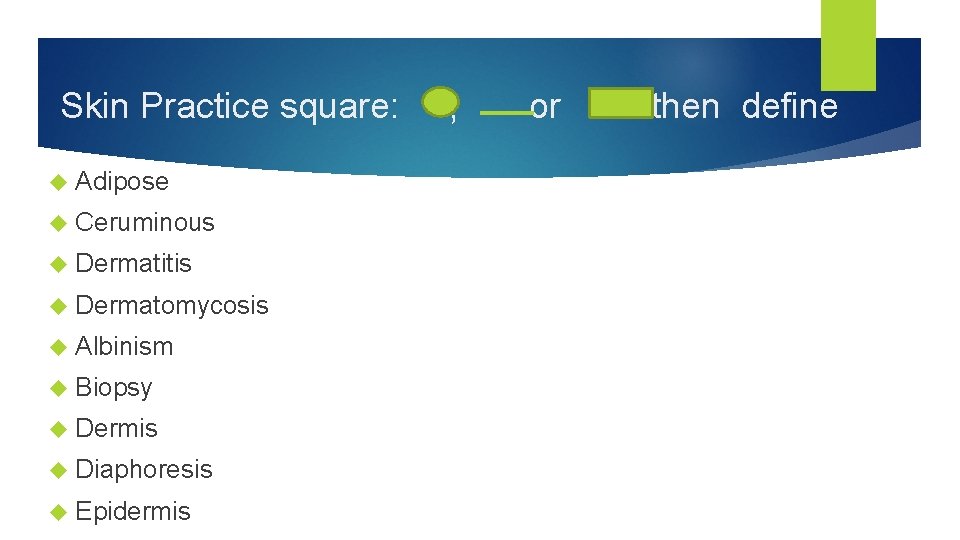
Skin Practice square: Adipose Ceruminous Dermatitis Dermatomycosis Albinism Biopsy Dermis Diaphoresis Epidermis , or then define

VOCAB Add to study set
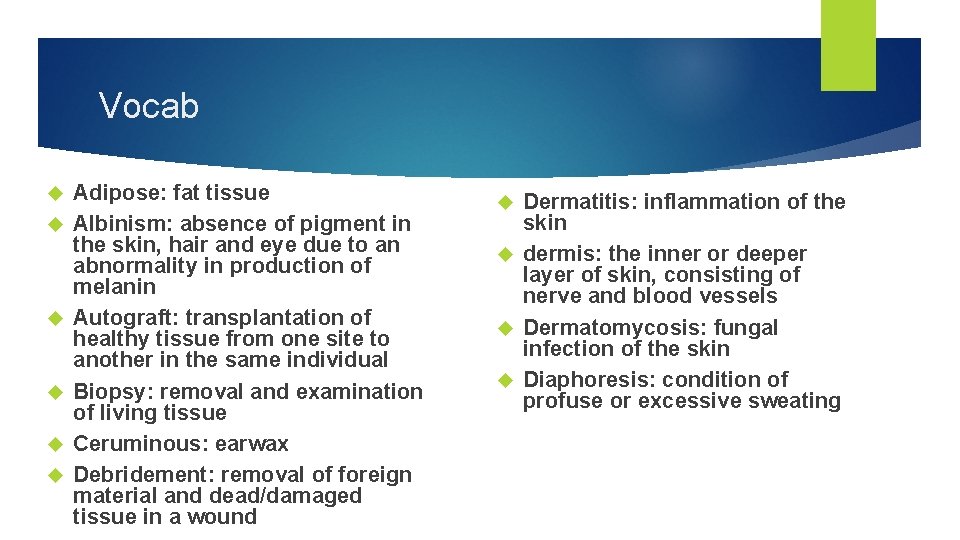
Vocab Adipose: fat tissue Albinism: absence of pigment in the skin, hair and eye due to an abnormality in production of melanin Autograft: transplantation of healthy tissue from one site to another in the same individual Biopsy: removal and examination of living tissue Ceruminous: earwax Debridement: removal of foreign material and dead/damaged tissue in a wound Dermatitis: inflammation of the skin dermis: the inner or deeper layer of skin, consisting of nerve and blood vessels Dermatomycosis: fungal infection of the skin Diaphoresis: condition of profuse or excessive sweating
Vocabulary: con’t Ecchymosis: a bruise Melanin: dark pigment of the skin Epidermis: the outer layer of skin that forms a protective covering of the body and does not have a blood or nerve supply Pilus: hair Papilla: nipple shaped projection or elevation Sebaceous: pertaining to sebum or greasy substance Subcutaneous: beneath the skin Sudoriferous: conveying sweat Verruca: a wart Vitiligo: loss of skin pigmentation characterized by milky-white patches Follicle: a sac or pouch like depression or cavity Hirsutism: excessive growth of hair in unusual places especially in women Keratosis: overgrowth and thickening of the epidermis Lunula: small crescent shaped area of
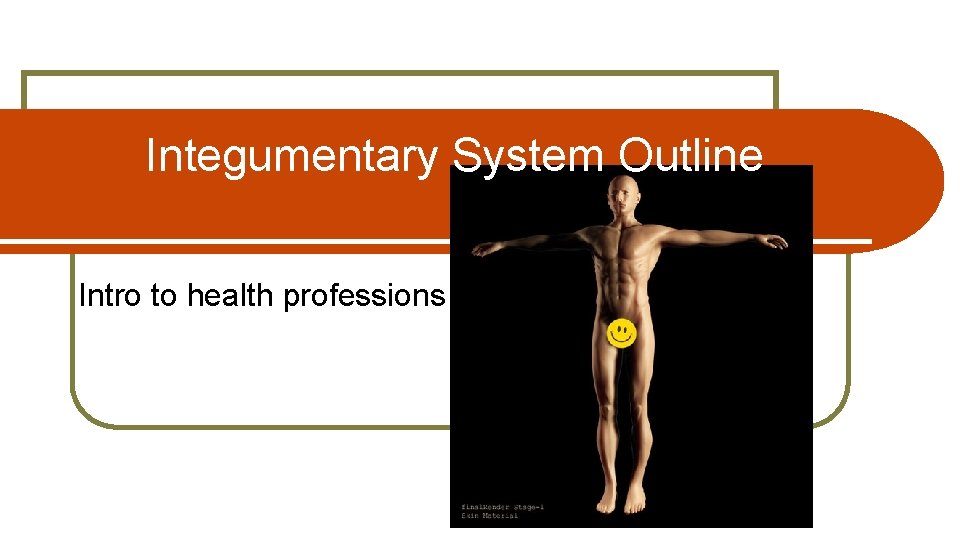
Integumentary System Outline Intro to health professions
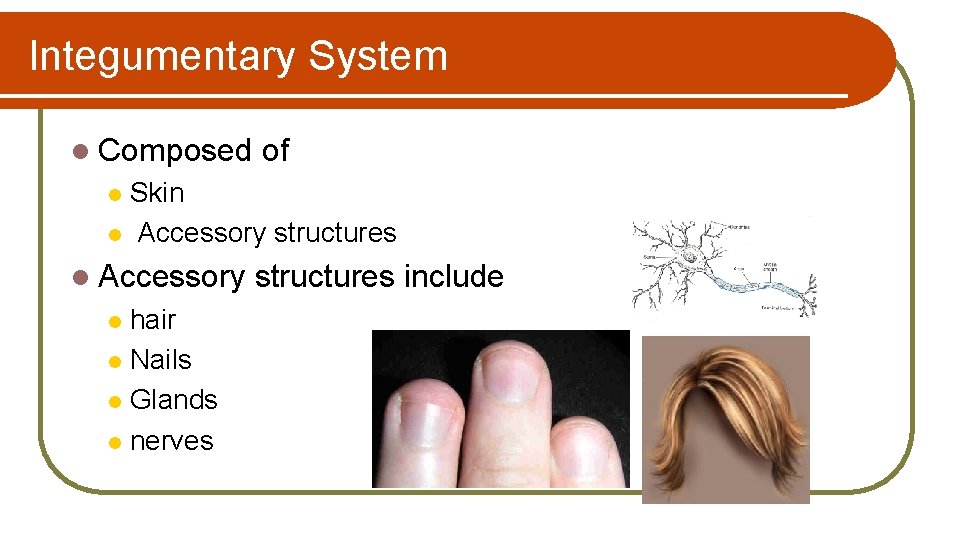
Integumentary System l Composed of Skin l Accessory structures l l Accessory hair l Nails l Glands l nerves l structures include
Integumentary System l Main Functions Cover and protect the body l Help regulate the body’s temperature l Excretes some of the body’s waste materials l Includes sensors for pain and sensation l Protects the body from injury l protects the body from the intrusion of harmful microorganisms l Protects the body from the ultraviolet (UV) rays of the sun l
video l On website
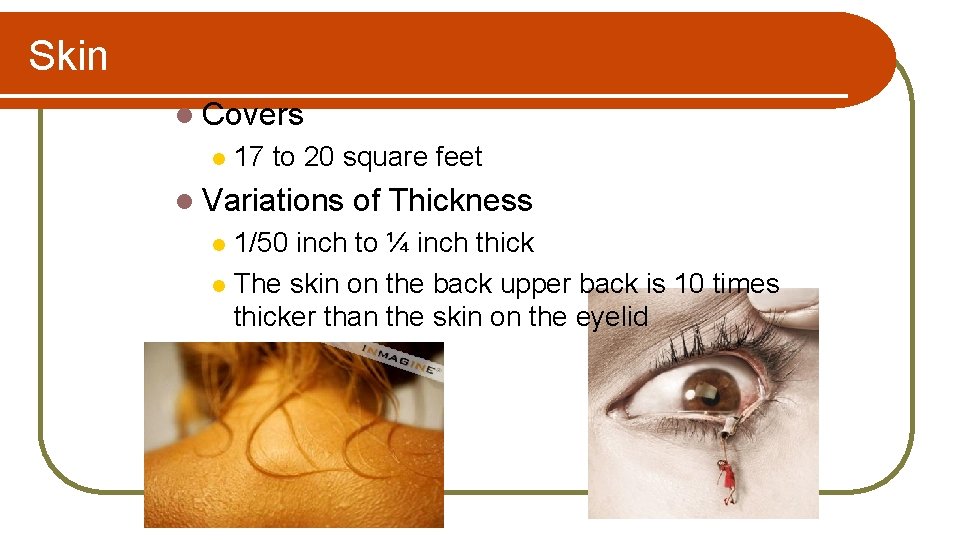
Skin l Covers l 17 to 20 square feet l Variations of Thickness 1/50 inch to ¼ inch thick l The skin on the back upper back is 10 times thicker than the skin on the eyelid l
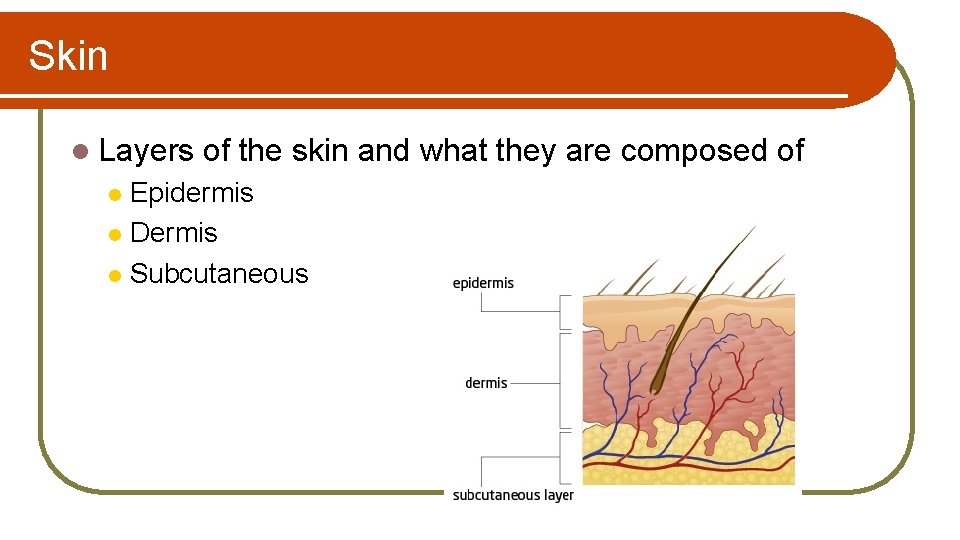
Skin l Layers of the skin and what they are composed of Epidermis l Dermis l Subcutaneous l
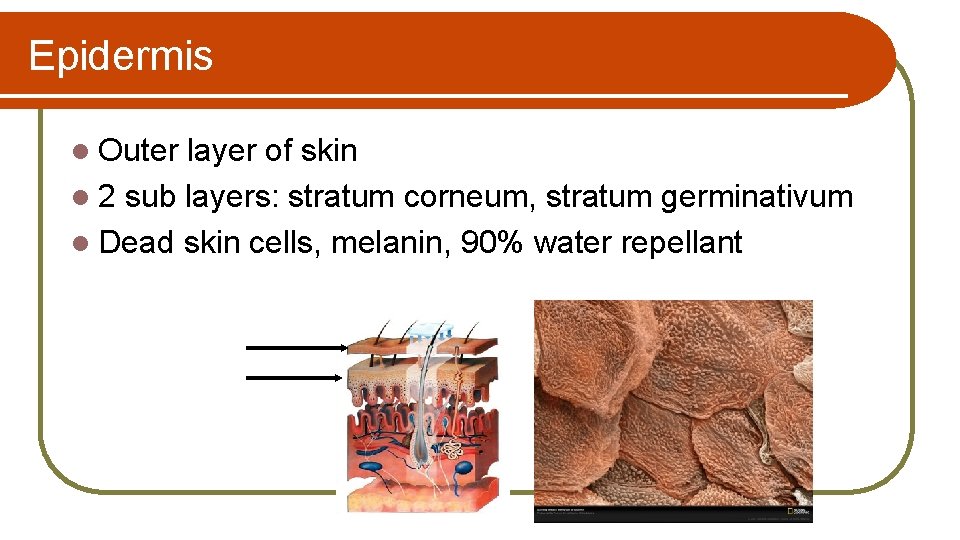
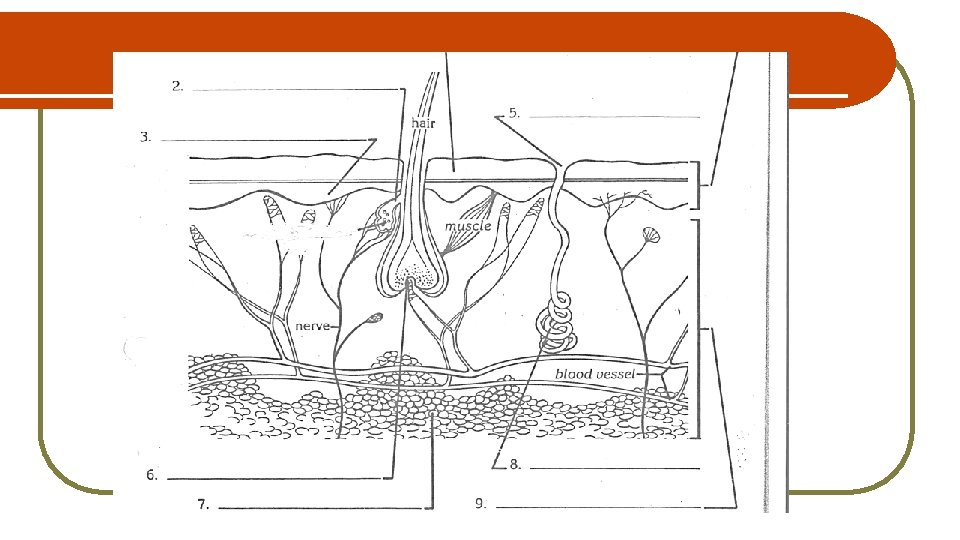
Epidermis l Outer layer of skin l 2 sub layers: stratum corneum, stratum germinativum l Dead skin cells, melanin, 90% water repellant
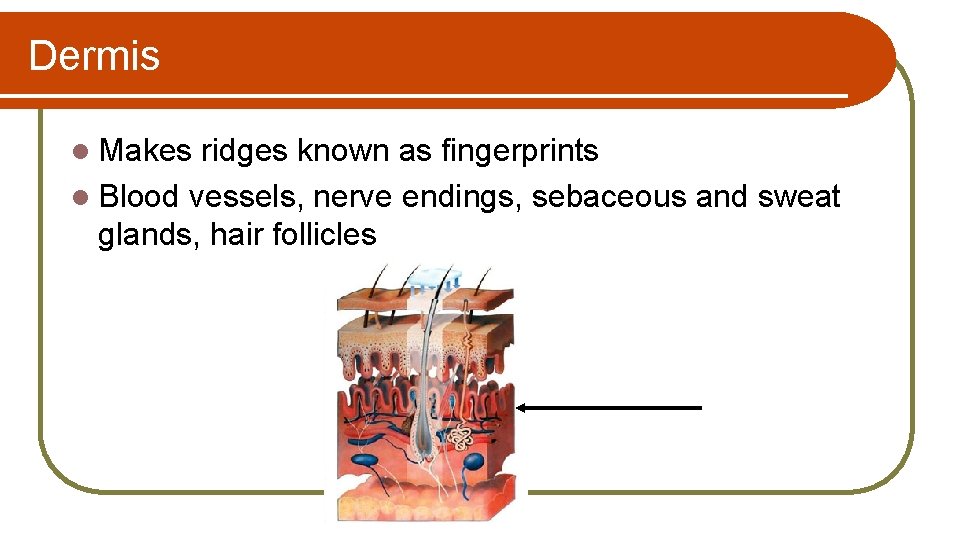
Dermis l Makes ridges known as fingerprints l Blood vessels, nerve endings, sebaceous and sweat glands, hair follicles
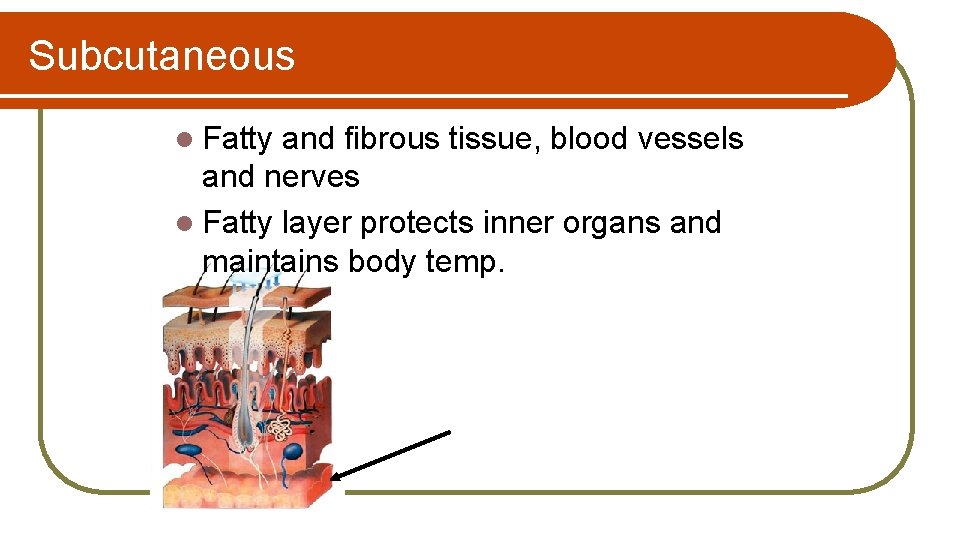
Subcutaneous l Fatty and fibrous tissue, blood vessels and nerves l Fatty layer protects inner organs and maintains body temp.
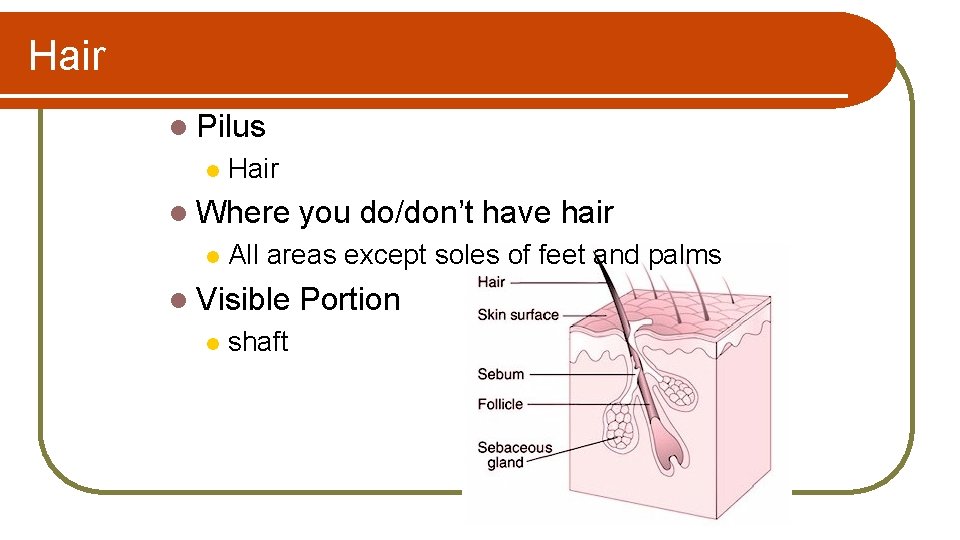
Hair l Pilus l Hair l Where l All areas except soles of feet and palms l Visible l you do/don’t have hair shaft Portion
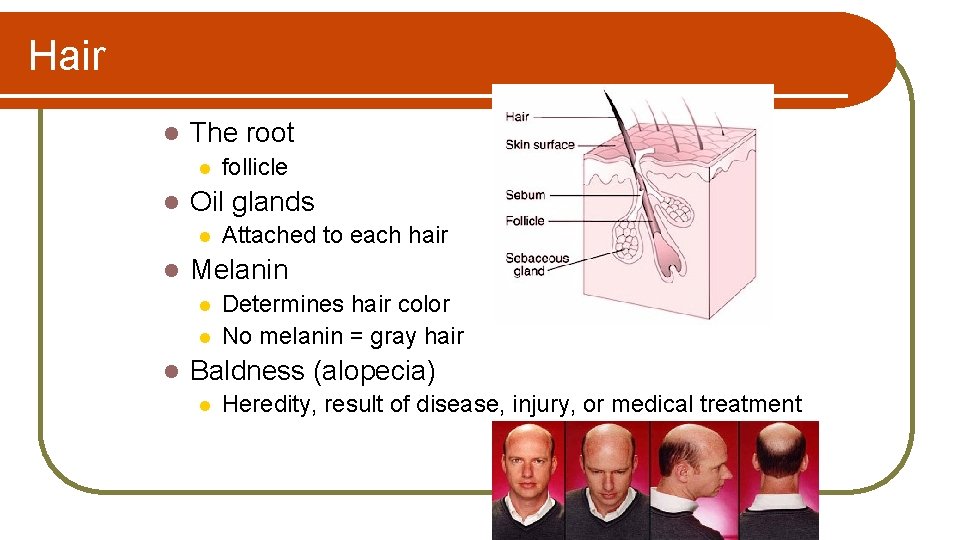
Hair l The root l l Oil glands l l Attached to each hair Melanin l l l follicle Determines hair color No melanin = gray hair Baldness (alopecia) l Heredity, result of disease, injury, or medical treatment
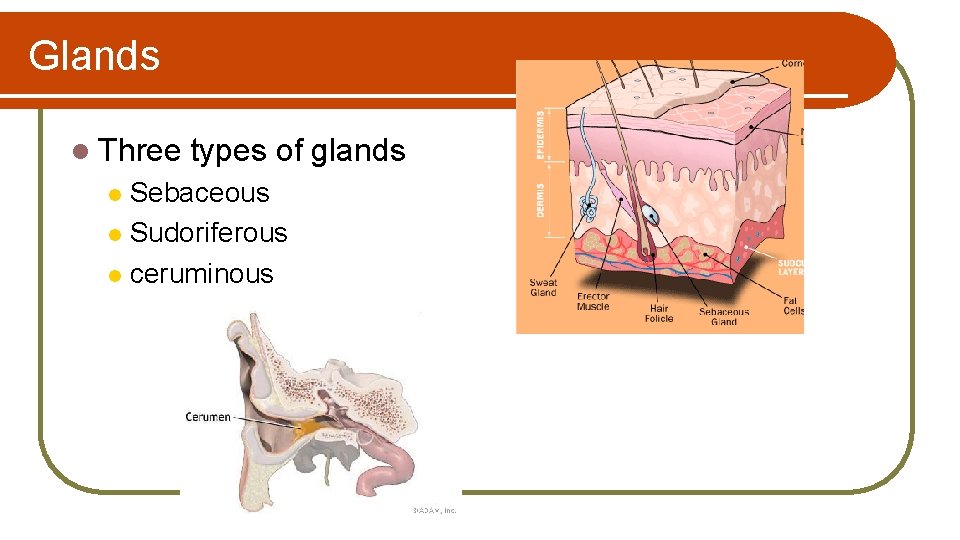
Glands l Three types of glands Sebaceous l Sudoriferous l ceruminous l
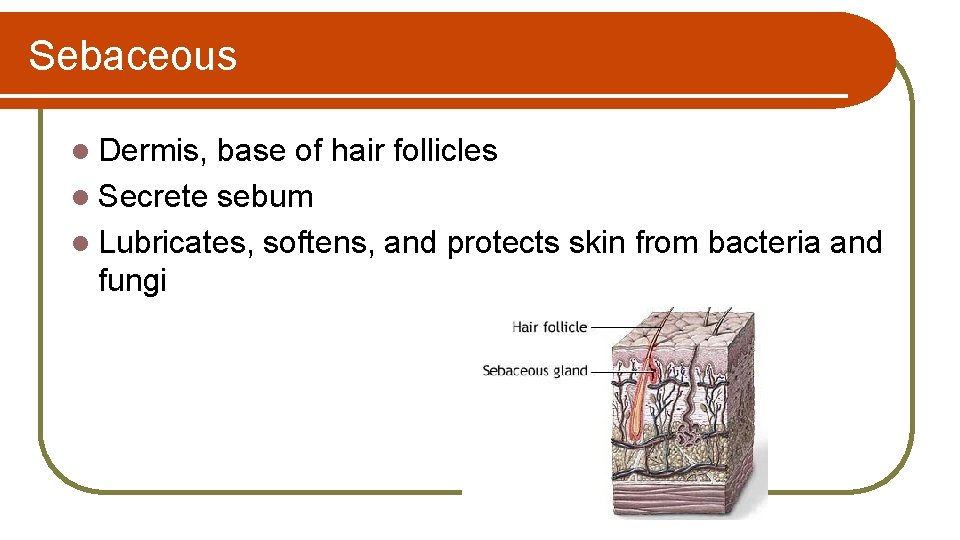
Sebaceous l Dermis, base of hair follicles l Secrete sebum l Lubricates, softens, and protects skin from bacteria and fungi
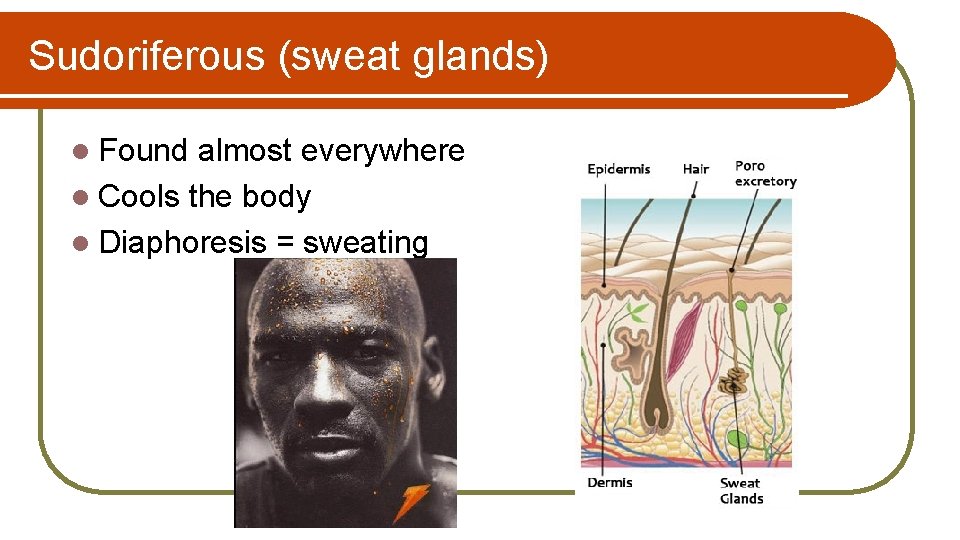
Sudoriferous (sweat glands) l Found almost everywhere l Cools the body l Diaphoresis = sweating
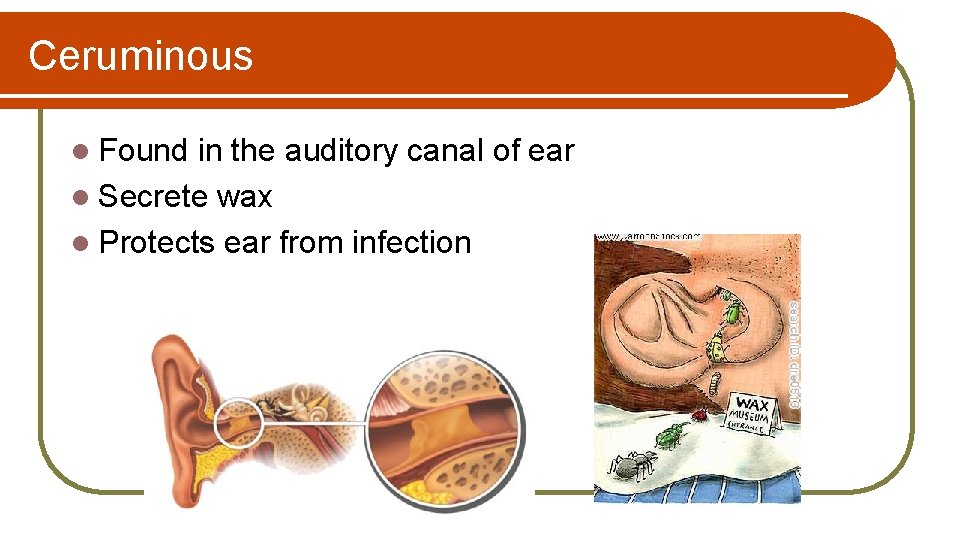
Ceruminous l Found in the auditory canal of ear l Secrete wax l Protects ear from infection
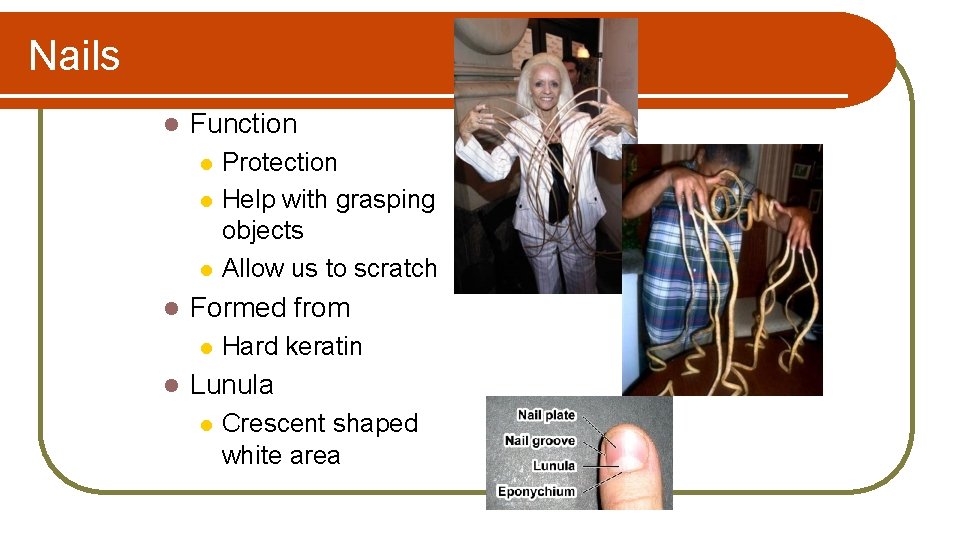
Nails l Function l l Formed from l l Protection Help with grasping objects Allow us to scratch Hard keratin Lunula l Crescent shaped white area

Integumentary Health Concerns SPORTS MED 1/INTRO TO HEALTH PROFESSIONS
Dear 16 year old me video l Watch on website
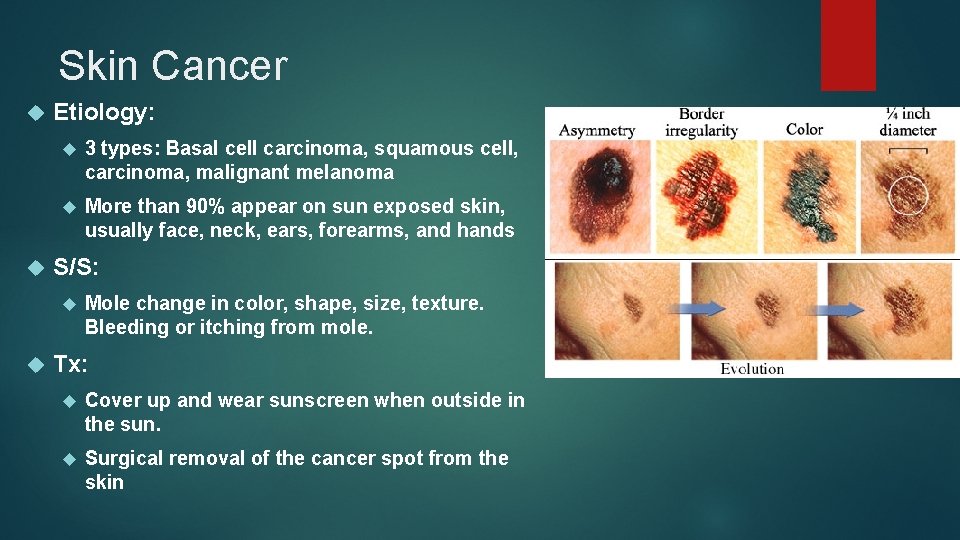
Skin Cancer Etiology: 3 types: Basal cell carcinoma, squamous cell, carcinoma, malignant melanoma More than 90% appear on sun exposed skin, usually face, neck, ears, forearms, and hands S/S: Mole change in color, shape, size, texture. Bleeding or itching from mole. Tx: Cover up and wear sunscreen when outside in the sun. Surgical removal of the cancer spot from the skin
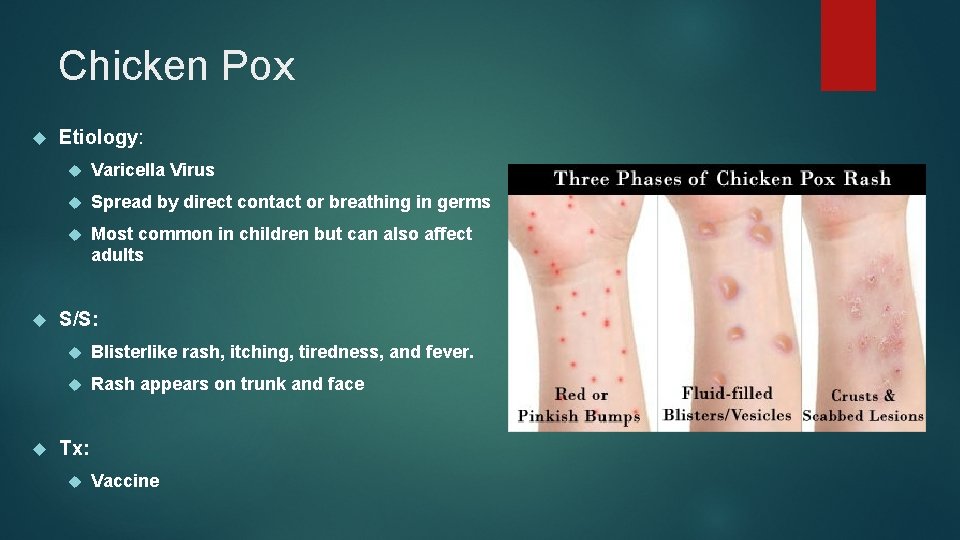
Chicken Pox Etiology: Varicella Virus Spread by direct contact or breathing in germs Most common in children but can also affect adults S/S: Blisterlike rash, itching, tiredness, and fever. Rash appears on trunk and face Tx: Vaccine
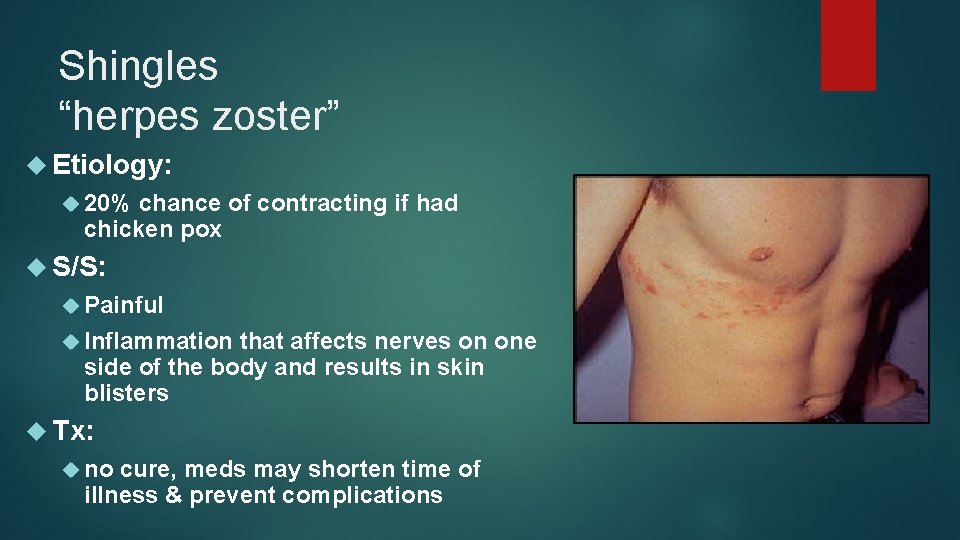
Shingles “herpes zoster” Etiology: 20% chance of contracting if had chicken pox S/S: Painful Inflammation that affects nerves on one side of the body and results in skin blisters Tx: no cure, meds may shorten time of illness & prevent complications
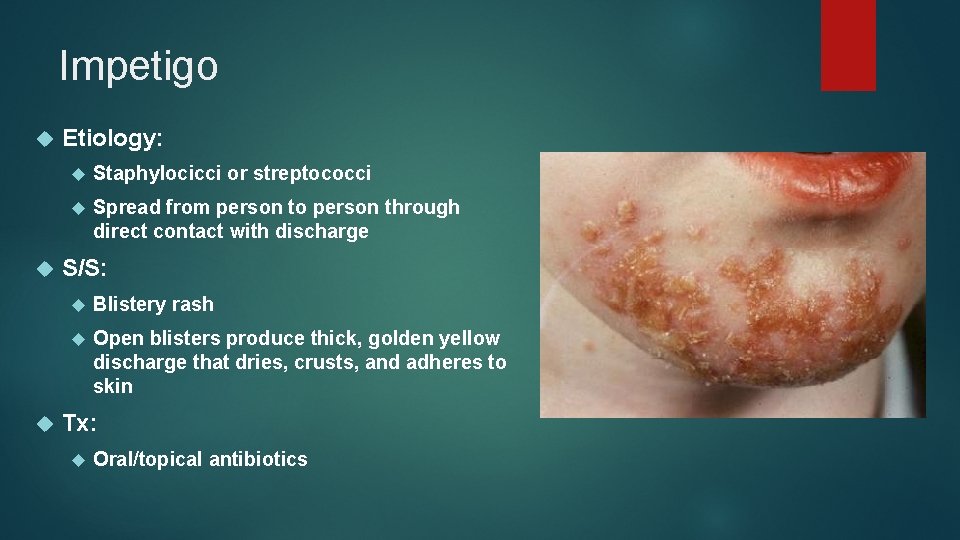
Impetigo Etiology: Staphylocicci or streptococci Spread from person to person through direct contact with discharge S/S: Blistery rash Open blisters produce thick, golden yellow discharge that dries, crusts, and adheres to skin Tx: Oral/topical antibiotics
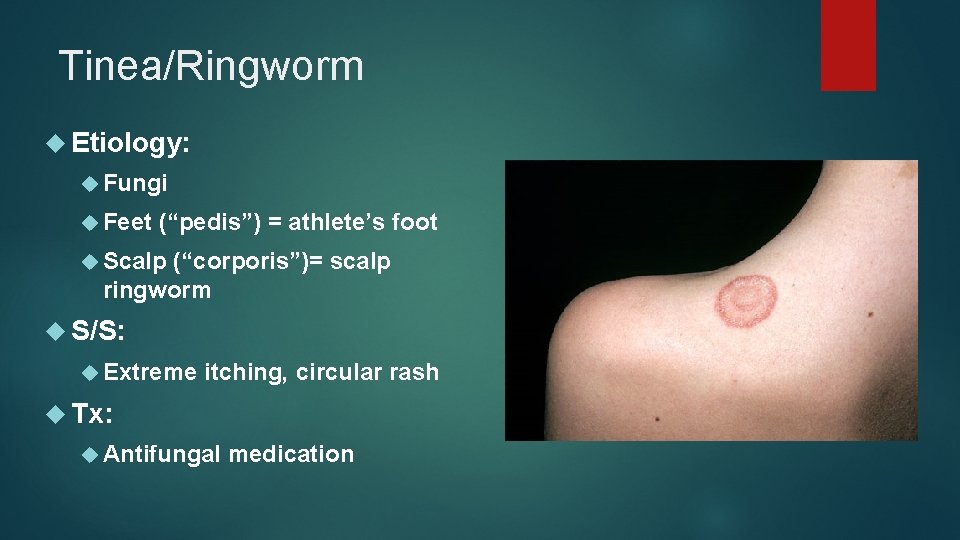
Tinea/Ringworm Etiology: Fungi Feet (“pedis”) = athlete’s foot Scalp (“corporis”)= scalp ringworm S/S: Extreme itching, circular rash Tx: Antifungal medication
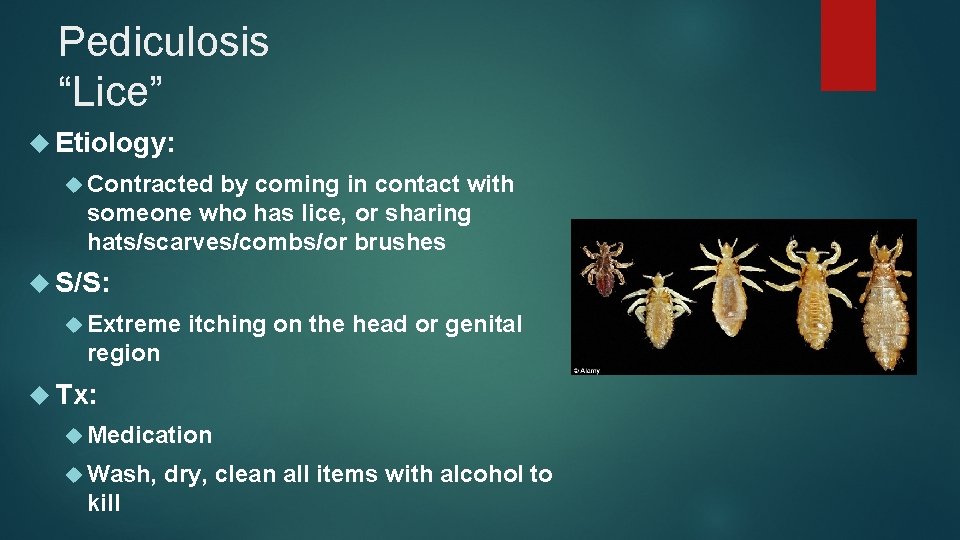
Pediculosis “Lice” Etiology: Contracted by coming in contact with someone who has lice, or sharing hats/scarves/combs/or brushes S/S: Extreme itching on the head or genital region Tx: Medication Wash, kill dry, clean all items with alcohol to
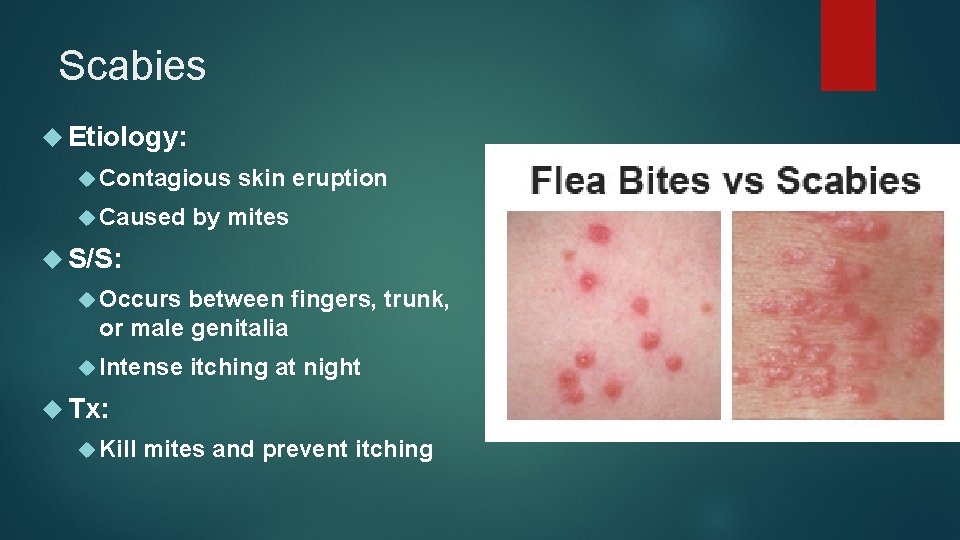
Scabies Etiology: Contagious Caused skin eruption by mites S/S: Occurs between fingers, trunk, or male genitalia Intense itching at night Tx: Kill mites and prevent itching
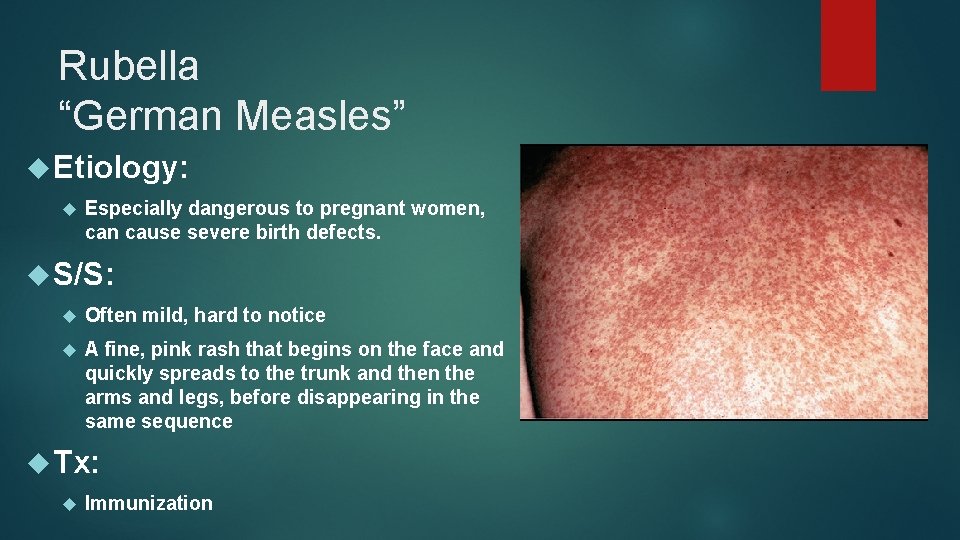
Rubella “German Measles” Etiology: Especially dangerous to pregnant women, can cause severe birth defects. S/S: Often mild, hard to notice A fine, pink rash that begins on the face and quickly spreads to the trunk and then the arms and legs, before disappearing in the same sequence Tx: Immunization
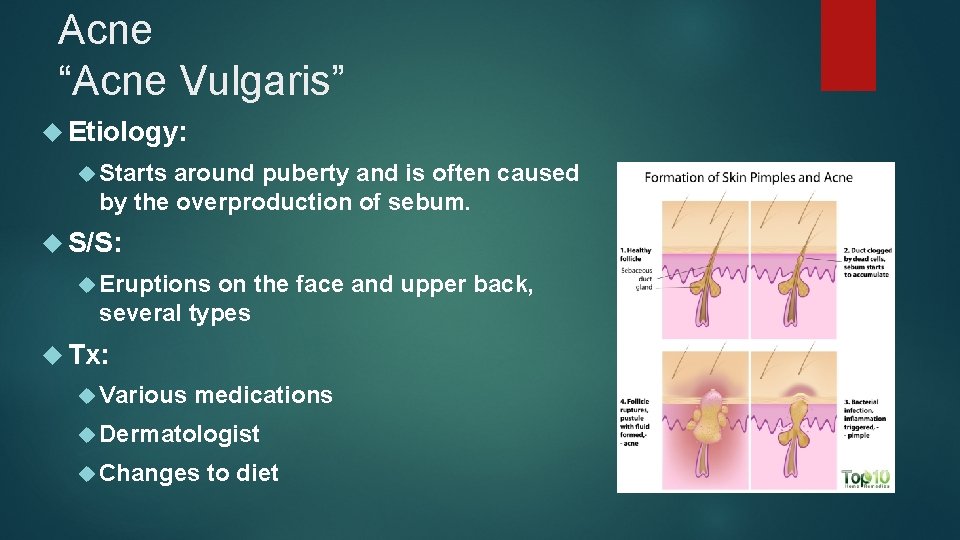
Acne “Acne Vulgaris” Etiology: Starts around puberty and is often caused by the overproduction of sebum. S/S: Eruptions on the face and upper back, several types Tx: Various medications Dermatologist Changes to diet
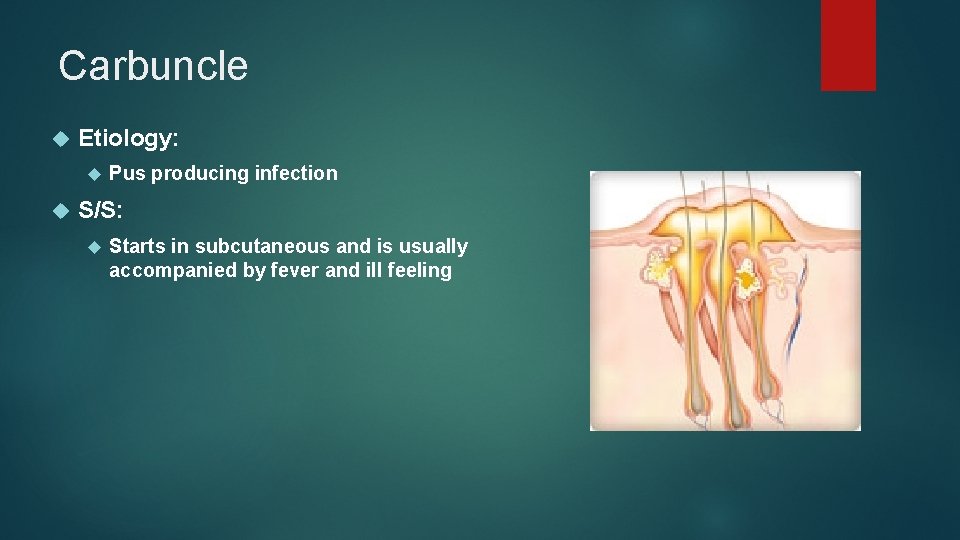
Carbuncle Etiology: Pus producing infection S/S: Starts in subcutaneous and is usually accompanied by fever and ill feeling
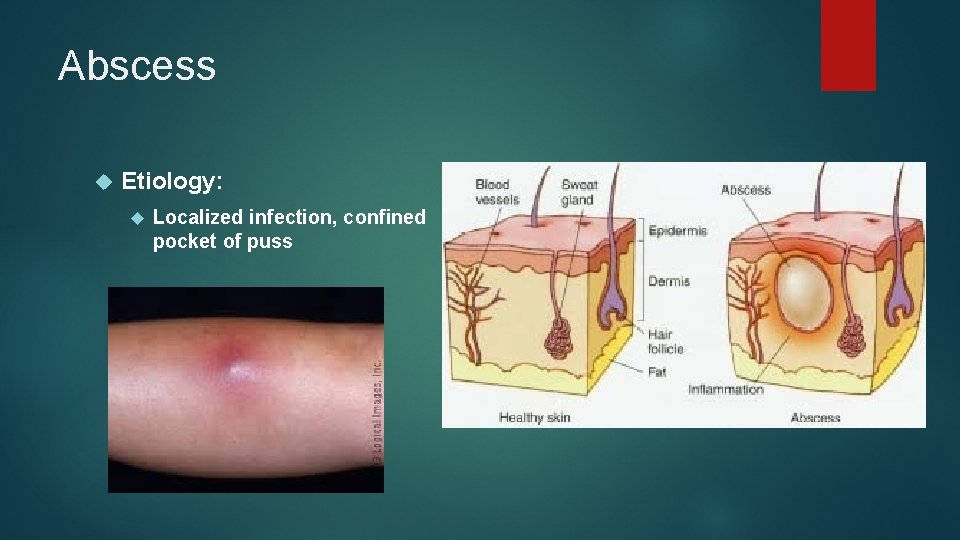
Abscess Etiology: Localized infection, confined pocket of puss
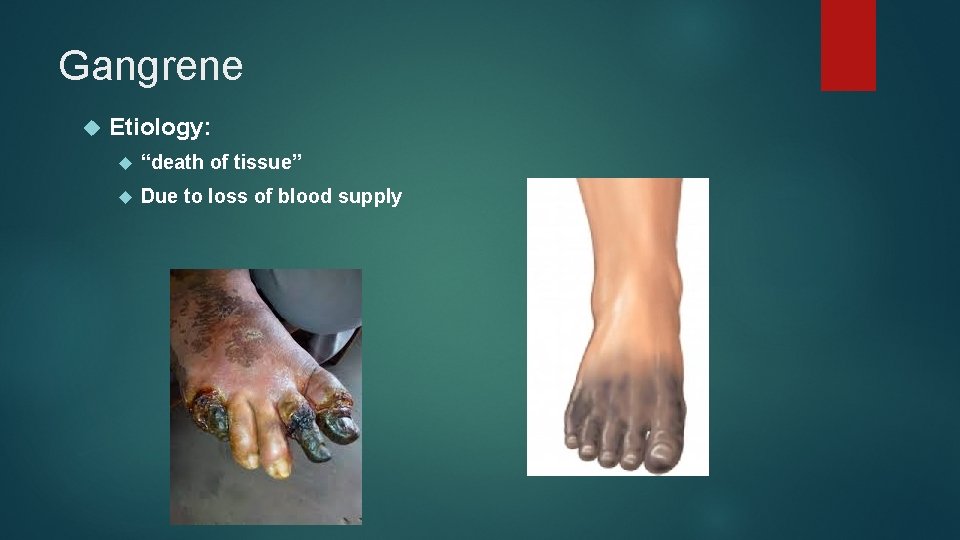
Gangrene Etiology: “death of tissue” Due to loss of blood supply
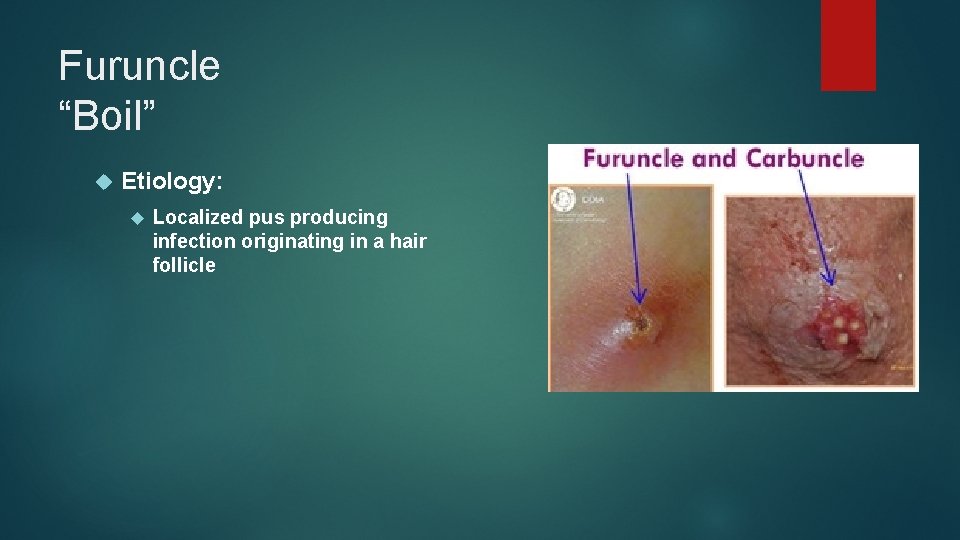
Furuncle “Boil” Etiology: Localized pus producing infection originating in a hair follicle
- Slides: 138