
BLISTER AGENT EXPOSURE 1999 Lockheed Martin Energy Research
BLISTER AGENT EXPOSURE © 1999 Lockheed Martin Energy Research Corporation CA 147

OBJECTIVES • Identify the specific signs and symptoms of sulfur mustard agent exposure • Identify the specific signs and symptoms of Lewisite exposure © 1999 Lockheed Martin Energy Research Corporation CA 148

BLISTER AGENTS • Destroy individual cells in target tissue ¥ Blisters (vesicles) most noticeable effect • Sulfur mustard and Lewisite in Army’s inventory – Lewisite stored only at Deseret Chemical Depot © 1999 Lockheed Martin Energy Research Corporation Blister CA 149

HOW BLISTER AGENTS WORK • Designed to inflict wartime casualties • Affect skin tissue and especially harsh on soft membranes – eyes – – mouth tissue lung tissue – throat tissue • Sulfur mustard greatest effect on warm, moist surfaces – mucous membranes – – groin – buttocks – knees and elbows creases © 1999 Lockheed Martin Energy Research Corporation armpits – fold of neck CA 150
BLISTER AGENT EXPOSURE • Liquid and vapors create extreme hazards • The greater absorbed dose, the greater severity of skin and tissue damage • Delayed reaction with little or no pain • Burning, stinging, redness, or blisters usually delayed between 2 to 36 hours for sulfur mustard – usually apparent between 4 - 8 hours • Immediate pain for Lewisite © 1999 Lockheed Martin Energy Research Corporation CA 151
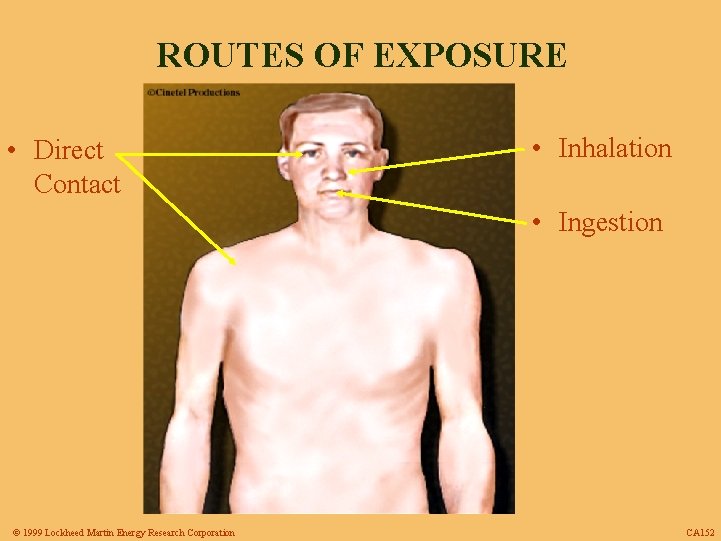
ROUTES OF EXPOSURE • Direct Contact • Inhalation • Ingestion © 1999 Lockheed Martin Energy Research Corporation CA 152
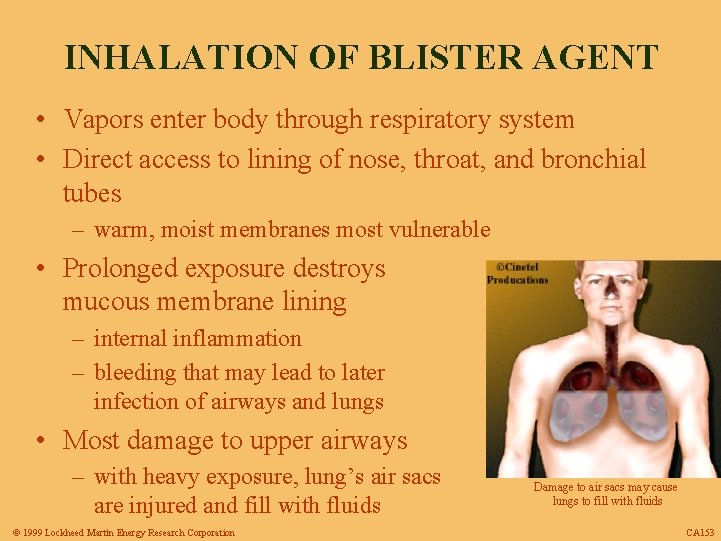
INHALATION OF BLISTER AGENT • Vapors enter body through respiratory system • Direct access to lining of nose, throat, and bronchial tubes – warm, moist membranes most vulnerable • Prolonged exposure destroys mucous membrane lining – internal inflammation – bleeding that may lead to later infection of airways and lungs • Most damage to upper airways – with heavy exposure, lung’s air sacs are injured and fill with fluids © 1999 Lockheed Martin Energy Research Corporation Damage to air sacs may cause lungs to fill with fluids CA 153

DIRECT CONTACT WITH BLISTER AGENT • Skin surface or eye touches liquid agent, surface where agent was deposited, or agent vapor • Broken blister fluid non-irritating – Does not cause blistering upon contact with skin • Warmth and moisture increase effects – – – between toes behind knees groin armpits behind ears © 1999 Lockheed Martin Energy Research Corporation CA 154

INGESTION OF BLISTER AGENT • Swallowing contaminated food, drink, placing contaminated items in mouth, or incidental hand-tomouth contact • Unlikely agent will contaminate food or drink © 1999 Lockheed Martin Energy Research Corporation CA 155
SULFUR MUSTARD © 1999 Lockheed Martin Energy Research Corporation CA 156
SULFUR MUSTARD SIGNS AND SYMPTOMS • Severity of symptoms and how rapidly they develop greatly influenced by weather conditions – hot, humid weather increases action of sulfur mustard • Signs and symptoms characteristically delayed for hours © 1999 Lockheed Martin Energy Research Corporation CA 157
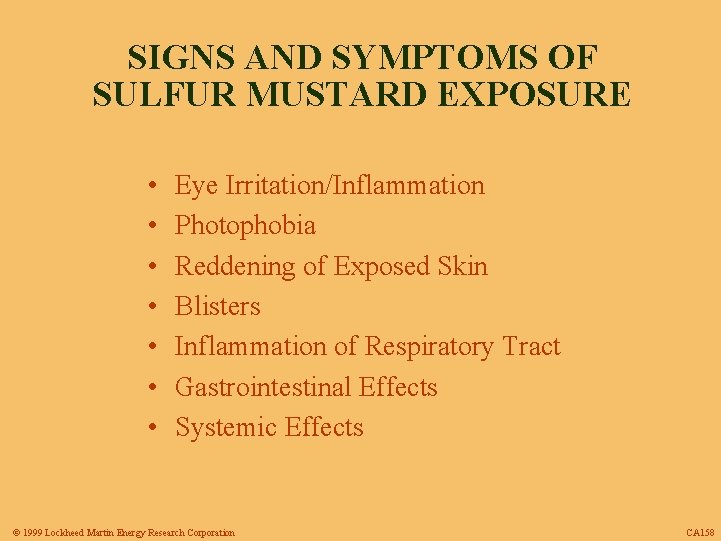
SIGNS AND SYMPTOMS OF SULFUR MUSTARD EXPOSURE • • Eye Irritation/Inflammation Photophobia Reddening of Exposed Skin Blisters Inflammation of Respiratory Tract Gastrointestinal Effects Systemic Effects © 1999 Lockheed Martin Energy Research Corporation CA 158
FACTORS AFFECTING SULFUR MUSTARD SIGNS AND SYMPTOMS • Characteristically delayed – may appear within 1 - 2 hours with large exposure or if weather hot and humid • Reaction time depends on the – – – type of agent amount of agent person has been exposed to dose (how much a person has absorbed) duration of exposure route of exposure sensitivity of person’s system © 1999 Lockheed Martin Energy Research Corporation CA 159
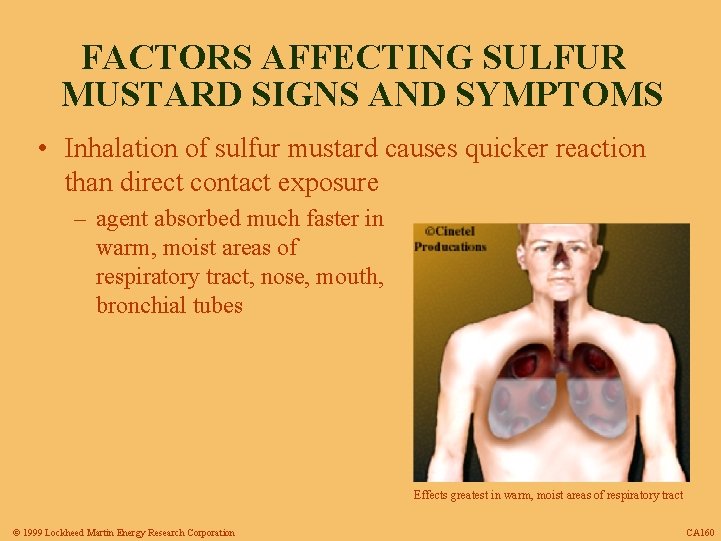
FACTORS AFFECTING SULFUR MUSTARD SIGNS AND SYMPTOMS • Inhalation of sulfur mustard causes quicker reaction than direct contact exposure – agent absorbed much faster in warm, moist areas of respiratory tract, nose, mouth, bronchial tubes Effects greatest in warm, moist areas of respiratory tract © 1999 Lockheed Martin Energy Research Corporation CA 160
FACTORS AFFECTING SULFUR MUSTARD SIGNS AND SYMPTOMS • Inhalation exposure effects occur after few hours – accompanied by sneezing, coughing, and inflammation of trachea and bronchi • Direct contact exposure effects usually delayed – absorption may continue for hours even after decontamination Not all signs and symptoms may appear. . . Dose, duration, and route of exposure make a difference © 1999 Lockheed Martin Energy Research Corporation CA 161
OTHER POSSIBLE CAUSES • Signs and symptoms may also be caused by – – – hay fever burns (chemical, thermal, sun) tear gas exposure poison ivy, poison oak, and other contact allergies certain drugs © 1999 Lockheed Martin Energy Research Corporation CA 162
INITIAL FIRST AID TREATMENT FOR SULFUR MUSTARD EXPOSURE • Immediate removal from source of exposure • Decontamination through washing and diluting • Airway management may be needed as signs/symptoms develop © 1999 Lockheed Martin Energy Research Corporation CA 163
TREATMENT FOR EYE CONTACT • Speed Critical – irreversible eye damage may be done very quickly – flush eyes immediately with water • tilt head to side • pulling eyelids apart with uncontaminated fingers • pouring water slowly into eyes • Do not cover eyes with bandages • Dark or opaque glasses shield eyes from light and provide relief from photophobia © 1999 Lockheed Martin Energy Research Corporation CA 164
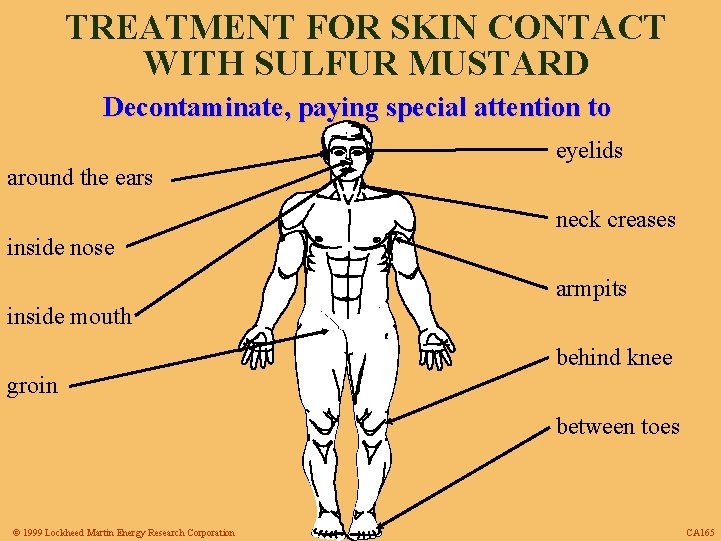
TREATMENT FOR SKIN CONTACT WITH SULFUR MUSTARD Decontaminate, paying special attention to eyelids around the ears neck creases inside nose armpits inside mouth behind knee groin between toes © 1999 Lockheed Martin Energy Research Corporation CA 165

LEWISITE © 1999 Lockheed Martin Energy Research Corporation CA 166
- Slides: 20