
Blind UnInformed and Heuristic informed Strategies Blind vs
Blind (Un-Informed) and Heuristic (informed) Strategies
Blind vs. Heuristic Strategies Blind (or un-informed) strategies have no additional information except available in problem definition n Distinguish a goal state from a non goal state. Heuristic (or informed) strategies know whether one non goal state is more promising than others.
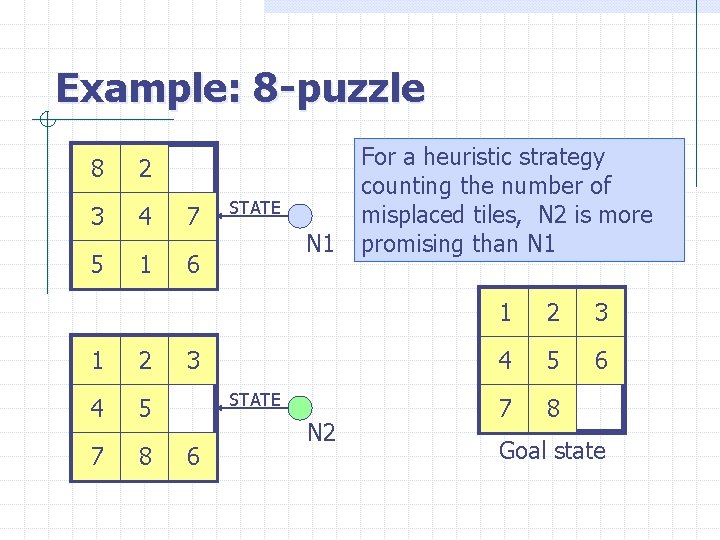
Example: 8 -puzzle 8 2 3 4 7 5 1 6 1 2 4 5 7 8 STATE N 1 3 STATE 6 N 2 For a heuristic blind strategy, strategy N 1 and N 2 are counting thejust number two nodes of (at some depth misplaced tiles, in. N 2 the is more search tree) promising than N 1 1 2 3 4 5 6 7 8 Goal state
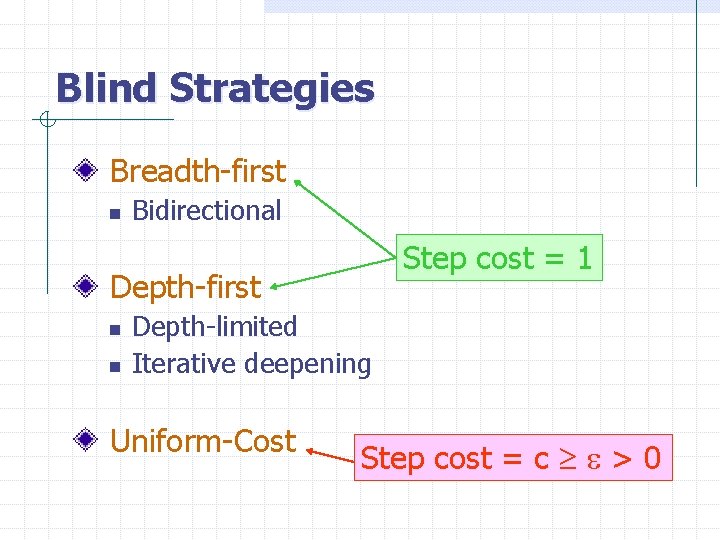
Blind Strategies Breadth-first n Bidirectional Step cost = 1 Depth-first n n Depth-limited Iterative deepening Uniform-Cost Step cost = c > 0
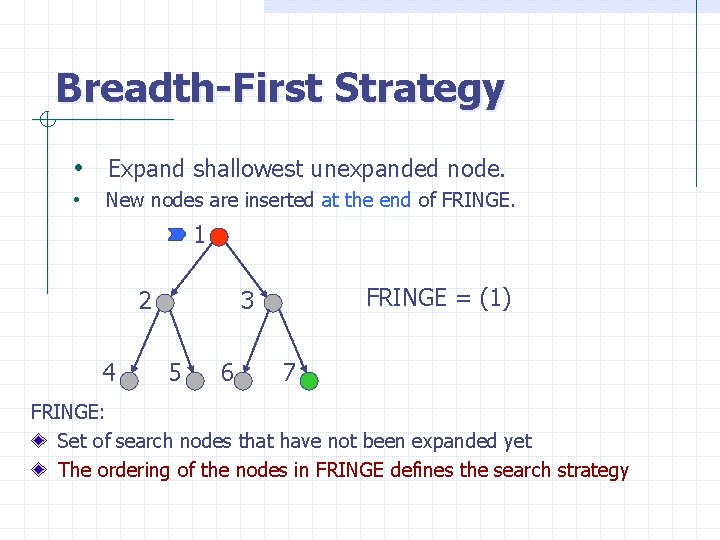
Breadth-First Strategy • Expand shallowest unexpanded node. • New nodes are inserted at the end of FRINGE. 1 2 4 FRINGE = (1) 3 5 6 7 FRINGE: Set of search nodes that have not been expanded yet The ordering of the nodes in FRINGE defines the search strategy
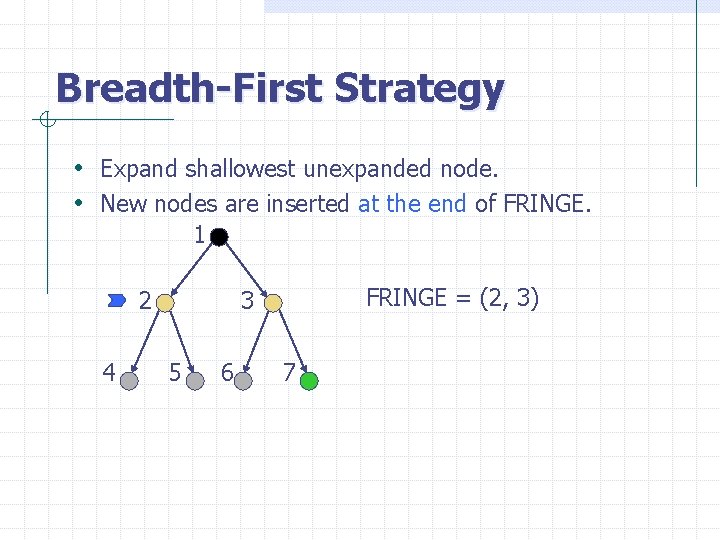
Breadth-First Strategy • Expand shallowest unexpanded node. • New nodes are inserted at the end of FRINGE. 1 2 4 FRINGE = (2, 3) 3 5 6 7
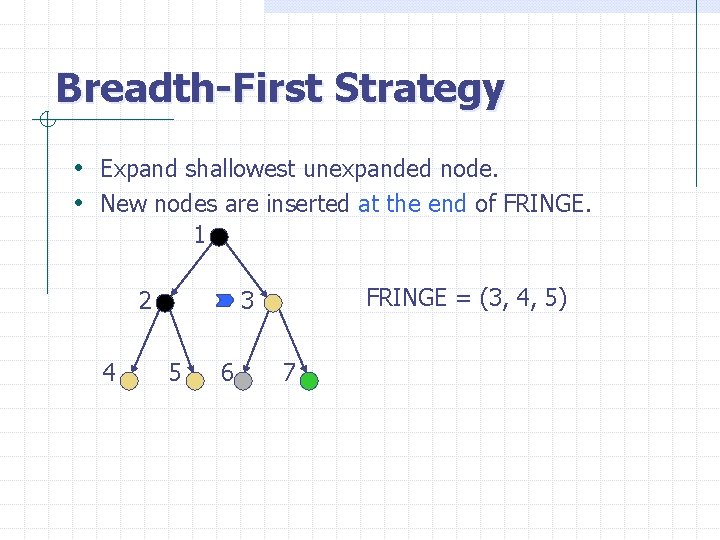
Breadth-First Strategy • Expand shallowest unexpanded node. • New nodes are inserted at the end of FRINGE. 1 2 4 FRINGE = (3, 4, 5) 3 5 6 7
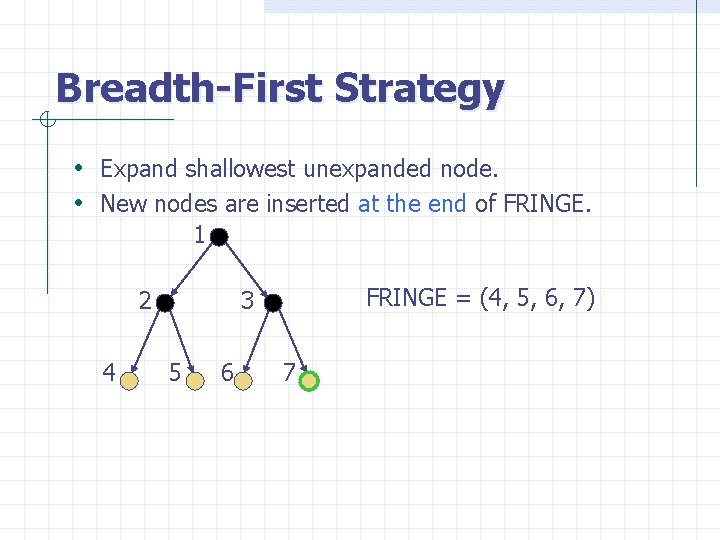
Breadth-First Strategy • Expand shallowest unexpanded node. • New nodes are inserted at the end of FRINGE. 1 2 4 FRINGE = (4, 5, 6, 7) 3 5 6 7
Bidirectional search Run two simultaneous searches-one forward from the initial state and the other backward from the goal state. It is implemented by checking each node before it is expanded to see if it is in the fringe of the other search tree. Otherwise Stop when two searches meet in the middle.
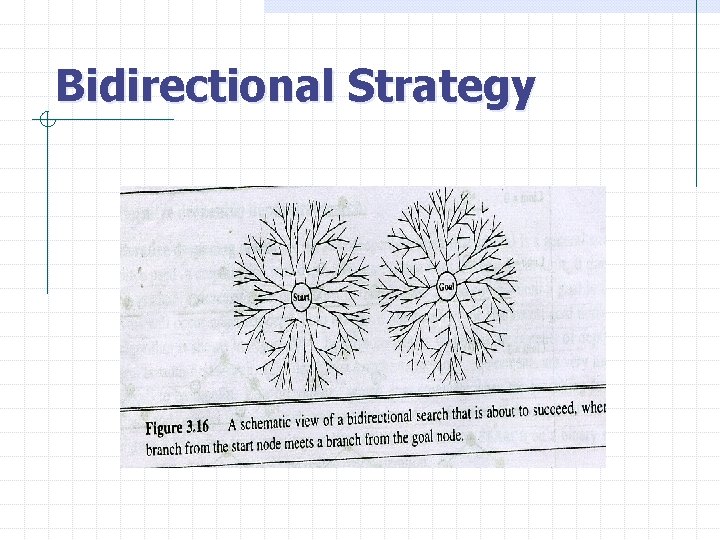
Bidirectional Strategy
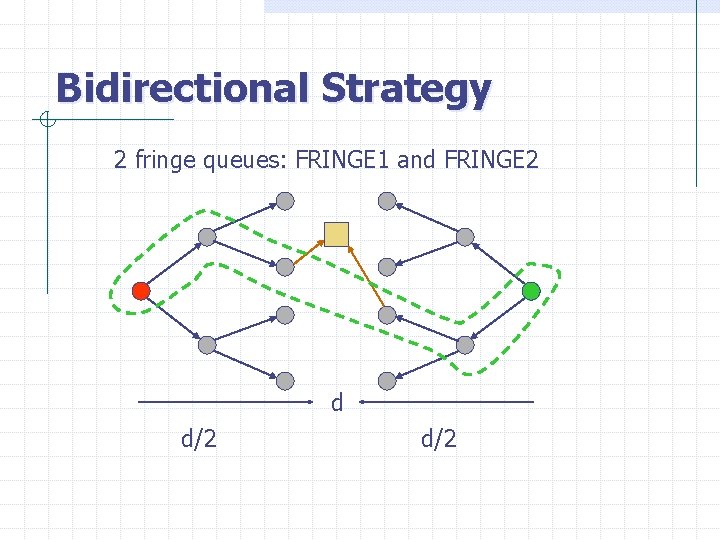
Bidirectional Strategy 2 fringe queues: FRINGE 1 and FRINGE 2 d d/2
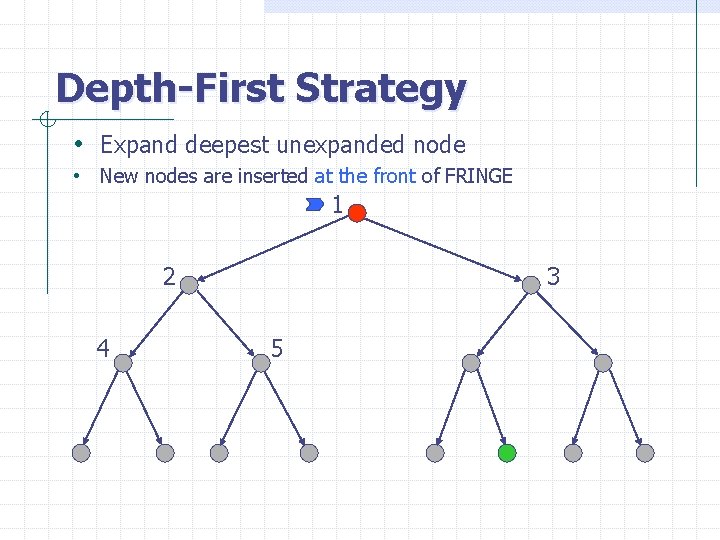
Depth-First Strategy • Expand deepest unexpanded node • New nodes are inserted at the front of FRINGE 1 2 4 3 5
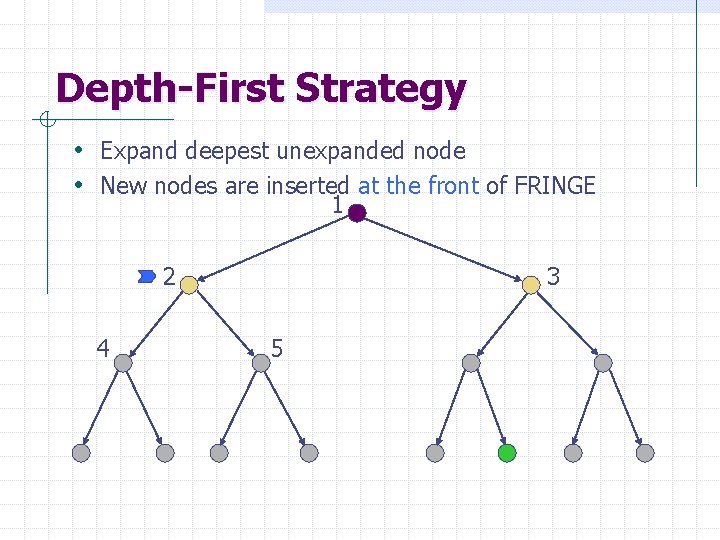
Depth-First Strategy • Expand deepest unexpanded node • New nodes are inserted at the front of FRINGE 1 2 4 3 5
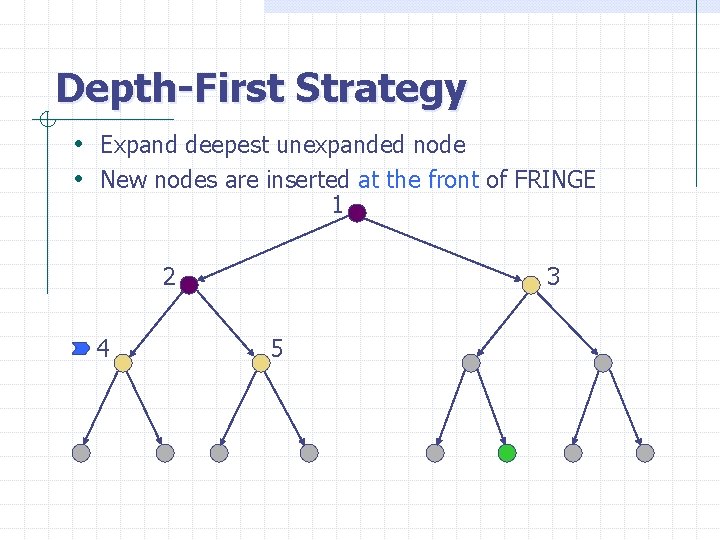
Depth-First Strategy • Expand deepest unexpanded node • New nodes are inserted at the front of FRINGE 1 2 4 3 5
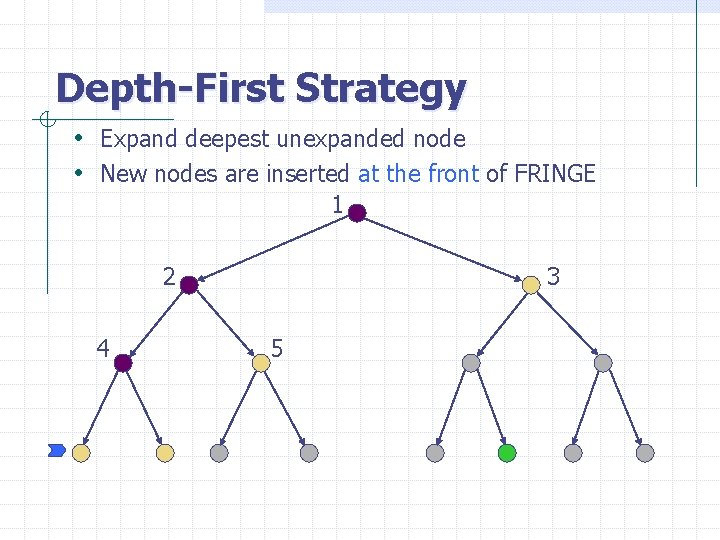
Depth-First Strategy • Expand deepest unexpanded node • New nodes are inserted at the front of FRINGE 1 2 4 3 5
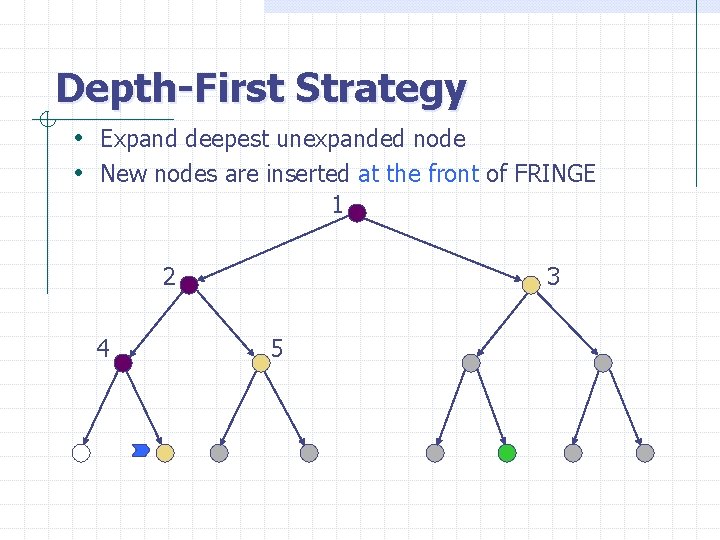
Depth-First Strategy • Expand deepest unexpanded node • New nodes are inserted at the front of FRINGE 1 2 4 3 5
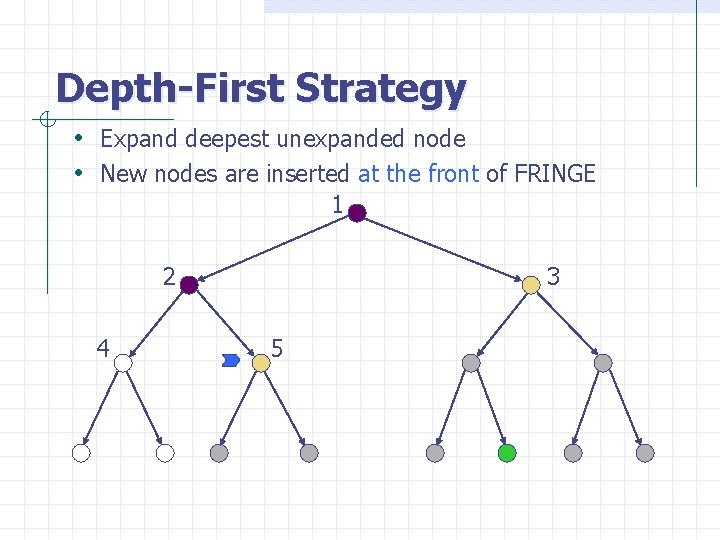
Depth-First Strategy • Expand deepest unexpanded node • New nodes are inserted at the front of FRINGE 1 2 4 3 5
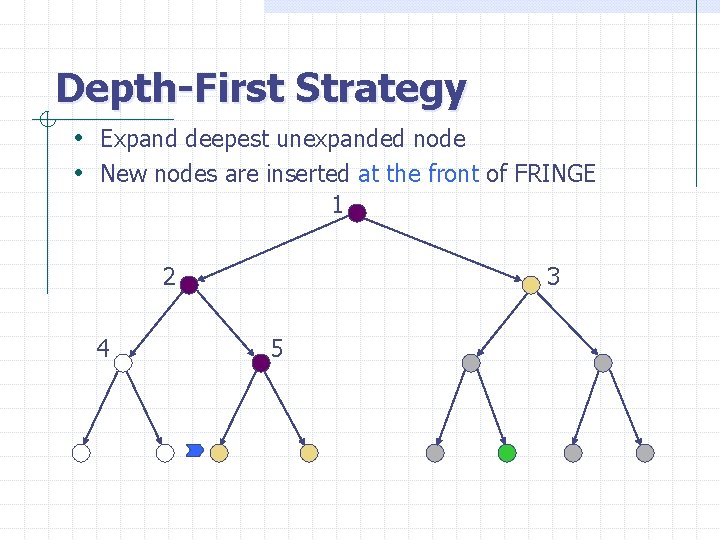
Depth-First Strategy • Expand deepest unexpanded node • New nodes are inserted at the front of FRINGE 1 2 4 3 5
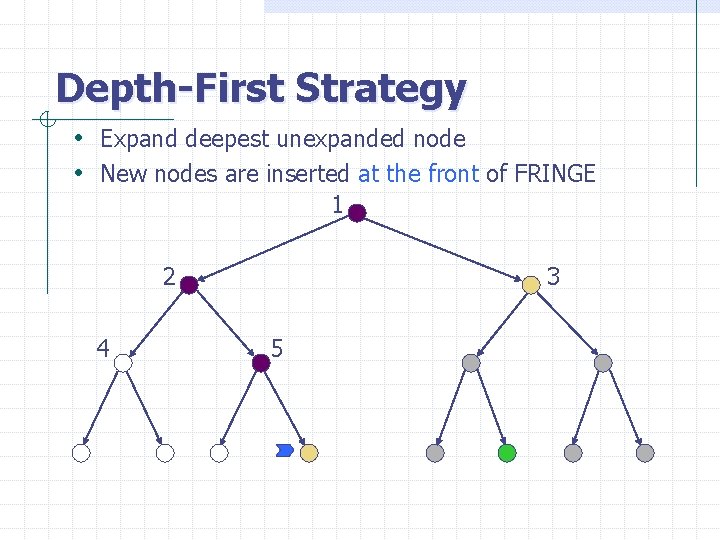
Depth-First Strategy • Expand deepest unexpanded node • New nodes are inserted at the front of FRINGE 1 2 4 3 5
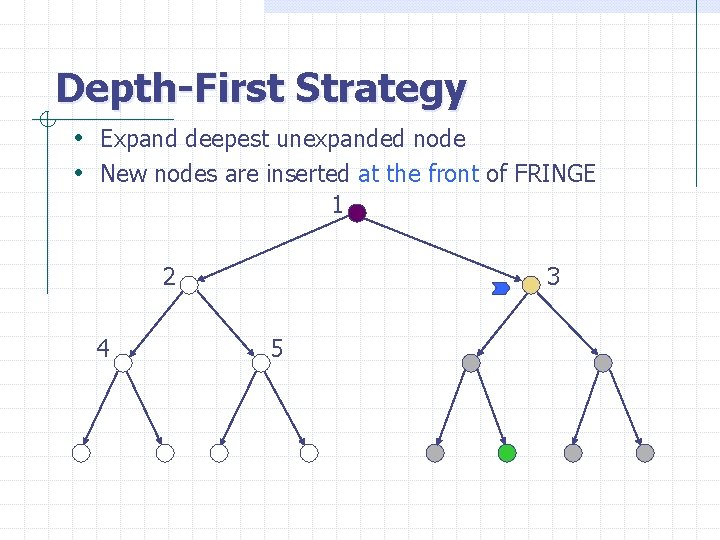
Depth-First Strategy • Expand deepest unexpanded node • New nodes are inserted at the front of FRINGE 1 2 4 3 5
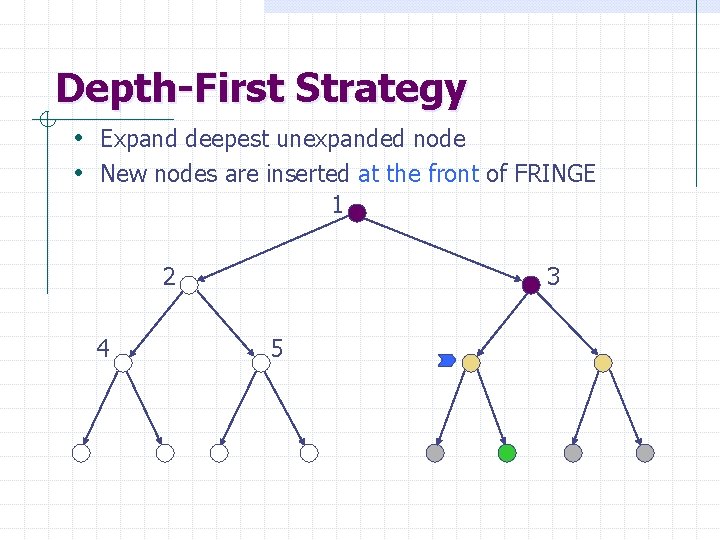
Depth-First Strategy • Expand deepest unexpanded node • New nodes are inserted at the front of FRINGE 1 2 4 3 5
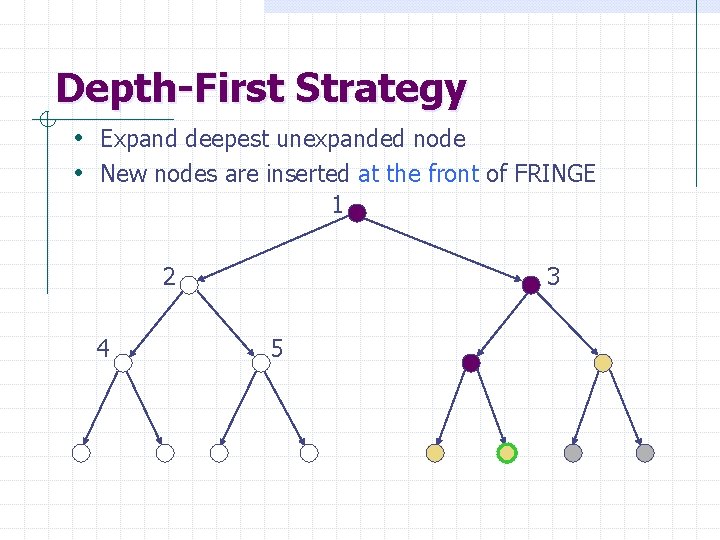
Depth-First Strategy • Expand deepest unexpanded node • New nodes are inserted at the front of FRINGE 1 2 4 3 5
Problem If one subtree were of unbounded(infinite) depth but contained no solution, it would never terminate. To overcome this depth limited search is used.
Depth-Limited Strategy Depth-first with depth limit k (maximal depth below which nodes are not expanded) Three possible outcomes: n n n Solution Failure (no solution) Cutoff (no solution within depth limit)
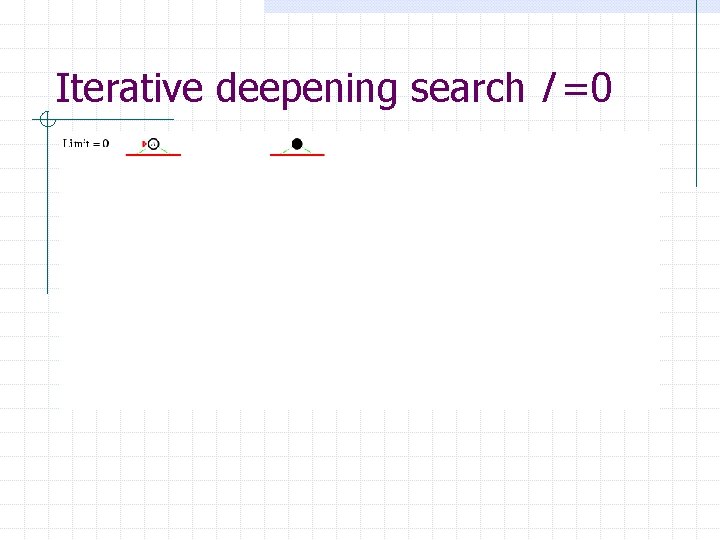
Iterative deepening search l =0
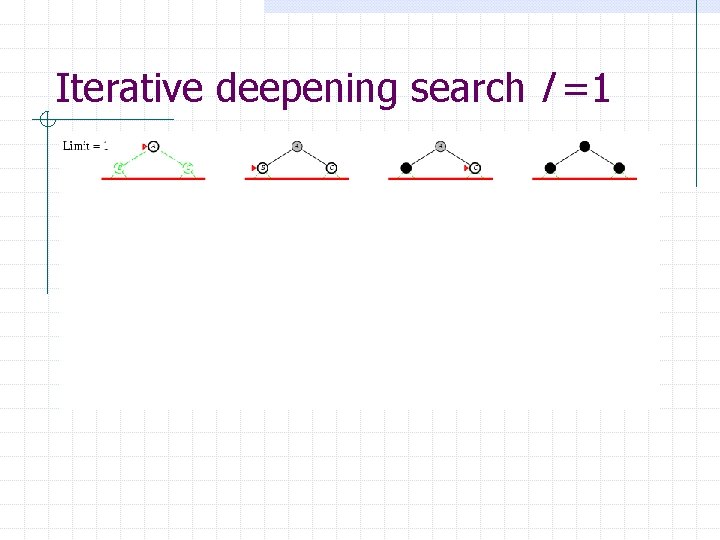
Iterative deepening search l =1
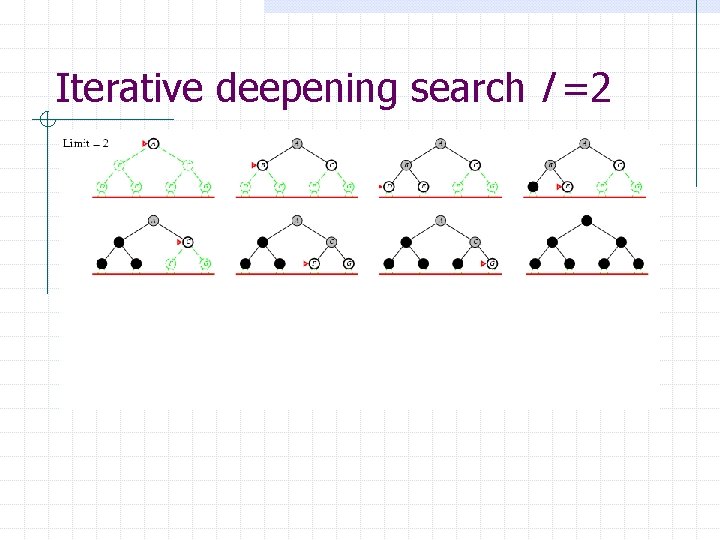
Iterative deepening search l =2
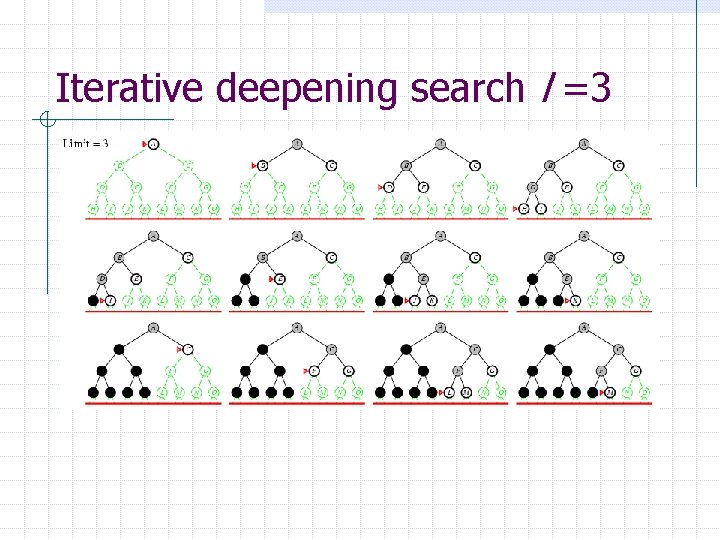
Iterative deepening search l =3
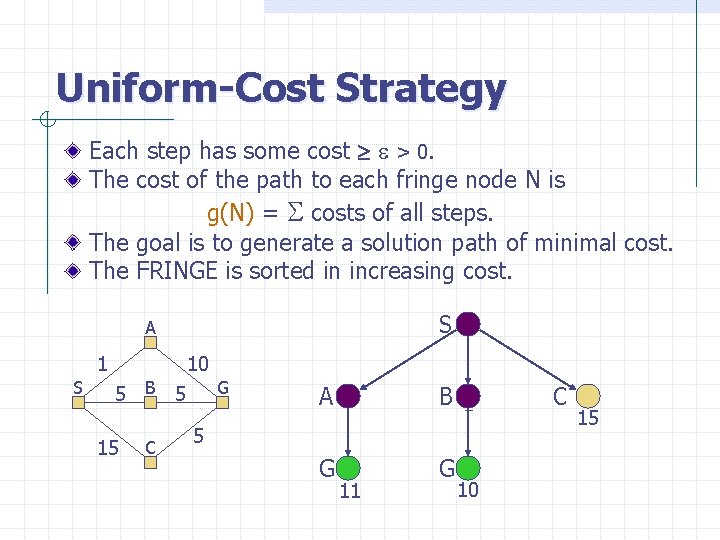
Uniform-Cost Strategy Each step has some cost > 0. The cost of the path to each fringe node N is g(N) = costs of all steps. The goal is to generate a solution path of minimal cost. The FRINGE is sorted in increasing cost. S A S 1 5 B 5 15 C 10 G A 5 G 1 11 B G 0 5 10 C 15
Informed Search Informed search(heuristic search) • They are given problem-specific knowledge such how far it is from the goal.
General approach Best-first search: The node is selected for an expansion based on an evaluation function. f(n). Define an evaluation function: f : node N real number whose value depends on the state of N The node with the lowest evaluation is selected for expansion, because the evaluation measures the distance to the goal. Order the fringe in increasing f [the smaller f, the better] Choose the node that appears to be best according to the evaluation function.
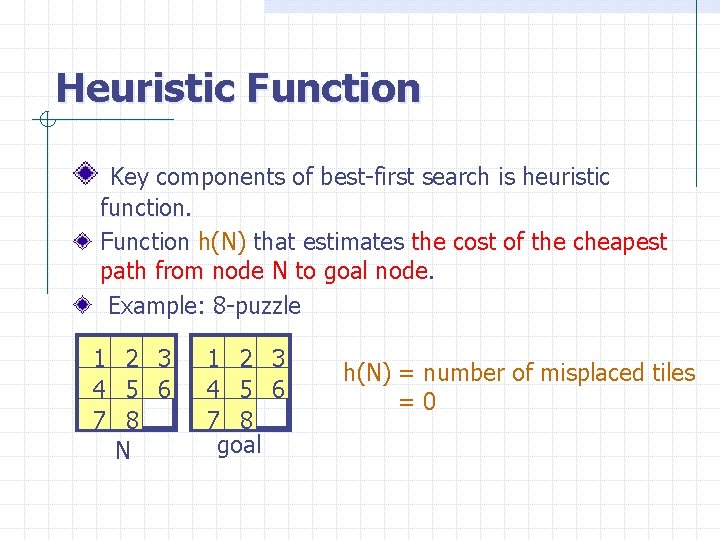
Heuristic Function Key components of best-first search is heuristic function. Function h(N) that estimates the cost of the cheapest path from node N to goal node. Example: 8 -puzzle 1 2 3 4 5 6 7 8 N 1 2 3 4 5 6 7 8 goal h(N) = number of misplaced tiles =0
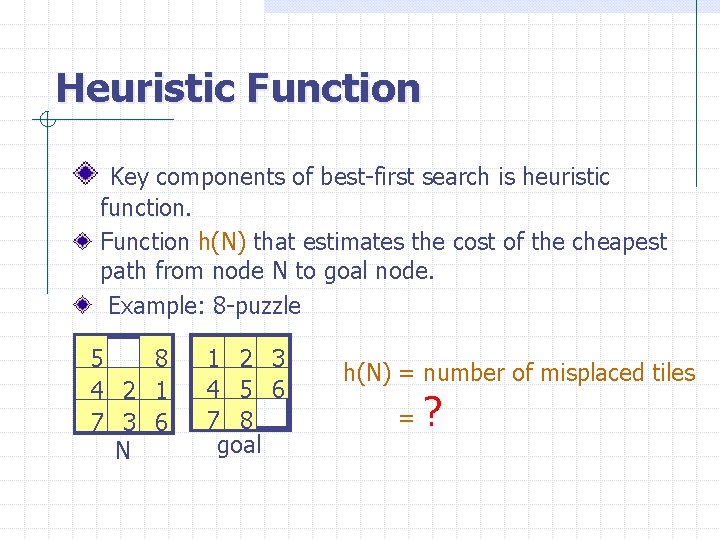
Heuristic Function Key components of best-first search is heuristic function. Function h(N) that estimates the cost of the cheapest path from node N to goal node. Example: 8 -puzzle 5 8 4 2 1 7 3 6 N 1 2 3 4 5 6 7 8 goal h(N) = number of misplaced tiles = ?
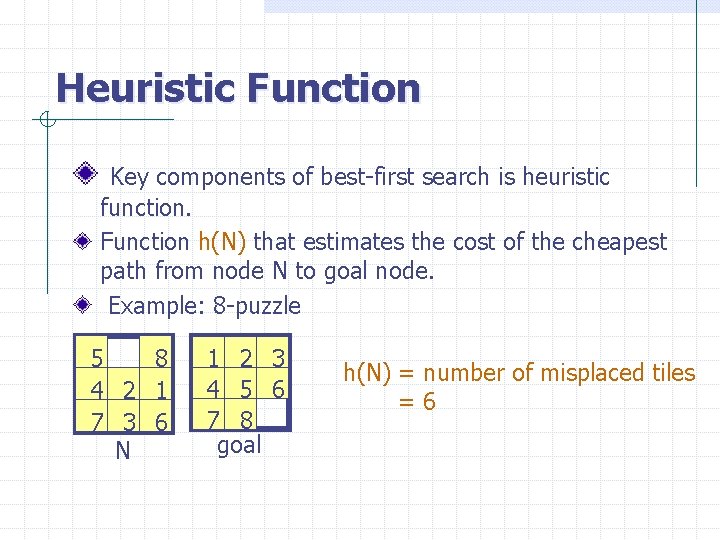
Heuristic Function Key components of best-first search is heuristic function. Function h(N) that estimates the cost of the cheapest path from node N to goal node. Example: 8 -puzzle 5 8 4 2 1 7 3 6 N 1 2 3 4 5 6 7 8 goal h(N) = number of misplaced tiles =6
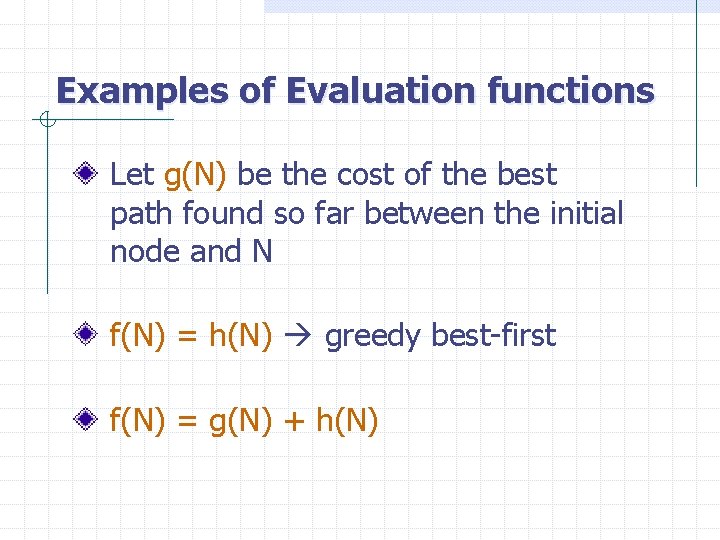
Examples of Evaluation functions Let g(N) be the cost of the best path found so far between the initial node and N f(N) = h(N) greedy best-first f(N) = g(N) + h(N)
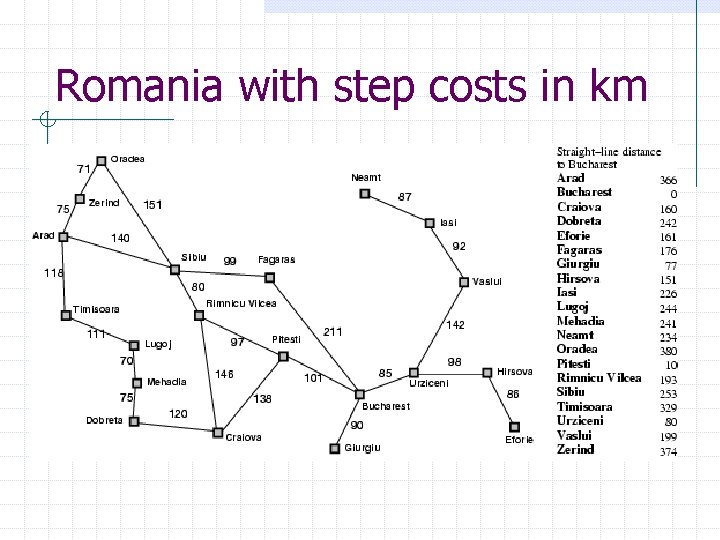
Romania with step costs in km
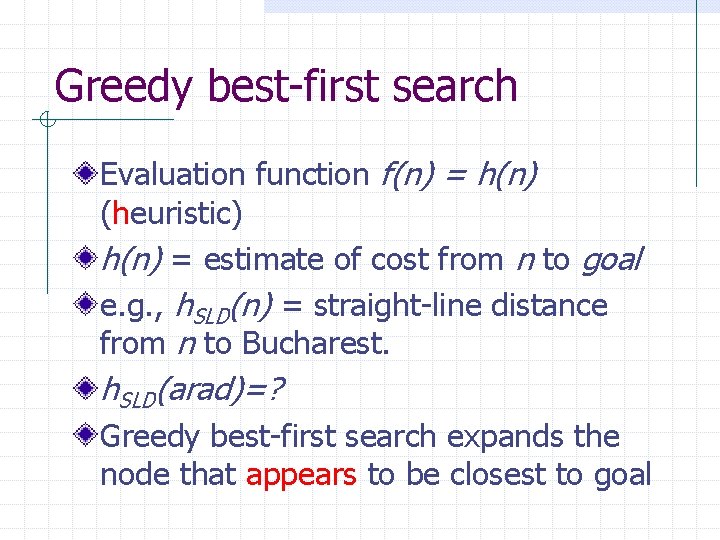
Greedy best-first search Evaluation function f(n) = h(n) (heuristic) h(n) = estimate of cost from n to goal e. g. , h. SLD(n) = straight-line distance from n to Bucharest. h. SLD(arad)=? Greedy best-first search expands the node that appears to be closest to goal
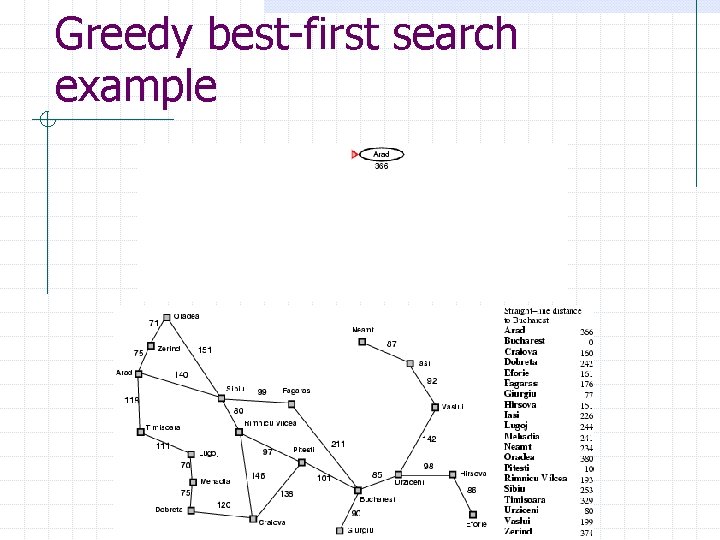
Greedy best-first search example
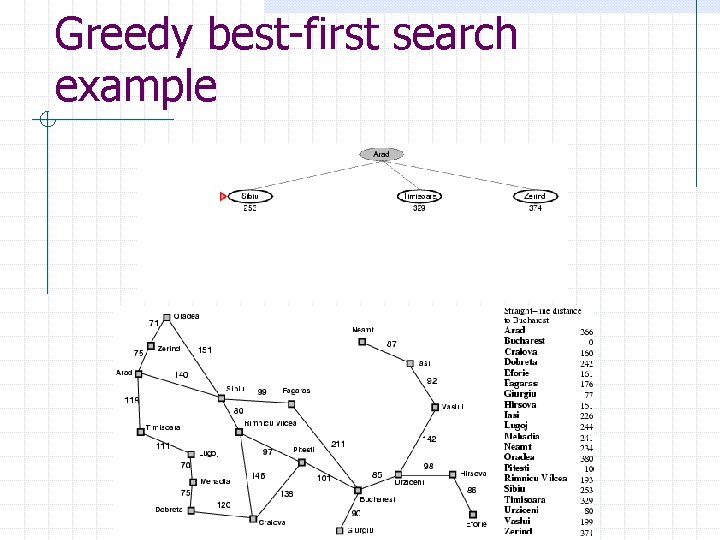
Greedy best-first search example
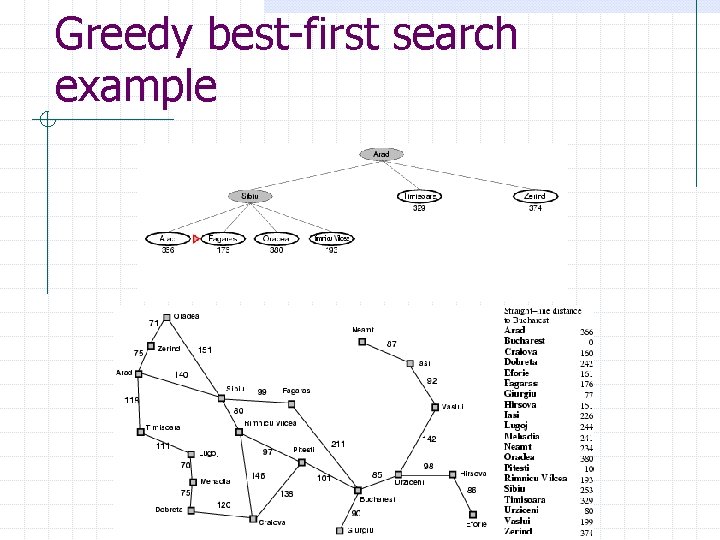
Greedy best-first search example
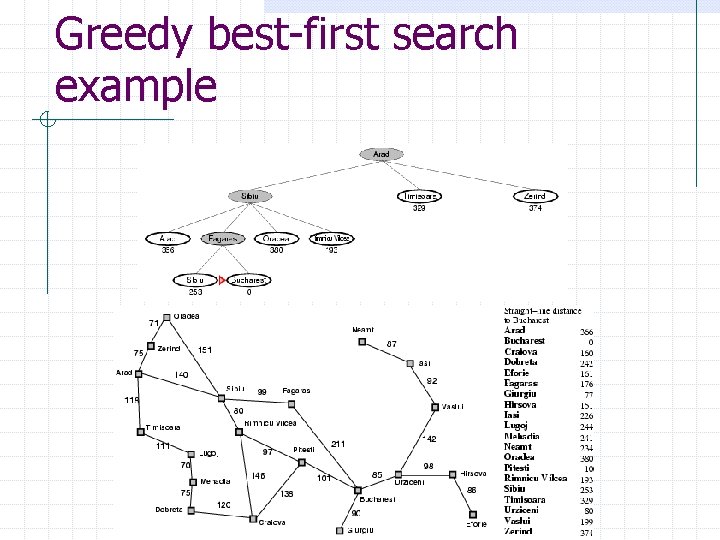
Greedy best-first search example
Greedy best-first search It is not optimal.
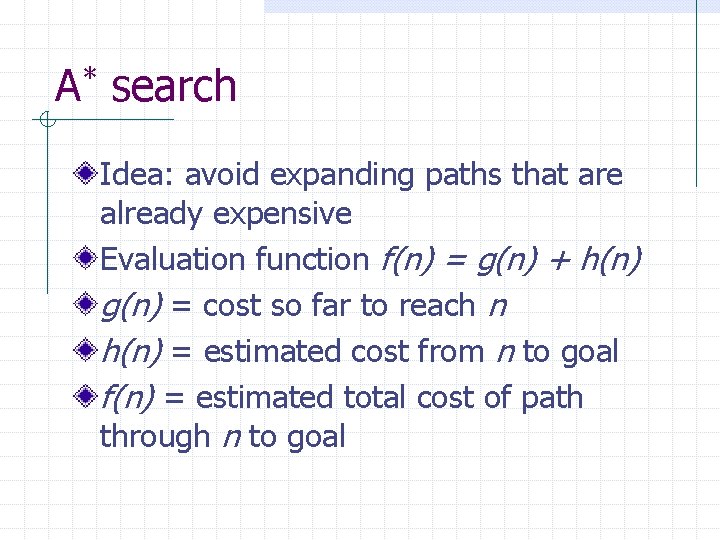
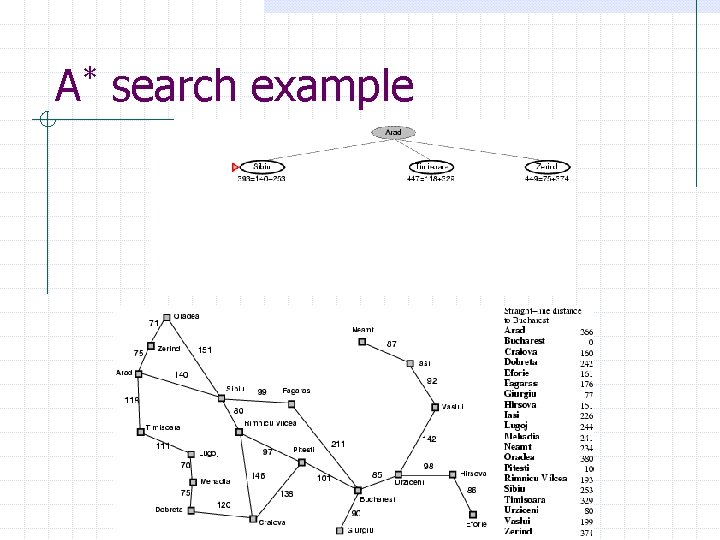
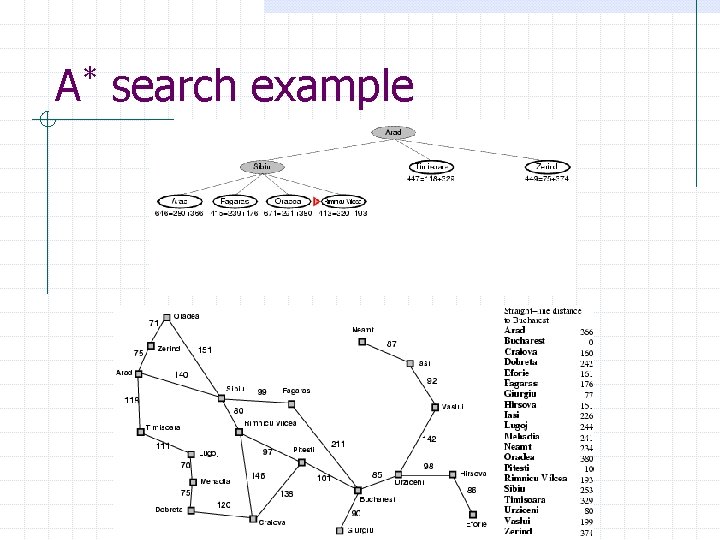
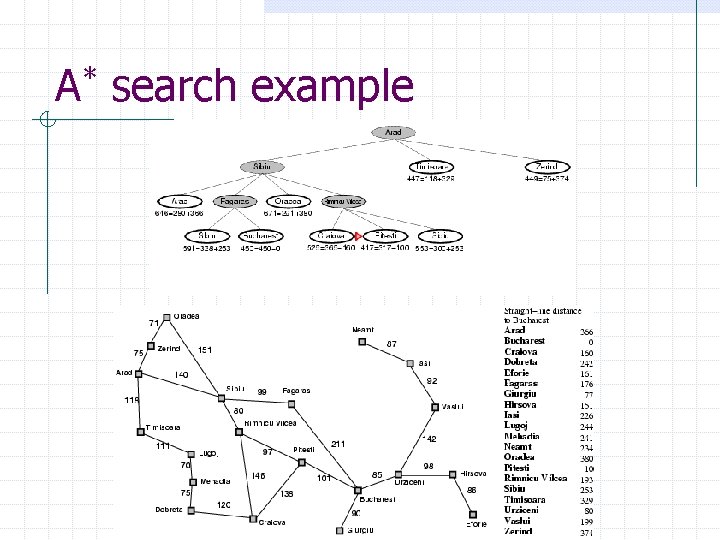
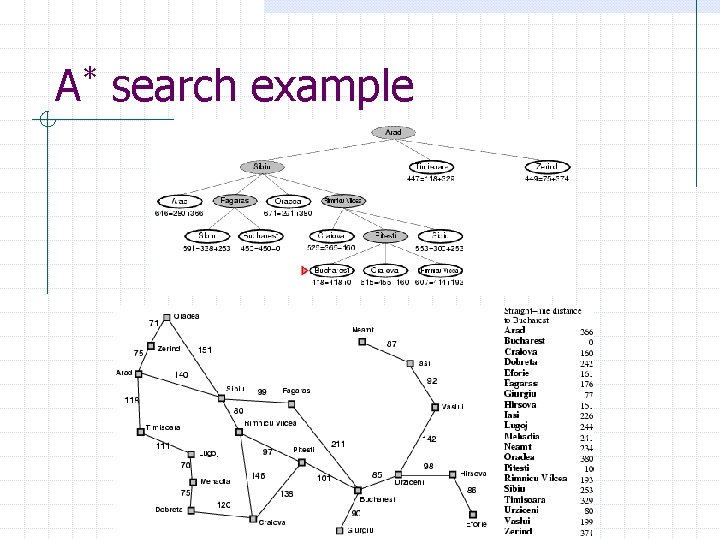
A* search Idea: avoid expanding paths that are already expensive Evaluation function f(n) = g(n) + h(n) g(n) = cost so far to reach n h(n) = estimated cost from n to goal f(n) = estimated total cost of path through n to goal
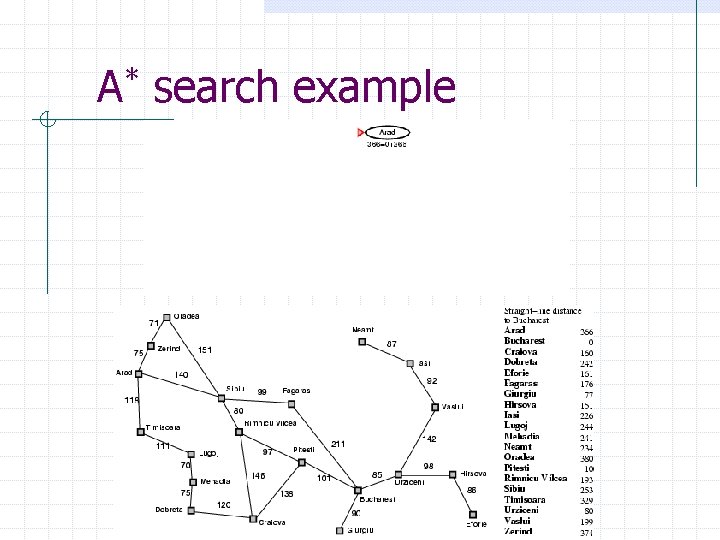
A* search example
A* search example
A* search example

A* search example
A* search example
A* search example
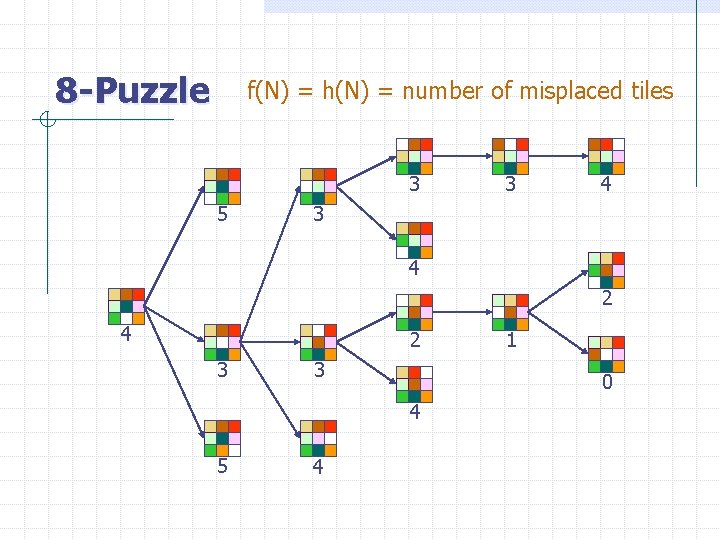
8 -Puzzle f(N) = h(N) = number of misplaced tiles 3 5 3 4 2 4 2 3 3 0 4 5 4 1
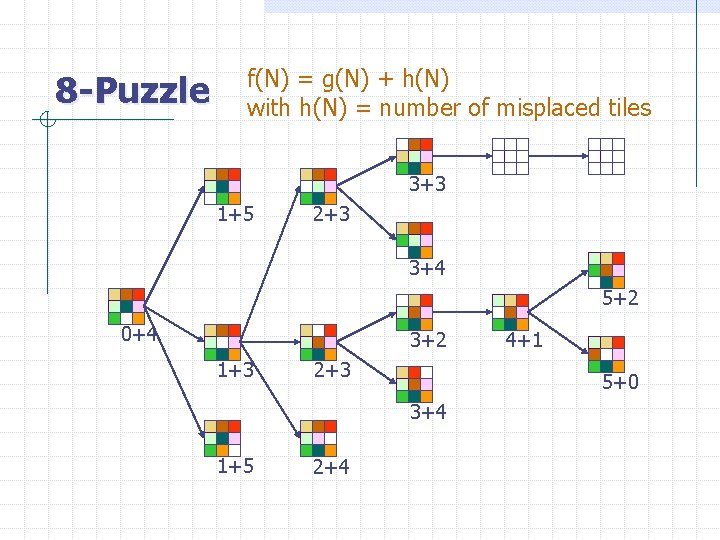
8 -Puzzle f(N) = g(N) + h(N) with h(N) = number of misplaced tiles 3+3 1+5 2+3 3+4 5+2 0+4 3+2 1+3 2+3 5+0 3+4 1+5 2+4 4+1
- Slides: 51