
Blending Classroom and Computing Activities for Mathematical Resilience
Blending Classroom and Computing Activities for Mathematical Resilience by Making Construals HENG CHONCHAIYA BURAPHA UNIVERSITY, THAILAND STEVE RUSS UNIVERSITY OF WARWICK PROMOTING MATHEMATICAL RESILIENCE CONFERENCE, UNIVERSITY OF WARWICK 4 TH MARCH 2016
Acknowledgement We are pleased to acknowledge the pioneering work of Sue Johnston-Wilder (Centre for Educational Studies) on Mathematical Resilience, and the leading role of Meurig Beynon and the Warwick CONSTRUIT! project team in developing both theory and practical aspects of work on making construals shown here.
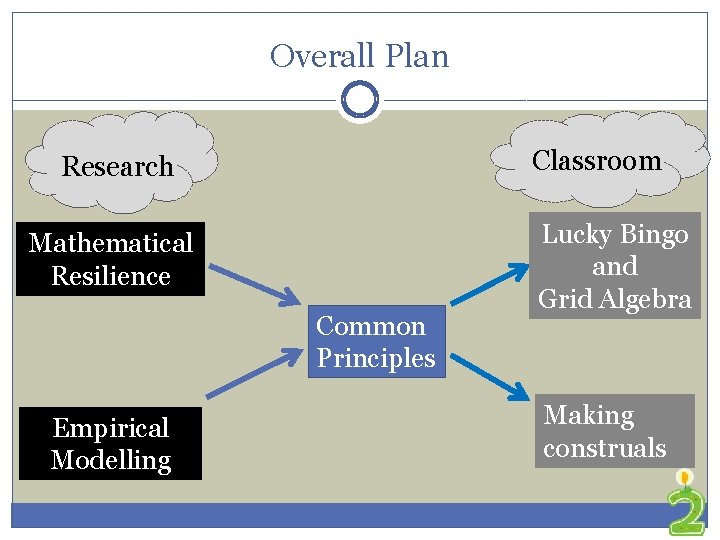
Overall Plan Classroom Research Mathematical Resilience Common Principles Empirical Modelling Lucky Bingo and Grid Algebra Making construals
Overall Claim Making construals offers a new kind of software that is well-suited to developing mathematical resilience.
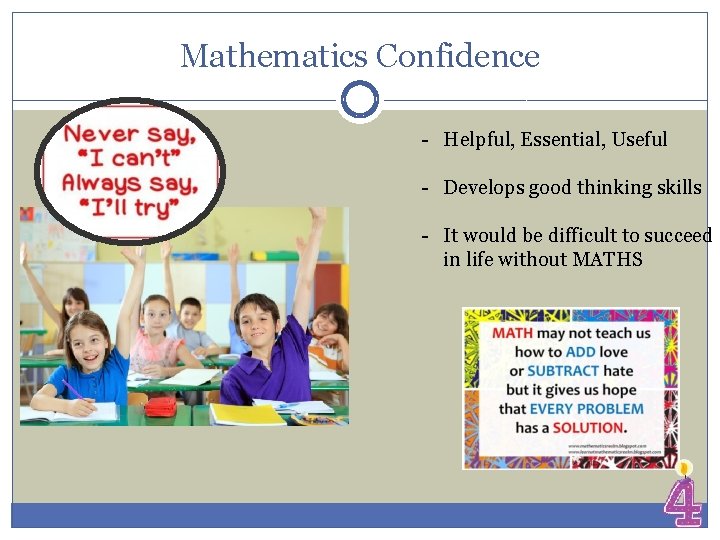
Mathematics Confidence - Helpful, Essential, Useful - Develops good thinking skills - It would be difficult to succeed in life without MATHS
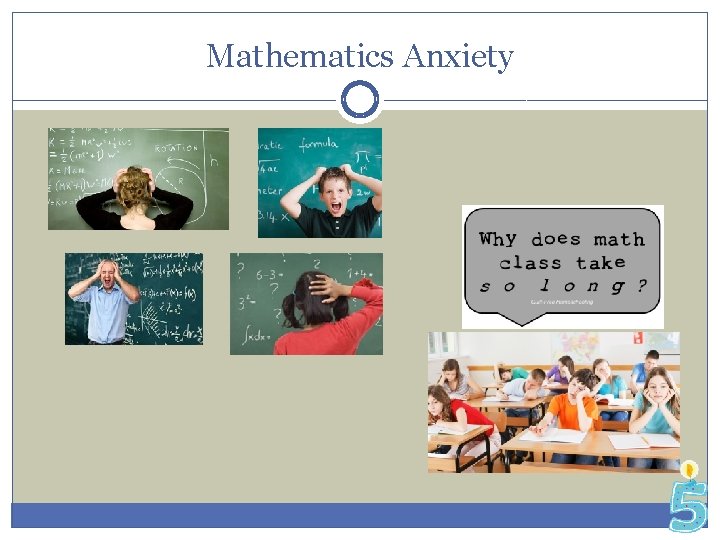
Mathematics Anxiety
Mathematics Anxiety in Training Johnston-Wilder, Brindley and Dent, 2014 1. Mathematics anxiety is a significant problem in apprenticeships with harder mathematics than expected. 2. Mathematics anxiety is highly likely to be hindering well-being and progress. 3. For many people, the problem “is only in Maths”.
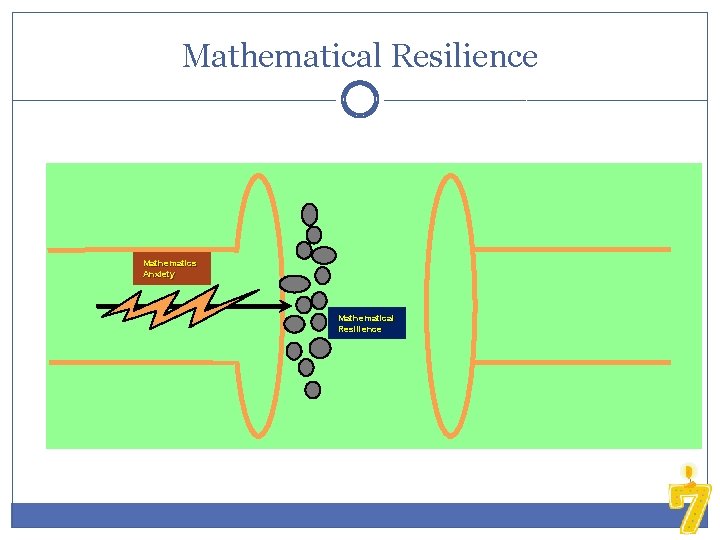
Mathematical Resilience Mathematics Anxiety Mathematical Resilience
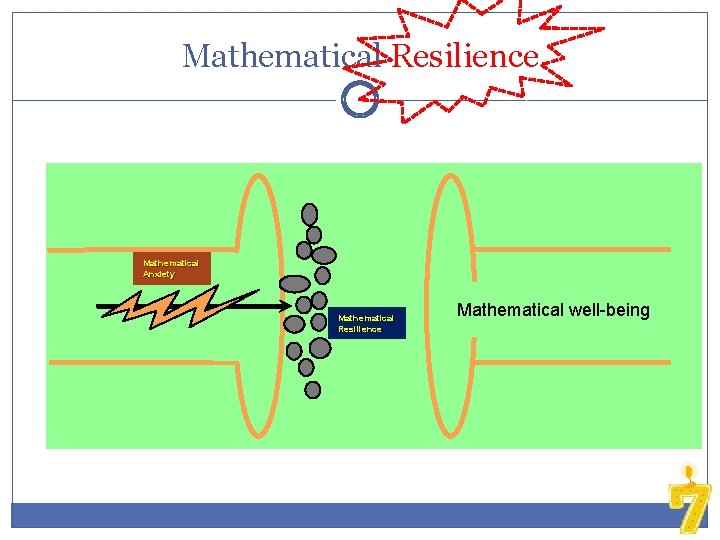
Mathematical Resilience Mathematical Anxiety Mathematical Resilience Mathematical well-being
What do resilient learners look like? Some suggestions: �Are flexible, adaptable & tolerate ambiguity �Anticipate problems & solve them logically �See creative solutions to challenges �Have positive self-esteem �Are curious & learn from experience �Are durable & independent �Have an internal locus of control �Have an achievement oriented attitude
How to develop Mathematical Resilience in classrooms? �more pupil talk, less teacher talk, and the development of mathematical language; �more expectation of effort, and growth mindset; �provision of challenging and hard work; �collaborative learning, working in groups and supporting each other. (Lee and Johnston-Wilder, 2013 )
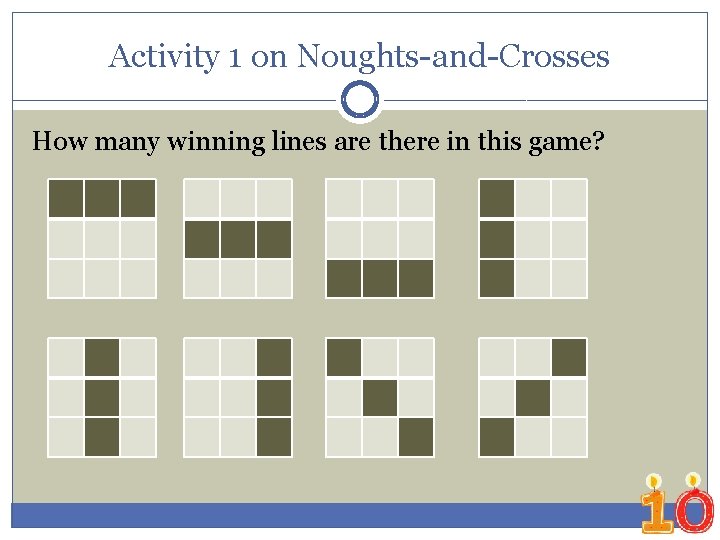
Activity 1 on Noughts-and-Crosses How many winning lines are there in this game?
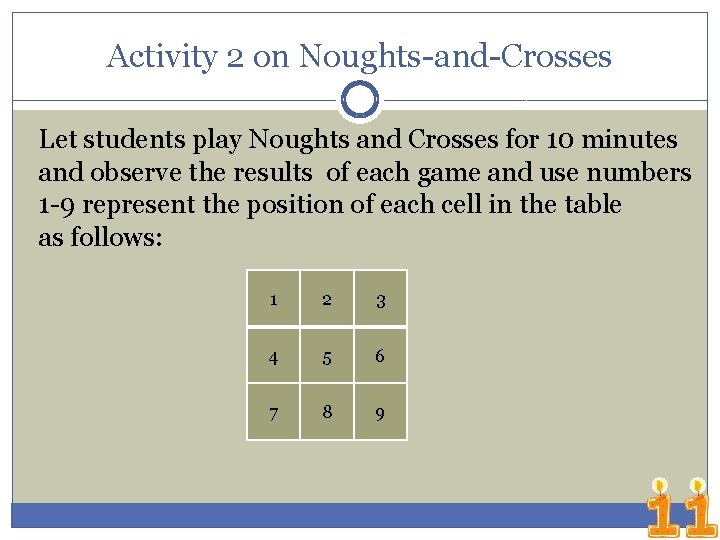
Activity 2 on Noughts-and-Crosses Let students play Noughts and Crosses for 10 minutes and observe the results of each game and use numbers 1 -9 represent the position of each cell in the table as follows: 1 2 3 4 5 6 7 8 9
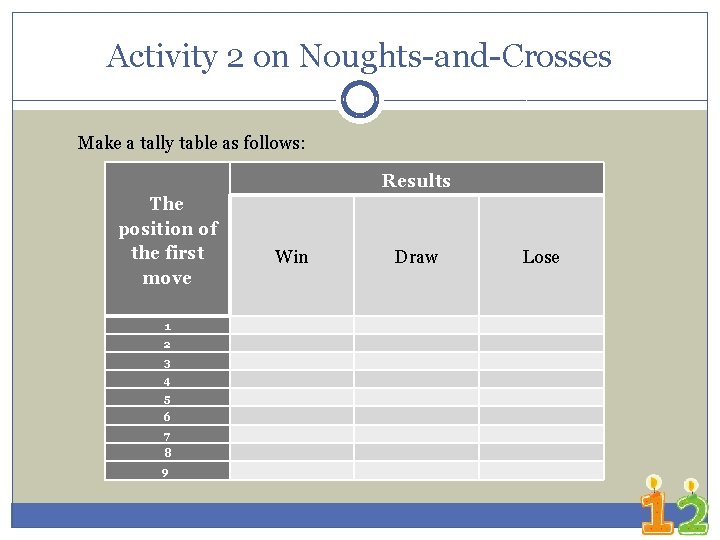
Activity 2 on Noughts-and-Crosses Make a tally table as follows: Results The position of the first move 1 2 3 4 5 6 7 8 9 Win Draw Lose
Activity 2 on Noughts-and-Crosses From the tally table: If you want to get more chance to win a game, which is the best first move? Discuss!!
Activity 3 on Noughts-and-Crosses Lucky BINGO �Teacher needs to prepare a lot of arithmetical problems which have an integer answer between 1 and 50. �Students put 9 distinct numbers from 1 to 50 on the grid (randomly not necessarily in order).
Activity 3 on Noughts-and-Crosses �Teacher asks a student to choose the first problem. Then the teacher writes the problem on the board. �Give students some time to get their answers and ask if someone wants to tell the answer or tell how to get it. A student who can show to calculate the answer correctly, he/she will be the one who draws the next problem. But if they could not calculate it correctly, that means they need some supportive suggestion from the teacher.
Activity 3 on Noughts-and-Crosses �Students who find that one of the 9 numbers which they have chosen is the same as the answer, they circle that number on their grid. �The first student who gets a “winning line” is the winner.
Producing Classroom Activities �Take a great deal of time and effort to prepare �Hard to adapt. � Expensive
Can electronic support really solve the problems? What should I do? Conventional software development is problematic because … �Requires special expertise �Needs a lot of time and effort �After building up a collection of electronic resources, to add or adapt activities may entail redesigning from scratch
But it works well sometimes … In 2015, M. Lugalia, S. Johnston-Wilder and J. Goodall’s research on ICT and Mathematical Resilience (using Grid Algebra) concluded that, “Appropriate use of computer software can have a significant impact on effort and attainment. ”
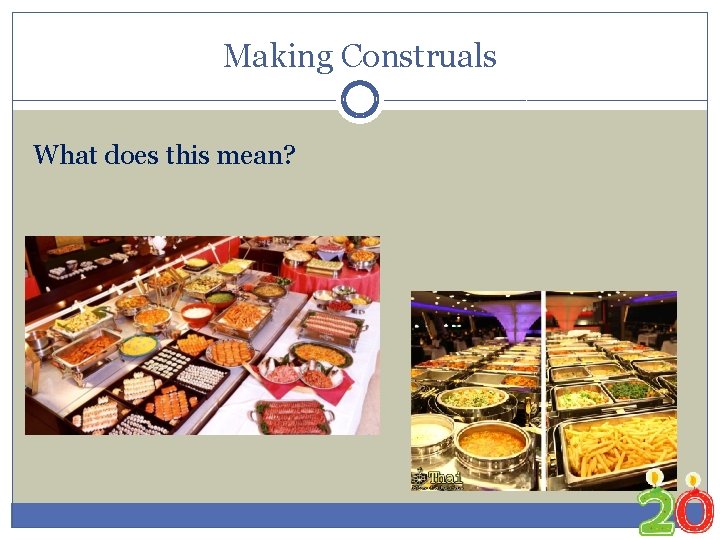
Making Construals What does this mean?
CONSTRUIT! PROJECT Making Construals As a New Digital Skill For Creating Interactive Open Educational Resources (2014 -2017) Partners: Warwick Uni (UK) Edumotiva (Greece) Edinburgh Uni (UK) Helix 5 (Netherlands) Comenius Uni (Slovakia) Uni of Eastern Finland http: //www. construit. org/
Common Principles or Features Emphasis on experience of the learner Attention to affective experience Communication and collaboration More student talk, less teacher talk Constructionism - making artefacts and making sense Learning is personal and provisional Exploration, discovery, confidence Dialogic teaching and learning Promoting engagement
Classroom Activities Blending of ICT and mathematics in: § Lucky Bingo / Grid Algebra § Making Construals: Shopping and Giving Change § Blending the roles of teacher, student, and developer
Demonstrations Shopping and the Shopping Game at jseden. dcs. warwick. ac. uk/scifest Giving Change at jseden. dcs. warwick. ac. uk/construit. c 6 Menu bottom right -> Browse agents -> -> agent ‘c 6’ -> then givingchange/versions 1 and 2
References �Lee, C. and Johnston-Wilder, S. (2013). 'Learning mathematics: letting the pupils have their say', Educational Studies in Mathematics, 83(2): pp. 163180. �Lugalia, M. , Johnston-Wilder, S and Goodall, J. (2015). ‘Using ICT and Dialogic Teaching: Impact on Mathematical Resilience and Attainment in Algebra of a Kenyan School Year Group’, EDULEARN 15 Proceedings, pp. 5069 -5078.
References (cont. ) �Johnston-Wilder, S. , Brindley, J. and Dent, P. (2014). ‘A Survey of Mathematics Anxiety and Mathematical Resilience Among Existing Apprentices’, The Gatsby Charitable Foundation, final report. � Meurig Beynon, Russell Boyatt, Jonathan Foss, Chris Hall, Elizabeth Hudnott, Steve Russ, Erkki Sutenin, Hamish Mac. Leod, Piet Kommers, ‘Making Construals as a new Digital Skill for Learning’, in Proceedings of the 12 th International Conference on Cognition and Exploratory Learning (CELDA 2015), Maynooth University, Greater Dublin, Ireland. (October 2015), 363 – 368
References (cont. ) �Nineteen members of the CONSTRUIT! project team, ‘Making construals as a new digital skill: dissolving the program – and the programmer – interface’. Proceedings of the 2015 International Conference on Interactive Technologies and Games, 22 -23 October 2015, Nottingham, UK, pp. 9 -16, DOI 10. 1109/i. TAG 2015. 10 (to appear)
Thank You For Your Attention
- Slides: 30