
BLEEDING DISORDERS Petechiae HSP Kasabach Merritt TAR Acute

BLEEDING DISORDERS
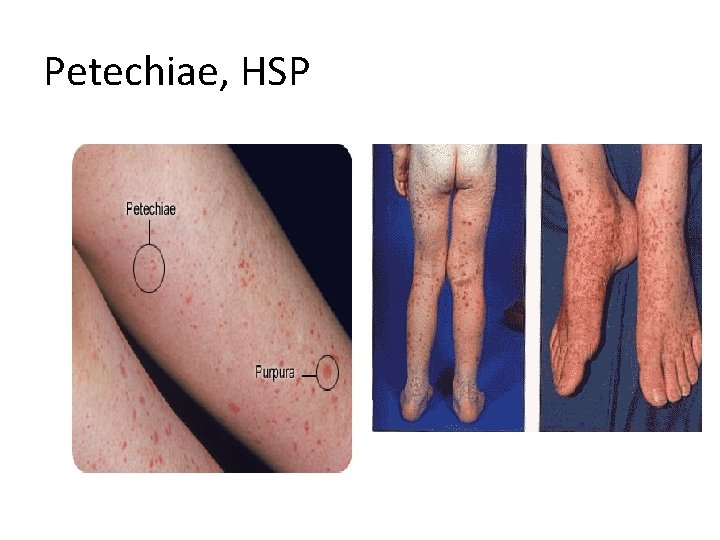
Petechiae, HSP
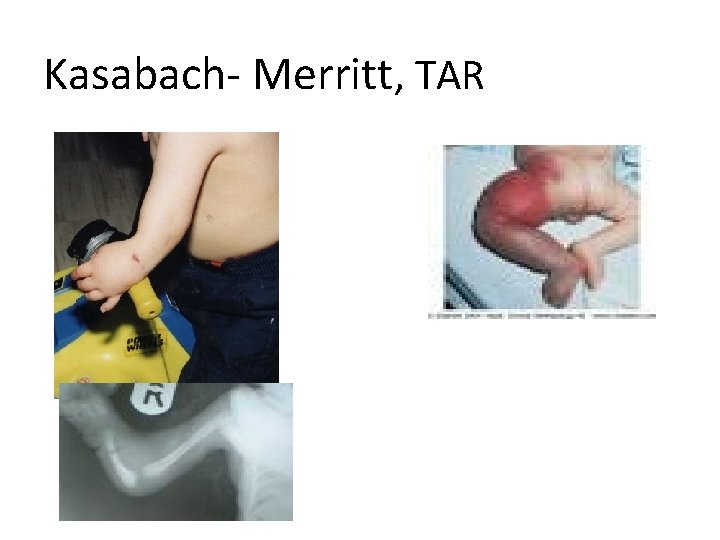
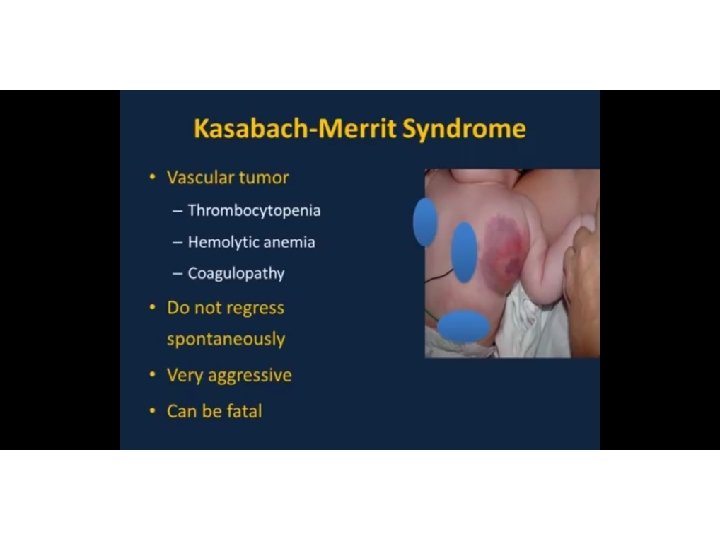
Kasabach- Merritt, TAR


Acute ITP ▪ Usually acute onset; immune mediated; post viral ▪ Peak 2 -5 years of age, ▪ PE –no lymphadenopathy (LN), hepatosplenomegaly. ▪ CBC- other cell lines normal, large plts on smear ▪ Treat if plt< 10, 000 or wet ITP, ▪ Treat- IVIG best response, 48 -72 hours; blocks Fc receptors, SE � Anti-D (WIn. Rho)- Rh+ , hemolysis, quick response � Steroids good response, block phagocytosis, reduces antibodies, SE, inexpensive, need BM ▪ BM- Increased megakaryocytes, otherwise normal ▪ Chronic- If >6 months, F>M, older, unpredictable prognosis
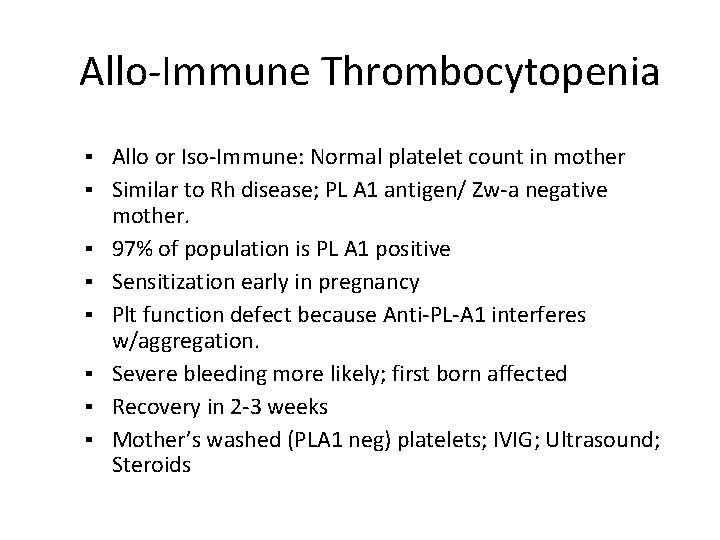
Allo-Immune Thrombocytopenia ▪ Allo or Iso-Immune: Normal platelet count in mother ▪ Similar to Rh disease; PL A 1 antigen/ Zw-a negative ▪ ▪ ▪ mother. 97% of population is PL A 1 positive Sensitization early in pregnancy Plt function defect because Anti-PL-A 1 interferes w/aggregation. Severe bleeding more likely; first born affected Recovery in 2 -3 weeks Mother’s washed (PLA 1 neg) platelets; IVIG; Ultrasound; Steroids
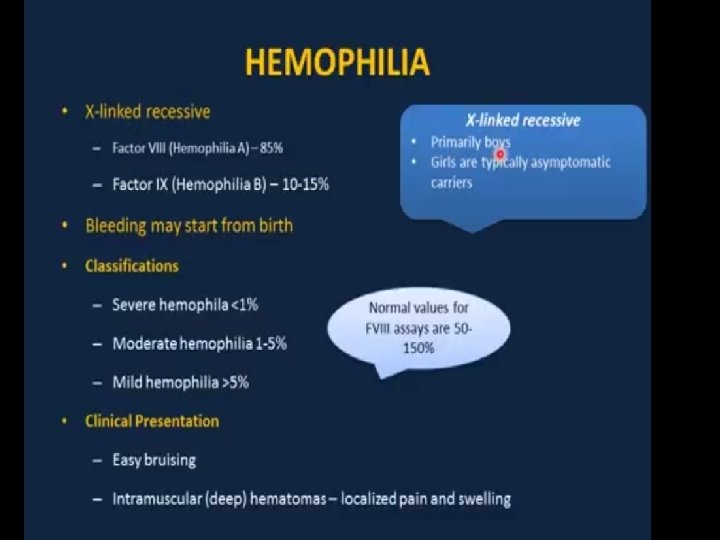
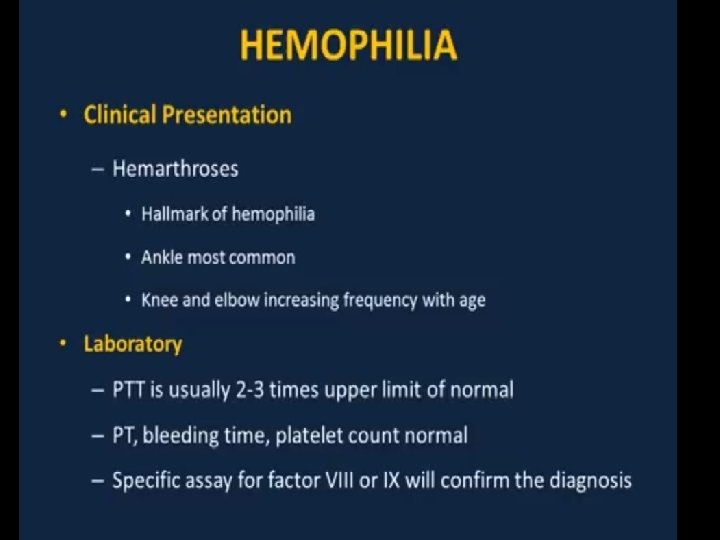
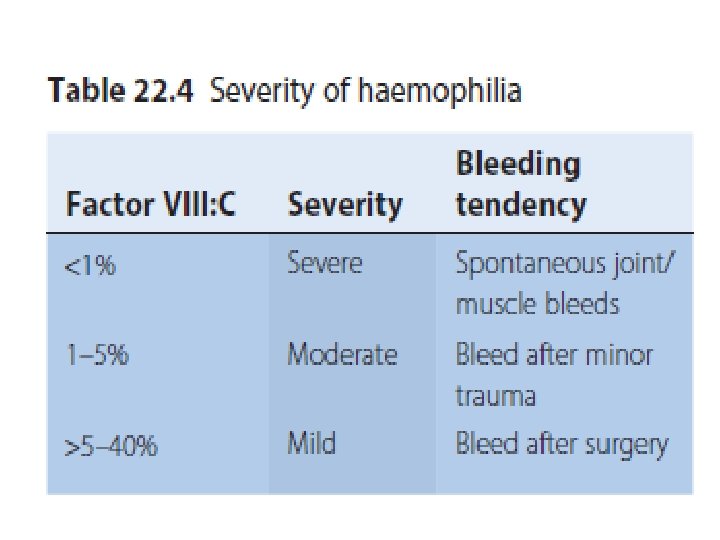
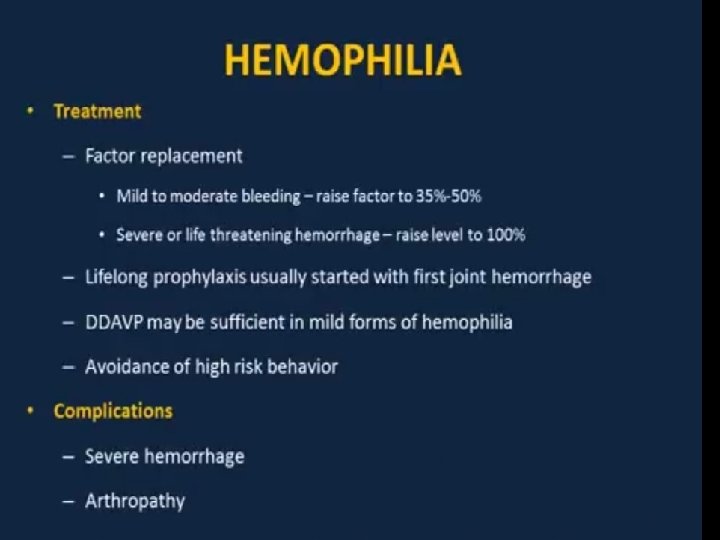
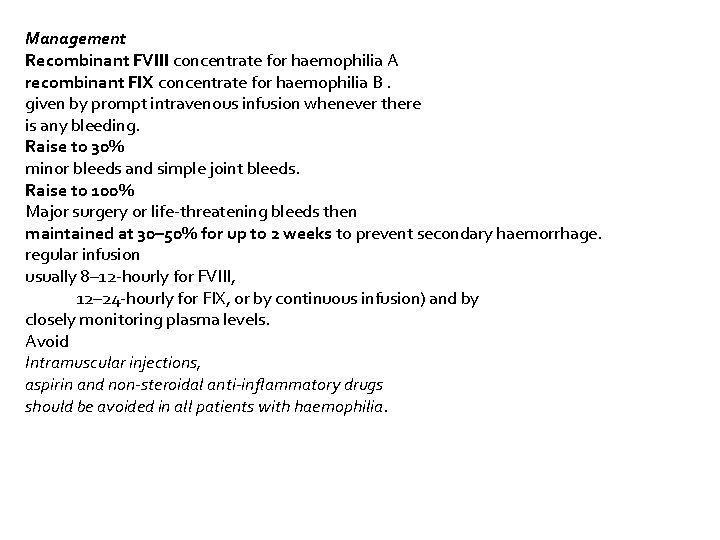
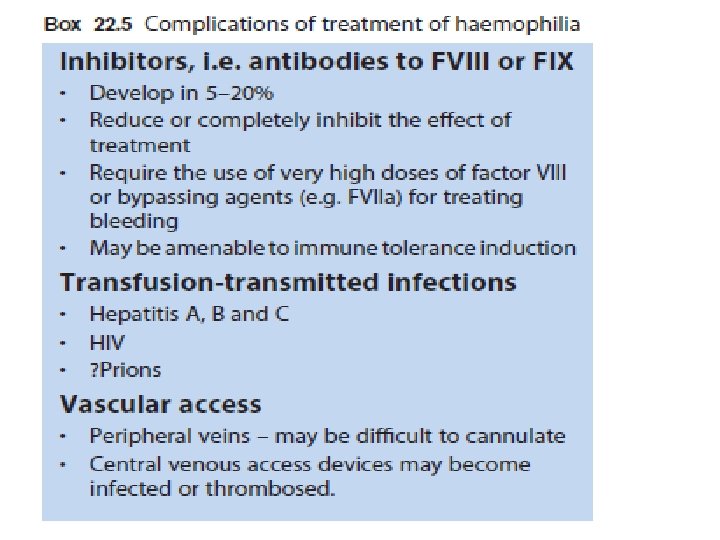
Management Recombinant FVIII concentrate for haemophilia A recombinant FIX concentrate for haemophilia B. given by prompt intravenous infusion whenever there is any bleeding. Raise to 30% minor bleeds and simple joint bleeds. Raise to 100% Major surgery or life-threatening bleeds then maintained at 30– 50% for up to 2 weeks to prevent secondary haemorrhage. regular infusion usually 8– 12 -hourly for FVIII, 12– 24 -hourly for FIX, or by continuous infusion) and by closely monitoring plasma levels. Avoid Intramuscular injections, aspirin and non-steroidal anti-inflammatory drugs should be avoided in all patients with haemophilia.
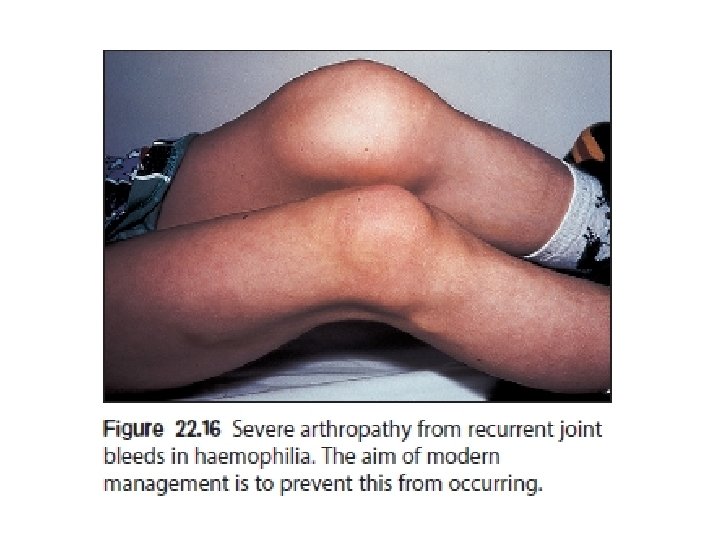
Prophylactic FVIII I given to all children with severe haemophilia A to further reduce the risk of chronic joint damage by raising the baseline level above 2%. Primary prophylaxis usually begins at age 2– 3 years. given two to three times per week.
Desmopressin (DDAVP) may allow mild haemophilia A to be managed without the use of blood products. It is given by infusion and stimulates endogenous release of FVIII: C and von Willebrand factor (v. WF). Adequate levels can be achieved to enable minor surgery and dental extraction to be undertaken. DDAVP is ineffective in haemophilia B.
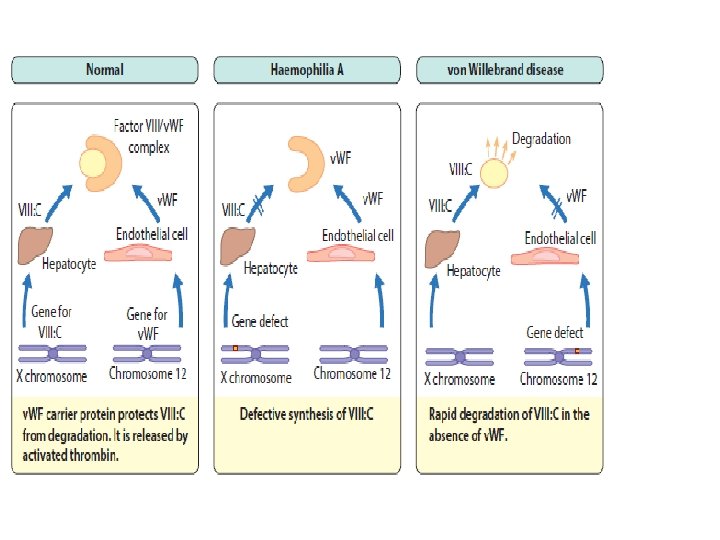
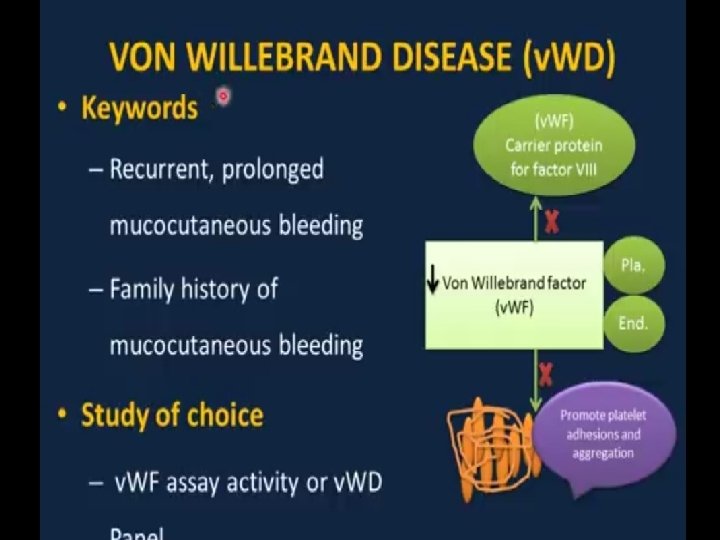
von Willebrand disease ▪ Family of bleeding disorders caused by an abnormality of the von Willebrand factor (v. WF), carrier protein for Factor VIII � can range from almost undetectable to severe bleeding propensity ▪ v. WF binds on platelets to its specific receptor glycoprotein Ib and acts as an adhesive bridge between the platelets and damaged subendothelium at the site of vascular injury � i. e. causes platelets to stick ▪ v. WF also protects FVIII from degradation
von Willebrand disease ▪ Type 1 (70 -80% of v. WFD) is quantitatively less of qualitatively normal v. WF � autosomal dominant, variable penetrance � generally mild, can be asymptomatic and vary with time ▪ Type 2 A and 2 B (~15%) have qualitatively abnormal v. WF � autosomal dominant � moderate severity ▪ Type 3 most severe, low v. WF and Factor VIIIc in plasma, v. WF absent on platelets � autosomal recessive, consanguinity an issue � possible mild disease in heterozygotes
von Willebrand disease ▪ History– � often mild bleeding (e. g. bruising, epistaxis, primary menorrhagia) ▪ Lab– � CBC us. normal, prolonged bleeding time, PT normal, a. PTT variably increased � v. WF and Factor VIII variably decreased ▪ Treatment– � often, none needed � DDAVP increases v. WF and Factor VIII � Factor VIII plasma concentrates for severe


- Slides: 29