
Bleeding Chapter 8 What is Blood Specialized body
Bleeding Chapter 8
What is Blood? � Specialized body fluid � Transports oxygen, nutrients and wastes � Protects against disease by producing antibodies and defending against pathogens � Maintains body temperature � 2 Portions › Liquid: Plasma › Solid: red blood cells, white blood cells, platelets
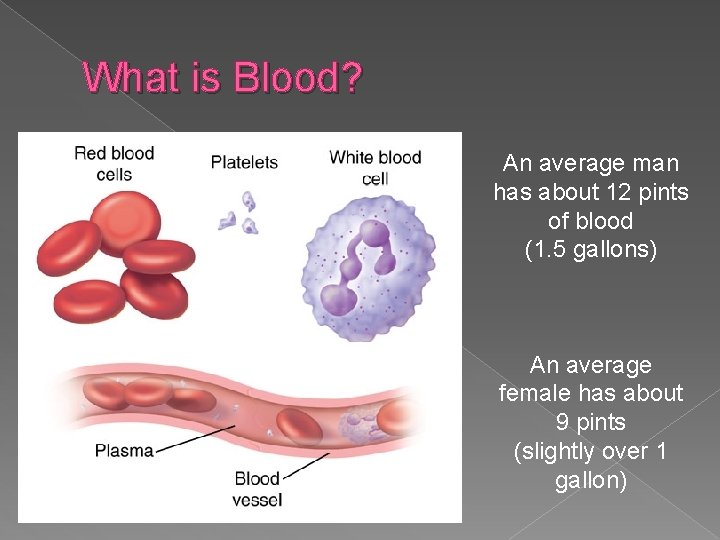
What is Blood? An average man has about 12 pints of blood (1. 5 gallons) An average female has about 9 pints (slightly over 1 gallon)
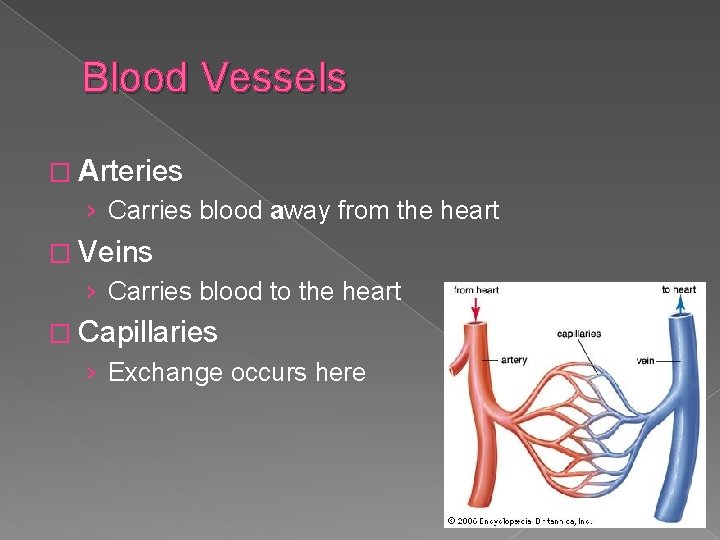
Blood Vessels � Arteries › Carries blood away from the heart � Veins › Carries blood to the heart � Capillaries › Exchange occurs here
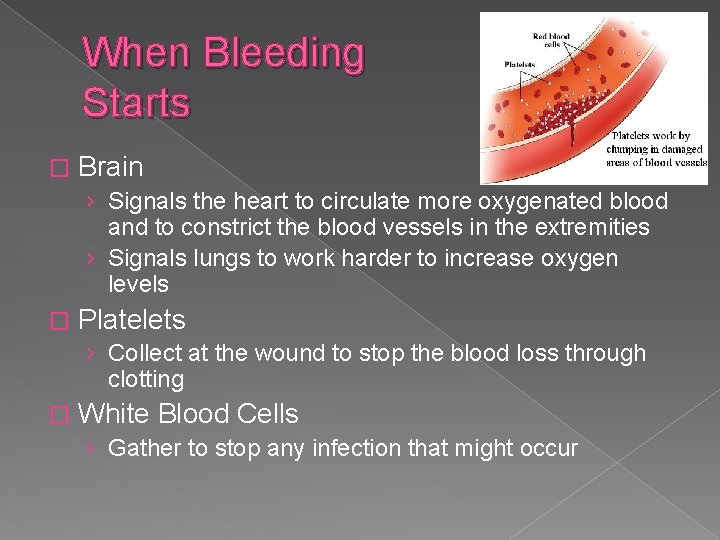
When Bleeding Starts � Brain › Signals the heart to circulate more oxygenated blood and to constrict the blood vessels in the extremities › Signals lungs to work harder to increase oxygen levels � Platelets › Collect at the wound to stop the blood loss through clotting � White Blood Cells › Gather to stop any infection that might occur

External Bleeding � Tears in the skin that open blood vessels externally � Venous bleeding › Blood flow will be steady › Usually dark red or maroon in color because it is oxygen poor
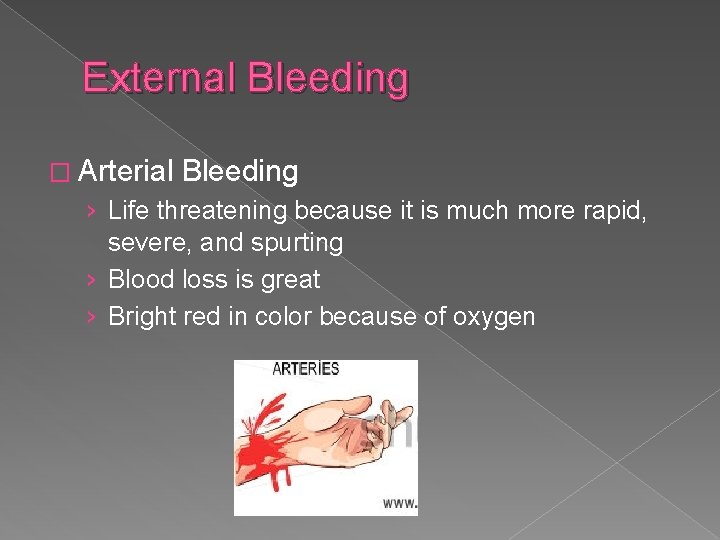
External Bleeding � Arterial Bleeding › Life threatening because it is much more rapid, severe, and spurting › Blood loss is great › Bright red in color because of oxygen
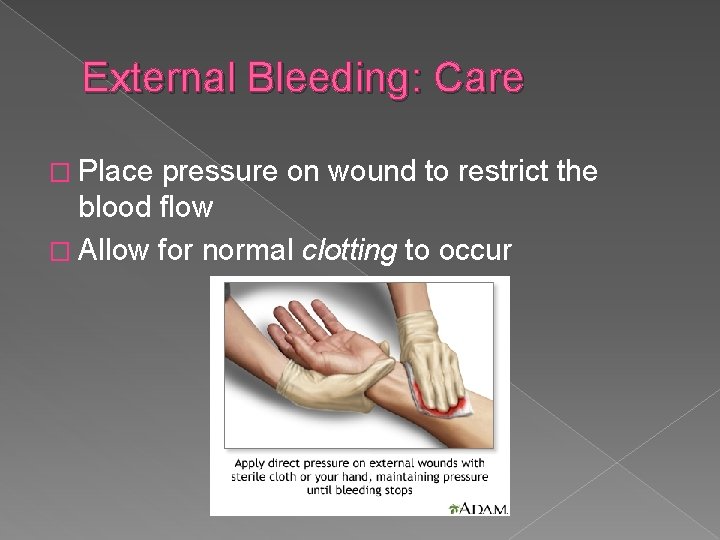
External Bleeding: Care � Place pressure on wound to restrict the blood flow � Allow for normal clotting to occur
External Bleeding: Care � Placing a sterile dressing and a gloved hand � Apply pressure with your hand › If you do not have disposable gloves have victim apply pressure if possible � Pressure Bandage � If blood soaks through add more bandage › DO NOT remove any of the soaked bandages
Internal Bleeding Blood escaping from arteries, capillaries or veins into space in the body � Signs: � › › › › › Soft tissues that are tender or swollen Anxiety or restlessness Rapid or weak pulse Rapid breathing, shortness of breath Moist/cool skin Nausea, vomiting Excessive thirst Decreased consciousness Severe headache
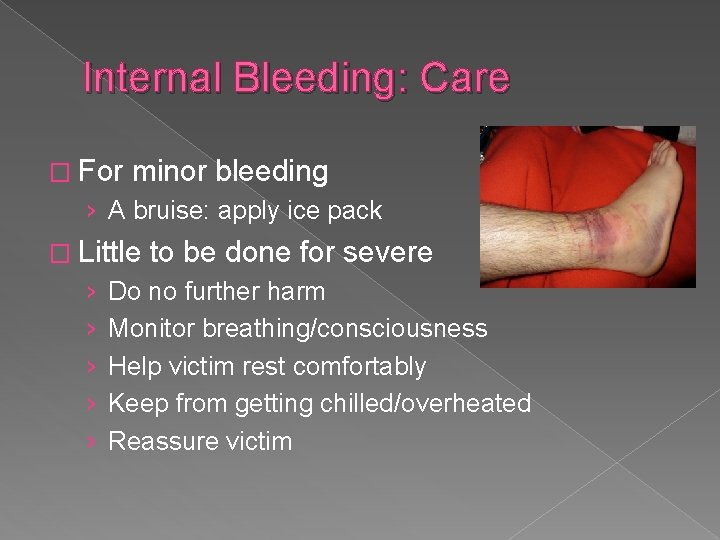
Internal Bleeding: Care � For minor bleeding › A bruise: apply ice pack � Little › › › to be done for severe Do no further harm Monitor breathing/consciousness Help victim rest comfortably Keep from getting chilled/overheated Reassure victim
- Slides: 11