
BLASTULATION AND ITS TYPES Dr Raju Thomas K
BLASTULATION AND IT’S TYPES Dr. Raju Thomas K. Dept. of Zoology, Mar Thoma College, Tiruvalla
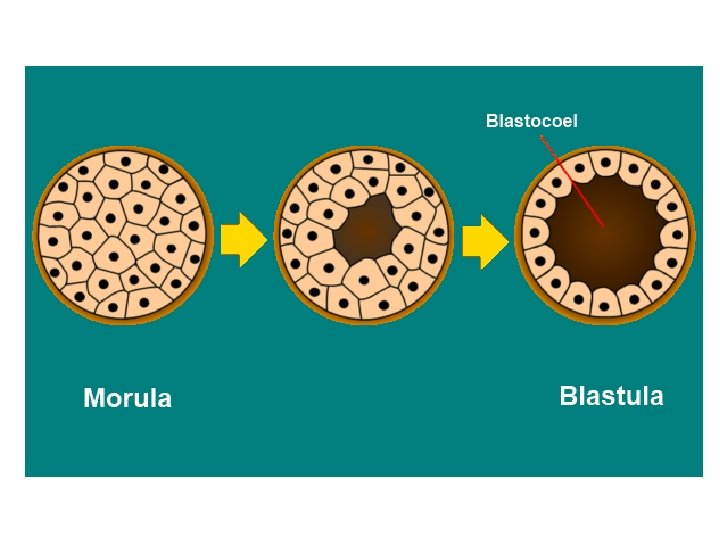
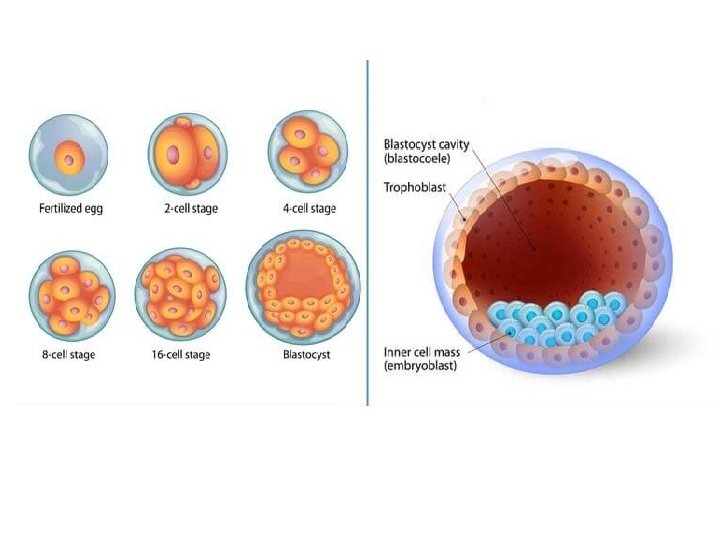
Blastulation Ø The blastomeres in the early cleavage stage tend to assume a spherical shape. The whole embryo appear to posses a shape of mulberry. This stage is called Morula. Ø Further cleavage to morula terminates in Blastula. It can be defined as a hollow sphere of blastomeres, surrounding a cavity, the Blastocoel. The process of formation of blastula is called Blastulation. Ø The cellular layer surrounding the blastocoel is called Blastoderm.
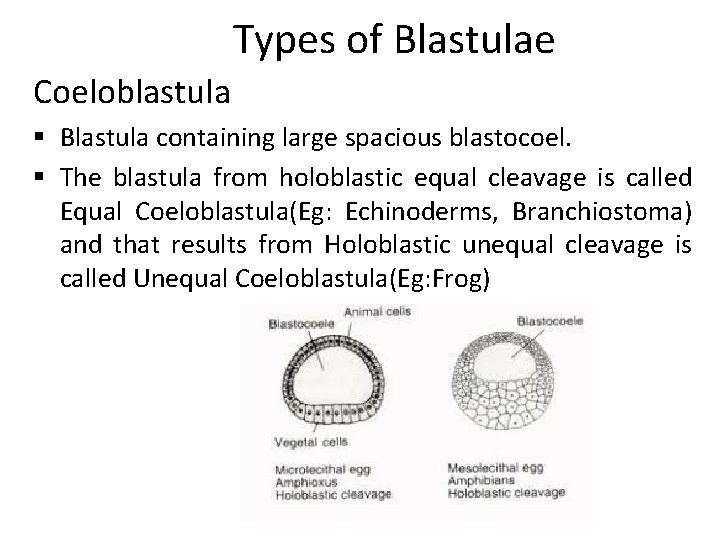
Types of Blastulae Coeloblastula § Blastula containing large spacious blastocoel. § The blastula from holoblastic equal cleavage is called Equal Coeloblastula(Eg: Echinoderms, Branchiostoma) and that results from Holoblastic unequal cleavage is called Unequal Coeloblastula(Eg: Frog)
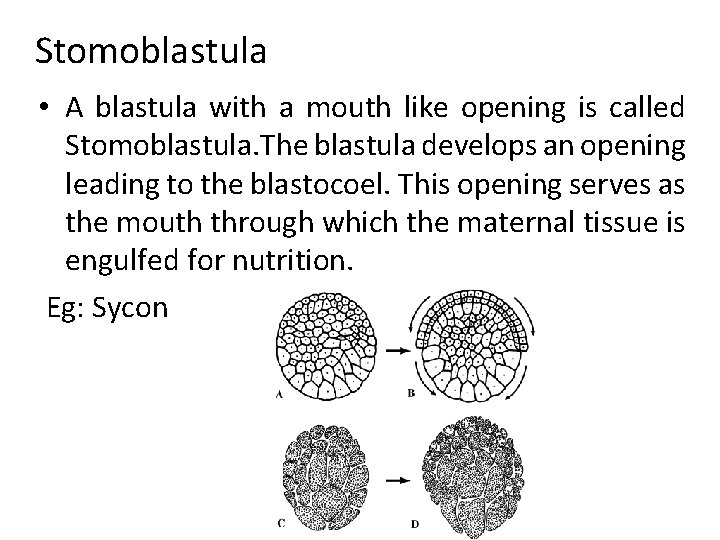
Stomoblastula • A blastula with a mouth like opening is called Stomoblastula. The blastula develops an opening leading to the blastocoel. This opening serves as the mouth through which the maternal tissue is engulfed for nutrition. Eg: Sycon
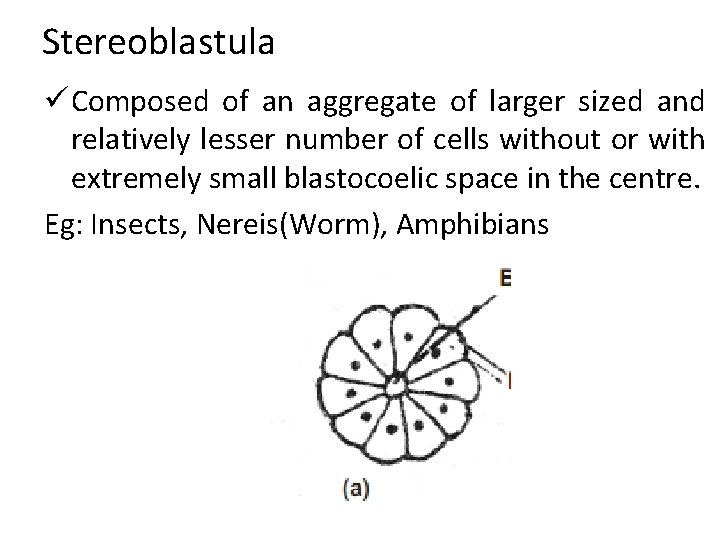
Stereoblastula ü Composed of an aggregate of larger sized and relatively lesser number of cells without or with extremely small blastocoelic space in the centre. Eg: Insects, Nereis(Worm), Amphibians
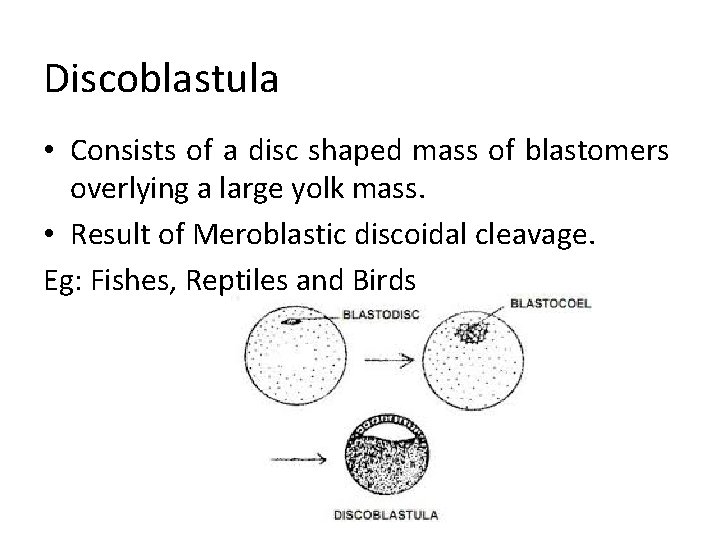
Discoblastula • Consists of a disc shaped mass of blastomers overlying a large yolk mass. • Result of Meroblastic discoidal cleavage. Eg: Fishes, Reptiles and Birds
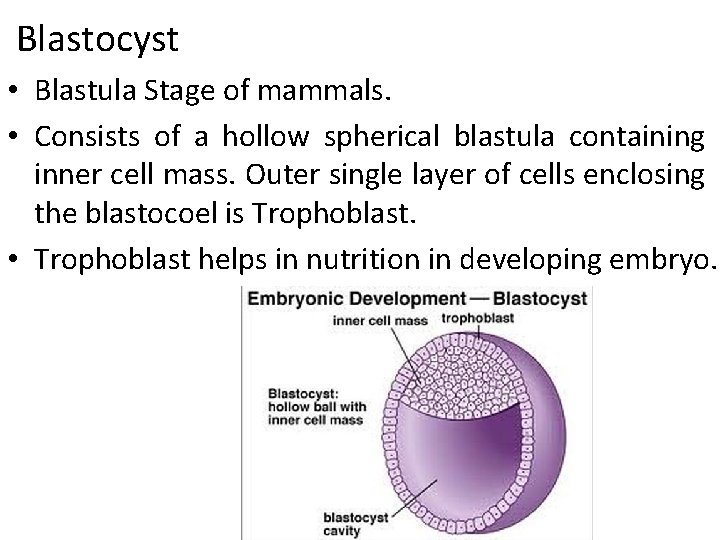
Blastocyst • Blastula Stage of mammals. • Consists of a hollow spherical blastula containing inner cell mass. Outer single layer of cells enclosing the blastocoel is Trophoblast. • Trophoblast helps in nutrition in developing embryo.

THANK YOU
- Slides: 10