
Blantidium coli BY T Moudy Bin Saleh Blantidium

Blantidium coli BY : T. Moudy Bin Saleh
- Blantidium coli is a parasitic species of ciliate alveolates that causes the disease Balantidiasis. - It is the only member of the ciliate phylum known to be pathogenic to humans.
Scientific classification Phylum: Ciliophora Class: Litostomatea Order: Vestibuliferida Family: Balantiididae Genus: Balantidium Species: B. coli

Life Cycle
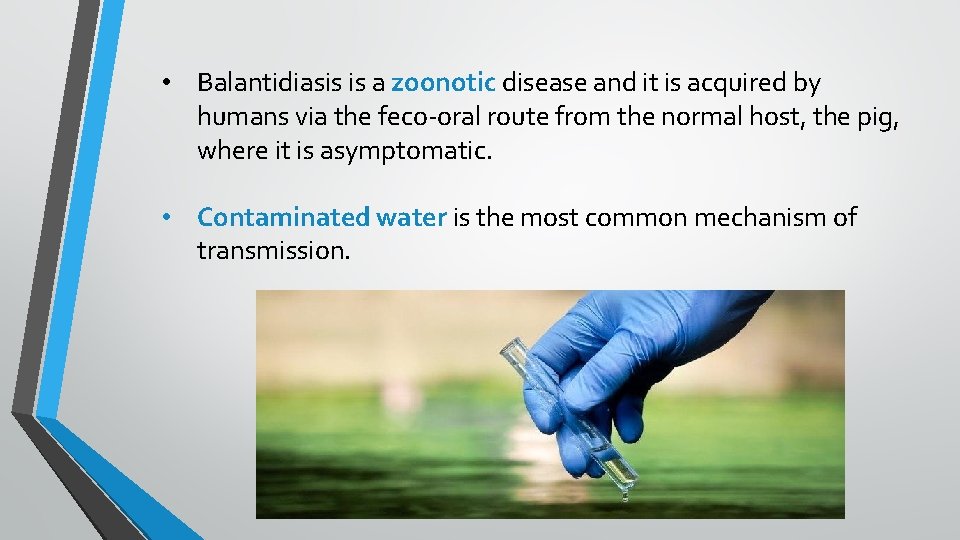
• Balantidiasis is a zoonotic disease and it is acquired by humans via the feco-oral route from the normal host, the pig, where it is asymptomatic. • Contaminated water is the most common mechanism of transmission.
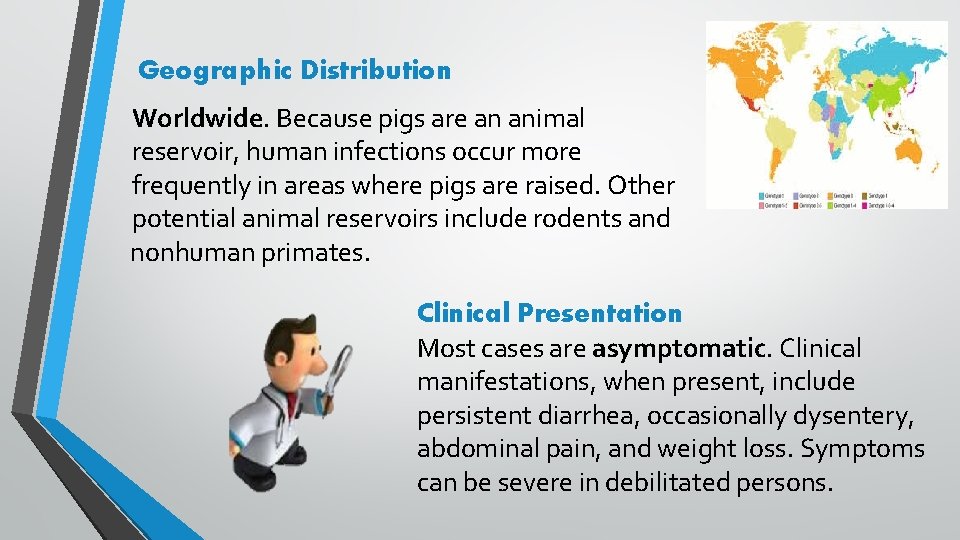
Geographic Distribution Worldwide. Because pigs are an animal reservoir, human infections occur more frequently in areas where pigs are raised. Other potential animal reservoirs include rodents and nonhuman primates. Clinical Presentation Most cases are asymptomatic. Clinical manifestations, when present, include persistent diarrhea, occasionally dysentery, abdominal pain, and weight loss. Symptoms can be severe in debilitated persons.
Stages • Both Balantidium coli trophozoites and cysts are found in stool and they are yellowish or greenish in color. • Trophozoites are characterized by: their large size (40 µm to 200 µm), the presence of cilia on the cell surface, a cytostome, and a bean shaped macronucleus which is often visible. • Cysts are smaller than trophozoites and are round and have a tough, heavy cyst wall made of one or two layers. Usually only the macronucleus and sometimes cilia and contractile vacuoles are visible in the cyst.
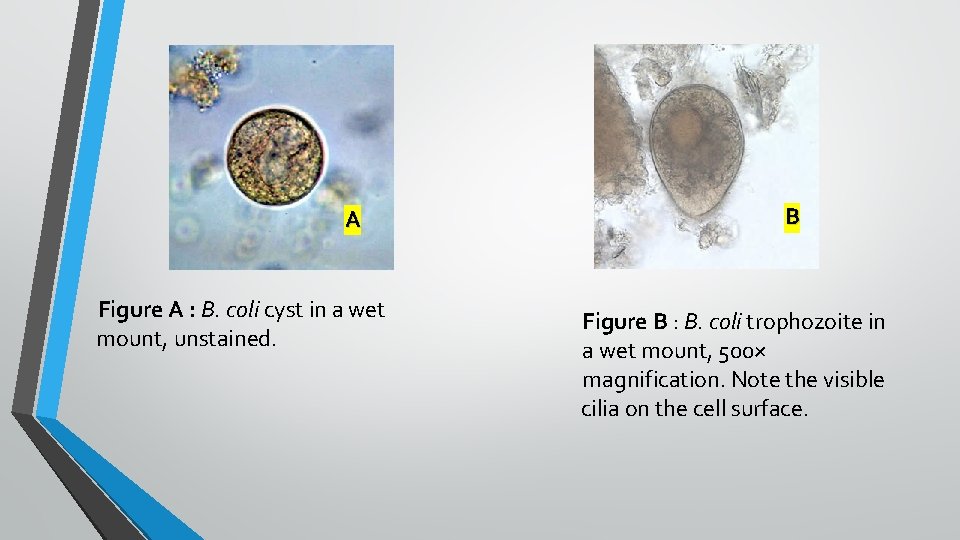
A Figure A : B. coli cyst in a wet mount, unstained. B Figure B : B. coli trophozoite in a wet mount, 500× magnification. Note the visible cilia on the cell surface.
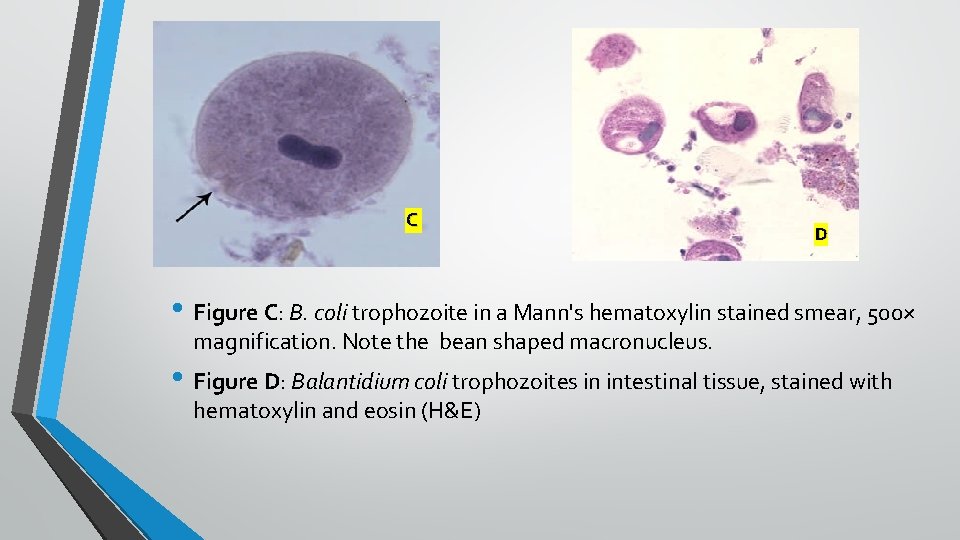
C D • Figure C: B. coli trophozoite in a Mann's hematoxylin stained smear, 500× magnification. Note the bean shaped macronucleus. • Figure D: Balantidium coli trophozoites in intestinal tissue, stained with hematoxylin and eosin (H&E)

- Slides: 10