
Blade with Shear Web bonded to Spar Cap
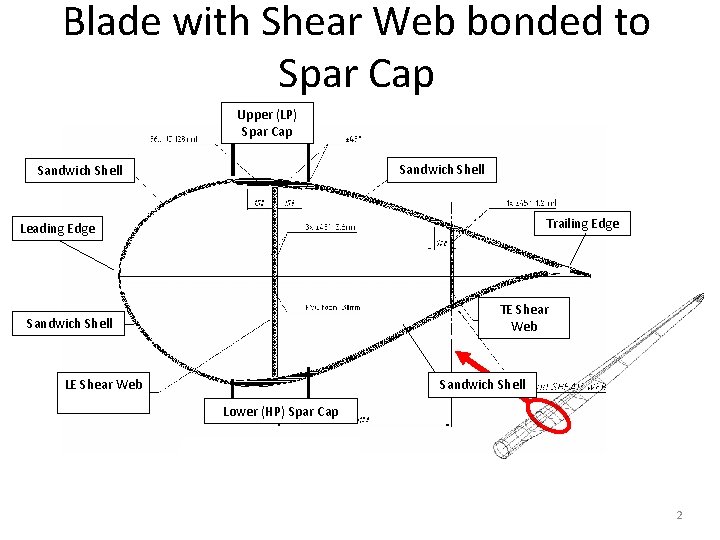
Blade with Shear Web bonded to Spar Cap Upper (LP) Spar Cap Sandwich Shell Trailing Edge Leading Edge TE Shear Web Sandwich Shell LE Shear Web Lower (HP) Spar Cap 2
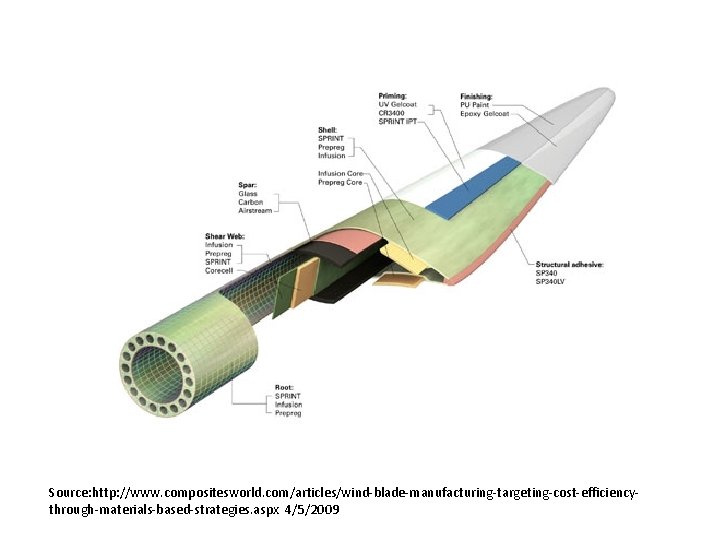
Source: http: //www. compositesworld. com/articles/wind-blade-manufacturing-targeting-cost-efficiencythrough-materials-based-strategies. aspx 4/5/2009
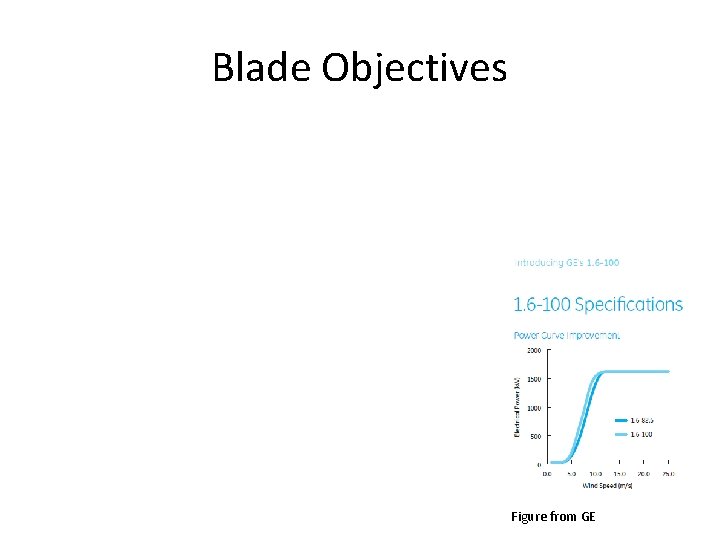
Blade Objectives Figure from GE
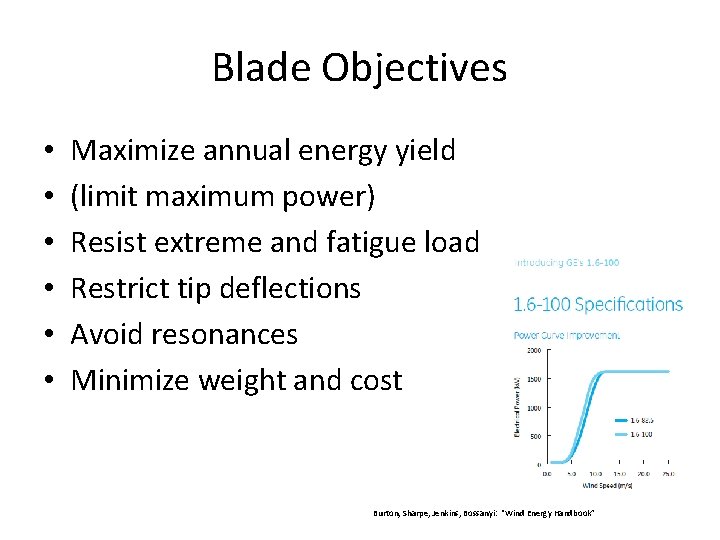
Blade Objectives • • • Maximize annual energy yield (limit maximum power) Resist extreme and fatigue loads Restrict tip deflections Avoid resonances Minimize weight and cost Burton, Sharpe, Jenkins, Bossanyi: “Wind Energy Handbook”
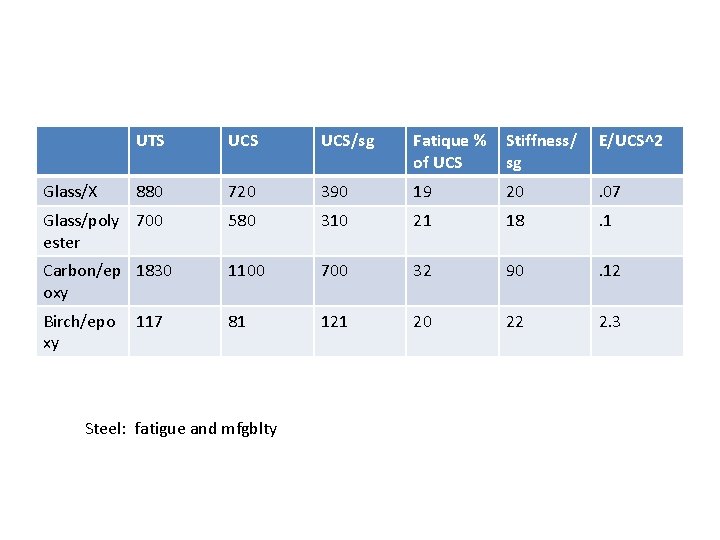
UTS UCS/sg Fatique % Stiffness/ of UCS sg E/UCS^2 880 720 390 19 20 . 07 Glass/poly 700 ester 580 310 21 18 . 1 Carbon/ep 1830 oxy 1100 700 32 90 . 12 Birch/epo xy 81 121 20 22 2. 3 Glass/X 117 Steel: fatigue and mfgblty
Blade Materials • compressive strength-to-weight ratio, • fatigue strength as a percentage of compressive strength, • stiffness-to-weight ratio, • a panel stability parameter, E/(UCS)2.
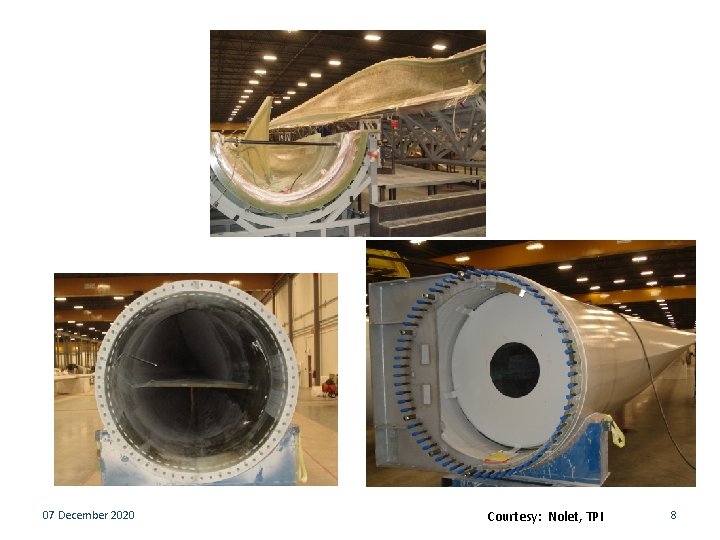
07 December 2020 Courtesy: Nolet, TPI 8
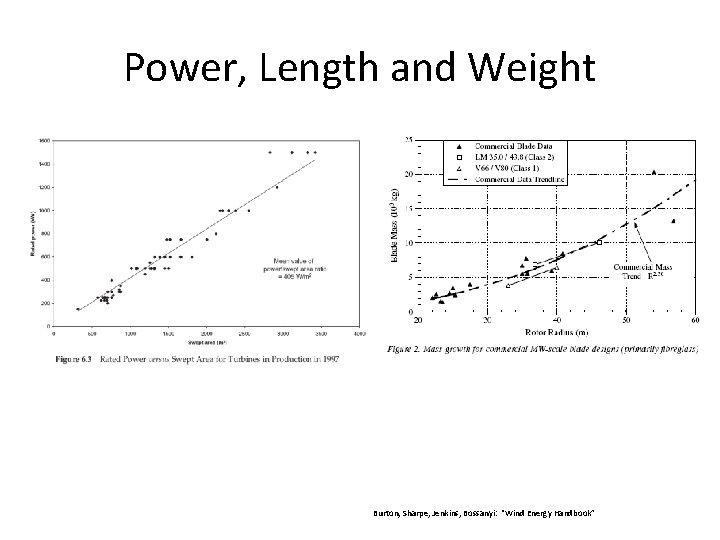
Power, Length and Weight Burton, Sharpe, Jenkins, Bossanyi: “Wind Energy Handbook”
Polymer Matrix Composites & Processes
General Composite Information • Composites: 2 or more physically distinct phases • Properties are better than the constituents • High strength to weight ratio • Also. . Corrosion, fatigue, toughness, surface finish
Why nots. . . • (many have) anisotropic properties • Polymer based may be subject to chemical attack • Cost? • Manufacturing process often slow and costly (Groover p 177)
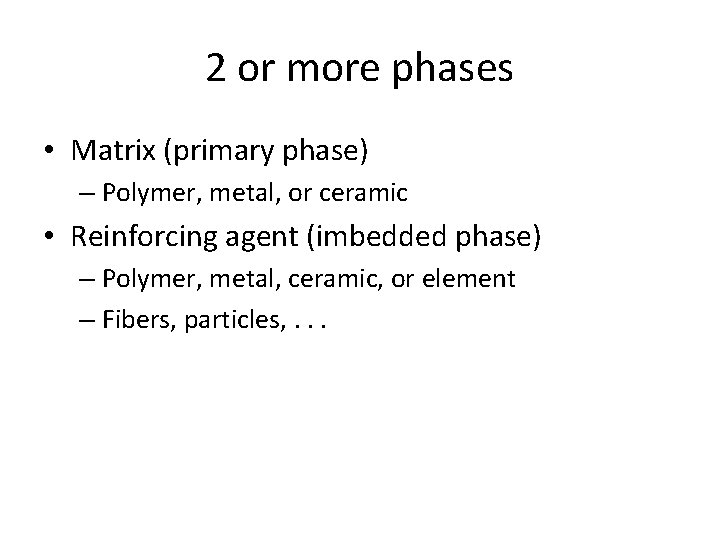
2 or more phases • Matrix (primary phase) – Polymer, metal, or ceramic • Reinforcing agent (imbedded phase) – Polymer, metal, ceramic, or element – Fibers, particles, . . .
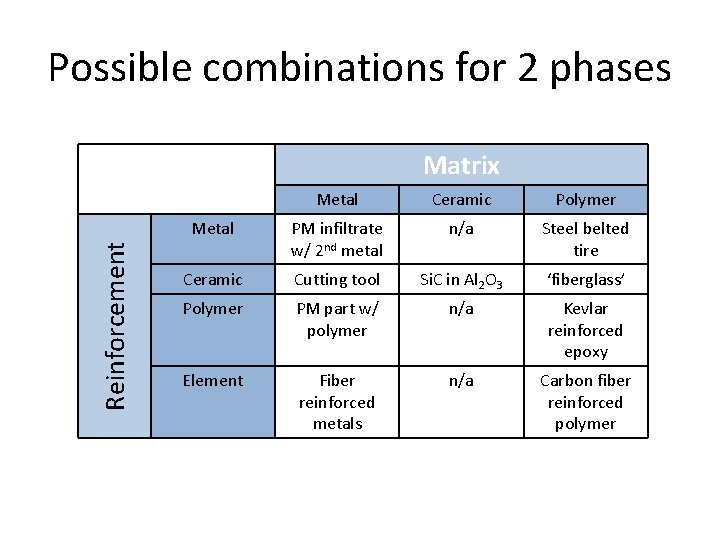
Possible combinations for 2 phases Reinforcement Matrix Metal Ceramic Polymer Metal PM infiltrate w/ 2 nd metal n/a Steel belted tire Ceramic Cutting tool Si. C in Al 2 O 3 ‘fiberglass’ Polymer PM part w/ polymer n/a Kevlar reinforced epoxy Element Fiber reinforced metals n/a Carbon fiber reinforced polymer
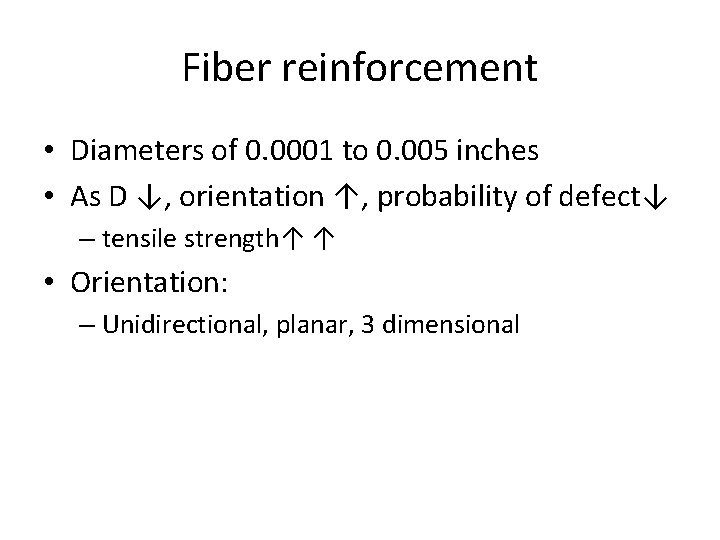
Fiber reinforcement • Diameters of 0. 0001 to 0. 005 inches • As D ↓, orientation ↑, probability of defect↓ – tensile strength↑ ↑ • Orientation: – Unidirectional, planar, 3 dimensional
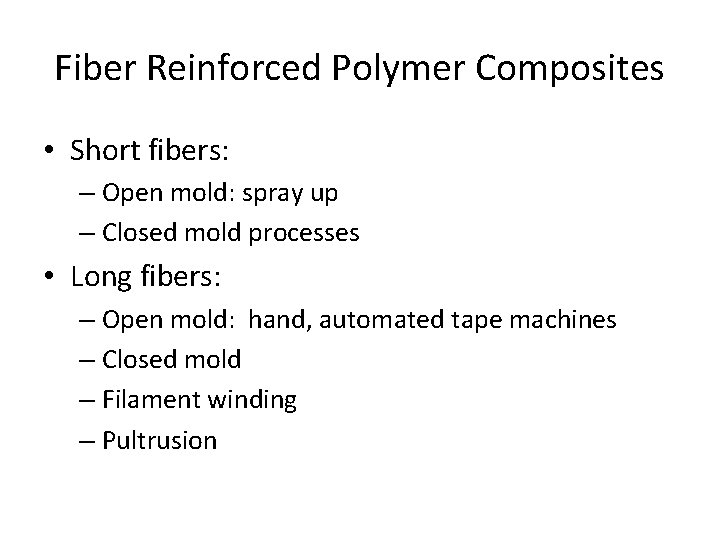
Fiber Reinforced Polymer Composites • Short fibers: – Open mold: spray up – Closed mold processes • Long fibers: – Open mold: hand, automated tape machines – Closed mold – Filament winding – Pultrusion
Materials • Polymer matrix – Thermosets: most common – Thermoplastics • Reinforcing – Glass – Carbon – Kevlar (polymer)
Composing Composites. . . • Molding compounds – Mix short fibers and matrix • Prepegs – Fibers impregnated with partially cured TS matrix – Allows fibers to ‘stay put’ – Continuous fibers • Or done in the mold
Open Mold Process • Spray up – Requires mold – Discontinuous fibers // random orientation – Mixture of fiber and matrix deposited in mold • Automated tape laying machine – Requires mold – Requires use of prepeg – CNC control Image sources: http: //www. bauteck. com/manufacture/Manufacture 2. htm 4/5/9 http: //www. mmsonline. com/articles/getting-to-know-black-aluminum. aspx 4/5/9
Filament Winding • Wound around mandrel or part of final component • Continuous fibers – Matrix added before or after winding • Automation controls wrap pattern Source: http: //sacomposite. com/filament_winding_carbon_fiber. html 4/5/9
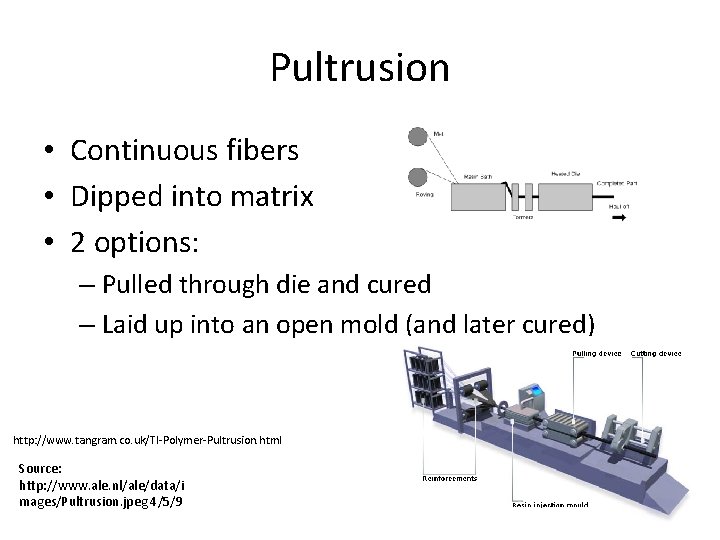
Pultrusion • Continuous fibers • Dipped into matrix • 2 options: – Pulled through die and cured – Laid up into an open mold (and later cured) http: //www. tangram. co. uk/TI-Polymer-Pultrusion. html Source: http: //www. ale. nl/ale/data/i mages/Pultrusion. jpeg 4/5/9
Open Mold Processes • Hand lay up – Oldest, labor intensive – Mold required – Fibers placed in mold: • Dry fibers placed and then matrix added – Pour or brush or spray >> rolled to achieve mixture – Vacuum used to ‘pull’ matrix into fiber • Prepeg placed in mold
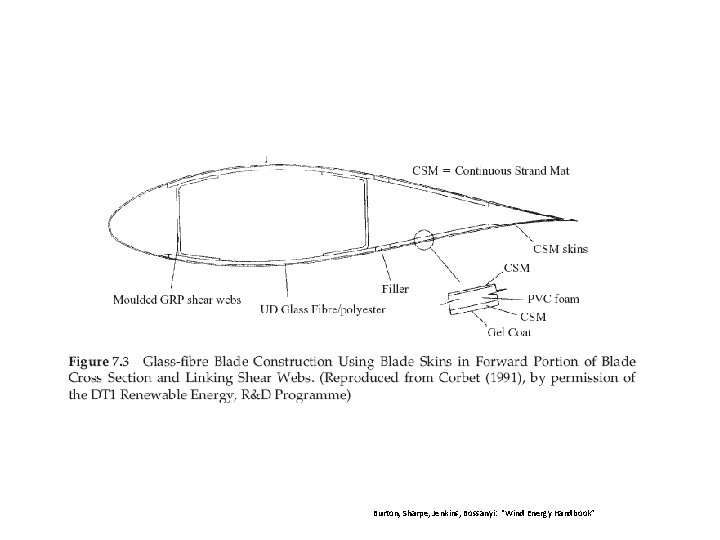
Burton, Sharpe, Jenkins, Bossanyi: “Wind Energy Handbook”
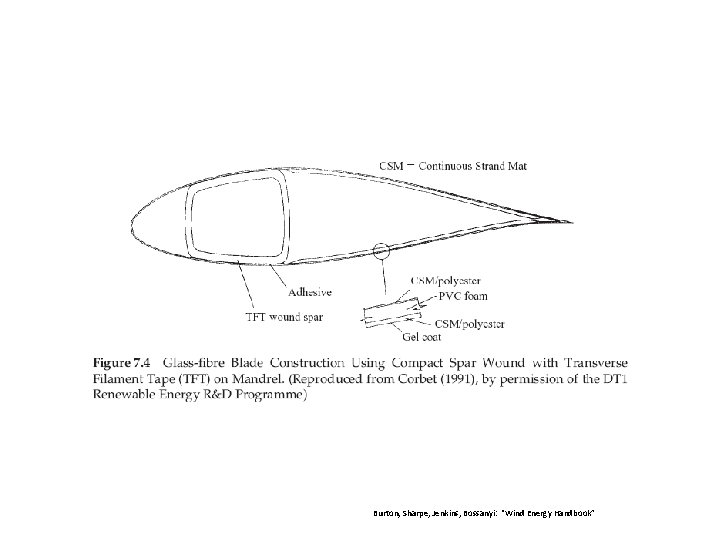
Burton, Sharpe, Jenkins, Bossanyi: “Wind Energy Handbook”
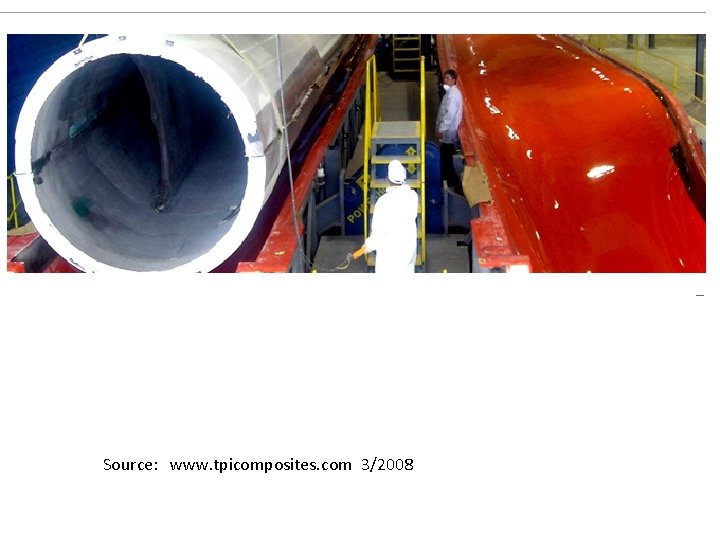
Source: www. tpicomposites. com 3/2008
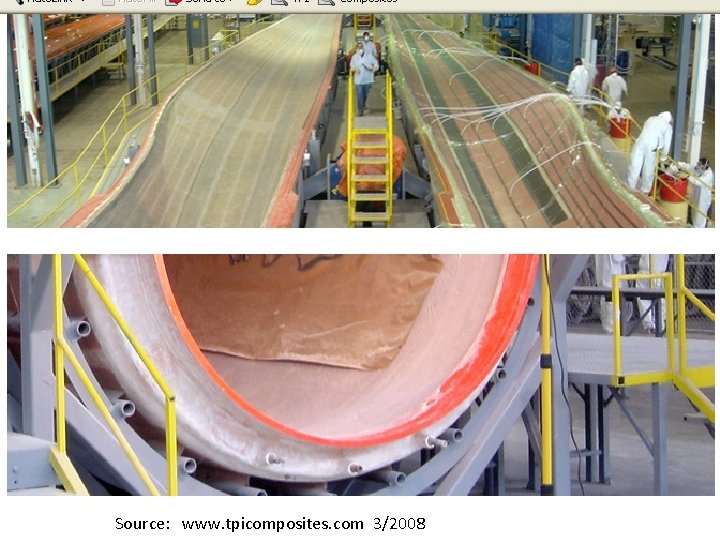
Source: www. tpicomposites. com 3/2008
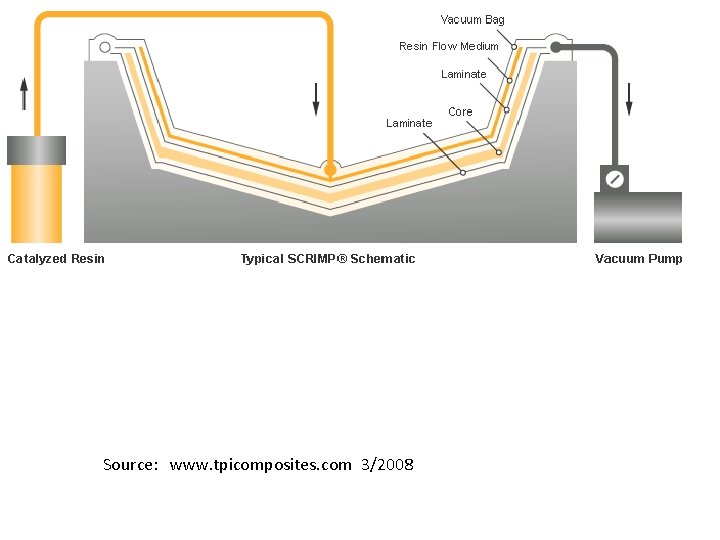
Source: www. tpicomposites. com 3/2008
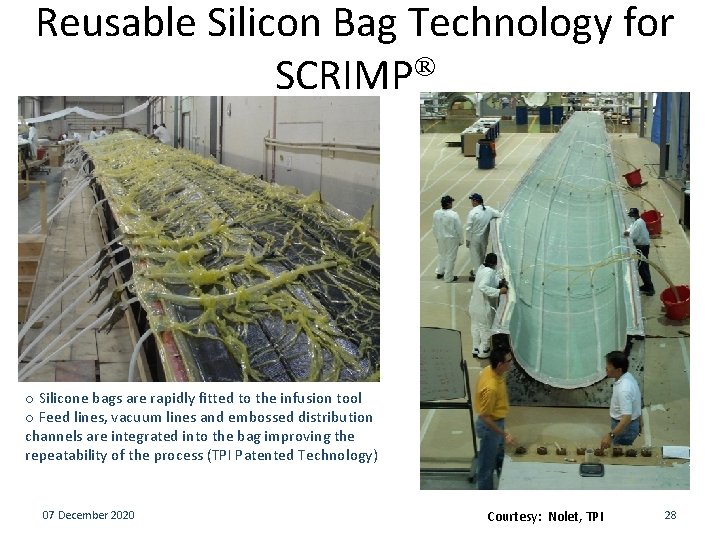
Reusable Silicon Bag Technology for ® SCRIMP o Silicone bags are rapidly fitted to the infusion tool o Feed lines, vacuum lines and embossed distribution channels are integrated into the bag improving the repeatability of the process (TPI Patented Technology) 07 December 2020 Courtesy: Nolet, TPI 28
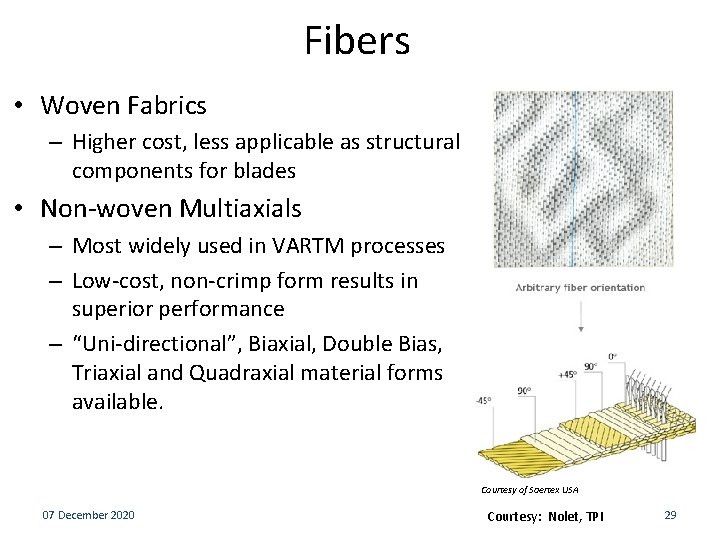
Fibers • Woven Fabrics – Higher cost, less applicable as structural components for blades • Non-woven Multiaxials – Most widely used in VARTM processes – Low-cost, non-crimp form results in superior performance – “Uni-directional”, Biaxial, Double Bias, Triaxial and Quadraxial material forms available. Courtesy of Saertex USA 07 December 2020 Courtesy: Nolet, TPI 29
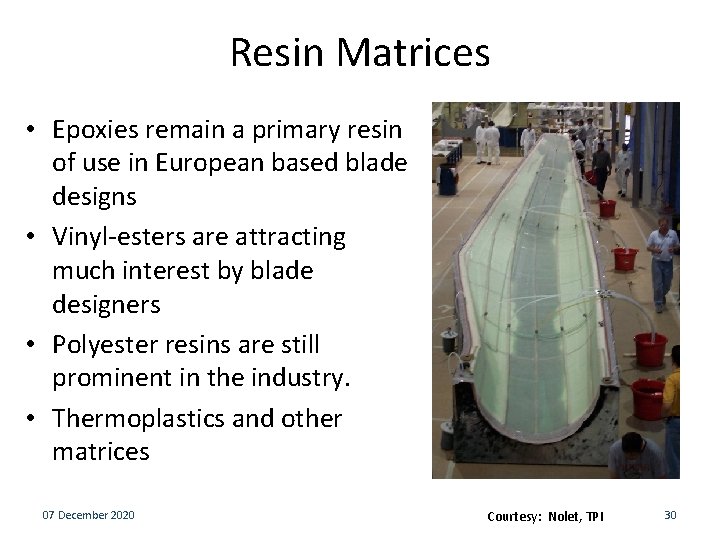
Resin Matrices • Epoxies remain a primary resin of use in European based blade designs • Vinyl-esters are attracting much interest by blade designers • Polyester resins are still prominent in the industry. • Thermoplastics and other matrices 07 December 2020 Courtesy: Nolet, TPI 30
http: //www. compositesworld. com/articles/carbon-fiber-in-the-wind. aspx
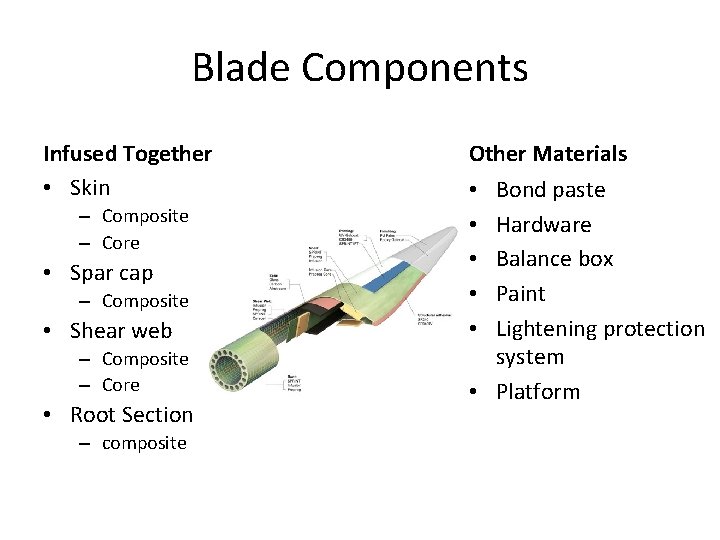
Blade Components Infused Together • Skin – Composite – Core • Spar cap – Composite • Shear web – Composite – Core • Root Section – composite Other Materials Bond paste Hardware Balance box Paint Lightening protection system • Platform • • •
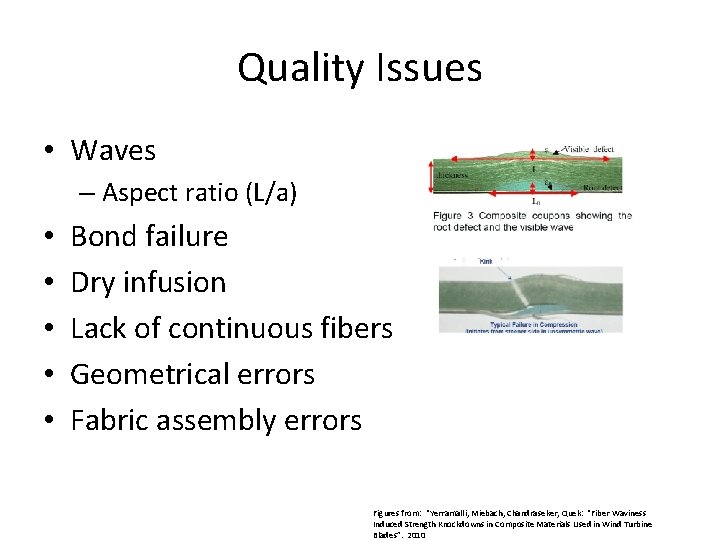
Quality Issues • Waves – Aspect ratio (L/a) • • • Bond failure Dry infusion Lack of continuous fibers Geometrical errors Fabric assembly errors Figures from: “Yerramalli, Miebach, Chandraseker, Quek: “Fiber Waviness Induced Strength Knockdowns in Composite Materials Used in Wind Turbine Blades”. 2010
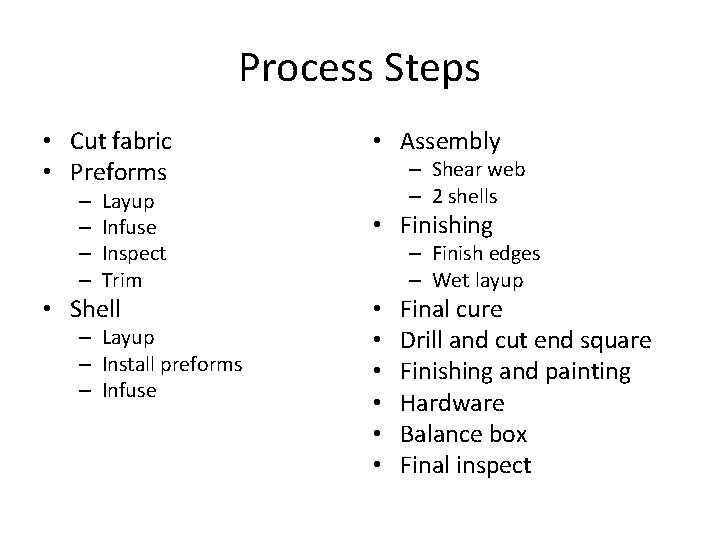
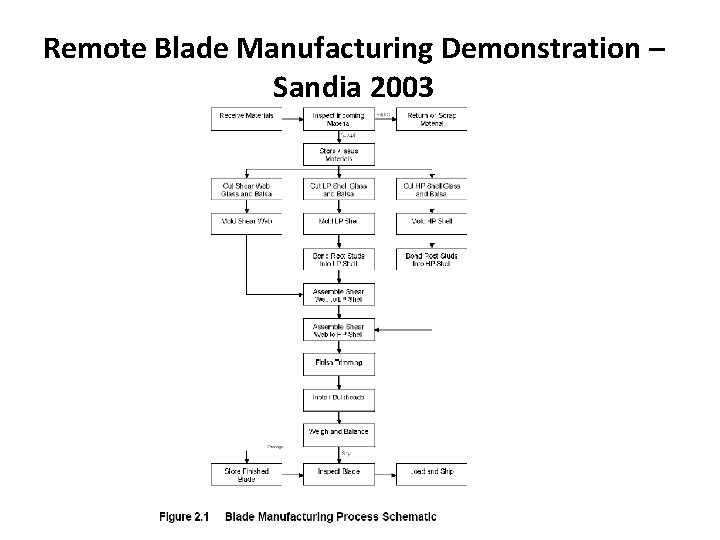
Process Steps • Cut fabric • Preforms – – Layup Infuse Inspect Trim • Shell – Layup – Install preforms – Infuse • Assembly – Shear web – 2 shells • Finishing – Finish edges – Wet layup • • • Final cure Drill and cut end square Finishing and painting Hardware Balance box Final inspect
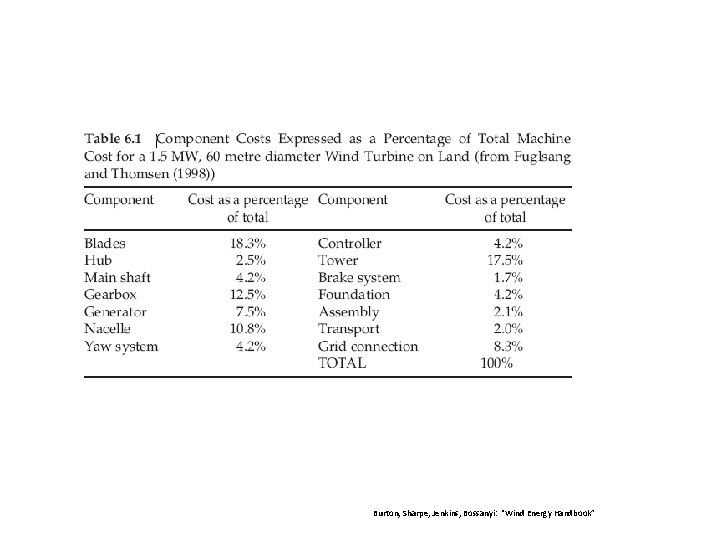
Burton, Sharpe, Jenkins, Bossanyi: “Wind Energy Handbook”
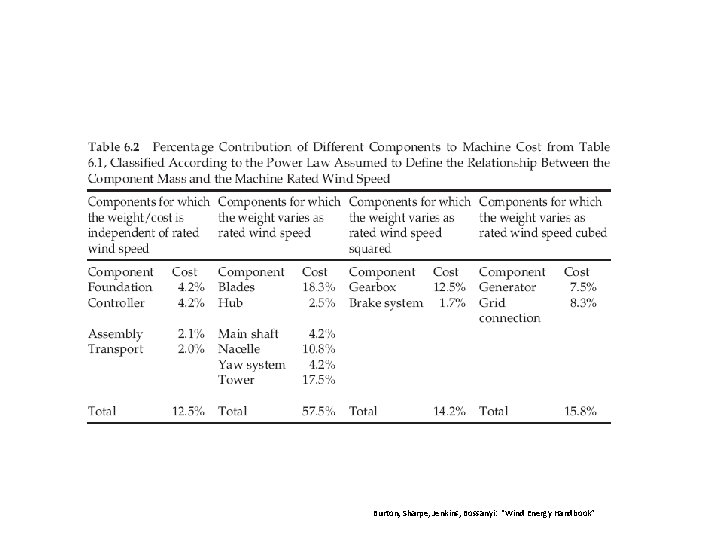
Burton, Sharpe, Jenkins, Bossanyi: “Wind Energy Handbook”

Mark Higgins 9/15/2011 Presentation at ISU
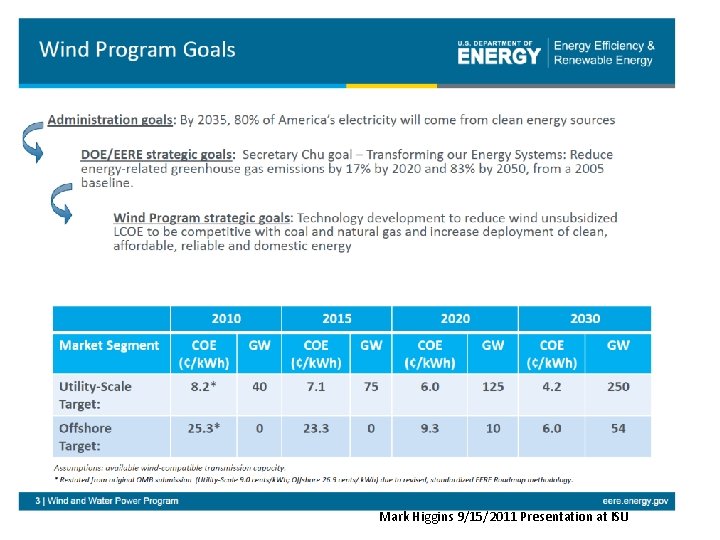
Mark Higgins 9/15/2011 Presentation at ISU
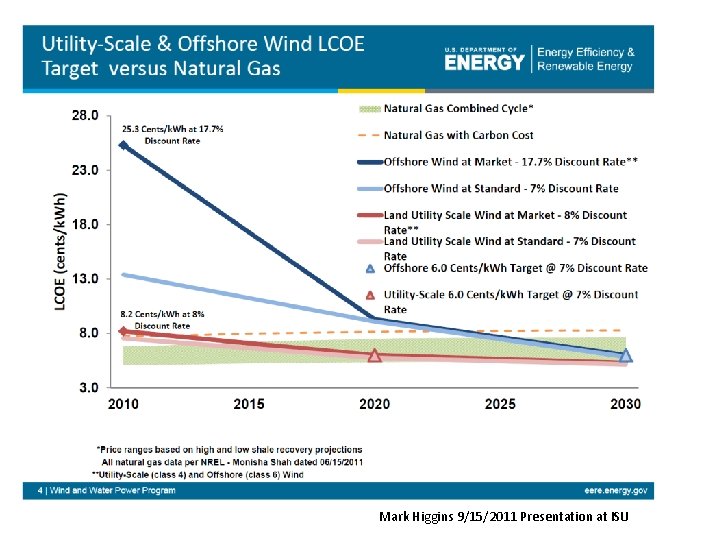
Mark Higgins 9/15/2011 Presentation at ISU
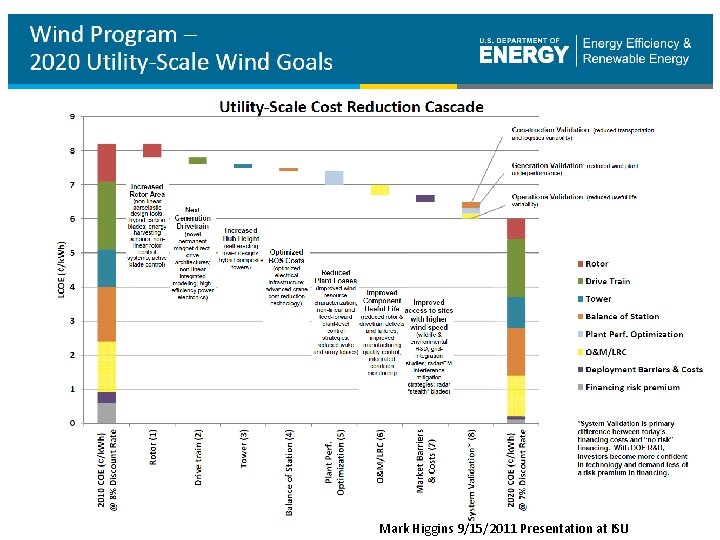
Mark Higgins 9/15/2011 Presentation at ISU
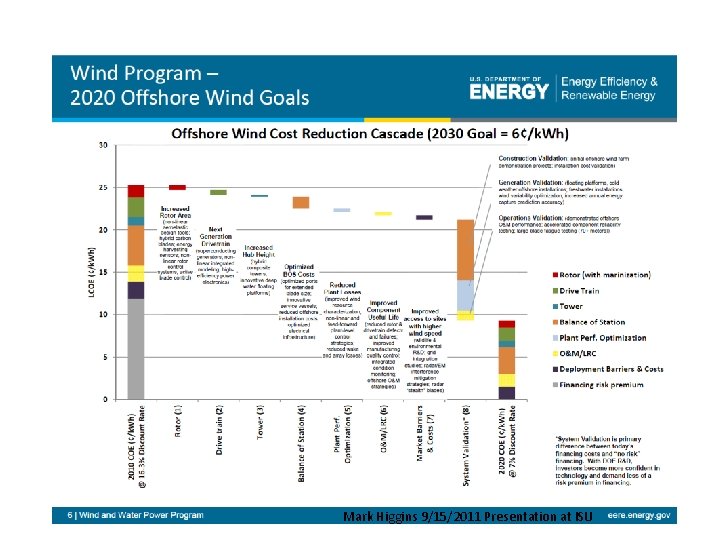
Mark Higgins 9/15/2011 Presentation at ISU
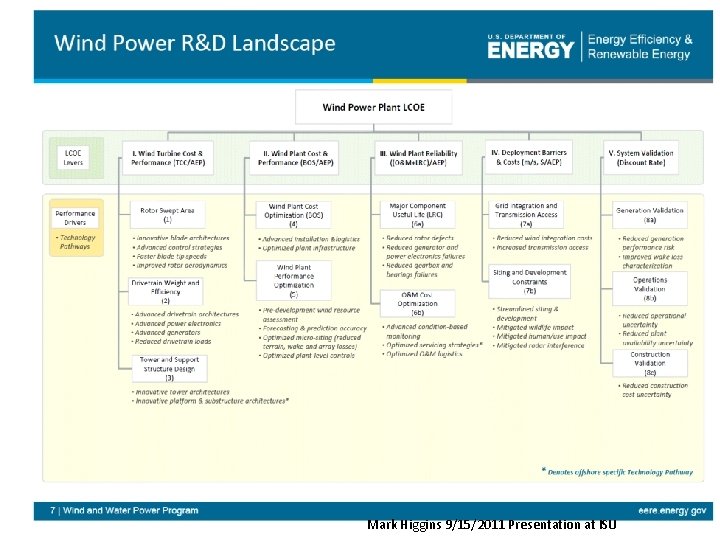
Mark Higgins 9/15/2011 Presentation at ISU
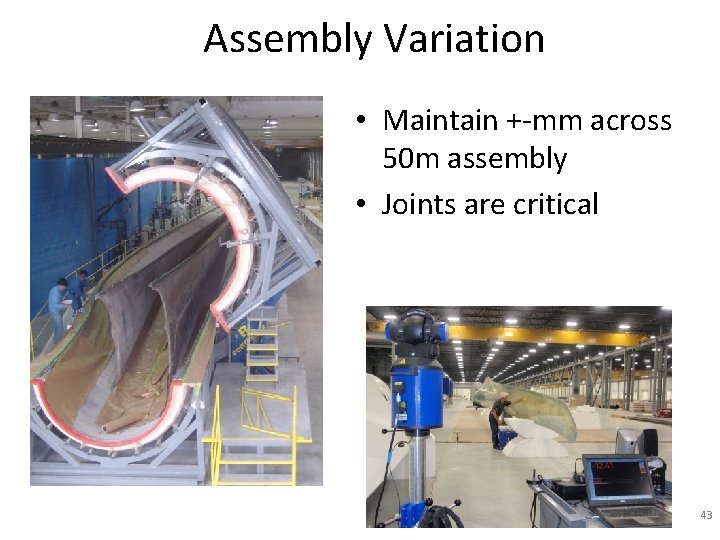
Assembly Variation • Maintain +-mm across 50 m assembly • Joints are critical 43
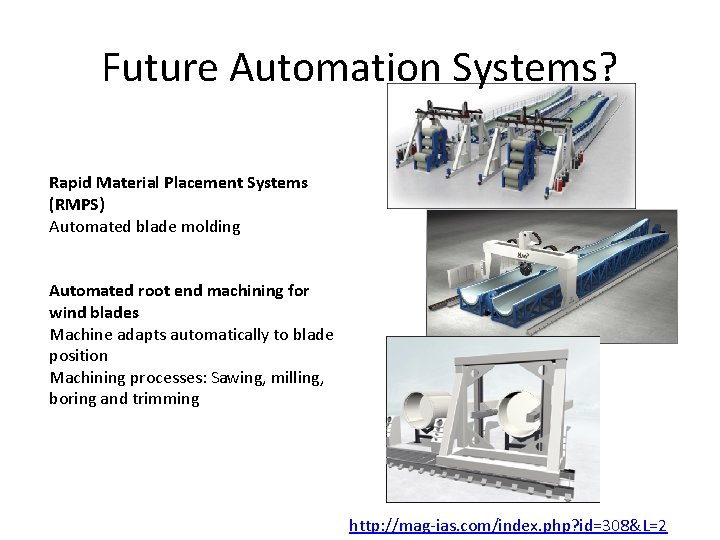
Future Automation Systems? Rapid Material Placement Systems (RMPS) Automated blade molding Automated root end machining for wind blades Machine adapts automatically to blade position Machining processes: Sawing, milling, boring and trimming http: //mag-ias. com/index. php? id=308&L=2
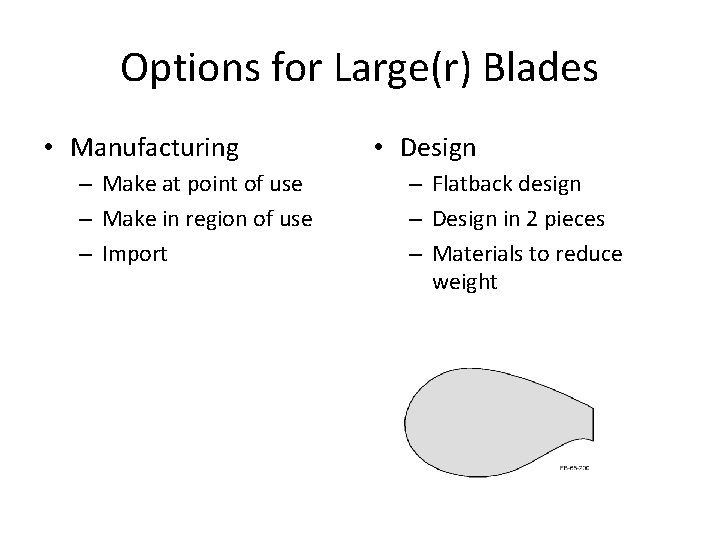
Options for Large(r) Blades • Manufacturing – Make at point of use – Make in region of use – Import • Design – Flatback design – Design in 2 pieces – Materials to reduce weight
Remote Blade Manufacturing Demonstration – Sandia 2003
- Slides: 46