
BLACKOUT SCRIPTED PERFORMANCE Davey Anderson DNAIN PAIRS ANSWER
BLACKOUT SCRIPTED PERFORMANCE Davey Anderson
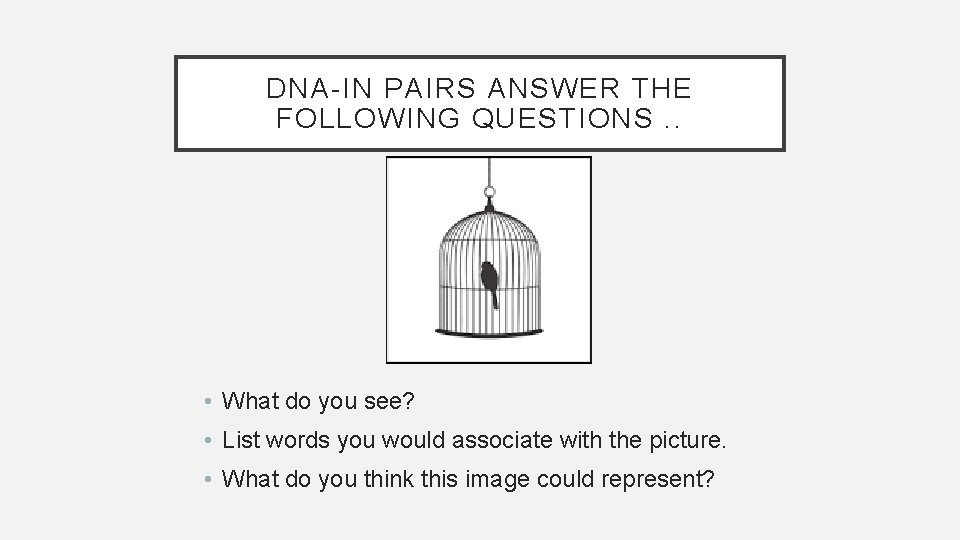
DNA-IN PAIRS ANSWER THE FOLLOWING QUESTIONS. . • What do you see? • List words you would associate with the picture. • What do you think this image could represent?
WHAT IS A MONOLOGUE? • A monologue is a speech given by a single character in a play. • A monologue vocalises the thoughts/opinions of a character on something. It is like an extended thought track where a character reveals their feelings to an audience.
PLANNING • Consider the original image and your ideas that this image creates. • 1 = Decide on a character that links to this idea. • 2 = Think about a circumstance/context that links to this character. . • For example; If your word is isolation your character might be isolated as they feel they are different from their friends or something may have happened to make them feel isolated. • 3 = Decide on a setting/location - Where is your character when they deliver their monologue? What has just happened? What are they doing ? How do they feel? What are they talking about?
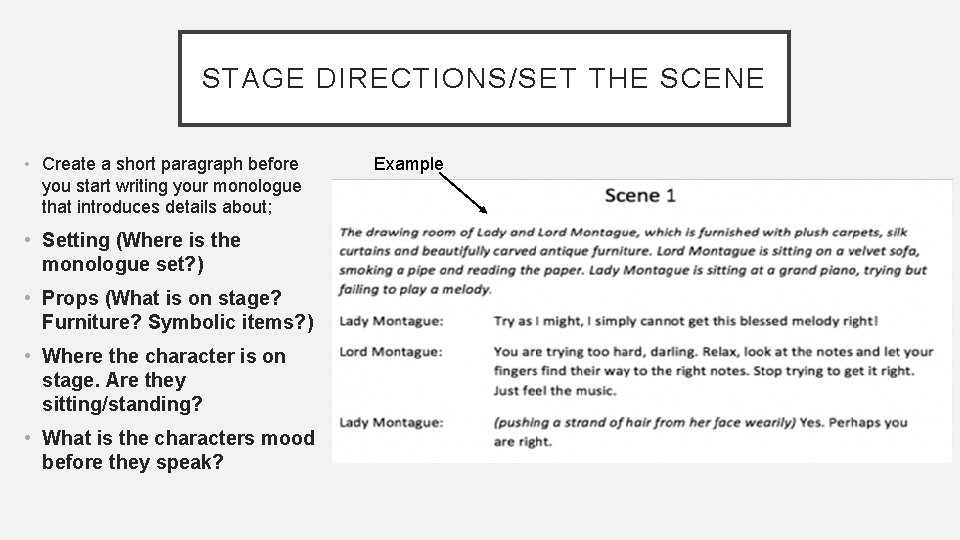
STAGE DIRECTIONS/SET THE SCENE • Create a short paragraph before you start writing your monologue that introduces details about; • Setting (Where is the monologue set? ) • Props (What is on stage? Furniture? Symbolic items? ) • Where the character is on stage. Are they sitting/standing? • What is the characters mood before they speak? Example
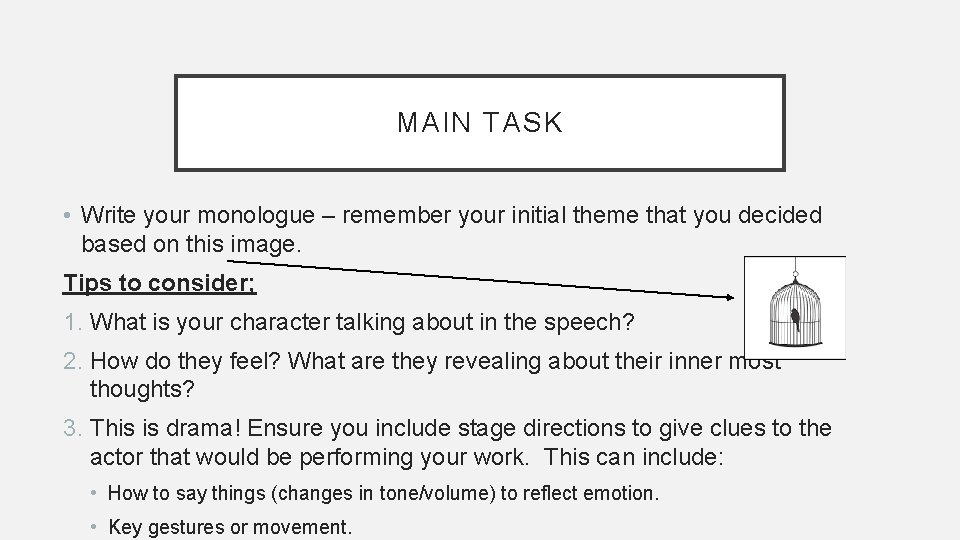
MAIN TASK • Write your monologue – remember your initial theme that you decided based on this image. Tips to consider; 1. What is your character talking about in the speech? 2. How do they feel? What are they revealing about their inner most thoughts? 3. This is drama! Ensure you include stage directions to give clues to the actor that would be performing your work. This can include: • How to say things (changes in tone/volume) to reflect emotion. • Key gestures or movement.
PROGRESS INDICATORS GOOD OUTSTANDING • You create a monologue that has a clear character in a situation that links back to the starting stimulus (picture). • Your monologue presents a character with a struggle or a challenge that links back to the stimulus/picture. • You have included stage directions that would give a performer an idea about how to set the stage up and what movements they need to do. • You have included extensive stage directions that provide the performer with detail on how to vocally deliver the lines and how to physically create the character.
- Slides: 7