
Black body radiation Why do objects have colour
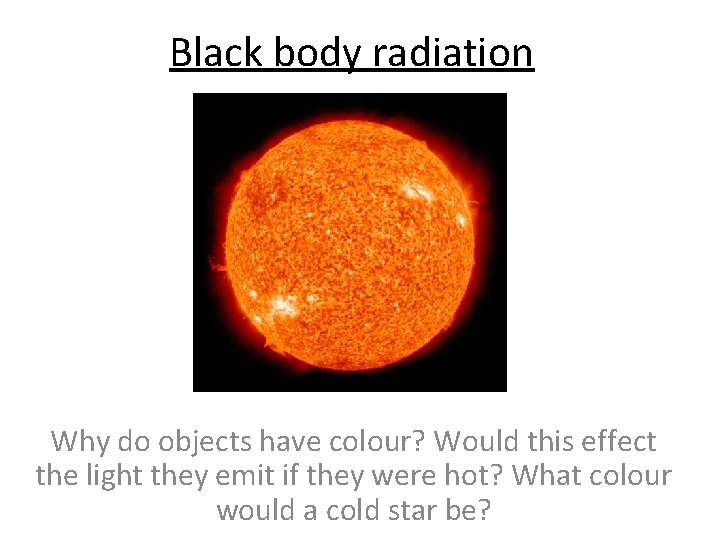
Black body radiation Why do objects have colour? Would this effect the light they emit if they were hot? What colour would a cold star be?

A reminder before we go on….
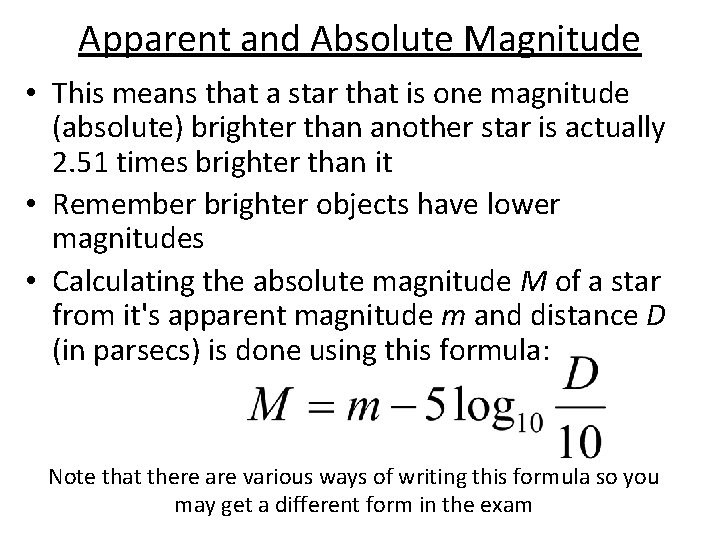
Apparent and Absolute Magnitude • This means that a star that is one magnitude (absolute) brighter than another star is actually 2. 51 times brighter than it • Remember brighter objects have lower magnitudes • Calculating the absolute magnitude M of a star from it's apparent magnitude m and distance D (in parsecs) is done using this formula: Note that there are various ways of writing this formula so you may get a different form in the exam
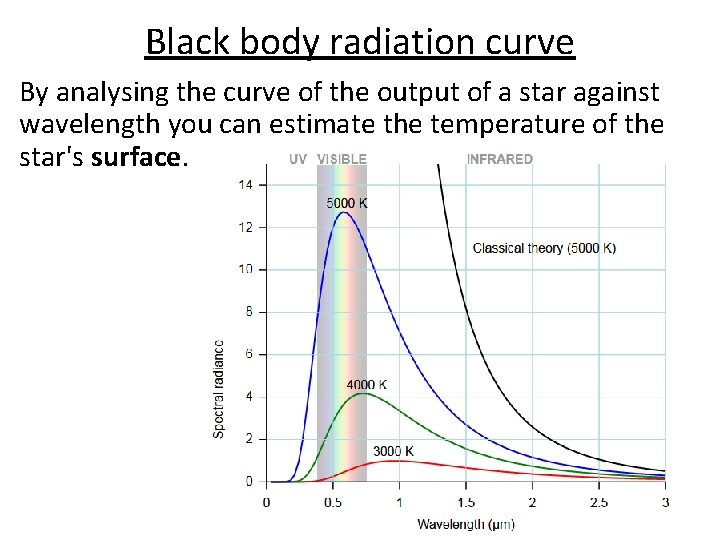
Black body radiation curve By analysing the curve of the output of a star against wavelength you can estimate the temperature of the star's surface.
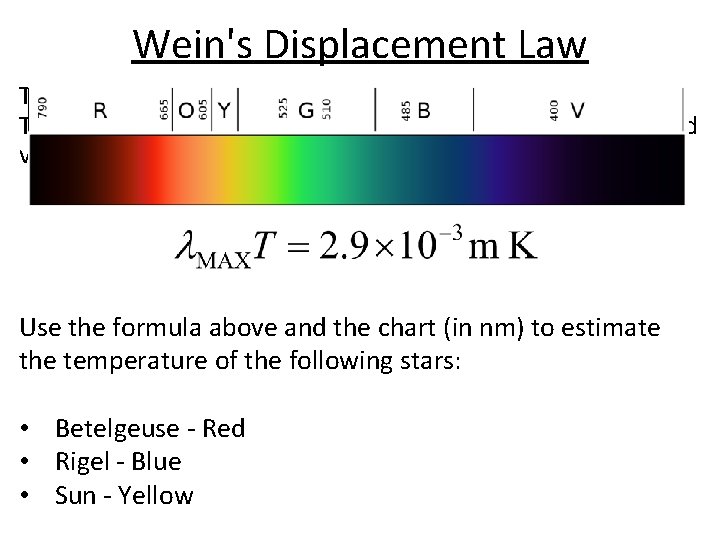
Wein's Displacement Law The peak of a blackbody curve can be calculated from the Temperature of an object using Wein's displacement law (and vice versa from analysis of the spectrum of light from a star): Use the formula above and the chart (in nm) to estimate the temperature of the following stars: • Betelgeuse - Red • Rigel - Blue • Sun - Yellow

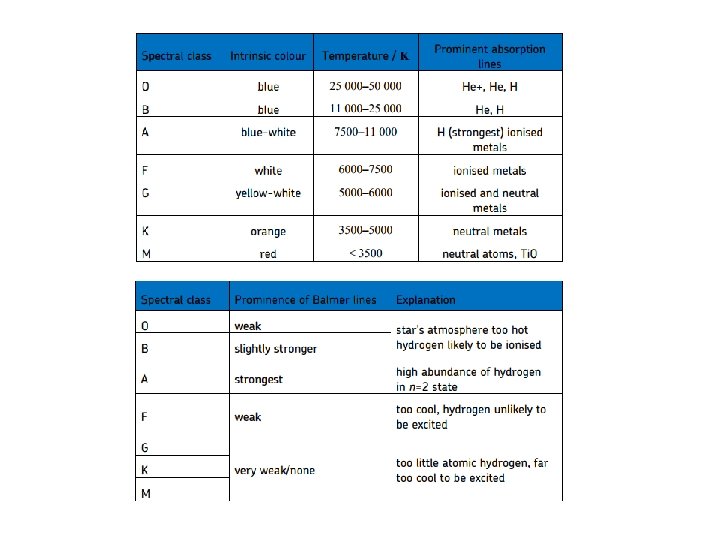
Spectral Classes Once Oh you know the surface temperature of a star Be A Fine Girl Kiss Me then you can assign it to a Spectral Class O B A F G K M Surface Temperature /103 K 25 – 50 11 – 25 7. 5 – 11 6. 0 – 7. 5 5. 0 – 6. 0 3. 5 – 5. 0 < 3. 5 Colour Blue / White Yellow / White Orange Red
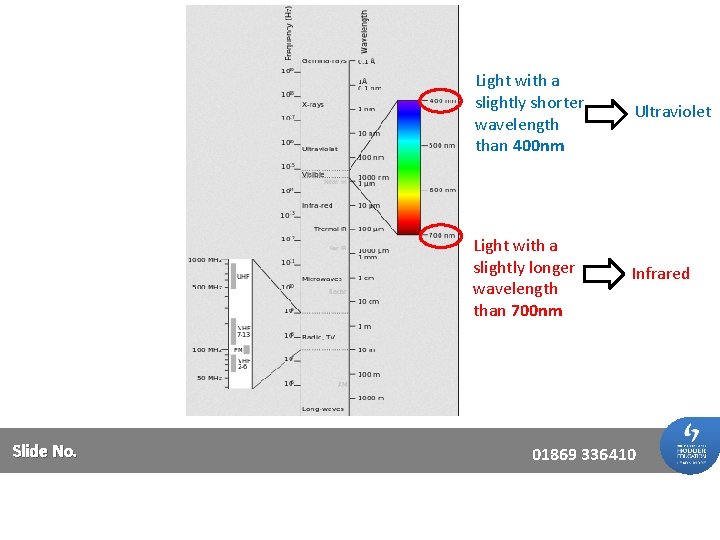
Slide No. Light with a slightly shorter wavelength than 400 nm Ultraviolet Light with a slightly longer wavelength than 700 nm Infrared 01869 336410
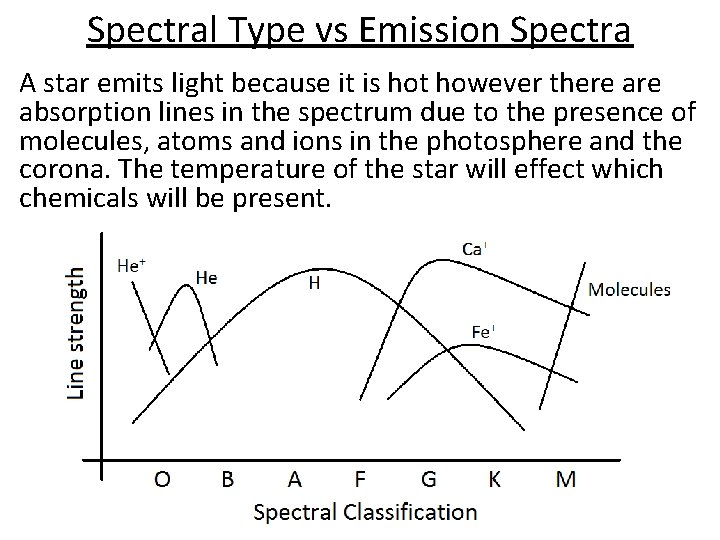
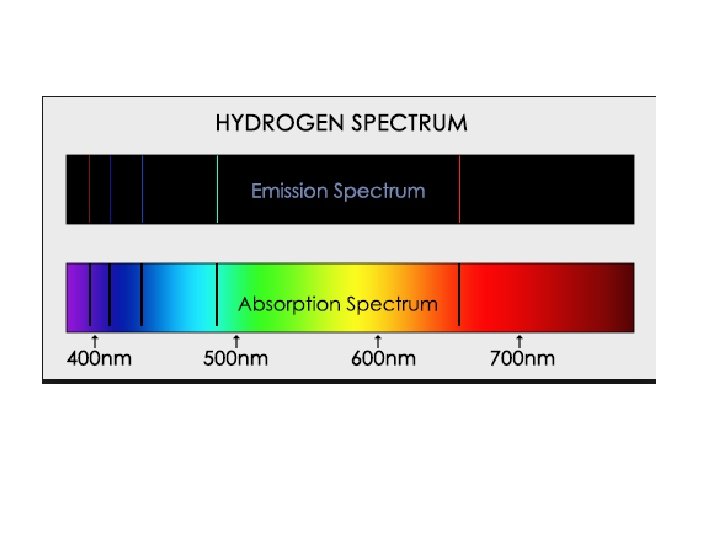
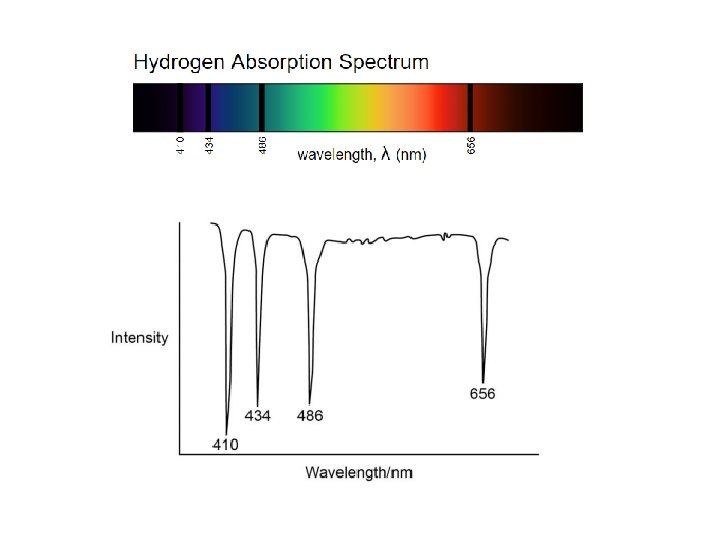
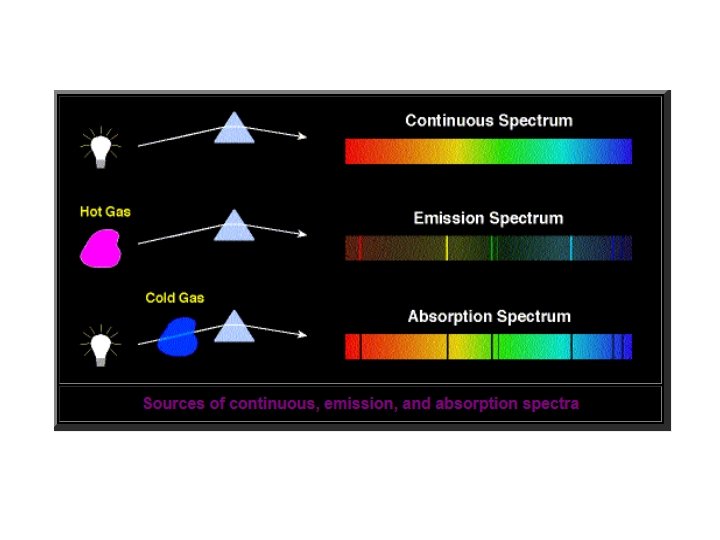
Spectral Type vs Emission Spectra A star emits light because it is hot however there absorption lines in the spectrum due to the presence of molecules, atoms and ions in the photosphere and the corona. The temperature of the star will effect which chemicals will be present.

Fraunhofer Lines
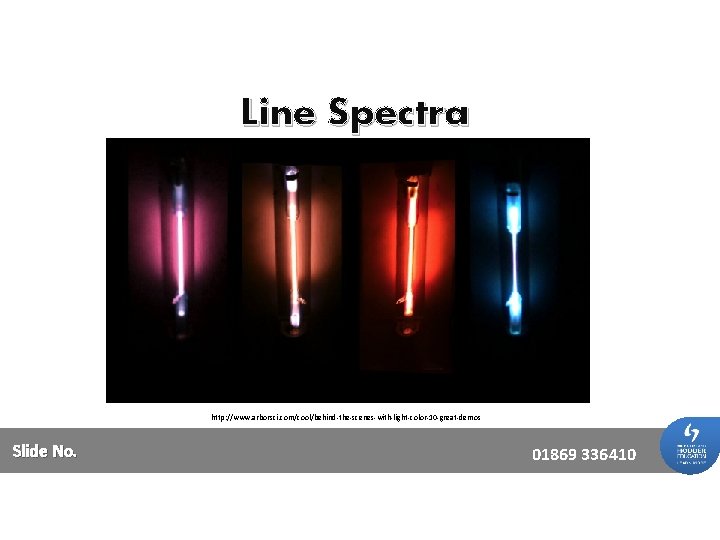
Line Spectra http: //www. arborsci. com/cool/behind-the-scenes-with-light-color-10 -great-demos Slide No. 01869 336410
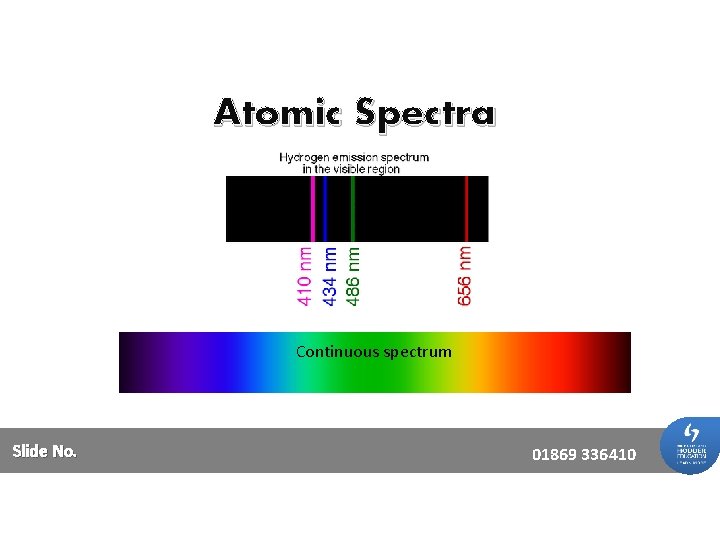
Atomic Spectra Continuous spectrum Slide No. 01869 336410
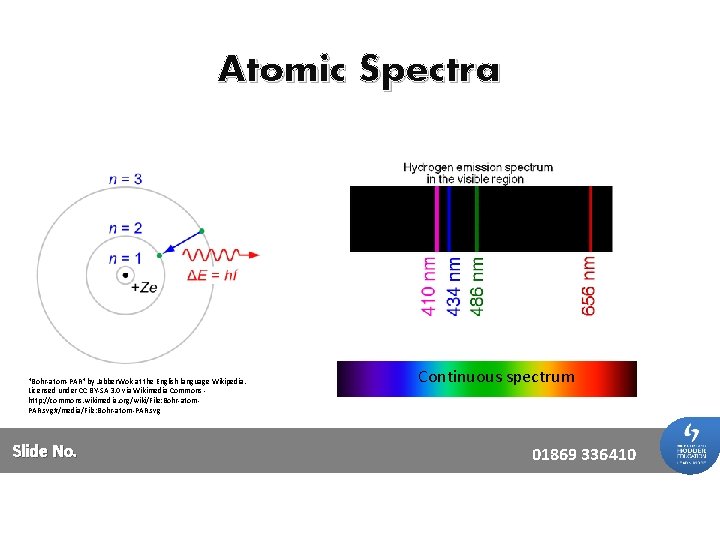
Atomic Spectra "Bohr-atom-PAR" by Jabber. Wok at the English language Wikipedia. Licensed under CC BY-SA 3. 0 via Wikimedia Commons http: //commons. wikimedia. org/wiki/File: Bohr-atom. PAR. svg#/media/File: Bohr-atom-PAR. svg Slide No. Continuous spectrum 01869 336410
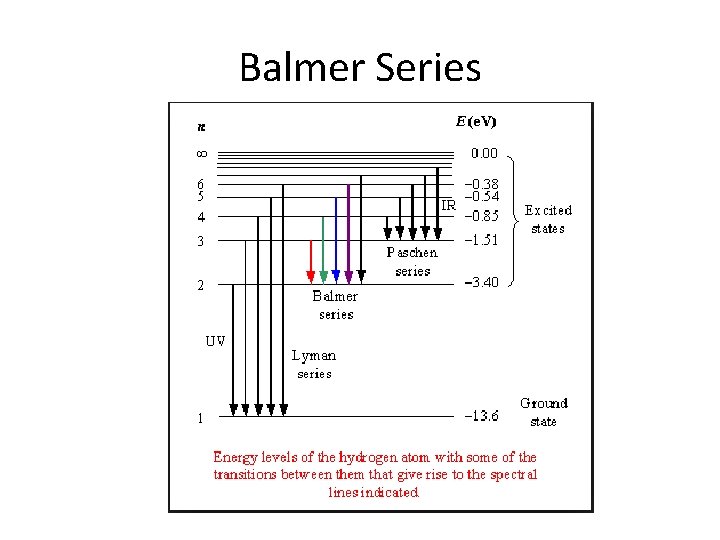
Balmer Series
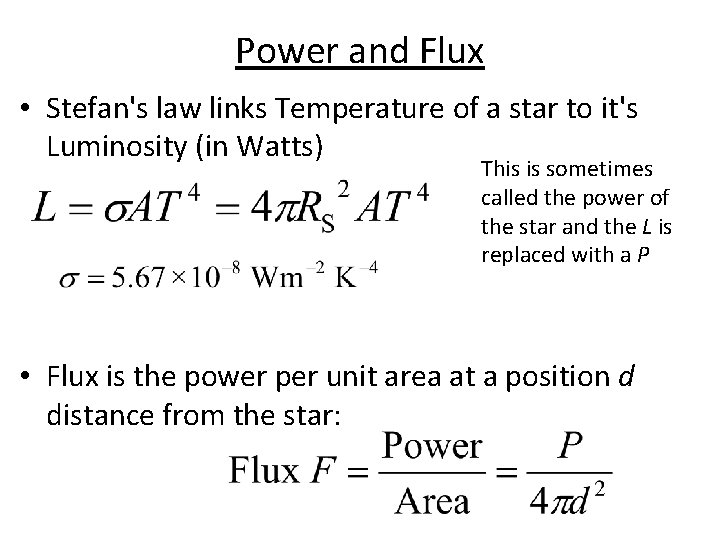
Power and Flux • Stefan's law links Temperature of a star to it's Luminosity (in Watts) This is sometimes called the power of the star and the L is replaced with a P • Flux is the power per unit area at a position d distance from the star:
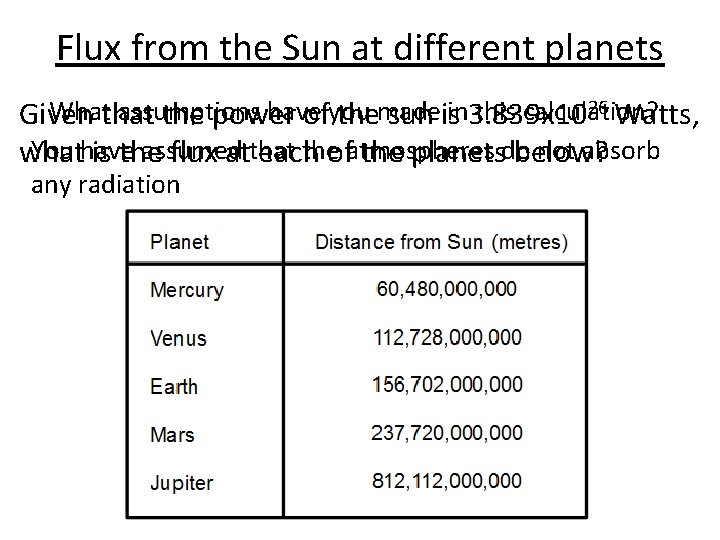
Flux from the Sun at different planets 26 Watts, Whatthat assumptions have this calculation? Given the power ofyou themade sun isin 3. 839 x 10 You have assumed theofatmospheres not absorb what is the flux atthat each the planetsdo below? any radiation
Summary • Stars are black body absorbers meaning that they emit a near perfect spectrum of radiation • The temperature of a star can be calculated from the peak wavelength of the emission • The temperature then places the star into a classification • The spectrum will also contain absorption lines which will help to confirm the temperature of the star • Cooler stars contains molecules, warmer ones contain metal ions, very hot stars contain helium ions
- Slides: 21