
Black adjective a color lacking hue and brightness
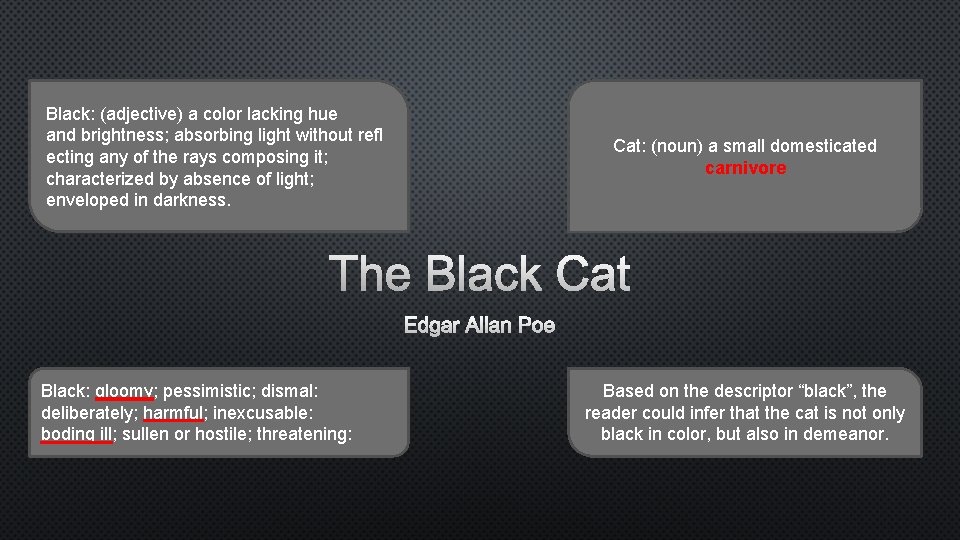
Black: (adjective) a color lacking hue and brightness; absorbing light without refl ecting any of the rays composing it; characterized by absence of light; enveloped in darkness. Cat: (noun) a small domesticated carnivore The Black Cat Edgar Allan Poe Black: gloomy; pessimistic; dismal: deliberately; harmful; inexcusable: boding ill; sullen or hostile; threatening: Based on the descriptor “black”, the reader could infer that the cat is not only black in color, but also in demeanor.
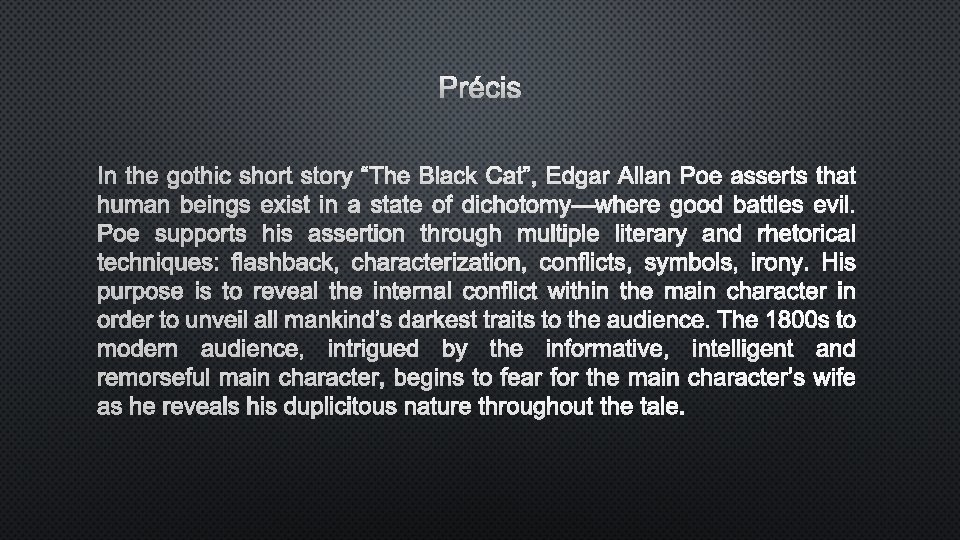
Précis In the gothic short story “The Black Cat”, Edgar Allan Poe asserts that human beings exist in a state of dichotomy—where good battles evil. Poe supports his assertion through multiple literary and rhetorical techniques: flashback, characterization, conflicts, symbols, irony. His purpose is to reveal the internal conflict within the main character in order to unveil all mankind’s darkest traits to the audience. The 1800 s to modern audience, intrigued by the informative, intelligent and remorseful main character, begins to fear for the main character’s wife as he reveals his duplicitous nature throughout the tale.
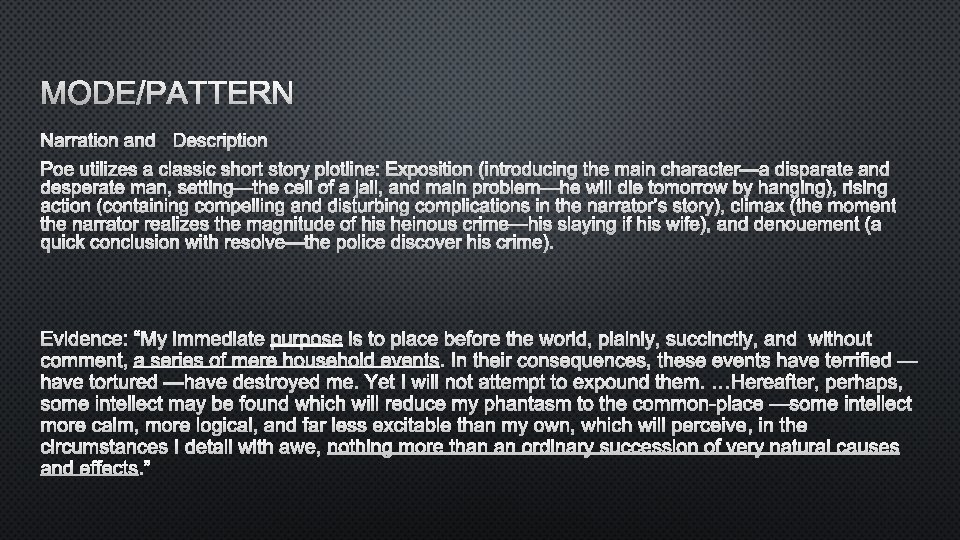
MODE/PATTERN NARRATION AND DESCRIPTION Poe utilizes a classic short story plotline: Exposition (introducing the main character—a disparate and desperate man, setting—the cell of a jail, and main problem—he will die tomorrow by hanging), rising action (containing compelling and disturbing complications in the narrator’s story), climax (the moment the narrator realizes the magnitude of his heinous crime—his slaying if his wife), and denouement (a quick conclusion with resolve—the police discover his crime).
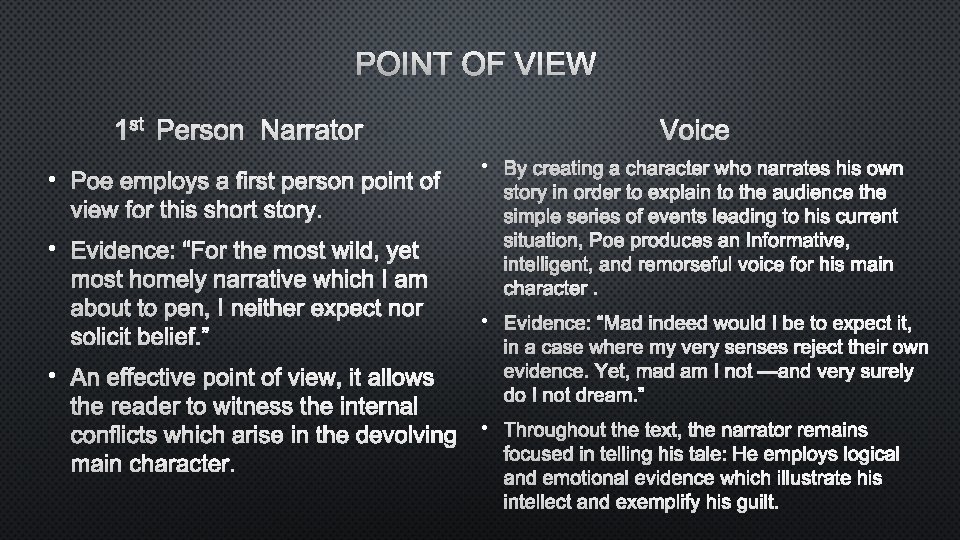
POINT OF VIEW 1 ST PERSON NARRATOR • Poe employs a first person point of view for this short story. VOICE • • Evidence: “For • • An effective point of view, it allows the reader to witness the internal conflicts which arise in the devolving • main character.
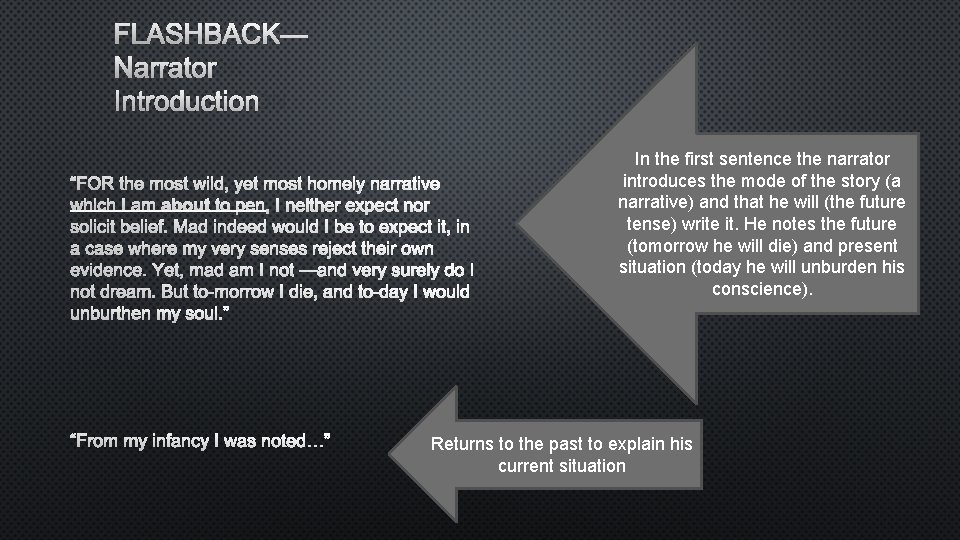
FLASHBACK— NARRATOR INTRODUCTION In the first sentence the narrator introduces the mode of the story (a narrative) and that he will (the future tense) write it. He notes the future (tomorrow he will die) and present situation (today he will unburden his conscience). Returns to the past to explain his current situation
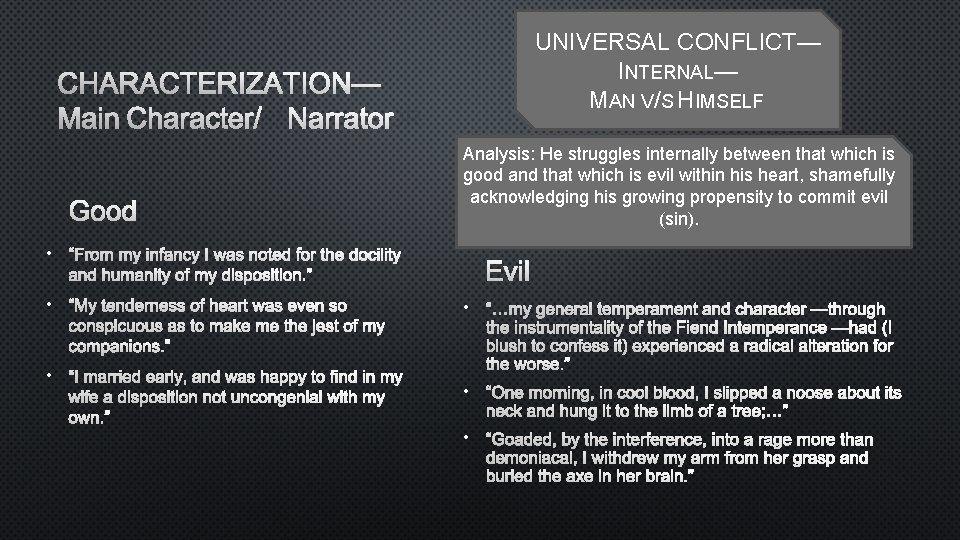
UNIVERSAL CONFLICT— INTERNAL— MAN V/S HIMSELF CHARACTERIZATION— MAIN CHARACTER/ NARRATOR GOOD Analysis: He struggles internally between that which is good and that which is evil within his heart, shamefully acknowledging his growing propensity to commit evil (sin). • • • EVIL • “…my general • •
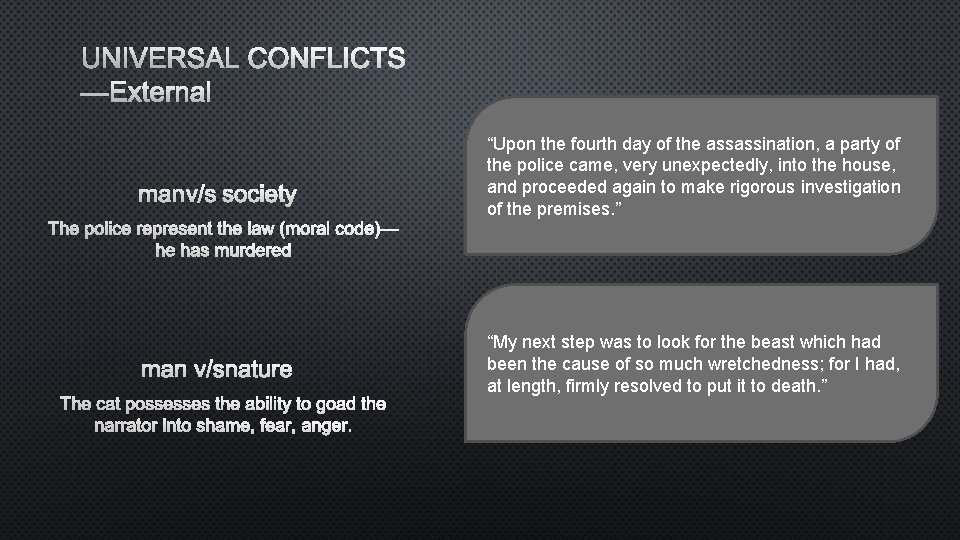
UNIVERSAL CONFLICTS —EXTERNAL “Upon the fourth day of the assassination, a party of the police came, very unexpectedly, into the house, and proceeded again to make rigorous investigation of the premises. ” “My next step was to look for the beast which had been the cause of so much wretchedness; for I had, at length, firmly resolved to put it to death. ”
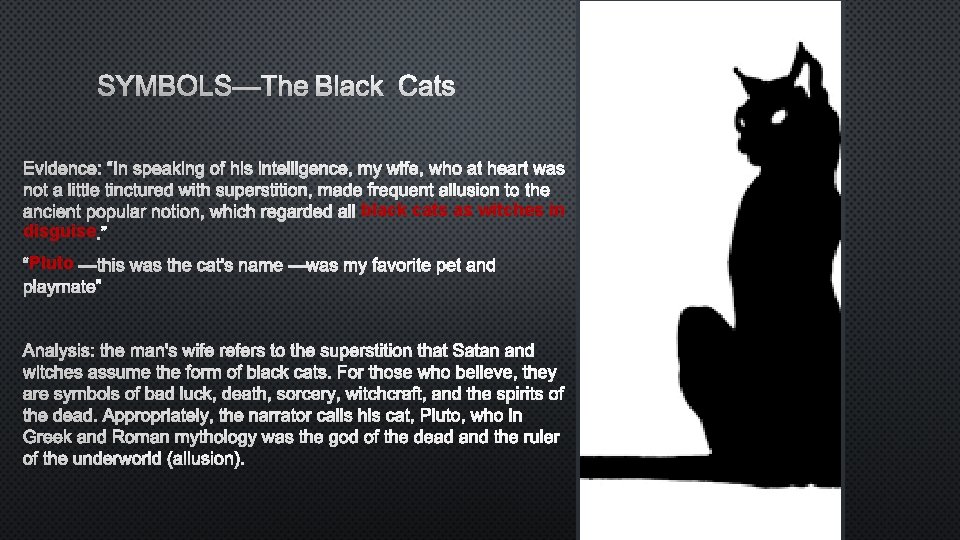
SYMBOLS—THE BLACK CATS black cats as witches in disguise Pluto

“ IRONY Analysis: ”
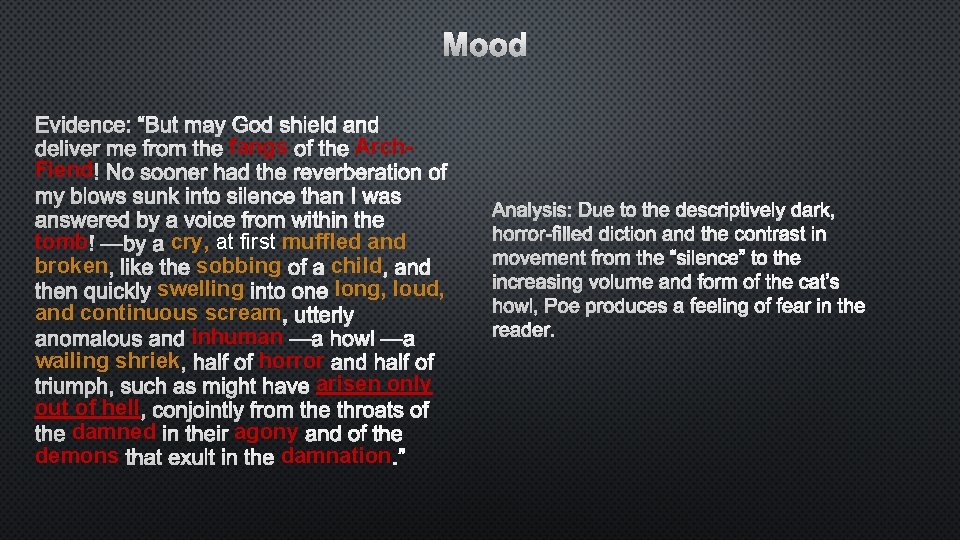
Mood Fiend tomb broken fangs Arch- cry, at first muffled and sobbing child swelling long, loud, and continuous scream inhuman wailing shriek horror arisen only out of hell damned agony demons damnation Analysis: Due to the descriptively dark, horror-filled diction and the contrast in movement from the “silence” to the increasing volume and form of the cat’s howl, Poe produces a feeling of fear in the reader.
- Slides: 10