
BK Virus Thea BrennanKrohn BK July 2010 Polyomaviruses

BK Virus Thea Brennan-Krohn (“BK”) July 2010
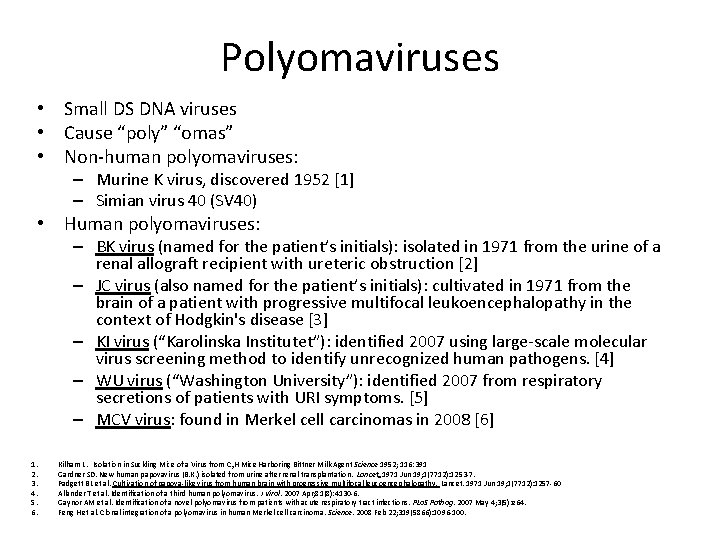
Polyomaviruses • Small DS DNA viruses • Cause “poly” “omas” • Non-human polyomaviruses: – Murine K virus, discovered 1952 [1] – Simian virus 40 (SV 40) • Human polyomaviruses: – BK virus (named for the patient’s initials): isolated in 1971 from the urine of a renal allograft recipient with ureteric obstruction [2] – JC virus (also named for the patient’s initials): cultivated in 1971 from the brain of a patient with progressive multifocal leukoencephalopathy in the context of Hodgkin's disease [3] – KI virus (“Karolinska Institutet”): identified 2007 using large-scale molecular virus screening method to identify unrecognized human pathogens. [4] – WU virus (“Washington University”): identified 2007 from respiratory secretions of patients with URI symptoms. [5] – MCV virus: found in Merkel cell carcinomas in 2008 [6] 1. 2. 3. 4. 5. 6. Kilham L. Isolation in Suckling Mice of a Virus from C 3 H Mice Harboring Bittner Milk Agent Science 1952; 116: 391 Gardner SD. New human papovavirus (B. K. ) isolated from urine after renal transplantation. Lancet. 1971 Jun 19; 1(7712): 1253 -7. Padgett BL et al. Cultivation of papova-like virus from human brain with progressive multifocal leucoencephalopathy. Lancet. 1971 Jun 19; 1(7712): 1257 -60 Allander T et al. Identification of a third human polyomavirus. J Virol. 2007 Apr; 81(8): 4130 -6. Gaynor AM et al. Identification of a novel polyomavirus from patients with acute respiratory tract infections. PLo. S Pathog. 2007 May 4; 3(5): e 64. Feng H et al. Clonal integration of a polyomavirus in human Merkel cell carcinoma. Science. 2008 Feb 22; 319(5866): 1096 -100.

Naming Viruses After Patients: A HIPAA Violation? • “James Delany, a man about 50… had an umbilical hernia… Eight days before admission, in struggling to hold a pig, he felt something give way at the tumour…” • Plan: “give as much beef-tea and brandy-andwater as he can take, and throw up an enema daily of strained gruel and milk. ” From Umbilical Hernia; Sloughing of Four Inches of the Small Intestines; Complete Recovery Br Med J. 1865 July 15; 2(237): 33– 35.
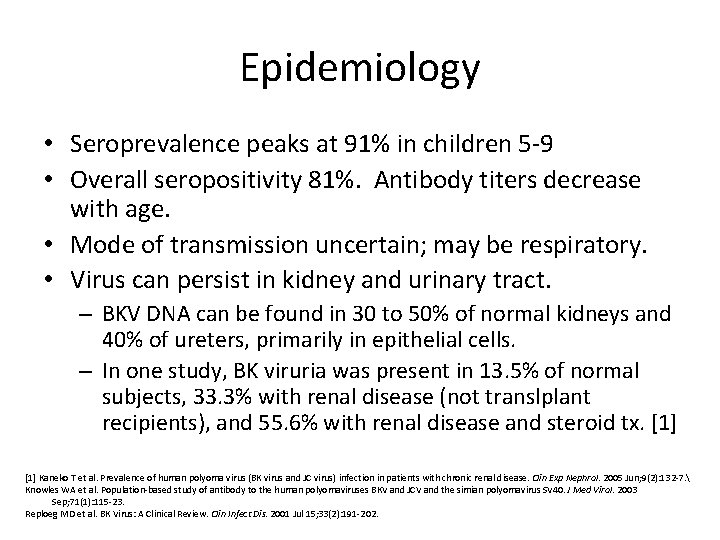
Epidemiology • Seroprevalence peaks at 91% in children 5 -9 • Overall seropositivity 81%. Antibody titers decrease with age. • Mode of transmission uncertain; may be respiratory. • Virus can persist in kidney and urinary tract. – BKV DNA can be found in 30 to 50% of normal kidneys and 40% of ureters, primarily in epithelial cells. – In one study, BK viruria was present in 13. 5% of normal subjects, 33. 3% with renal disease (not translplant recipients), and 55. 6% with renal disease and steroid tx. [1] Kaneko T et al. Prevalence of human polyoma virus (BK virus and JC virus) infection in patients with chronic renal disease. Clin Exp Nephrol. 2005 Jun; 9(2): 132 -7. Knowles WA et al. Population-based study of antibody to the human polyomaviruses BKV and JCV and the simian polyomavirus SV 40. J Med Virol. 2003 Sep; 71(1): 115 -23. Reploeg MD et al. BK Virus: A Clinical Review. Clin Infect Dis. 2001 Jul 15; 33(2): 191 -202.

The Virus • Small, nonenveloped, double-stranded DNA icosahedral virions. • Three structural capsid proteins and three non -capsid regulatory proteins: large T-antigen, small t-antigen, and agnoprotein. White MK; Khalili K. Polyomaviruses and human cancer: molecular mechanisms underlying patterns of tumorigenesis. Virology. 2004 Jun 20; 324(1): 1 -16. Jiang M et al. The role of polyomaviruses in human disease. Virology. 2009 Feb 20; 384(2): 266 -73.
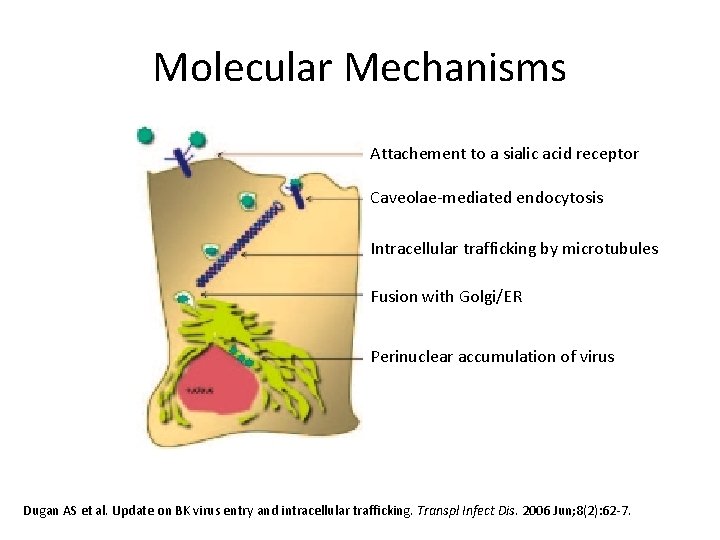
Molecular Mechanisms Attachement to a sialic acid receptor Caveolae-mediated endocytosis Intracellular trafficking by microtubules Fusion with Golgi/ER Perinuclear accumulation of virus Dugan AS et al. Update on BK virus entry and intracellular trafficking. Transpl Infect Dis. 2006 Jun; 8(2): 62 -7.

Clinical Manifestations • Asymptomatic or mild URI in immunocompetant hosts • Hemorrhagic cystitis in hematopoietic stem cell transplant recipients • Allograft nephropathy in renal transplant recipients • Unusual manifestations – Systemic vasculopathy widespread capillary leakage, MI, death. [1] – Disseminated infection [2, 3] – Retinitis [4, 5] – Interstitial pneumonia [6] – Ulcers of the colon [7] [1] Petrogiannis-Haliotis T et al. BK-related polyomavirus vasculopathy in a renal-transplant recipient. N Engl J Med 2001; 345: 1250. [2] Rosen S et al. Tubulo-interstitial nephritis associated with polyomavirus (BK type) infection. N Engl J Med 1983; 308: 1192 -6. [3] Vallbracht A et al. Disseminated BK type polyomavirus infection in an AIDS patient associated with central nervous system disease. Am J Pathol 1993; 143: 29 -39. [4] Bratt G et al. BK virus as the cause of meningoencephalitis, retinitis and nephritis in a patient with AIDS 1999; 13: 1071 -5. 12. [5] Hedquist BG et al. Identification of BK virus in a patient with acquired immune deficiency syndrome and bilateral atypical retinitis. Ophthalmology 1999; 106: 129 -32. [6] Sandler ES et al. BK papova virus pneumonia following hematopoietic stem cell transplantation. Bone Marrow Transplant 1997; 20: 163 -5 [7] Kim, GY et al. BK virus colonic ulcerations. Clin Gastroenterol Hepatol 2004; 2: 175. .
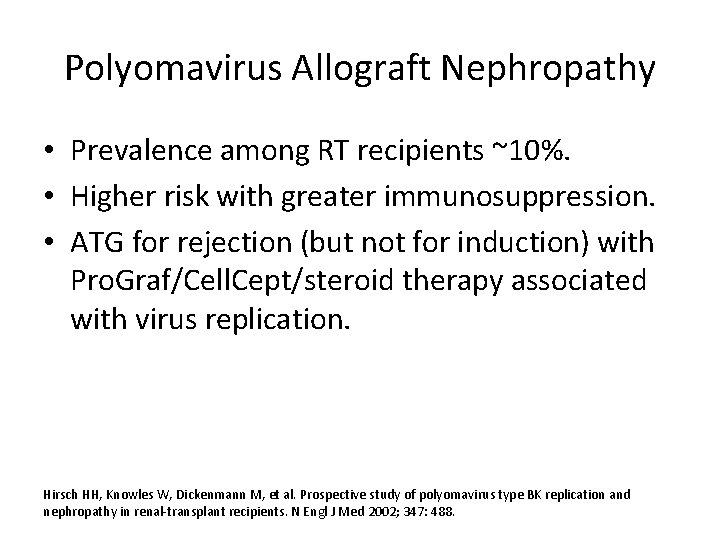
Polyomavirus Allograft Nephropathy • Prevalence among RT recipients ~10%. • Higher risk with greater immunosuppression. • ATG for rejection (but not for induction) with Pro. Graf/Cell. Cept/steroid therapy associated with virus replication. Hirsch HH, Knowles W, Dickenmann M, et al. Prospective study of polyomavirus type BK replication and nephropathy in renal-transplant recipients. N Engl J Med 2002; 347: 488.
Diagnosis • • • Serum or urine PCR Urine cytology Biopsy Electron microscopy of biopsy or urine Screening by urine cytology or PCR recommended – Every three months for first 2 years post transplant – With graft dysfunction – With all biopsies Hirsch HH. Polyomavirus-associated nephropathy in renal transplantation: interdisciplinary analyses and recommendations. Transplantation 2005 May 27; 79(10): 1277 -86.
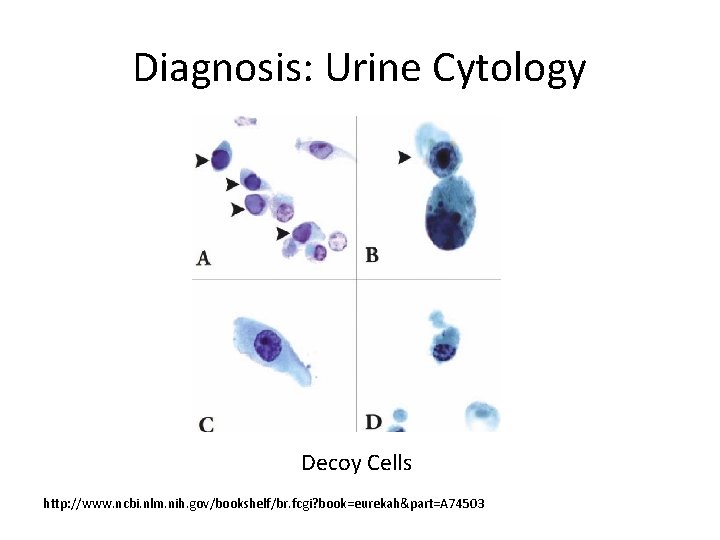
Diagnosis: Urine Cytology Decoy Cells http: //www. ncbi. nlm. nih. gov/bookshelf/br. fcgi? book=eurekah&part=A 74503
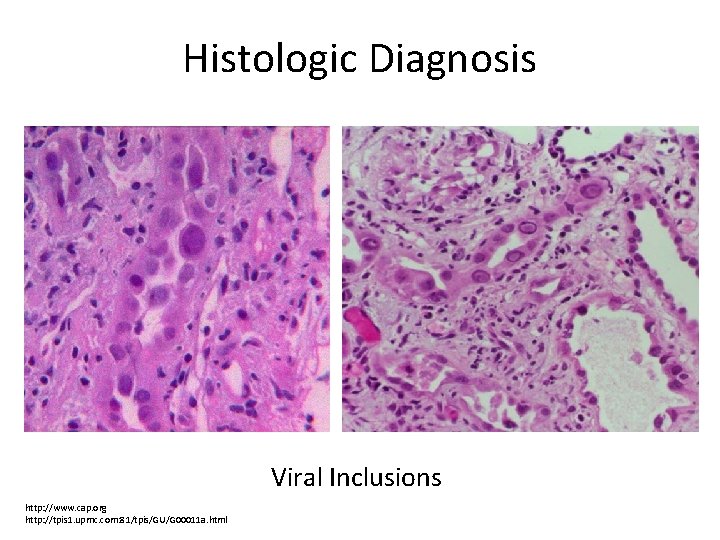
Histologic Diagnosis Viral Inclusions http: //www. cap. org http: //tpis 1. upmc. com: 81/tpis/GU/G 00011 a. html
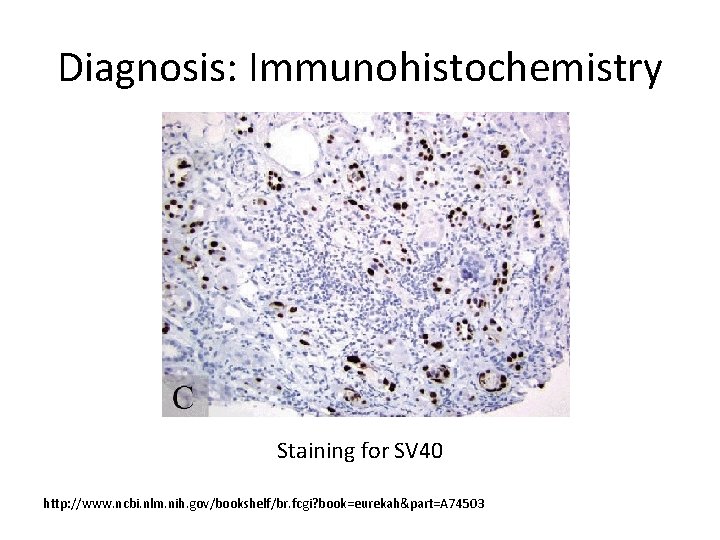
Diagnosis: Immunohistochemistry Staining for SV 40 http: //www. ncbi. nlm. nih. gov/bookshelf/br. fcgi? book=eurekah&part=A 74503
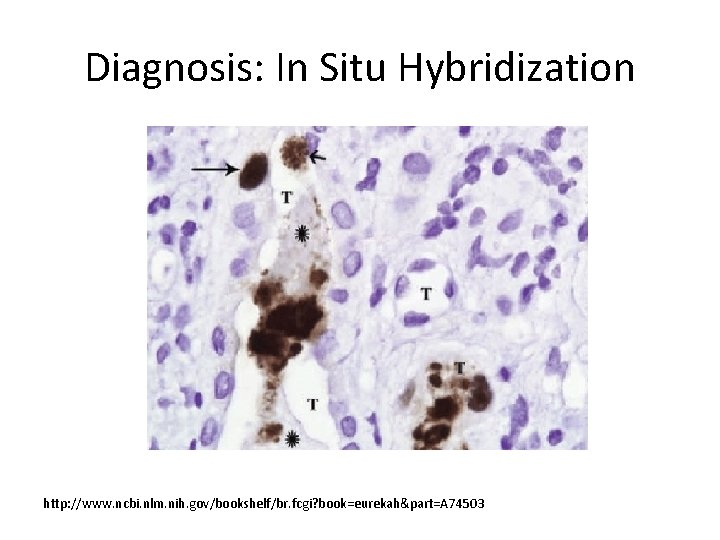
Diagnosis: In Situ Hybridization http: //www. ncbi. nlm. nih. gov/bookshelf/br. fcgi? book=eurekah&part=A 74503
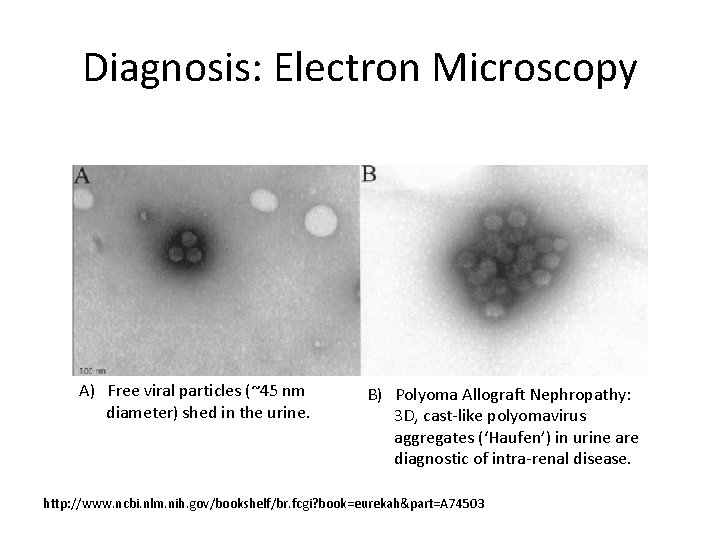
Diagnosis: Electron Microscopy A) Free viral particles (~45 nm diameter) shed in the urine. B) Polyoma Allograft Nephropathy: 3 D, cast-like polyomavirus aggregates (‘Haufen’) in urine are diagnostic of intra-renal disease. http: //www. ncbi. nlm. nih. gov/bookshelf/br. fcgi? book=eurekah&part=A 74503
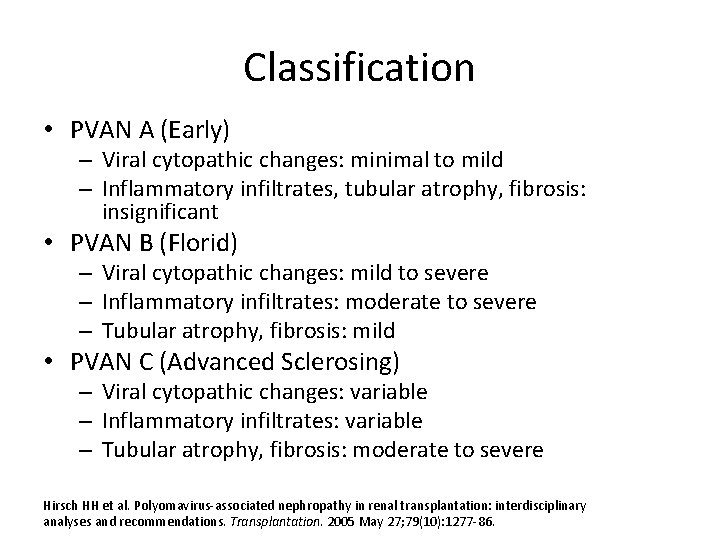
Classification • PVAN A (Early) – Viral cytopathic changes: minimal to mild – Inflammatory infiltrates, tubular atrophy, fibrosis: insignificant • PVAN B (Florid) – Viral cytopathic changes: mild to severe – Inflammatory infiltrates: moderate to severe – Tubular atrophy, fibrosis: mild • PVAN C (Advanced Sclerosing) – Viral cytopathic changes: variable – Inflammatory infiltrates: variable – Tubular atrophy, fibrosis: moderate to severe Hirsch HH et al. Polyomavirus-associated nephropathy in renal transplantation: interdisciplinary analyses and recommendations. Transplantation. 2005 May 27; 79(10): 1277 -86.
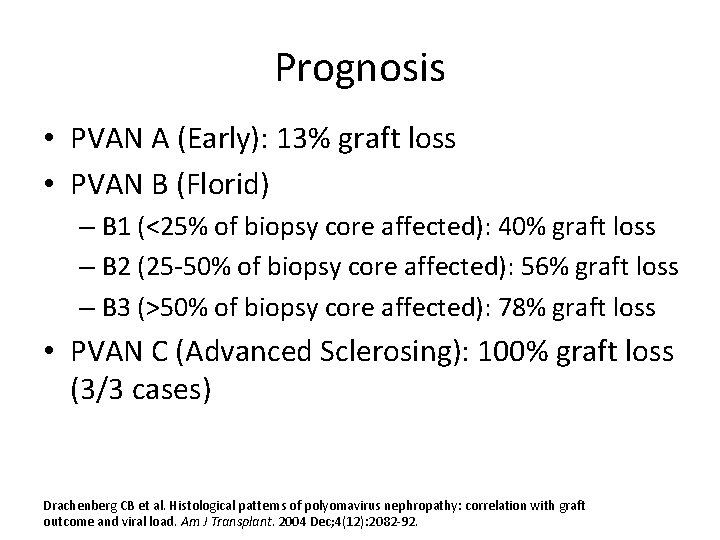
Prognosis • PVAN A (Early): 13% graft loss • PVAN B (Florid) – B 1 (<25% of biopsy core affected): 40% graft loss – B 2 (25 -50% of biopsy core affected): 56% graft loss – B 3 (>50% of biopsy core affected): 78% graft loss • PVAN C (Advanced Sclerosing): 100% graft loss (3/3 cases) Drachenberg CB et al. Histological patterns of polyomavirus nephropathy: correlation with graft outcome and viral load. Am J Transplant. 2004 Dec; 4(12): 2082 -92.
Treatment: Adjustment of Immunosuppression • Reduction of immunosuppression – Tacrolimus trough <6 ng/m. L – MMF <1 gm/day – Cyclosporine A trough 100 -150 ng/m. L – Discontinuation of tacrolimus or MMF • Change in immunosuppression – Tacrolimus cyclosporine A or sirolimus – MMF azathioprine, sirolimus or leflunomide Hirsch HH et al. Polyomavirus-associated nephropathy in renal transplantation: interdisciplinary analyses and recommendations. Transplantation. 2005 May 27; 79(10): 1277 -86.
Treatment: Cidofovir • Cytosine-phosphate analog, originally used for CMV retinitis in patients with AIDS • Shown to have in vitro activity against BK virus • Concentrates in tubular epithelial cells and urine • A few studies have shown improvement in patients treated with cidofovir, but no RCTs. [1 -3] – In one study patients treated with cidofovir had no decline in BKV and had decreased renal function compared to those not treated. [4] • 0. 25– 0. 33 mg/kg IV q 2– 3 weeks (10– 20% of the CMV dose) without probenicid. [5] [1] Vats A, Shapiro R, Singh RP, et al. Quantitative viral load monitoring and cidofovir therapy for the management of BK virus-associated nephropathy in children and adults. Transplantation 2003; 75: 105. [2] Kadambi PV, Josephson MA, Williams J, et al. Treatment of refractory BK virus-associated nephropathy with cidofovir. Am J Transplant 2003; 3: 186. [3] Vats A, Shapiro R, Randhawa PS, et al. BK Virus associated nephropathy and cidofovir: long term experience. Am J Transplantation 2003; 3: 190 (Abstract #148). [4]Pallet N. Cidofovir may be deleterious in BK virus-associated nephropathy. Transplantation. 2010 Jun 27; 89(12): 1542 -4. [5] Hirsch HH et al. Polyomavirus-associated nephropathy in renal transplantation: interdisciplinary analyses and recommendations. Transplantation. 2005 May 27; 79(10): 1277 -86.
Treatment: Leflunomide • A disease-modifying anti-rheumatic drug • In one study, 12/13 patients treated by exchanging leflunomide for MMF and lowering the trough level of the calcineurin-inhibitor cleared the virus. [1] • In another study 5/12 pts treated by exchanging leflunomide for MMF and decreasing immunosuppresion cleared the virus. [2] [1] Teschner S et al. Leflunomide therapy for polyomavirus-induced allograft nephropathy: efficient BK virus elimination without increased risk of rejection. Transplant Proc. 2009 Jul-Aug; 41(6): 2533 -8. [2] Faguer S. Leflunomide treatment for polyomavirus BK-associated nephropathy after kidney transplantation. Transpl Int. 2007 Nov; 20(11): 962 -9. Epub 2007 Jul 30. Johnston O et al. Treatment of polyomavirus infection in kidney transplant recipients: a systematic review. Transplantation. 2010 May 15; 89(9): 1057 -70.

Other Treatment Possibilities • IVIg • Ciprofloxacin

The Future • Do more studies • Invent new drugs
- Slides: 21