
BK Virus Nephropathy Grand rounds Kiran Babu Fellow

BK Virus Nephropathy Grand rounds Kiran Babu, Fellow UTHSC 1/17/2012
BK Virus Nephropathy Introduction Virology Epidemiology Pathogenesis Diagnosis, Risk factors & screening • Treatment • Trends • • •
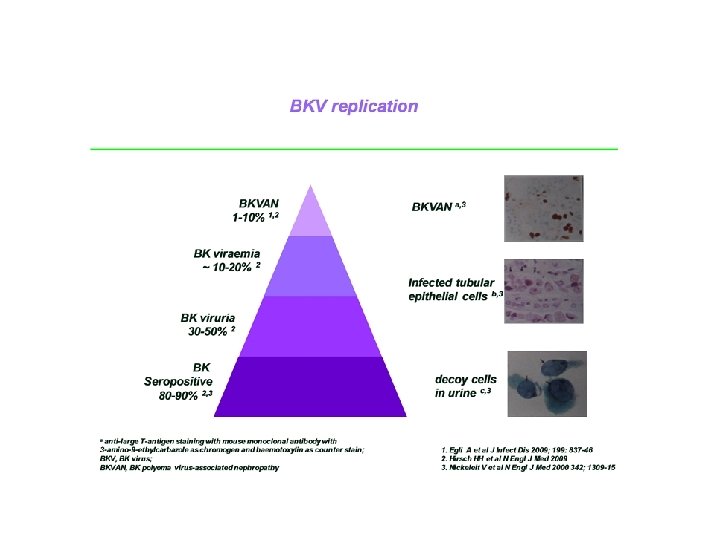
• BKV was first isolated in 1970 from a Sudanese kidney transplant recipient with ureteric stricture. • BKVAN was diagnosed in kidney transplant reciepient suspected for acute rejection in 1993 at Pittsburgh and published in 1996. • Epidemiological studies report that up to 90% of human populations become exposed to BKV by adulthood. * • Post Kidney transplantation 10 -60% of recipients were noted to excrete virus in urine mainly as asymptomatic to only transient graft dysfunction. *Randhawa PS, Vats , Shapiro R et al. BK Virus : Discovery, epidemiology and biology. Graft 2002; 2 (suppl 5): S 19 -27
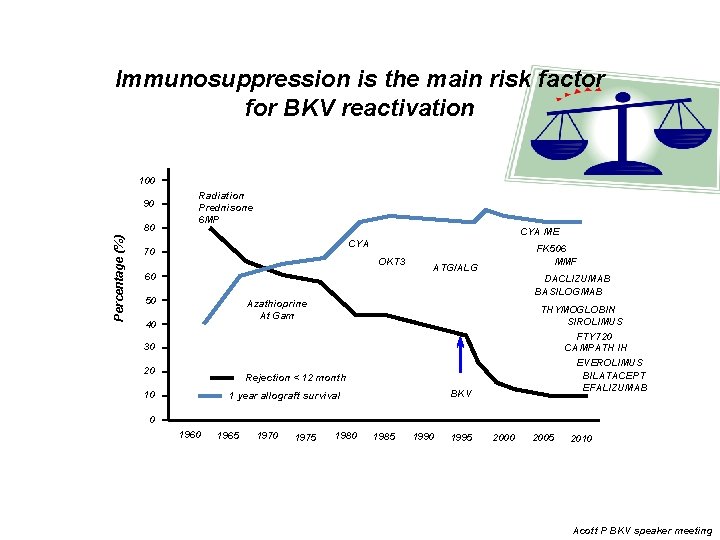
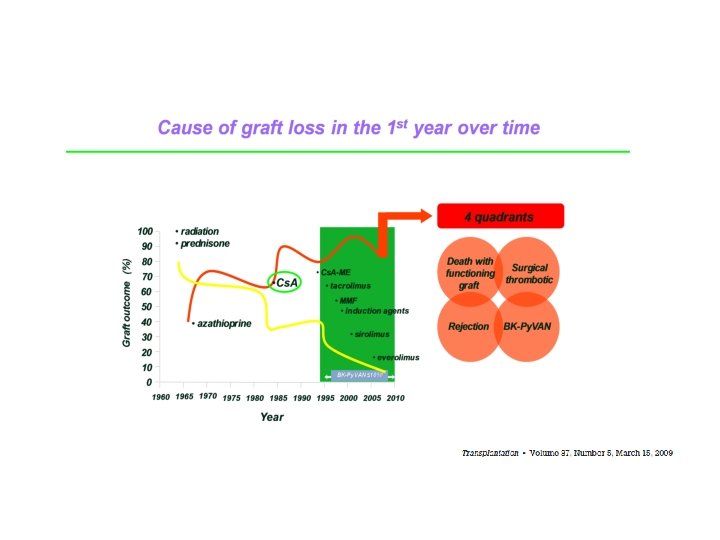
Immunosuppression is the main risk factor for BKV reactivation 100 90 Percentage (%) 80 Radiation Prednisone 6 MP CYA ME CYA 70 OKT 3 60 50 FK 506 MMF ATG/ALG DACLIZUMAB BASILOGMAB Azathioprine At Gam 40 THYMOGLOBIN SIROLIMUS FTY 720 CAMPATH IH 30 20 EVEROLIMUS BILATACEPT EFALIZUMAB Rejection < 12 month 10 BKV 1 year allograft survival 0 1965 1970 1975 1980 1985 1990 1995 2000 2005 2010 Acott P BKV speaker meeting
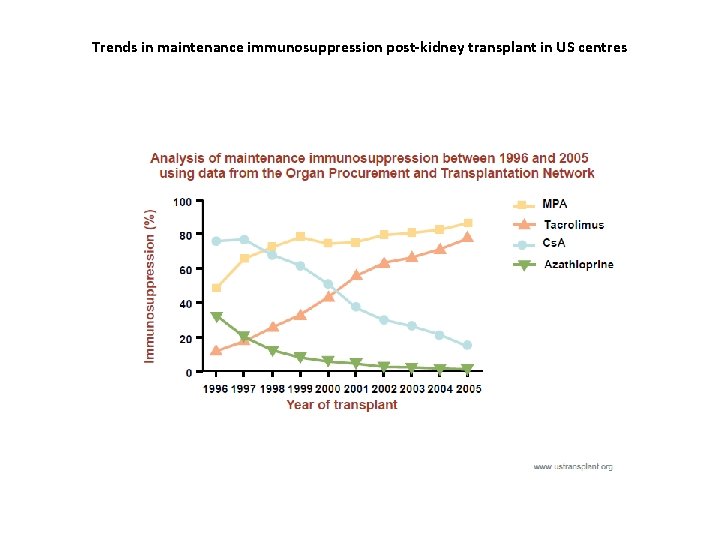
Trends in maintenance immunosuppression post-kidney transplant in US centres
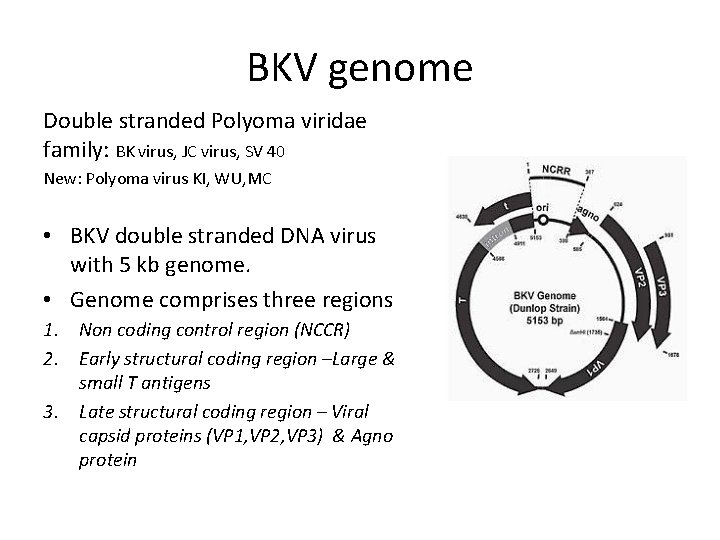
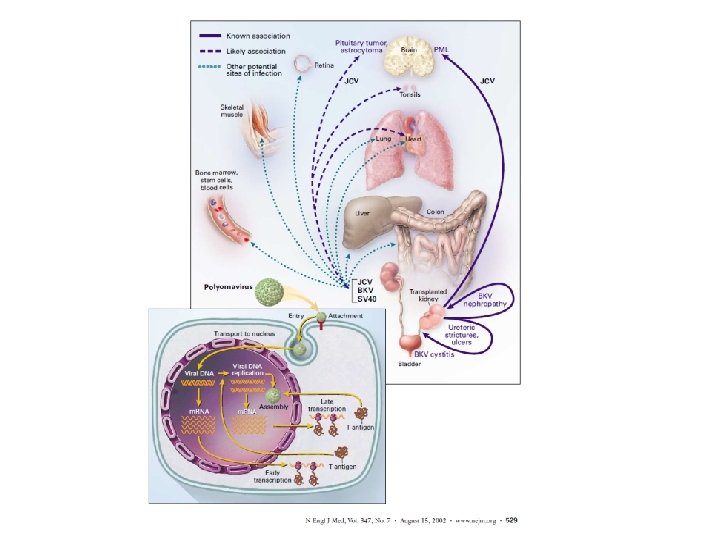
BKV genome Double stranded Polyoma viridae family: BK virus, JC virus, SV 40 New: Polyoma virus KI, WU, MC • BKV double stranded DNA virus with 5 kb genome. • Genome comprises three regions 1. Non coding control region (NCCR) 2. Early structural coding region –Large & small T antigens 3. Late structural coding region – Viral capsid proteins (VP 1, VP 2, VP 3) & Agno protein
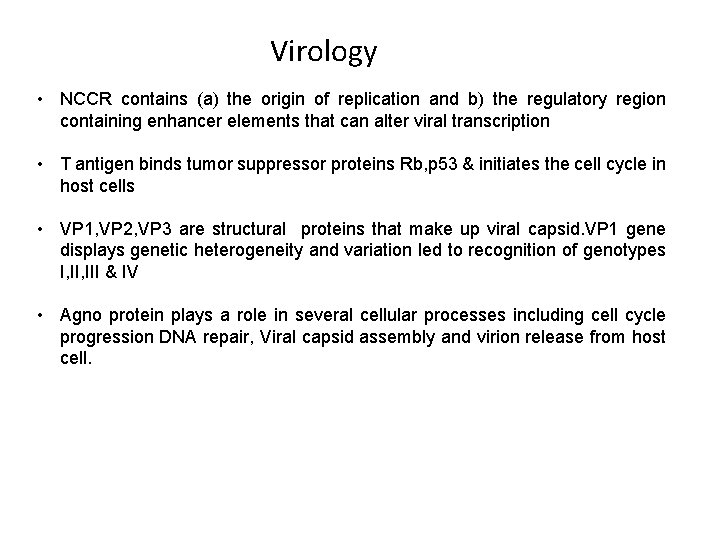
Virology • NCCR contains (a) the origin of replication and b) the regulatory region containing enhancer elements that can alter viral transcription • T antigen binds tumor suppressor proteins Rb, p 53 & initiates the cell cycle in host cells • VP 1, VP 2, VP 3 are structural proteins that make up viral capsid. VP 1 gene displays genetic heterogeneity and variation led to recognition of genotypes I, III & IV • Agno protein plays a role in several cellular processes including cell cycle progression DNA repair, Viral capsid assembly and virion release from host cell.
Epidemiology Prevalence – primary infection in childhood without specific symptoms: 90% seropositive by 10 yrs age. Kidney transplant affected : 1 -5% Mode of spread : respiratory droplets Other speculated modes are urine, semen, blood transfusion, organ transplantation. Source : Donor, reactivation or both Renal specificity such as tropism and ischemic injury Viral virulence
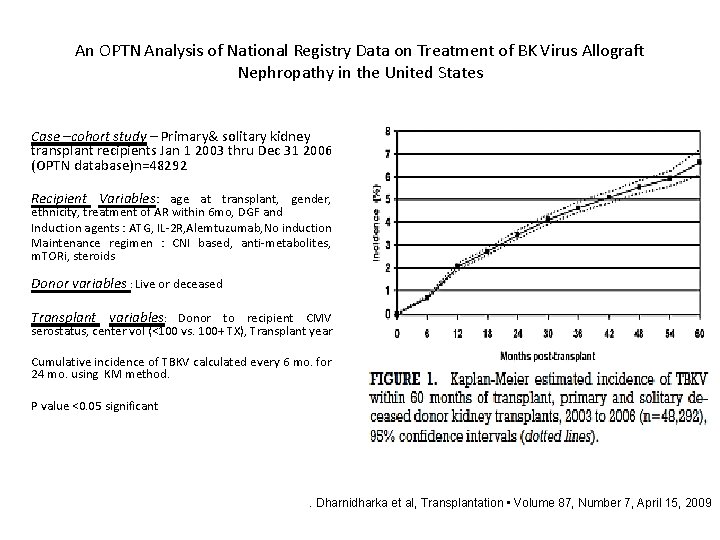
An OPTN Analysis of National Registry Data on Treatment of BK Virus Allograft Nephropathy in the United States Case –cohort study – Primary& solitary kidney transplant recipients Jan 1 2003 thru Dec 31 2006 (OPTN database)n=48292 Recipient Variables: age at transplant, gender, ethnicity, treatment of AR within 6 mo, DGF and Induction agents : ATG, IL-2 R, Alemtuzumab, No induction Maintenance regimen : CNI based, anti-metabolites, m. TORi, steroids Donor variables : Live or deceased Transplant variables: Donor to recipient CMV serostatus, center vol (<100 vs. 100+ TX), Transplant year Cumulative incidence of TBKV calculated every 6 mo. for 24 mo. using KM method. P value <0. 05 significant . Dharnidharka et al, Transplantation • Volume 87, Number 7, April 15, 2009
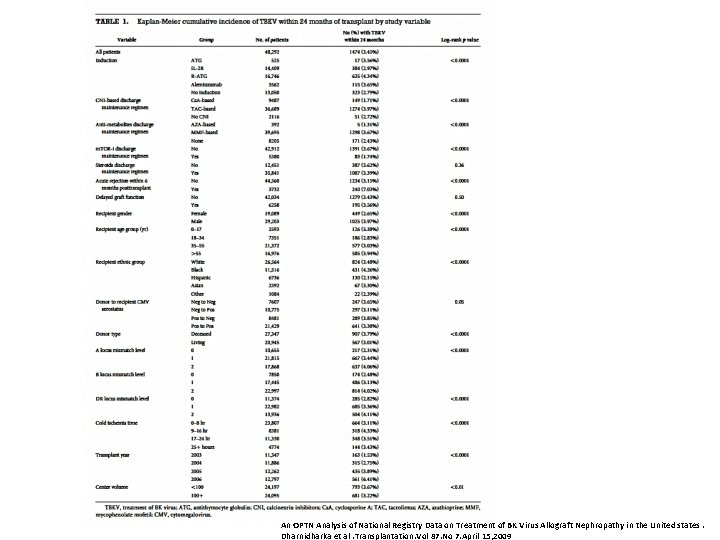
An OPTN Analysis of National Registry Data on Treatment of BK Virus Allograft Nephropathy in the United states. Dharnidharka et al. Transplantation. Vol 87. No 7. April 15, 2009
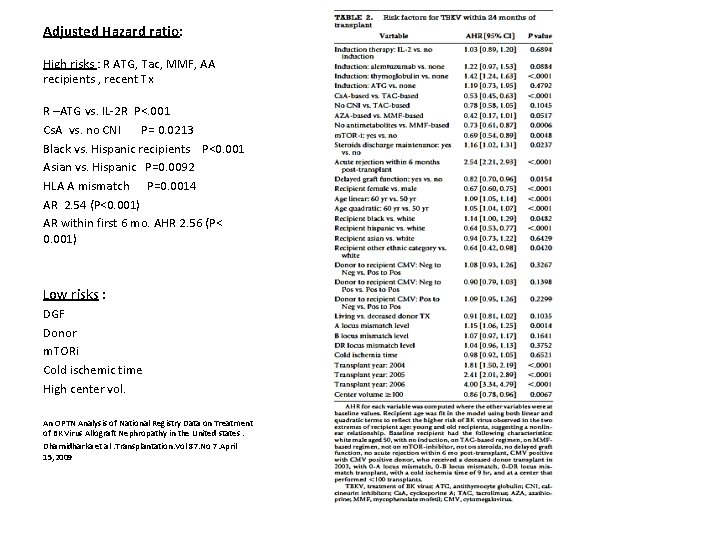
Adjusted Hazard ratio: High risks : R ATG, Tac, MMF, AA recipients , recent Tx R –ATG vs. IL-2 R P<. 001 Cs. A vs. no CNI P= 0. 0213 Black vs. Hispanic recipients P<0. 001 Asian vs. Hispanic P=0. 0092 HLA A mismatch P=0. 0014 AR 2. 54 (P<0. 001) AR within first 6 mo. AHR 2. 56 (P< 0. 001) Low risks : DGF Donor m. TORi Cold ischemic time High center vol. An OPTN Analysis of National Registry Data on Treatment of BK Virus Allograft Nephropathy in the United states. Dharnidharka et al. Transplantation. Vol 87. No 7. April 15, 2009
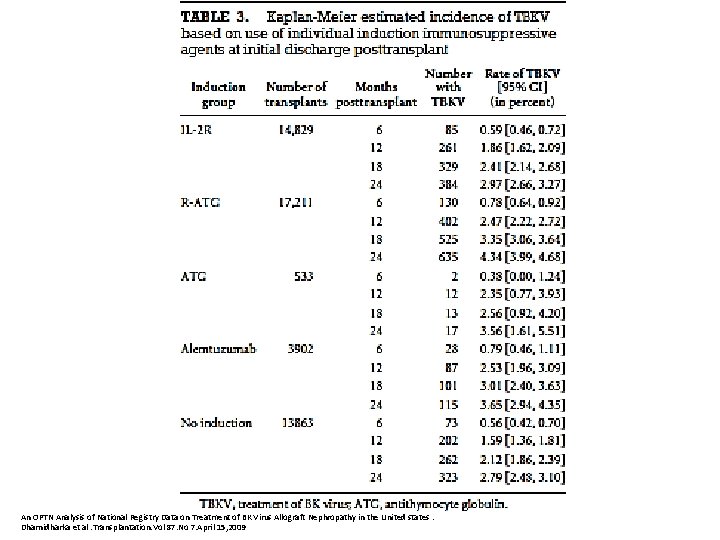
An OPTN Analysis of National Registry Data on Treatment of BK Virus Allograft Nephropathy in the United states. Dharnidharka et al. Transplantation. Vol 87. No 7. April 15, 2009
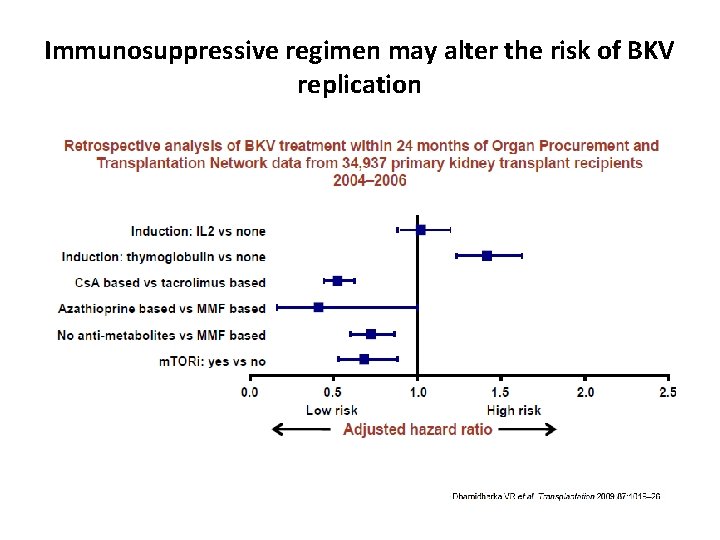
Immunosuppressive regimen may alter the risk of BKV replication
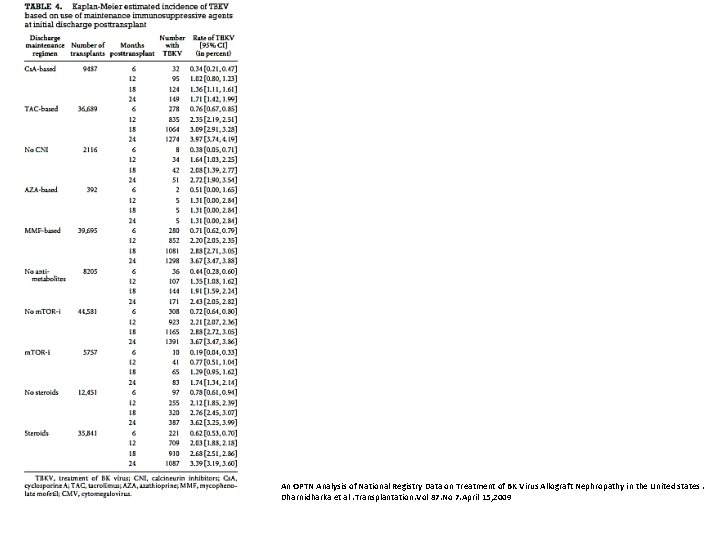
An OPTN Analysis of National Registry Data on Treatment of BK Virus Allograft Nephropathy in the United states. Dharnidharka et al. Transplantation. Vol 87. No 7. April 15, 2009
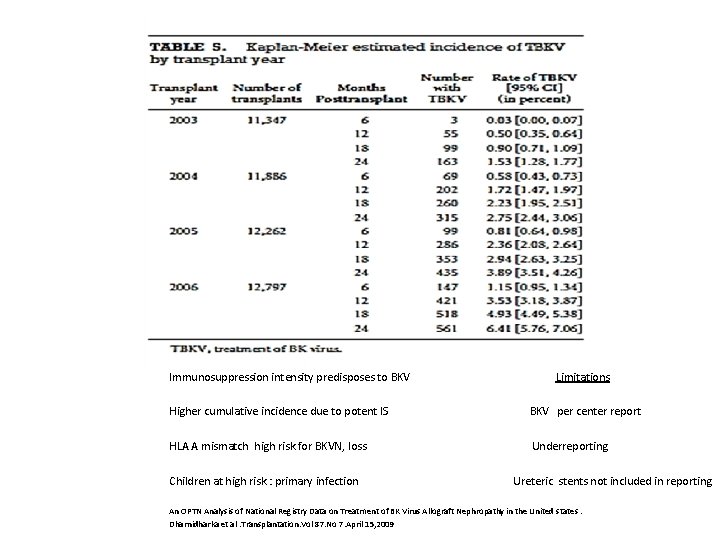
Immunosuppression intensity predisposes to BKV Limitations Higher cumulative incidence due to potent IS BKV per center report HLA A mismatch high risk for BKVN, loss Underreporting Children at high risk : primary infection Ureteric stents not included in reporting An OPTN Analysis of National Registry Data on Treatment of BK Virus Allograft Nephropathy in the United states. Dharnidharka et al. Transplantation. Vol 87. No 7. April 15, 2009
Immunology Determined by intensity of immunosuppression rather than individual drug Innate (Natural killer) and adaptive immunity (CD 4, CD 8) plays vital defense role against BKV Humoral immunity : BKV D+/R- : BKV infection ( 43%)* BKV D+/R+ : BKV viruria (50%)+ BKV D-/R- : BKV infection ( 10%)*+ Cellular immunity : High BKV Abs titers , low frequency of Gamma IFN producing cells – Rec. BKV viremia# Persistent viremia with high BKV Abs titers but weak CD 8 T cells@ Alloimune activation : subclinical activation may trigger BKV replication and reactivation leading to nephritis? ? - mouse studies *Shah +Bohl #Comoli @Chen
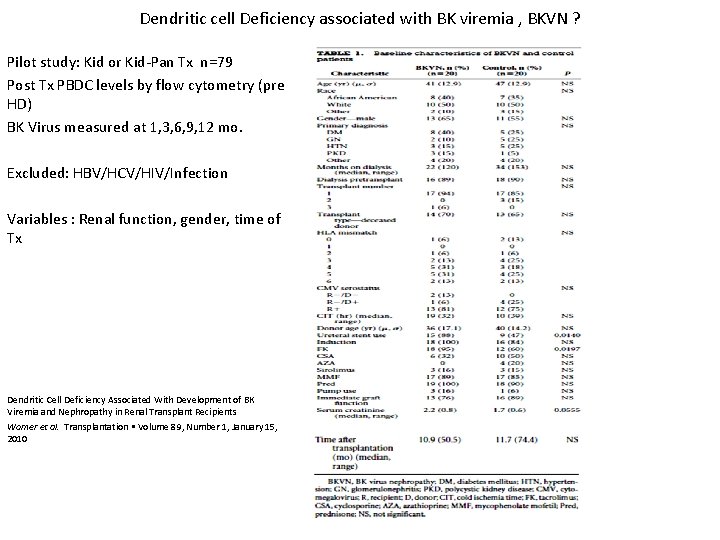
Dendritic cell Deficiency associated with BK viremia , BKVN ? Pilot study: Kid or Kid-Pan Tx n=79 Post Tx PBDC levels by flow cytometry (pre HD) BK Virus measured at 1, 3, 6, 9, 12 mo. Excluded: HBV/HCV/HIV/Infection Variables : Renal function, gender, time of Tx Dendritic Cell Deficiency Associated With Development of BK Viremia and Nephropathy in Renal Transplant Recipients Womer et al. Transplantation • Volume 89, Number 1, January 15, 2010
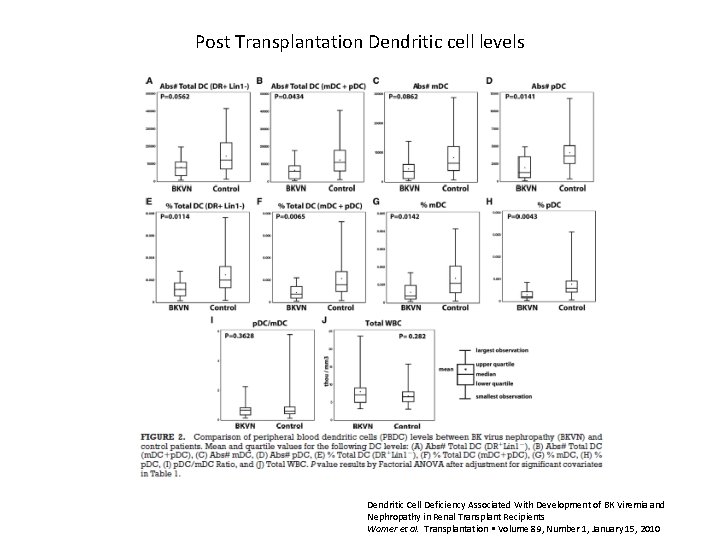
Post Transplantation Dendritic cell levels Dendritic Cell Deficiency Associated With Development of BK Viremia and Nephropathy in Renal Transplant Recipients Womer et al. Transplantation • Volume 89, Number 1, January 15, 2010
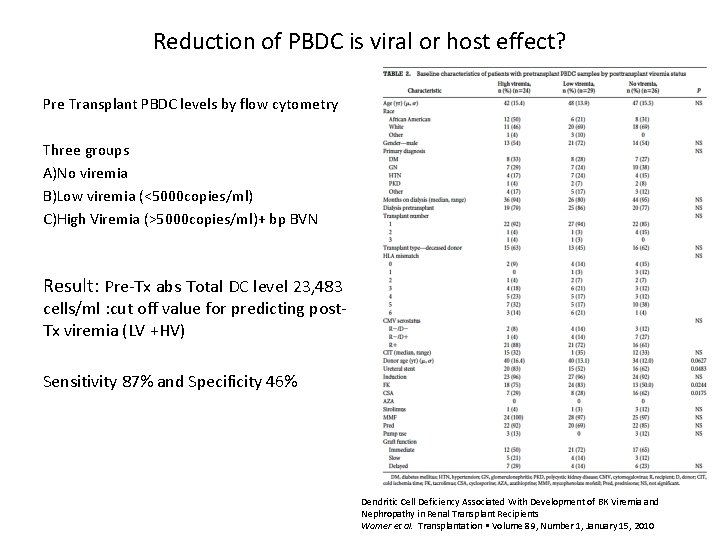
Reduction of PBDC is viral or host effect? Pre Transplant PBDC levels by flow cytometry Three groups A)No viremia B)Low viremia (<5000 copies/ml) C)High Viremia (>5000 copies/ml)+ bp BVN Result: Pre-Tx abs Total DC level 23, 483 cells/ml : cut off value for predicting post. Tx viremia (LV +HV) Sensitivity 87% and Specificity 46% Dendritic Cell Deficiency Associated With Development of BK Viremia and Nephropathy in Renal Transplant Recipients Womer et al. Transplantation • Volume 89, Number 1, January 15, 2010
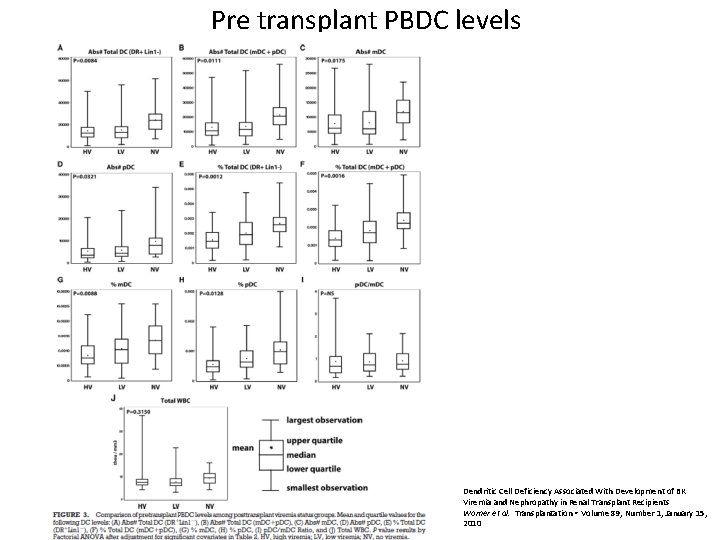
Pre transplant PBDC levels Dendritic Cell Deficiency Associated With Development of BK Viremia and Nephropathy in Renal Transplant Recipients Womer et al. Transplantation • Volume 89, Number 1, January 15, 2010
• Risk factors for BKV replication and BKVN • Importance of early detection of BKV replication and BKVN • Interventions for BKV replication and BKVN
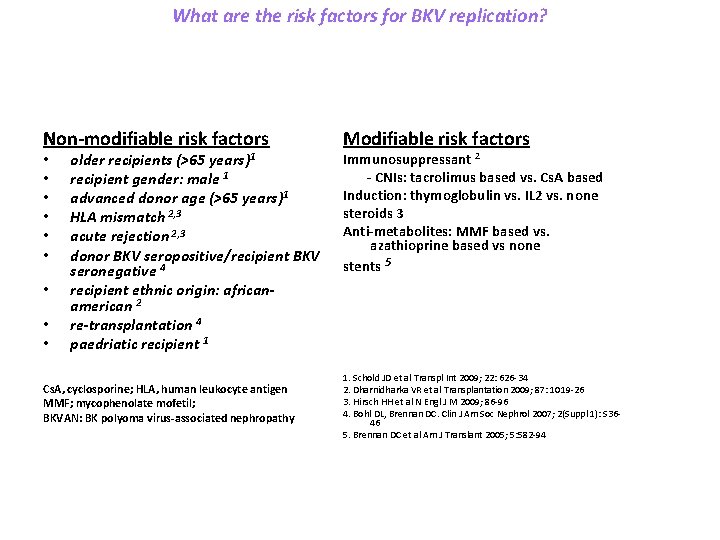
What are the risk factors for BKV replication? Non-modifiable risk factors • • • years)1 older recipients (>65 recipient gender: male 1 advanced donor age (>65 years)1 HLA mismatch 2, 3 acute rejection 2, 3 donor BKV seropositive/recipient BKV seronegative 4 recipient ethnic origin: africanamerican 2 re-transplantation 4 paedriatic recipient 1 Cs. A, cyclosporine; A, Cs. A, cyclosporine; HLA, human leukocyte antigen MMF; mycophenolate mofetil; BKVAN: BK polyoma virus-associated nephropathy • nephropathy Modifiable risk factors Immunosuppressant 2 - CNIs: tacrolimus based vs. Cs. A based Induction: thymoglobulin vs. IL 2 vs. none steroids 3 Anti-metabolites: MMF based vs. azathioprine based vs none stents 5 1. Schold JD et al Transpl Int 2009; 22: 626 -34 2. Dharnidharka VR et al Transplantation 2009; 87: 1019 -26 3. Hirsch HH et al N Engl J M 2009; 86 -96 4. Bohl DL, Brennan DC. Clin J Am Soc Nephrol 2007; 2(Suppl 1): S 3646 5. Brennan DC et al Am J Translant 2005; 5: 582 -94
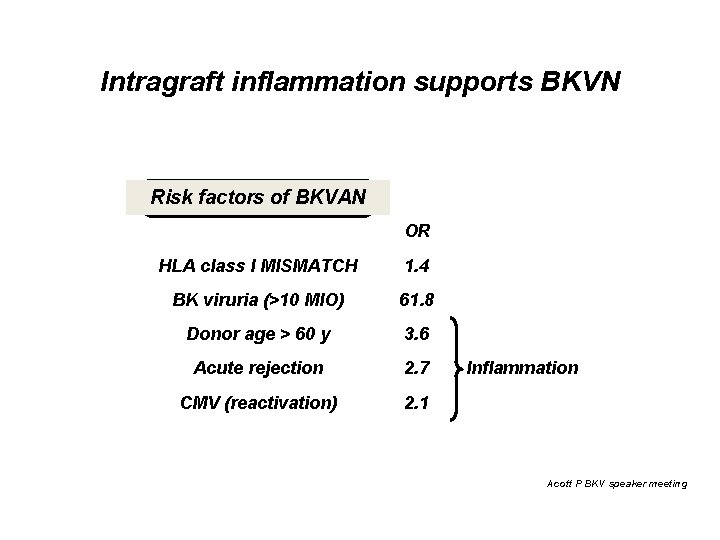
Intragraft inflammation supports BKVN Risk factors of BKVAN OR HLA class I MISMATCH 1. 4 BK viruria (>10 MIO) 61. 8 Donor age > 60 y 3. 6 Acute rejection 2. 7 CMV (reactivation) 2. 1 Inflammation Acott P BKV speaker meeting
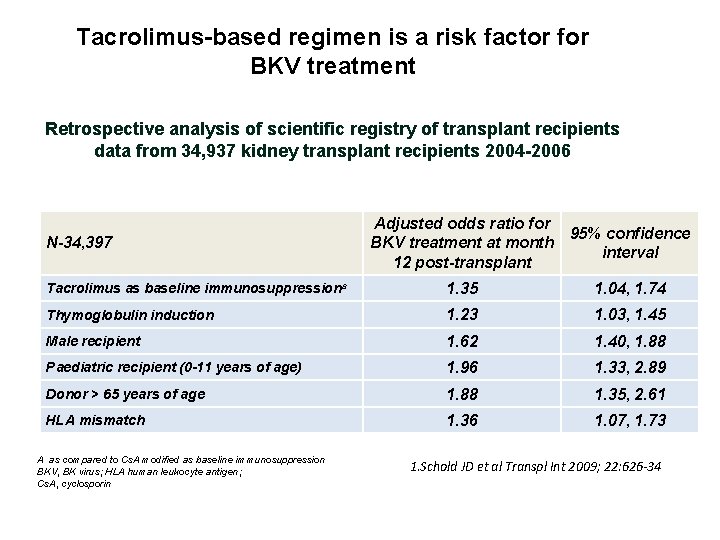
Tacrolimus-based regimen is a risk factor for BKV treatment Retrospective analysis of scientific registry of transplant recipients data from 34, 937 kidney transplant recipients 2004 -2006 Adjusted odds ratio for BKV treatment at month 12 post-transplant 95% confidence interval Tacrolimus as baseline immunosuppressiona 1. 35 1. 04, 1. 74 Thymoglobulin induction 1. 23 1. 03, 1. 45 Male recipient 1. 62 1. 40, 1. 88 Paediatric recipient (0 -11 years of age) 1. 96 1. 33, 2. 89 Donor > 65 years of age 1. 88 1. 35, 2. 61 HLA mismatch 1. 36 1. 07, 1. 73 N-34, 397 A as compared to Cs. A modified as baseline immunosuppression BKV, BK virus; HLA human leukocyte antigen; Cs. A, cyclosporin 11. Schold JD et al Transpl Int 2009; 22: 626 -34 626 -34 1. Schold JD et al Transpl Int 2009; 22: 626 -34
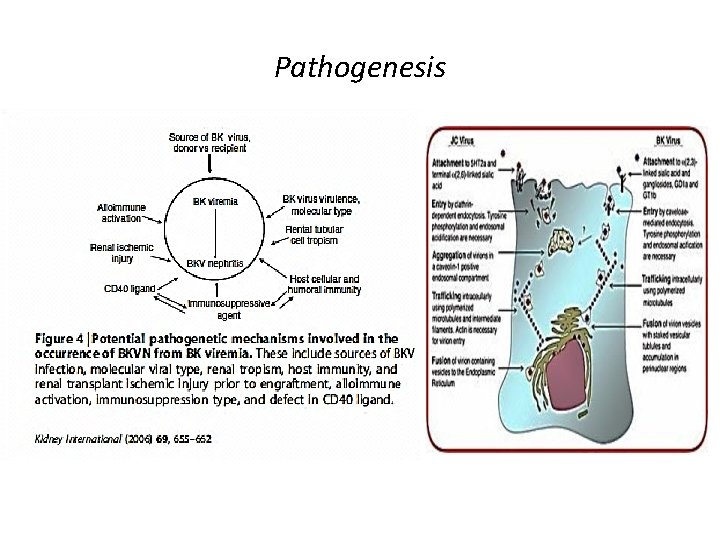
Pathogenesis
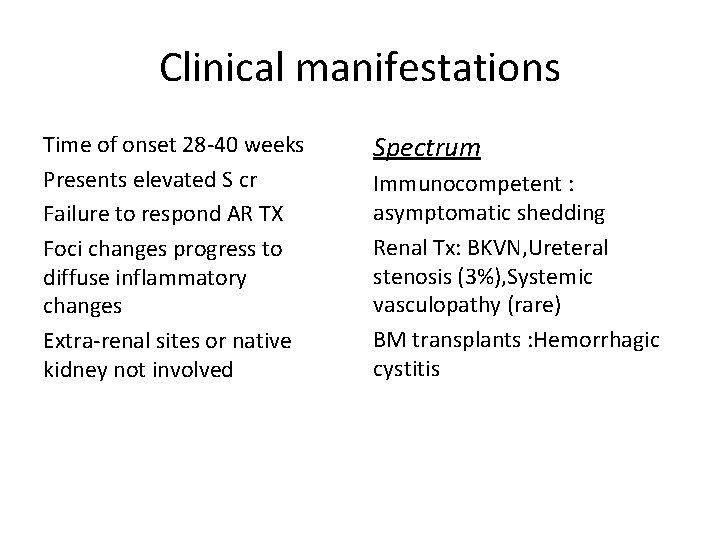
Clinical manifestations Time of onset 28 -40 weeks Presents elevated S cr Failure to respond AR TX Foci changes progress to diffuse inflammatory changes Extra-renal sites or native kidney not involved Spectrum Immunocompetent : asymptomatic shedding Renal Tx: BKVN, Ureteral stenosis (3%), Systemic vasculopathy (rare) BM transplants : Hemorrhagic cystitis
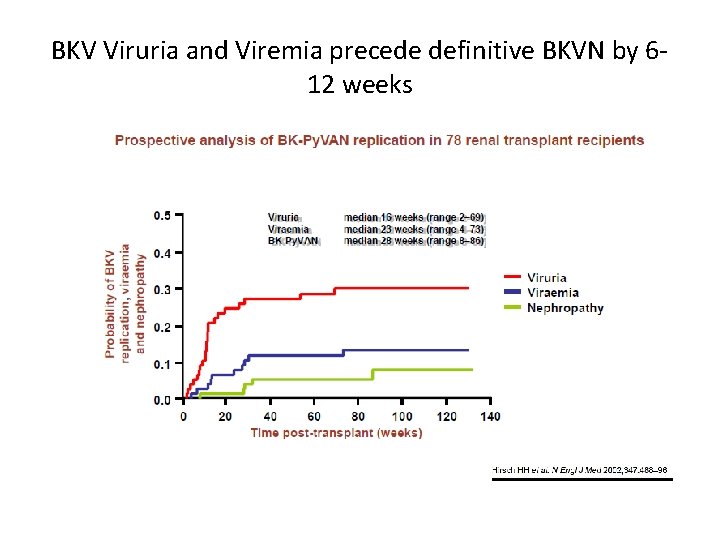
BKV Viruria and Viremia precede definitive BKVN by 612 weeks
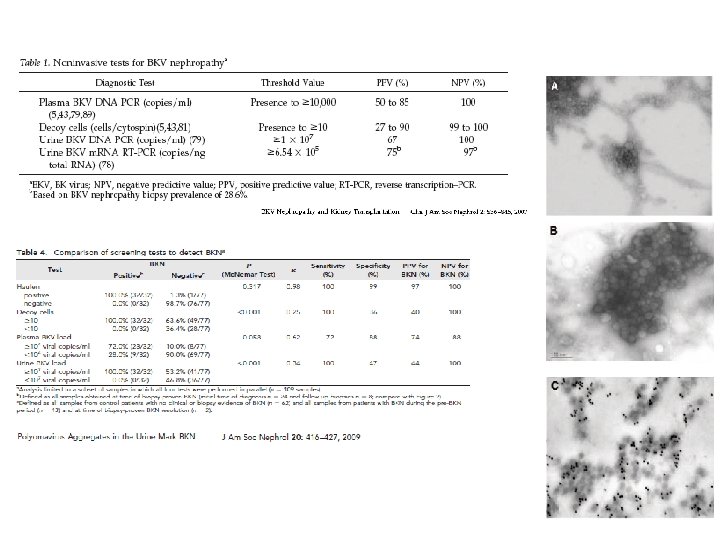
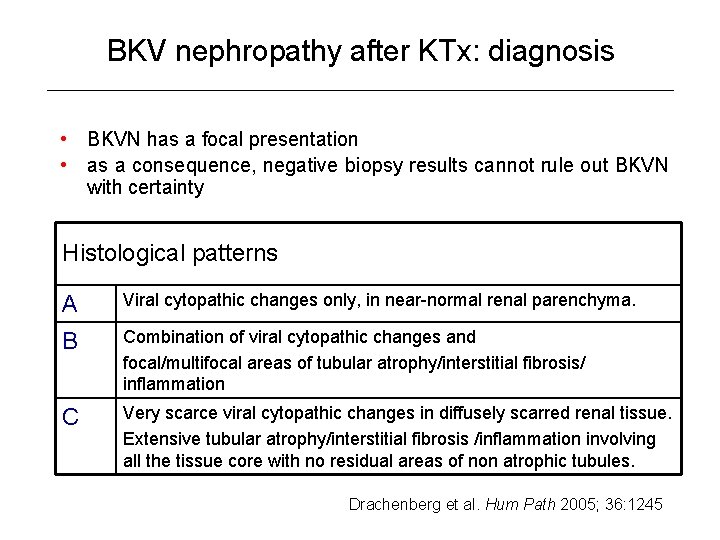
BKV nephropathy after KTx: diagnosis • BKVN has a focal presentation • as a consequence, negative biopsy results cannot rule out BKVN with certainty Histological patterns A Viral cytopathic changes only, in near-normal renal parenchyma. B Combination of viral cytopathic changes and focal/multifocal areas of tubular atrophy/interstitial fibrosis/ inflammation C Very scarce viral cytopathic changes in diffusely scarred renal tissue. Extensive tubular atrophy/interstitial fibrosis /inflammation involving all the tissue core with no residual areas of non atrophic tubules. Drachenberg et al. Hum Path 2005; 36: 1245
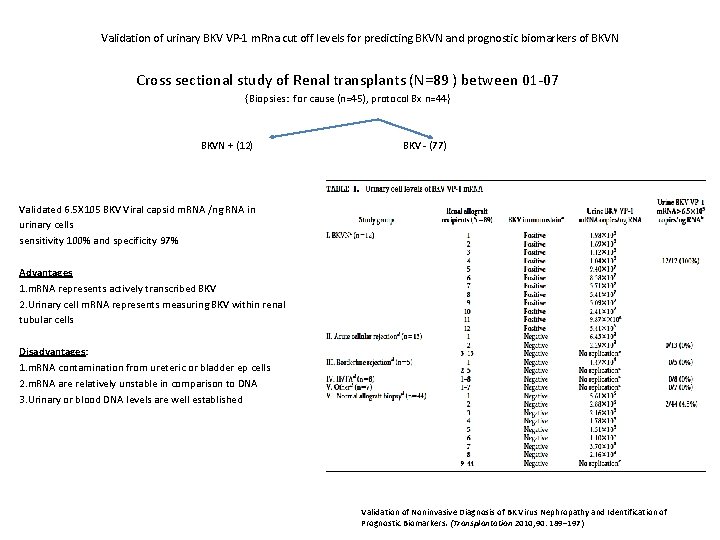
Validation of urinary BKV VP-1 m. Rna cut off levels for predicting BKVN and prognostic biomarkers of BKVN Cross sectional study of Renal transplants (N=89 ) between 01 -07 {Biopsies: for cause (n=45), protocol Bx n=44} BKVN + (12) BKV - (77) Validated 6. 5 X 10⁵ BKV Viral capsid m. RNA /ng RNA in urinary cells sensitivity 100% and specificity 97% Advantages 1. m. RNA represents actively transcribed BKV 2. Urinary cell m. RNA represents measuring BKV within renal tubular cells Disadvantages: 1. m. RNA contamination from ureteric or bladder ep cells 2. m. RNA are relatively unstable in comparison to DNA 3. Urinary or blood DNA levels are well established Validation of Noninvasive Diagnosis of BK Virus Nephropathy and Identification of Prognostic Biomarkers. (Transplantation 2010; 90: 189– 197)
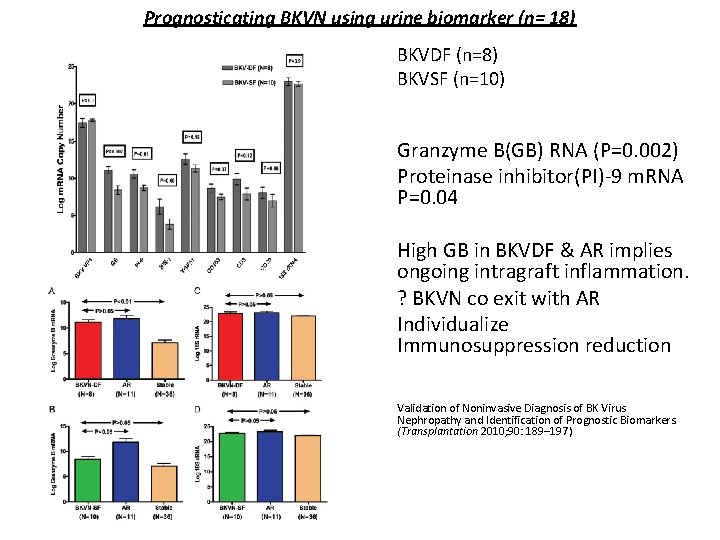
Prognosticating BKVN using urine biomarker (n= 18) BKVDF (n=8) BKVSF (n=10) Granzyme B(GB) RNA (P=0. 002) Proteinase inhibitor(PI)-9 m. RNA P=0. 04 High GB in BKVDF & AR implies ongoing intragraft inflammation. ? BKVN co exit with AR Individualize Immunosuppression reduction Validation of Noninvasive Diagnosis of BK Virus Nephropathy and Identification of Prognostic Biomarkers. (Transplantation 2010; 90: 189– 197)
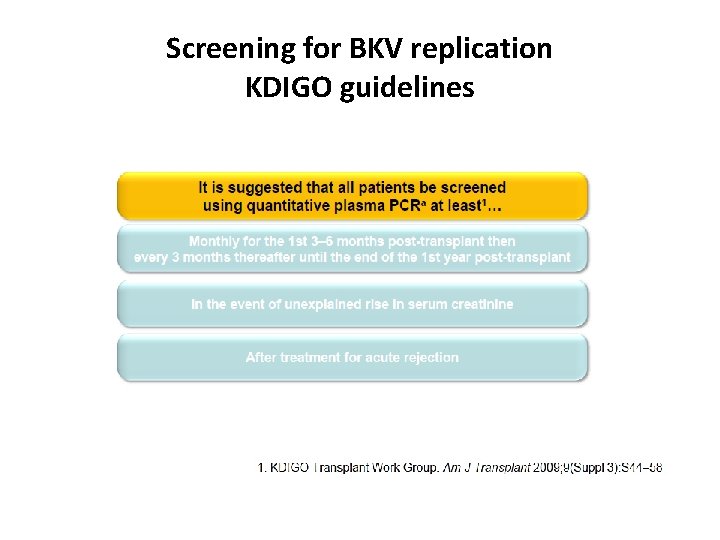
Screening for BKV replication KDIGO guidelines
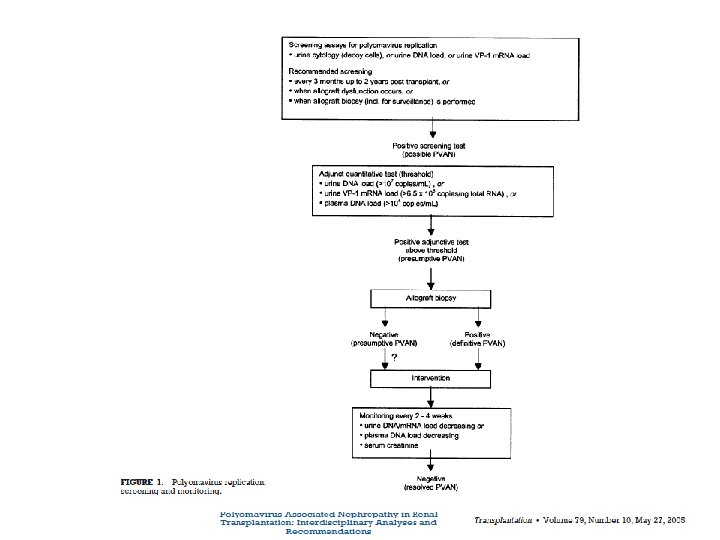
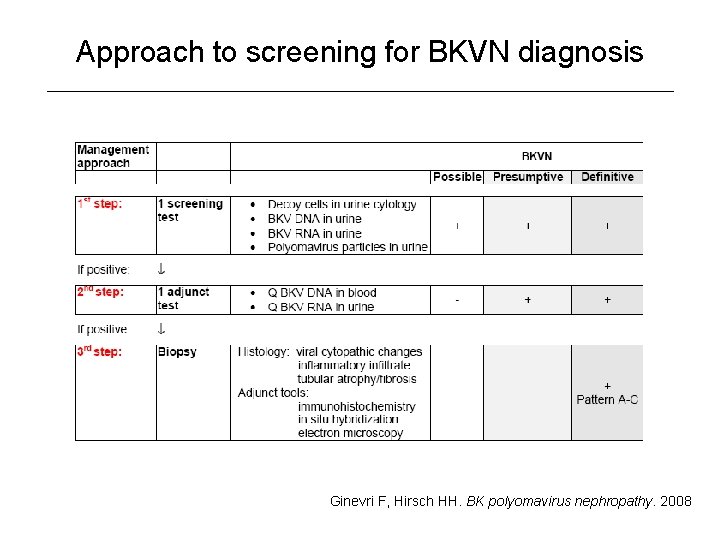
Approach to screening for BKVN diagnosis Ginevri F, Hirsch HH. BK polyomavirus nephropathy. 2008
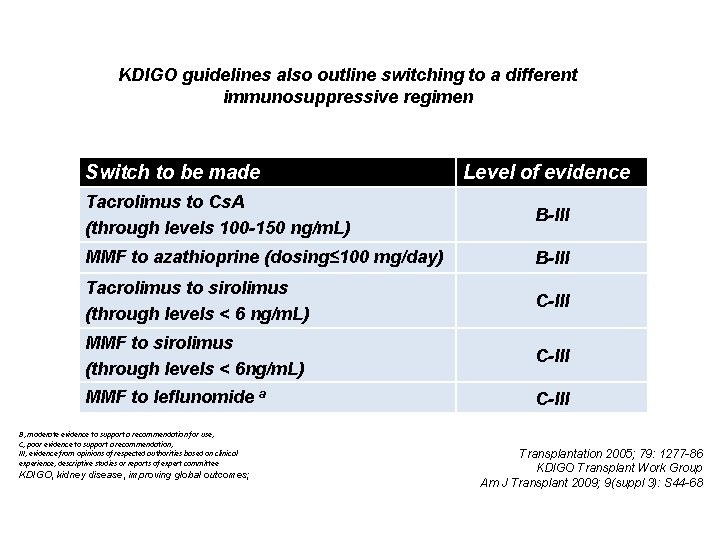
KDIGO guidelines also outline switching to a different immunosuppressive regimen Switch to be made Level of evidence Tacrolimus to Cs. A (through levels 100 -150 ng/m. L) B-III MMF to azathioprine (dosing≤ 100 mg/day) B-III Tacrolimus to sirolimus (through levels < 6 ng/m. L) C-III MMF to sirolimus (through levels < 6 ng/m. L) C-III MMF to leflunomide a C-III B, moderate evidence to support a recommendation for use; C, poor evidence to support a recommendation; III, evidence from opinions of respected authorities based on clinical experience, descriptive studies or reports of expert committee KDIGO, kidney disease, improving global outcomes; Transplantation 2005; 79: 1277 -86 KDIGO Transplant Work Group Am J Transplant 2009; 9(suppl 3): S 44 -68
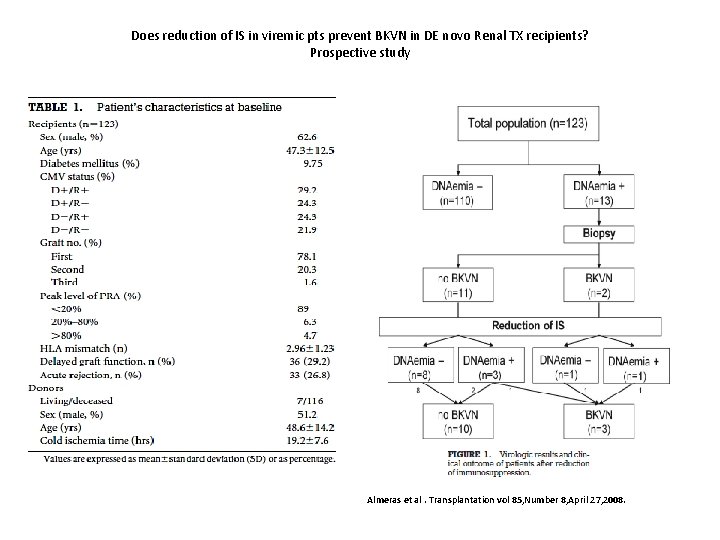
Does reduction of IS in viremic pts prevent BKVN in DE novo Renal TX recipients? Prospective study Almeras et al. Transplantation vol 85, Number 8, April 27, 2008.
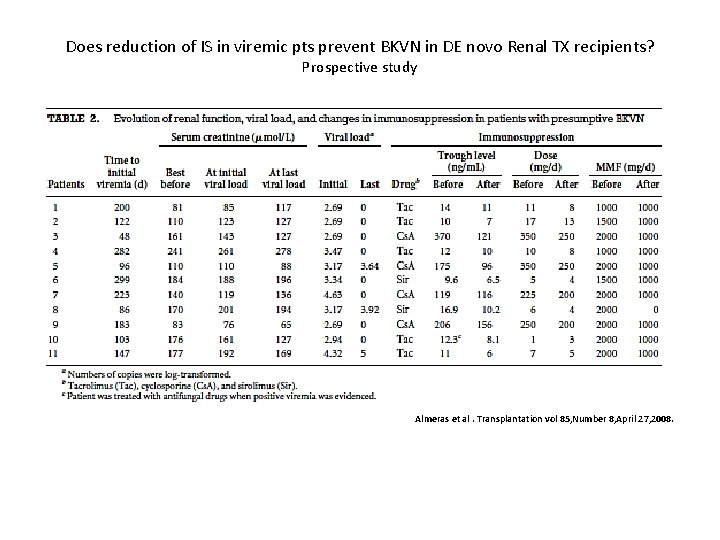
Does reduction of IS in viremic pts prevent BKVN in DE novo Renal TX recipients? Prospective study Almeras et al. Transplantation vol 85, Number 8, April 27, 2008.
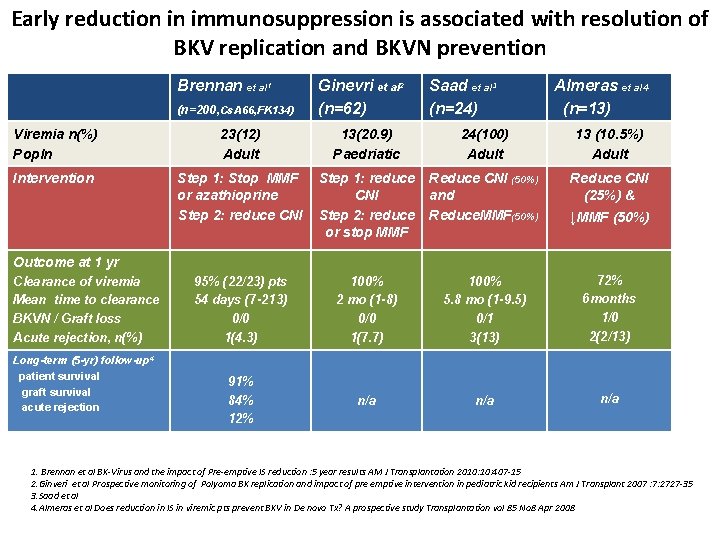
Early reduction in immunosuppression is associated with resolution of BKV replication and BKVN prevention Brennan et al 1 (n=200, Cs. A 66, FK 134) Ginevri et al 2 (n=62) Saad et al 3 (n=24) Almeras et al 4 (n=13) Viremia n(%) Popln 23(12) Adult 13(20. 9) Paedriatic 24(100) Adult 13 (10. 5%) Adult Intervention Step 1: Stop MMF or azathioprine Step 2: reduce CNI Step 1: reduce CNI Step 2: reduce or stop MMF Reduce CNI (50%) and Reduce. MMF(50%) Reduce CNI (25%) & ↓MMF (50%) 95% (22/23) pts 54 days (7 -213) 0/0 1(4. 3) 100% 2 mo (1 -8) 0/0 1(7. 7) 100% 5. 8 mo (1 -9. 5) 0/1 3(13) 72% 6 months 1/0 2(2/13) 91% 84% 12% n/a n/a Outcome at 1 yr Clearance of viremia Mean time to clearance BKVN / Graft loss Acute rejection, n(%) Long-term (5 -yr) follow-up 4 patient survival graft survival acute rejection 1. Brennan et al BK-Virus and the impact of Pre-emptive IS reduction : 5 year results AM J Transplantation 2010: 407 -15 2. Ginveri et al Prospective monitoring of Polyoma BK replication and impact of pre emptive intervention in pediatric kid recipients Am J Transplant 2007 : 7: 2727 -35 3. Saad et al 4. Almeras et al Does reduction in IS in viremic pts prevent BKV in De novo Tx? A prospective study Transplantation vol 85 No 8 Apr 2008
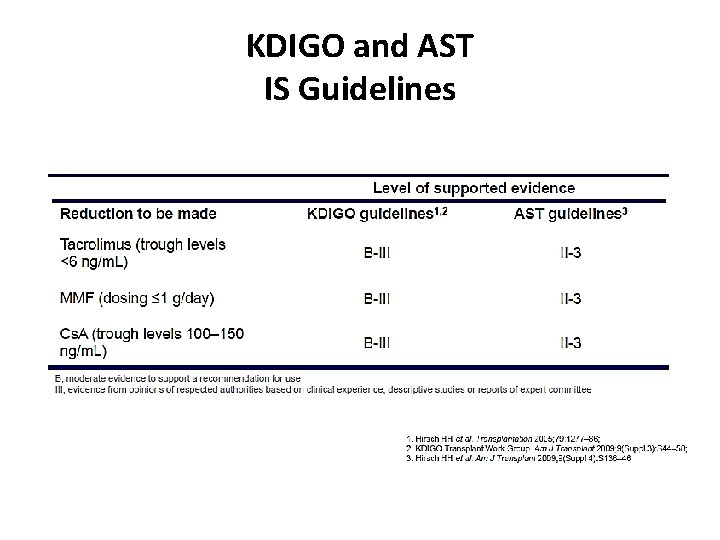
KDIGO and AST IS Guidelines
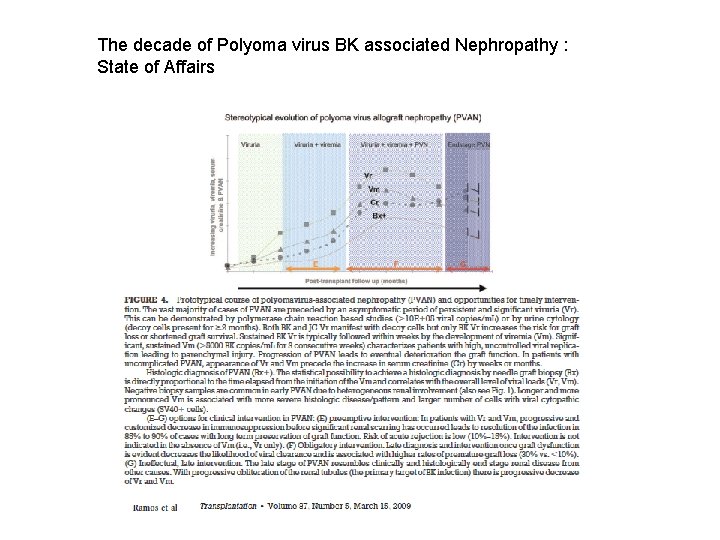
The decade of Polyoma virus BK associated Nephropathy : State of Affairs
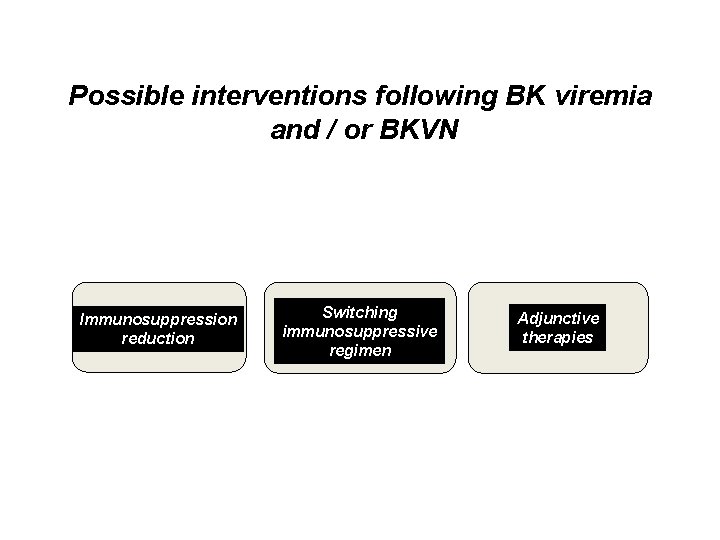
Possible interventions following BK viremia and / or BKVN Immunosuppression reduction Switching immunosuppressive regimen Adjunctive therapies Hirsch HH et al Am J Transplant 2009; 9(Suppl 4): S 136 -46 KDIGO Transplant Work Group
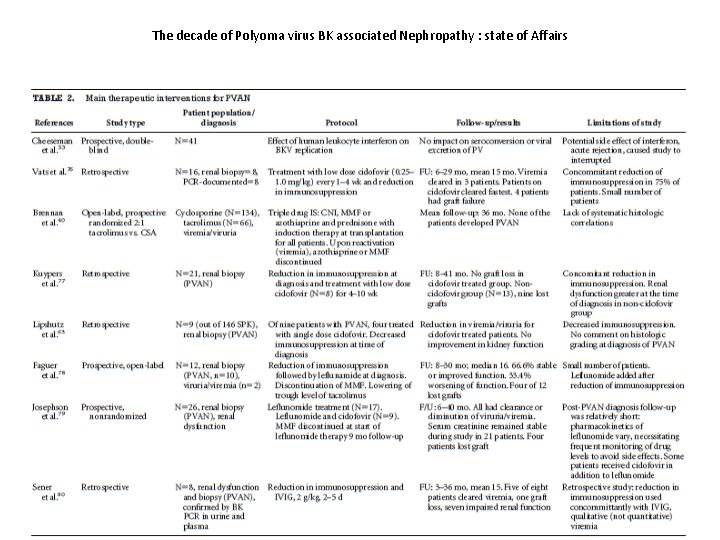
The decade of Polyoma virus BK associated Nephropathy : state of Affairs
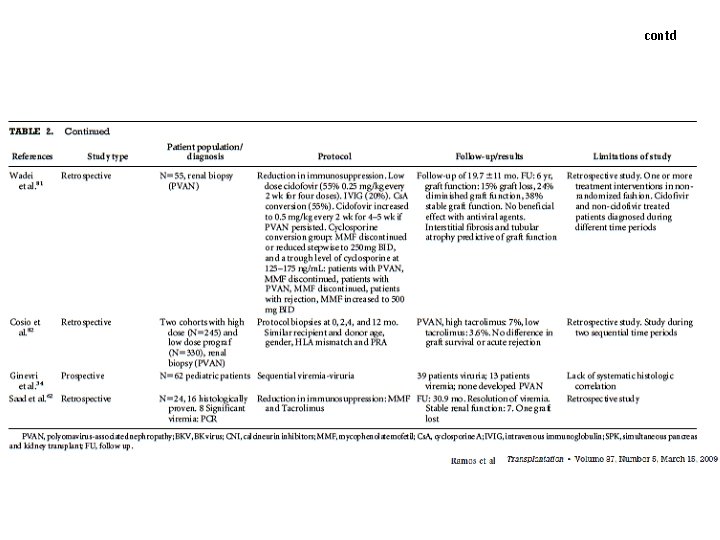
contd
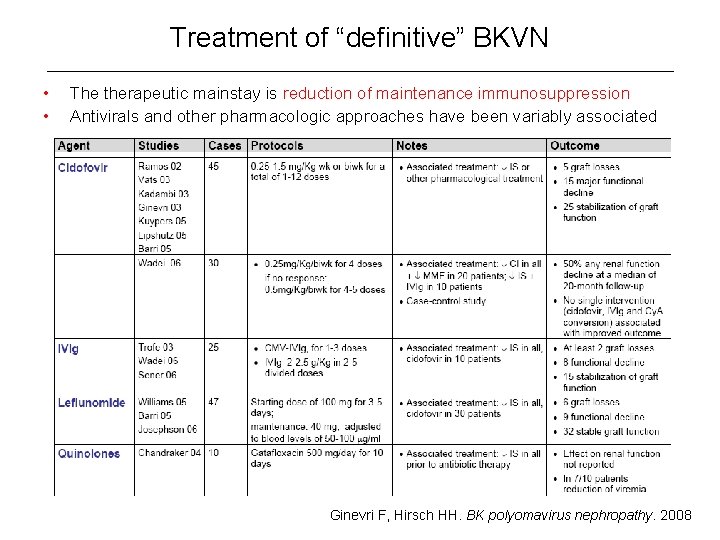
Treatment of “definitive” BKVN • • The therapeutic mainstay is reduction of maintenance immunosuppression Antivirals and other pharmacologic approaches have been variably associated Ginevri F, Hirsch HH. BK polyomavirus nephropathy. 2008
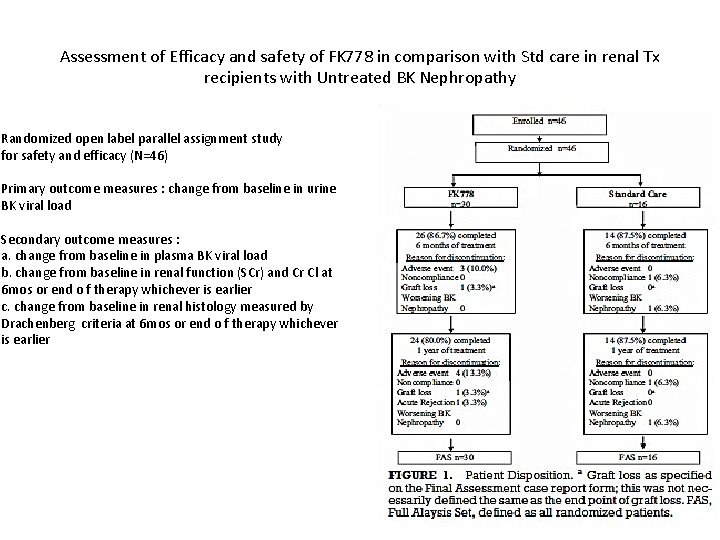
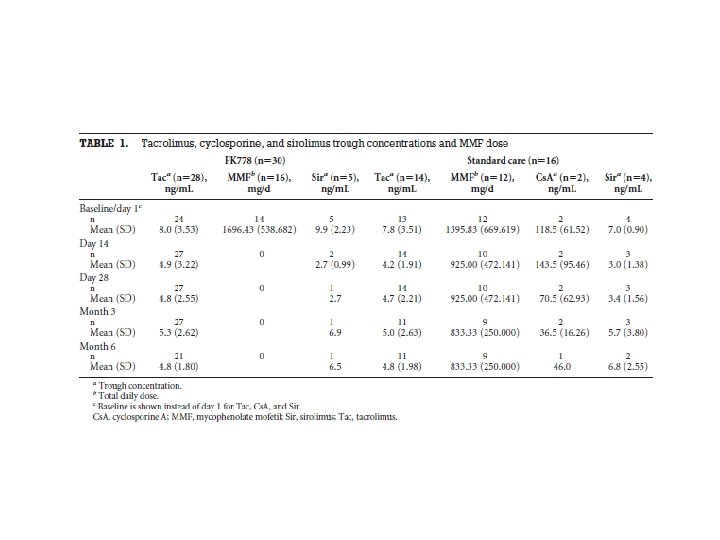
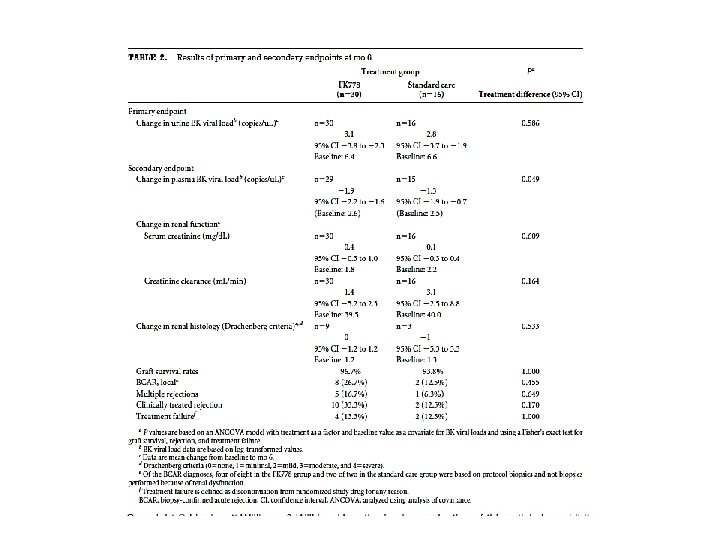
Assessment of Efficacy and safety of FK 778 in comparison with Std care in renal Tx recipients with Untreated BK Nephropathy Randomized open label parallel assignment study for safety and efficacy (N=46) Primary outcome measures : change from baseline in urine BK viral load Secondary outcome measures : a. change from baseline in plasma BK viral load b. change from baseline in renal function (SCr) and Cr Cl at 6 mos or end o f therapy whichever is earlier c. change from baseline in renal histology measured by Drachenberg criteria at 6 mos or end o f therapy whichever is earlier
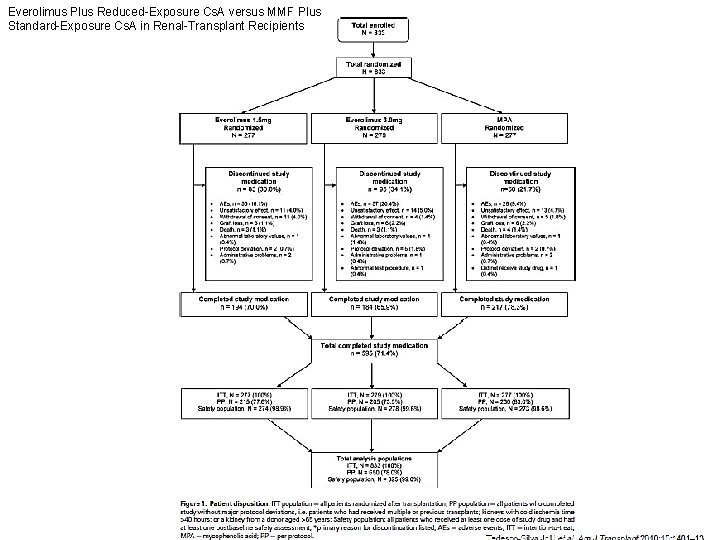
Everolimus Plus Reduced-Exposure Cs. A versus MMF Plus Standard-Exposure Cs. A in Renal-Transplant Recipients
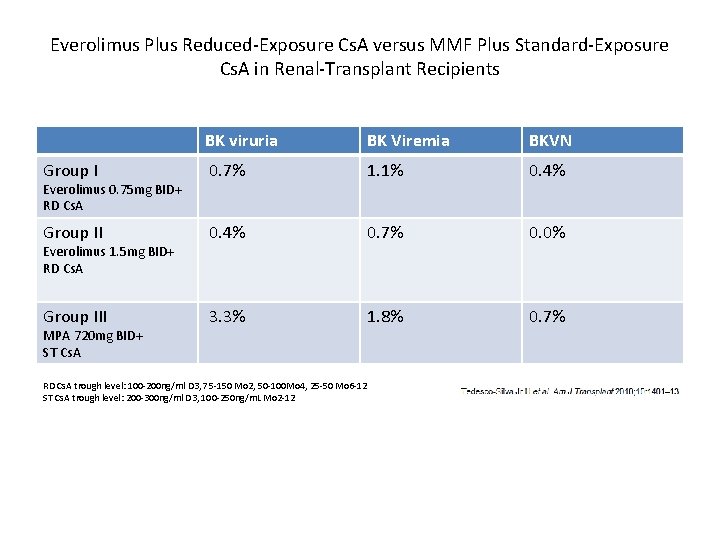
Everolimus Plus Reduced-Exposure Cs. A versus MMF Plus Standard-Exposure Cs. A in Renal-Transplant Recipients BK viruria BK Viremia BKVN Group I 0. 7% 1. 1% 0. 4% Group II 0. 4% 0. 7% 0. 0% Group III 3. 3% 1. 8% 0. 7% Everolimus 0. 75 mg BID+ RD Cs. A Everolimus 1. 5 mg BID+ RD Cs. A MPA 720 mg BID+ ST Cs. A RD Cs. A trough level: 100 -200 ng/ml D 3, 75 -150 Mo 2, 50 -100 Mo 4, 25 -50 Mo 6 -12 ST Cs. A trough level: 200 -300 ng/ml D 3, 100 -250 ng/m. L Mo 2 -12
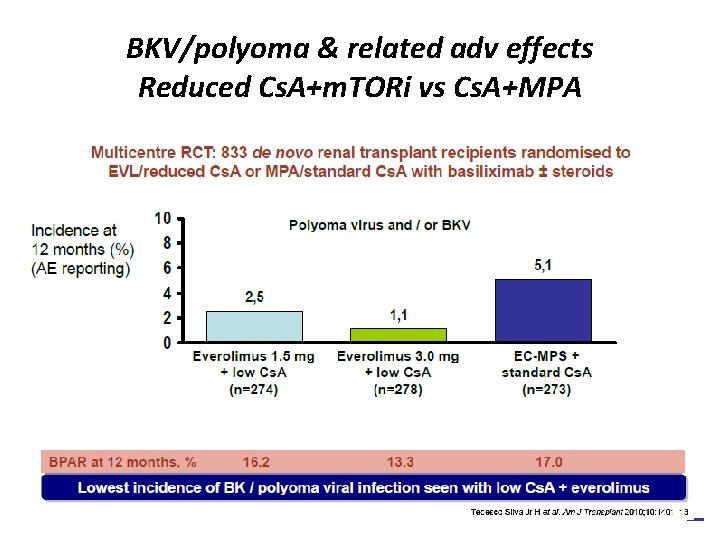
BKV/polyoma & related adv effects Reduced Cs. A+m. TORi vs Cs. A+MPA
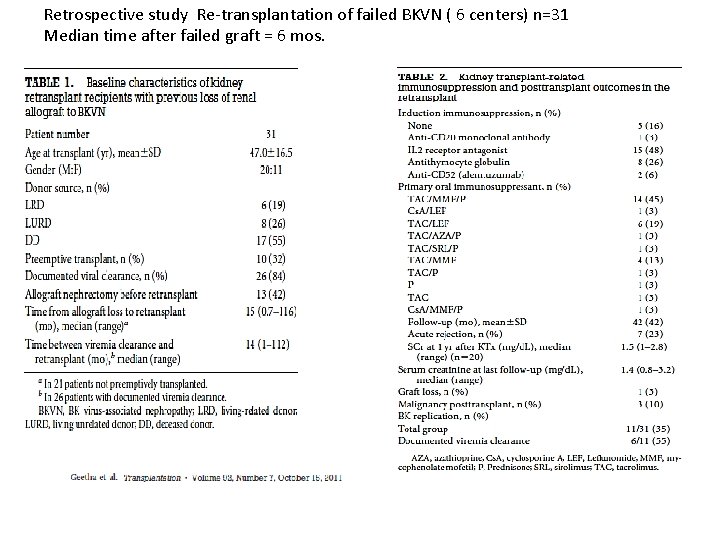
Retrospective study Re-transplantation of failed BKVN ( 6 centers) n=31 Median time after failed graft = 6 mos.
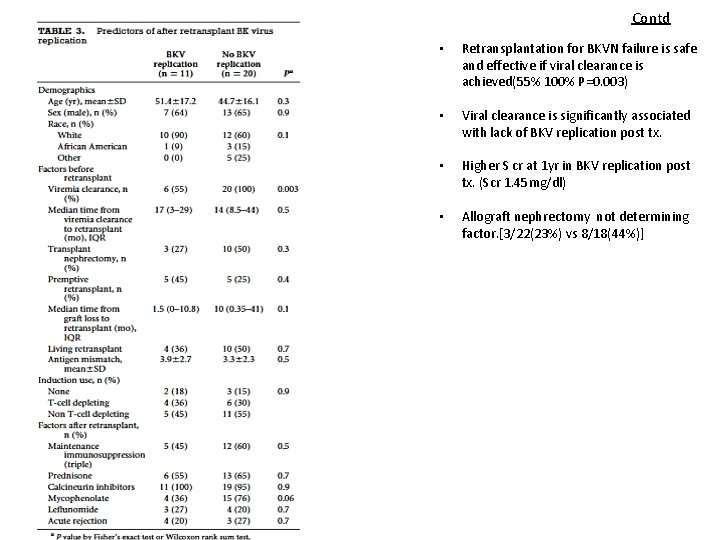
Contd • Retransplantation for BKVN failure is safe and effective if viral clearance is achieved(55% 100% P=0. 003) • Viral clearance is significantly associated with lack of BKV replication post tx. • Higher S cr at 1 yr in BKV replication post tx. (Scr 1. 45 mg/dl) • Allograft nephrectomy not determining factor. [3/22(23%) vs 8/18(44%)]
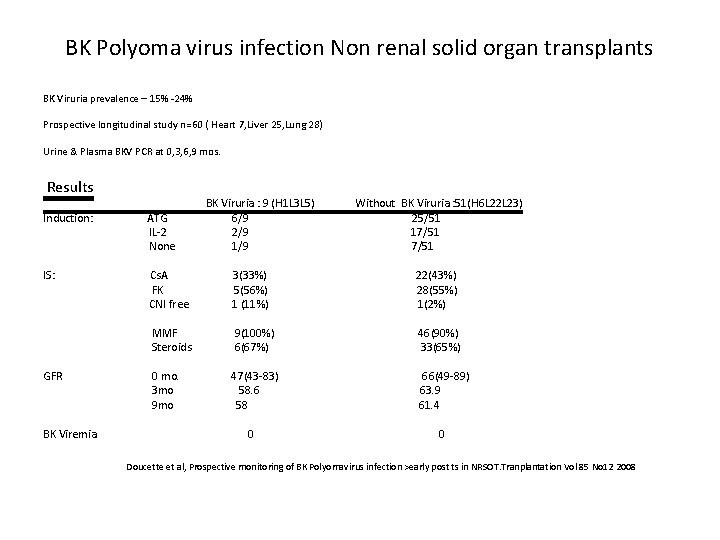
BK Polyoma virus infection Non renal solid organ transplants BK Viruria prevalence – 15% -24% Prospective longitudinal study n=60 ( Heart 7, Liver 25, Lung 28) Urine & Plasma BKV PCR at 0, 3, 6, 9 mos. Results BK Viruria : 9 (H 1 L 3 L 5) 6/9 2/9 1/9 Without BK Viruria : 51(H 6 L 22 L 23) 25/51 17/51 Induction: ATG IL-2 None IS: Cs. A FK CNI free 3(33%) 5(56%) 1 (11%) 22(43%) 28(55%) 1(2%) MMF Steroids 9(100%) 6(67%) 46(90%) 33(65%) 0 mo. 3 mo 9 mo 47(43 -83) 58. 6 58 66(49 -89) 63. 9 61. 4 GFR BK Viremia 0 0 Doucette et al, Prospective monitoring of BK Polyomavirus infection >early post ts in NRSOT. Tranplantation Vol 85 No 12 2008
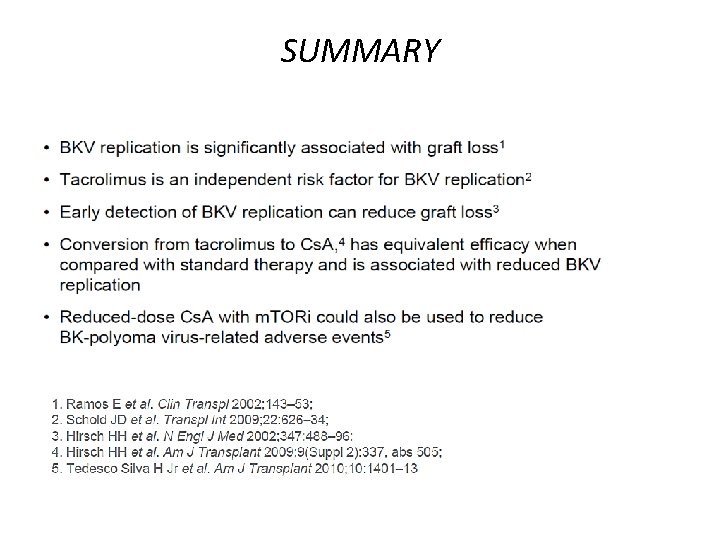
SUMMARY
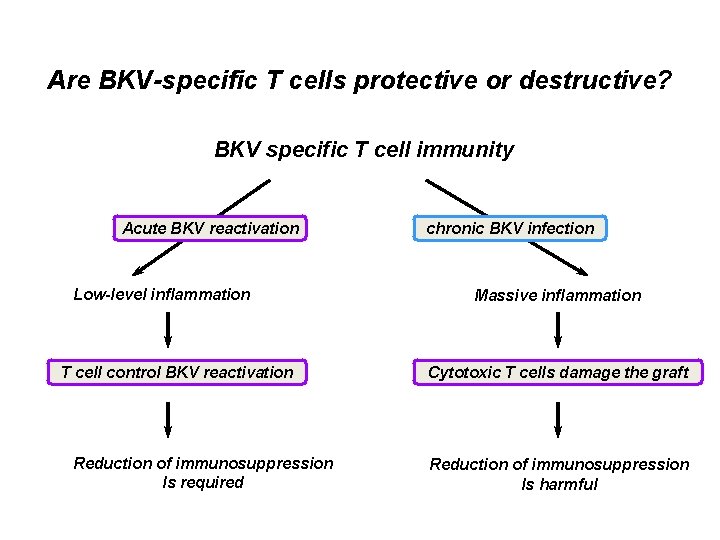
Are BKV-specific T cells protective or destructive? BKV specific T cell immunity Acute BKV reactivation Low-level inflammation T cell control BKV reactivation Reduction of immunosuppression Is required chronic BKV infection Massive inflammation Cytotoxic T cells damage the graft Reduction of immunosuppression Is harmful

THANKYOU
- Slides: 59