
BJT Amplifier topologies Possible BJT Amplifier Topologies l

BJT Amplifier topologies
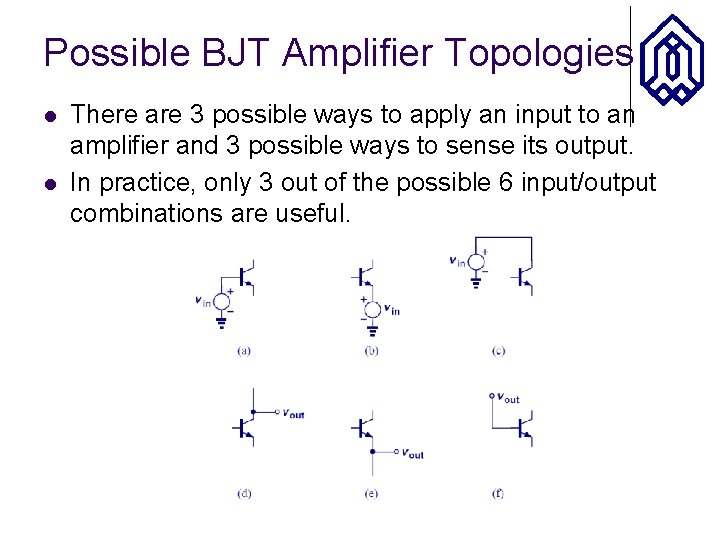
Possible BJT Amplifier Topologies l l There are 3 possible ways to apply an input to an amplifier and 3 possible ways to sense its output. In practice, only 3 out of the possible 6 input/output combinations are useful.
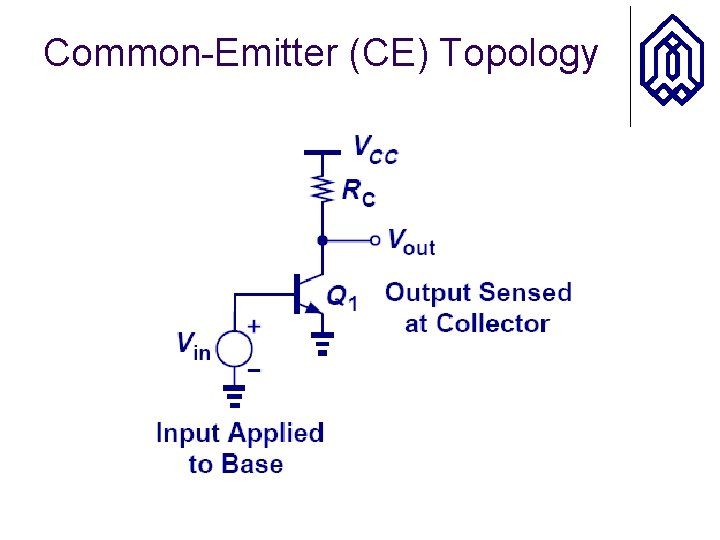
Common-Emitter (CE) Topology
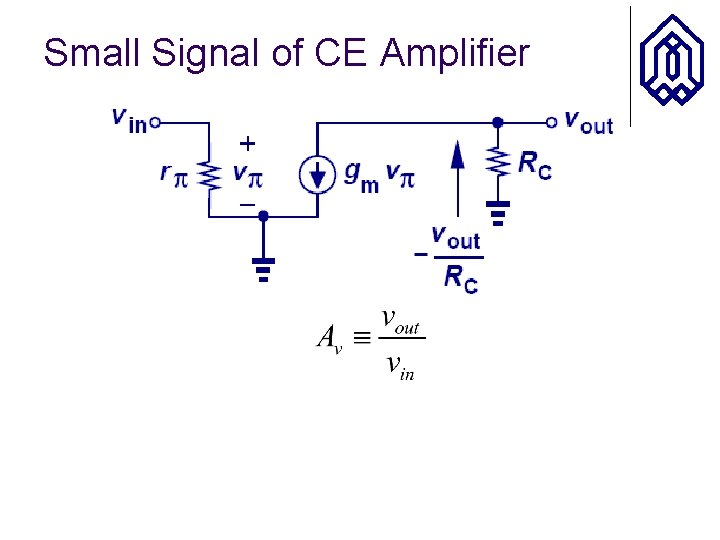
Small Signal of CE Amplifier
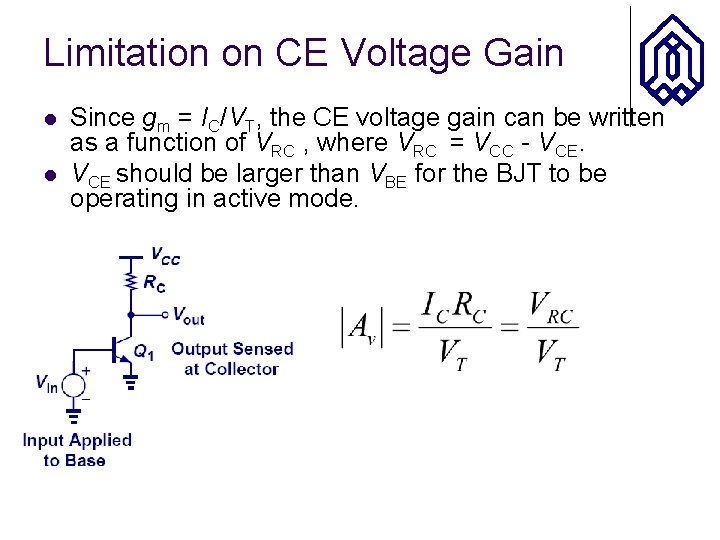
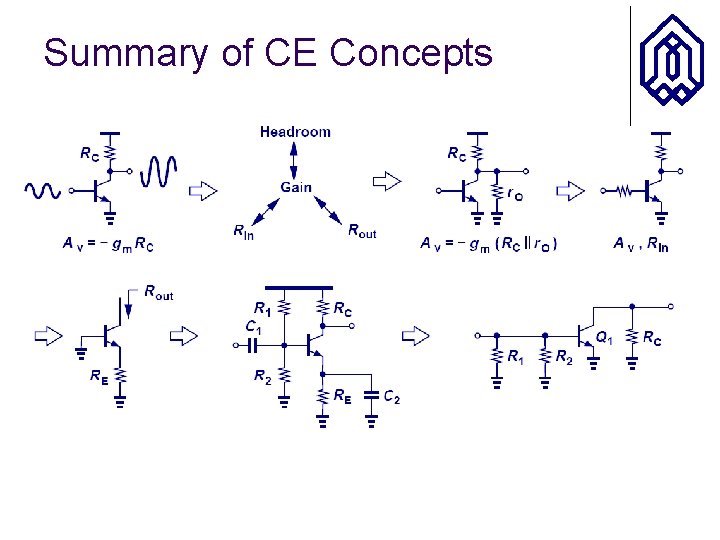
Limitation on CE Voltage Gain l l Since gm = IC/VT, the CE voltage gain can be written as a function of VRC , where VRC = VCC - VCE should be larger than VBE for the BJT to be operating in active mode.
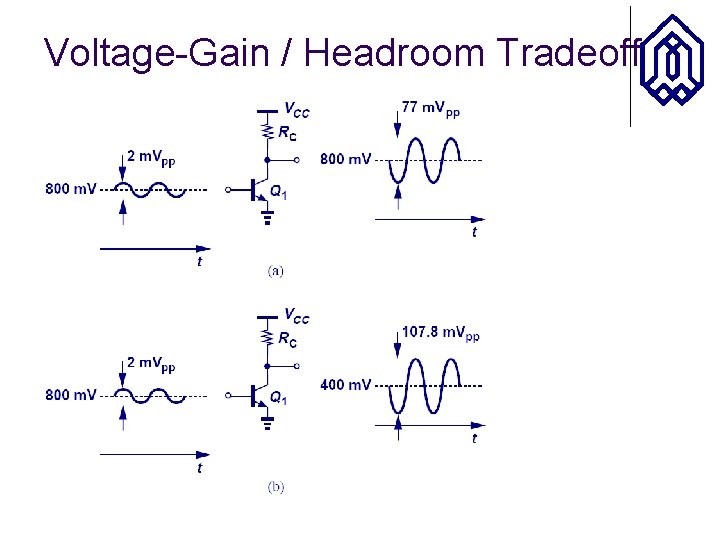
Voltage-Gain / Headroom Tradeoff
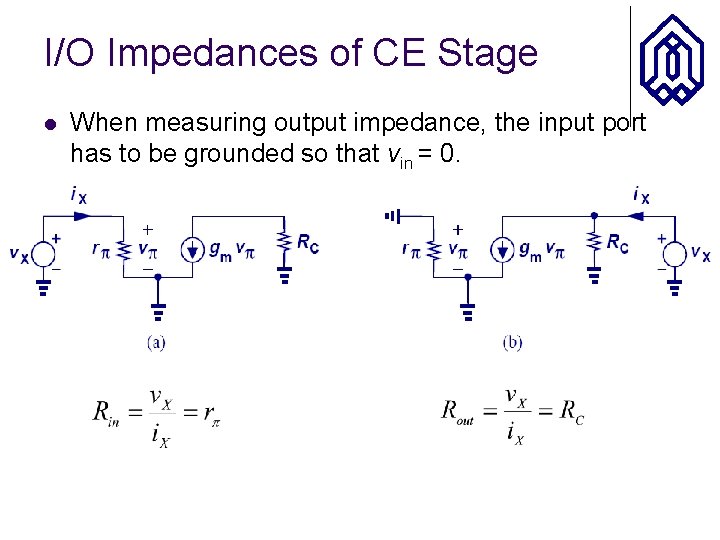
I/O Impedances of CE Stage l When measuring output impedance, the input port has to be grounded so that vin = 0.
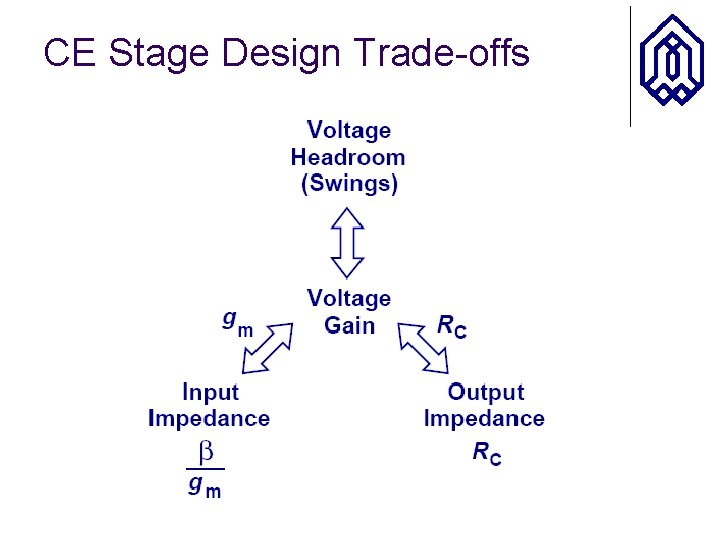
CE Stage Design Trade-offs
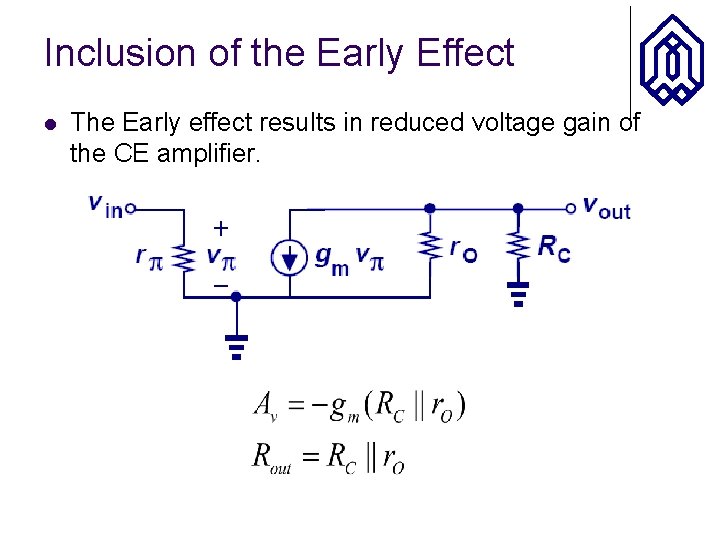
Inclusion of the Early Effect l The Early effect results in reduced voltage gain of the CE amplifier.
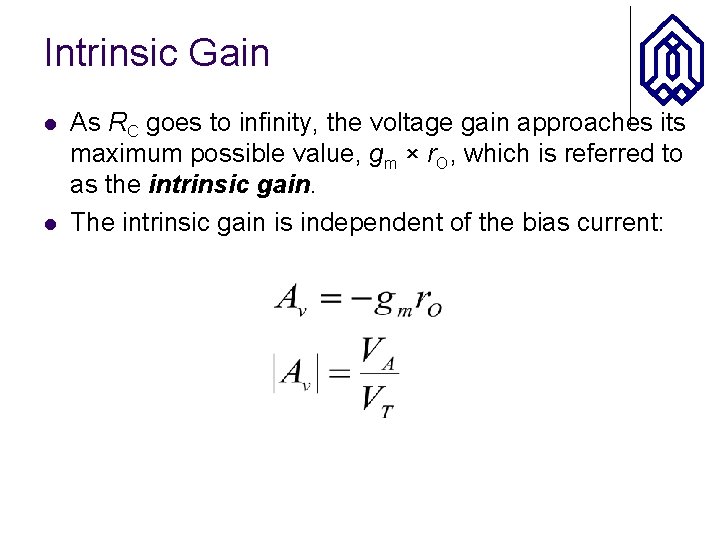
Intrinsic Gain l l As RC goes to infinity, the voltage gain approaches its maximum possible value, gm × r. O, which is referred to as the intrinsic gain. The intrinsic gain is independent of the bias current:
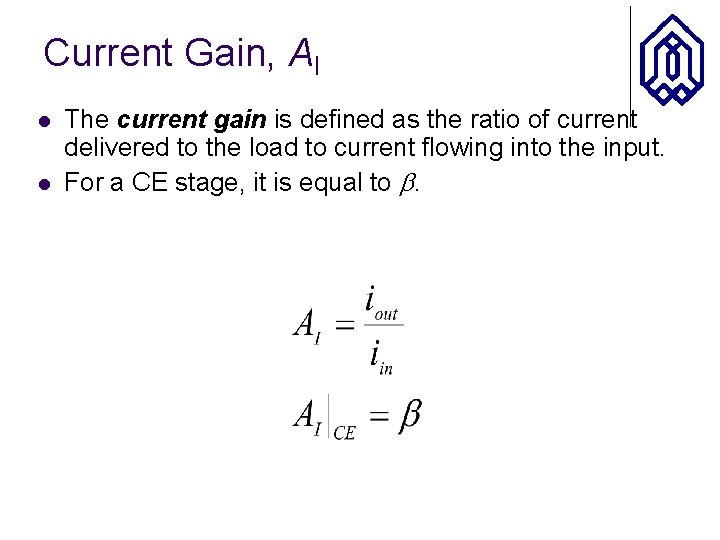
Current Gain, AI l l The current gain is defined as the ratio of current delivered to the load to current flowing into the input. For a CE stage, it is equal to .
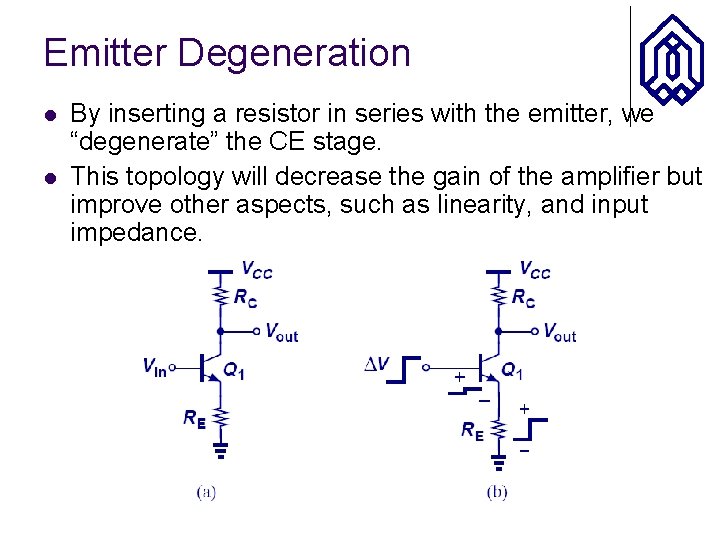
Emitter Degeneration l l By inserting a resistor in series with the emitter, we “degenerate” the CE stage. This topology will decrease the gain of the amplifier but improve other aspects, such as linearity, and input impedance.
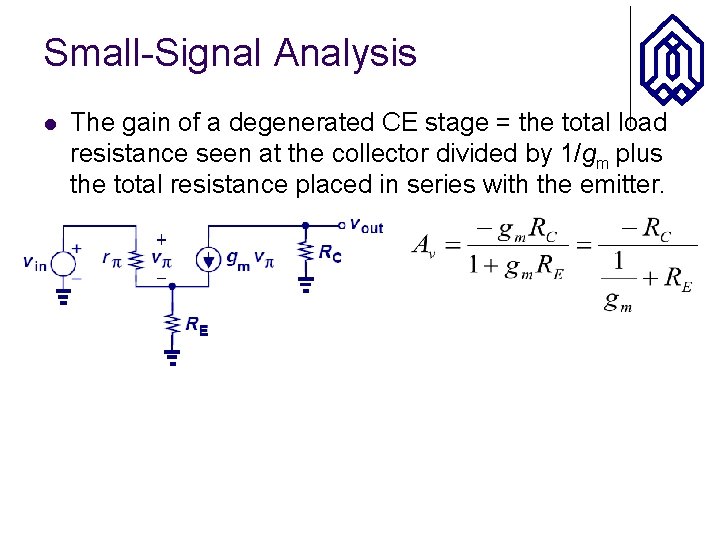
Small-Signal Analysis l The gain of a degenerated CE stage = the total load resistance seen at the collector divided by 1/gm plus the total resistance placed in series with the emitter.
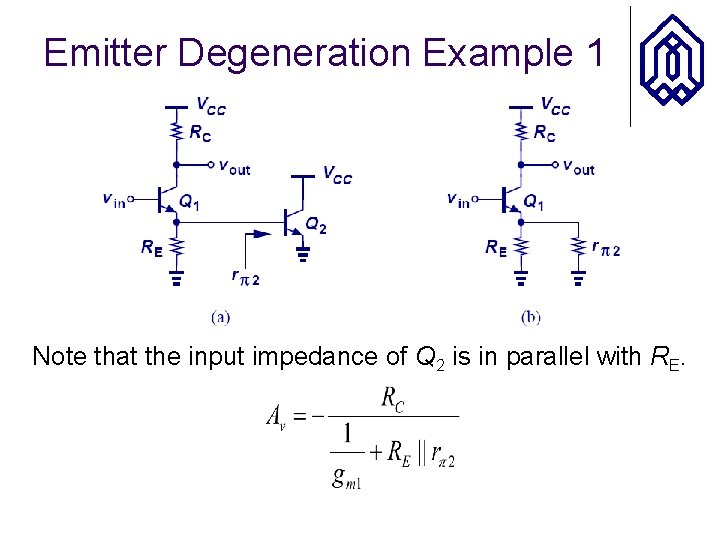
Emitter Degeneration Example 1 Note that the input impedance of Q 2 is in parallel with RE.
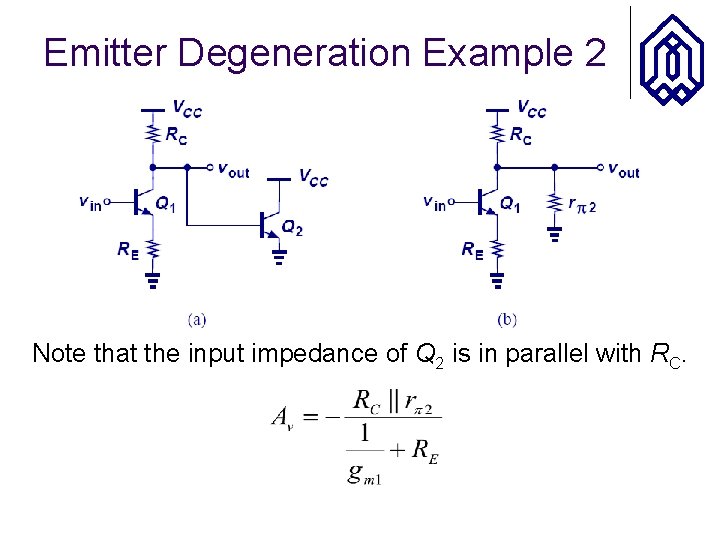
Emitter Degeneration Example 2 Note that the input impedance of Q 2 is in parallel with RC.
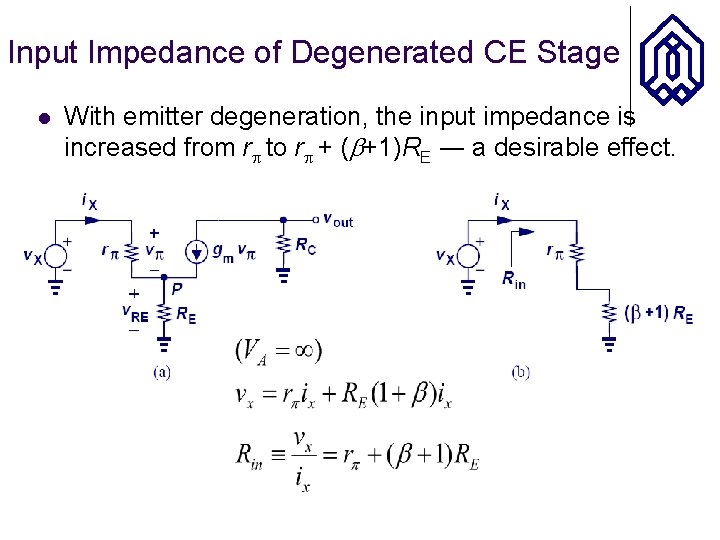
Input Impedance of Degenerated CE Stage l With emitter degeneration, the input impedance is increased from r to r + ( +1)RE ― a desirable effect.
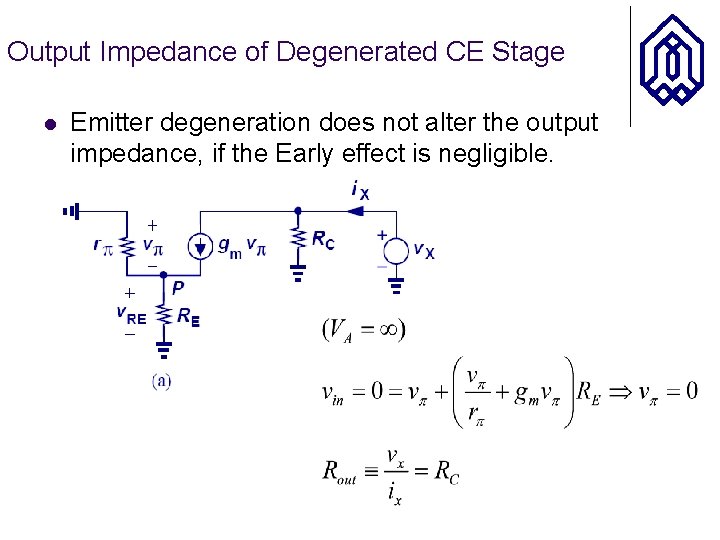
Output Impedance of Degenerated CE Stage l Emitter degeneration does not alter the output impedance, if the Early effect is negligible.
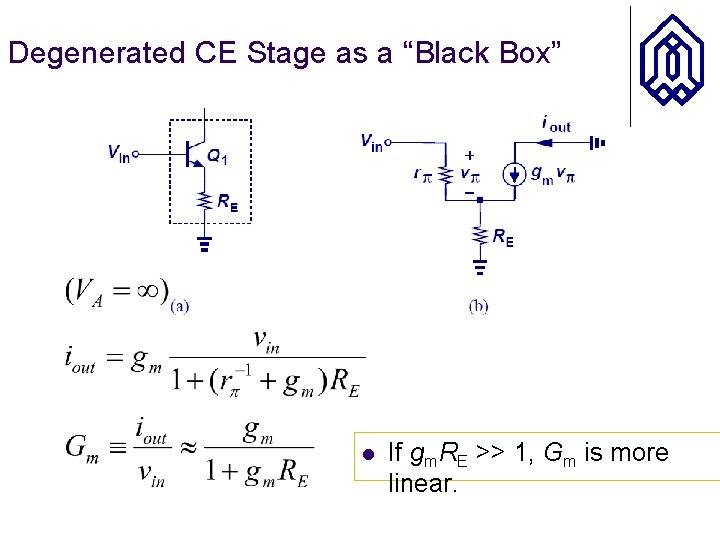
Degenerated CE Stage as a “Black Box” l If gm. RE >> 1, Gm is more linear.
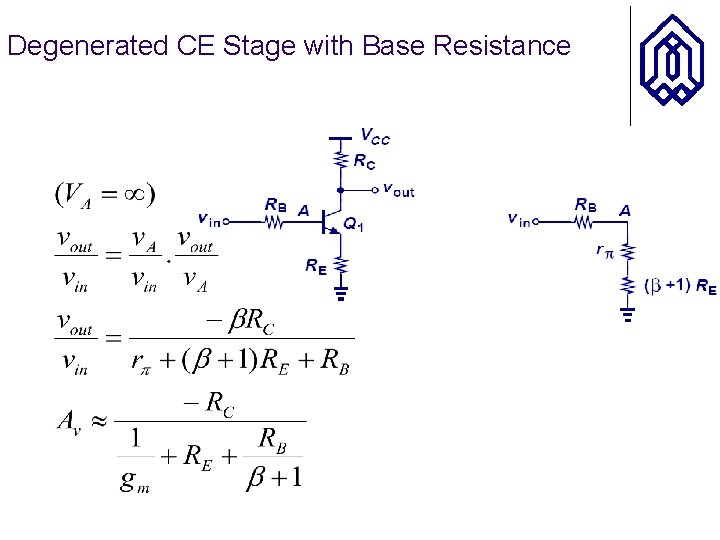
Degenerated CE Stage with Base Resistance
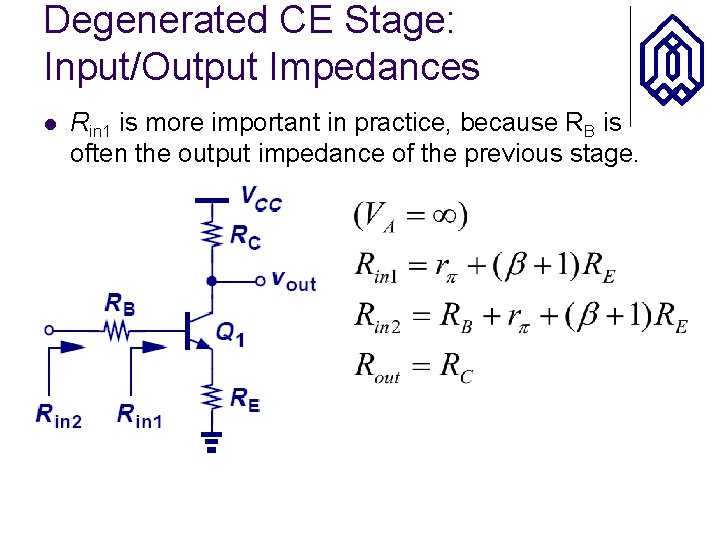
Degenerated CE Stage: Input/Output Impedances l Rin 1 is more important in practice, because RB is often the output impedance of the previous stage.
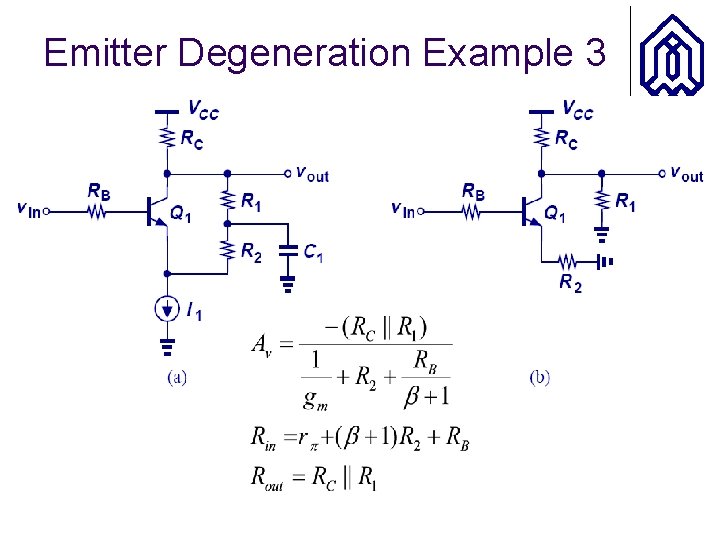
Emitter Degeneration Example 3
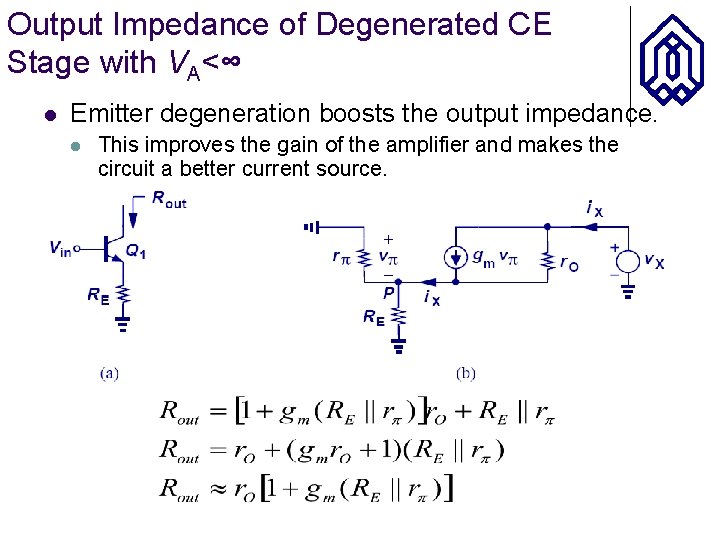
Output Impedance of Degenerated CE Stage with VA<∞ l Emitter degeneration boosts the output impedance. l This improves the gain of the amplifier and makes the circuit a better current source.
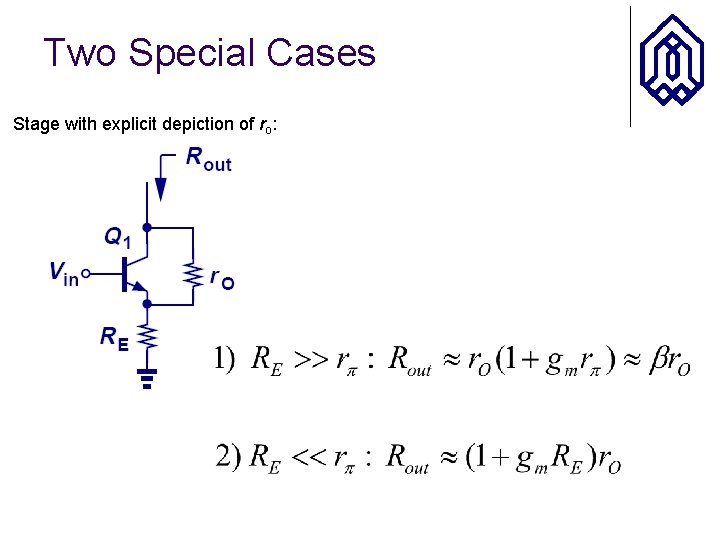
Two Special Cases Stage with explicit depiction of ro:
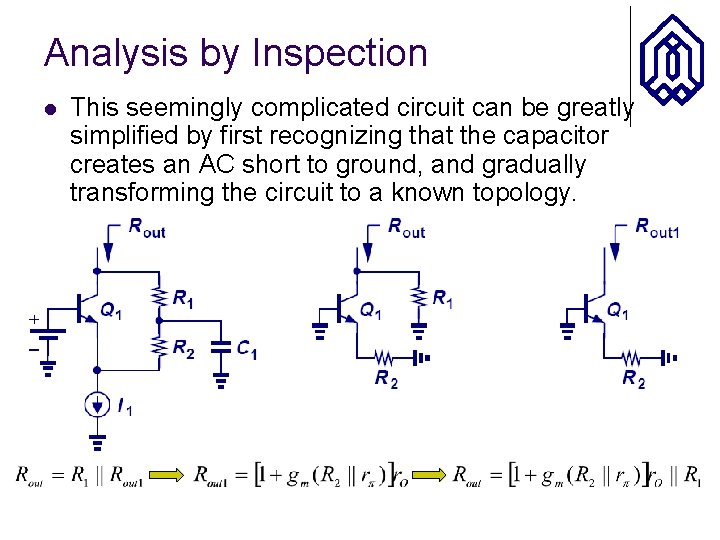
Analysis by Inspection l This seemingly complicated circuit can be greatly simplified by first recognizing that the capacitor creates an AC short to ground, and gradually transforming the circuit to a known topology.
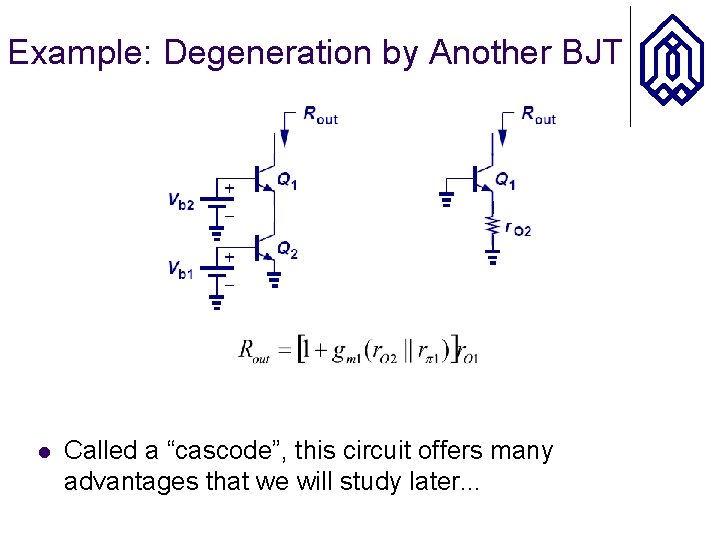
Example: Degeneration by Another BJT l Called a “cascode”, this circuit offers many advantages that we will study later. . .
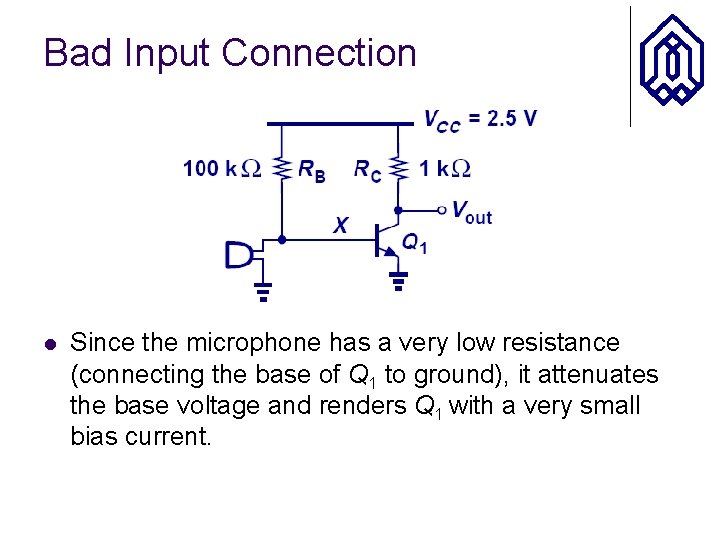
Bad Input Connection l Since the microphone has a very low resistance (connecting the base of Q 1 to ground), it attenuates the base voltage and renders Q 1 with a very small bias current.
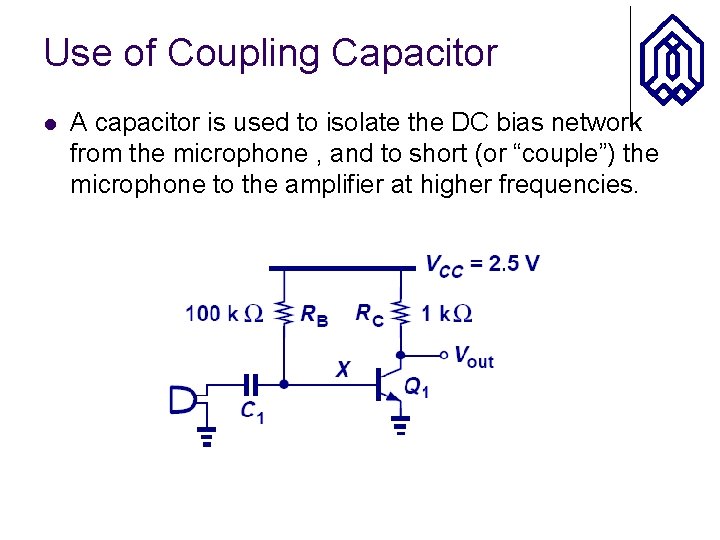
Use of Coupling Capacitor l A capacitor is used to isolate the DC bias network from the microphone , and to short (or “couple”) the microphone to the amplifier at higher frequencies.
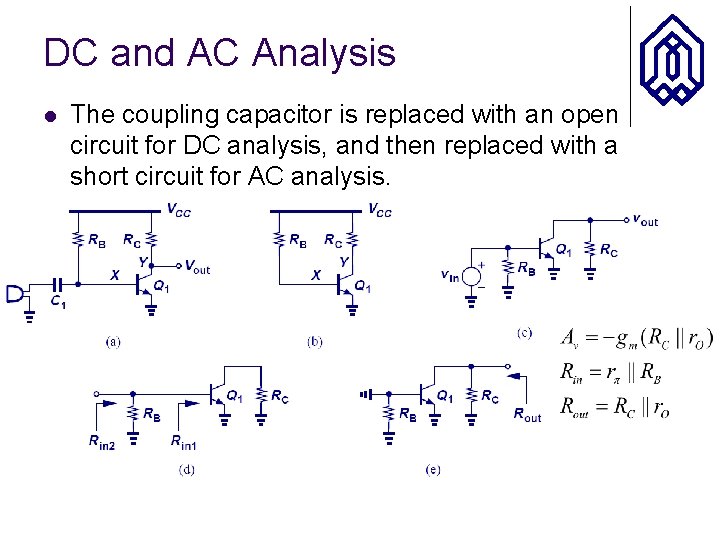
DC and AC Analysis l The coupling capacitor is replaced with an open circuit for DC analysis, and then replaced with a short circuit for AC analysis.
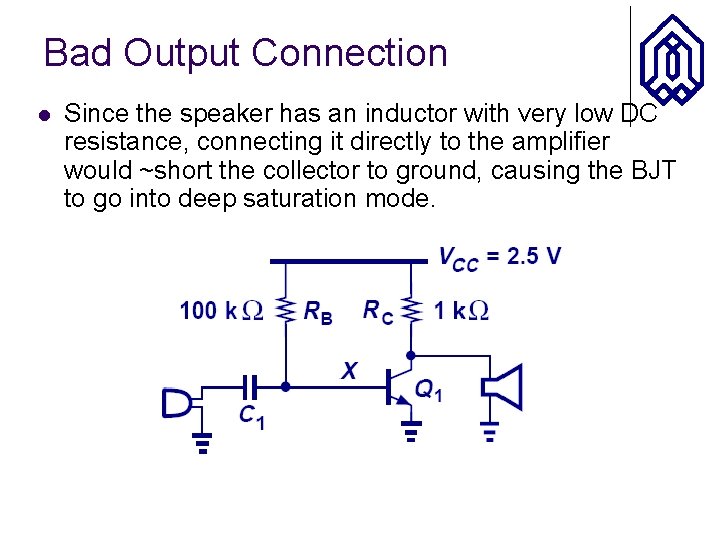
Bad Output Connection l Since the speaker has an inductor with very low DC resistance, connecting it directly to the amplifier would ~short the collector to ground, causing the BJT to go into deep saturation mode.
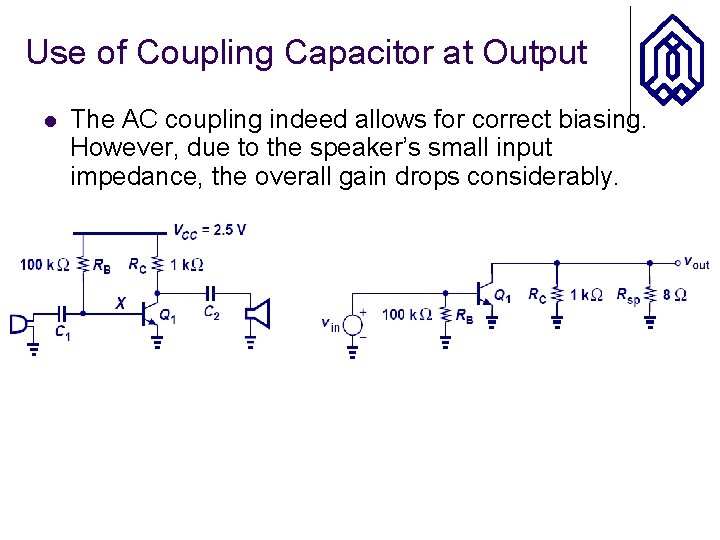
Use of Coupling Capacitor at Output l The AC coupling indeed allows for correct biasing. However, due to the speaker’s small input impedance, the overall gain drops considerably.
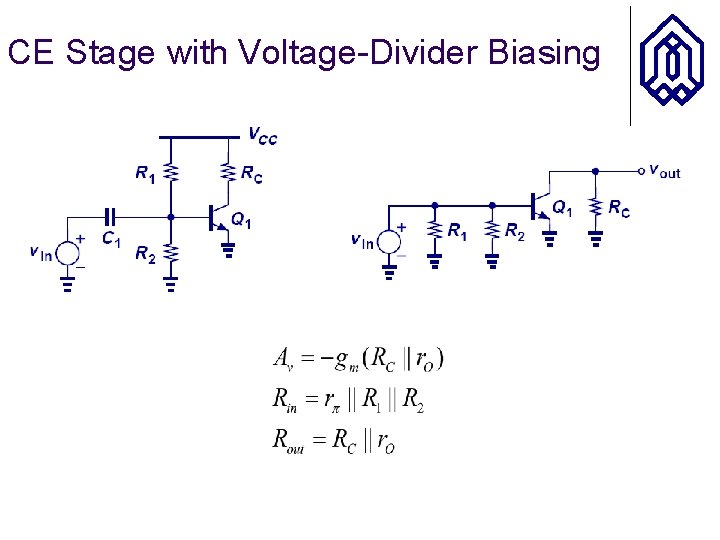
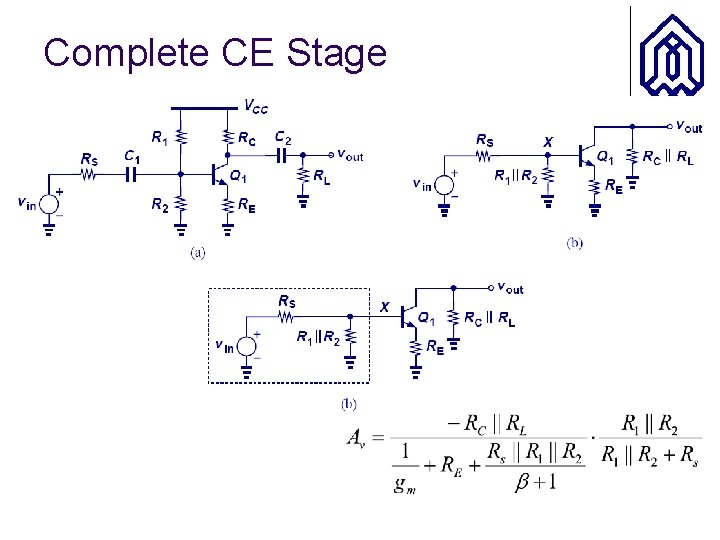
CE Stage with Voltage-Divider Biasing
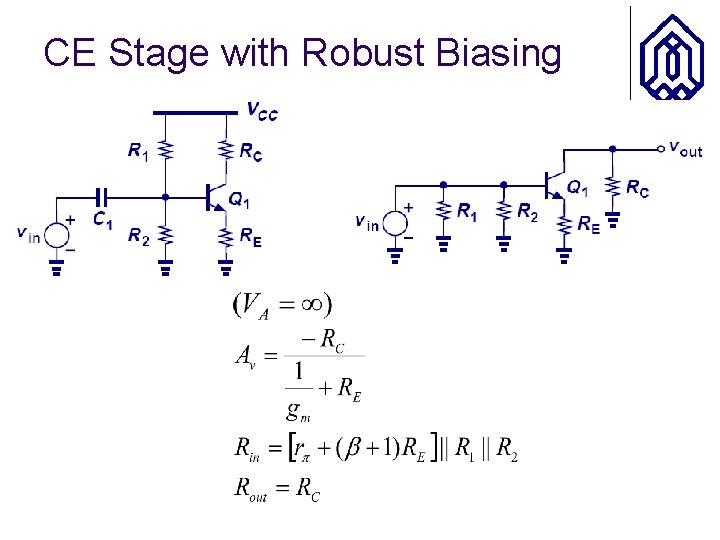
CE Stage with Robust Biasing
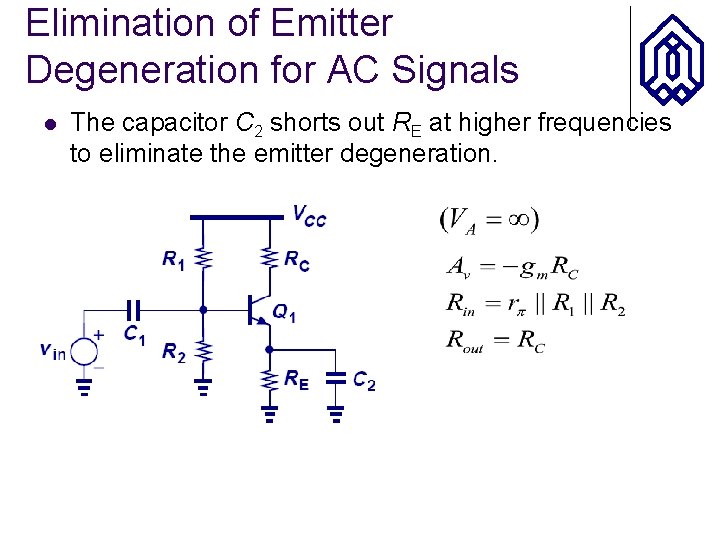
Elimination of Emitter Degeneration for AC Signals l The capacitor C 2 shorts out RE at higher frequencies to eliminate the emitter degeneration.
Complete CE Stage
Summary of CE Concepts
- Slides: 35