
Bivalent MuDelta Opioid Ligands Potential for Pain Control
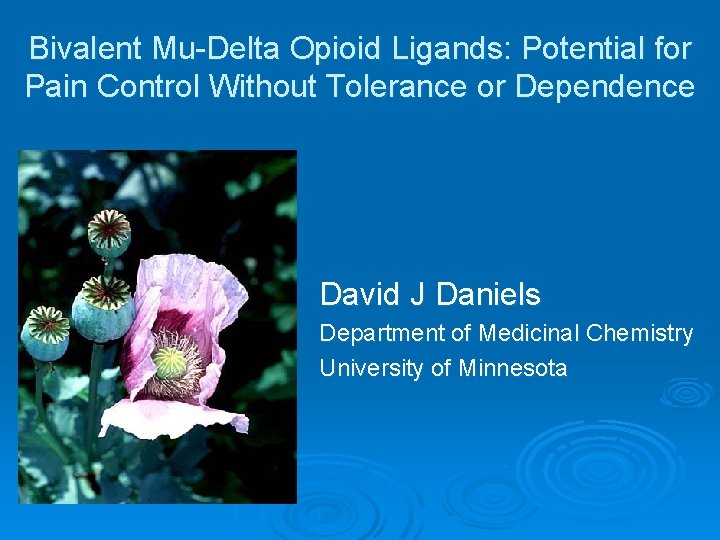
Bivalent Mu-Delta Opioid Ligands: Potential for Pain Control Without Tolerance or Dependence David J Daniels Department of Medicinal Chemistry University of Minnesota
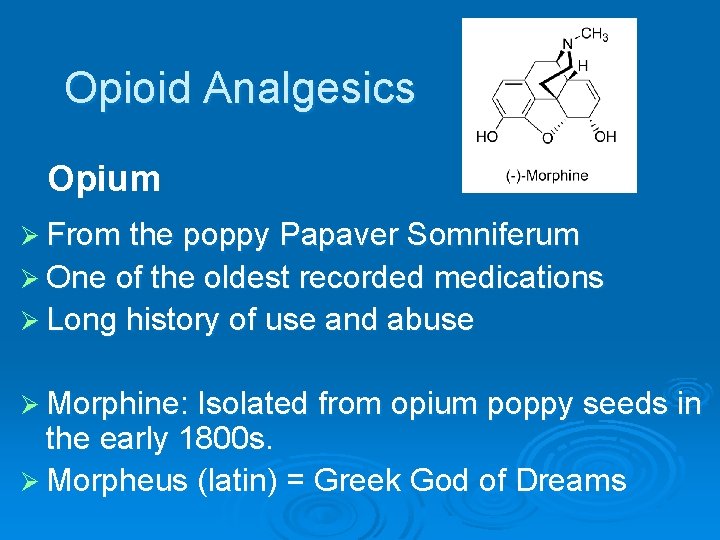
Opioid Analgesics Opium Ø From the poppy Papaver Somniferum Ø One of the oldest recorded medications Ø Long history of use and abuse Ø Morphine: Isolated from opium poppy seeds in the early 1800 s. Ø Morpheus (latin) = Greek God of Dreams

Diacetylmorphine - Heroin Ø 1 st Synthesized in 1874 by C. R. Alder Wright Ø 1897 - Bayer Pharmaceutical company “re-invented” diacetylmorphine l named it Heroin after the German word l heroisch “heroic” 1898 – 1910 Bayer marketed Heroin as a non-addictive morphine substitute 1914 Harrison Narcotics Tax Act Ø 1924 US banned all use of Heroin Ø
Opioid Analgesics – The Holy Grail Ø Countless synthetic opiate compounds have been synthesized over the last century in an attempt to create the “perfect” analgesic
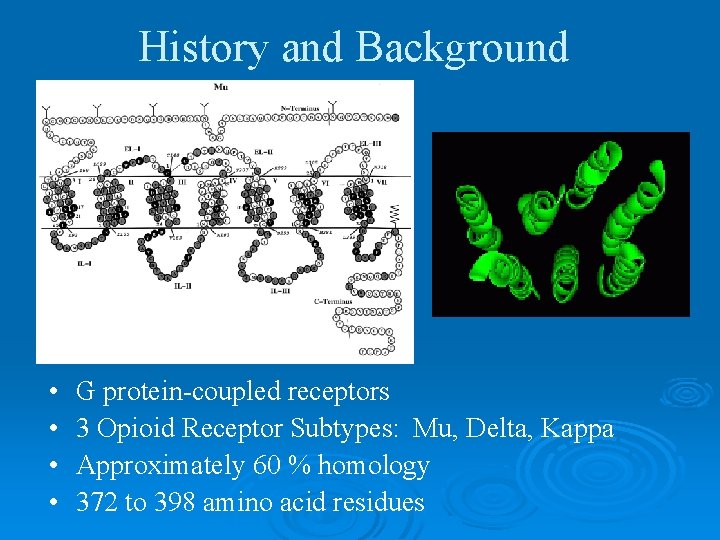
History and Background • • G protein-coupled receptors 3 Opioid Receptor Subtypes: Mu, Delta, Kappa Approximately 60 % homology 372 to 398 amino acid residues
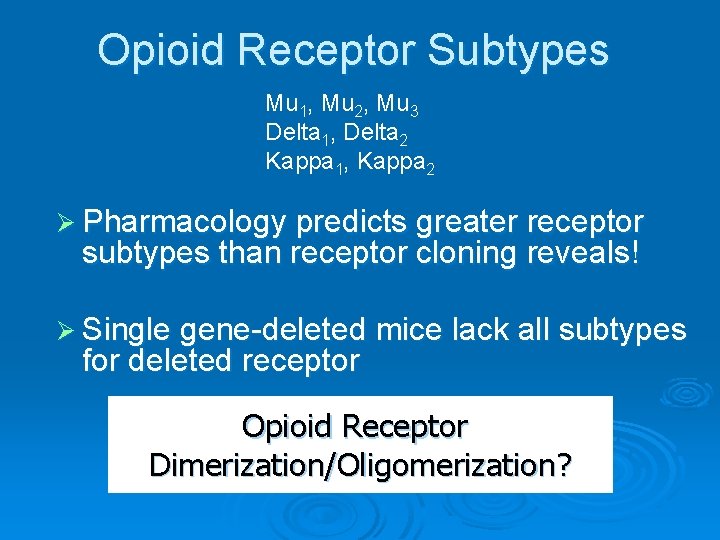
Opioid Receptor Subtypes Mu 1, Mu 2, Mu 3 Delta 1, Delta 2 Kappa 1, Kappa 2 Ø Pharmacology predicts greater receptor subtypes than receptor cloning reveals! Ø Single gene-deleted mice lack all subtypes for deleted receptor Opioid Receptor Dimerization/Oligomerization?
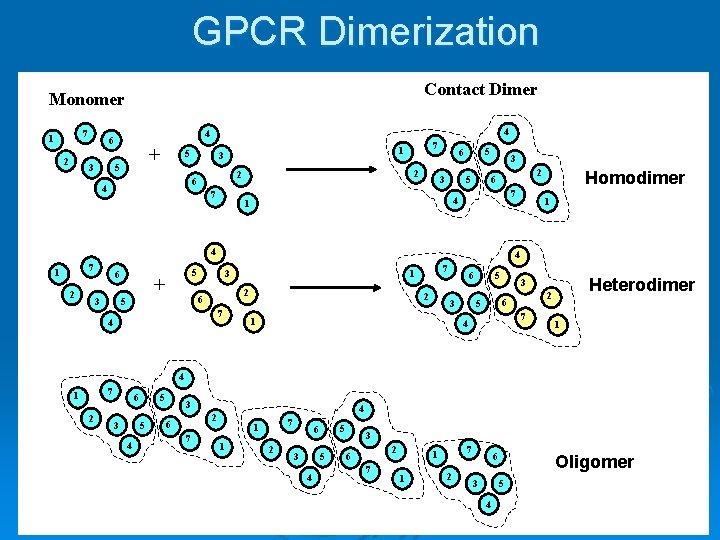
GPCR Dimerization Contact Dimer Monomer 7 1 2 3 4 4 6 + 5 5 2 2 6 4 7 1 3 7 5 6 3 3 2 6 5 7 4 1 4 7 1 2 6 3 3 7 4 7 1 2 6 5 1 4 5 + Homodimer 2 5 6 3 1 2 6 5 Heterodimer 3 7 4 1 4 7 1 2 5 6 3 5 4 3 4 2 6 7 7 1 1 2 5 6 3 5 4 3 2 6 7 7 1 1 2 6 3 Oligomer 5 4
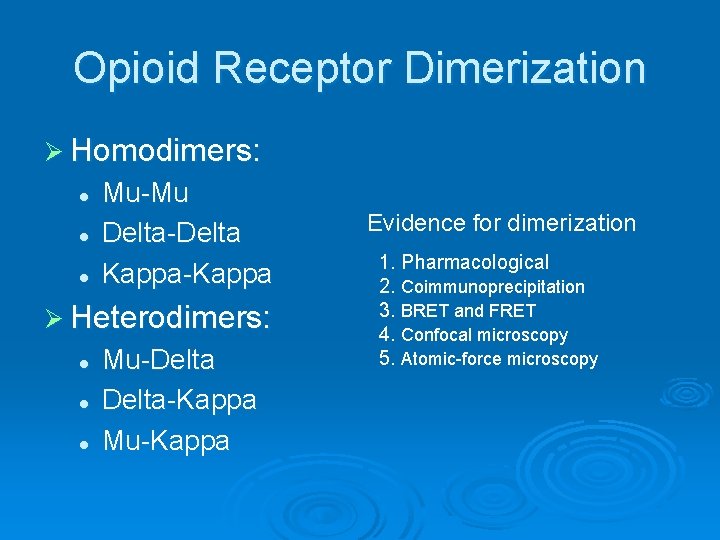
Opioid Receptor Dimerization Ø Homodimers: l l l Mu-Mu Delta-Delta Kappa-Kappa Ø Heterodimers: l l l Mu-Delta-Kappa Mu-Kappa Evidence for dimerization 1. Pharmacological 2. Coimmunoprecipitation 3. BRET and FRET 4. Confocal microscopy 5. Atomic-force microscopy
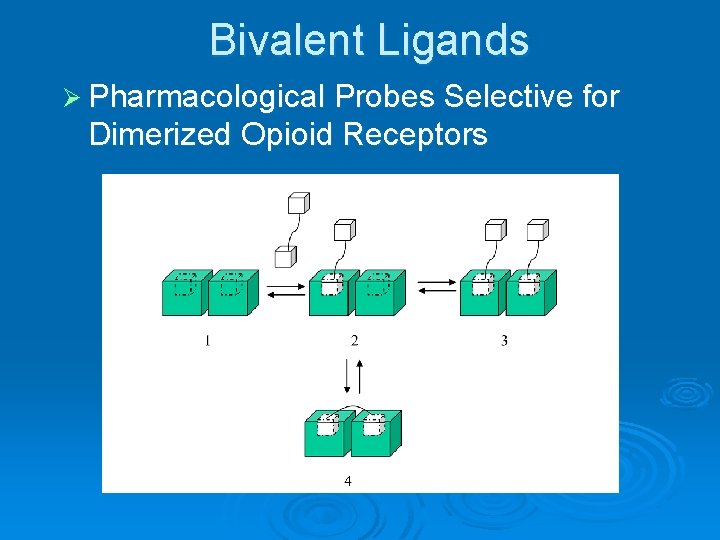
Bivalent Ligands Ø Pharmacological Probes Selective for Dimerized Opioid Receptors
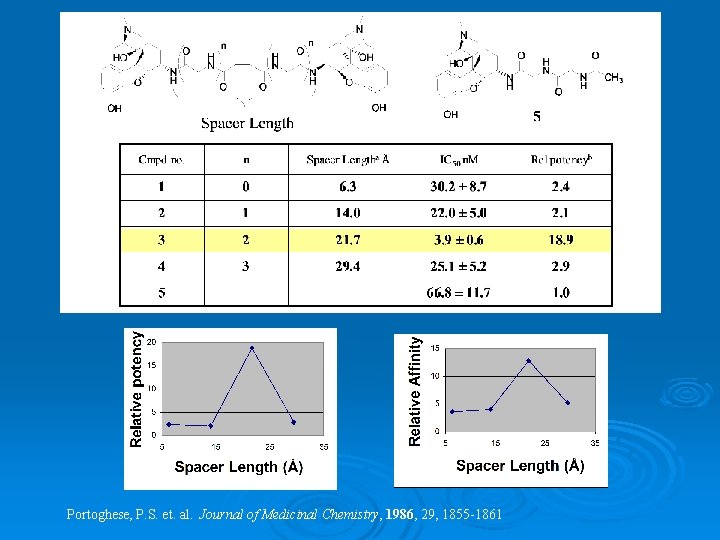
Portoghese, P. S. et. al. Journal of Medicinal Chemistry, 1986, 29, 1855 -1861
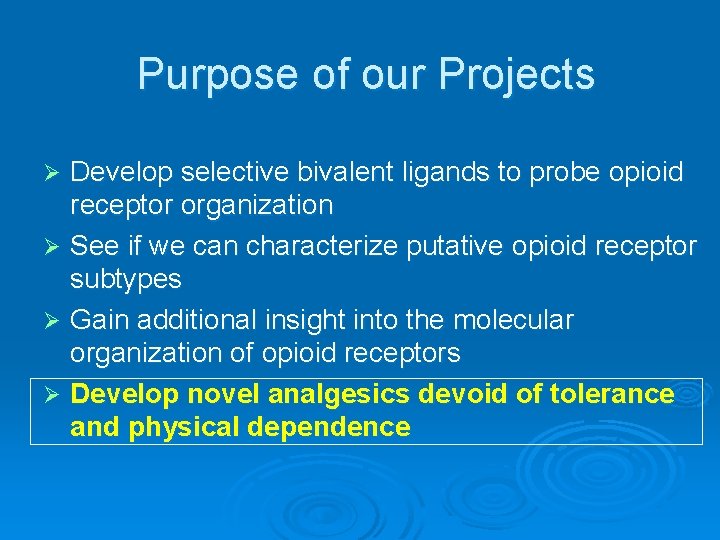
Purpose of our Projects Develop selective bivalent ligands to probe opioid receptor organization Ø See if we can characterize putative opioid receptor subtypes Ø Gain additional insight into the molecular organization of opioid receptors Ø Develop novel analgesics devoid of tolerance and physical dependence Ø
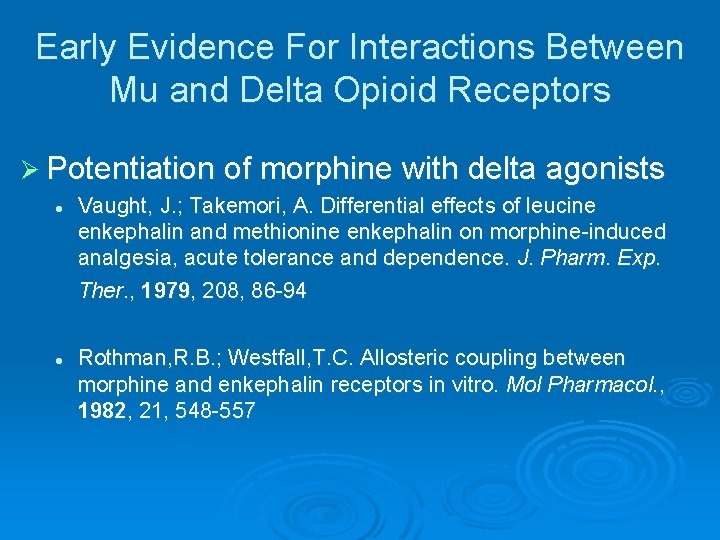
Early Evidence For Interactions Between Mu and Delta Opioid Receptors Ø Potentiation of morphine with delta agonists l l Vaught, J. ; Takemori, A. Differential effects of leucine enkephalin and methionine enkephalin on morphine-induced analgesia, acute tolerance and dependence. J. Pharm. Exp. Ther. , 1979, 208, 86 -94 Rothman, R. B. ; Westfall, T. C. Allosteric coupling between morphine and enkephalin receptors in vitro. Mol Pharmacol. , 1982, 21, 548 -557
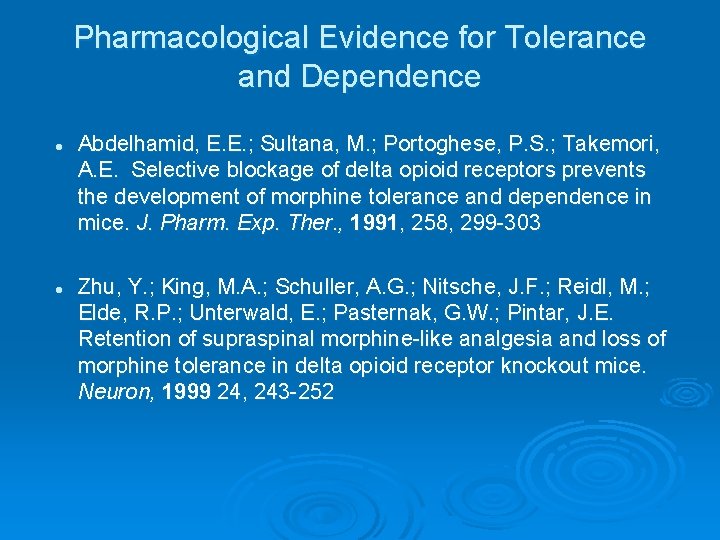
Pharmacological Evidence for Tolerance and Dependence l l Abdelhamid, E. E. ; Sultana, M. ; Portoghese, P. S. ; Takemori, A. E. Selective blockage of delta opioid receptors prevents the development of morphine tolerance and dependence in mice. J. Pharm. Exp. Ther. , 1991, 258, 299 -303 Zhu, Y. ; King, M. A. ; Schuller, A. G. ; Nitsche, J. F. ; Reidl, M. ; Elde, R. P. ; Unterwald, E. ; Pasternak, G. W. ; Pintar, J. E. Retention of supraspinal morphine-like analgesia and loss of morphine tolerance in delta opioid receptor knockout mice. Neuron, 1999 24, 243 -252
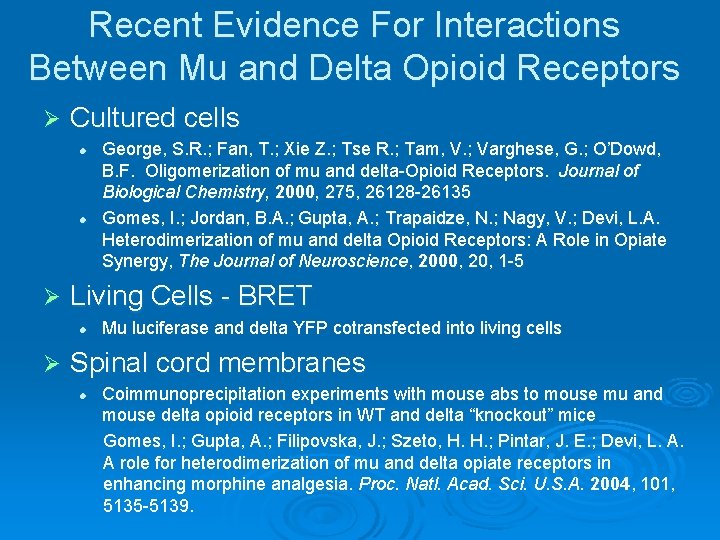
Recent Evidence For Interactions Between Mu and Delta Opioid Receptors Ø Cultured cells l l Ø Living Cells - BRET l Ø George, S. R. ; Fan, T. ; Xie Z. ; Tse R. ; Tam, V. ; Varghese, G. ; O’Dowd, B. F. Oligomerization of mu and delta-Opioid Receptors. Journal of Biological Chemistry, 2000, 275, 26128 -26135 Gomes, I. ; Jordan, B. A. ; Gupta, A. ; Trapaidze, N. ; Nagy, V. ; Devi, L. A. Heterodimerization of mu and delta Opioid Receptors: A Role in Opiate Synergy, The Journal of Neuroscience, 2000, 20, 1 -5 Mu luciferase and delta YFP cotransfected into living cells Spinal cord membranes l Coimmunoprecipitation experiments with mouse abs to mouse mu and mouse delta opioid receptors in WT and delta “knockout” mice Gomes, I. ; Gupta, A. ; Filipovska, J. ; Szeto, H. H. ; Pintar, J. E. ; Devi, L. A. A role for heterodimerization of mu and delta opiate receptors in enhancing morphine analgesia. Proc. Natl. Acad. Sci. U. S. A. 2004, 101, 5135 -5139.

Mu-Delta Bivalent Ligand Project M DAN - # # of Atoms of the spacer MU Delta m - Agonist d - Antagonist Daniels, D. J. ; Lenard, N. R. ; Etienne, C. L. ; Law, P. Y. ; Roerig, S. C. ; Portoghese, P. S. Opioidinduced tolerance and dependence in mice is modulated by the distance between pharmacophores in a bivalent ligand series. Proc. Natl. Acad. Sci. U. S. A. 2005, 102, 19208 -19213.
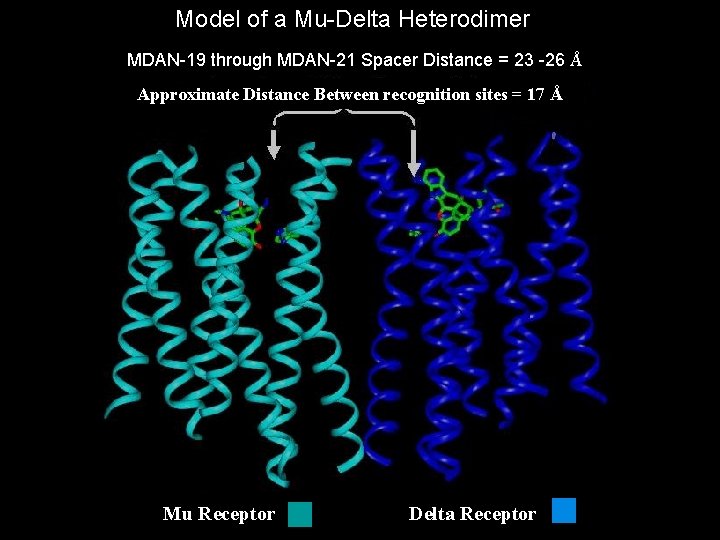
Model of a Mu-Delta Heterodimer MDAN-19 through MDAN-21 Spacer Distance = 23 -26 Å Approximate Distance Between recognition sites = 17 Å Mu Receptor Delta Receptor
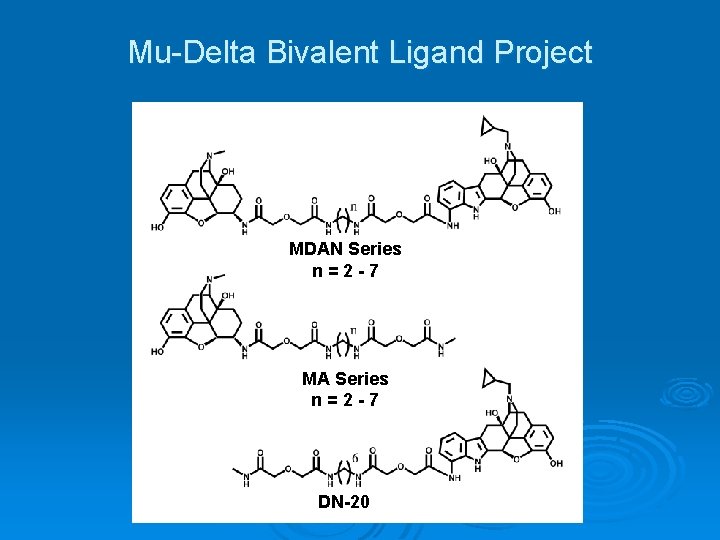
Mu-Delta Bivalent Ligand Project MDAN Series n=2 -7 MA Series n=2 -7 DN-20
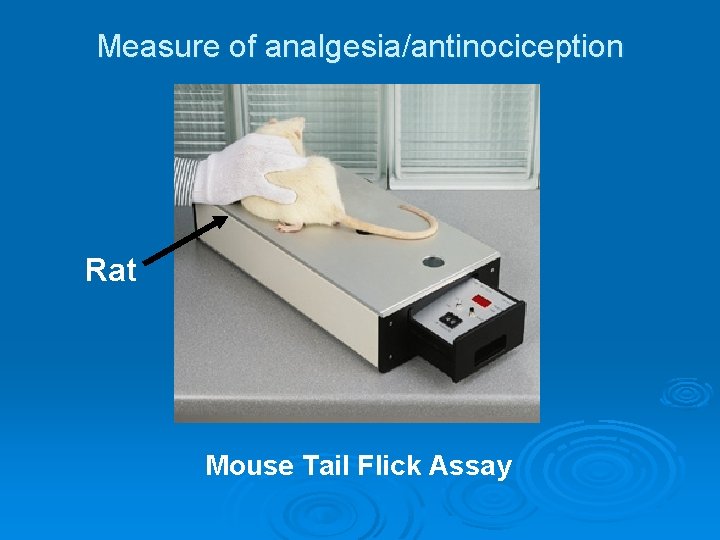
Measure of analgesia/antinociception Rat Mouse Tail Flick Assay
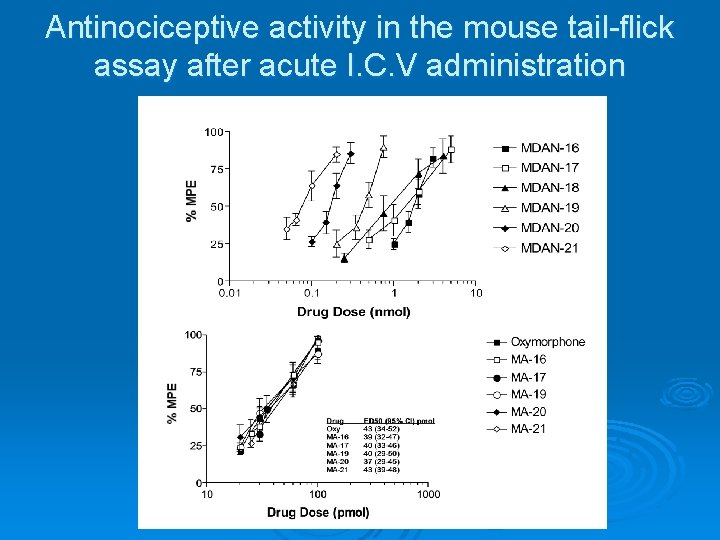
Antinociceptive activity in the mouse tail-flick assay after acute I. C. V administration
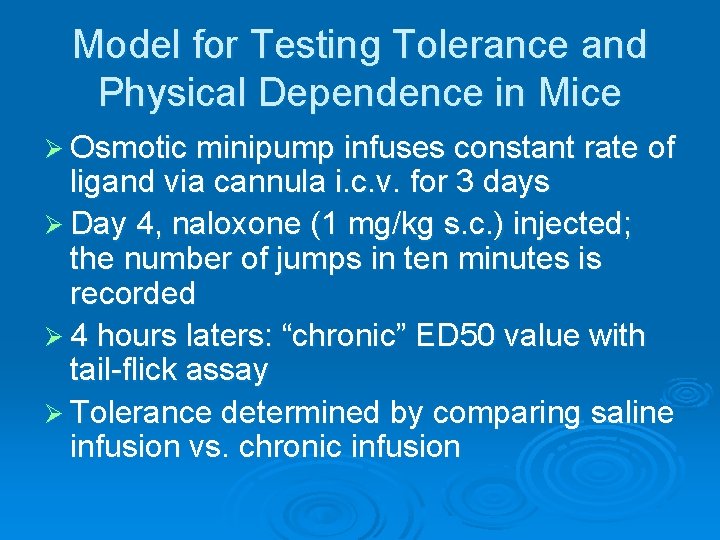
Model for Testing Tolerance and Physical Dependence in Mice Ø Osmotic minipump infuses constant rate of ligand via cannula i. c. v. for 3 days Ø Day 4, naloxone (1 mg/kg s. c. ) injected; the number of jumps in ten minutes is recorded Ø 4 hours laters: “chronic” ED 50 value with tail-flick assay Ø Tolerance determined by comparing saline infusion vs. chronic infusion
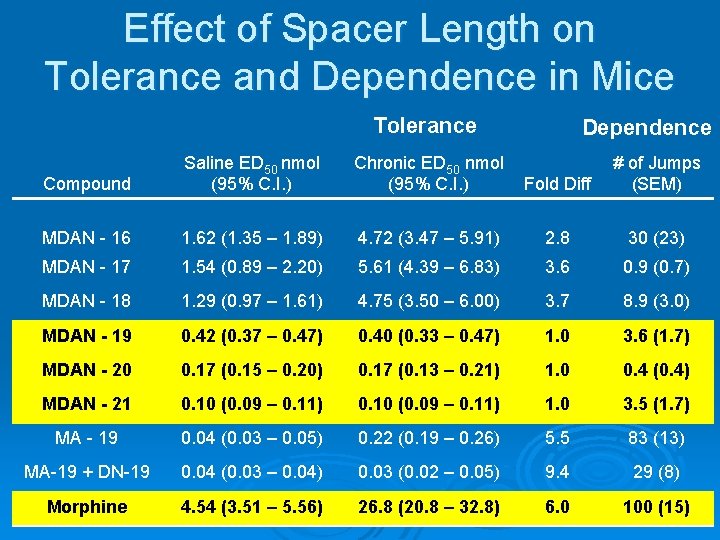
Effect of Spacer Length on Tolerance and Dependence in Mice Tolerance Dependence Compound Saline ED 50 nmol (95% C. I. ) Chronic ED 50 nmol (95% C. I. ) Fold Diff # of Jumps (SEM) MDAN - 16 1. 62 (1. 35 – 1. 89) 4. 72 (3. 47 – 5. 91) 2. 8 30 (23) MDAN - 17 1. 54 (0. 89 – 2. 20) 5. 61 (4. 39 – 6. 83) 3. 6 0. 9 (0. 7) MDAN - 18 1. 29 (0. 97 – 1. 61) 4. 75 (3. 50 – 6. 00) 3. 7 8. 9 (3. 0) MDAN - 19 0. 42 (0. 37 – 0. 47) 0. 40 (0. 33 – 0. 47) 1. 0 3. 6 (1. 7) MDAN - 20 0. 17 (0. 15 – 0. 20) 0. 17 (0. 13 – 0. 21) 1. 0 0. 4 (0. 4) MDAN - 21 0. 10 (0. 09 – 0. 11) 1. 0 3. 5 (1. 7) MA - 19 0. 04 (0. 03 – 0. 05) 0. 22 (0. 19 – 0. 26) 5. 5 83 (13) MA-19 + DN-19 0. 04 (0. 03 – 0. 04) 0. 03 (0. 02 – 0. 05) 9. 4 29 (8) Morphine 4. 54 (3. 51 – 5. 56) 26. 8 (20. 8 – 32. 8) 6. 0 100 (15)
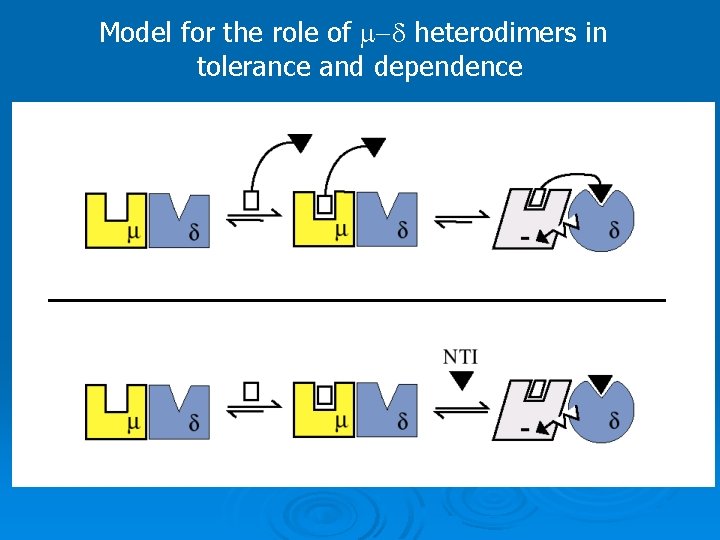
Model for the role of m-d heterodimers in tolerance and dependence
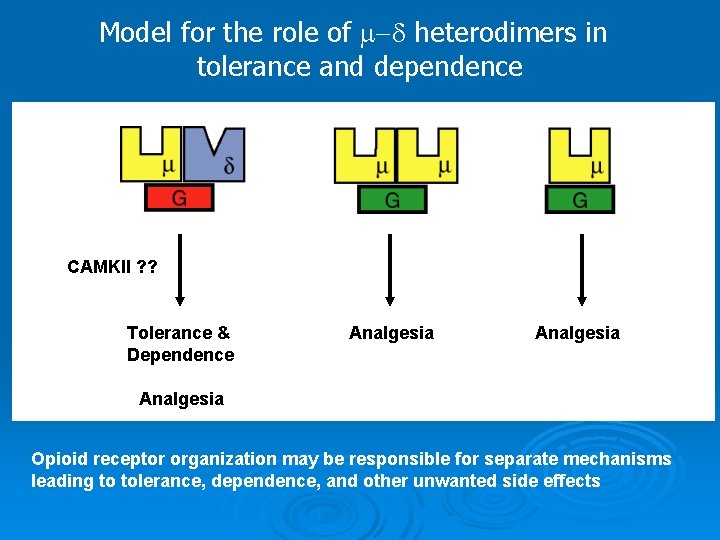
Model for the role of m-d heterodimers in tolerance and dependence CAMKII ? ? Tolerance & Dependence Analgesia Opioid receptor organization may be responsible for separate mechanisms leading to tolerance, dependence, and other unwanted side effects
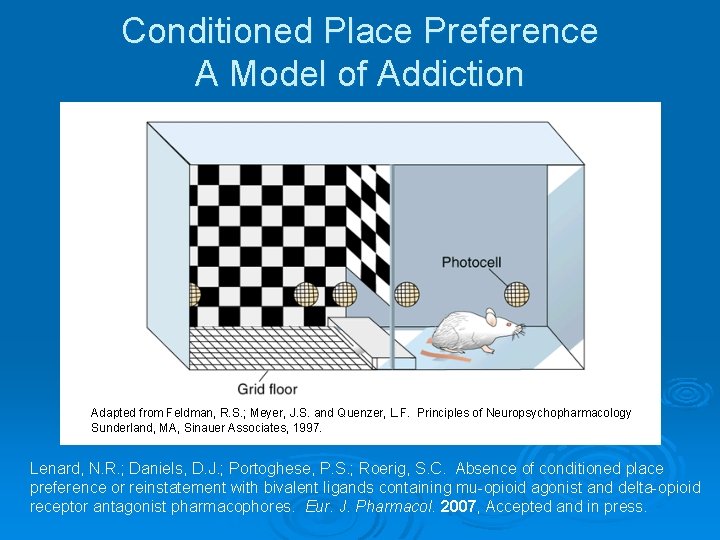
Conditioned Place Preference A Model of Addiction Adapted from Feldman, R. S. ; Meyer, J. S. and Quenzer, L. F. Principles of Neuropsychopharmacology Sunderland, MA, Sinauer Associates, 1997. Lenard, N. R. ; Daniels, D. J. ; Portoghese, P. S. ; Roerig, S. C. Absence of conditioned place preference or reinstatement with bivalent ligands containing mu-opioid agonist and delta-opioid receptor antagonist pharmacophores. Eur. J. Pharmacol. 2007, Accepted and in press.
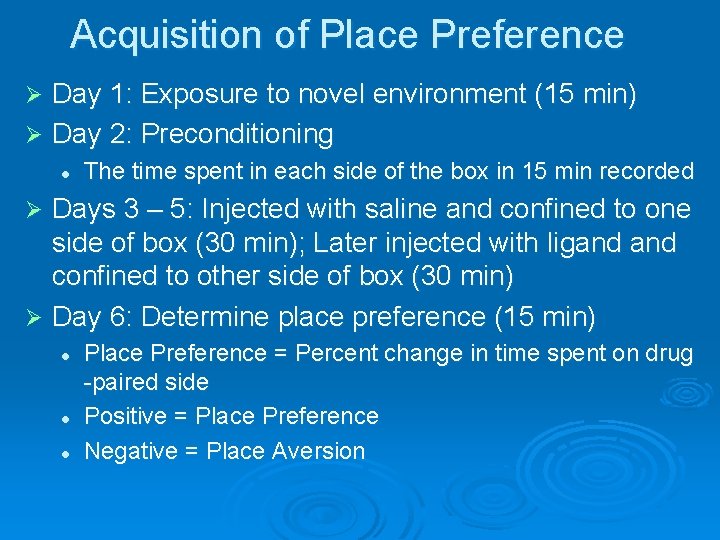
Acquisition of Place Preference Day 1: Exposure to novel environment (15 min) Ø Day 2: Preconditioning Ø l The time spent in each side of the box in 15 min recorded Days 3 – 5: Injected with saline and confined to one side of box (30 min); Later injected with ligand confined to other side of box (30 min) Ø Day 6: Determine place preference (15 min) Ø l l l Place Preference = Percent change in time spent on drug -paired side Positive = Place Preference Negative = Place Aversion
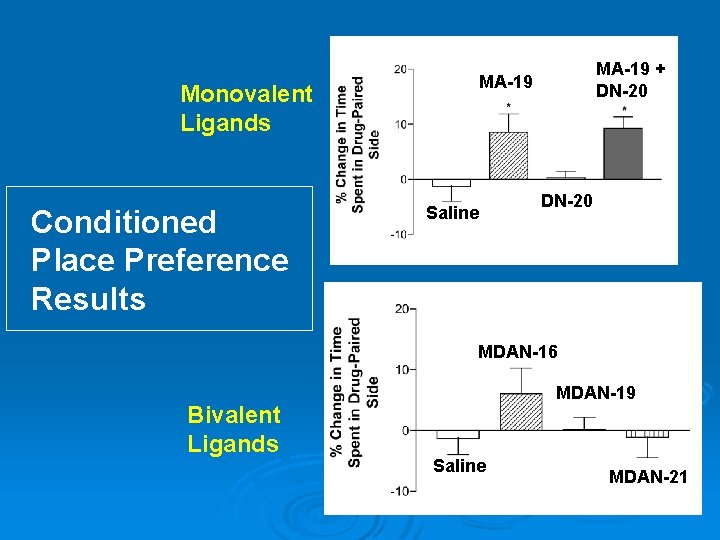
MA-19 Monovalent Ligands Conditioned Place Preference Results MA-19 + DN-20 Saline DN-20 MDAN-16 Bivalent Ligands MDAN-19 Saline MDAN-21
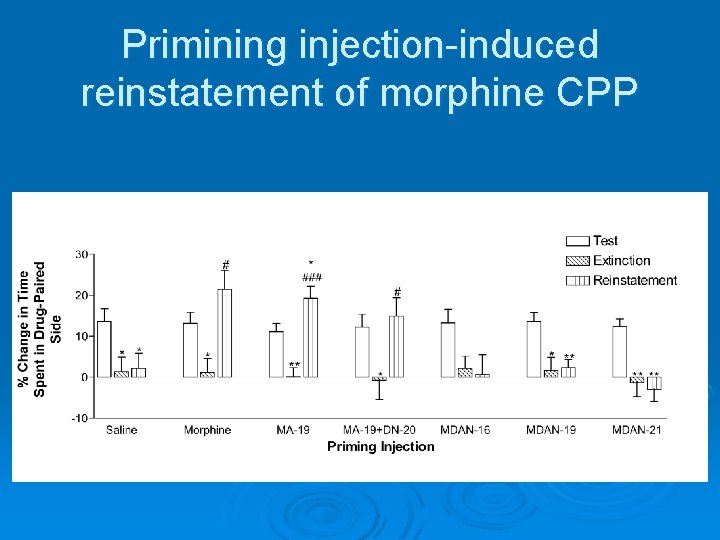
Primining injection-induced reinstatement of morphine CPP
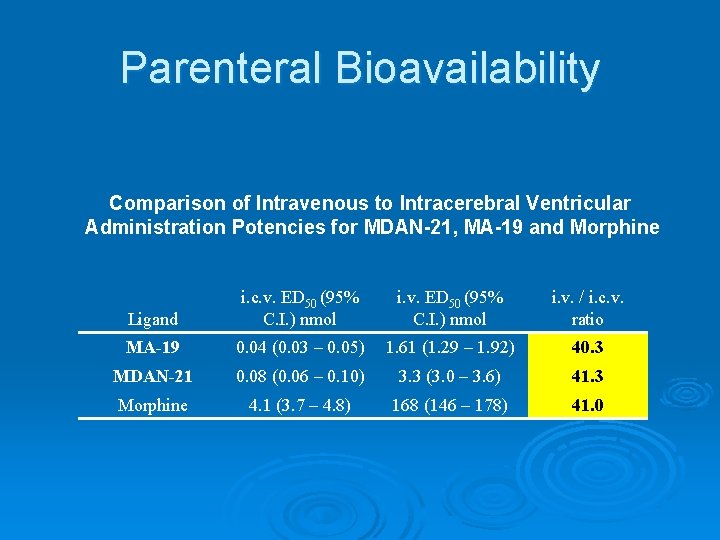
Parenteral Bioavailability Comparison of Intravenous to Intracerebral Ventricular Administration Potencies for MDAN-21, MA-19 and Morphine Ligand i. c. v. ED 50 (95% C. I. ) nmol i. v. / i. c. v. ratio MA-19 0. 04 (0. 03 – 0. 05) 1. 61 (1. 29 – 1. 92) 40. 3 MDAN-21 0. 08 (0. 06 – 0. 10) 3. 3 (3. 0 – 3. 6) 41. 3 Morphine 4. 1 (3. 7 – 4. 8) 168 (146 – 178) 41. 0
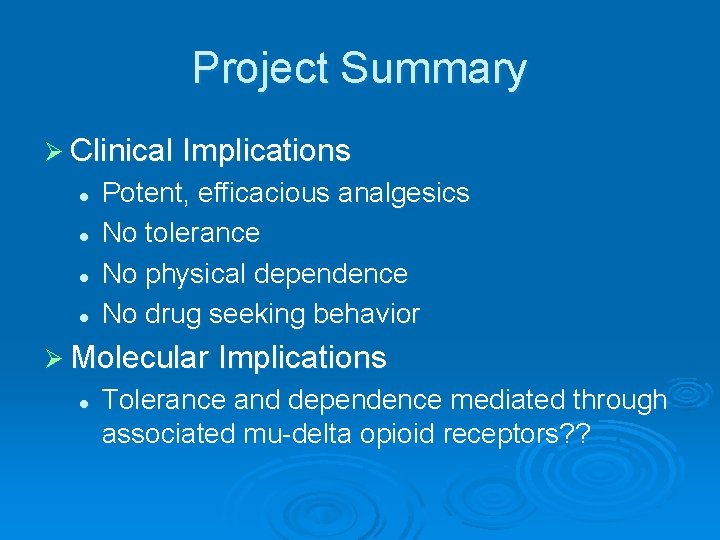
Project Summary Ø Clinical Implications l l Potent, efficacious analgesics No tolerance No physical dependence No drug seeking behavior Ø Molecular Implications l Tolerance and dependence mediated through associated mu-delta opioid receptors? ?
Future Directions University of Minnesota is in the process of patenting the MDAN series Ø Several pharmaceutical companies have expressed interest Ø Ø Other laboratories are in the process of designing compounds with mixed m-agonist/dantagontist activity

Acknowledgements Ø Philip Portoghese Ø Sandy Roerig Natalie Lenard Ø Ping Law Ø Chris Etienne Ø Funding: 1. Work Supported by NIH project Grant DA 1509 2. NIDA Postdoctoral Fellowship DA 18028 (to N. L. )


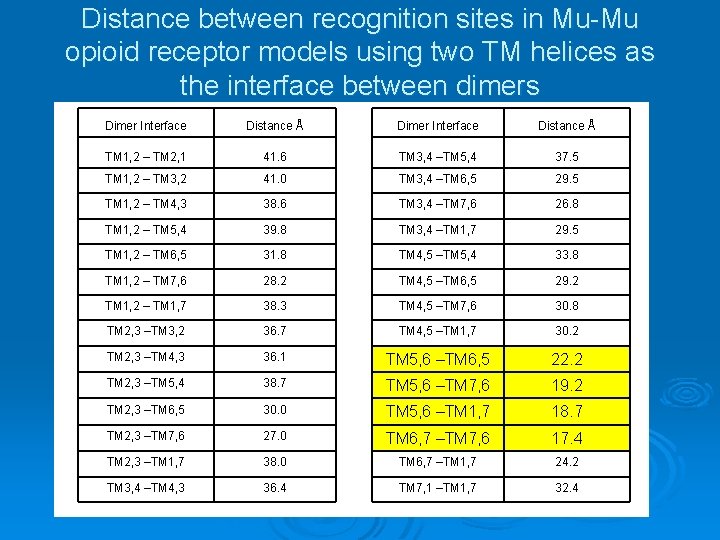
Distance between recognition sites in Mu-Mu opioid receptor models using two TM helices as the interface between dimers Dimer Interface Distance Å TM 1, 2 – TM 2, 1 41. 6 TM 3, 4 –TM 5, 4 37. 5 TM 1, 2 – TM 3, 2 41. 0 TM 3, 4 –TM 6, 5 29. 5 TM 1, 2 – TM 4, 3 38. 6 TM 3, 4 –TM 7, 6 26. 8 TM 1, 2 – TM 5, 4 39. 8 TM 3, 4 –TM 1, 7 29. 5 TM 1, 2 – TM 6, 5 31. 8 TM 4, 5 –TM 5, 4 33. 8 TM 1, 2 – TM 7, 6 28. 2 TM 4, 5 –TM 6, 5 29. 2 TM 1, 2 – TM 1, 7 38. 3 TM 4, 5 –TM 7, 6 30. 8 TM 2, 3 –TM 3, 2 36. 7 TM 4, 5 –TM 1, 7 30. 2 TM 2, 3 –TM 4, 3 36. 1 TM 5, 6 –TM 6, 5 22. 2 TM 2, 3 –TM 5, 4 38. 7 TM 5, 6 –TM 7, 6 19. 2 TM 2, 3 –TM 6, 5 30. 0 TM 5, 6 –TM 1, 7 18. 7 TM 2, 3 –TM 7, 6 27. 0 TM 6, 7 –TM 7, 6 17. 4 TM 2, 3 –TM 1, 7 38. 0 TM 6, 7 –TM 1, 7 24. 2 TM 3, 4 –TM 4, 3 36. 4 TM 7, 1 –TM 1, 7 32. 4
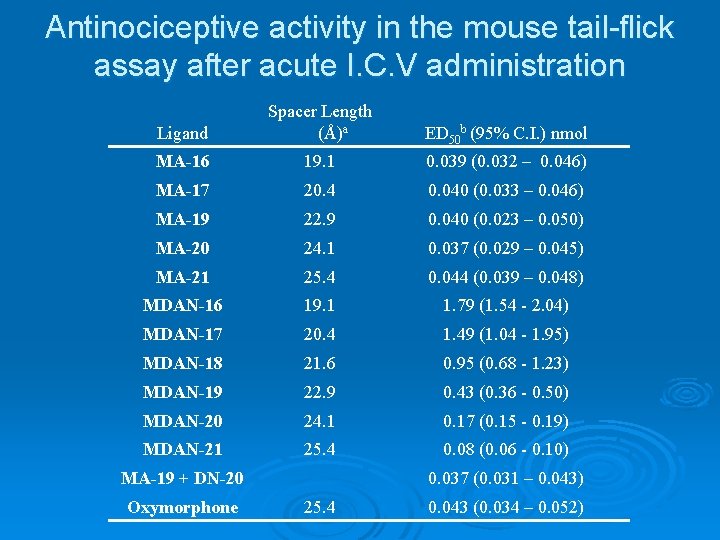
Antinociceptive activity in the mouse tail-flick assay after acute I. C. V administration Ligand Spacer Length (Å)a ED 50 b (95% C. I. ) nmol MA-16 19. 1 0. 039 (0. 032 – 0. 046) MA-17 20. 4 0. 040 (0. 033 – 0. 046) MA-19 22. 9 0. 040 (0. 023 – 0. 050) MA-20 24. 1 0. 037 (0. 029 – 0. 045) MA-21 25. 4 0. 044 (0. 039 – 0. 048) MDAN-16 19. 1 1. 79 (1. 54 - 2. 04) MDAN-17 20. 4 1. 49 (1. 04 - 1. 95) MDAN-18 21. 6 0. 95 (0. 68 - 1. 23) MDAN-19 22. 9 0. 43 (0. 36 - 0. 50) MDAN-20 24. 1 0. 17 (0. 15 - 0. 19) MDAN-21 25. 4 0. 08 (0. 06 - 0. 10) MA-19 + DN-20 Oxymorphone 0. 037 (0. 031 – 0. 043) 25. 4 0. 043 (0. 034 – 0. 052)
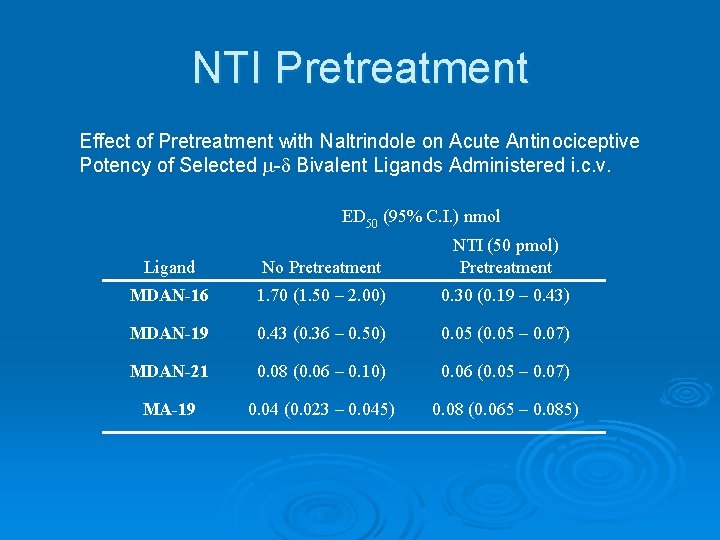
NTI Pretreatment Effect of Pretreatment with Naltrindole on Acute Antinociceptive Potency of Selected m-d Bivalent Ligands Administered i. c. v. ED 50 (95% C. I. ) nmol Ligand No Pretreatment NTI (50 pmol) Pretreatment MDAN-16 1. 70 (1. 50 – 2. 00) 0. 30 (0. 19 – 0. 43) MDAN-19 0. 43 (0. 36 – 0. 50) 0. 05 (0. 05 – 0. 07) MDAN-21 0. 08 (0. 06 – 0. 10) 0. 06 (0. 05 – 0. 07) MA-19 0. 04 (0. 023 – 0. 045) 0. 08 (0. 065 – 0. 085)
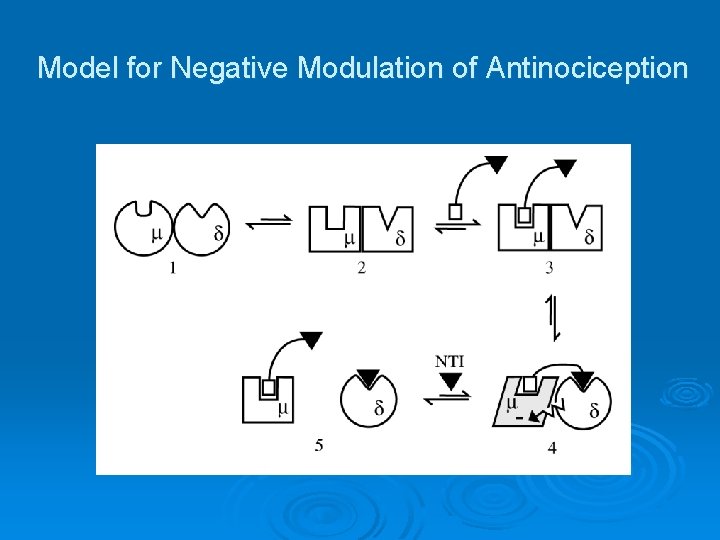
Model for Negative Modulation of Antinociception

Other Approaches to Avoid Tolerance and Dependence 2 1 DIPP-NH 2[ ] 1 So. RI 9409 Schiller, P. W. ; Fundytus, M. E. ; Merovitz, L. ; Weltorski, G. ; Nguyen, T. M. D. ; Lemieux, C. ; Chung, N. N. ; Coderre, T. The opioid mu agonist/delta antagonist DIPP-NH(2)[Psi] produces a potent analgesic effect, no physical dependence, and less tolerance than morphine in rats. J. Med. Chem. 1999, 42, 3520 -3526. Ananthan, S. ; Khare, N. K. ; Saini, S. K. ; Seitz, L. E. ; Bartlett, J. L. ; Davis, P. ; Dersch, C. M. ; 2 Porreca, F. ; Rothman, R. B. ; Bilsky, E. J. Identification of opioid ligands possessing mixed mu agonist/delta antagonist activity among pyridomorphinans derived from naloxone, oxymorphone, and hydromorphone. J. Med. Chem. 2004, 47, 1400 -1412
- Slides: 38