
Bite marks like fingerprints are unique and a
• Bite marks, like fingerprints, are unique and a forensic dentist will be able to make a cast or take pictures of the bite marks (which bruise in the same way as a wound caused by blunt force trauma or the result of a tightly held grip) to use later on as a means of comparing results.
Forensic dentists use several different terms to describe the type of bite mark: • Abrasion - a scrape on the skin • Artifact - when a piece of the body, such as an ear lobe, is removed through biting • Avulsion - a bite resulting in the removal of skin • Contusion - a bruise • Hemorrhage - a profusely bleeding bite • Incision - a clean, neat wound • Laceration - a puncture wound
Types of Bites • A clear impression means that there was significant pressure; • obvious bite signifies medium pressure • noticeable impression means that the biter used violent pressure to bite down.

Characteristics • A human bite mark will often be elliptical or circular in formation and will display the specific characteristics of the teeth that have been used to make the mark. • Likewise a bite mark will can be U-shaped in appearance with a space in between to show where the biter has opened their mouth to a width necessary to get their teeth around a wrist or an arm.
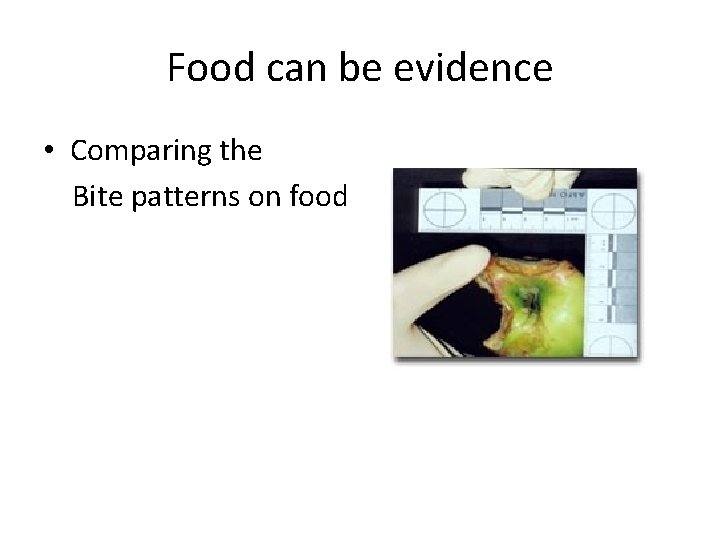
Food can be evidence • Comparing the Bite patterns on food
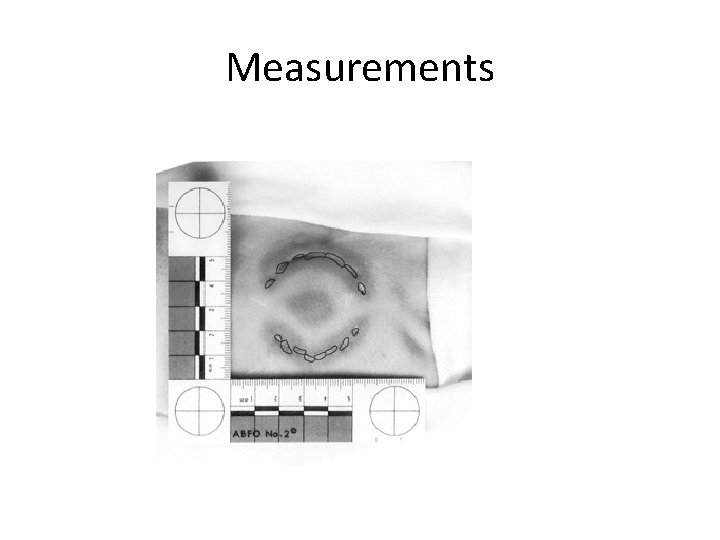
Measurements
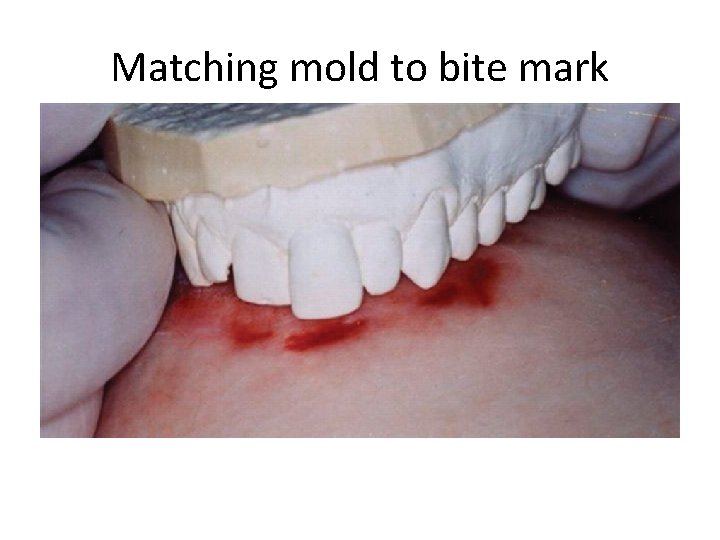
Matching mold to bite mark
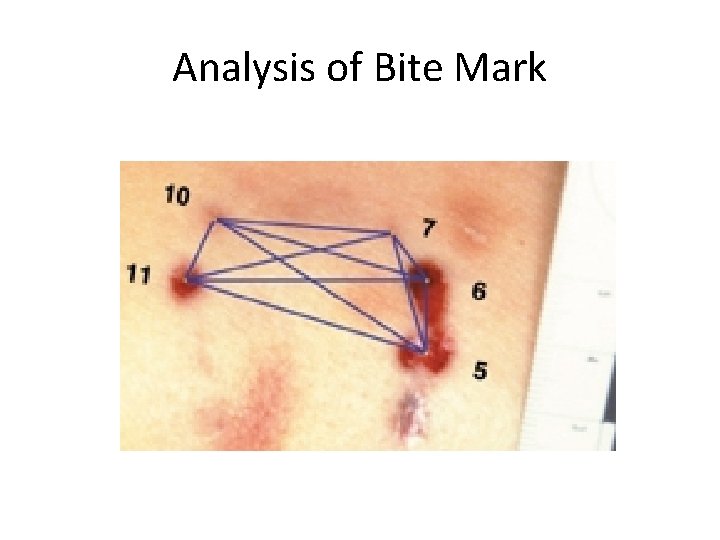
Analysis of Bite Mark
Becoming a Forensic Dentist • In the United States, many forensic dentists are certified by the American Board of Forensic Odontology. There is a long list of qualifications to obtain this certification, including: • Complete coursework at an approved school such as the Armed Forces Institute of Pathology or the School of Dentistry at the University of Texas at San Antonio • Be present and participate in meetings of national organizations related to forensics or forensic dentistry • Work with a coroner, medical examiner's office or law enforcement for at least two years • Work on at least 25 forensic dental cases, including 15 positive identification cases and two bite-mark cases
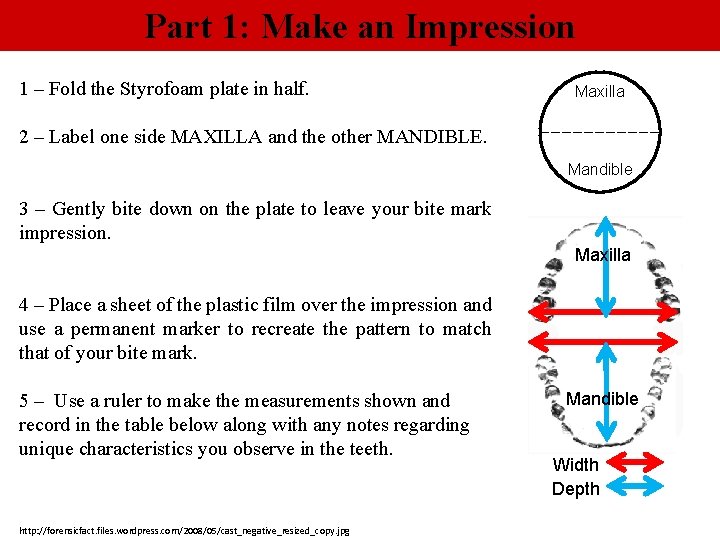
Part 1: Make an Impression 1 – Fold the Styrofoam plate in half. Maxilla 2 – Label one side MAXILLA and the other MANDIBLE. Mandible 3 – Gently bite down on the plate to leave your bite mark impression. Maxilla 4 – Place a sheet of the plastic film over the impression and use a permanent marker to recreate the pattern to match that of your bite mark. 5 – Use a ruler to make the measurements shown and record in the table below along with any notes regarding unique characteristics you observe in the teeth. http: //forensicfact. files. wordpress. com/2008/05/cast_negative_resized_copy. jpg Mandible Width Depth
- Slides: 13