
bisc 102 library research workshop checking in Have
bisc 102 library research workshop
{ checking in } Have you had an SFU Library research session before? (A) Yes (B) No (C) Don’t remember
{ two topics } You have two different research assignments to choose from. We will be focusing on the endangered species assignment today, but the research process for both assignments is very similar.
{ agenda } 1) The IUCN Red List of Threatened Species 2) Researching your topic 3) Evaluating your sources 4) Finding scholarly articles 5) Citing sources 6) Getting help
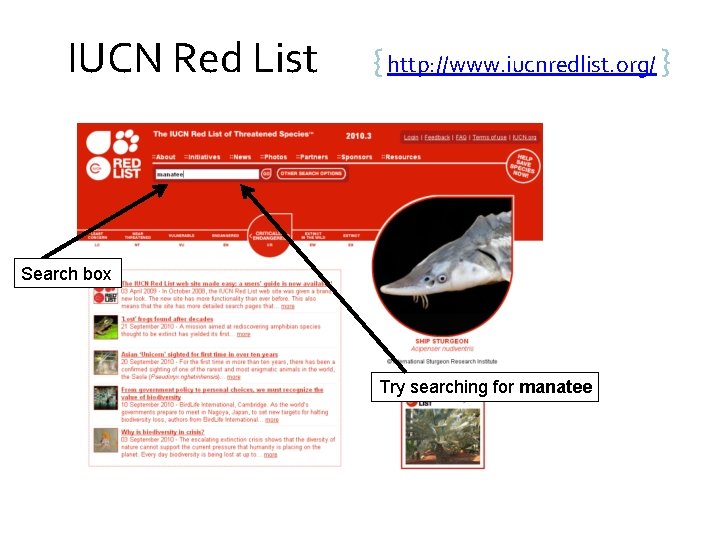
IUCN Red List { http: //www. iucnredlist. org/ } Search box Try searching for manatee
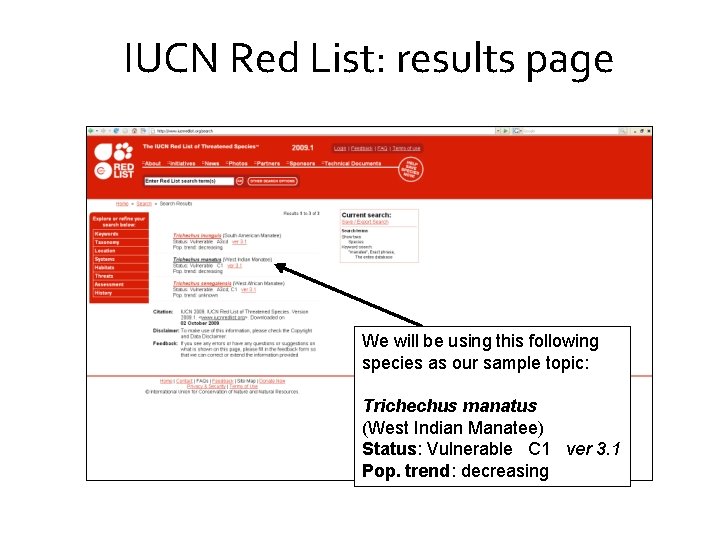
IUCN Red List: results page We will be using this following species as our sample topic: Trichechus manatus (West Indian Manatee) Status: Vulnerable C 1 ver 3. 1 Pop. trend: decreasing
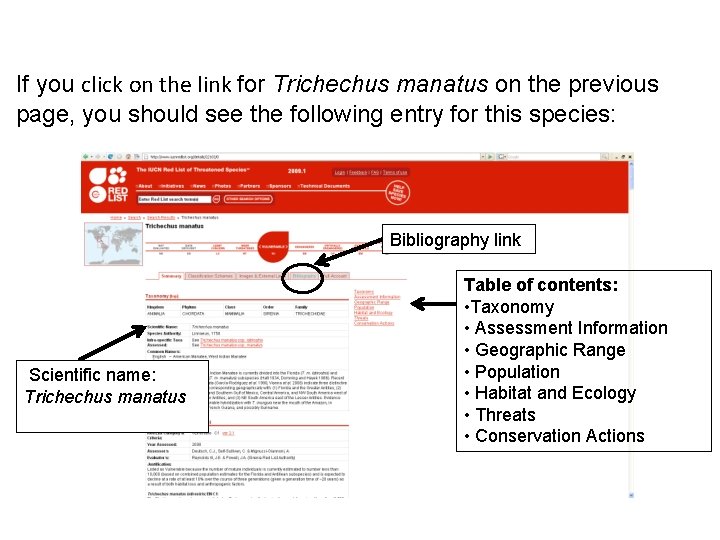
If you click on the link for Trichechus manatus on the previous page, you should see the following entry for this species: Bibliography link Scientific name: Trichechus manatus Table of contents: • Taxonomy • Assessment Information • Geographic Range • Population • Habitat and Ecology • Threats • Conservation Actions
{ choosing your species } Note: It will be easier to find information on your species if you choose an organism that has been studied by researchers extensively. – This may seem obvious, but it’s worth considering before you commit to a species.
the research process
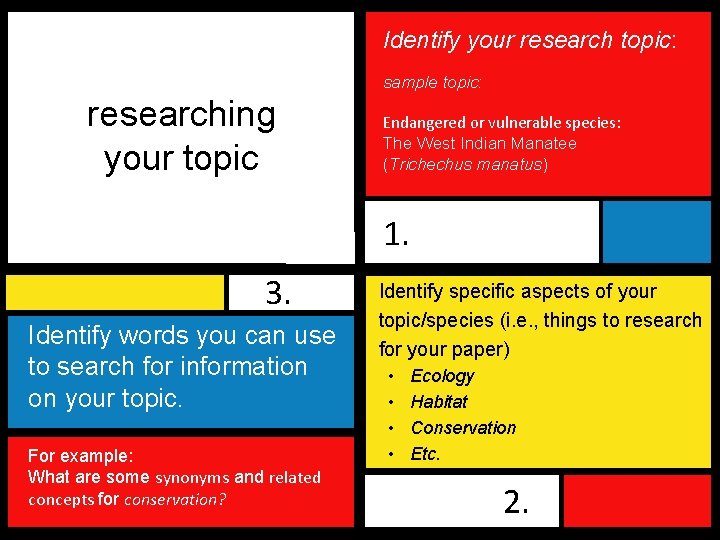
Identify your research topic: researching your topic sample topic: Endangered or vulnerable species: The West Indian Manatee (Trichechus manatus) 1. 3. Identify words you can use to search for information on your topic. For example: What are some synonyms and related concepts for conservation? Identify specific aspects of your topic/species (i. e. , things to research for your paper) • • Ecology Habitat Conservation Etc. 2.
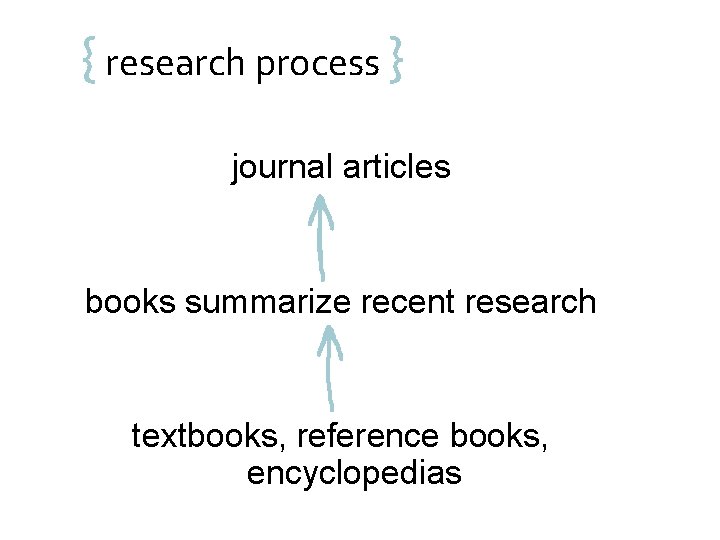
{ research process } journal articles books summarize recent research textbooks, reference books, encyclopedias
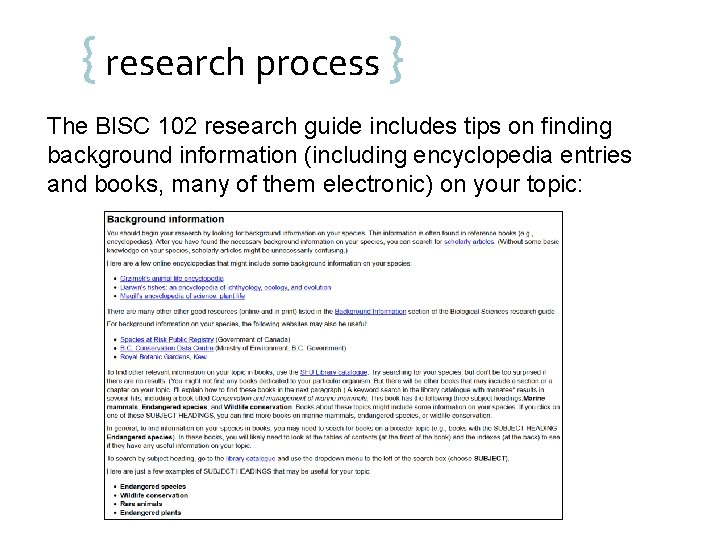
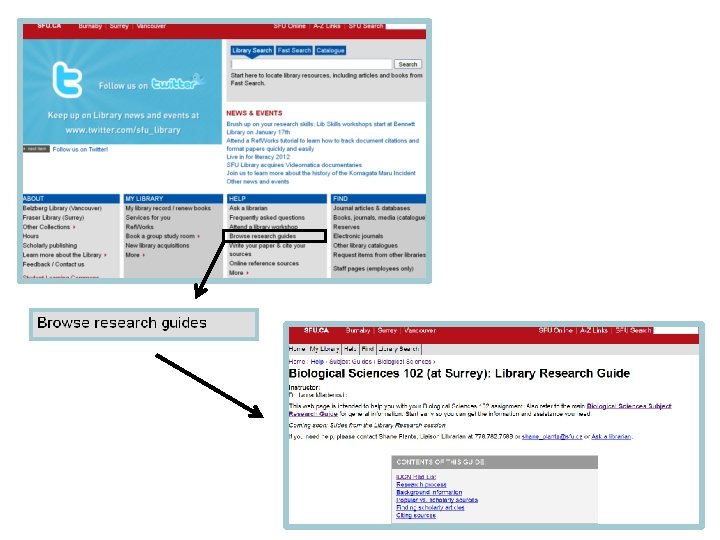
{ research process } The BISC 102 research guide includes tips on finding background information (including encyclopedia entries and books, many of them electronic) on your topic:
evaluating your sources
{ evaluating sources } You need to find scholarly sources relevant to your topic. Are either of the article shown on your handout scholarly sources? a) How can you tell? b) BONUS: What does “peer reviewed” mean?
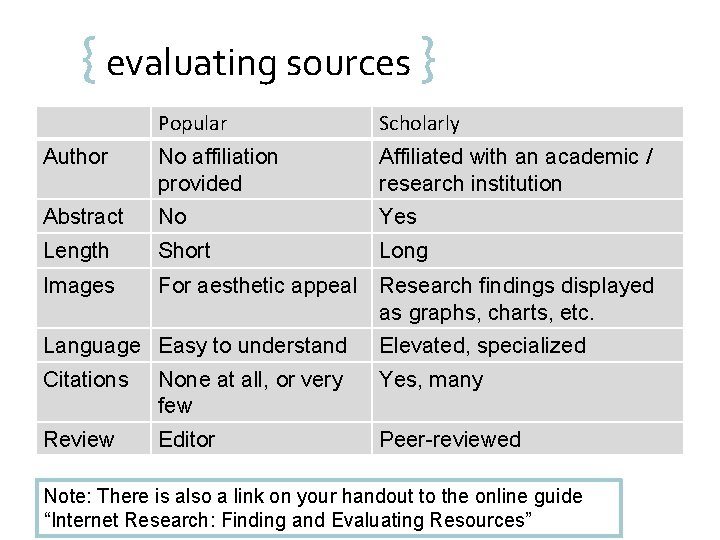
{ evaluating sources } Popular Scholarly Author No affiliation provided Affiliated with an academic / research institution Abstract No Yes Length Short Long Images For aesthetic appeal Research findings displayed as graphs, charts, etc. Language Easy to understand Elevated, specialized Citations None at all, or very few Yes, many Review Editor Peer-reviewed Note: There is also a link on your handout to the online guide “Internet Research: Finding and Evaluating Resources”

finding scholarly sources
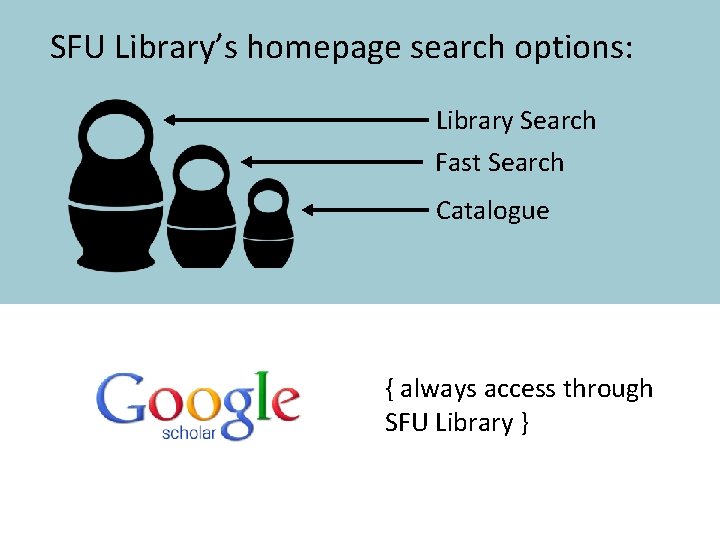
SFU Library’s homepage search options: Library Search Fast Search Catalogue { always access through SFU Library }
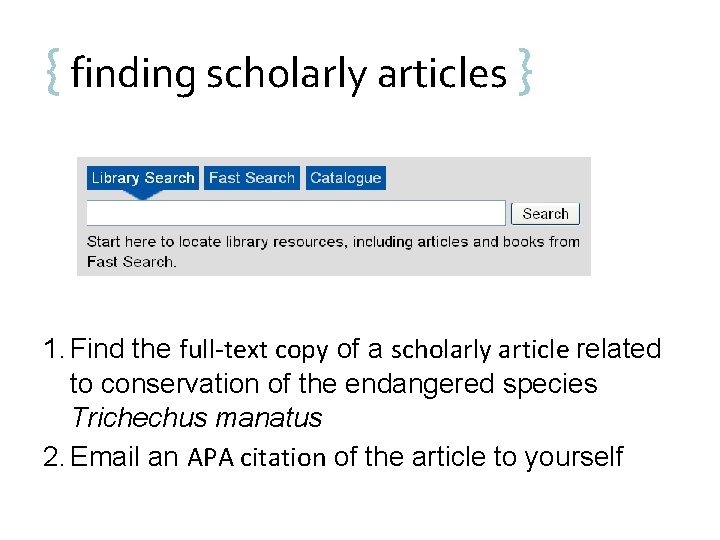
{ finding scholarly articles } 1. Find the full-text copy of a scholarly article related to conservation of the endangered species Trichechus manatus 2. Email an APA citation of the article to yourself
{ citing sources } • What information don’t you need to cite? • What information do you need to cite?
{ the very basics of APA } You need to cite each source in two places: • In the body of the paper – Called an in-text citation • At the back of the paper – In the list of References The BISC 102 research guide includes links to: • an APA style guide • a guide on citing images in APA style
Image credits All icons used were published with CC-BY licenses or are in the public domain. They all come from The Noun Project: thenounproject. com In order of appearance: Tree by Alberto Guerra Quintanilla Lungs by chris dawson Brain Machine Interface by HYPERMORGEN Gears by Mark Shorter Stethoscope by Olivier Guin Light Bulb by Olivier Guin Curious by Stephen Borengasser Glasses by Cor Tiemens Okay by kobieta Russian Doll by Dmitriy Lagunov Network by Mister Pixel Signpost by Juan Pablo Bravo Juggle by Anstey. Design Thinking by Timothy Dilich
Getting help The library provides many ways to get help: - In-person at the reference desk - Telephone - Email - IM - Text message - Student Learning Commons http: //www. lib. sfu. ca/help/ask-us/
Any questions?
- Slides: 24