
Birth of the Republican Party Chapter 10 Section
Birth of the Republican Party Chapter 10 Section 3 Objective 3. 01
Objective 3. 01 • Trace the economic, social, and political events from the Mexican War to the outbreak of the Civil War.
New Political Parties Emerge • Old political parties were breaking up over the issue of slavery • Whigs deeply divided
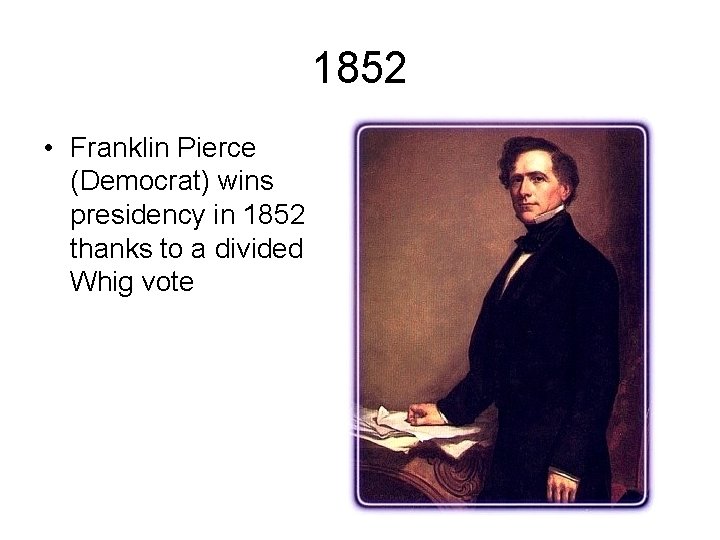
1852 • Franklin Pierce (Democrat) wins presidency in 1852 thanks to a divided Whig vote
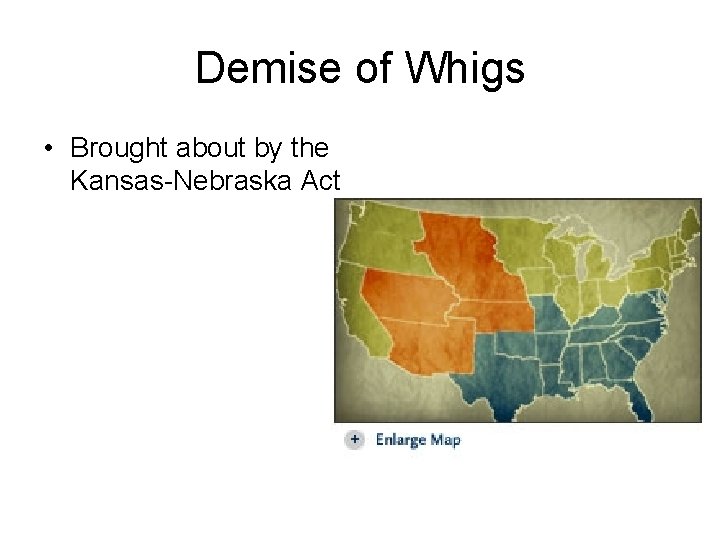
Demise of Whigs • Brought about by the Kansas-Nebraska Act
Know-Nothings • Formed around nativists • Nativism – favoring of native-born Americans over immigrants – also anti. Catholic • Know-Nothing (“American”) Party founded in 1854 • Know-Nothings split over issue of slavery in the territories
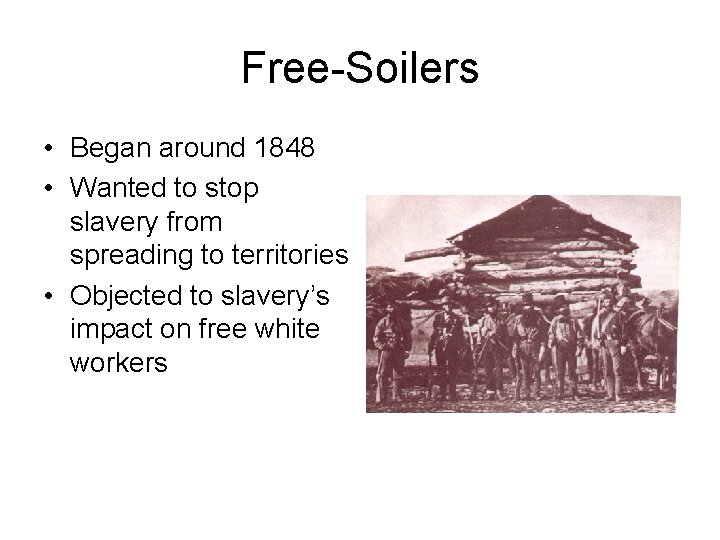
Free-Soilers • Began around 1848 • Wanted to stop slavery from spreading to territories • Objected to slavery’s impact on free white workers
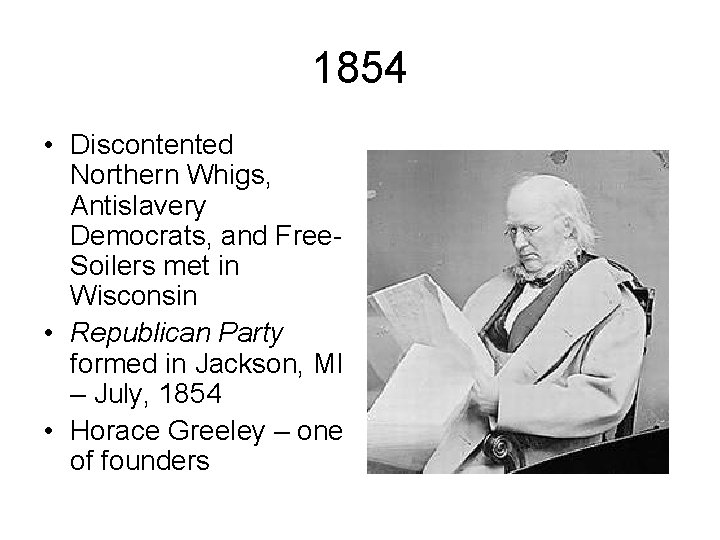
1854 • Discontented Northern Whigs, Antislavery Democrats, and Free. Soilers met in Wisconsin • Republican Party formed in Jackson, MI – July, 1854 • Horace Greeley – one of founders
Republican platform? • United to opposing the Kansas-Nebraska Act and the extension of slavery into territories • Strong enough to challenge for presidency by 1856
Election of 1856 • John C. Fremont (California) – Republican • Millard Fillmore – Southern Know-Nothing • James Buchanan – Democrat – Northerner with Southern support • Buchanan only truly nat’l candidate
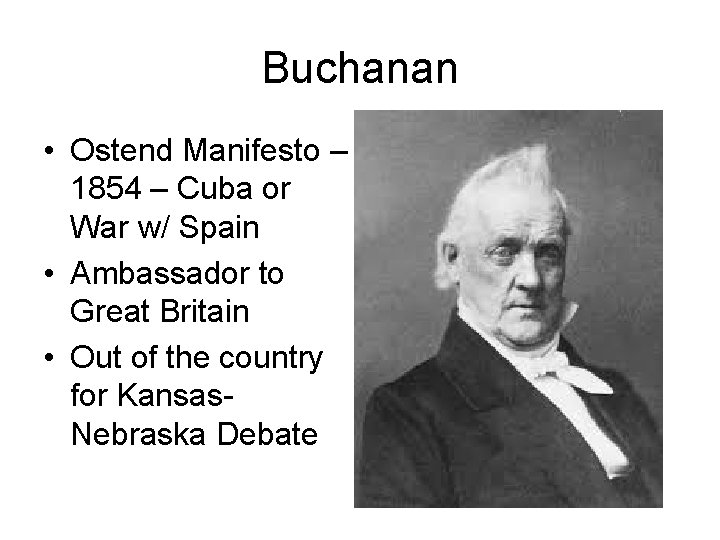
Buchanan • Ostend Manifesto – 1854 – Cuba or War w/ Spain • Ambassador to Great Britain • Out of the country for Kansas. Nebraska Debate
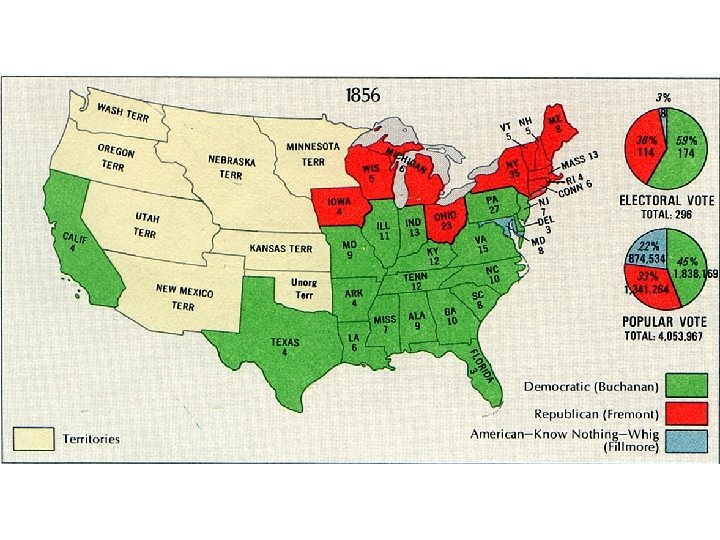
Buchanan wins • Election shows 3 things: • Democrats could win w/ a national candidate • Know-Nothings in decline • Republican Party becoming a force in the North
- Slides: 14