
BIRTH OF RENAISSANCE RENAISSANCE French for the word
BIRTH OF RENAISSANCE

RENAISSANCE - French for the word “rebirth” - Typically refers to a period of time from 14 th – 16 th century in Europe - Began in Italy (primarily Florence and Sienna - Renewed interest in Classicism - Growth of humanism in cultural attitude - Human values and interests are chief concern - Humanistic attitude is represented in all arts (visual and literature)
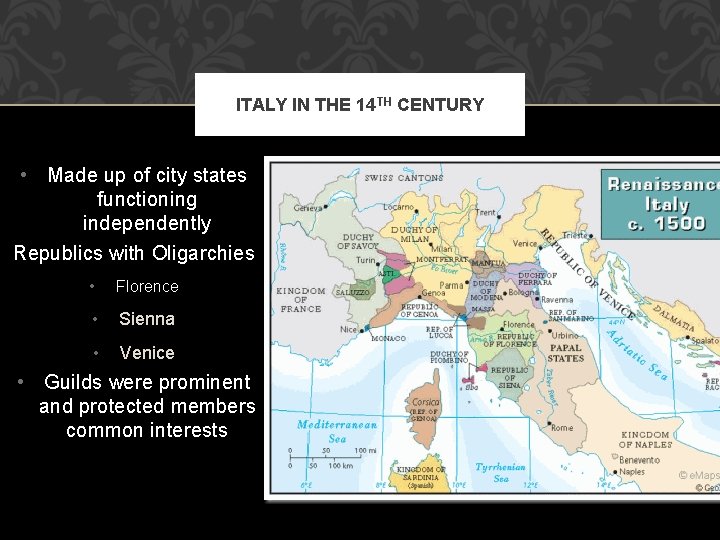
ITALY IN THE 14 TH CENTURY • Made up of city states functioning independently Republics with Oligarchies • Florence • Sienna • Venice • Guilds were prominent and protected members common interests
HISTORICAL CONTEXT • 1340 Black Death the Bubonic Plague stimulated religious bequests and encouraged the production and commissioning of devotional images • 1305 Great Papal Schiscm • Latin was the language of the church
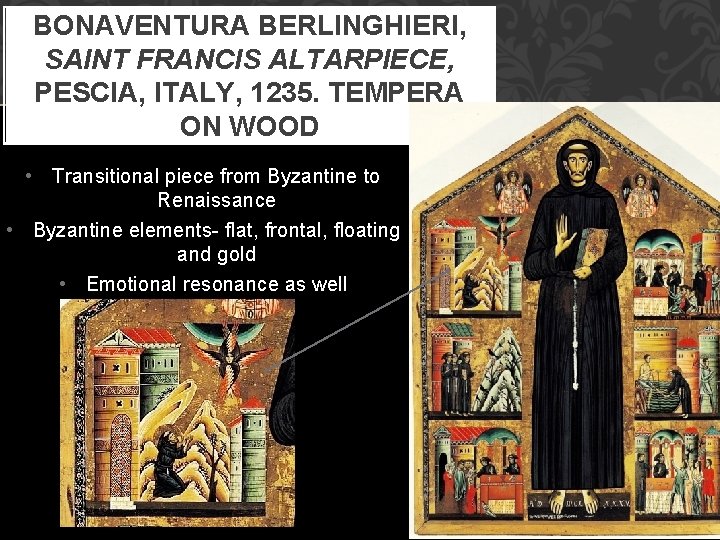
BONAVENTURA BERLINGHIERI, SAINT FRANCIS ALTARPIECE, PESCIA, ITALY, 1235. TEMPERA ON WOOD • Transitional piece from Byzantine to Renaissance • Byzantine elements- flat, frontal, floating and gold • Emotional resonance as well
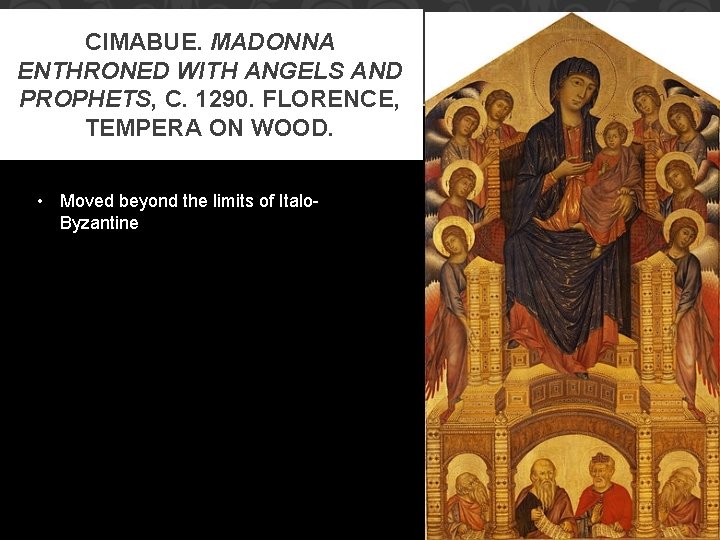
CIMABUE. MADONNA ENTHRONED WITH ANGELS AND PROPHETS, C. 1290. FLORENCE, TEMPERA ON WOOD. • Moved beyond the limits of Italo. Byzantine
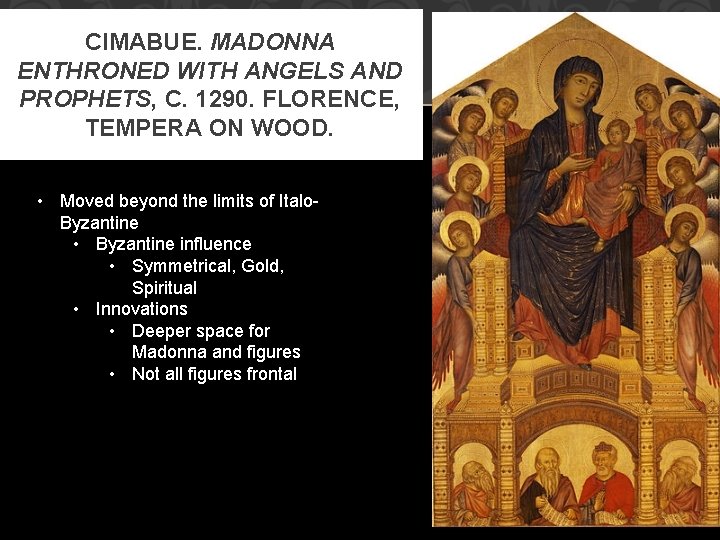
CIMABUE. MADONNA ENTHRONED WITH ANGELS AND PROPHETS, C. 1290. FLORENCE, TEMPERA ON WOOD. • Moved beyond the limits of Italo. Byzantine • Byzantine influence • Symmetrical, Gold, Spiritual • Innovations • Deeper space for Madonna and figures • Not all figures frontal
GIOTTO DI BONDONE -considered father of pictorial art • Pictorial expression based on observation and scientific study • Florentine • Not much known about his life • Much speculation about which works are attributed to him • Teacher was possibly Cimabue
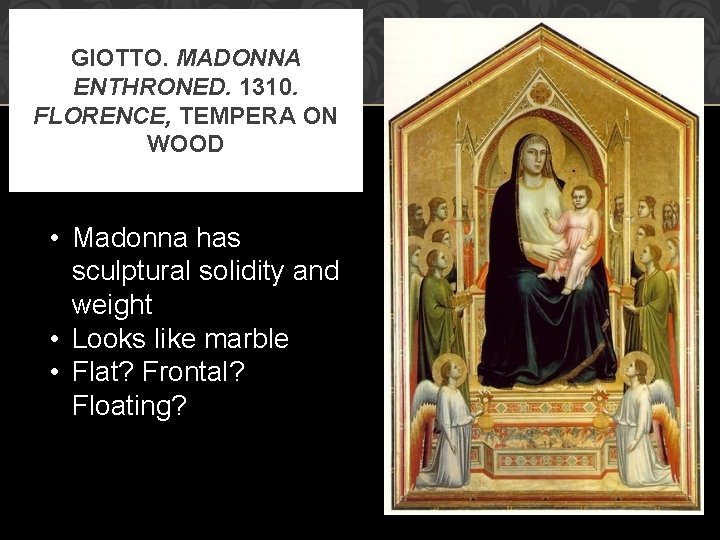
GIOTTO. MADONNA ENTHRONED. 1310. FLORENCE, TEMPERA ON WOOD • Madonna has sculptural solidity and weight • Looks like marble • Flat? Frontal? Floating?
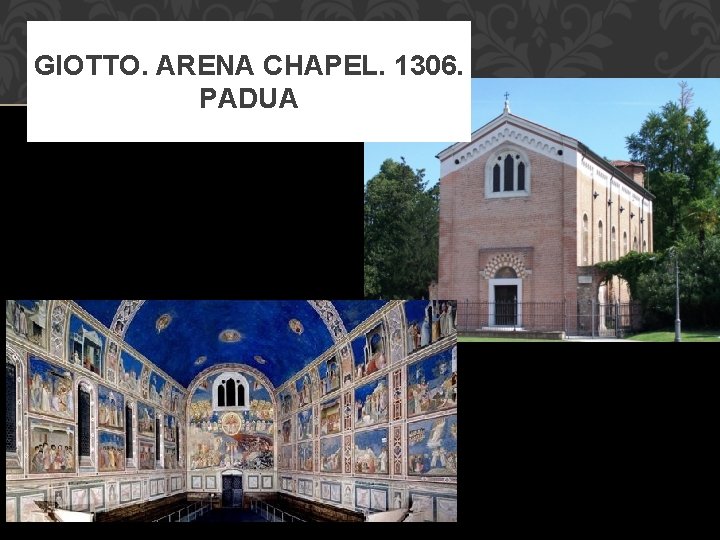
GIOTTO. ARENA CHAPEL. 1306. PADUA
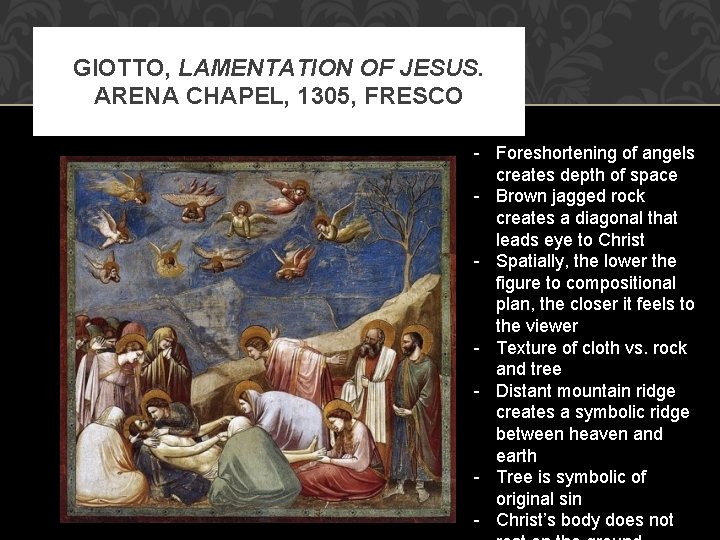
GIOTTO, LAMENTATION OF JESUS. ARENA CHAPEL, 1305, FRESCO - Foreshortening of angels creates depth of space - Brown jagged rock creates a diagonal that leads eye to Christ - Spatially, the lower the figure to compositional plan, the closer it feels to the viewer - Texture of cloth vs. rock and tree - Distant mountain ridge creates a symbolic ridge between heaven and earth - Tree is symbolic of original sin - Christ’s body does not
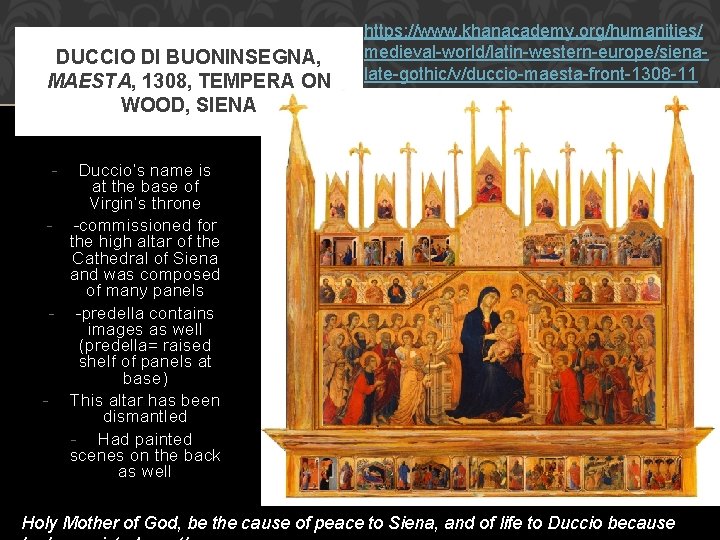
DUCCIO DI BUONINSEGNA, MAESTA, 1308, TEMPERA ON WOOD, SIENA https: //www. khanacademy. org/humanities/ medieval-world/latin-western-europe/sienalate-gothic/v/duccio-maesta-front-1308 -11 - Duccio’s name is at the base of Virgin’s throne - -commissioned for the high altar of the Cathedral of Siena and was composed of many panels - -predella contains images as well (predella= raised shelf of panels at base) - This altar has been dismantled - Had painted scenes on the back as well Holy Mother of God, be the cause of peace to Siena, and of life to Duccio because
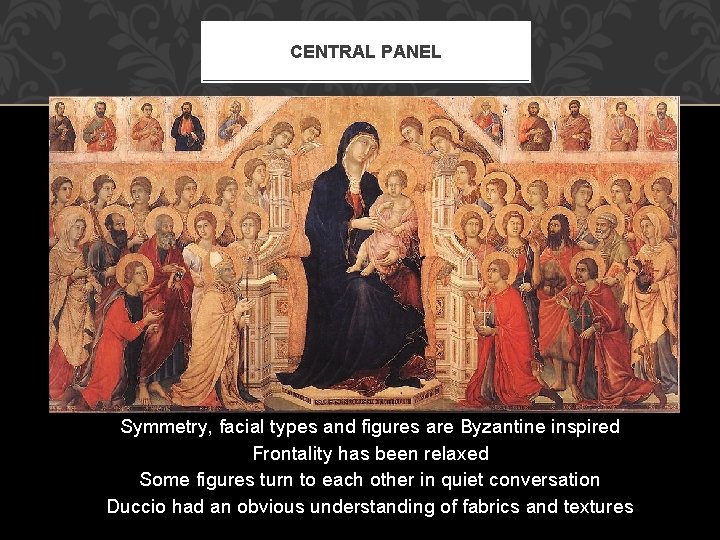
CENTRAL PANEL Symmetry, facial types and figures are Byzantine inspired Frontality has been relaxed Some figures turn to each other in quiet conversation Duccio had an obvious understanding of fabrics and textures
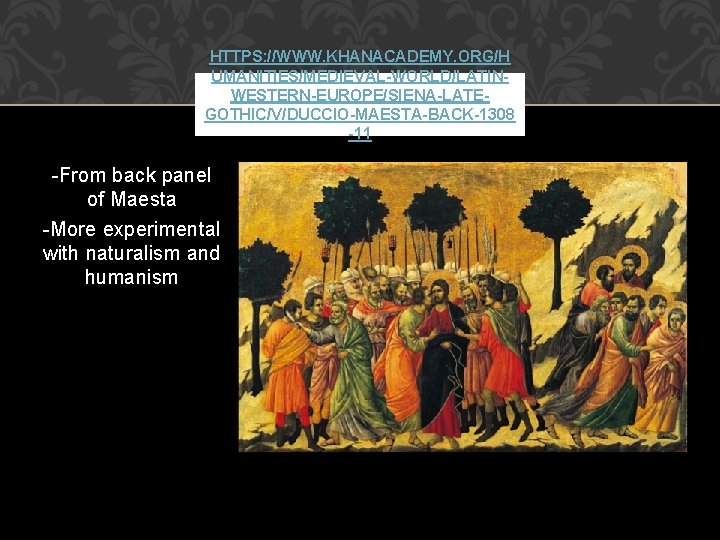
HTTPS: //WWW. KHANACADEMY. ORG/H UMANITIES/MEDIEVAL-WORLD/LATINWESTERN-EUROPE/SIENA-LATEGOTHIC/V/DUCCIO-MAESTA-BACK-1308 -11 -From back panel of Maesta -More experimental with naturalism and humanism
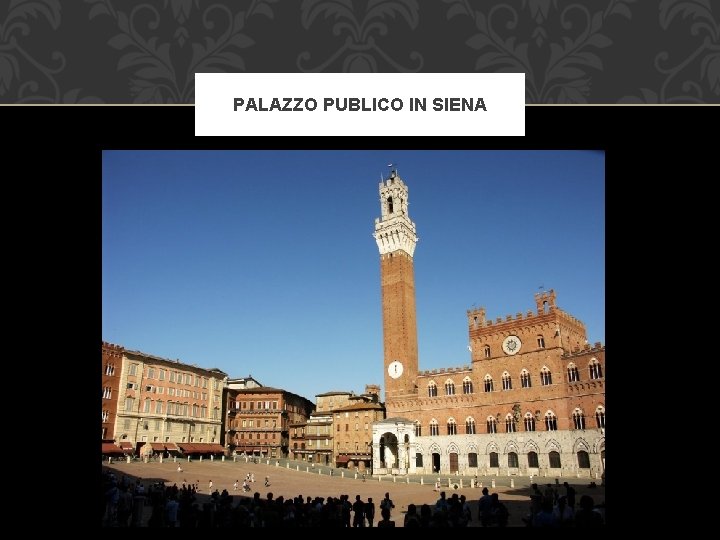
PALAZZO PUBLICO IN SIENA
- Slides: 15