
Birth of Civilization Paleolithic Age Neolithic Age Origins
Birth of Civilization Paleolithic Age Neolithic Age Origins & Attributes of a Complex Society
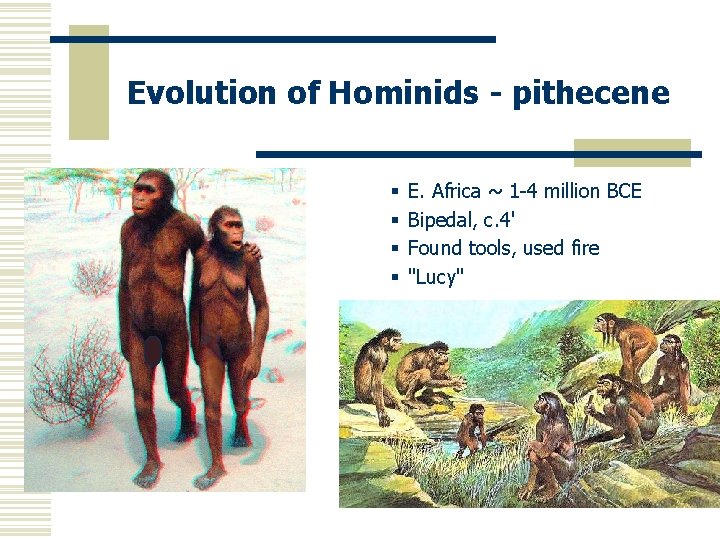
Evolution of Hominids - pithecene § § E. Africa ~ 1 -4 million BCE Bipedal, c. 4' Found tools, used fire "Lucy"
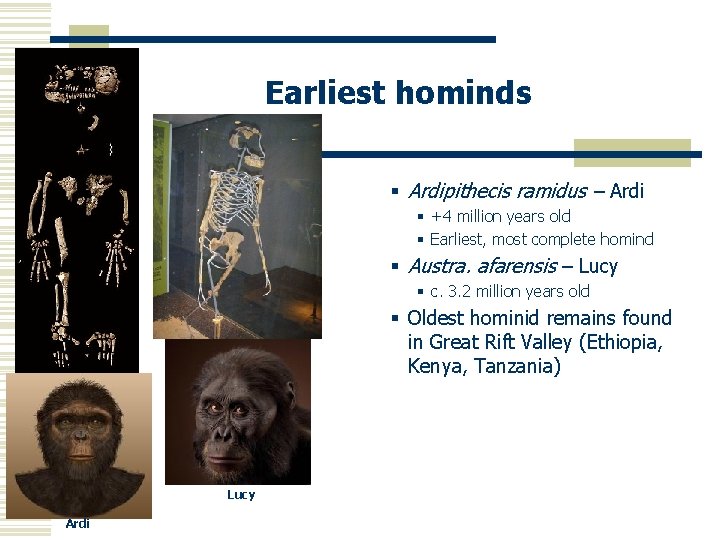
Earliest hominds § Ardipithecis ramidus – Ardi § +4 million years old § Earliest, most complete homind § Austra. afarensis – Lucy § c. 3. 2 million years old § Oldest hominid remains found in Great Rift Valley (Ethiopia, Kenya, Tanzania) Lucy Ardi
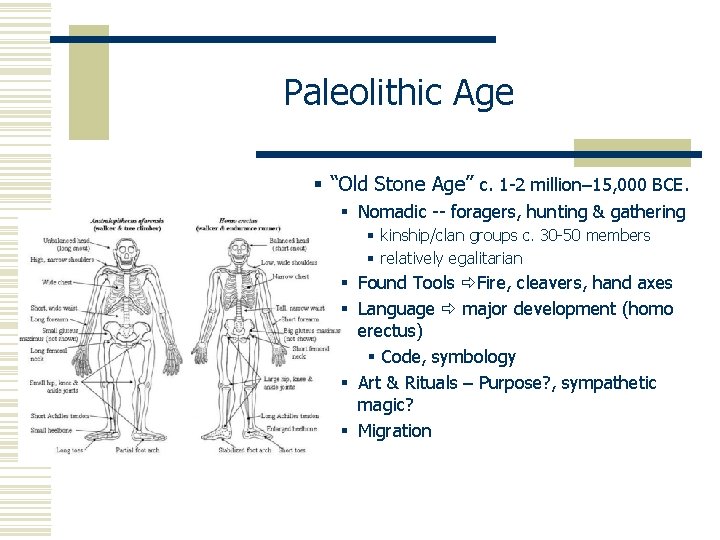
Paleolithic Age § “Old Stone Age” c. 1 -2 million– 15, 000 BCE. § Nomadic -- foragers, hunting & gathering § kinship/clan groups c. 30 -50 members § relatively egalitarian § Found Tools Fire, cleavers, hand axes § Language major development (homo erectus) § Code, symbology § Art & Rituals – Purpose? , sympathetic magic? § Migration
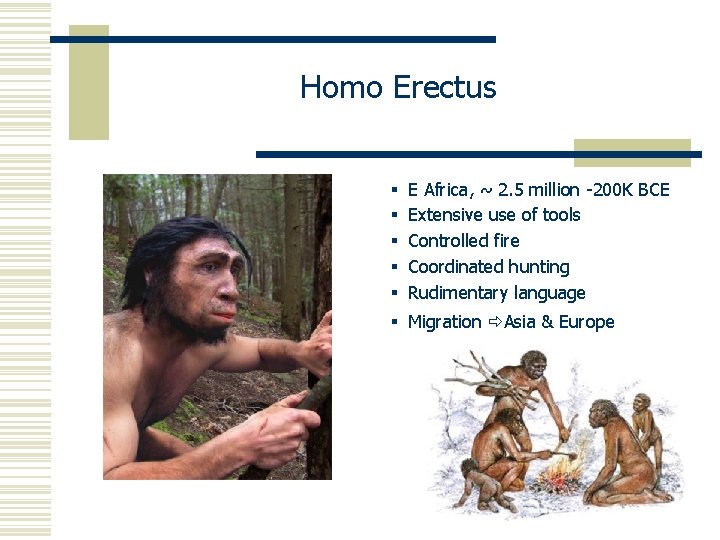
Homo Erectus § § § E Africa, ~ 2. 5 million -200 K BCE Extensive use of tools Controlled fire Coordinated hunting Rudimentary language § Migration Asia & Europe
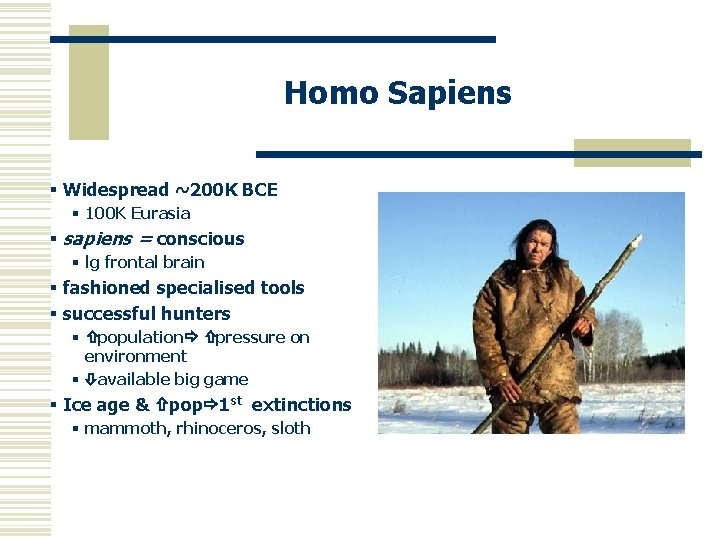
Homo Sapiens § Widespread ~200 K BCE § 100 K Eurasia § sapiens = conscious § lg frontal brain § fashioned specialised tools § successful hunters § population pressure on environment § available big game § Ice age & pop 1 st extinctions § mammoth, rhinoceros, sloth
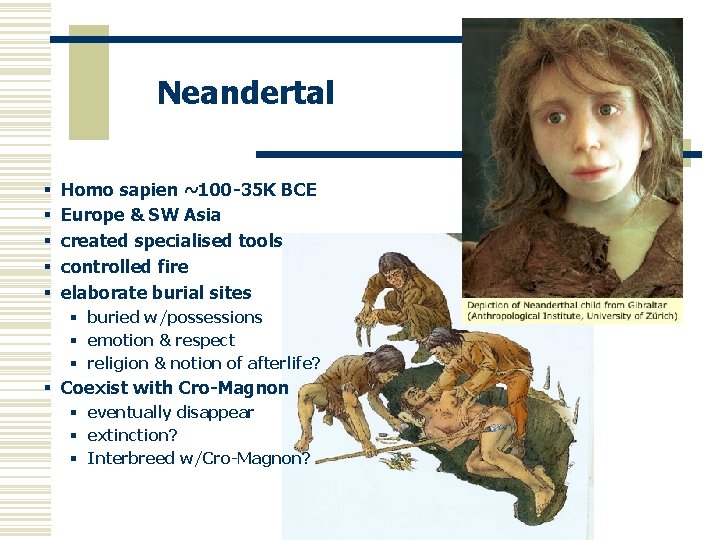
Neandertal § § § Homo sapien ~100 -35 K BCE Europe & SW Asia created specialised tools controlled fire elaborate burial sites § buried w/possessions § emotion & respect § religion & notion of afterlife? § Coexist with Cro-Magnon § eventually disappear § extinction? § Interbreed w/Cro-Magnon?
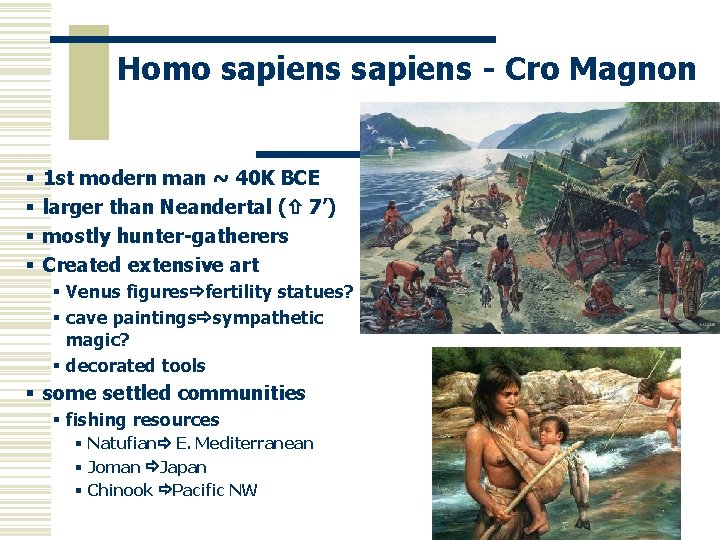
Homo sapiens - Cro Magnon § § 1 st modern man ~ 40 K BCE larger than Neandertal ( 7’) mostly hunter-gatherers Created extensive art § Venus figures fertility statues? § cave paintings sympathetic magic? § decorated tools § some settled communities § fishing resources § Natufian E. Mediterranean § Joman Japan § Chinook Pacific NW
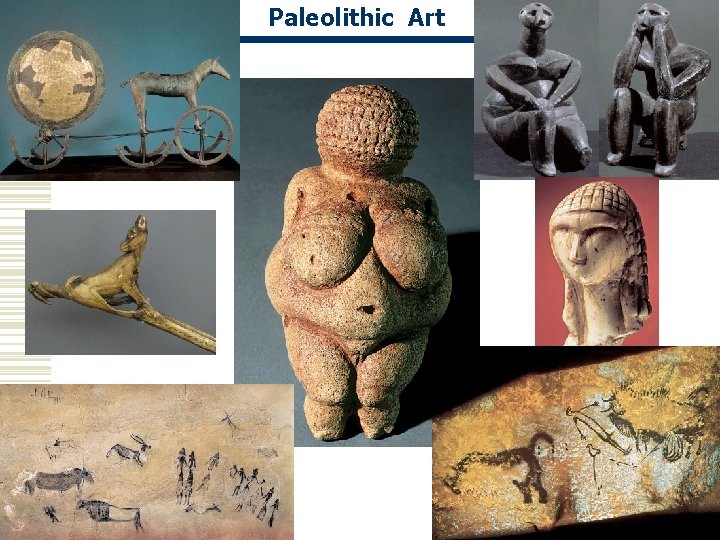
Paleolithic Art
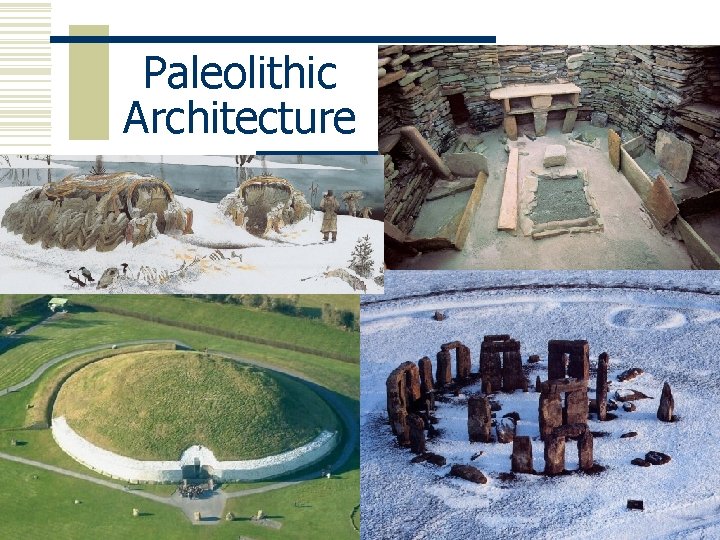
Paleolithic Architecture
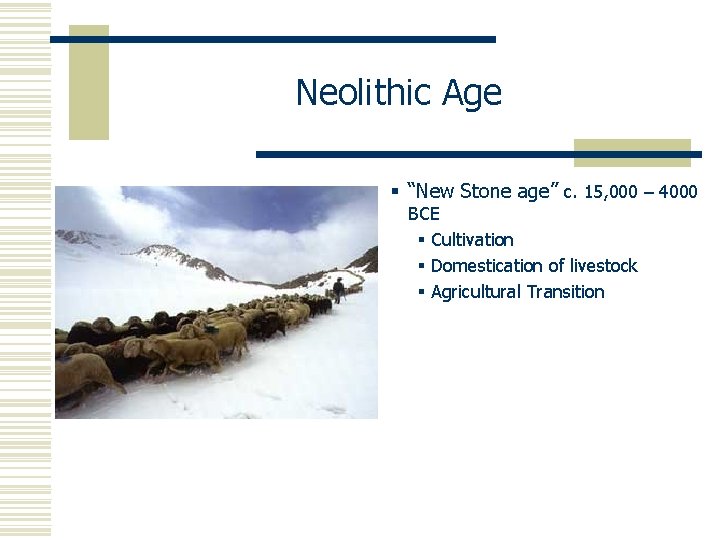
Neolithic Age § “New Stone age” c. 15, 000 – 4000 BCE § Cultivation § Domestication of livestock § Agricultural Transition
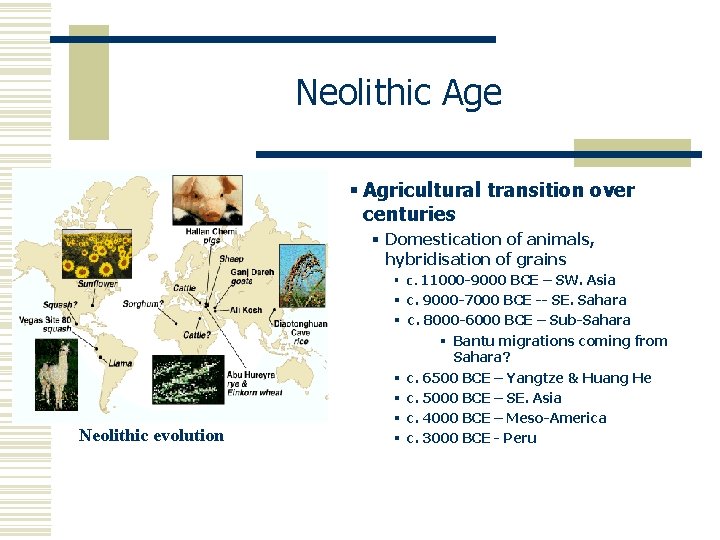
Neolithic Age § Agricultural transition over centuries § Domestication of animals, hybridisation of grains § c. 11000 -9000 BCE – SW. Asia Neolithic evolution § c. 9000 -7000 BCE -- SE. Sahara § c. 8000 -6000 BCE – Sub-Sahara § Bantu migrations coming from Sahara? § c. 6500 BCE – Yangtze & Huang He § c. 5000 BCE – SE. Asia § c. 4000 BCE – Meso-America § c. 3000 BCE - Peru
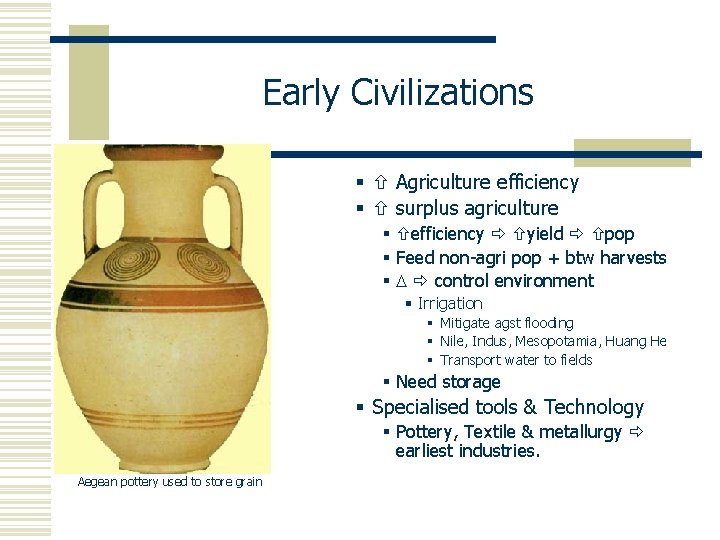
Early Civilizations § Agriculture efficiency § surplus agriculture § efficiency yield pop § Feed non-agri pop + btw harvests § control environment § Irrigation § Mitigate agst flooding § Nile, Indus, Mesopotamia, Huang He § Transport water to fields § Need storage § Specialised tools & Technology Çatal Hüyük Aegean pottery used to store grain § Pottery, Textile & metallurgy earliest industries.
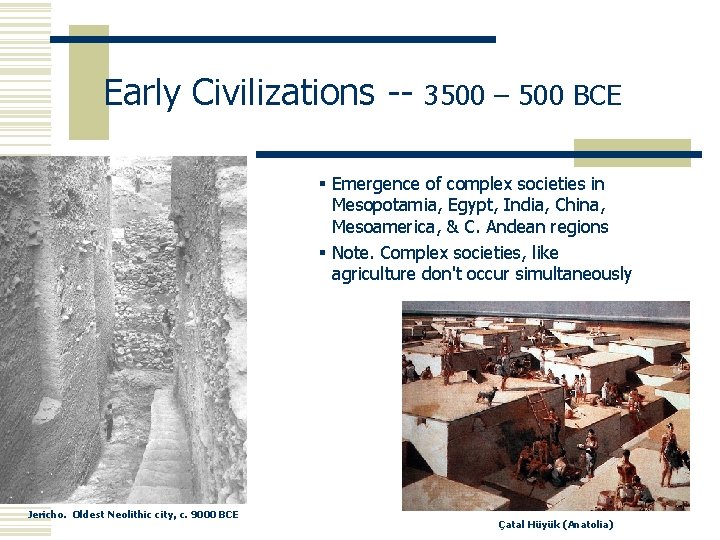
Early Civilizations -- 3500 – 500 BCE § Emergence of complex societies in Mesopotamia, Egypt, India, China, Mesoamerica, & C. Andean regions § Note. Complex societies, like agriculture don't occur simultaneously Jericho. Oldest Neolithic city, c. 9000 BCE Çatal Hüyük (Anatolia)
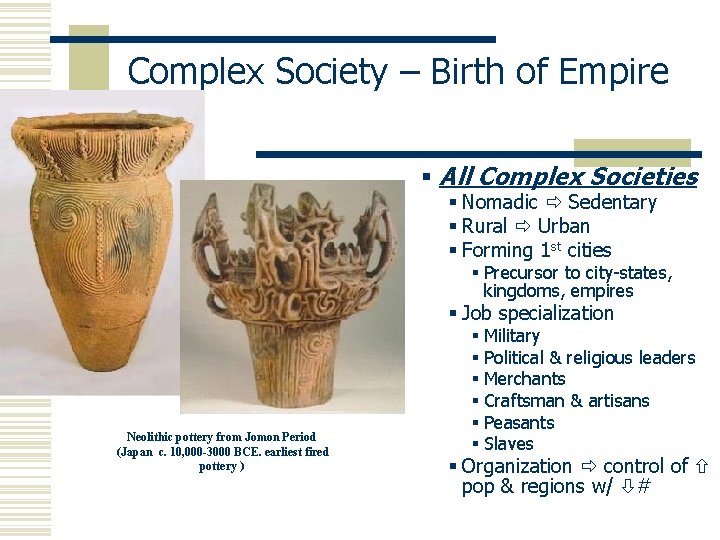
Complex Society – Birth of Empire § All Complex Societies § Nomadic Sedentary § Rural Urban § Forming 1 st cities § Precursor to city-states, kingdoms, empires § Job specialization Neolithic pottery from Jomon Period (Japan c. 10, 000 -3000 BCE. earliest fired pottery ) § Military § Political & religious leaders § Merchants § Craftsman & artisans § Peasants § Slaves § Organization control of pop & regions w/ #
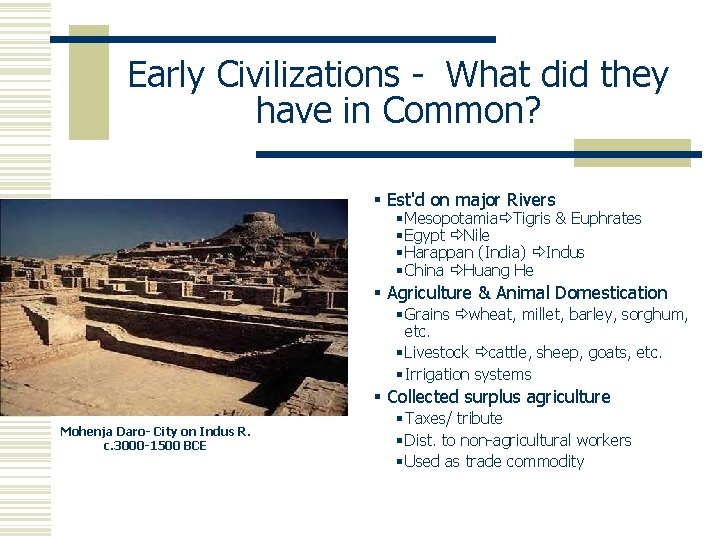
Early Civilizations - What did they have in Common? § Est'd on major Rivers § Mesopotamia Tigris & Euphrates § Egypt Nile § Harappan (India) Indus § China Huang He § Agriculture & Animal Domestication § Grains wheat, millet, barley, sorghum, etc. § Livestock cattle, sheep, goats, etc. § Irrigation systems § Collected surplus agriculture Mohenja Daro- City on Indus R. c. 3000 -1500 BCE § Taxes/ tribute § Dist. to non-agricultural workers § Used as trade commodity
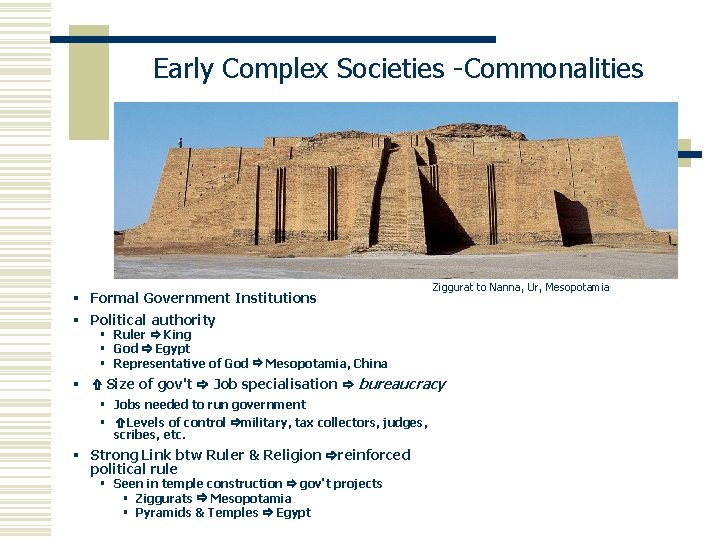
Early Complex Societies -Commonalities § Formal Government Institutions Ziggurat to Nanna, Ur, Mesopotamia § Political authority § Ruler King § God Egypt § Representative of God Mesopotamia, China § Size of gov't Job specialisation bureaucracy § Jobs needed to run government § Levels of control military, tax collectors, judges, scribes, etc. § Strong Link btw Ruler & Religion reinforced political rule § Seen in temple construction gov't projects § Ziggurats Mesopotamia § Pyramids & Temples Egypt
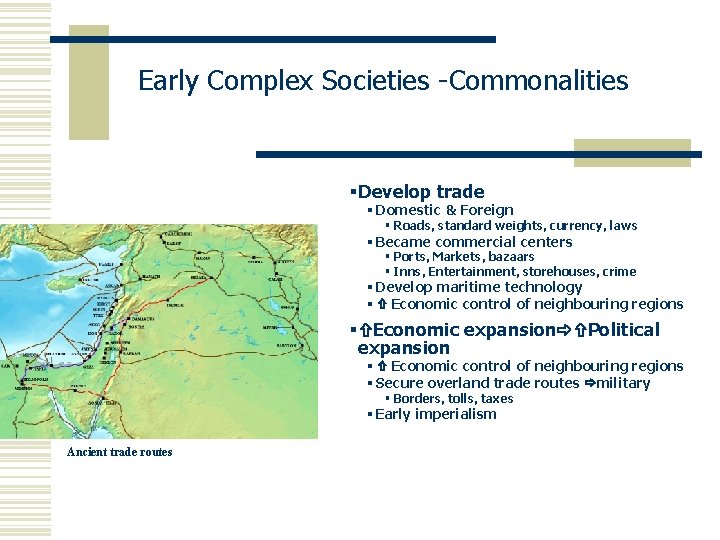
Early Complex Societies -Commonalities §Develop trade § Domestic & Foreign § Roads, standard weights, currency, laws § Became commercial centers § Ports, Markets, bazaars § Inns, Entertainment, storehouses, crime § Develop maritime technology § Economic control of neighbouring regions § Economic expansion Political expansion § Economic control of neighbouring regions § Secure overland trade routes military § Borders, tolls, taxes § Early imperialism Ancient trade routes
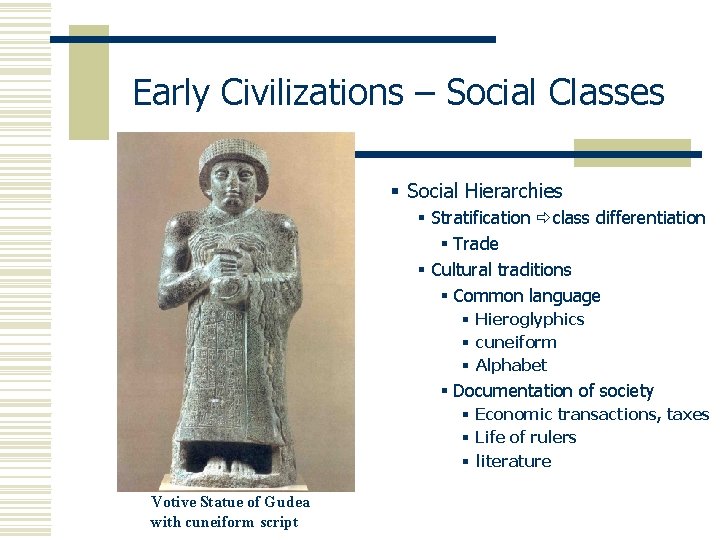
Early Civilizations – Social Classes § Social Hierarchies § Stratification class differentiation § Trade § Cultural traditions § Common language § Hieroglyphics § cuneiform § Alphabet § Documentation of society § Economic transactions, taxes § Life of rulers § literature Votive Statue of Gudea with cuneiform script
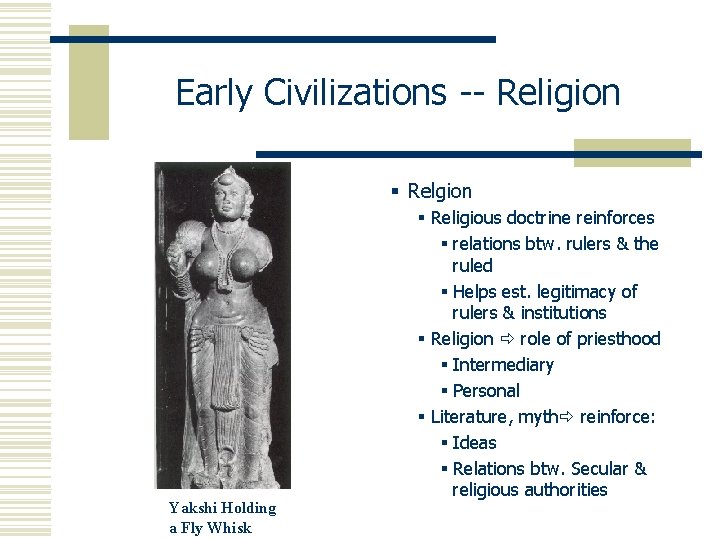
Early Civilizations -- Religion § Relgion Yakshi Holding a Fly Whisk § Religious doctrine reinforces § relations btw. rulers & the ruled § Helps est. legitimacy of rulers & institutions § Religion role of priesthood § Intermediary § Personal § Literature, myth reinforce: § Ideas § Relations btw. Secular & religious authorities
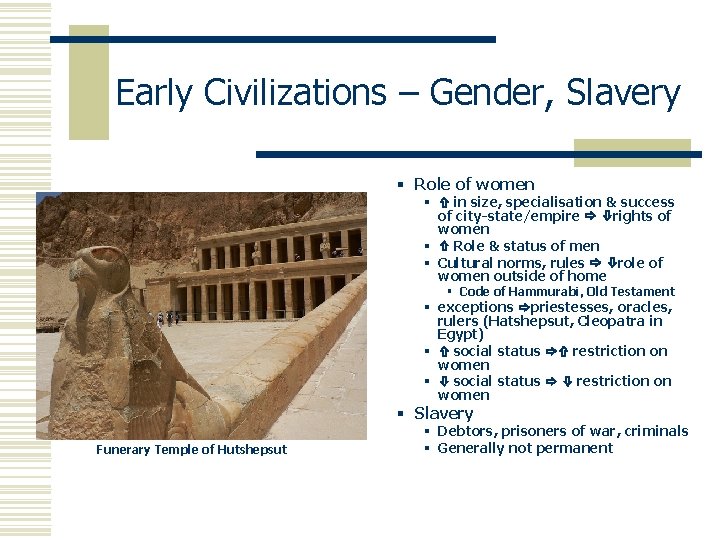
Early Civilizations – Gender, Slavery § Role of women § in size, specialisation & success of city-state/empire rights of women § Role & status of men § Cultural norms, rules role of women outside of home § Code of Hammurabi, Old Testament § exceptions priestesses, oracles, rulers (Hatshepsut, Cleopatra in Egypt) § social status restriction on women § social status restriction on women § Slavery Funerary Temple of Hutshepsut § Debtors, prisoners of war, criminals § Generally not permanent
- Slides: 21