
Birmingham healthy Eating and Active lifestyle for CHildren
Birmingham healthy Eating and Active lifestyle for CHildren Study Investigators: Collaborators: Research team: Peymané Adab (PI), Tim Barrett, Janet Cade, KK Cheng, Amanda Daley, Joan Duda, Ulf Ekelund, Paramjit Gill, Miranda Pallan, Jayne Parry Raj Bhopal, Michelle Howard, Eleanor Mc. Gee, Sandra Passmore Victoria Brookes; Miriam Banting; Sheila Hirst Funded by: National Prevention Research Initiative http: //www. npri. org. uk
BEACHe. S Study: Aims • To develop a childhood obesity prevention intervention aimed at children aged 6 to 8, particularly focusing on South Asians – Using lay knowledge, evidence base and expert input • To pilot developed intervention in an exploratory trial – Primary and secondary outcomes measured in school children

MRC framework for developing and evaluating complex interventions Campbell, M. et al. BMJ 2000; 321: 694 -696
BEACHe. S Study Methodology • Setting – 8 Primary schools & communities in Birmingham with >50% South Asian pupils (Indian, Pakistani or Bangladeshi) • Phase I – Focus groups run with a range of local stakeholders – Views on childhood obesity and potential prevention interventions explored – Resulting data used in development of intervention package
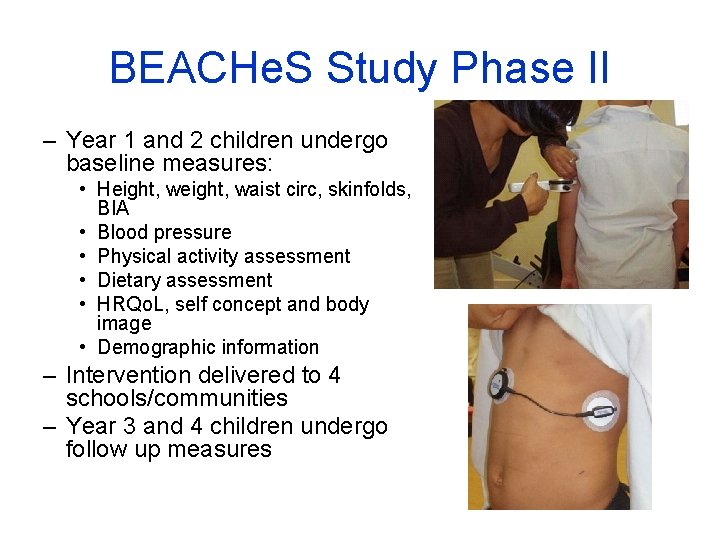
BEACHe. S Study Phase II – Year 1 and 2 children undergo baseline measures: • Height, waist circ, skinfolds, BIA • Blood pressure • Physical activity assessment • Dietary assessment • HRQo. L, self concept and body image • Demographic information – Intervention delivered to 4 schools/communities – Year 3 and 4 children undergo follow up measures
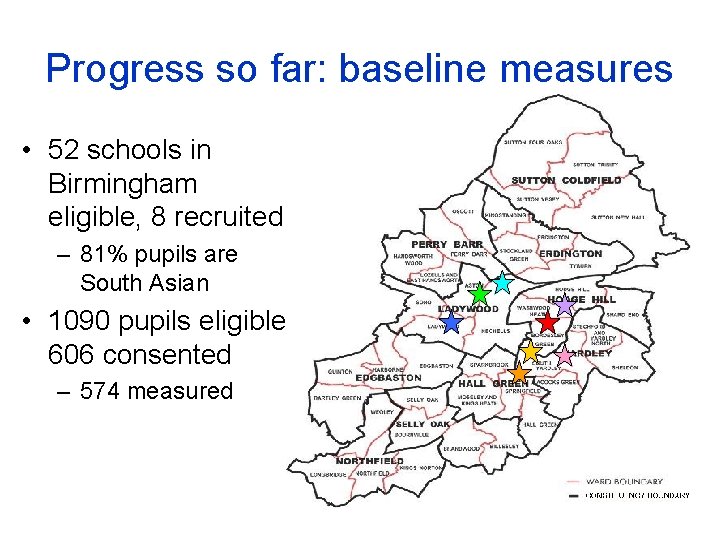
Progress so far: baseline measures • 52 schools in Birmingham eligible, 8 recruited: – 81% pupils are South Asian • 1090 pupils eligible, 606 consented – 574 measured
Phase 1: Focus groups • Identity groups convened: – Parents (groups run in English and Punjabi) – Teachers – Catering and school support staff – Local Authority, leisure and retail representatives – Community representatives – Health representatives – Children
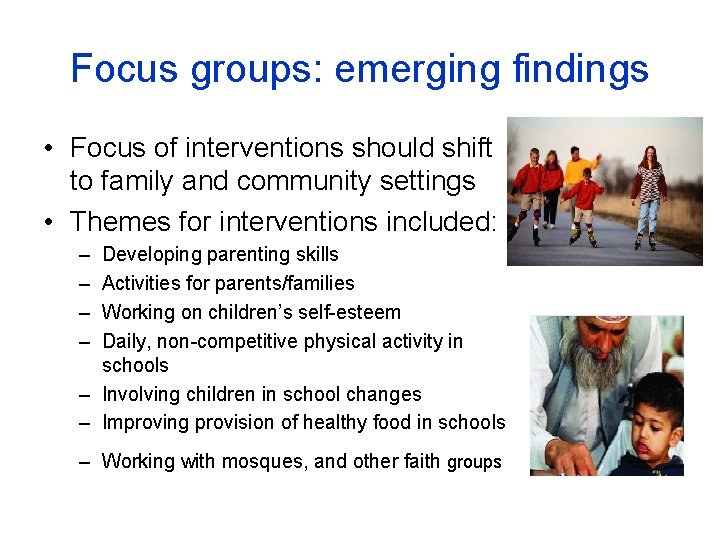
Focus groups: emerging findings • Focus of interventions should shift to family and community settings • Themes for interventions included: – – Developing parenting skills Activities for parents/families Working on children’s self-esteem Daily, non-competitive physical activity in schools – Involving children in school changes – Improving provision of healthy food in schools – Working with mosques, and other faith groups
Focus groups: barriers to successful interventions • Many barriers identified • Some are culturally specific – Many children spend evenings at mosque – Extended families in same household, grand parents may have major influence over children – Obesity may not be seen as a problem in some communities
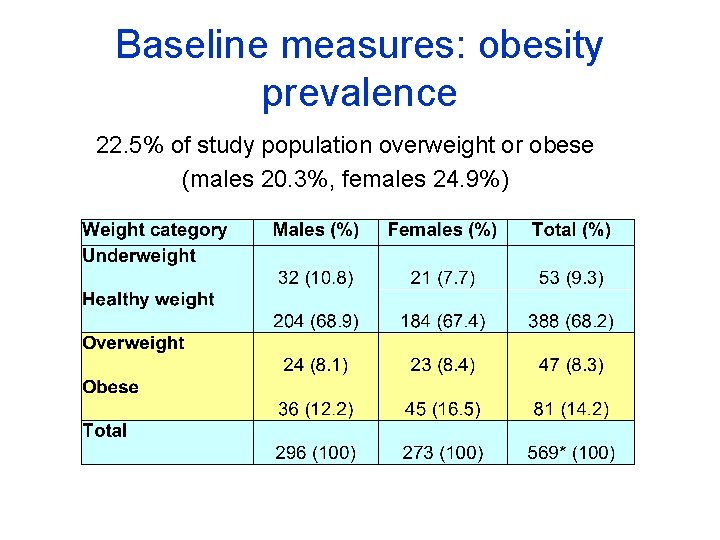
Baseline measures: obesity prevalence 22. 5% of study population overweight or obese (males 20. 3%, females 24. 9%)
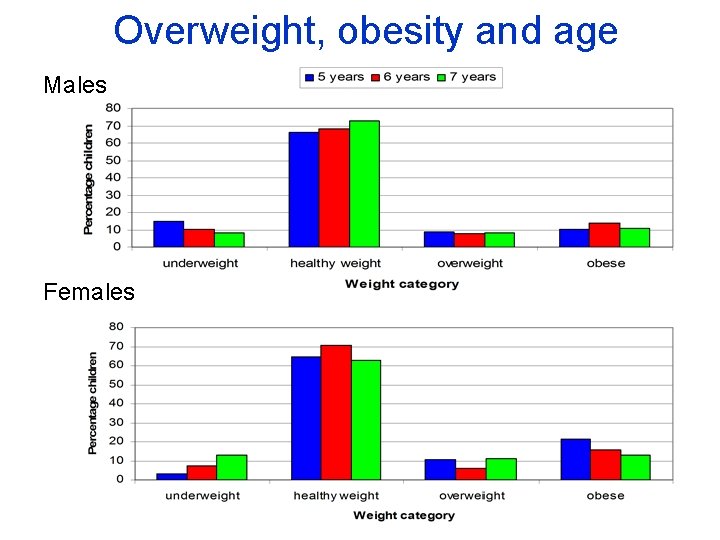
Overweight, obesity and age Males Females
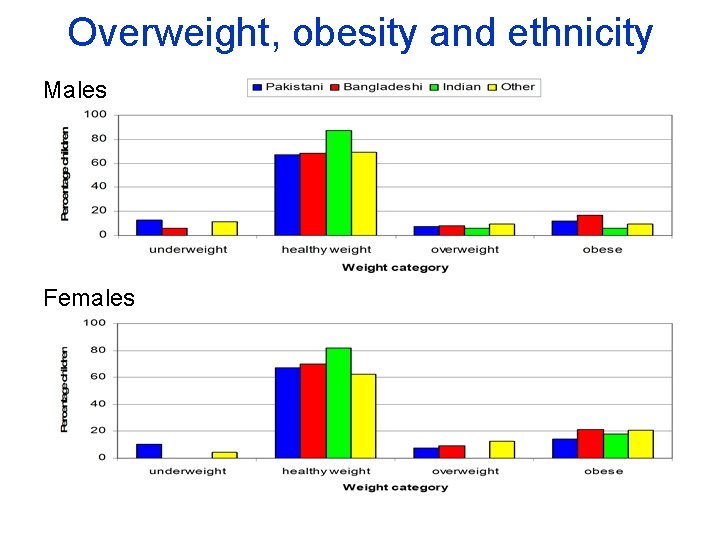
Overweight, obesity and ethnicity Males Females
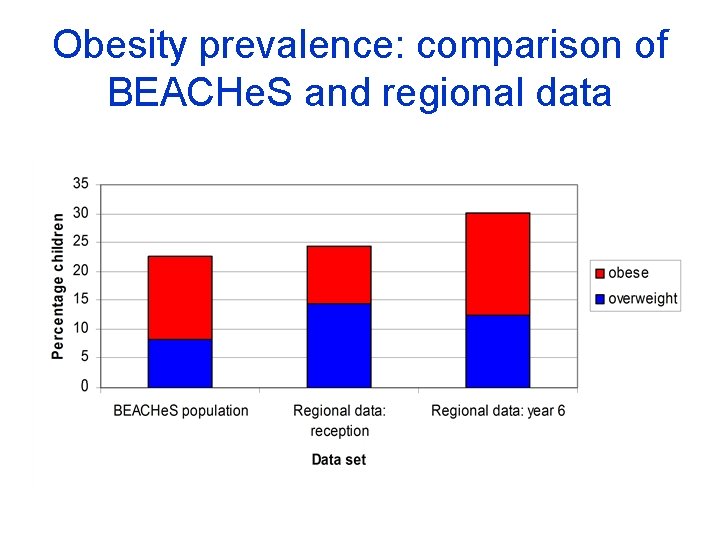
Obesity prevalence: comparison of BEACHe. S and regional data
Next steps for BEACHe. S • Detailed analysis of focus group data • Detailed analysis of baseline measures • Development of the intervention using: – focus group data – Evidence base – expert input • Implementation of the developed intervention package
- Slides: 14