
Birds of a Feather Flock Together A dynamic
Birds of a Feather Flock Together -----A dynamic model of students’ academic performance and the tendency of homophily Lin Gu and Helen Yang of Coe College Problem C of 2018 SCUDEM Team 39
INTRODUCTION 1 Homophoily 2 Goals 3 Differential Equations 4 Further thoughts 5 Q&A
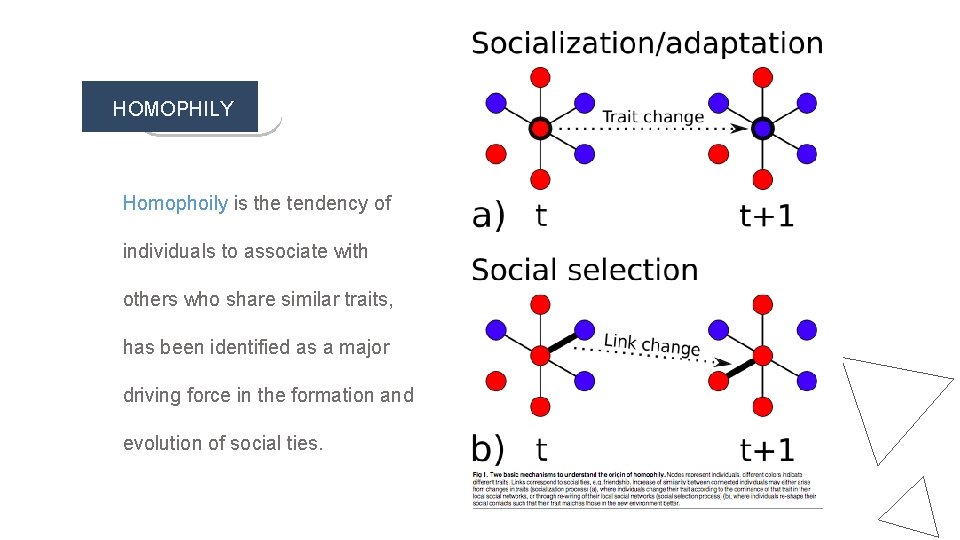
HOMOPHILY Homophoily is the tendency of individuals to associate with others who share similar traits, has been identified as a major driving force in the formation and evolution of social ties.
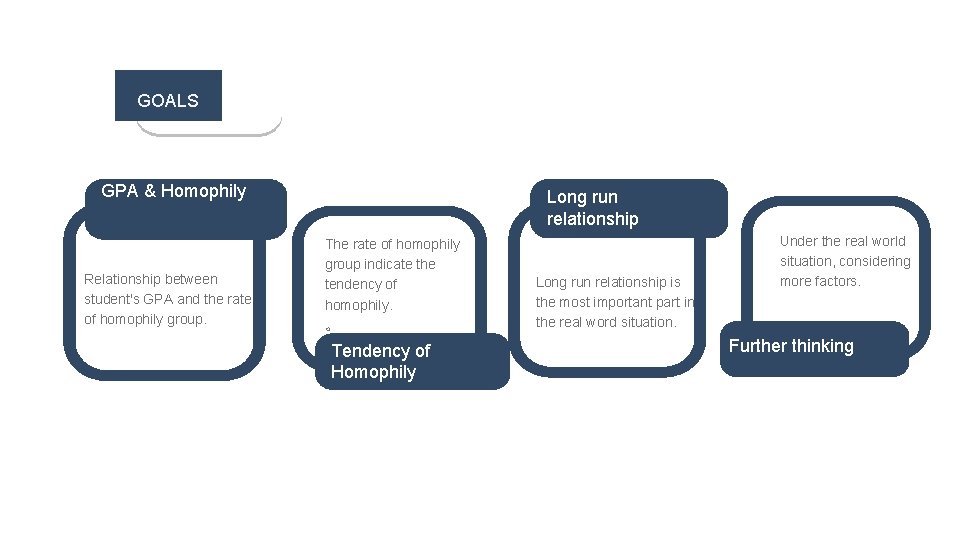
GOALS GPA & Homophily Relationship between student's GPA and the rate of homophily group. Long run relationship The rate of homophily group indicate the tendency of homophily. 。 Tendency of Homophily Long run relationship is the most important part in the real word situation. Under the real world situation, considering more factors. Further thinking
Model
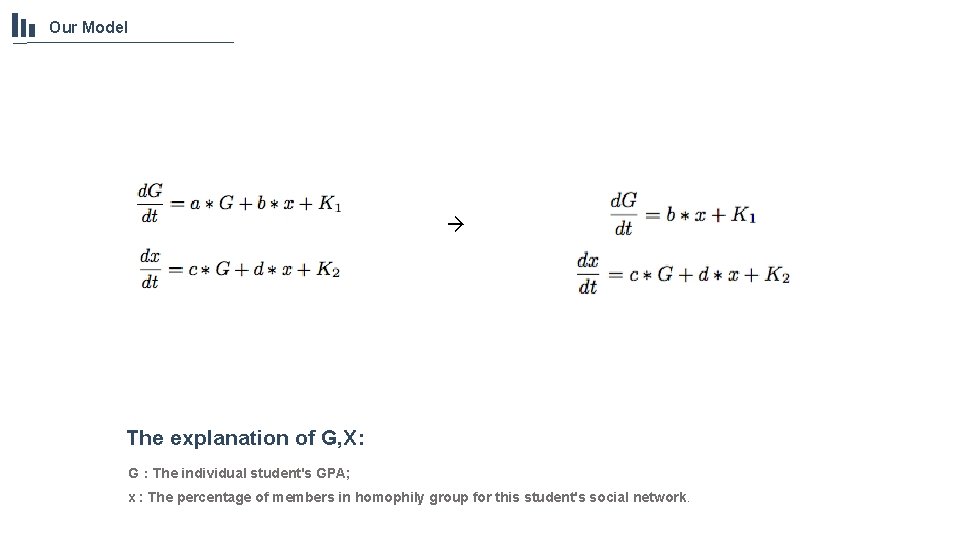
Our Model → The explanation of G, X: G:The individual student's GPA; x : The percentage of members in homophily group for this student's social network.
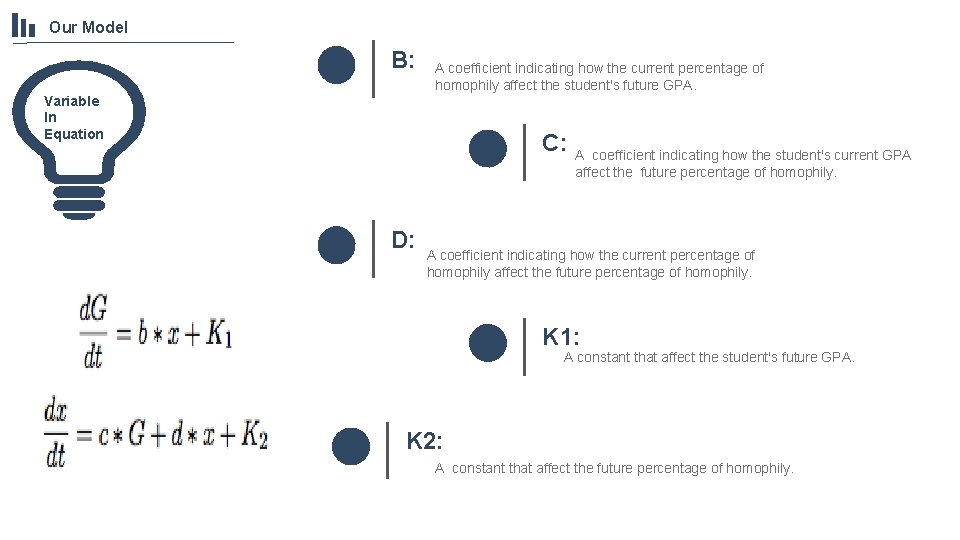
Our Model B: Variable In Equation A coefficient indicating how the current percentage of homophily affect the student's future GPA. C: D: A coefficient indicating how the student's current GPA affect the future percentage of homophily. A coefficient indicating how the current percentage of homophily affect the future percentage of homophily. K 1: A constant that affect the student's future GPA. K 2: A constant that affect the future percentage of homophily.
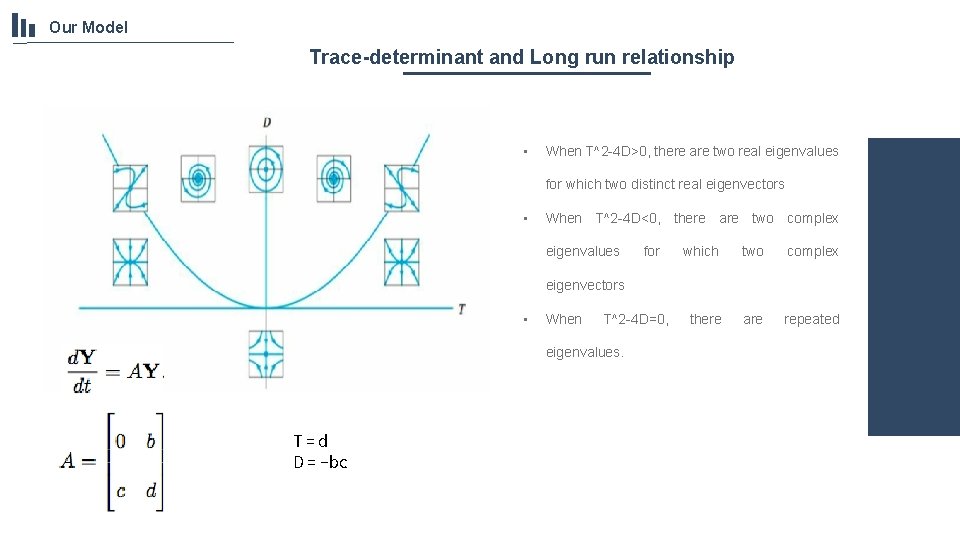
Our Model Trace-determinant and Long run relationship • When T^2 -4 D>0, there are two real eigenvalues for which two distinct real eigenvectors • When T^2 -4 D<0, there are two complex eigenvalues for which two complex there are repeated eigenvectors • When T^2 -4 D=0, eigenvalues. T=d D = −bc
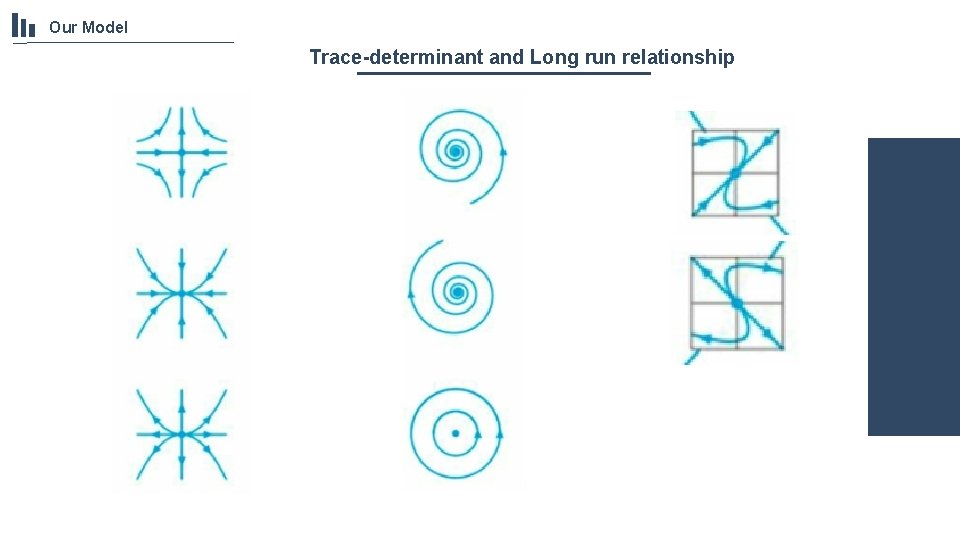
Our Model Trace-determinant and Long run relationship

Further thoughts
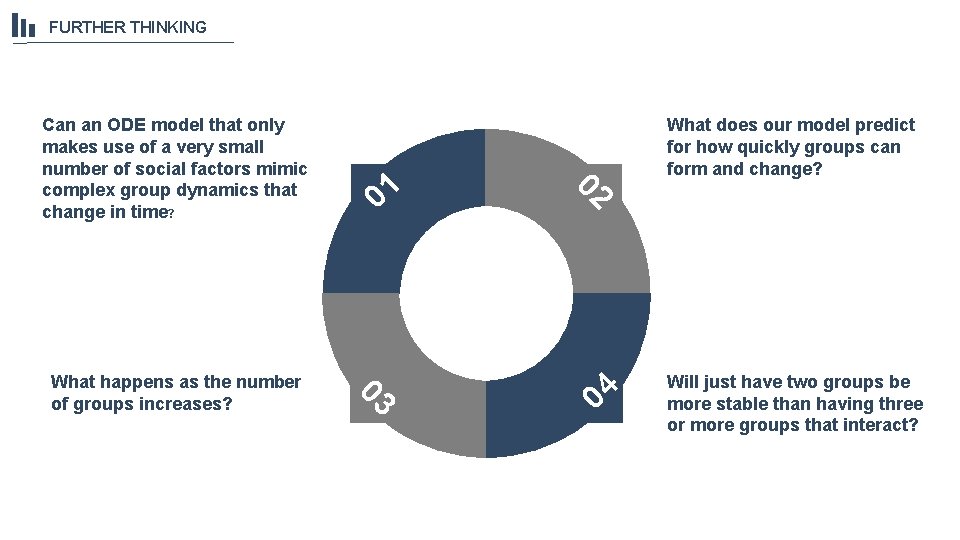
FURTHER THINKING 04 01 03 What happens as the number of groups increases? What does our model predict for how quickly groups can form and change? 02 Can an ODE model that only makes use of a very small number of social factors mimic complex group dynamics that change in time? Will just have two groups be more stable than having three or more groups that interact?
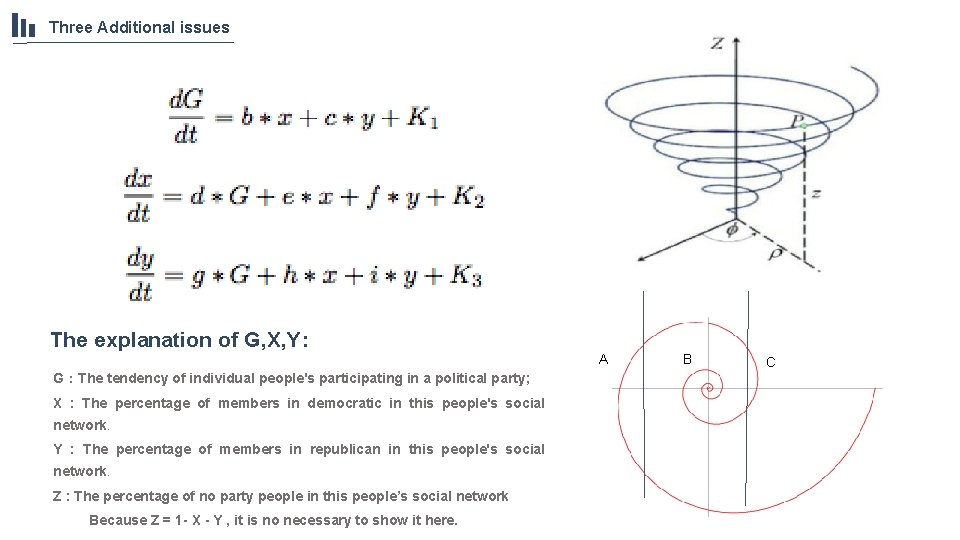
Three Additional issues The explanation of G, X, Y: A G:The tendency of individual people's participating in a political party; X : The percentage of members in democratic in this people's social network. Y : The percentage of members in republican in this people's social network. Z : The percentage of no party people in this people’s social network Because Z = 1 - X - Y , it is no necessary to show it here. B C
Questions? 2018 SCUDEM Lin Gu & Chengyuan Yang
References
- Slides: 14